
Chemotherapy Induced Peripheral Neuropathy Market Summary
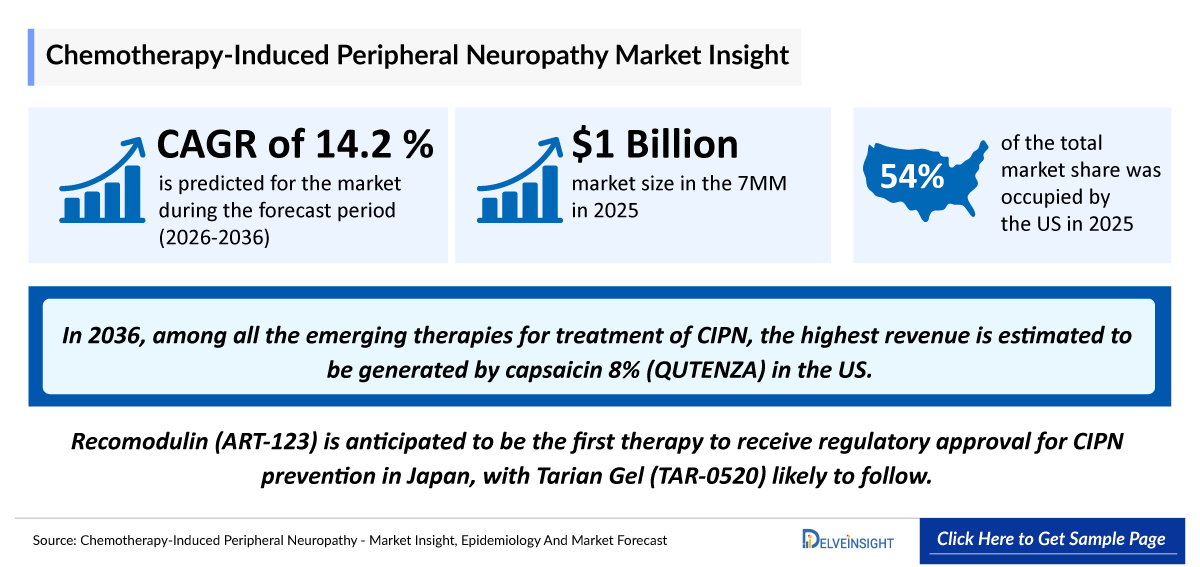
- The Chemotherapy-Induced Peripheral Neuropathy (CIPN) market size was valued at approximately USD 1.0 billion in 2025 and is projected to reach nearly USD 3.8 billion by 2036, growing at a CAGR of 14.2% during the forecast period from 2026 to 2036.
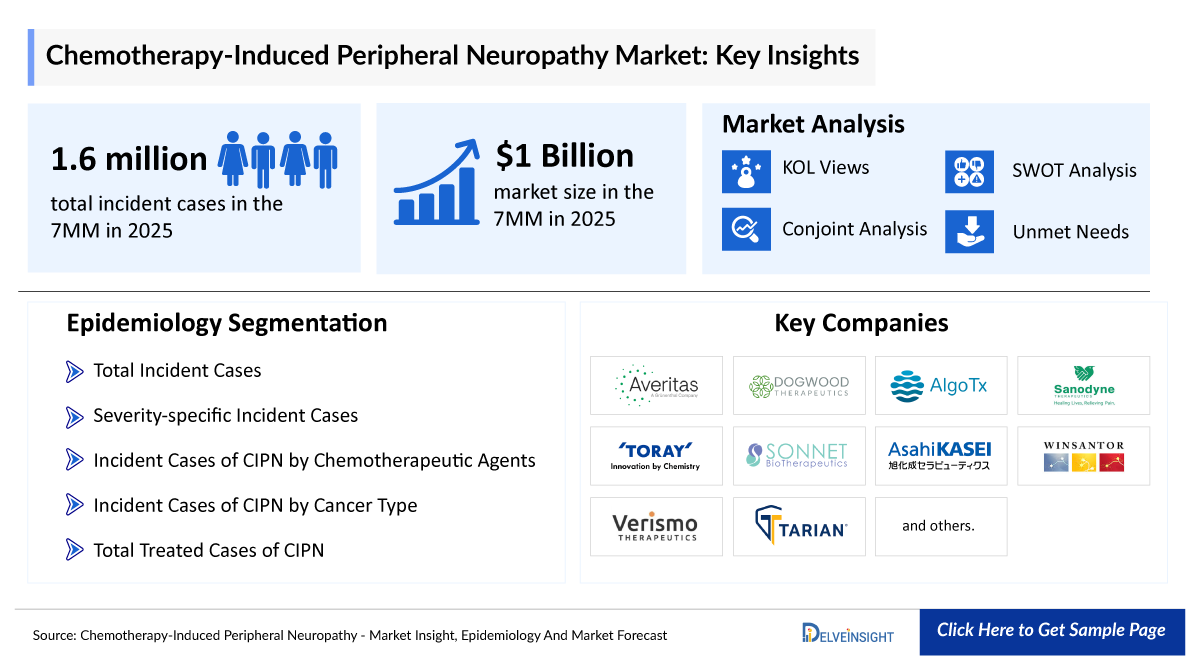
- The leading CIPN companies developing therapies in the treatment market include - Averitas Pharma (Grünenthal), Dogwood Therapeutics, AlgoTherapeutix, Sanodyne Therapeutics, Toray Industries, Sonnet BioTherapeutics, Asahi Kasei Pharma, WinSanTor, VM Therapeutics, Tarian Pharma, and others.
CIPN Market & Epidemiology Insights
- According to DelveInsight’s analysis, the CIPN market size was found to be around USD 1,000 million in the leading markets (the United States, the EU4 (Germany, France, Italy, and Spain), the United Kingdom, and Japan) in 2025.
- CIPN is a common complication of neurotoxic chemotherapy, affecting up to 90% of patients, with many experiencing persistent and debilitating neuropathic symptoms. Although not life-threatening, its chronic nature significantly impairs quality of life and contributes to long-term survivorship burden.
- The lack of standardized diagnostic criteria, coupled with limitations in current assessment tools, complicates disease evaluation and clinical trial design. Additionally, the complex and multifactorial pathobiology, encompassing peripheral nerve damage, oxidative stress, and neuroinflammation, has hindered the identification of consistent therapeutic targets.
- Despite the substantial impact of CIPN on patient well-being and treatment continuity, effective preventive and therapeutic strategies remain limited. Management is largely stratified by severity, with lower-grade neuropathy typically addressed through supportive measures such as topical agents, whereas higher-grade manifestations often necessitate palliative pharmacological interventions, including neuromodulatory agents and high-concentration capsaicin formulations.
- Currently, there are no FDA-approved therapies for CIPN prevention and only limited treatment options, with duloxetine being the only agent supported by moderate evidence. Management remains largely symptomatic and severity-based, relying on off-label therapies.
- The CIPN landscape is increasingly being approached through both therapeutic and preventive strategies, supported by a growing pipeline of mechanism-based interventions. Emerging therapies include capsaicin 8% (QUTENZA) by Averitas Pharma, halneuron (tetrodotoxin) by Dogwood Therapeutics, ATX01 (amitriptyline hydrochloride 15%) by AlgoTherapeutix and others for CIPN treatment.
- While recomodulin (ART-123) by Asahi Kasei Pharma, Tarian Gel (TAR-0520) by Tarian Pharma, pirenzepine (WST-057) by WinSanTor, and others are being developed for the prevention of CIPN.
Chemotherapy-induced Peripheral Neuropathy (CIPN) Market Size and Forecast in the 7MM
- 2025 CIPN Market Size: ~USD 1,000 million
- 2036 Projected CIPN Market Size: ~USD 3,800 million
- CIPN Growth Rate (2026–2036): 14.2 % CAGR
Request for unlocking the sample page of the "CIPN Market Forecast"
DelveInsight's ‘Chemotherapy-induced Peripheral Neuropathy (CIPN) Market Insights, Epidemiology and Market Forecast – 2036’ report delivers an in-depth understanding of the Chemotherapy-induced Peripheral Neuropathy (CIPN), historical and forecasted epidemiology, as well as the CIPN therapeutics market trends in the United States, EU4 (Germany, Spain, Italy, and France) and the United Kingdom, and Japan.
The Chemotherapy-induced Peripheral Neuropathy (CIPN) market report delivers a comprehensive analysis of the current treatment landscape, including standards of care, clinical practices, and evolving therapeutic algorithms. It evaluates Chemotherapy-induced Peripheral Neuropathy (CIPN) patient burden trends, revenue & market share dynamics, peak patient share & therapy uptake analysis, and provides an in-depth market size assessment, and growth rate projections (Historical & Forecast 2022–2036) across global regions. The report highlights key unmet medical needs in Chemotherapy-induced Peripheral Neuropathy (CIPN) and maps the competitive and clinical landscape to uncover high-value opportunities, providing a clear outlook on future market growth potential.
Scope of the CIPN Market Report | |
|
Study Period |
2022–2036 |
|
Historical Year |
2022–2025 |
|
Forecast Period |
2026–2036 |
|
Base Year |
2026 |
|
Geographies Covered |
|
|
CIPN Market CAGR (Forecast period) |
14.2% (2026–2036) |
|
CIPN Epidemiology Segmentation Analysis |
Patient Burden Assessment
|
|
CIPN Companies |
|
|
CIPN Therapies |
|
|
CIPN Market |
Segmented by
|
|
Analysis |
|
Chemotherapy-induced Peripheral Neuropathy (CIPN) Disease Understanding
Chemotherapy-induced Peripheral Neuropathy (CIPN) Overview and Diagnosis
Cancer remains a leading cause of global mortality, with rising incidence and improved survival driven by advances in early detection and frontline chemotherapy; however, CIPN has emerged as a common and clinically significant toxicity affecting up to 90% of patients treated with agents such as platinum compounds, taxanes, vinca alkaloids, and proteasome inhibitors. Widely used across cancers, including breast cancer, colorectal cancer, prostate cancer, and hematological malignancies, these therapies can induce neurotoxicity characterized by distal axonal degeneration and functional neuronal alterations, leading to persistent sensory symptoms such as tingling, numbness, burning pain, and a “glove and stocking” distribution. CIPN may last for months or years, significantly impairing quality of life and contributing to psychological distress, and in severe cases, necessitating dose reduction or discontinuation of chemotherapy, potentially compromising treatment efficacy and clinical outcomes.
There is no standardized method for diagnosing CIPN, so assessment relies on clinical evaluation, including patient history, symptoms, neurological examination, and chemotherapy exposure. Objective tools such as nerve conduction studies (NCS) detect reduced sensory and motor amplitudes, while quantitative sensory testing (QST) assesses small fiber dysfunction. Subjective measures include clinician-graded scales (e.g., NCI-CTCAE) and patient-reported tools (e.g., EORTC QLQ-CIPN20), which better capture symptom burden but may miss early changes. Emerging biomarkers like neurofilament light chain (NfL), microRNAs, and ABCB1 variants show potential for early detection, though they remain under validation.
Further details are provided in the report...
Current Chemotherapy-induced Peripheral Neuropathy (CIPN) Treatment Landscape
Currently, no agents are recommended for the prevention of CIPN, and management primarily involves chemotherapy dose reduction, delay, or discontinuation. Non-pharmacological approaches such as exercise, acupuncture, mindfulness, and massage may help alleviate symptoms and improve quality of life. Among pharmacological options, duloxetine (an SNRI) is the only agent with moderate evidence for pain relief, while venlafaxine may offer limited benefit in select cases. Tricyclic antidepressants like amitriptyline show inconsistent efficacy and carry safety concerns, and anticonvulsants such as gabapentin and pregabalin have largely failed to demonstrate significant benefit. Topical and infusion therapies, including lidocaine and capsaicin patches, show promise for localized pain with favorable tolerability, whereas opioids are considered third-line options due to limited efficacy in neuropathic pain and risks of adverse effects and dependence.
Further details related to country-based variations are provided in the report...
Chemotherapy-induced Peripheral Neuropathy (CIPN) Unmet Needs
The section “unmet needs of CIPN” outlines the critical gaps between the current state of patient care, diagnosis, and the ideal & effective management of the disease. It highlights the obstacles experienced by patients, clinicians, and researchers and identifies potential solutions for future progress.
- Lack of FDA-approved therapies
- Insufficient evidence and no clinical guidelines for the prevention of CIPN
- Biological complexity as a barrier to targeted therapeutics in CIPN
- Reversal of “coasting” and long-term chronic neuropathy, and others…..
Note: Comprehensive unmet needs insights in CIPN and their strategic implications are provided in the full report....
Chemotherapy-induced Peripheral Neuropathy (CIPN) Epidemiology
The CIPN epidemiology section provides insights about the historical and current CIPN patient pool and forecasted trends for individual seven major countries. It helps to recognize the causes of current and forecasted trends by exploring numerous studies and views of key opinion leaders. This part of the CIPN market report also provides the diagnosed patient pool and their trends along with assumptions undertaken.
Key Findings from Chemotherapy-induced Peripheral Neuropathy (CIPN) Epidemiological Analysis and Forecast
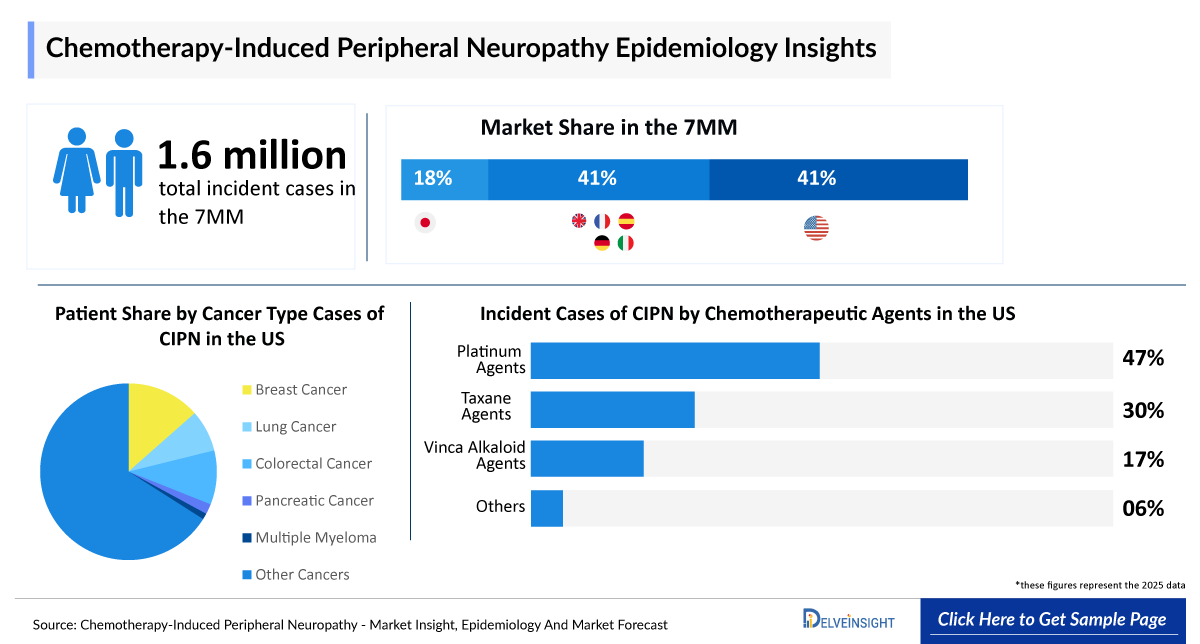
- According to DelveInsight’s estimates, in 2025, the total number of incident cases of CIPN in the 7MM was ~1.6 million.
- In the US, among severity-specific incident cases of CIPN, severe CIPN accounted for the majority of cases (~239,600), followed by mild (~208,550) and moderate (~199,500) in 2025.
- In 2025, breast and colorectal cancers accounted for the majority share of CIPN incidence across the EU4 and the UK. Breast cancer was associated with ~123,450 CIPN cases, and colorectal cancer contributed ~118,600 cases.
- The likelihood of developing CIPN is strongly influenced by the extent of chemotherapy use, with higher utilization seen in cancers such as hematologic malignancies, lung, and gastric cancers. This makes chemotherapy exposure, rather than cancer incidence alone, a critical determinant of CIPN burden. As treatment intensity and duration increase, the risk of neuropathy correspondingly rises.
CIPN Epidemiology Segmentation
- Total Incident Population of CIPN
- Severity-specific Incident Population of CIPN
- Incident Population of CIPN by Cancer Type
- Total Treated Population of CIPN
Recent Developments in the CIPN Treatment Landscape:
- In July 2026, the first patient was dosed in a clinical trial evaluating a novel therapeutic candidate designed to treat chemotherapy-induced peripheral neuropathy (CIPN). The study aims to address a critical unmet need for cancer patients suffering from severe nerve pain and tingling caused by neurotoxic cancer treatments.
- In February 2026, Dogwood Therapeutics announced that it has achieved over 50% of the planned enrollment in its ongoing HAL-CINP-203 Phase IIb chemotherapy-induced neuropathic pain (“HALT-CINP”) trial. HALT-CINP remains on track for top-line results to be available during the third quarter of 2026.
- In December 2025, Dogwood Therapeutics reported positive interim results from 97 patients in the ongoing Phase IIb Halneuron study in CINP. An independent statistical review of unblinded data indicated that patients receiving Halneuron showed a clear improvement in pain compared to placebo over the four-week treatment period.
- In June 2025, the European Patent Office has granted an European Union patent (licensed from Yale University) for OSM-0205, and Osmol is securing financing to begin a Phase I trial, with Phase II studies in CIPN planned for the second half of 2026.
Chemotherapy-induced Peripheral Neuropathy (CIPN) Drug Analysis & Competitive Landscape
The CIPN drug chapter provides a detailed, market-focused review of the emerging pipeline across Phase I–III Chemotherapy-induced Peripheral Neuropathy clinical trials. It covers the mechanism of action, clinical trial data, patents, collaborations, and strategic partnerships, upcoming key catalysts for each therapy, along with their advantages, limitations, and recent developments. This section offers critical insights into the CIPN treatment landscape, supporting market assessment, competitive analysis, and growth forecasting for the CIPN therapeutics market.
CIPN Pipeline Analysis
Larsuscosterol (DUR-928): Bausch Health
Capsaicin 8% topical system is a high-dose, localized patch targeting TRPV1-expressing nociceptors to provide sustained relief from peripheral neuropathic pain. By inducing defunctionalization of sensory nerve fibers, it reduces pain signaling without systemic exposure, an advantage in oncology settings. While approved for postherpetic neuralgia and diabetic neuropathy, it is being explored for CIPN due to its targeted mechanism.
The drug is currently under evaluation in a Phase III ACT trial for CIPN. Based on an estimated primary completion in March 2028, the therapy is anticipated to achieve regulatory approval and potential commercial launch in 2029, positioning it as a promising non-opioid, site-specific treatment option for CIPN.
Emerging Competitive Landscape of CIPN | ||||||
|
Product |
Company |
Phase |
Indication |
RoA |
MoA |
Anticipated Launch in the US |
|
Capsaicin 8% (QUTENZA) |
Averitas Pharma (Grünenthal) |
III |
CIPN |
Topical |
Transient Receptor Potential Vanilloid 1 (TRPV1) |
2029 |
|
Halneuron (tetrodotoxin) |
Dogwood Therapeutics |
II |
CIPN |
SC |
NaV 1.7 inhibitor |
Information is available in the full report |
|
ATX01 (amitriptyline hydrochloride 15%) |
AlgoTherapeutix |
II |
CIPN |
Topical |
Nociceptive voltage-gated sodium channels (Nav1.7, Nav1.8, and Nav1.9) inhibitor |
Information is available in the full report |
|
Recomodulin (ART-123) |
Asahi Kasei Pharma |
III |
Prevention of CIPN |
IV |
Anticoagulant activity |
Information is available in the full report |
|
Note: Launch insights are provisional and may change with future report updates or the occurrence of major key catalysts. | ||||||
Chemotherapy-induced Peripheral Neuropathy (CIPN) Key Players, Market Leaders and Emerging Companies
- Bausch Health
- Averitas Pharma (Grünenthal)
- Dogwood Therapeutics
- AlgoTherapeutix
- Sanodyne Therapeutics/
- Toray Industries
- Sonnet BioTherapeutics
- Asahi Kasei Pharma
- WinSanTor
- VM Therapeutics
- Tarian Pharma, and others
Chemotherapy-induced Peripheral Neuropathy (CIPN) Market Outlook
CIPN is a common and potentially debilitating complication of chemotherapy, arising from peripheral nerve damage and affecting a substantial proportion of patients undergoing cancer treatment. As chemotherapy remains a cornerstone of oncology care, the increasing number of treated patients has led to a rising burden of CIPN, significantly impairing functional ability and quality of life, and emerging as an important clinical and public health concern.
Current treatment of CIPN is largely symptomatic, focused on pain relief and quality-of-life improvement through pharmacologic and non-pharmacologic approaches. Common systemic agents, including antidepressants, anticonvulsants, and opioids, demonstrate modest and inconsistent efficacy, often limited by systemic adverse effects. Although duloxetine is the only guideline-recommended first-line therapy, its real-world use is frequently delayed due to step-therapy requirements, highlighting a gap between clinical evidence and treatment access. Non-pharmacologic and complementary approaches have also shown inconsistent benefit and are not widely supported by robust clinical evidence, limiting their role in standard care. As a result, CIPN management remains suboptimal, with no approved disease-modifying therapies currently available.
The treatment landscape is gradually evolving with emerging therapies targeting key mechanisms of neuropathic pain. In the treatment setting, agents such as capsaicin 8% (QUTENZA), Halneuron (tetrodotoxin), and ATX01 (amitriptyline hydrochloride 15%) are being investigated for their potential to provide targeted and sustained symptom relief. In parallel, preventive strategies are gaining attention, with Recomodulin (ART-123) and Tarian Gel (TAR-0520) being evaluated for their ability to reduce nerve damage and CIPN incidence/severity.
Overall, the CIPN market is expected to evolve dynamically, driven by increasing chemotherapy use, rising disease awareness, and the advancement of targeted, mechanism-based therapies across both treatment and prevention settings in the 7MM CIPN market from 2022–2036.
- Among the 7MM, the US accounted for the largest market size of CIPN. i.e., USD ~535 million in 2025.
- In 2036, among all the emerging therapies for treatment of CIPN, the highest revenue is estimated to be generated by capsaicin 8% (QUTENZA) in the US.
- The entry of late-stage Recomodulin (ART-123) is expected to intensify competition in the CIPN prevention landscape during the latter half of the forecast period.
Further details will be provided in the report….
Drug Class/Insights into Leading Emerging and Marketed Therapies
The CIPN market comprises small molecules, recombinant human soluble thrombomodulin (rTM), biologics, and other emerging modalities, each targeting key mechanisms such as peripheral nerve hyperexcitability, ion channel modulation, and neuroprotection.
Small molecules: This segment includes agents such as capsaicin 8% (QUTENZA), Halneuron (tetrodotoxin), and ATX01 (amitriptyline hydrochloride 15%), which act locally on peripheral nociceptors to reduce pain signaling. These therapies offer the advantage of site-specific action with minimal systemic exposure, making them particularly suitable in oncology settings.
Biologics and recombinant therapies (prevention-focused): Agents such as Recomodulin (ART-123), a recombinant thrombomodulin, and Tarian Gel (TAR-0520) are being explored for their potential to prevent or mitigate nerve damage through anti-inflammatory and cytoprotective mechanisms.
Overall, topical and small molecule approaches currently dominate the CIPN landscape, particularly for symptomatic relief, while novel systemic and preventive strategies are expected to drive future diversification as clinical evidence matures.
Chemotherapy-induced Peripheral Neuropathy (CIPN) Drug Uptake
This section focuses on the uptake rate of potential CIPN drugs expected to be launched in the market during the forecast period (2026–2036). The analysis covers the CIPN drug’s uptake, performance at peak, factors affecting performance during prime years of growth, patient uptake by therapy, and anticipated sales generated by each drug.
The uptake of therapies in CIPN is expected to vary based on clinical positioning, mechanism of action, and strength of supporting evidence across both treatment and prevention settings. Among treatment options, capsaicin 8% (QUTENZA) and Halneuron (tetrodotoxin) may witness relatively faster uptake, supported by their targeted approaches to neuropathic pain management. In contrast, ATX01 (amitriptyline hydrochloride 15%) is likely to see a more gradual uptake, with adoption dependent on clear and consistent clinical benefit.
In the prevention landscape, Recomodulin (ART-123) and Tarian Gel (TAR-0520) may achieve moderate uptake, particularly if they demonstrate meaningful efficacy in reducing CIPN risk and severity. Overall, in the lack of approved therapies for CIPN, uptake dynamics are likely to remain gradual but responsive to robust clinical validation and real-world outcomes.
Detailed insights into emerging therapies' drug uptake are included in the report...
CIPN Market Access and Reimbursement of Approved Therapies
The report further provides detailed insights on the country-wise accessibility and reimbursement scenarios, cost-effectiveness scenario of approved therapies, programs making accessibility easier and out-of-pocket costs more affordable, insights on patients insured under federal or state government prescription drug programs, etc.
Reimbursement is a crucial factor that affects the drug’s access to the market. Often, the decision to reimburse comes down to the price of the drug relative to the benefit it produces in treated patients. To reduce the healthcare burden of these high-cost therapies, many payment models are being considered by payers and other industry insiders.
NOTE: Further Details are provided in the final report….
Chemotherapy-induced Peripheral Neuropathy (CIPN) Therapies Price Scenario & Trends
Pricing and analogue assessment of CIPN therapies highlights evolving price dynamics structures. This section summarizes the cost of approved treatments, the closest and most appropriate analogue selection for emerging therapies, and the understanding of how pricing influences market access, adherence, and long-term uptake.
Industry Experts and Physician Views for Chemotherapy-induced Peripheral Neuropathy (CIPN)
To keep up with CIPN market trends, we take Key Opinion Leaders (KOLs) and Subject Matter Experts (SMEs) opinions working in the domain through primary research to fill the data gaps and validate our secondary research. Industry Experts were contacted for insights on CIPN emerging therapies, evolving treatment landscape, patient adherence to conventional therapies, therapy switching trends, drug adoption and uptake, accessibility challenges, and epidemiology and real-world prescription patterns in CIPN, including MD, PhD, Instructor, Postdoctoral Researcher, Professor, Researcher, and others.
DelveInsight’s analysts connected with 10+ KOLs to gather insights at the country level. Centers such as University of Michigan Hospitals & Health Centers, University of Duisburg-Essen, King’s College London, and University of Verona, etc. were contacted. Their opinion helps understand and validate current and emerging CIPN therapies, highlight unmet medical needs, provide epidemiological context, and support strategic decisions for market access, therapy adoption, and pipeline prioritization in CIPN.
|
Region |
Key Opinion Leaders (KOLs) and Subject Matter Experts (SMEs) |
|
United States |
“The design and reporting quality of existing CIPN clinical trials vary considerably, and methodological shortcomings limit the ability to determine effective treatments. There is a clear need for well-designed, sufficiently powered Randomized Controlled Trials (RCTs) to generate more reliable evidence.” |
|
Germany |
“Non-pharmacological approaches for managing CIPN are widely regarded as promising for incorporation into standard cancer care. However, their use in real-world settings remains limited, largely due to insufficient training among healthcare providers and low patient awareness, both of which hinder broader clinical adoption.” |
CIPN Report Qualitative Analysis: SWOT and Conjoint Analysis
We perform qualitative and market Intelligence analysis using various approaches, such as SWOT analysis and conjoint analysis.
In the SWOT analysis of Chemotherapy-induced Peripheral Neuropathy (CIPN), strengths, weaknesses, opportunities, and threats in terms of disease diagnosis, patient awareness, patient burden, competitive landscape, cost-effectiveness, and geographical accessibility of therapies are provided.
Conjoint analysis analyzes emerging therapies based on relevant attributes such as safety, efficacy, frequency of administration, route of administration, and order of entry. Scoring is given based on these parameters to analyze the effectiveness of therapy.
The team of analysts analyzes promising emerging therapies based on relevant attributes such as safety, efficacy, frequency of administration, route of administration, and order of entry. In efficacy, the trial’s primary and secondary outcome measures are evaluated, whereas the therapies’ safety is evaluated, wherein the acceptability, tolerability, and adverse events are mainly observed. In addition, the scoring is also based on the route of administration, order of entry, probability of success, and the addressable patient pool for each therapy. According to these parameters, the final weightage score and the ranking of the emerging therapies are decided.
Scope of the CIPN Market Report
- The report covers a segment of key events, an executive summary, a descriptive overview of Chemotherapy-induced Peripheral Neuropathy (CIPN), explaining its causes, signs and symptoms, pathogenesis, and currently available treatments.
- Comprehensive insight has been provided into the epidemiology segments and forecasts, the future growth potential of the diagnosis rate, and disease progression along treatment guidelines.
- Additionally, an all-inclusive account of both the current and emerging treatments, along with the elaborative profiles of late-stage and prominent therapies, will have an impact on the current treatment landscape.
- A detailed review of the Chemotherapy-induced Peripheral Neuropathy (CIPN) market, historical and forecasted market size, market share by therapies, detailed assumptions, and rationale behind our approach is included in the report, covering the 7MM drug outreach.
- The report provides an edge while developing business strategies by understanding trends through SWOT analysis and expert insights/KOL views, patient journey, and treatment preferences that help in shaping and driving the 7MM Chemotherapy-induced Peripheral Neuropathy (CIPN) market.
CIPN Market Report Insights
- Chemotherapy-induced Peripheral Neuropathy (CIPN) Patient Population Forecast
- Chemotherapy-induced Peripheral Neuropathy (CIPN) Therapeutics Market Size
- Chemotherapy-induced Peripheral Neuropathy (CIPN) Pipeline Analysis
- Chemotherapy-induced Peripheral Neuropathy (CIPN) Market Size and Trends
- Chemotherapy-induced Peripheral Neuropathy (CIPN) Market Opportunity (Current and forecasted)
CIPN Market Report Key Strengths
- Chemotherapy-induced Peripheral Neuropathy (CIPN) Epidemiology-based (Epi-based) Bottom-up Forecasting
- Artificial Intelligence (AI)-Enabled Market Research Report
- 11-Year Forecast
- Chemotherapy-induced Peripheral Neuropathy (CIPN) Market Outlook (North America, Europe, Asia-Pacific)
- Chemotherapy-induced Peripheral Neuropathy (CIPN) Patient Burden Trends (By Geography)
- Chemotherapy-induced Peripheral Neuropathy (CIPN) Treatment Addressable Market (TAM)
- Chemotherapy-induced Peripheral Neuropathy (CIPN) Competitive Landscape
- Chemotherapy-induced Peripheral Neuropathy (CIPN) Major Companies Insights
- Chemotherapy-induced Peripheral Neuropathy (CIPN) Price Trends and Analogue Assessment
- Chemotherapy-induced Peripheral Neuropathy (CIPN) Therapies Drug Adoption/Uptake
- Chemotherapy-induced Peripheral Neuropathy (CIPN) Therapies Peak Patient Share Analysis
CIPN Market Report Assessment
- Chemotherapy-induced Peripheral Neuropathy (CIPN) Current Treatment Practices
- Chemotherapy-induced Peripheral Neuropathy (CIPN) Unmet Needs
- Chemotherapy-induced Peripheral Neuropathy (CIPN) Clinical Development Analysis
- Chemotherapy-induced Peripheral Neuropathy (CIPN) Emerging Drugs Product Profiles
- Chemotherapy-induced Peripheral Neuropathy (CIPN) Market attractiveness
- Chemotherapy-induced Peripheral Neuropathy (CIPN) Qualitative Analysis (SWOT and Conjoint analysis)
- Chemotherapy-induced Peripheral Neuropathy (CIPN) Market Drivers
- Chemotherapy-induced Peripheral Neuropathy (CIPN) Market Barriers
FAQs Related to the CIPN Market Report:
CIPN Market Insights
- What was the Chemotherapy-induced Peripheral Neuropathy (CIPN) market size, the market size by therapies, market share (%) distribution in 2025, and what would it look like by 2036? What are the contributing factors for this growth?
- What are the anticipated pricing variations among different geographies for the emerging therapies in the future?
- What can be the future treatment paradigm of Chemotherapy-induced Peripheral Neuropathy (CIPN)?
- What are the disease risks, burdens, and unmet needs of Chemotherapy-induced Peripheral Neuropathy (CIPN)? What will be the growth opportunities across the 7MM concerning the CIPN patient population?
- Who is the major future competitor in the market, and how will the competitors affect their market share?
- What are the current options for the treatment of Chemotherapy-induced Peripheral Neuropathy (CIPN)? What are the current guidelines for treating Chemotherapy-induced Peripheral Neuropathy (CIPN) in the US, Europe, and Japan?
Reasons to Buy CIPN Market Forecast Report
- The report will help in developing business strategies by understanding the latest trends and changing treatment dynamics driving the Chemotherapy-induced Peripheral Neuropathy (CIPN) market.
- Bottom up forecasting builds from the affected population to product forecasts, delivering a robust, data driven approach ideal for new therapies and novel classes.
- Insights on patient burden/disease incidence, evolution in diagnosis, and factors contributing to the change in the epidemiology of the disease during the forecast years.
- Understand the existing market opportunities in varying geographies and the growth potential over the coming years.
- Identifying strong upcoming players in the market will help devise strategies to help get ahead of competitors.
- Detailed analysis and ranking of class-wise potential current and emerging therapies under the conjoint analysis section to provide visibility around leading classes.
- To understand KOLs’ perspectives on the accessibility, acceptability, and compliance-related challenges of existing treatment to overcome barriers in the future.
- Detailed insights on the unmet needs of the existing market so that the upcoming players can strengthen their development and launch strategy.
- This Artificial Intelligence (AI) enabled report summarizes and simplifies complex datasets within the report into clear, actionable insights for stakeholders, investors, and healthcare providers, enabling faster, data driven decisions.