Kidney Transplant Rejection Market Summary
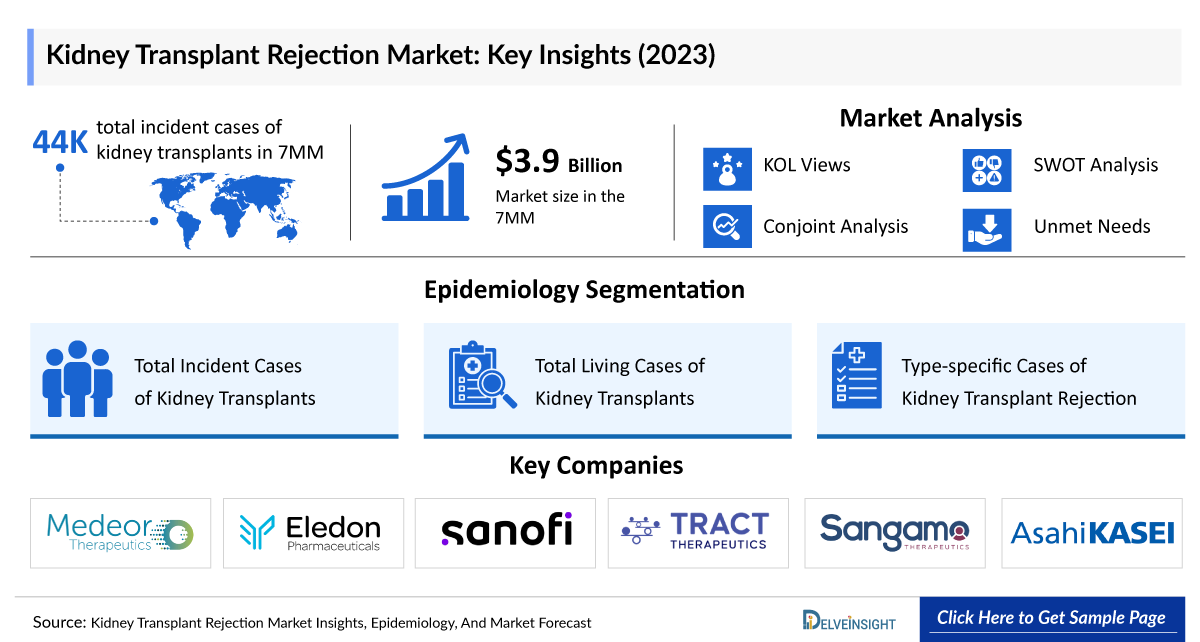
- The Kidney Transplant Rejection Market Size in the 7MM is expected to grow from USD 4,260 million in 2025 to USD 6,647 million in 2034.
- The Kidney Transplant Rejection Market is projected to grow at a CAGR of 5.07% by 2034 in leading countries like the US, EU4, UK, and Japan.
Kidney Transplant Rejection Market and Epidemiology Analysis
- According to DelveInsight’s analysis, the kidney transplant rejection market in the 7MM was valued at approximately USD 3,970 million in 2023.
- The kidney transplant rejection prophylaxis market is projected to experience steady growth, driven by a strong compound annual growth rate (CAGR) from 2024 to 2034. This expansion across the 7MM will be fueled by the introduction of innovative therapies such as MDR-101, tegoprubart (AT-1501), riliprubart (BIVV020, SAR445088), and TRK-001 (Treg). Additionally, the growing number of kidney transplants, fueled by the increasing prevalence of End-stage Renal Disease (ESRD), further supports the kidney transplants market’s expansion.
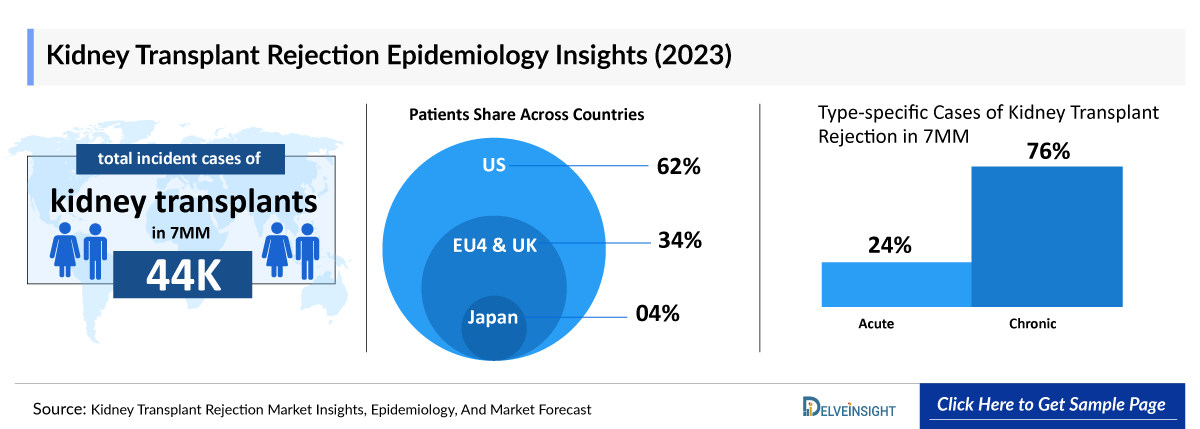
- According to DelveInsight’s estimates, in 2023, there were approximately 44 thousand incident cases of kidney transplants in the 7MM. Of these, the United States accounted for 62% of the cases, while EU4 and the UK accounted for nearly 34% and Japan represented 4% of the cases, respectively.
- Prophylaxis for the kidney transplant rejection involves a variety of medications that have been approved to help prevent rejection, each offering different mechanisms of action to support long-term transplant success. These include ENVARSUS XR, IDEFIRIX, NULOJIX, THYMOGLOBULIN, MYHIBBIN, and SIMULECT, among others, all playing a crucial role in managing immune responses and minimizing the risk of rejection.
- Medeor Therapeutics, Eledon Pharmaceuticals, Sanofi, and TRACT Therapeutics are advancing their assets through various stages of development, driving innovation in the kidney transplant rejection market. Their efforts are shaping a dynamic landscape and opening up significant opportunities for Kidney Transplant Rejection market growth and expansion.
- Medeor Therapeutics’ MDR-101, an innovative therapy in advanced development, is in Phase III clinical trials and is anticipated to launch by 2026 in US for the prevention of kidney transplant rejection.
Kidney Transplant Rejection Market Size and Forecasts
- 2025 Kidney Transplant Rejection Market Size: USD 4260 million in 2025
- 2034 Projected Kidney Transplant Rejection Market Size: USD 6647 million in 2034
- Growth Rate (2025-2034): 5.07% CAGR
- Largest Kidney Transplant Rejection Market: United States
Key Factors Driving the Kidney Transplant Rejection Market
Kidney Transplant Rejection Patient Pool
There were approximately 44K kidney transplant procedures across the 7MM in 2023. In the US alone, around 27K incident cases were reported. The number of kidney transplants is expected to rise steadily by 2034, driven by the increasing prevalence of End-Stage Renal Disease (ESRD) and the growing demand for life-saving organ replacements.
Kidney Transplant Rejection Treatment Market
The kidney transplant rejection market in the 7MM was valued at approximately USD 4 billion in 2023 and is expected to reach USD 6.6 billion by 2034, reflecting a CAGR of 5.07%. Standard prophylaxis involves approved therapies such as ENVARSUS XR, IDEFIRIX, NULOJIX, THYMOGLOBULIN, MYHIBBIN, and SIMULECT, each providing distinct mechanisms to manage immune responses and reduce the risk of rejection. Among emerging therapies, Medeor Therapeutics’ MDR-101, currently in Phase III trials, is anticipated to launch in the US by 2026, offering a novel approach to prevent kidney transplant rejection.
Kidney Transplant Rejection Competitive Landscape
Innovative therapies under development include MDR-101 (Medeor Therapeutics), tegoprubart (Eledon Pharmaceuticals), riliprubart (Sanofi), and TRK-001 (TRACT Therapeutics), all targeting improved long-term graft survival. These therapies complement existing immunosuppressive regimens, addressing unmet needs such as reducing adverse effects, lowering rejection rates, and improving patient outcomes.
Kidney Transplant Rejection Market Dynamics and Opportunity
Market growth is primarily driven by the rising number of kidney transplants, coupled with the introduction of next-generation therapies. While payer scrutiny remains significant due to high costs and the rarity of complications, targeted biologics and cell therapies have the potential to redefine the prophylaxis landscape. By 2034, the adoption of these advanced therapies may significantly enhance graft survival and transform the management paradigm of kidney transplant rejection.
DelveInsight’s “Kidney Transplant Rejection Market Insights, Epidemiology, and Market Forecast – 2034” report delivers an in-depth understanding of kidney transplant rejection, historical and forecasted epidemiology, as well as the kidney transplant rejection therapeutics market trends in the United States, EU4 (Germany, France, Italy, and Spain) and the United Kingdom, and Japan.
The kidney transplant rejection market report provides current treatment practices, emerging drugs, market share of individual therapies, and current and forecasted 7MM kidney transplant rejection market size from 2020 to 2034. The report also covers kidney transplant rejection treatment practices and unmet medical needs to curate the best opportunities and assess the kidney transplant rejection market’s potential.
Kidney Transplant Rejection Disease Understanding
Kidney transplant rejection overview
Kidney transplant rejection occurs when the recipient’s immune system identifies the transplanted kidney as foreign and attacks it, potentially impairing its function. While kidney transplantation is the gold standard treatment for End-Stage Renal Disease (ESRD) and advanced Chronic Kidney Disease (CKD), offering better survival rates and quality of life than dialysis, its success depends on precise donor-recipient matching to minimize immune responses. Rejection is primarily driven by T lymphocytes through both innate and adaptive immune mechanisms, amplified by costimulatory molecules and cytokines, highlighting the complexity of the immune response and the critical need for effective immunosuppressive strategies.
The underlying causes of kidney transplant rejection include nonadherence to immunosuppressive therapy, infections triggering immune activation, mismatched organs in terms of HLA compatibility or blood type, and immune responses such as acute cellular or chronic antibody-mediated rejection. Key risk factors include younger recipient age, non-compliance with prescribed medications, infections, donor-specific antibodies, and transplant-related challenges like delayed graft function. Effective prevention and management rely on strict adherence to therapy, regular monitoring, and timely intervention to address complications.
Key primary symptoms of kidney transplant rejection can include decreased urine output, swelling in the legs or feet, high blood pressure, and fatigue. Other indicators can include fever, flu-like symptoms such as chills, nausea, and body aches, as well as tenderness over the transplant site. Elevated creatinine levels in blood tests can further suggest impaired kidney function. If left untreated, these signs can lead to reduced graft function, potential graft failure, and a decline in quality of life, requiring increased medical intervention or dialysis.
Kidney transplant rejection diagnosis
Kidney transplant rejection is diagnosed through kidney biopsy and classified using the Banff system to identify types like Antibody-mediated rejection (AMR) and T cell-mediated rejection (TCMR). Blood tests for creatinine and BUN, urine tests for markers like NGAL, and non-invasive imaging techniques like ultrasound, MRI, and PET scans aid in detection. In AMR, histological and serological evidence are used, while acute TCMR is identified by biopsy showing cell infiltration.
Further details related to country-based variations are provided in the report…
Kidney transplant rejection treatment
The treatment of kidney transplant rejection involves a multifaceted approach tailored to the type and severity of rejection. Hyper acute rejection, being irreversible, necessitates immediate removal of the transplanted kidney. Acute rejection, whether TCMR or AMR, is typically managed with targeted therapies. TCMR responds to corticosteroids and T-cell-depleting agents like rabbit anti-thymocyte globulin, while AMR is treated with plasmapheresis, intravenous immunoglobulin, and monoclonal antibodies targeting B cells or plasma cells. Immunosuppressive regimens, including calcineurin inhibitors like tacrolimus, antimetabolites such as mycophenolic acid, and corticosteroids, are critical for both prevention and treatment. Early detection through vigilant monitoring and timely intervention is vital for reversing acute rejection and preserving kidney function. However, chronic rejection remains a challenge, highlighting the need for emerging therapies and ongoing research to improve long-term outcomes.
Kidney Transplant Rejection Epidemiology
As the Kidney Transplantation market is derived using a patient-based model, the kidney transplant rejection epidemiology chapter in the report provides historical as well as forecasted epidemiology segmented by total incident cases of kidney transplants, total living cases of kidney transplants and type-specific cases of kidney transplant rejection in the 7MM covering the United States, EU4 countries (Germany, France, Italy, and Spain) and the United Kingdom, and Japan from 2020 to 2034.
Key Findings from Kidney Transplant Rejection Epidemiological Analyses and Forecast
- In 2023, there were an estimated 44 thousand total incident cases of kidney transplants across the 7MM, with the number expected to rise by 2034.
- According to DelveInsight’s estimates, there were approximately 27 thousand incident cases of kidney transplants across the US in 2023, with the number expected to rise by 2034.
- In 2023, the US reported approximately 2 thousand acute and 8 thousand chronic cases of kidney transplant rejection, with these numbers expected to increase by 2034.
- In 2023, among EU4 and the UK, the UK reported the highest number of living kidney transplants, with approximately 46 thousand instances, followed by France, with nearly 45 thousand cases. In contrast, Italy recorded the lowest, with around 28 thousand cases.
- In 2023, EU4 and the UK reported approximately 2 thousand acute and 4 thousand chronic cases of kidney transplant rejection. By 2034, these numbers are expected to increase to nearly 4 thousand acute cases and 7 thousand chronic cases.
- In 2023, Japan had approximately 2 thousand incident cases of kidney transplants. This number is projected to rise by 2034, growing at a CAGR of 0.7%.
Kidney Transplant Rejection Epidemiology Segmentation
- Total incident cases of kidney transplants
- Total living cases of kidney transplants
- Type-specific cases of kidney transplant rejection
Recent Developments Kidney Transplant Rejection Clinical Trials
- In February 2025, the U.S. FDA approved clinical trials to transplant organs from genetically modified pigs into patients with kidney failure. United Therapeutics Corp. will begin with six patients with end-stage renal disease, expanding to 50. The trial will assess safety during a 24-week post-transplant period, with lifelong tracking of survival, kidney function, and other factors.
Kidney Transplant Rejection Drug Analysis
The drug chapter segment of the kidney transplant rejection therapeutics market report encloses a detailed analysis of kidney transplant rejection prophylaxis marketed drugs and mid to late-stage (Phase III and Phase II) pipeline drugs. It also helps understand the kidney transplant rejection clinical trial details, expressive pharmacological action, agreements and collaborations, approval and patent details, advantages and disadvantages of each included drug, and the latest news and press releases.
Kidney Transplant Rejection Marketed Drugs
MYHIBBIN: Azurity Pharmaceuticals
MYHIBBIN, developed by Azurity Pharmaceuticals, is the first ready-to-use mycophenolate mofetil (MMF) oral suspension approved for preventing organ rejection in patients aged 3 months and older who have received allogeneic kidney, heart, or liver transplants. Approved by the US FDA in May 2024, MYHIBBIN is intended for use in combination with other immunosuppressive therapies. The product works by inhibiting inosine monophosphate dehydrogenase (IMPDH), a key enzyme in the de novo guanosine nucleotide synthesis pathway, leading to the suppression of T and B lymphocyte proliferation and cytokine production, which prevents graft rejection.
THYMOGLOBULIN: Sanofi
THYMOGLOBULIN, developed by Sanofi, is an immunosuppressive therapy derived from rabbit serum through immunization with human thymocytes. This purified, pasteurized IgG product targets T lymphocyte antigens and is designed for the prevention of acute kidney transplant rejection. Administered via intravenous infusion, it exerts therapeutic effects by clearing circulating T cells and modulating their activation, homing, and cytotoxic functions. Its mechanism includes targeting multiple T-cell markers, such as CD2, CD3, CD4, and HLA-DR, promoting immune suppression and reducing the risk of transplant rejection.
Initially approved in Japan (2011), the EU (2013), and the US (2017), THYMOGLOBULIN has been pivotal in kidney transplant immunosuppression. The US FDA designated it as an Orphan Drug Designation (ODD) in 2010, highlighting its critical role in renal transplantation. With an established safety and efficacy profile, THYMOGLOBULIN remains a cornerstone therapy for transplant recipients, reducing acute rejection rates and enhancing long-term graft survival.
NULOJIX: Bristol Myers Squibb
NULOJIX (belatacept), developed by Bristol Myers Squibb, is a selective T-cell costimulation blocker approved for the prevention of organ rejection in adult kidney transplant recipients. Administered via intravenous infusion, NULOJIX is used alongside basiliximab induction, mycophenolate mofetil, and corticosteroids. Its mechanism of action involves targeting CD80 and CD86 on antigen-presenting cells, thereby preventing CD28-mediated T-cell activation, a key driver of immunologic rejection. This results in reduced T-cell proliferation and cytokine production, including interleukin-2 and TNF-a, mitigating the immune response in transplant rejection.
NULOJIX received the US FDA and EMA approval in June 2011 and was designated an ODD by the US FDA in 2008 for prophylaxis of organ rejection in renal allograft recipients.
|
MoA |
RoA |
|
MMF inhibits IMPDH, suppressing lymphocyte proliferation |
Oral |
|
T-cell clearance and modulation |
IV |
|
CD80 antigen inhibitors; T cell activation inhibitors |
IV |
|
XX |
X |
Emerging Kidney Transplant Rejection Drugs
MDR-101: Medeor Therapeutics
MDR-101, developed by Medeor Therapeutics, is an innovative cellular therapy derived from the blood and peripheral stem cells of a living kidney donor. The therapy is designed to induce donor-specific immune tolerance, effectively preventing kidney transplant rejection. By reprogramming the recipient’s immune system to accept the donor organ, MDR-101 eliminates the need for lifelong immunosuppressive drugs and their associated side effects, thereby enhancing transplant kidney function and long-term survival. Positive interim data from a Phase III trial, presented as a late-breaking oral presentation at the American Society of Nephrology (ASN) Kidney Week in November 2023, highlighted its potential as a breakthrough in transplantation medicine.
MDR-101 has received ODD in both the US and EU. The clinical trial is being conducted under an FDA Special Protocol Assessment (SPA). In September 2020, the US FDA also granted Regenerative Medicine Advanced Therapy (RMAT) designation to MDR-101 for the prevention of kidney transplant rejection. Further, in January 2018, the California Institute for Regenerative Medicine (CIRM) awarded USD 18.8 million to support the Phase III clinical trial under its clinical trial funding initiative.
Tegoprubart (AT-1501): Eledon Pharmaceuticals
Tegoprubart, developed by Eledon Pharmaceuticals, is a humanized monoclonal antibody targeting the CD40L pathway, designed to prevent kidney transplant rejection by blocking the CD40-CD40L interaction. This innovative immunosuppressive therapy aims to replace traditional calcineurin inhibitors (CNIs), such as tacrolimus, potentially improving long-term graft survival and patient outcomes. In September 2024, Eledon completed enrollment for the Phase II BESTOW trial, four months ahead of schedule, with topline results anticipated in Q4 2025. Phase Ib trial data presented at the American Transplant Congress (ATC) in June 2024 demonstrated the drug’s safety and tolerability.
In addition to clinical progress, Eledon Pharmaceuticals secured a securities purchase agreement in May 2023, yielding up to USD 185 million in funding, including USD 35 million upfront and milestone-based funding of up to USD 105 million. The company plans to release updated interim clinical data and long-term safety results by mid-2025.
Riliprubart (BIVV020, SAR445088): Sanofi
Riliprubart, developed by Sanofi, is an IgG4 humanized monoclonal antibody under investigation for the treatment of Antibody-Mediated Rejection (AMR) in kidney transplants. The drug works by selectively inhibiting activated complement component C1s, a critical mediator of the inflammatory processes associated with AMR. Phase II clinical trials are currently underway to evaluate the efficacy and safety of Riliprubart in patients diagnosed with or at risk of AMR. Administered intravenously, Riliprubart represents a promising therapeutic approach to addressing AMR in kidney transplant recipients.
|
MoA |
RoA |
Company |
Logo |
|
Cell replacements; Immunologic cytotoxicity |
IV |
Medeor Therapeutics |
|
|
Blocks CD40 Ligand (CD40L) |
IV |
Eledon Pharmaceuticals |
|
|
C1s inhibitor |
IV |
Sanofi |
|
|
XX |
X |
XXX |
|


Kidney Transplant Rejection Drug Class Analysis
Currently, a variety of medication approaches for kidney transplant rejection prophylaxis involve approved treatments that utilize different mechanisms of action to support long-term transplant success. These include ENVARSUS XR, IDEFIRIX, NULOJIX, THYMOGLOBULIN, MYHIBBIN, and SIMULECT, among others, all of which play a crucial role in managing immune responses and minimizing the risk of rejection.
Kidney transplant rejection aims to manage immune responses, prevent further organ damage, and ensure long-term transplant success. Treatment involves a combination of immunosuppressive therapies, close monitoring, and supportive care to address acute and chronic rejection. Key goals include preserving graft function, reducing inflammation, minimizing complications, and improving the patient’s quality of life. Lifestyle adjustments, including dietary management and adherence to medication regimens, are essential for long-term success. While challenges remain, ongoing research is focused on advancing therapies to enhance graft survival and improve outcomes for transplant recipients.
Kidney Transplant Rejection Market Outlook
Kidney transplant rejection is a major concern for recipients, as it can severely affect the long-term success and function of the transplanted organ. Rejection happens when the recipient’s immune system recognizes the donor kidney as foreign, prompting an immune response that damages the graft. There are two main types of rejection: Acute, which usually occurs within the first-year after transplantation, and chronic, which develops gradually over several years and is more prevalent. Chronic rejection is often associated with insufficient immunosuppression or non-compliance with medication regimens, leading to ongoing immune attacks that result in scarring and eventual loss of kidney function. Around 15–20% of transplant recipients experience some form of rejection, highlighting the importance of regular monitoring and strict adherence to immunosuppressive therapy to reduce this risk.
The treatment landscape for kidney transplant rejection has evolved significantly, with an emphasis on personalized immunosuppressive therapies to address both acute and chronic rejection episodes. Acute rejection, which can be TCMR or AMR, typically necessitates prompt intervention with escalated doses of immunosuppressants. TCMR may require intravenous steroids or T-cell-depleting agents, while AMR may involve plasmapheresis or intravenous immunoglobulins. Early detection through regular monitoring and kidney biopsies is essential, as timely intervention can often reverse acute rejection and preserve graft function.
A diverse array of approved Kidney Transplant Rejection medications is utilized to manage kidney transplant rejection, each with unique mechanisms of action aimed at ensuring long-term graft success. Key treatments such as ENVARSUS XR, IDEFIRIX, NULOJIX, THYMOGLOBULIN, MYHIBBIN, and SIMULECT are instrumental in regulating immune responses and minimizing rejection risks in Kidney Transplant Rejection medicine market.
The development pipeline for prophylaxis kidney transplantation rejection features promising candidates, including MDR-101, tegoprubart (AT-1501), riliprubart (BIVV020, SAR445088), TRK-001 (Treg), TX200, and VEL-101, among others, also showing potential Kidney Transplant Rejection clinical trials focused on specific mechanisms within well-defined patient subgroups are expected to refine therapeutic strategies and identify the most effective interventions. Additionally, the identification of biomarkers and molecular targets associated with immune activation and graft injury holds significant promise for enhancing the understanding of kidney transplant rejection and developing novel therapeutic strategies to mitigate its complex immunopathology.
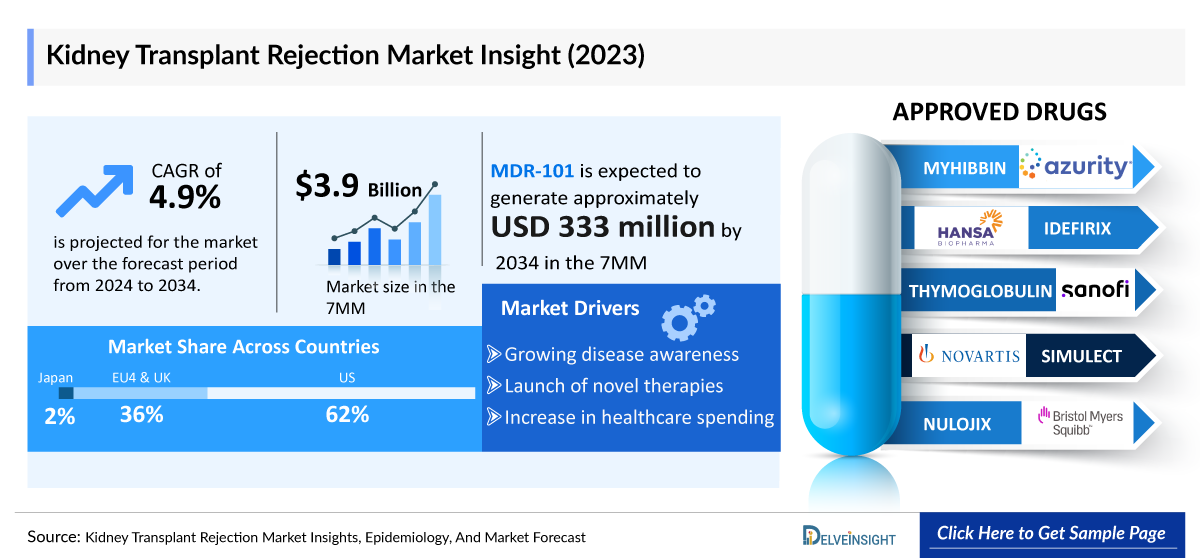
- The total Kidney Transplant Rejection Market Size in the 7MM was approximately USD 3,970 million in 2023 and is projected to increase during the forecast period (2024–2034).
- The Kidney Transplant Rejection Market Size in the US was approximately USD 2,448 million in 2023 and is anticipated to increase due to the launch of emerging Kidney Transplant Rejection therapies.
- The total Kidney Transplant Rejection Market Size of EU4 and the UK was calculated to be approximately USD 1,423 million in 2023, which was nearly 36% of the total Kidney Transplant Rejection market revenue for the 7MM.
- In 2023, France led the Kidney Transplant Rejection Market among the EU4 countries and the UK, generating approximately USD 361 million, followed by the UK, which contributed around USD 360 million.
- In 2023, the total Kidney Transplant Rejection Market Size was approximately USD 99 million in Japan which is anticipated to increase during the forecast period (2024-2034).
- Estimates suggest that MDR-101 is expected to generate approximately USD 332.8 million by 2034 in the 7MM.
Kidney Transplant Rejection Drugs Uptake
This section focuses on the uptake rate of potential Kidney Transplant Rejection drugs expected to be launched in the Kidney Transplant Rejection medicine market during 2020–2034.
Kidney Transplant Rejection Pipeline Development Activities
The Kidney Transplant Rejection therapeutics market report provides insights into different Kidney Transplant Rejection clinical trials within Phase III, Phase II, and Phase I. It also analyzes key Kidney Transplant Rejection companies involved in developing targeted therapeutics.
Pipeline development activities
The Kidney Transplant Rejection therapeutics market report covers information on collaborations, acquisitions and mergers, licensing, and patent details for emerging therapies for kidney transplant rejection.
Latest KOL Views on Kidney Transplant Rejection
To keep up with current Kidney Transplant Rejection market trends, we take KOLs and SMEs’ opinions working in the domain through primary research to fill the data gaps and validate our secondary research. Industry Experts contacted for insights on kidney transplant rejection evolving treatment landscape, patient reliance on conventional therapies, patient therapy switching acceptability, and drug uptake, along with challenges related to accessibility, including Medical/scientific writers, Medical Professionals, Professors, Directors, and Others.
DelveInsight’s analysts connected with 50+ KOLs to gather insights; however, interviews were conducted with 15+ KOLs in the 7MM. Centers like the Johns Hopkins University, Kentucky, US, University of California, US, Charité Universitätsmedizin Berlin, Germany, Paris Cité University, France, Sapienza University, Italy, University of Valencia, Spain, University of Cambridge, UK, and University of Tokyo, Japan, among others, were contacted. Their opinion helps understand and validate current and emerging therapy treatment patterns or kidney transplant rejection market trends. This will support the clients in potential upcoming novel treatments by identifying the overall scenario of the market and the unmet needs.
Physician’s View
As per the KOLs from the US, significant progress is being made in understanding and managing kidney transplant rejection, with a particular emphasis on optimizing immunosuppressive therapies. Recent studies have focused on the development of targeted treatments, such as costimulatory blockade agents, which have demonstrated potential in reducing both acute and chronic rejection episodes, ultimately improving graft survival. These therapies aim to offer better precision in managing immune responses, minimizing side effects, and enhancing long-term transplant outcomes. As research continues to evolve, these innovations hold great promise for the future of kidney transplantation.
As per the KOLs from UK, rejection episodes are unfortunately, a common challenge in kidney transplants, but they can often be mitigated with the right medications and constant surveillance. However, the real issue lies in ensuring that patients are being monitored consistently. Too many patients do not receive the level of care they require following a transplant, which places them at greater risk of rejection and graft failure. As a medical community, need to strengthen the patient pathway from the moment of transplant, improving access to specialist centers.
As per the KOLs from Japan, the issue of kidney transplant rejection remains a significant challenge in Japan, despite the advancements in transplantation techniques and immunosuppressive therapies. It is no surprise that acute rejection episodes continue to affect a proportion of kidney transplant recipients, with approximately 10–15% of patients experiencing rejection within the first year post-transplant. This issue is compounded by the growing number of individuals requiring transplants, coupled with an increase in sensitized patients and ABO-incompatible cases.
Kidney Transplant Rejection Report Qualitative Analysis
We perform Qualitative and market Intelligence analysis using various approaches, such as SWOT and Conjoint Analysis. In the SWOT analysis, strengths, weaknesses, opportunities, and threats in terms of disease diagnosis, patient awareness, patient burden, competitive landscape, cost-effectiveness, and geographical accessibility of therapies are provided. These pointers are based on the Analyst’s discretion and assessment of the patient burden, cost analysis, and existing and evolving treatment landscape.
Conjoint Analysis analyzes multiple emerging Kidney Transplant Rejection therapies based on relevant attributes such as safety, efficacy, frequency of administration, route of administration, and order of entry. Scoring is given based on these parameters to analyze the effectiveness of therapy.
To analyze the effectiveness of these therapies, have calculated their attributed analysis by giving them scores based on their ability to improve atrial and ventricular dimension/function and ability to regulate heart rate.
Further, the therapies’ safety is evaluated wherein the adverse events are majorly observed, and it sets a clear understanding of the side effects posed by the drug in the trials, which directly affects the safety of the molecule in the upcoming Kidney Transplant Rejection trials. It sets a clear understanding of the side effects posed by the drug in the trials. In addition, the scoring is also based on the route of administration, order of entry and designation, probability of success, and the addressable patient pool for each therapy. According to these parameters, the final weightage score and the ranking of the emerging therapies are decided.
Kidney Transplant Rejection Market Access and Reimbursement
DelveInsight’s ‘Kidney Transplant Rejection Market Insights, Epidemiology, and Market Forecast – 2034’ report provides a descriptive overview of the market access and reimbursement scenario of kidney transplant rejection.
ENVARSUS XR (Tacrolimus Extended-release Tablets)
ENVARSUS XR savings and support
ENVARSUS XR is committed to supporting kidney transplant patients through various means. When prescribed by a healthcare provider, it is essential for patients to have access to the medication through pharmacies and to afford it. ENVARSUS XR offers savings programs designed to assist patients with a range of insurance types. A dedicated team is available to guide how to obtain prescriptions and navigate the process of accessing the medication.
Insurance-covered patients can access cost savings on ENVARSUS XR
Eligible patients with commercial insurance may qualify for the ENVARSUS XR USD 0 co-pay card, which offers a reduced or zero co-payment option. This program is designed to assist patients in accessing ENVARSUS XR at minimal or no cost, depending on their insurance coverage and eligibility
This section includes a detailed analysis of the country-wise healthcare system for each therapy, enlightening the market access, reimbursement policies, and health technology assessments.
Scope of the Kidney Transplant Rejection Market Report
- The Kidney Transplant Rejection market report covers a segment of key events, an executive summary, and a descriptive overview of kidney transplant rejection, explaining its causes, signs and symptoms, pathogenesis, and currently available therapies.
- Comprehensive insight into the epidemiology segments and forecasts, the future growth potential of diagnosis rate, disease progression, and treatment guidelines have been provided.
- Additionally, an all-inclusive account of the current and emerging therapies and the elaborative profiles of late-stage and prominent therapies will impact the current treatment landscape.
- A detailed review of the kidney transplant rejection market, historical and forecasted market size, market share by therapies, detailed assumptions, and rationale behind our approach is included in the report, covering the 7MM drug outreach.
- The Kidney Transplant Rejection treatment market report provides an edge while developing business strategies by understanding trends through SWOT analysis and expert insights/KOL views, patient journey, and treatment preferences that help shape and drive the 7MM kidney transplant rejection market.
Kidney transplant rejection market report insights
- Kidney Transplant Rejection Patient Population
- Kidney Transplant Rejection Therapeutic Approaches
- Kidney Transplant Rejection Pipeline Analysis
- Kidney Transplant Rejection Market Size
- Kidney Transplant Rejection Market Trends
- Existing and Future Kidney Transplant Rejection Market Opportunity
Kidney transplant rejection Market report key strengths
- 11 years Forecast
- The 7MM Coverage
- Kidney Transplant Rejection Epidemiology Segmentation
- Key Cross Competition
- Attribute analysis
- Kidney Transplant Rejection Drugs Uptake
- Key Kidney Transplant Rejection Market Forecast Assumptions
Kidney Transplant Rejection Market Report Assessment
- Current Treatment Practices
- Kidney Transplant Rejection Unmet Needs
- Pipeline Product Profiles
- Kidney Transplant Rejection Market Attractiveness
- Qualitative Analysis (SWOT and Attribute Analysis)
Key Questions Answered in the Kidney Transplant Rejection Market Report
Kidney Transplant Rejection Market Insights
- What was the total Kidney Transplant Rejection market size, the market size of kidney transplant rejection by therapies, and market share (%) distribution in 2020, and what would it look like by 2034? What are the contributing factors for this growth?
- How will MDR-101 affect the treatment paradigm of kidney transplant rejection?
- How will THYMOGLOBULIN compete with other upcoming Kidney Transplant Rejection products and marketed therapies?
- Which Kidney Transplant Rejection drug is going to be the largest contributor by 2034?
- What are the pricing variations among different geographies for marketed and approved Kidney Transplant Rejection therapies?
- How would future opportunities affect the Kidney Transplant Rejection market dynamics and subsequent analysis of the associated trends?
Kidney Transplant Rejection Epidemiology Insights
- What are the disease risks, burdens, and unmet needs of kidney transplant rejection? What will be the growth opportunities across the 7MM with respect to the patient population pertaining to kidney transplant rejection?
- What is the historical and forecasted kidney transplant rejection patient pool in the United States, EU4 (Germany, France, Italy, and Spain) and the United Kingdom, and Japan?
- Out of the countries mentioned above, which country would have the highest incidence cases of kidney transplant rejection population during the forecast period (2024–2034)?
- What factors are contributing to the growth of kidney transplant rejection cases?
Current Treatment Scenario, Marketed Drugs, and Emerging Therapies
- What are the current options for the prophylaxis of kidney transplant rejection? What are the current clinical and treatment guidelines for the prevention of kidney transplant rejection?
- How many Kidney Transplant Rejection companies are developing therapies for the prevention of kidney transplant rejection?
- How many emerging Kidney Transplant Rejection therapies are in the mid-stage and late stage of development for the prevention of kidney transplant rejection?
- What are the recent novel therapies, targets, mechanisms of action, and technologies developed to overcome the limitations of existing therapies?
- What is the cost burden of current treatment on the patient?
- Patient acceptability in terms of preferred treatment options as per real-world scenarios?
- What are the accessibility issues of approved Kidney Transplant Rejection therapy in the US?
- What is the 7MM historical and forecasted Kidney Transplant Rejection market?
Reasons to Buy Kidney Transplant Rejection Report
- The Kidney Transplant Rejection Treatment Market Report will help develop business strategies by understanding the latest trends and changing treatment dynamics driving the kidney transplant rejection prophylaxis market.
- Insights on patient burden/disease incidence, evolution in diagnosis, and factors contributing to the change in the epidemiology of the disease during the forecast years.
- Understand the existing Kidney Transplant Rejection market opportunities in varying geographies and the growth potential over the coming years.
- The distribution of historical and current Kidney Transplant Rejection patient share is based on real-world prescription data in the US, EU4 (Germany, France, Italy, and Spain) and the United Kingdom, and Japan.
- Identifying upcoming Kidney Transplant Rejection companies in the market will help devise strategies to help get ahead of competitors.
- Detailed analysis and ranking of class-wise potential current and emerging therapies under the conjoint analysis section to provide visibility around leading classes.
- Highlights of Access and Reimbursement policies for kidney transplant rejection, barriers to accessibility of approved therapy, and patient assistance programs.
- To understand Key Opinion Leaders’ perspectives around the accessibility, acceptability, and compliance-related challenges of existing treatment to overcome barriers in the future.
- Detailed insights on the unmet needs of the existing market so that the upcoming Kidney Transplant Rejection companies can strengthen their development and launch strategy.