
Neurodegenerative Disease Market Summary
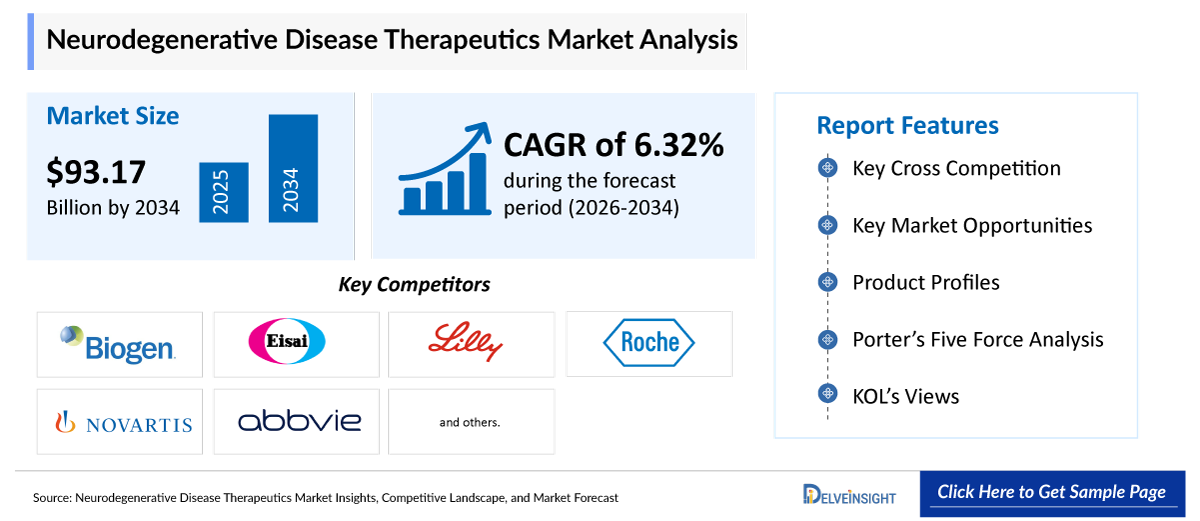
- The Neurodegenerative Disease Market Size is estimated at USD 53.94 billion in 2025 and is projected to reach USD 93.17 billion by 2034. Growth is anchored in the rising global prevalence of Alzheimer's disease, Parkinson's disease, and ALS, rapid advancement of disease-modifying biologics, and expanding investment in neuroscience research and drug development.
- The Global Neurodegenerative Disease Market Size is growing at a CAGR of 6.32% during the forecast period from 2026 to 2034.
Neurodegenerative Disease Market Trends & Insights
- By drug modality, the small molecules segment dominated the Neurodegenerative Disease market with a 55% share in 2025.
- By drug class, the cholinesterase inhibitors segment dominated the Neurodegenerative Disease market with a 28% share in 2025.
- By route of administration, the oral segment dominated the Neurodegenerative Disease market with a 62% share in 2025.
- By disease type, the Alzheimer's disease segment dominated the Neurodegenerative Disease market with a 43% share in 2025.
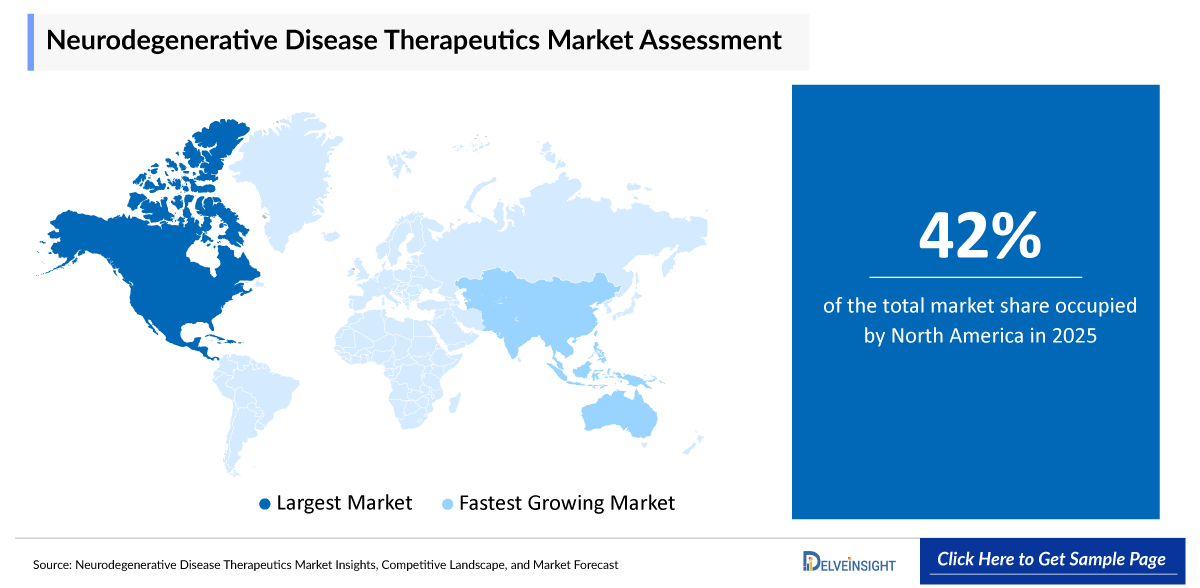
- North America dominated the global Neurodegenerative Disease market revenue with a 42% share in 2025, representing the highest regional market share globally.
Request to unlock the Sample Page of "Neurodegenerative Disease Market"
Neurodegenerative Disease Market Size
The following snapshot summarizes the principal report metrics for the Neurodegenerative Disease market.
|
Report Metrics |
Details |
|
2025 Market Size | |
|
2034 Projected Market Size | |
|
Growth Rate (2026-2034) | |
|
Largest Market |
North America |
|
Fastest Growing Market |
Asia-Pacific |
|
Market Structure |
Moderately Concentrated |
All market values are expressed in USD and represent DelveInsight estimates synthesized from primary and secondary research.
Factors Contributing to the Growth of the Neurodegenerative Disease Market
Neurodegenerative Disease Market Drivers
-
Rising Global Prevalence of Neurodegenerative Disorders
The most fundamental driver of the Neurodegenerative Disease Market is the rising global burden of chronic neurological disorders. The World Health Organization estimated that approximately 57 million people were living with dementia worldwide in 2025, the large majority of which is attributable to Alzheimer's disease, while the Parkinson's Foundation estimated more than 10 million people globally living with Parkinson's disease, with nearly 90,000 new diagnoses occurring annually in the United States alone.
As global populations age, particularly across North America, Europe, and East Asia, the pool of patients requiring long-term symptomatic and disease-modifying treatment continues to expand. Improved diagnostic capabilities and growing disease awareness are further increasing identification rates, translating directly into sustained and growing demand for Neurodegenerative Disease across the forecast period.
-
Advancements in Disease-Modifying Therapies
The development and commercialization of disease-modifying therapies is fundamentally reshaping the treatment paradigm for neurodegenerative disorders. The FDA approval of Leqembi in January 2023 marked a major milestone as the first therapy demonstrated to slow cognitive decline by targeting amyloid-beta in early-stage Alzheimer's disease, a breakthrough reinforced by the FDA approval of Eli Lilly's Kisunla in July 2024.
These approvals have shifted treatment strategy away from purely symptomatic management toward addressing underlying disease pathology, and have substantially increased pharmaceutical investment, clinical trial activity, and physician and payer engagement with amyloid- and tau-targeting monoclonal antibodies. As additional disease-modifying candidates advance through late-stage development, this shift is expected to be a durable structural driver of market growth through 2034.
-
Expanding Pipeline of RNA-Based, Gene, and Cell Therapies
A wave of advanced therapeutic modalities is opening new treatment avenues for conditions that were previously difficult to address. The FDA approval of Qalsody in April 2023 for SOD1-linked ALS demonstrated the clinical and commercial viability of antisense oligonucleotide approaches in Neurodegenerative Disease, while gene therapy and cell therapy platforms targeting neuronal regeneration and protein aggregation continue to progress through clinical development for ALS, Huntington's disease, and related disorders.
This expanding pipeline is attracting substantial industry investment and creating a new competitive frontier alongside established small-molecule and monoclonal antibody therapies, broadening the addressable market and supporting long-term growth.
-
Increasing Investment in Neuroscience Research and Drug Development
Pharmaceutical and biotechnology companies are significantly increasing research and development spending to address the substantial unmet medical need associated with Neurodegenerative Diseases. Growing funding from governments, academic institutions, and private investors is supporting the discovery of novel therapeutic targets, biomarker-driven clinical trial design, and next-generation treatment platforms.
Strategic collaborations, such as the partnership between Novartis and PTC Therapeutics advancing votoplam for Huntington's disease, illustrate how large pharmaceutical companies are pairing capital and commercial infrastructure with specialized biotechnology innovation to accelerate development timelines and expand the late-stage pipeline.
-
Accelerating Regulatory Approvals and Label Expansions
A growing wave of regulatory approvals and expansions is increasing commercial demand for Neurodegenerative Disease. In April 2025, the European Commission approved Leqembi as the first disease-modifying therapy authorized in Europe to slow cognitive decline in early Alzheimer's disease, extending access beyond the United States.
Regulatory momentum is similarly evident in Parkinson's disease and ALS, where products such as Amneal's CREXONT and Mitsubishi Tanabe's RADICAVA ORS have achieved expanded payer coverage and continued clinical validation. Each approval and label expansion creates durable, recurring demand for manufacturing, clinical support, and commercial infrastructure across the therapeutic landscape.
-
Strong Pharmaceutical and Investor Interest in Neuroscience
Surging pharmaceutical and investor interest is accelerating capital deployment across the Neurodegenerative Disease landscape. Major transactions underscore the strategic value of the space, including Shionogi's December 2025 agreement to acquire global rights to Mitsubishi Tanabe Pharma's RADICAVA franchise for approximately USD 2.5 billion, and continued co-development funding flowing into Huntington's disease, ALS, and Alzheimer's disease programs.
Large pharmaceutical companies are increasingly securing rights to late-stage neuroscience assets through licensing and acquisition, validating the sector's long-term growth potential and channeling sustained investment toward companies with differentiated disease-modifying pipelines.
Neurodegenerative Disease Overview
Neurodegenerative diseases comprise the pharmaceutical and biologic products used to treat progressive disorders characterized by the gradual degeneration and loss of neuronal structure and function within the central nervous system, including Alzheimer's disease, Parkinson's disease, and Amyotrophic Lateral Sclerosis.
Because these conditions are chronic, largely irreversible, and driven by distinct underlying pathologies such as amyloid-beta and tau accumulation, alpha-synuclein aggregation, and motor neuron degeneration, treatment approaches span symptomatic small-molecule therapies, disease-modifying monoclonal antibodies, and emerging gene and cell therapy platforms.
The Neurodegenerative Disease Market is organized by drug modality across small molecules, monoclonal antibodies, gene therapies, cell therapies, and others; by drug class, led by anti-amyloid therapies, cholinesterase inhibitors, anti-tau therapies, and NMDA receptor antagonists; by route of administration across oral, intravenous, and subcutaneous delivery; by disease type, led by Alzheimer's disease, Parkinson's disease, and ALS; and by end-user across hospitals and neurologic clinics.
Driven by an aging global population, the commercial emergence of amyloid-targeting disease-modifying therapies, and a rapidly expanding pipeline of RNA-based, gene, and cell therapy candidates, neurodegenerative diseases have become one of the most closely watched and fastest-innovating segments of the global pharmaceutical industry.
Neurodegenerative Disease Market Key Growth Drivers
- The rising global prevalence of neurodegenerative disorders is expanding the treatable patient pool, with the World Health Organization reporting approximately 57 million people living with dementia worldwide in 2025 and the Parkinson's Foundation estimating more than 10 million people living with Parkinson's disease globally.
- Advancements in disease-modifying therapies are transforming the treatment landscape, anchored by the FDA approval of Leqembi in January 2023 and Kisunla in July 2024, both targeting amyloid-beta pathology in early Alzheimer's disease.
- The expanding pipeline of RNA-based, gene, and cell therapies is creating new treatment options for previously unaddressed conditions, exemplified by the FDA approval of Qalsody in April 2023 for SOD1-linked ALS.
- Increasing investment in neuroscience research and drug development by pharmaceutical companies, biotechnology firms, governments, and research institutions is accelerating innovation and clinical trial activity.
- Accelerating regulatory approvals and label expansions, including the April 2025 European Commission approval of Leqembi as the first disease-modifying Alzheimer's therapy authorized in Europe, are increasing commercial demand.
- Growing collaboration between large pharmaceutical companies and specialized biotechnology firms, such as the Novartis and PTC Therapeutics partnership on votoplam for Huntington's disease, is broadening the late-stage pipeline.
- The convergence of demographic aging, disease-modifying innovation, and sustained R&D investment is expected to support steady, durable growth in the market through 2034.
Major Neurodegenerative Disease Companies
The Neurodegenerative Disease Competitive Landscape is led by the following active manufacturers:
- Biogen Inc.
- Eisai Co., Ltd.
- Eli Lilly and Company
- F. Hoffmann-La Roche Ltd
- Novartis AG
- AbbVie Inc.
- Amneal Pharmaceuticals, Inc.
- Mitsubishi Tanabe Pharma Corporation
- PTC Therapeutics, Inc.
- H. Lundbeck A/S, and others
For illustrative purposes, only the top 10 companies are listed in the Table of Contents. The report may include analysis and references to additional companies relevant to the market assessment.
Neurodegenerative Disease Market Restraints
Despite strong underlying momentum, the Neurodegenerative Disease Market faces material constraints. The high failure rate in clinical trials remains a persistent barrier, as many drug candidates fail during late-stage development due to inadequate efficacy or safety concerns in complex central nervous system disorders, exemplified by the FDA's August 2025 Complete Response Letter for PTC Therapeutics' vatiquinone in Friedreich's ataxia.
The blood-brain barrier continues to restrict the penetration of large-molecule biologics and many small-molecule candidates into the brain, limiting therapeutic effectiveness and constraining the design of new disease-modifying agents.
High treatment costs and uneven reimbursement for newer amyloid- and tau-targeting therapies limit adoption in price-sensitive markets, while the need for specialized diagnostic infrastructure, including amyloid PET imaging and biomarker testing, adds further complexity to patient identification and treatment initiation.
Safety monitoring requirements associated with amyloid-related imaging abnormalities (ARIA) for monoclonal antibody therapies add cost and complexity to treatment administration, and a shortage of specialized neurologists in emerging markets constrains broader adoption.
Together, these clinical, regulatory, and access-related barriers temper the pace of growth, even as the underlying drivers of demographic aging, disease-modifying innovation, and R&D investment remain firmly intact.
Neurodegenerative Disease Market Segment Analysis
The Neurodegenerative Disease Market by Drug Modality (Small Molecules, Monoclonal Antibodies, Gene Therapies, Cell Therapies, and Others), Drug Class (Anti-Amyloid Therapies, Cholinesterase Inhibitors, Anti-Tau Therapies, NMDA Receptor Antagonists, and Others), Route of Administration (Oral, Intravenous (IV), Subcutaneous, and Others), Disease Type (Alzheimer's Disease, Parkinson's Disease, Amyotrophic Lateral Sclerosis (ALS), and Others), End-Users (Hospitals, Neurologic Clinics, and Others), and Geography (North America, Europe, Asia-Pacific, and Rest of World).
-
Neurodegenerative Disease Market Segmentation By Drug Modality
Dominant Subsegment: Small Molecules.
The small molecules segment accounted for 55% of the Neurodegenerative Disease market in 2025. Small molecules remain the leading drug modality because of their well-established clinical utility, cost-effectiveness, oral bioavailability, and broad accessibility across both developed and emerging healthcare systems. These therapies are extensively used for symptomatic management of Alzheimer's disease, Parkinson's disease, and ALS, supported by strong physician familiarity and the availability of multiple generic formulations, including levodopa-based combinations and cholinesterase inhibitors.
At the same time, monoclonal antibodies are the fastest-growing modality, propelled by the commercial rise of amyloid-targeting disease-modifying therapies such as Leqembi and Kisunla, while gene and cell therapies are advancing rapidly in ALS and Huntington's disease. Nonetheless, the scale, affordability, and broad therapeutic applicability of small molecules secure the segment's leadership across the forecast period.
-
Neurodegenerative Disease Market Segmentation By Drug Class
Dominant Subsegment: Cholinesterase Inhibitors.
The cholinesterase inhibitors segment accounted for 28% of the Neurodegenerative Disease market in 2025. Cholinesterase inhibitors are the leading drug class because they remain the first-line, guideline-recommended standard of care for symptomatic management of mild-to-moderate Alzheimer's disease, with decades of established clinical use, favorable safety profiles, and broad generic availability supporting sustained prescription volumes.
Anti-amyloid therapies are the fastest-growing drug class, propelled by the commercial launches of Leqembi and Kisunla and a deep pipeline of next-generation amyloid- and tau-targeting candidates, while anti-tau therapies and NMDA receptor antagonists continue to contribute steady, recurring demand. The chronic, long-duration nature of Alzheimer's disease treatment, combined with the breadth of cholinesterase inhibitor use across earlier disease stages, secures the segment's leadership through the forecast period.
-
Neurodegenerative Disease Market By Route of Administration
Dominant Subsegment: Oral.
The oral segment accounted for 62% of the Neurodegenerative Disease market in 2025. Oral administration is the leading route because of strong patient preference, ease of self-administration, improved long-term adherence, and broad availability across hospital and outpatient care settings. Oral formulations are particularly important in chronic neurodegenerative conditions such as Parkinson's disease and Alzheimer's disease, where patients require continuous, long-duration therapy, and products such as Amneal's CREXONT extended-release carbidopa/Levodopa capsules and oral cholinesterase inhibitors exemplify this dominance.
Intravenous administration is growing quickly as monoclonal antibody infusions such as Leqembi and Kisunla expand in early Alzheimer's disease, while subcutaneous delivery, exemplified by Mitsubishi Tanabe's investigational ND0612 in Parkinson's disease, is gaining traction for continuous drug delivery. Despite this shift toward biologics, the reduced treatment burden and broad accessibility of oral therapies preserve the segment's overall leadership across the forecast period.
-
Neurodegenerative Disease Market Segmentation By Disease Type
Dominant Subsegment: Alzheimer's Disease.
The Alzheimer's disease segment accounted for 43% of the Neurodegenerative Disease market in 2025. Alzheimer's disease is overwhelmingly the leading disease type because of its rapidly increasing global prevalence, particularly among the aging population, combined with rising awareness and improved diagnostic capabilities that are enabling earlier and more frequent identification of cases. The disease represents one of the largest unmet medical needs in neurology, and the approvals of Leqembi in January 2023 and Kisunla in July 2024 have significantly expanded treatment options while increasing investment, clinical trial activity, and pharmaceutical interest.
Parkinson's disease is the fastest-growing disease type, propelled by products including Amneal's CREXONT and Mitsubishi Tanabe's investigational ND0612, while ALS continues to see innovation through RNA-based therapies such as Qalsody and edaravone-based treatments including RADICAVA ORS. Nonetheless, the depth of the Alzheimer's Disease Pipeline and the scale of recently commercialized disease-modifying therapies secure the segment's clear leadership across the forecast period.
-
Neurodegenerative Disease Market Segmentation By End-Users
Dominant Subsegment: Hospitals.
The hospitals segment accounted for 57% of the Neurodegenerative Disease market in 2025. Hospitals are the leading end-user because they serve as the primary setting for diagnosing, initiating, and administering high-cost, closely monitored therapies, including intravenous monoclonal antibody infusions that require amyloid-related imaging abnormality (ARIA) surveillance and specialty infusion capacity. Hospitals also provide the diagnostic infrastructure, including amyloid PET Imaging and cerebrospinal fluid biomarker testing, needed to identify eligible patients for disease-modifying therapies.
Neurologic clinics are growing quickly as decentralized, outpatient-based care models expand access to chronic disease management for Parkinson's disease and early-stage Alzheimer's disease, but the complexity and monitoring requirements of newer disease-modifying therapies continue to anchor hospitals as the leading end-user across the forecast period.
Neurodegenerative Disease Market Region Analysis
-
Dominant Region: North America
North America accounted for 42% of the global Neurodegenerative Disease market revenue in 2025, representing the highest regional market share globally. The region's dominance reflects a strong combination of advanced healthcare infrastructure, high disease prevalence, and rapid adoption of innovative therapies, particularly in the United States, which has been at the forefront of disease-modifying therapy approvals, including Leqembi in January 2023 and Kisunla in July 2024.
According to the Parkinson's Foundation, nearly 90,000 people are diagnosed with Parkinson's disease in the United States each year, further expanding the region's treated patient population.
North America is also leading the expanding pipeline of RNA-based, gene, and cell therapies, supported by strong biotechnology ecosystems in hubs such as Boston and San Francisco, while major pharmaceutical companies including Biogen, Eli Lilly, and Roche continue to accelerate clinical trials and biomarker discovery.
Strong reimbursement frameworks, regulatory clarity, and substantial neuroscience R&D investment anchor the region's continued leadership across the forecast period.
-
Fastest Growing Region: Asia-Pacific
Asia-Pacific is the fastest-growing region in the Neurodegenerative Disease market. The region's elevated CAGR is driven by a rapidly aging population, an increasing burden of neurological disorders, and improving access to advanced healthcare services across China, Japan, India, and South Korea. Countries in the region are witnessing a sharp rise in cases of Alzheimer's disease, Parkinson's disease, and other dementia-related conditions, significantly expanding the patient pool and driving demand for both symptomatic and disease-modifying therapies.
Multinational companies including Eli Lilly and Roche have expanded Alzheimer's and Parkinson's Disease clinical programs across Japan and China to accelerate patient recruitment and regional approvals, while government healthcare investment, including China's national neuroscience initiatives and Japan's dementia care strategies, is strengthening research and treatment accessibility across the region.
Neurodegenerative Disease Market Regional Commentary
-
North America
North America accounted for 42% of the global Neurodegenerative Disease market revenue in 2025. The United States dominates on the strength of its healthcare infrastructure, clinical-research base, FDA regulatory clarity, and the presence of leading pharmaceutical and biotechnology companies, while continued approvals of disease-modifying therapies and strong reimbursement frameworks reinforce its leadership.
-
Europe
Europe is a large and advanced regional market, supported by a well-funded healthcare system and established European Medicines Agency regulatory frameworks that facilitate accelerated approvals for high-need neurological treatments. The April 2025 European Commission approval of Leqembi, along with continued investment in neuroscience R&D by companies including Roche and Novartis, is expanding access and clinical innovation across Germany, France, the United Kingdom, Italy, and Spain.
-
Asia-Pacific
Asia-Pacific is the fastest-growing region, propelled by rising disease prevalence, expanding diagnostic and hospital infrastructure, and growing healthcare investment across China, Japan, India, South Korea, and Australia. Increasing participation in global clinical trials and rising adoption of biologics and small-molecule therapies are accelerating regional market growth.
-
Rest of World
The Rest of World region, spanning Latin America, the Middle East, and Africa, is an emerging growth frontier. Expanding neurological care infrastructure, rising awareness of disease-modifying treatment options, and gradual alignment of regulatory frameworks with global standards are broadening access, while international partnerships support the build-out of regional treatment capacity.
Neurodegenerative Disease Market Competitive Landscape
The Neurodegenerative Disease Market is classified as Moderately Concentrated. A group of large, diversified pharmaceutical companies with deep neuroscience pipelines and commercial infrastructure, including Biogen, Eisai, Eli Lilly, and Roche, anchors the top tier through disease-modifying Alzheimer's therapies, while specialized and fast-scaling companies such as Amneal Pharmaceuticals, Mitsubishi Tanabe Pharma, PTC Therapeutics, and H. Lundbeck compete through targeted Parkinson's disease, ALS, and Huntington's disease franchises, increasing competition across the fastest-growing disease segments.
The Neurodegenerative Disease Competitive Landscape can be evaluated across the following dimensions:
- Market concentration: Moderately concentrated, with large diversified neuroscience players leading and a growing field of specialized disease-focused companies.
- Leading players: Biogen, Eisai, Eli Lilly, and Roche anchor the top tier through disease-modifying Alzheimer's disease therapies and broad commercial infrastructure.
- Geographic reach: Leaders operate global commercial networks spanning North America, Europe, and Asia-Pacific, essential for supporting complex biomarker-driven diagnosis and treatment.
- Pipeline strength: Top players maintain deep pipelines spanning small molecules, monoclonal antibodies, and RNA-based, gene, and cell therapy candidates across Alzheimer's disease, Parkinson's disease, ALS, and Huntington's disease.
- Regulatory track record: Proven ability to secure approvals for complex central nervous system therapies, including Leqembi, Kisunla, Qalsody, and CREXONT, is a decisive competitive advantage.
- Strategic partnerships: Collaborations between large pharmaceutical companies and specialized biotechnology firms, such as Novartis and PTC Therapeutics on votoplam for Huntington's disease, extend pipeline reach.
- M&A activity: Active consolidation, including Shionogi's agreement to acquire Mitsubishi Tanabe Pharma's RADICAVA franchise for approximately USD 2.5 billion in December 2025, underscores the strategic value of established Neurodegenerative Disease assets.
- Manufacturing and commercial capabilities: Specialty infusion networks, biomarker-driven diagnostics, and monitoring infrastructure for amyloid-related imaging abnormalities are key competitive moats for monoclonal antibody therapies.
- Innovation focus: Amyloid- and tau-targeting monoclonal antibodies, RNA-based and antisense oligonucleotide platforms, gene and cell therapy development, and long-acting extended-release oral formulations.
Neurodegenerative Disease Market Recent Breakthroughs
- In August 2026, 28Bio launched its CNS 3D Plasticity Organoids platform to evaluate drug effects on human learning and memory functions. This advanced human cell-based model enables biopharmaceutical researchers to better assess neuroplasticity, cognitive impact, and potential therapeutic efficacy in neurodegenerative and central nervous system disorders during early-stage drug discovery.
- In December 2025, Mitsubishi Tanabe Pharma Corporation entered into an agreement with Shionogi & Co., Ltd. for the sale of global rights to its RADICAVA ORS® and IV RADICAVA (edaravone) ALS franchise for approximately USD 2.5 billion. Strategic significance: Underscores the substantial strategic value of established ALS therapeutics and reshapes the competitive ALS franchise landscape.
- In December 2025, Amneal Pharmaceuticals, Inc. announced positive interim results from its Phase 4 ELEVATE-PD study evaluating CREXONT® (carbidopa and levodopa) extended-release capsules in Parkinson's disease patients. Strategic significance: Reinforces real-world clinical evidence supporting CREXONT and strengthens Amneal's Parkinson's disease franchise.
- In April 2025, PTC Therapeutics, Inc. and Novartis AG reported positive Phase 2 PIVOT-HD study results for votoplam (PTC518) in Huntington's disease, advancing plans for a Phase 3 trial. Strategic significance: Validates the huntingtin-lowering mechanism and strengthens the late-stage Huntington's Disease Pipeline.
- In April 2025, Eisai Co., Ltd. and Biogen Inc. received European Commission approval for Leqembi, the first disease-modifying therapy authorized in Europe to slow cognitive decline in early-stage Alzheimer's disease. Strategic significance: Extends commercial access for amyloid-targeting therapy beyond the United States into major European markets.
- In July 2025, Amneal Pharmaceuticals, Inc. achieved expanded insurance coverage for CREXONT® across three major U.S. formularies, including the Veterans Administration, UnitedHealthcare, and CVS Health. Strategic significance: Increases total U.S. insurance coverage for CREXONT to over 50% of covered lives, broadening patient access.
- In July 2024, Eli Lilly and Company received U.S. FDA approval for Kisunla™ (donanemab-azbt), an amyloid-targeting monoclonal antibody for adults with early symptomatic Alzheimer's disease. Strategic significance: Strengthens the competitive field of disease-modifying Alzheimer's therapies and expands treatment options for early-stage patients.
- In August 2024, Amneal Pharmaceuticals, Inc. received U.S. FDA approval for CREXONT® (carbidopa and levodopa) extended-release capsules for the treatment of Parkinson's disease. Strategic significance: Adds a differentiated, longer-acting oral formulation to the Parkinson's disease treatment landscape.
- In April 2023, Mitsubishi Tanabe Pharma Corporation received FDA Orphan Drug Exclusivity for RADICAVA ORS® (edaravone), recognizing its oral suspension route of administration for ALS. Strategic significance: Reinforces the company's position in oral ALS therapeutics and extends market exclusivity.
- In April 2023, Biogen Inc. received U.S. FDA approval for Qalsody (tofersen), an antisense oligonucleotide therapy for SOD1-linked amyotrophic lateral sclerosis. Strategic significance: Expands the RNA-based therapeutic landscape and demonstrates clinical viability of genetically targeted ALS treatment.
- In January 2023, Eisai Co., Ltd. and Biogen Inc. received U.S. FDA approval for Leqembi, targeting amyloid-beta in early Alzheimer's disease. Strategic significance: Represents a major milestone in disease-modifying approaches and establishes the commercial template for amyloid-targeting therapy.
Neurodegenerative Disease Market Segmentation
-
Neurodegenerative Disease Market by Drug Modality
- Small Molecules
- Monoclonal Antibodies
- Gene Therapies
- Cell Therapies
- Other
-
Neurodegenerative Disease Market by Drug Class
- Anti-Amyloid Therapies
- Cholinesterase Inhibitors
- Anti-Tau Therapies
- NMDA Receptor Antagonists
- Others
-
Neurodegenerative Disease Market by Route of Administration
- Oral
- Intravenous (IV)
- Subcutaneous
- Others
-
Neurodegenerative Disease Market by Disease Type
- Alzheimer's Disease
- Parkinson's Disease
- Amyotrophic Lateral Sclerosis (ALS)
- Others
-
Neurodegenerative Disease Market by End-Users
- Hospitals
- Neurologic Clinics
- Others
Neurodegenerative Disease Market by Geography
- North America Neurodegenerative Disease Market
- United States Neurodegenerative Disease Market Size in USD million (2023-2034)
- Canada Neurodegenerative Disease Market Size in USD million (2023-2034)
- Mexico Neurodegenerative Disease Market Size in USD million (2023-2034)
- Europe Neurodegenerative Disease Market
- Germany Neurodegenerative Disease Market Size in USD million (2023-2034)
- United Kingdom Neurodegenerative Disease Market Size in USD million (2023-2034)
- France Neurodegenerative Disease Market Size in USD million (2023-2034)
- Italy Neurodegenerative Disease Market Size in USD million (2023-2034)
- Spain Neurodegenerative Disease Market Size in USD million (2023-2034)
- Rest of Europe Neurodegenerative Disease Market Size in USD million (2023-2034)
- Asia-Pacific Neurodegenerative Disease Market
- China Neurodegenerative Disease Market Size in USD million (2023-2034)
- Japan Neurodegenerative Disease Market Size in USD million (2023-2034)
- India Neurodegenerative Disease Market Size in USD million (2023-2034)
- Australia Neurodegenerative Disease Market Size in USD million (2023-2034)
- South Korea Neurodegenerative Disease Market Size in USD million (2023-2034)
- Rest of Asia-Pacific Neurodegenerative Disease Market Size in USD million (2023-2034)
- Rest of the World (RoW) Neurodegenerative Disease Market
- Middle East Neurodegenerative Disease Market Size in USD million (2023-2034)
- Africa Neurodegenerative Disease Market Size in USD million (2023-2034)
- South America Neurodegenerative Disease Market Size in USD million (2023-2034)
Neurodegenerative Disease Market Recent Industry Trends and Milestones (2023-2026):
|
Category |
Key Developments |
|
Neurodegenerative Disease Market Product Approval |
Regulatory momentum is expanding commercial demand for disease-modifying therapies. The FDA approved Leqembi in January 2023 and Kisunla in July 2024 for early Alzheimer's disease, while the European Commission approved Leqembi in April 2025, extending access across Europe. Qalsody was approved for SOD1-ALS in April 2023, and CREXONT was approved for Parkinson's disease in August 2024. Each approval creates durable demand for manufacturing, clinical support, and specialty distribution infrastructure across the therapeutic landscape. |
|
Neurodegenerative Disease Market Expansion |
Companies broadened clinical and commercial capacity across the value chain. Amneal expanded CREXONT insurance coverage to over 50% of U.S. covered lives, Mitsubishi Tanabe presented an expanding RADICAVA ORS real-world evidence base at major neurology conferences, and Novartis and PTC Therapeutics advanced Phase 3 planning for votoplam in Huntington's disease. Decentralized, outpatient-based neurologic clinic care continued to expand alongside hospital-based infusion capacity for monoclonal antibody therapies. |
|
Neurodegenerative Disease Market Investment |
Capital and consolidation activity accelerated. Shionogi agreed to acquire Mitsubishi Tanabe Pharma's RADICAVA franchise for approximately USD 2.5 billion in December 2025, while Eli Lilly, Biogen, Eisai, and Roche continued substantial R&D investment in amyloid- and tau-targeting pipelines. Novartis expanded its collaboration funding with PTC Therapeutics following positive Huntington's disease trial results. |
|
Company Strategy |
Biogen Inc.: Portfolio expansion across Alzheimer's disease and RNA-based ALS therapies, reinforced by the Leqembi collaboration with Eisai and the Qalsody launch. Eisai Co., Ltd.: Global commercialization leadership for Leqembi across the United States, Europe, and Japan. Eli Lilly and Company: Aggressive investment in amyloid-targeting monoclonal antibodies following the Kisunla approval. F. Hoffmann-La Roche Ltd: Continued Alzheimer's and Parkinson's disease pipeline expansion and rare-disease partnership with PTC Therapeutics. Novartis AG: Huntington's disease pipeline expansion through the PTC Therapeutics collaboration. AbbVie Inc.: Sustained NMDA receptor-targeted Alzheimer's disease portfolio. Amneal Pharmaceuticals, Inc.: Parkinson's disease franchise growth through CREXONT coverage expansion. Mitsubishi Tanabe Pharma Corporation: ALS franchise value realization through the RADICAVA divestiture to Shionogi. PTC Therapeutics, Inc.: Huntington's disease pipeline advancement through the Novartis partnership. H. Lundbeck A/S: Continued focus on symptomatic neurological therapeutics and adjunct Parkinson's disease treatment. |
|
Emerging Technologies |
Monoclonal antibody-based immunotherapy targeting amyloid-beta and tau remains the leading edge of Alzheimer's disease innovation, while antisense oligonucleotide and RNA-splicing platforms are expanding treatment options in ALS and Huntington's disease. Continuous subcutaneous drug delivery systems, such as Mitsubishi Tanabe's investigational ND0612 in Parkinson's disease, and extended-release oral formulations are improving patient adherence, while biomarker-driven clinical trial design and early diagnostic tools are accelerating patient identification and treatment initiation. |
Neurodegenerative Disease Market Startup Funding and Investment Trends
Investment in the Neurodegenerative Disease ecosystem has concentrated on disease-modifying Alzheimer's therapies, RNA-based and gene therapy platforms for ALS and Huntington's disease, and cell-based neuronal regeneration approaches. The following company illustrates recent funding and investment activity and technology focus.
|
Company |
Total Funding |
Funding Stage |
Main Offering |
Core Technology |
|
Neurona Therapeutics |
USD 120 million |
Growth venture |
NRTX-1001 cell therapy |
Neurological disorders and epilepsy treatment |
|
Request for unlocking the report of the @ Neurodegenerative Disease Market Insights | ||||
Capital is flowing toward companies that secure differentiated disease-modifying mechanisms and advance late-stage neuroscience assets. Shionogi's approximately USD 2.5 billion agreement to acquire Mitsubishi Tanabe Pharma's RADICAVA franchise underscores the strategic value of established ALS therapeutics, while Novartis' continued funding of the PTC Therapeutics Huntington's disease collaboration signals confidence in RNA-based and huntingtin-lowering approaches.
Emerging companies advancing cell-based neuronal regeneration platforms are also attracting venture investment. Collectively, these investments signal conviction that disease-modifying innovation, biomarker-driven precision neurology, and expanded access to advanced therapies will define the next phase of competitive advantage in the global Neurodegenerative Disease market.
Key Takeaways from the Neurodegenerative Disease Market Report Study
- Market size analysis for the current Neurodegenerative Disease Market Size (2025), and market forecast for 9 years (2026 to 2034).
- Top key product/technology developments, mergers, acquisitions, partnerships, and joint ventures that happened over the last 3 years.
- Key companies dominating the global Neurodegenerative Disease Market.
- Various opportunities available for competitors in the Neurodegenerative Disease Market space.
- What are the top-performing segments in 2025? How will these segments perform in 2034?
- Which are the top-performing regions and countries in the current Neurodegenerative Disease market scenario?
- Which are the regions and countries where companies should concentrate their opportunities for Neurodegenerative Disease market growth in the future?
Target audience who can benefit from this Neurodegenerative Disease market report study
- Neurodegenerative Disease product providers
- Research organizations and consulting companies
- Neurodegenerative Disease-related organizations, associations, forums, and other alliances
- Government and corporate offices
- Start-up companies, venture capitalists, and private equity firms
- Distributors and traders dealing in Neurodegenerative Disease
- Various end-users who want to know more about the Neurodegenerative Disease market and the latest technological developments in the Neurodegenerative Disease market.
Stay updated with us for Recent Articles @ New DelveInsight Blogs

