Persistent Corneal Epithelial Defect (PCED) Insights and Trends
- PCED is a chronic ocular surface disorder characterised by failure of corneal epithelial healing beyond 10–14 days. It reflects the impaired regenerative capacity of the cornea and is commonly associated with underlying ocular or systemic conditions affecting epithelial integrity.
- PCED is associated with a lack of reliable biomarkers and objective tools to effectively monitor epithelial healing. This limitation hinders accurate prediction of disease progression, complicates standardised assessment, and creates challenges in ensuring consistent evaluation and monitoring across diverse patient populations and clinical settings.
- If unresolved, PCED may progress to corneal ulceration, stromal thinning, scarring, and potential perforation, leading to vision impairment. Chronic epithelial defects also increase susceptibility to secondary infections, highlighting the importance of early identification and understanding of underlying pathological mechanisms.
- The actual incidence of PCED is unknown. However, based on the annual occurrence of its underlying conditions, studies have estimated that the total incidence of PCED is fewer than 200,000 cases in the United States, classifying it as an orphan disease.
- The emerging treatment landscape for PCED is advancing with several promising investigational therapies, including cenegermin (OXERVATE), ST266, and other novel candidates being developed by companies such as Dompe Farmaceutici and Noveome Biotherapeutics, aiming to address unmet needs and improve corneal healing outcomes.
- With no approved therapies currently available, the evolving development pipeline is anticipated to drive significant innovation and growth in the PCED market between 2026 and 2036.
Persistent Corneal Epithelial Defect (PECD) Market Size and Forecast in the 7MM
- 2025 PCED Market Size: ~USD XX million
- 2036 Projected PCED Market Size: ~USD XX million
- PCED Growth Rate (2026–2036): XX% CAGR
DelveInsight's ‘Persistent Corneal Epithelial Defect (PCED) Market Insights, Epidemiology and Market Forecast – 2036’ report delivers an in-depth understanding of the PCED, historical and forecasted epidemiology, as well as the PCED market trends in the United States, EU4 (Germany, Spain, Italy, and France) and the United Kingdom, and Japan.
The PCED market report delivers a comprehensive analysis of the current treatment landscape, including standards of care, clinical practices, and evolving therapeutic algorithms. It evaluates PCED patient burden trends, revenue & market share dynamics, peak patient share & therapy uptake analysis, and provides an in-depth market size assessment, and growth rate projections (Historical & Forecast 2022–2036) across global regions. The report highlights key unmet medical needs in PCED and maps the competitive and clinical landscape to uncover high‑value opportunities, providing a clear outlook on future market growth potential.
|
Study Period |
2022–2036 |
|
Historical Year |
2022–2025 |
|
Forecast Period |
2026–2036 |
|
Base Year |
2026 |
|
Geographies Covered |
|
|
PCED Market CAGR (Forecast period) |
XX% (2026–2036) |
|
PCED Epidemiology Segmentation Analysis |
Patient Burden Assessment
|
|
PCED Companies |
|
|
PCED Therapies |
|
|
PCED Market |
Segmented by
|
|
Analysis |
|
|
|
Key Factors Driving the Persistent Corneal Epithelial Defect (PCED) Market
Rising Prevalence of Systemic Diseases
The increasing incidence of diabetes and other systemic disorders is contributing to a higher burden of PCED by impairing corneal innervation and delaying epithelial wound healing. As these underlying conditions become more common, the number of patients at risk of developing persistent corneal defects is expected to rise, expanding the need for effective therapeutic interventions across major markets.
Supportive Regulatory Environment
Favourable regulatory incentives, including orphan drug designations and expedited review pathways, are promoting investment in innovative ophthalmic therapies. These measures are encouraging the development of novel treatments targeting corneal healing and regeneration, thereby strengthening the PCED pipeline and supporting future market expansion.
Severe Complications and Visual Impairment Risks
Delayed corneal epithelial healing in PED can lead to progressive stromal ulceration, infection risk, corneal scarring, and vision impairment. Existing treatment strategies primarily focus on symptom management rather than actively stimulating epithelial regeneration, creating a significant need for disease-modifying therapies capable of accelerating tissue repair and improving long-term visual outcomes.
Shortage of Objective Diagnostic and Monitoring Tools
PED is associated with a lack of reliable biomarkers and objective tools to effectively monitor epithelial healing. This limitation hinders accurate prediction of disease progression, complicates standardized assessment, and creates challenges in ensuring consistent evaluation and monitoring across diverse patient populations and clinical settings.
Persistent Corneal Epithelial Defect (PCED) Understanding
Persistent Corneal Epithelial Defect (PCED) Overview
PCED are a challenging ocular surface disorder characterised by the failure of the corneal epithelium to heal within the expected timeframe, typically despite conventional treatment. PCED can arise secondary to a variety of conditions, including neurotrophic keratopathy, dry eye disease, corneal infections, chemical injuries, systemic diseases such as diabetes, and post-surgical complications. If left untreated, PCED may lead to corneal ulceration, stromal melting, scarring, vision loss, and, in severe cases, corneal perforation.
Diagnosis is primarily based on clinical examination, with persistent epithelial defects identified through slit-lamp biomicroscopy and fluorescein staining, which highlights areas of non-healing epithelium. Additional assessments, including corneal sensitivity testing, ocular surface evaluation, and advanced imaging techniques, may help determine the underlying cause and severity of the condition. Early diagnosis and timely intervention are critical to prevent disease progression and preserve visual function, particularly in patients with neurotrophic or other high-risk ocular surface disorders.
Further details are provided in the report.
Current Persistent Corneal Epithelial Defect (PCED) Treatment Landscape
Current management relies largely on supportive and symptomatic approaches, including preservative-free artificial tears, therapeutic contact lenses, punctal occlusion, amniotic membrane transplantation, autologous serum eye drops, and tarsorrhaphy in severe cases. Treatment of associated conditions such as neurotrophic keratopathy, dry eye disease, infection, or diabetes is also essential for successful healing. While therapies such as cenegermin have demonstrated efficacy in specific underlying conditions, treatment options for PCED remain limited and are often associated with variable outcomes. Consequently, the current therapeutic landscape continues to be characterised by significant unmet needs, highlighting the demand for novel regenerative and disease-modifying therapies capable of accelerating corneal repair, restoring ocular surface integrity, and improving long-term visual outcomes.
Further details related to country-based variations are provided in the report.
Persistent Corneal Epithelial Defect (PCED) Unmet Needs
The section “unmet needs of PCED” outlines the critical gaps between the current state of patient care, diagnosis, and the ideal & effective management of the disease. It highlights the obstacles experienced by patients, clinicians, and researchers and identifies potential solutions for future progress.
-
Lack of Approved Targeted Therapies for PCED
-
Limited Efficacy in Achieving Rapid and Durable Corneal Healing
-
Need for Regenerative Therapies Addressing Underlying Disease Mechanisms, and others…..
Note: Comprehensive unmet needs insights in PCED and their strategic implications are provided in the full report.
Persistent Corneal Epithelial Defect (PCED) Epidemiology
Key Findings from Persistent Corneal Epithelial Defect (PCED) Epidemiological Analysis and Forecast
-
In the United States, PCED is reported annually in approximately 7,558 patients undergoing corneal transplantation and in 2,480 to 5,257 patients undergoing diabetic vitrectomy. The risk of developing PCED is further increased by diabetic keratopathy, a complication affecting an estimated 47%–64% of individuals with diabetes.
-
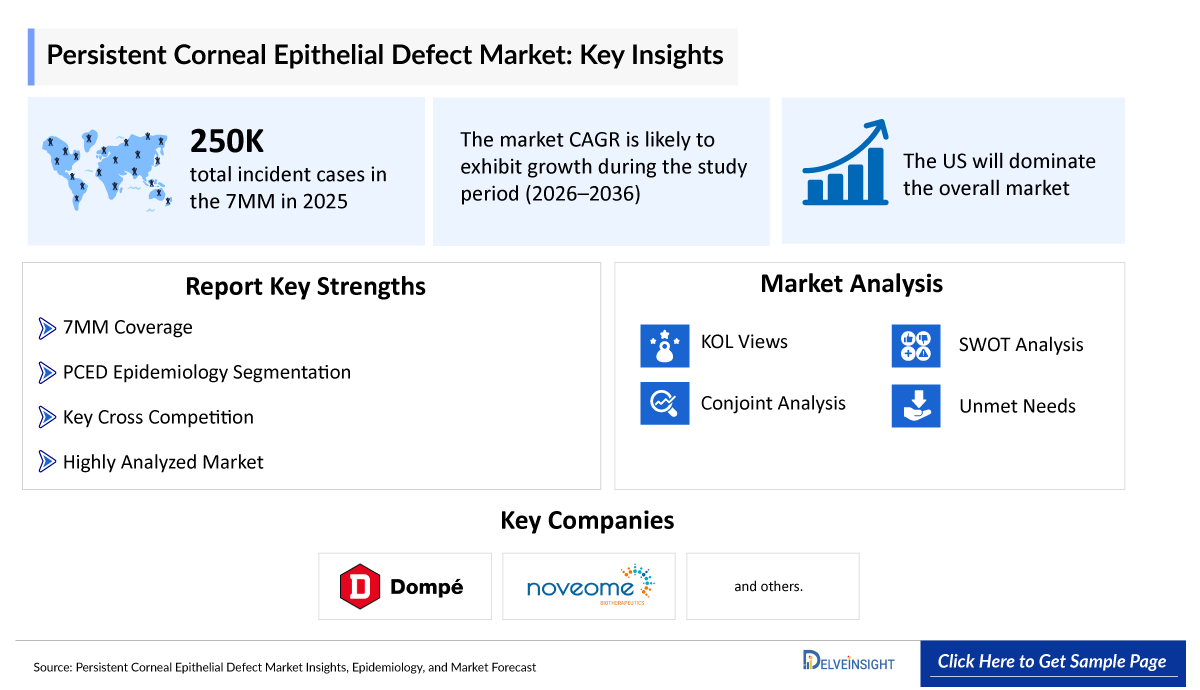
As per DelveInsight analysis, the total incident cases of PCED in the 7MM were estimated to be more than 250,000 cases in 2025 and are projected to increase further over the forecast period from 2026 to 2036.
-
According to estimates based on DelveInsight’s analysis, the United States accounted for approximately 45% of the total incident cases of Persistent Epithelial Defect in the 7MM in 2025, and this proportion is expected to increase further by 2036.
-
According to DelveInsight's estimates, males constitute more than 60% of total PCED cases across the 7MM, indicating a clear male predominance.
-
According to DelveInsight’s estimates, Germany accounted for the highest number of incident cases within the EU4 and the UK, followed by France, reflecting a comparatively greater disease burden in these countries.
- In 2025, the United States accounted for the highest number of incident cases of PED among the 7MM, whereas Spain reported the lowest incidence, highlighting notable regional differences in disease burden and epidemiological distribution.
According to etiology-specific incident cases of PED, the majority of cases in the United States in 2025 were attributed to inflammatory diseases (48%), while the lowest proportion was associated with epithelial or limbal stem cell deficiency.
Persistent Corneal Epithelial Defect (PCED) Drug Analysis & Competitive Landscape
The PCED drug chapter provides a detailed, market-focused review of the emerging pipeline across Phase I–III clinical trials. It covers the mechanism of action, clinical trial data, regulatory approvals, patents, collaborations, strategic partnerships, and upcoming key catalysts for each therapy, along with their advantages, limitations, and recent developments. This section offers critical insights into the PCED treatment landscape, supporting market assessment, competitive analysis, and growth forecasting for the PCED therapeutics market.
Persistent Corneal Epithelial Defect (PCED) Pipeline Analysis
Cenegermin (OXERVATE): Dompe Farmaceutici
Cenegermin is a recombinant human nerve growth factor that promotes corneal healing, epithelial regeneration, and nerve restoration through topical ophthalmic administration. Approved for the treatment of neurotrophic keratitis–associated persistent epithelial defects, it is currently being evaluated in a Phase III clinical trial for PCED.
It is approved for neurotrophic keratitis-associated persistent epithelial defects and promotes corneal healing, epithelial regeneration, and nerve restoration through topical ophthalmic administration.
The launch of emerging therapies such as Cenegermin (OXERVATE) and ST266 is expected to significantly expand treatment options for PED patients and contribute to future market growth.
ST266: Noveome Biotherapeutics
ST266, developed by Noveome Biotherapeutics, is an investigational cell-free biologic secretome therapy comprising multiple growth factors and cytokines that are intended to promote corneal healing, reduce inflammation, and enhance epithelial regeneration in PCED. Preclinical studies have shown that ST266 facilitates corneal re-epithelialization while mitigating ocular inflammation in injured corneas. In June 2020, the company reported positive Phase II clinical trial results supporting the potential of ST266 for the treatment of PCED.
|
Table 2: Competitive Landscape of Pipeline Drugs | ||||||
|
Drug Name |
Company |
Highest Phase |
Indication |
RoA |
MoA |
Anticipated Launch in the US |
|
Cenegermin (OXERVATE) |
Dompe Farmaceutici |
III |
PCED |
Topical |
Neuron stimulants |
Information is available in the full report |
|
ST266 |
Noveome Biotherapeutics |
II |
PCED |
Topical |
SIRT1 protein stimulant |
Information is available in the full report |
|
Note: Launch insights are provisional and may change with future report updates or the occurrence of major key catalysts. | ||||||
Note: Detailed emerging therapies assessment will be provided in the final report.
Persistent Corneal Epithelial Defect (PCED) Key Players, Market Leaders and Emerging Companies
- Dompe Farmaceutici
- Noveome Biotherapeutics, and others
Persistent Corneal Epithelial Defect (PCED) Drug Updates
- In June 2026, Dompé initiated a Phase III clinical trial (Orunea) evaluating cenegermin-bkbj for Persistent Corneal Epithelial Defect (PCED). The multicenter study is expected to enroll approximately 150 patients and aims to assess the efficacy of cenegermin in achieving complete corneal epithelial healing. This represents one of the most significant late-stage clinical developments in the PCED treatment landscape.
- In March 2026, New evidence reinforced the clinical value of cenegermin in corneal nerve regeneration and restoration of corneal sensation. A systematic literature review demonstrated continued interest in nerve growth factor–based approaches, supporting the role of biologic therapies in addressing underlying disease mechanisms rather than providing symptomatic management alone.
- Additionally, preclinical studies showed that ST266 reduced ocular inflammation in injured corneas while promoting corneal re-epithelialization, supporting its potential as a regenerative treatment approach for PCED.
Persistent Corneal Epithelial Defect (PCED) Market Outlook
Persistent Corneal epithelial defects, though seemingly small, require careful attention and effective treatment for optimal healing and prevention of complications. The treatment and management of these defects involve a multifaceted approach that combines innovative techniques and patient-centred care. From the simple yet powerful act of frequent lubrication with eye drops to promote healing, to the implementation of therapeutic bandage contact lenses that serve as guardians of the delicate cornea, every step aims to restore the epithelium's integrity. The incorporation of topical medications, such as antibiotics to thwart potential infections and cycloplegic agents to soothe discomfort, showcases the comprehensive nature of the treatment.
The evolving pipeline for PED remains relatively limited despite substantial unmet clinical demand and absence of approved therapies. Expanding research into novel ophthalmic biologics, regenerative medicines, RNA-based therapeutics, and epithelial healing agents is essential to improve treatment outcomes, reduce complications, and potentially reshape the future management landscape of PED.
Many available supportive treatments for PED do not directly address the underlying biological mechanisms responsible for impaired epithelial healing, including inflammation, neurotrophic dysfunction, or cellular repair abnormalities. This therapeutic gap creates opportunities for innovative regenerative and molecular-based therapies capable of targeting disease-driving pathways and enhancing corneal surface restoration.
In conclusion, PCED management currently relies primarily on preservative-free lubricants and supportive care; however, these approaches are often insufficient to achieve complete corneal healing. The growing prevalence of conditions that impair corneal repair, coupled with limited treatment options, underscores a significant unmet need for effective therapies. Increasing research activity, a strengthening pipeline of novel drugs and devices, orphan disease recognition, and supportive regulatory incentives are expected to drive the development of innovative treatments aimed at promoting corneal healing, preventing disease progression, and reducing the need for surgical intervention.
Overall, the introduction of novel regenerative and disease-targeted therapies, the advancement of pipeline candidates with differentiated mechanisms of action, improving diagnostic and clinical management practices, and increasing awareness of the long-term clinical burden of PCED are expected to drive steady market growth across the 7MM during 2026–2036. These factors are anticipated to create significant commercial opportunities for both emerging therapies and late-stage pipeline assets.
-
In 2025, the United States accounted for the largest share of the 7MM PCED market and is projected to grow at a significant CAGR through 2036.
Further details will be provided in the report….
Drug Class/Insights into Leading Emerging Therapies in Persistent Corneal Epithelial Defect (PCED) (2022–2036 Forecast)
The PCED market comprises enzyme replacement therapies, next-generation biologics, and emerging small molecules/cell-based approaches, each targeting different aspects of disease biology linked to ALPL dysfunction and impaired bone mineralisation.
-
Neurotrophic and regenerative therapies: Cenegermin (OXERVATE) promotes corneal nerve regeneration and epithelial healing, while emerging candidates such as ST266 aim to accelerate corneal repair and improve healing outcomes through regenerative mechanisms.
Persistent Corneal Epithelial Defect (PCED) Drug Uptake
This section focuses on the uptake rate of potential drugs expected to be launched in the market during the forecast period (2026–2036). The analysis covers the PCED drug’s uptake, performance at peak, factors affecting performance during prime years of growth, patient uptake by therapy, and anticipated sales generated by each drug.
The future PCED treatment landscape is expected to evolve with the emergence of regenerative biologics, growth factor-based therapies, and novel corneal healing approaches. Investigational therapies such as ST266 and other regenerative candidates may achieve meaningful uptake due to their potential to accelerate epithelial healing and restore ocular surface integrity. In the longer term, advanced regenerative and cell-based therapies could offer more durable treatment benefits by addressing the underlying mechanisms of impaired corneal repair, although their adoption will depend on successful clinical validation and regulatory approval.
Detailed insights of emerging therapies' drug uptake is included in the report
Market Access and Reimbursement of Approved Therapies in Persistent Corneal Epithelial Defect (PCED)
Reimbursement is a crucial factor that affects the drug’s access to the market. Often, the decision to reimburse comes down to the price of the drug relative to the benefit it produces in treated patients. To reduce the healthcare burden of these high-cost therapies, many payment models are being considered by payers and other industry insiders.
NOTE: Further Details are provided in the final report….
Persistent Corneal Epithelial Defect (PCED) Therapies Price Scenario & Trends
Pricing and analogue assessment of PCED therapies highlight evolving price dynamics structures. This section summarises the cost of approved treatments, the closest and most appropriate analogue selection for emerging therapies, and the understanding of how pricing influences market access, adherence, and long-term uptake.
Industry Experts and Physician Views for Persistent Corneal Epithelial Defect (PCED)
To keep up with PCED market trends, we take Key Opinion Leaders (KOLs) and Subject Matter Experts (SMEs) opinions working in the domain through primary research to fill the data gaps and validate our secondary research. Industry experts were contacted for insights on the PCED emerging therapies, evolving treatment landscape, patient adherence to conventional therapies, therapy switching trends, drug adoption and uptake, accessibility challenges, and epidemiology and real-world prescription patterns in PCED, including MD, PhD, Instructor, Postdoctoral Researcher, Professor, Researcher, and others.
DelveInsight’s analysts connected with 15+ KOLs to gather insights at the country level. Centres such as the Metabolic Research Unit, Shriners Hospital, University of Liverpool, and Fujita Health University of Medicine, etc. were contacted. Their opinion helps understand and validate current and emerging PCED therapies, highlight unmet medical needs, provide epidemiological context, and support strategic decisions for market access, therapy adoption, and pipeline prioritisation in PCED.
|
Region |
Key Opinion Leaders (KOLs) and Subject Matter Experts (SMEs) |
|
United States |
“PCED remains a significant unmet need in ophthalmology, as currently available treatments often fail to achieve rapid and sustained corneal healing, particularly in patients with neurotrophic keratopathy and severe ocular surface disease.” |
|
United Kingdom |
“Early intervention is critical to prevent vision-threatening complications, including corneal ulceration, stromal melting, scarring, and perforation, which can result in irreversible vision loss.” |
Qualitative Analysis: SWOT and Conjoint Analysis
We perform qualitative and market Intelligence analysis using various approaches, such as SWOT analysis and conjoint analysis.
In the SWOT analysis of PCED, strengths, weaknesses, opportunities, and threats in terms of disease diagnosis, patient awareness, patient burden, competitive landscape, cost-effectiveness, and geographical accessibility of therapies are provided.
Conjoint analysis analyses emerging therapies based on relevant attributes such as safety, efficacy, frequency of administration, route of administration, and order of entry. Scoring is given based on these parameters to analyse the effectiveness of therapy.
The team of analysts analyses promising emerging therapies based on relevant attributes such as safety, efficacy, frequency of administration, route of administration, and order of entry. In efficacy, the trial’s primary and secondary outcome measures are evaluated, whereas the therapies’ safety is evaluated, wherein the acceptability, tolerability, and adverse events are mainly observed. In addition, the scoring is also based on the route of administration, order of entry, probability of success, and the addressable patient pool for each therapy. According to these parameters, the final weightage score and the ranking of the emerging therapies are decided.
Scope of the Report
- The report covers a segment of key events, an executive summary, a descriptive overview of PCED, explaining their causes, signs and symptoms, pathogenesis, and currently available treatments.
- Comprehensive insight has been provided into the epidemiology segments and forecasts, the future growth potential of the diagnosis rate, and disease progression along treatment guidelines.
- Additionally, an all-inclusive account of both the current and emerging treatments, along with the elaborative profiles of late-stage and prominent therapies, will have an impact on the current treatment landscape.
- A detailed review of the PCED market, historical and forecasted market size, market share by therapies, detailed assumptions, and rationale behind our approach is included in the report, covering the 7MM drug outreach.
- The report provides an edge while developing business strategies by understanding trends through SWOT analysis and expert insights/KOL views, patient journey, and treatment preferences that help in shaping and driving the 7MM PCED market.
Report Insights
- Persistent Corneal Epithelial Defect (PCED) Patient Population Forecast
- Persistent Corneal Epithelial Defect (PCED) Therapeutics Market Size
- Persistent Corneal Epithelial Defect (PCED) Pipeline Analysis
- Persistent Corneal Epithelial Defect (PCED) Market Size and Trends
- Persistent Corneal Epithelial Defect (PCED) Market Opportunity (Current and forecasted)
Report Key Strengths
- Epidemiology‑based (Epi‑based) Bottom‑up Forecasting
- Artificial Intelligence (AI)-Enabled Market Research Report
- 11-Year Forecast
- Persistent Corneal Epithelial Defect (PCED) Market Outlook (North America, Europe, Asia-Pacific)
- Patient Burden Trends (By Geography)
- Persistent Corneal Epithelial Defect (PCED) Treatment Addressable Market (TAM)
- Persistent Corneal Epithelial Defect (PCED) Competitive Landscape
- Persistent Corneal Epithelial Defect (PCED) Major Companies Insights
- Persistent Corneal Epithelial Defect (PCED) Price Trends and Analogue Assessment
- Persistent Corneal Epithelial Defect (PCED) Therapies Drug Adoption/Uptake
- Persistent Corneal Epithelial Defect (PCED) Therapies Peak Patient Share Analysis
Report Assessment
- Persistent Corneal Epithelial Defect (PCED) Current Treatment Practices
- Persistent Corneal Epithelial Defect (PCED) Unmet Needs
- Persistent Corneal Epithelial Defect (PCED) Clinical Development Analysis
- Persistent Corneal Epithelial Defect (PCED) Emerging Drugs Product Profiles
- Persistent Corneal Epithelial Defect (PCED) Market Attractiveness
- Persistent Corneal Epithelial Defect (PCED) Qualitative Analysis (SWOT and conjoint analysis)
FAQs
Market Insights
- What was the PCED market size, the market size by therapies, market share (%) distribution in 2025, and what would it look like by 2036? What are the contributing factors for this growth?
- What are the anticipated pricing variations among different geographies for the emerging therapies in the future?
- What can be the future treatment paradigm of PCED?
- What are the disease risks, burdens, and unmet needs of PCED? What will be the growth opportunities across the 7MM concerning the patient population with PCED?
- Who is the major future competitor in the market, and how will the competitors affect their market share?
- What are the current options for the treatment of PCED? What are the current guidelines for treating PCED in the US, Europe, and Japan?
Reasons to Buy
- The report will help in developing business strategies by understanding the latest trends and changing treatment dynamics driving the PCED market.
- Bottom-up forecasting builds from the affected population to product forecasts, delivering a robust, data-driven approach ideal for new therapies and novel classes.
- Insights on patient burden/disease incidence, evolution in diagnosis, and factors contributing to the change in the epidemiology of the disease during the forecast years.
- Understand the existing market opportunities in varying geographies and the growth potential over the coming years.
- Identifying strong upcoming players in the market will help devise strategies to help get ahead of competitors.
- Detailed analysis and ranking of class-wise potential current and emerging therapies under the conjoint analysis section to provide visibility around leading classes.
- To understand KOLs’ perspectives on the accessibility, acceptability, and compliance-related challenges of existing treatment to overcome barriers in the future.
- Detailed insights into the unmet needs of the existing market so that the upcoming players can strengthen their development and launch strategy.
- This Artificial Intelligence (AI)-enabled report summarises and simplifies complex datasets within the report into clear, actionable insights for stakeholders, investors, and healthcare providers, enabling faster, data-driven decisions.
-market.png&w=256&q=75)