RNAi Technology Market Summary
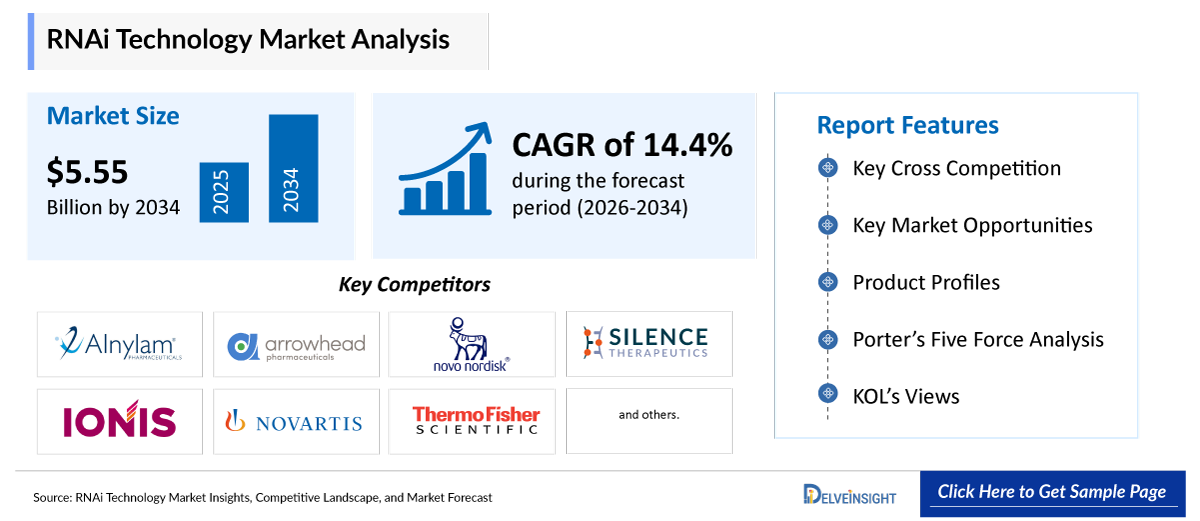
- The RNAi Technology Market Size is estimated at USD 1.65 billion in 2025 and is projected to reach USD 5.55 billion by 2034. Growth is anchored in a rapidly expanding pipeline of approved siRNA therapeutics, breakthroughs in targeted delivery, and the widespread use of RNAi in drug discovery and functional genomics.
- The Global RNAi Technology Market Size is growing at a CAGR of 14.4% during the forecast period from 2026 to 2034.
RNAi Technology Market Trends & Insights
- By molecule type, the siRNA segment dominated the RNAi Technology market with a 68% share in 2025.
- By application, the drug discovery and development segment dominated the RNAi Technology market with a 69% share in 2025.
- By delivery technology, the GalNAc conjugate segment dominated the RNAi Technology market with a 46% share in 2025.
- By end user, the pharmaceutical and biotechnology companies segment dominated the RNAi Technology market with a 64% share in 2025.
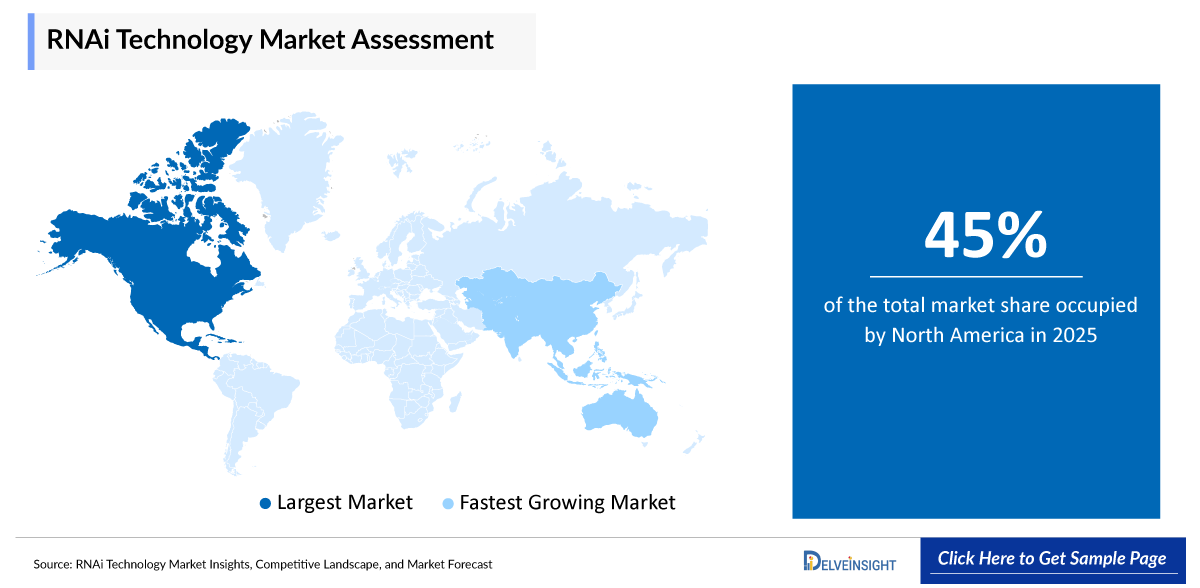
- North America dominated the global RNAi Technology market revenue with a 45% share in 2025, representing the highest regional market share globally.
Request to unlock the Sample Page of the "RNAi Technology Market"
RNAi Technology Market Size
The following snapshot summarizes the principal report metrics for the RNAi Technology market.
|
Report Metrics |
Details |
|---|---|
|
2025 Market Size | |
|
2034 Projected Market Size | |
|
Growth Rate (2026-2034) | |
|
Largest Market |
North America |
|
Fastest Growing Market |
Asia-Pacific |
|
Market Structure |
Consolidated |
All market values are expressed in USD and represent DelveInsight estimates synthesized from primary and secondary research.
Factors Contributing to the Growth of the RNAi Technology Market
-
Expanding Portfolio of Approved siRNA Therapeutics
The most powerful driver of the RNAi technology market is the rapidly expanding portfolio of approved siRNA therapeutics, which has validated RNAi as a commercial therapeutic platform. Over ten siRNA-based drugs have now been approved, transitioning RNAi from experimental research into routine clinical use across rare and common diseases. Alnylam Pharmaceuticals leads with a commercial portfolio spanning transthyretin amyloidosis, acute hepatic porphyria, and primary hyperoxaluria, and its therapeutic vutrisiran secured approval for the cardiomyopathy of transthyretin amyloidosis, a large cardiovascular indication, in 2025.
Additional approvals, including a new RNAi therapeutic for hemophilia and inclisiran for lowering cholesterol, demonstrate expansion into common diseases with large patient populations. Each approval builds clinical and commercial confidence, attracts investment, and encourages new programs. As the number of approved RNAi medicines grows and expands into larger indications, revenue and demand for RNAi platforms rise, anchoring market growth through the forecast period.
-
Breakthroughs in Targeted Delivery Technologies
Breakthroughs in targeted delivery are a central growth engine, having resolved the historical bottleneck that limited RNAi's clinical potential. The highly labile nature of nucleic acids and the difficulty of delivering them intact to target tissues once constrained the field, but innovations in N-acetylgalactosamine (GalNAc) conjugation, lipid nanoparticles, polymer carriers, and ligand-conjugated systems have largely overcome earlier problems of poor uptake, rapid degradation, and off-target effects.
GalNAc conjugation in particular enables precise, subcutaneous, liver-directed delivery of siRNA with infrequent dosing, transforming the convenience and safety profile of RNAi medicines. Lipid nanoparticles support systemic delivery, and emerging approaches such as exosome-mimetic vesicles and cell-penetrating peptides aim to extend RNAi beyond the liver to the central nervous system, muscle, lung, and other tissues. As delivery platforms mature and broaden the range of treatable tissues, they expand the therapeutic reach of RNAi and drive demand, reinforcing market growth across the forecast period.
-
Ability to Silence Previously Undruggable Targets
RNAi's unique ability to silence previously undruggable genes is a fundamental driver of its adoption. Conventional small molecules and antibodies can address only a fraction of disease-associated proteins, leaving many targets inaccessible, whereas RNAi acts upstream at the messenger RNA level to silence the production of virtually any protein, regardless of whether it can be targeted by traditional modalities. This mechanistic advantage opens therapeutic possibilities in genetic disorders, cardiometabolic disease, oncology, and viral infections where other approaches have failed, and it allows rational drug design based directly on genetic sequence.
The specificity and potency of siRNA in silencing disease-causing genes make it a powerful therapeutic and research tool. As drug developers confront high attrition and the limits of conventional modalities, the flexibility of RNAi to address undruggable targets and to rapidly validate therapeutic hypotheses drives sustained demand, reinforcing market growth across the forecast period.
-
Deep and Expanding Clinical Pipeline
A deep and rapidly expanding clinical pipeline is a powerful driver of the market. Active interventional RNAi trials now exceed 150, over triple the number recorded a few years earlier, reflecting a strong late-stage pipeline that sustains long-term growth. RNAi programs are broadening well beyond the rare hepatic diseases that anchored the first approvals, extending into large cardiometabolic indications such as hypertension and hypercholesterolemia, oncology, central nervous system disorders, ocular and respiratory diseases, and even behavioral conditions.
Companies including Alnylam, Arrowhead, Silence Therapeutics, and Novo Nordisk through Dicerna are advancing extensive pipelines, and each new indication expands the addressable market. Government orphan-drug incentives, including exclusivity, tax credits, and waived fees, make rare-disease RNAi programs capital-efficient, while the move into common diseases multiplies commercial potential. As the pipeline matures and diversifies, it drives demand for RNAi platforms, delivery systems, and manufacturing, reinforcing market growth across the forecast period.
-
Strategic Partnerships, Investment, and Big-Pharma Entry
Major strategic partnerships, investment, and the entry of large pharmaceutical companies are accelerating the market. Big pharma has embraced RNAi through high-value alliances, exemplified by a multi-billion-dollar cardiovascular RNAi collaboration between Novartis and Shanghai Argo, Novo Nordisk's acquisition of Dicerna and its GalXC platform, and long-standing partnerships such as Alnylam with Regeneron and Novartis on inclisiran. These deals validate the platform, provide capital and commercialization scale, and draw cardiovascular, metabolic, and oncology expertise into RNAi.
Venture funding is equally robust, with well-capitalized startups such as City Therapeutics raising substantial financing led by experienced RNA leaders, and contract development and manufacturing capacity expanding as a strategic asset. This flow of strategic and venture capital funds pipeline expansion, delivery innovation, and manufacturing scale-up. As investment and partnership activity intensifies, it accelerates development and adoption, reinforcing market growth across the forecast period.
-
Widespread Use in Drug Discovery and Functional Genomics
The widespread use of RNAi in drug discovery and functional genomics is a durable structural driver that sustains demand independent of the therapeutic pipeline. By knocking down gene expression, researchers use siRNA and shRNA to evaluate a gene's role in disease, validate and prioritize drug targets early in discovery, identify biomarkers, and develop personalized medicines. Customized siRNA and shRNA libraries designed for specific disease pathways, along with genome-wide screening, allow high-throughput evaluation of novel targets and rapid validation of therapeutic hypotheses, making RNAi an indispensable tool for biopharmaceutical research.
Leading life-science suppliers provide integrated RNAi reagents, delivery systems, and genome-wide libraries that support functional genomics, drug discovery, and therapeutic development. As drug developers work to overcome high attrition rates and accelerate early research, the flexibility and throughput of RNAi tools sustain steady, recurring demand, reinforcing market growth across the forecast period.
-
Rising Disease Burden and Demand for Precision Medicine
The rising burden of chronic and genetic disease and the growing demand for precision medicine reinforce long-term demand for RNAi technology. The global prevalence of cardiovascular disease, metabolic disorders, and cancer is climbing with aging populations and lifestyle factors, and millions of people live with rare genetic diseases for which few effective treatments exist. RNAi is well suited to this landscape, enabling precise, durable, gene-specific therapy with infrequent dosing that improves adherence and outcomes.
Its alignment with precision medicine, where treatment is tailored to a patient's genetic profile, positions RNAi as a foundational modality for targeted therapy. Growing awareness among clinicians and patients, expanding diagnosis of rare and cardiometabolic diseases, and health-system interest in durable therapies further enlarge the addressable population. As disease burden rises and precision medicine advances, demand for RNAi-based therapies and research tools grows, reinforcing market expansion across the forecast period.
RNA Interference Overview
RNA interference (RNAi) is a naturally occurring biological process in which small RNA molecules regulate gene expression by degrading or blocking specific messenger RNA sequences, thereby silencing targeted genes and preventing the production of disease-associated proteins. RNAi technology harnesses this mechanism, primarily through small interfering RNA (siRNA), microRNA (miRNA), and short hairpin RNA (shRNA), to silence genes that were previously considered undruggable by small molecules or antibodies.
The technology spans both therapeutic applications, where RNAi drugs treat rare genetic, cardiometabolic, hepatic, and other diseases, and research applications, where RNAi reagents, genome-wide libraries, and delivery systems support drug discovery, target validation, and functional genomics. Central to the field are targeted delivery platforms, including N-acetylgalactosamine (GalNAc) conjugates for liver-directed delivery and lipid nanoparticles, which have overcome earlier barriers of instability, poor uptake, and off-target effects.
The RNAi Technology Market encompasses molecule types, delivery technologies, applications across therapeutics and research, and end users including pharmaceutical and biotechnology companies, academic institutes, and contract research and manufacturing organizations. Propelled by a growing portfolio of approved siRNA therapeutics, delivery breakthroughs, major partnerships, and expanding clinical pipelines, RNAi has evolved from a Nobel-recognized discovery into a validated, commercially significant therapeutic and research platform.
RNAi Technology Market Key Growth Drivers
- A rapidly expanding portfolio of approved siRNA therapeutics, with over ten siRNA-based drugs now approved, is validating RNAi as a commercial therapeutic platform.
- Breakthroughs in targeted delivery, particularly GalNAc conjugation for liver-directed siRNA and lipid nanoparticles, have overcome earlier barriers of stability, uptake, and off-target effects.
- RNAi's unique ability to silence previously undruggable genes offers mechanistic therapies where small molecules and antibodies fall short.
- A deep and expanding clinical pipeline, with over 150 active interventional trials, is broadening RNAi into cardiometabolic, oncology, and central nervous system diseases.
- Major strategic partnerships and acquisitions, including multi-billion-dollar collaborations, are accelerating development and drawing large pharmaceutical companies into RNAi.
- The widespread use of RNAi in drug discovery and functional genomics, for gene-function studies and target validation, sustains durable demand for RNAi reagents and platforms.
- The convergence of clinical validation, delivery innovation, pipeline expansion, and industry investment is expected to sustain strong double-digit growth in the market through 2034.
Major RNAi Technology Companies
The RNAi Technology Competitive Landscape is led by the following active developers and providers:
- Alnylam Pharmaceuticals, Inc.
- Arrowhead Pharmaceuticals, Inc.
- Novo Nordisk A/S (Dicerna)
- Silence Therapeutics plc
- Novartis AG
- Ionis Pharmaceuticals, Inc.
- Thermo Fisher Scientific Inc.
- Merck KGaA
- Sirnaomics, Inc.
- Sanofi S.A.
For illustrative purposes, only the top 10 companies are listed in the Table of Contents. The report may include analysis and references to additional companies, where relevant to the market assessment.
RNAi Technology Market Restraints
Despite strong momentum, the RNAi technology market faces material constraints. Delivery beyond the liver remains the central scientific challenge, as GalNAc conjugation has enabled highly effective liver-directed therapy, but extending RNAi to the central nervous system, muscle, lung, heart, and other tissues is far more difficult, limiting the range of treatable diseases until extrahepatic delivery matures.
High development and treatment costs are a significant barrier, as RNAi medicines, particularly for rare diseases, carry high prices that strain payers and constrain access, and complex manufacturing of synthetic oligonucleotides and delivery systems adds cost and capacity constraints. Off-target effects, immune activation, and long-term safety require careful management, and regulatory frameworks for these advanced therapeutics are still evolving, lengthening timelines and adding uncertainty.
Reimbursement is uneven across geographies and indications, and the concentration of clinical value in rare diseases limits patient volumes, although expansion into common diseases is changing this. The market is highly concentrated, with a small number of leaders holding most therapeutic value, creating dependence on a limited set of platforms and intellectual property, and durability of gene silencing, dosing optimization, and patient adherence require ongoing study.
Competition from other genetic modalities, including antisense oligonucleotides and gene editing, intensifies the landscape. Together, these delivery, cost, safety, regulatory, and competitive barriers temper the pace of growth, even as the underlying drivers of clinical validation and delivery innovation remain firmly intact.
RNAi Technology Market Segment Analysis
The RNAi Technology Market by Molecule Type (siRNA, miRNA, shRNA, Others), Application (Drug Discovery and Development, Therapeutics, Functional Genomics), Delivery Technology (GalNAc Conjugates, Lipid Nanoparticles, Polymer and Other Carriers, Viral Vectors), End User (Pharmaceutical and Biotechnology Companies, Academic and Research Institutes, Contract Research and Manufacturing Organizations), and Geography (North America, Europe, Asia-Pacific, Rest of World).
-
RNAi Technology Market Segmentation By Molecule Type
Dominant Subsegment: siRNA. The siRNA category is expected to dominate the market.
Dominant: siRNA ~ 68%
The siRNA segment accounted for 68% of the RNAi Technology market in 2025. Small interfering RNA is the dominant molecule type because it underpins virtually all approved RNAi therapeutics and the large majority of late-stage clinical programs. The high specificity and potency of siRNA in silencing disease-causing genes, combined with the approval of medicines such as Patisiran, Givosiran, Vutrisiran, inclisiran, and fitusiran, have established it as the clinically and commercially proven RNAi modality.
Advances in delivery, particularly GalNAc conjugation and lipid nanoparticles, have overcome earlier barriers of stability, uptake, and off-target effects, further entrenching siRNA's leadership across viral, cardiometabolic, and genetic indications. MicroRNA is an important and growing molecule type, valued for its role in regulating multiple genes and its potential in oncology and complex diseases, while short hairpin RNA is widely used in research and functional genomics for durable gene knockdown. As new siRNA therapeutics continue to reach approval and enter larger indications, the modality's clinical validation, potency, and delivery maturity secure its clear leadership across the forecast period.
-
RNAi Technology Market Segmentation By Application
Dominant Subsegment: Drug Discovery and Development. The drug discovery and development category is expected to dominate the market.
Dominant: Drug Discovery and Development ~ 69%
The drug discovery and development segment accounted for 69% of the RNAi Technology market in 2025. Drug discovery and development is the leading application because RNAi's ability to precisely silence specific genes makes it an essential tool for studying gene function, validating and prioritizing therapeutic targets, and advancing candidates through preclinical and clinical development. Rising investment, strategic collaborations for RNAi-based therapeutics, and continued delivery advances concentrate value in this segment, which spans both the discovery use of RNAi to interrogate targets and the development of RNAi drugs themselves.
The deep and expanding clinical pipeline, growing approvals, and the entry of large pharmaceutical companies reinforce the segment's dominance. Functional genomics is a fast-growing application, as RNAi screening interprets the phenotypic effects of gene knockdown and underpins a large share of cancer and disease gene-function research, while dedicated therapeutic use grows rapidly as approved medicines expand into larger indications. Nonetheless, the scale, investment intensity, and pipeline breadth of drug discovery and development secure its clear leadership across the forecast period.
-
RNAi Technology Market Segmentation By Delivery Technology
Dominant Subsegment: GalNAc Conjugates. The GalNAc conjugate category is expected to dominate the market.
Dominant: GalNAc Conjugates ~ 46%
The GalNAc conjugate segment accounted for 46% of the RNAi Technology market in 2025. N-acetylgalactosamine conjugation is the leading delivery technology because it has transformed the safety, convenience, and commercial viability of RNAi medicines by enabling precise, subcutaneous, liver-directed delivery of siRNA with infrequent dosing. Most approved and late-stage siRNA therapeutics rely on GalNAc conjugation, which targets hepatocytes with high efficiency and supports dosing as infrequent as twice yearly, dramatically improving patient convenience and adherence.
This platform underpins the commercial success of leading products and the pipelines of Alnylam, Arrowhead, Silence Therapeutics, and Novo Nordisk. Lipid nanoparticles are a major and established delivery technology, essential for the first approved RNAi therapeutic and for systemic delivery, and remain central to nucleic-acid medicine. Polymer and other carriers, and viral vectors, serve research and specialized applications, while emerging systems aim to extend delivery beyond the liver. Nonetheless, the clinical dominance and commercial success of GalNAc conjugation in liver-targeted therapy secure its leadership across the forecast period.
-
RNAi Technology Market Segmentation By End User
Dominant Subsegment: Pharmaceutical and Biotechnology Companies. The pharmaceutical and biotechnology companies category is expected to dominate the market.
Dominant: Pharmaceutical and Biotechnology Companies ~ 64%
The pharmaceutical and biotechnology companies segment accounted for 64% of the RNAi Technology market in 2025. Pharmaceutical and biotechnology companies are the leading end user because they drive the discovery, development, manufacturing, and commercialization of RNAi therapeutics and consume the largest share of RNAi platforms, reagents, delivery systems, and services. Dedicated RNAi leaders such as Alnylam, Arrowhead, and Silence Therapeutics, alongside large pharmaceutical entrants such as Novartis, Novo Nordisk, and Sanofi, invest heavily in RNAi pipelines, delivery innovation, and manufacturing, anchoring the segment's dominance.
These companies also form the high-value partnerships and acquisitions that define the field. Academic and research institutes are a large and foundational end user, driving basic discovery, functional genomics, and target validation with RNAi tools, while contract research and manufacturing organizations grow rapidly as demand for specialized oligonucleotide synthesis, delivery, and GMP manufacturing rises with the expanding pipeline. Nonetheless, the scale, investment, and commercial activity of pharmaceutical and biotechnology companies secure their leadership across the forecast period.
RNAi Technology Market Region Analysis
-
Dominant Region: North America
North America accounted for 45% of the global RNAi Technology market revenue in 2025, representing the highest regional market share globally. The region's dominance reflects a strong biotechnology sector, advanced healthcare and research infrastructure, high research and development investment, supportive regulatory frameworks, and the concentration of leading RNAi companies, particularly in the United States. North America is home to Alnylam Pharmaceuticals, the global RNAi therapeutics leader, along with Arrowhead, Ionis, and major life-science suppliers, and it hosts the FDA, whose successive siRNA approvals have anchored the field.
The region benefits from deep venture and strategic capital, extensive clinical-trial activity, orphan-drug incentives, and strong academic research, and it leads in delivery innovation and commercialization. Strategic collaborations and growing demand for targeted therapies further accelerate RNAi development and adoption. Deep innovation, capital, regulatory leadership, and a dense company base anchor the region's continued leadership across the forecast period.
Dominant: North America ~ 45% (Largest)
-
Fastest Growing Region: Asia-Pacific
Asia-Pacific is the fastest-growing region in the RNAi Technology market. The region's elevated CAGR is driven by rising investment in precision medicine, expanding biotechnology and RNAi research, a large and growing burden of chronic and genetic disease, and increasing government support for genomics and healthcare innovation across China, Japan, South Korea, and India. China in particular has become a significant center of RNAi innovation, home to developers such as Sirnaomics and Shanghai Argo, the latter anchoring a multi-billion-dollar cardiovascular RNAi collaboration with Novartis, and Chinese and other regional biotechs are advancing siRNA candidates and delivery technologies.
Growing clinical-trial activity, expanding manufacturing capacity, large patient populations, and strengthening RNAi ecosystems accelerate adoption. The combination of rising investment, government support, and local innovation positions Asia-Pacific as the principal source of incremental growth over the forecast period.
RNAi Technology Regional Commentary
- North America
North America accounted for 45% of the global RNAi Technology market revenue in 2025. The United States dominates on the strength of a robust biotechnology sector, high research and development investment, FDA regulatory leadership, a dense base of RNAi companies led by Alnylam, and deep capital and academic research, while Canada contributes through biotechnology research and clinical activity.
- Europe
Europe is a large and advanced regional market, led by the United Kingdom, Germany, France, and Switzerland. Growth is supported by strong academic and clinical research, active RNAi developers such as Silence Therapeutics and Sylentis, the European Medicines Agency's evolving regulatory frameworks, and significant investment in rare-disease and cardiometabolic RNAi programs, alongside major research-funding initiatives across the region.
- Asia-Pacific
Asia-Pacific is the fastest-growing region, propelled by rising precision-medicine investment, expanding biotechnology and RNAi research, a growing burden of chronic and genetic disease, and government support across China, Japan, South Korea, and India. Regional developers such as Sirnaomics and Shanghai Argo advance siRNA candidates and delivery technologies, while large patient populations and expanding manufacturing accelerate adoption.
- Rest of World
The Rest of World region, spanning Latin America, the Middle East, and Africa, is an emerging contributor. Growing investment in precision medicine, increasing use of RNAi tools in genetic research, and government support for genomics and healthcare innovation, particularly in the Gulf states, are creating early opportunities, while broader adoption awaits stronger infrastructure, reimbursement, and local research capacity across these markets over the forecast period.
RNAi Technology Market Competitive Landscape
The RNAi Technology Market is classified as Consolidated. A small group of therapeutic leaders, headed by Alnylam Pharmaceuticals and including Arrowhead, Novo Nordisk through Dicerna, Silence Therapeutics, and Novartis, holds the large majority of therapeutic value, with the top players collectively controlling most of the market, given that clinical validation, delivery intellectual property, and first-mover approvals create high barriers, while a broader field of life-science suppliers and emerging biotechs, including Thermo Fisher, Merck, Sirnaomics, and City Therapeutics, competes in research tools and next-generation platforms.
The RNAi Technology Competitive Landscape can be evaluated across the following dimensions:
- Market concentration: Consolidated, with a few therapeutic leaders holding most value alongside life-science suppliers and emerging platform biotechs.
- Leading players: Alnylam leads decisively with the largest approved portfolio, followed by Arrowhead, Novo Nordisk through Dicerna, Silence Therapeutics, and Novartis.
- Geographic reach: Leaders operate globally, with strong North American and European positions and rapidly growing Asia-Pacific activity, notably in China.
- Product and pipeline strength: Approved siRNA portfolios and deep late-stage pipelines across rare, cardiometabolic, and common diseases are decisive assets.
- Delivery platform strength: Proprietary GalNAc conjugation and lipid-nanoparticle platforms, and efforts to reach extrahepatic tissues, differentiate players.
- Intellectual property: Layered patents and first-mover approvals, particularly Alnylam's, create durable competitive advantages and licensing leverage.
- Strategic partnerships: High-value alliances, such as Novartis with Shanghai Argo and Alnylam with Regeneron and Novartis, extend reach and capital.
- M&A activity: Active consolidation, including Novo Nordisk's acquisition of Dicerna, as large pharma acquires RNAi platforms and pipelines.
- Innovation focus: Extrahepatic delivery, AI-optimized siRNA design, combination with other modalities, and expansion into common diseases.
RNAi Technology Market Recent Breakthroughs and Developments
- In March 2025, Alnylam Pharmaceuticals, Inc., received FDA approval of AMVUTTRA (vutrisiran) for the cardiomyopathy of transthyretin-mediated amyloidosis, the first RNAi therapeutic shown to reduce cardiovascular death, hospitalizations, and urgent heart failure visits, based on the HELIOS-B trial. Strategic significance: Expanded RNAi into a large cardiovascular indication and validated the platform in common disease.
- In March 2025, Alnylam Pharmaceuticals, Inc., launched Qfitlia (fitusiran), an RNAi therapeutic for hemophilia A and B with or without inhibitors, using a subcutaneous GalNAc conjugate for liver-targeted delivery, following FDA approval. Strategic significance: Extended RNAi into bleeding disorders and demonstrated broadening therapeutic reach.
- In September 2025, Novartis AG, announced a collaboration valued at up to USD 4.165 billion with Shanghai Argo to develop cardiovascular RNAi assets. Strategic significance: Marked a landmark big-pharma commitment to RNAi and deepened cardiovascular pipeline investment.
- In October 2024, City Therapeutics, launched with USD 135 million in Series A financing led by former Alnylam executives to advance next-generation RNAi medicines. Strategic significance: Signaled strong investor conviction in next-generation, AI-optimized RNAi discovery platforms.
- In May 2025, Sylentis, received GMP clearance for its in-house siRNA manufacturing facility, enabling commercial-scale production. Strategic significance: Strengthened European siRNA manufacturing capacity and supported commercialization readiness.
- In April 2025, Arrowhead Pharmaceuticals, Inc., reported completion of phase 2 evaluation of its RNAi candidate ARO-HIF2 for renal cell carcinoma, showing promising reductions in tumor-growth markers. Strategic significance: Advanced RNAi into oncology and demonstrated the platform's reach beyond hepatic diseases.
- In July 2024, Sirnaomics, Inc., entered a partnership with Gore Range Capital to advance RNAi therapies for aesthetic medicine, exploring novel applications in skin rejuvenation and cosmetic treatment. Strategic significance: Extended RNAi into aesthetic and dermatological applications and diversified indications.
- In December 2023, Innovent and SanegeneBio, entered a strategic partnership to develop an siRNA drug for the treatment of hypertension. Strategic significance: Advanced RNAi into a large cardiometabolic indication and strengthened Asia-Pacific RNAi development.
- In November 2024, Alnylam Pharmaceuticals, Inc., had its supplemental new drug application for vutrisiran in transthyretin amyloidosis with cardiomyopathy accepted for priority review by the FDA. Strategic significance: Set the stage for the landmark 2025 cardiovascular approval and RNAi's move into common disease.
- In 2024, Novo Nordisk A/S, continued to advance RNAi candidates through its Dicerna GalXC platform for cardiometabolic and endocrine disorders, complementing its diabetes and obesity portfolio. Strategic significance: Reinforced big-pharma integration of RNAi into large chronic-disease franchises.
- In 2024 and 2025, Silence Therapeutics plc, advanced its GalNAc-conjugated siRNA pipeline, including cardiovascular and rare-disease programs built on its mRNAi GOLD platform. Strategic significance: Strengthened a leading independent RNAi developer's late-stage cardiovascular pipeline.
- In February 2025, Alnylam Pharmaceuticals, Inc., advanced its Alnylam P5x25 strategy to expand its RNAi portfolio across rare and common diseases through deepening late-stage pipeline and delivery innovation. Strategic significance: Reinforced the market leader's long-term strategy to broaden RNAi into large indications.
RNAi Technology Market Segmentation
RNAi Technology Market by Molecule Type
- siRNA (Small Interfering RNA)
- miRNA (MicroRNA)
- shRNA (Short Hairpin RNA)
- Others
RNAi Technology Market by Application
- Drug Discovery and Development
- Therapeutics
- Functional Genomics
RNAi Technology Market by Delivery Technology
- GalNAc Conjugates
- Lipid Nanoparticles
- Polymer and Other Carriers
- Viral Vectors
RNAi Technology Market by Therapeutic Area
- Rare Genetic Disorders
- Cardiometabolic Disorders
- Oncology
- Hepatic and Infectious Diseases
- Neurological and Other Disorders
RNAi Technology Market by End User
- Pharmaceutical and Biotechnology Companies
- Academic and Research Institutes
- Contract Research and Manufacturing Organizations
RNAi Technology Market by Geography
- North America RNAi Technology Market
- United States RNAi Technology Market Size in USD million (2023-2034)
- Canada RNAi Technology Market Size in USD million (2023-2034)
- Mexico RNAi Technology Market Size in USD million (2023-2034)
-
Europe RNAi Technology Market
- Germany RNAi Technology Market Size in USD million (2023-2034)
- United Kingdom RNAi Technology Market Size in USD million (2023-2034)
- France RNAi Technology Market Size in USD million (2023-2034)
- Italy RNAi Technology Market Size in USD million (2023-2034)
- Spain RNAi Technology Market Size in USD million (2023-2034)
- Rest of Europe RNAi Technology Market Size in USD million (2023-2034)
-
Asia-Pacific RNAi Technology Market
- China RNAi Technology Market Size in USD million (2023-2034)
- Japan RNAi Technology Market Size in USD million (2023-2034)
- India RNAi Technology Market Size in USD million (2023-2034)
- South Korea RNAi Technology Market Size in USD million (2023-2034)
- Australia RNAi Technology Market Size in USD million (2023-2034)
- Rest of Asia-Pacific RNAi Technology Market Size in USD million (2023-2034)
-
Rest of the World (RoW) RNAi Technology Market
- Middle East RNAi Technology Market Size in USD million (2023-2034)
- Africa RNAi Technology Market Size in USD million (2023-2034)
- South America RNAi Technology Market Size in USD million (2023-2034)
RNAi Technology Market Recent Industry Trends and Milestones (2023-2026)
|
Category |
Key Developments |
|---|---|
|
RNAi Technology Market Product Approval |
Regulatory momentum reached an inflection point. Alnylam secured FDA approval of vutrisiran (AMVUTTRA) for the cardiomyopathy of transthyretin amyloidosis (March 2025), the first RNAi therapeutic to reduce cardiovascular death and hospitalizations, and launched fitusiran (Qfitlia) for hemophilia (March 2025). Over ten siRNA-based therapies are now approved, including patisiran, givosiran, lumasiran, inclisiran, vutrisiran, and fitusiran, reflecting RNAi's transition from experimental research to validated clinical use across rare and increasingly common diseases, with synchronized FDA and EMA review supporting dual-continent launches. |
|
RNAi Technology Market Pipeline Expansion |
The clinical pipeline expanded rapidly, with active interventional RNAi trials exceeding 150, over triple the figure of a few years earlier. Programs broadened well beyond rare hepatic diseases into cardiometabolic indications such as hypertension and hypercholesterolemia, oncology, central nervous system disorders, ocular, respiratory, and even behavioral conditions. Arrowhead advanced ARO-HIF2 in renal cell carcinoma, Innovent and SanegeneBio pursued siRNA for hypertension, and Sirnaomics explored aesthetic applications, while developers pursued extrahepatic delivery to extend RNAi beyond the liver. |
|
RNAi Technology Market Investment |
Investment and partnership activity intensified. Novartis announced a collaboration valued at up to USD 4.165 billion with Shanghai Argo for cardiovascular RNAi assets, Novo Nordisk continued to leverage its Dicerna acquisition and GalXC platform, and City Therapeutics launched with USD 135 million led by former Alnylam executives. Alnylam maintained long-standing alliances with Regeneron and Novartis, contract manufacturing capacity expanded as a strategic asset, and orphan-drug incentives supported capital-efficient rare-disease programs, collectively accelerating development and drawing large pharmaceutical companies into RNAi. |
|
Company Strategy |
Alnylam Pharmaceuticals, Inc.: Market leadership with the largest approved siRNA portfolio and the P5x25 strategy to expand into common diseases. Arrowhead Pharmaceuticals, Inc.: TRiM platform across liver, cardiometabolic, pulmonary, and oncology targets. Novo Nordisk A/S: RNAi via the Dicerna GalXC platform for cardiometabolic and endocrine disease. Silence Therapeutics plc: GalNAc-conjugated cardiovascular and rare-disease pipeline. Novartis AG and Sanofi S.A.: Cardiovascular and rare-disease RNAi through partnerships. Thermo Fisher Scientific, Merck KGaA, and Sirnaomics: Research reagents, libraries, and emerging therapeutic platforms. |
|
Emerging Technologies |
GalNAc conjugation and lipid nanoparticles have established effective liver-directed and systemic delivery, and the field is advancing toward extrahepatic delivery to the central nervous system, muscle, lung, and heart through ligand-conjugated nanoparticles, exosome-mimetic vesicles, and cell-penetrating peptides. Artificial intelligence and machine learning optimize siRNA sequence design for higher efficacy and lower off-target effects, and RNAi is increasingly combined with other modalities such as antisense oligonucleotides and gene editing. Expansion into common diseases, self-administered subcutaneous dosing, and scalable oligonucleotide manufacturing are broadening RNAi's reach. |
RNAi Technology Market Startup Funding and Investment Trends
Investment in the RNAi ecosystem has concentrated on next-generation delivery, extrahepatic targeting, AI-optimized siRNA design, and expansion into common diseases. The following companies illustrate recent funding and investment activity and technology focus.
|
Company |
Total Funding |
Funding Stage |
Main Focus |
Core Technology |
|---|---|---|---|---|
|
City Therapeutics, Inc. |
USD 135 million and above |
Series A |
Next-generation RNAi |
AI-optimized siRNA design |
|
Sirnaomics, Inc. |
Publicly listed |
Public |
RNAi therapeutics |
siRNA and delivery polymers |
|
Request for unlocking the report of the @ RNAi Technology Market | ||||
Capital is flowing toward next-generation delivery, extrahepatic targeting, and AI-driven siRNA design. City Therapeutics, launched with USD 135 million led by former Alnylam leaders, exemplifies investor conviction in AI-optimized discovery engines that de-risk off-target profiles, while publicly listed players such as Silence Therapeutics, Arrowhead, and Sirnaomics advance GalNAc-conjugated and multi-tissue platforms. Emerging developers such as SanegeneBio pursue cardiometabolic siRNA through partnerships.
Strategic capital is also entering through landmark alliances, including Novartis with Shanghai Argo and Novo Nordisk's Dicerna platform, and through expanding contract manufacturing capacity. Collectively, these investments signal conviction that extrahepatic delivery, AI-optimized design, and expansion into common diseases will define the next phase of competitive advantage in the global RNAi Technology market.
Key Takeaways from the RNAi Technology Market Report Study
- Market size analysis for the current RNAi technology market size (2025), and market forecast for 9 years (2026 to 2034).
- Top key product/technology developments, mergers, acquisitions, partnerships, and joint ventures that happened over the last 3 years.
- Key companies dominating the global RNAi technology market.
- Various opportunities available for competitors in the RNAi technology market space.
- What are the top-performing segments in 2025? How will these segments perform in 2034?
- Which are the top-performing regions and countries in the current RNAi technology market scenario?
- Which are the regions and countries where companies should concentrate their opportunities for RNAi technology market growth in the future?
Target audience who can benefit from this RNAi technology market report study
- RNAi Technology product providers
- Research organizations and consulting companies
- RNAi Technology-related organizations, associations, forums, and other alliances
- Government and corporate offices
- Start-up companies, venture capitalists, and private equity firms
- Distributors and traders dealing in RNAi technology
- Various end-users who want to know more about the RNAi technology market and the latest technological developments in the RNAi technology market.
Stay updated with us for Recent Articles @ New DelveInsight Blogs

