Blood Glucose Monitoring Systems Market Summary
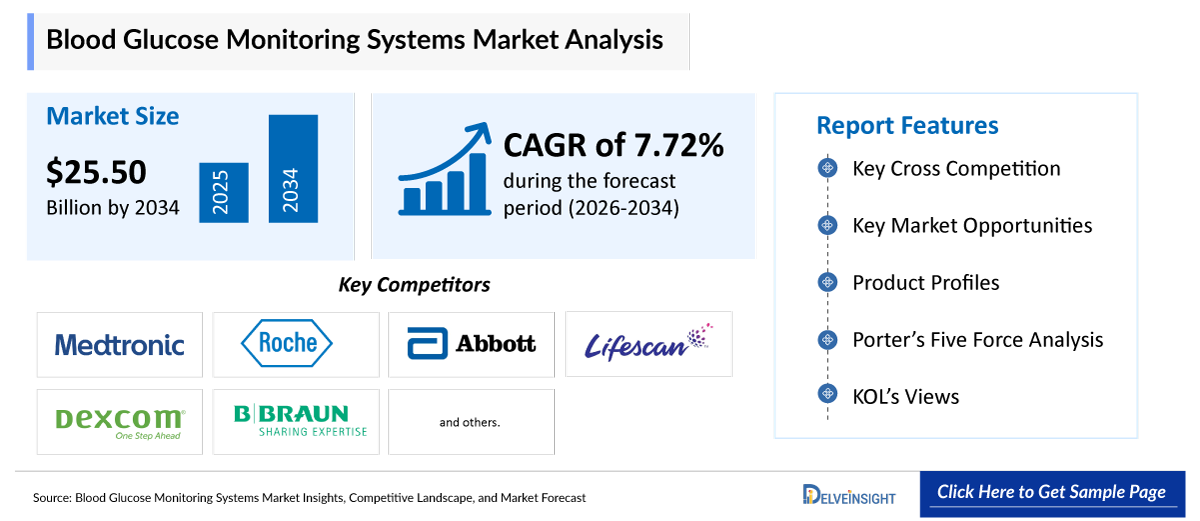
- The global blood glucose monitoring systems market size was valued at USD 13.06 billion in 2025 and is projected to reach USD 25.50 billion by 2034.
- The market is expected to expand at a CAGR of 7.72% during the forecast period 2026-2034, supported by the rising prevalence of lifestyle disorders such as diabetes and impaired glucose tolerance, growing product launches and approvals, and a rising preference for minimally invasive monitoring techniques.
- By product type, the continuous glucose monitoring systems segment dominated the blood glucose monitoring systems market with a 62% share in 2025.
- By modality, the wearable segment dominated the blood glucose monitoring systems market with a 58% share in 2025.
- By end-user, the home care settings segment dominated the blood glucose monitoring systems market with a 60% share in 2025.
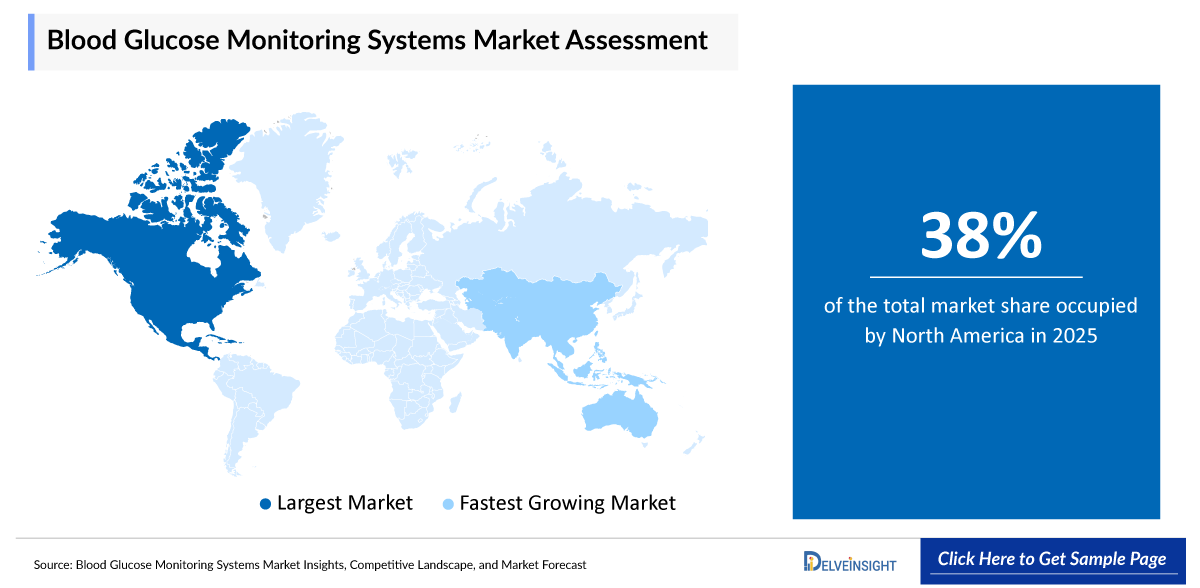
- North America accounted for the largest share of the blood glucose monitoring systems market at 38% in 2025, while Asia-Pacific is anticipated to register the fastest growth through 2034.
Blood glucose monitoring systems are the devices used at home or in healthcare settings to measure and monitor the concentration of glucose in the blood, enabling people with diabetes and impaired glucose tolerance to track their levels and adjust diet, exercise, and medication accordingly. The market is organized by the type of device supplied, the modality of use, and the setting of care. By product type, it divides between self-monitoring blood glucose systems, in which the user obtains a reading from a drop of capillary blood on a test strip read by a meter, and continuous glucose monitoring systems, in which a small sensor placed under the skin measures glucose in the interstitial fluid and updates readings continuously. By modality, it divides between wearable devices, principally the sensor-based continuous and long-wear systems worn on the body, and non-wearable devices, principally the meters and test strips used for intermittent self-monitoring. By end-user, it spans hospitals, home care settings, and other settings in which glucose is measured and managed. The market is expanding rapidly, driven by the rising global prevalence of diabetes, the accelerating shift toward continuous glucose monitoring, continuous technological advancement in sensor accuracy, wear duration, connectivity, and artificial intelligence, and the integration of glucose data with digital health platforms and automated insulin delivery.
Blood Glucose Monitoring Systems Market Key Growth Drivers
- The rising global prevalence of Type 1, Type 2, and gestational diabetes, with the International Diabetes Federation reporting that 537 million adults were living with diabetes in 2021, a figure projected to reach 643 million by 2030 and 783 million by 2045.
- The accelerating shift toward continuous glucose monitoring, as real-time and intermittently scanned systems offer better accuracy, convenience, and adherence, particularly among insulin-dependent patients.
- Continuous technological advancement, including improved sensor accuracy, longer wear durations, smartphone connectivity, cloud-based data sharing, artificial-intelligence-driven predictive insights, and minimally invasive and needle-free sensors.
- Increasing awareness of early diagnosis and self-management, with self-monitoring of blood glucose, preventive care programs, and education initiatives encouraging regular monitoring.
- Favorable reimbursement policies in major markets, since coverage for test strips, meters, and continuous glucose monitoring systems in the United States, Europe, and Japan reduces out-of-pocket costs and supports adoption.
- The growth of the geriatric population, since older adults have a higher prevalence of diabetes and require continuous monitoring, increasing both self-monitoring and continuous glucose monitoring usage.
- The integration of digital health platforms, including cloud-based data sharing, remote patient monitoring, telehealth, and physician dashboards, increases the value of the devices in chronic disease management.
Key Companies in Blood Glucose Monitoring Systems Market
The competitive landscape is led by the following active manufacturers:
- Medtronic plc
- Abbott Laboratories
- F. Hoffmann-La Roche Ltd.
- LifeScan, Inc.
- Dexcom, Inc.
- ARKRAY, Inc.
- Senseonics Holdings, Inc.
- WaveForm Technologies, Inc.
- B. Braun Melsungen AG
- Ascensia Diabetes Care Holdings AG, and others
For illustrative purposes, only the top 10 companies are listed in the Table of Contents. The report may include analysis and references to additional companies relevant to the market assessment.
Blood Glucose Monitoring Systems Market Size
The following table summarizes the headline market metrics for the global blood glucose monitoring systems market across the base year and the forecast horizon.
|
Report Metrics |
Details |
|
2025 Market Size |
USD 13.06 billion |
|
2034 Projected Market Size |
USD 25.50 billion |
|
Growth Rate (2026-2034) |
7.72% CAGR |
|
Largest Market |
North America (38% share in 2025) |
|
Fastest Growing Market |
Asia-Pacific |
|
Market Structure |
Moderately Consolidated |
All market values are expressed in USD and represent DelveInsight estimates synthesized from primary and secondary research.
Factors Contributing to the Growth of the Blood Glucose Monitoring Systems Market
Blood Glucose Monitoring Systems Market Drivers
- Rising Global Prevalence of Diabetes: The foundational driver of the blood glucose monitoring systems market is the rapidly increasing prevalence of diabetes, because the size of the diabetic population directly determines the demand for the meters, test strips, and continuous glucose monitoring systems that constitute the market. The rising incidence of Type 1, Type 2, and gestational diabetes is the strongest driver of demand, since a larger patient pool boosts the sale of every category of device, and the scale and trajectory of the burden are striking. The International Diabetes Federation reported that 537 million adults aged 20 to 79 were living with diabetes in 2021, equating to about one in ten individuals, and projected this number to rise to 643 million by 2030 and to 783 million by 2045, with over 75% of adults with diabetes residing in low- and middle-income countries. A further 541 million adults have impaired glucose tolerance, placing them at elevated risk of developing Type 2 diabetes and extending the population that benefits from monitoring. Blood glucose monitoring systems are essential tools for managing diabetes and preventing its progression, enabling individuals to check and manage their levels and make timely adjustments to diet, exercise, and medication. For those with impaired glucose tolerance, monitoring can identify early glucose fluctuations and support interventions to prevent the onset of diabetes. Because the diabetic and pre-diabetic population is very large, rising, and requires lifelong monitoring, this driver provides the most durable foundation for market growth.
- Shift Toward Continuous Glucose Monitoring: The accelerating shift toward continuous glucose monitoring is a central driver of the blood glucose monitoring systems market, because it moves patients from intermittent finger-stick testing toward the sensor-based systems that command higher value and recurring revenue, raising both the volume and the value of the market. The adoption of real-time and intermittently scanned continuous glucose monitoring systems is accelerating due to their better accuracy, convenience, and improved patient adherence relative to self-monitoring, and their role in therapy optimization, especially among insulin-dependent patients, significantly increases market revenue. A continuous glucose monitoring system provides real-time tracking of glucose by using a small sensor placed under the skin to measure glucose in the interstitial fluid, updating readings every few minutes and reducing the need for frequent manual checks, and its features, including alarms for high or low glucose, calibration-free technology, and integration with smartphones and digital health platforms, make it particularly beneficial for people with Type 1 and Type 2 diabetes. These systems help patients achieve better glycemic control, reduce the risk of hypoglycemia, and optimize insulin therapy through integration with insulin pumps and automated insulin delivery systems, and they are increasingly used in clinical research to analyze glucose patterns. Because continuous glucose monitoring delivers superior outcomes and a recurring-revenue model, and because its adoption remains far from complete, the shift toward it is a powerful and durable driver of growth.
- Technological Advancement in Sensors and Connectivity: Continuous technological advancement is a central driver of the blood glucose monitoring systems market, because the accuracy, comfort, wear duration, and connectivity of the devices determine both their clinical value and the willingness of patients to adopt and adhere to them, and each advance extends the market to new users and applications. Advancements in the field include improved sensor accuracy, longer wear durations, smartphone connectivity, cloud-based data sharing, and artificial-intelligence-driven predictive insights, and innovations such as minimally invasive and needle-free sensors enhance user comfort and adherence, driving wider adoption of continuous and self-monitoring solutions. The trajectory of the technology is toward sensors that last longer, some now approaching a full year of wear, that require no calibration and no finger-stick confirmation, and that connect directly to smartphones and to the cloud for data sharing with clinicians and caregivers; the application of artificial intelligence to the resulting data stream enables the prediction of high and low glucose events and personalized coaching. These advances address the principal barriers to monitoring, namely the discomfort, inconvenience, and limited information of finger-stick testing, and each improvement extends monitoring to more patients and deepens its use among existing ones. Because innovation is rapid, addresses real barriers to adoption, and continually raises the value delivered per device, technological advancement is a principal engine of both volume and value growth.
- Awareness of Early Diagnosis and Self-Management: The increasing awareness of early diagnosis and self-management is an important driver of the blood glucose monitoring systems market, because it expands the population that monitors regularly and increases the frequency and consistency of monitoring, both of which raise device and consumable demand. A greater emphasis on self-monitoring of blood glucose, on preventive care programs, and on education initiatives is encouraging people with diabetes and those at risk of it to monitor their glucose regularly, and this behavioral shift converts a diagnosed population into an actively monitoring one. Awareness campaigns by public health authorities, professional societies, and patient organizations have increased understanding of the importance of glycemic control in preventing the complications of diabetes, and the growing recognition that early detection and consistent management of glucose reduce the long-term burden of the disease drives both the diagnosis of previously undetected diabetes and the more consistent monitoring of those already diagnosed. Self-management is central to modern diabetes care, since the daily decisions about diet, activity, and medication that determine outcomes are made by patients themselves, and the information that monitoring provides is what makes effective self-management possible. Because awareness and self-management expand the monitoring population and increase the intensity of monitoring, they are a meaningful and durable contributor to market growth.
- Favorable Reimbursement Policies in Major Markets: Favorable reimbursement policies in the major markets are an important driver of the blood glucose monitoring systems market, because the coverage and payment available for devices and consumables directly determine their affordability and therefore their adoption, particularly for the higher-cost continuous glucose monitoring systems. Coverage for test strips, meters, and continuous glucose monitoring systems, particularly in the United States, Europe, and Japan, reduces the out-of-pocket cost to patients and supports higher adoption rates, and the extension of reimbursement to continuous glucose monitoring for broader populations, including those with Type 2 diabetes not on intensive insulin therapy, has been a particularly significant development. Because continuous glucose monitoring systems carry a substantially higher cost than finger-stick testing, the availability of reimbursement is frequently decisive in whether a patient can access them, and the progressive expansion of coverage in the major markets has been a principal enabler of the shift toward continuous monitoring. Reimbursement policy also shapes the competitive landscape, favoring the manufacturers whose devices secure broad coverage and whose clinical evidence supports it. Because access to the higher-value devices depends heavily upon reimbursement, and because coverage is expanding across the major markets, favorable reimbursement is a meaningful contributor to the growth and the value mix of the market.
- Growth in the Geriatric Population: The growth of the geriatric population is a significant driver of the blood glucose monitoring systems market, because the prevalence of diabetes rises with age and because older adults require regular monitoring, so the aging of the population expands the monitoring population and the demand for devices. Older adults have a higher prevalence of diabetes than younger groups, driven by the accumulation of risk factors and the physiological changes of aging, and they require continuous monitoring to manage their disease and to avoid the hypoglycemia and hyperglycemia to which they are particularly vulnerable, boosting both self-monitoring and continuous glucose monitoring usage. The aging of the population across the developed and increasingly the developing world therefore translates directly into a rising diabetic population and a rising demand for monitoring, and older patients benefit particularly from the continuous glucose monitoring systems and the connected platforms that allow caregivers and clinicians to monitor them remotely. The combination of higher diabetes prevalence, greater vulnerability to glycemic events, and the value of remote monitoring in this group makes the geriatric population an important and growing source of demand. Because demographic aging is slow, predictable, and effectively irreversible, and because it concentrates diabetes in the growing older population, it provides a stable foundation for long-term market growth.
- Integration of Digital Health Platforms: The integration of digital health platforms is an important driver of the blood glucose monitoring systems market, because it increases the value of the devices beyond measurement and embeds them in the broader management of chronic disease, deepening adoption and supporting recurring revenue. The availability of cloud-based data sharing, remote patient monitoring, telehealth platforms, and physician dashboards increases the value proposition of blood glucose monitoring devices and supports strong adoption, especially in the chronic disease management programs that increasingly define diabetes care. A continuous glucose monitoring system connected to a smartphone and the cloud is not merely a measurement device, but the front end of a data platform that shares glucose data with clinicians, caregivers, and coaching services, that integrates with automated insulin delivery, and that supports the remote and value-based care models that payers and health systems increasingly favor. The integration of glucose data with artificial-intelligence-driven analytics enables predictive alerts and personalized coaching, and the resulting software and services create new revenue streams and increase patient engagement and adherence. Because digital integration raises the value of the devices, supports the recurring-revenue and value-based models that define modern diabetes care, and deepens patient engagement, it is a meaningful contributor to the growth and the value mix of the market.
Blood Glucose Monitoring Systems Market Restraints
Despite a large and rising diabetic population and rapid technological advances, the blood glucose monitoring systems market faces several material constraints. The most significant is the risk of false readings or technical errors, since an inaccurate glucose reading can lead to incorrect insulin dosing, which is associated with hypoglycemia or hyperglycemia, both of which are dangerous and potentially life-threatening, and the clinical consequences of device inaccuracy place a high burden of accuracy and reliability upon manufacturers and create caution among clinicians and patients in adopting new devices. Sensor accuracy, calibration, interference, and the lag between interstitial and blood glucose all contribute to the potential for error, and the reliance of automated insulin delivery upon continuous glucose monitoring data raises the stakes of accuracy further, since an erroneous reading can drive an inappropriate insulin dose without human intervention. A second constraint is the availability of alternative options, since patients and health systems can choose among a range of devices and monitoring strategies, and the competition among self-monitoring, intermittently scanned continuous monitoring, and real-time continuous monitoring, together with the availability of low-cost meters and strips, limits the pricing power and the end-user base of any individual device or manufacturer. Additional constraints include the high cost of continuous glucose monitoring systems relative to finger-stick testing, which limits access where reimbursement is unavailable; the recurring cost of sensors and consumables; the variability of reimbursement across markets and populations; and, for some patients, the discomfort, skin reactions, and burden of wearing a sensor continuously. Together, these accuracy, competitive, and cost factors ensure that growth, while rapid, proceeds against genuine constraint.
Blood Glucose Monitoring Systems Market Segment Analysis
The global blood glucose monitoring systems market by product type (self-monitoring blood glucose systems and continuous glucose monitoring systems), by modality (wearable and non-wearable), by end-user (hospitals, home care settings, and others), and by geography (North America, Europe, Asia-Pacific, and the Rest of the World).
By Product Type
Dominant Subsegment: Continuous Glucose Monitoring Systems.
The continuous glucose monitoring systems segment accounted for a 62% share of the blood glucose monitoring systems market in 2025. Continuous glucose monitoring systems dominate the product-type structure owing to the key features and widespread application they provide and to the accelerating shift of patients from intermittent finger-stick testing toward sensor-based continuous monitoring. A continuous glucose monitoring system provides real-time tracking of glucose by using a small sensor placed under the skin to measure glucose in the interstitial fluid, updating readings every few minutes and reducing the need for frequent manual checks, and its features, including alarms for high or low glucose, calibration-free technology, and integration with smartphones and digital health platforms, deliver a level of information and convenience that finger-stick testing cannot match. These systems are especially beneficial for people with Type 1 and Type 2 diabetes, helping them achieve better glycemic control, reduce the risk of hypoglycemia, and optimize insulin therapy through integration with insulin pumps and automated insulin delivery, and they are widely used in clinical research to analyze glucose patterns. The higher price of continuous glucose monitoring systems and their recurring sensor revenue mean that the segment captures a disproportionate share of market value, and the wave of product launches and approvals, including over-the-counter systems that extend continuous monitoring beyond the insulin-using population, continues to expand it. Self-monitoring blood glucose systems constitute the second product category, comprising the meters and test strips used for intermittent testing, which remain widely used for their low cost and simplicity. Continuous glucose monitoring systems are expected to retain and extend their leading share throughout the forecast period.
By Modality
Dominant Subsegment: Wearable.
The wearable segment accounted for a 58% share of the blood glucose monitoring systems market in 2025. Wearable devices dominate the modality structure because the continuous glucose monitoring systems that increasingly define the market are worn on the body, and the migration toward continuous monitoring therefore drives the migration toward wearable devices. A wearable glucose monitoring device consists of a small sensor worn on the skin, typically on the upper arm or abdomen, that measures glucose in the interstitial fluid continuously and transmits the readings to a smartphone or reader, and this form factor is intrinsic to the continuous, real-time, and long-wear monitoring that delivers the superior glycemic control and convenience driving the market. The wearable modality has advanced rapidly, with sensors that last progressively longer, some approaching a full year of wear, that require no calibration or finger-stick confirmation, and that connect directly to smartphones and the cloud, and the extension of wearable continuous monitoring to the over-the-counter and wellness markets has broadened the wearable population beyond the insulin-using patients who pioneered it. The comfort, convenience, and continuous information that wearable sensors provide underpin the adherence and outcomes that make them the preferred modality. Non-wearable devices constitute the second modality, comprising the meters and test strips used for intermittent self-monitoring, which remain important for their low cost and simplicity, particularly in cost-sensitive and lower-intensity settings. Wearable devices are expected to retain and extend their leading share throughout the forecast period.
By End-User
Dominant Subsegment: Home Care Settings.
The home care settings segment accounted for a 60% share of the blood glucose monitoring systems market in 2025. Home care settings dominate the end-user structure because blood glucose monitoring is fundamentally a self-management activity performed by patients in their daily lives, and the great majority of monitoring, whether by finger-stick testing or by continuous sensor, takes place in the home rather than in a clinical facility. The management of diabetes depends upon frequent and continuous measurement of glucose to inform the daily decisions about diet, activity, and medication that determine outcomes, and these measurements are made by patients themselves at home, at work, and throughout their daily activities, making the home the principal setting of blood glucose monitoring. The shift toward continuous glucose monitoring reinforces the dominance of the home setting, since a continuous sensor is worn continuously through daily life and transmits data to the patient and, through connected platforms, to clinicians and caregivers remotely, and the growth of remote patient monitoring and telehealth further concentrates monitoring in the home while connecting it to clinical oversight. The convenience, the continuous information, and the integration with digital health platforms all support the home as the center of modern diabetes self-management. Hospitals constitute a second end-user category, encompassing the inpatient monitoring of glucose in diabetic and critically ill patients, and other settings, including long-term care and clinics, complete the structure. Home care settings are expected to retain their dominant share throughout the forecast period.
Blood Glucose Monitoring Systems Market Region Analysis
Dominant Region: North America
North America accounted for a 38% share of the global blood glucose monitoring systems market in 2025. The region is expected to dominate the blood glucose monitoring systems market throughout the forecast period, driven by the rising cases of diabetes, advancements in blood glucose monitoring systems, strong regulatory support, and the introduction of innovative products by the key market players. As per the Centers for Disease Control and Prevention, in 2021 some 38.4 million people of all ages, or 11.6% of the United States population, had diabetes, creating a very large monitoring population, and blood glucose monitoring systems are essential tools for managing that population, enabling users to track glucose fluctuations throughout the day and to make timely adjustments to diet, physical activity, and medication. The region combines the largest and most technologically advanced diabetes-care market in the world with strong reimbursement for meters, strips, and continuous glucose monitoring systems, a high rate of adoption of continuous and connected monitoring, and the presence and commercial strength of the leading manufacturers. The region also leads in the regulatory clearance and early launch of innovative products, including the over-the-counter continuous glucose monitoring systems and the disposable, all-in-one sensors that are extending the market beyond the insulin-using population, and the continuing flow of product development and approvals accelerates growth. The region is expected to retain its leading position throughout the forecast period.
Fastest Growing Region: Asia-Pacific
Asia-Pacific is projected to register the fastest compound annual growth rate in the blood glucose monitoring systems market through 2034. The region is emerging as the principal growth engine of the market, propelled by a very large and rapidly rising diabetic population, expanding healthcare access, rising awareness of diabetes management, and the increasing availability and affordability of both self-monitoring and continuous glucose monitoring systems. The region carries an enormous burden of diabetes, with the International Diabetes Federation identifying the largest and fastest-growing diabetic populations in the major Asian economies, and the combination of large populations, rising prevalence driven by urbanization and lifestyle change, and the concentration of much of the global diabetic population in the low- and middle-income countries of the region creates rapidly growing demand for monitoring. Expanding healthcare access, rising disposable incomes, growing awareness of the importance of glycemic control, and government initiatives to address the diabetes burden are converting this rising prevalence into demand for devices, and both international manufacturers and capable regional participants, including major domestic device companies, are expanding to serve the opportunity with products spanning the premium and cost-effective segments. China combines the largest diabetic population in the world with a rapidly developing domestic device industry, India combines a very large and rising diabetic population with expanding access, and Japan combines an aged population with sophisticated adoption of advanced monitoring. Regional growth is expected to exceed the global average across every segment.
Blood Glucose Monitoring Systems Regional Commentary
North America
North America leads on value and adoption, holding a 38% share in 2025. The region combines the largest and most advanced diabetes-care market with strong reimbursement, high adoption of continuous and connected monitoring, and the commercial strength of the leading manufacturers. The Centers for Disease Control and Prevention reported some 38.4 million people, or 11.6% of the United States population, with diabetes in 2021, creating a very large monitoring population, and the region leads in the clearance and launch of innovative products including over-the-counter and disposable continuous glucose monitoring systems. Near-term dynamics are shaped by the shift to continuous monitoring, the extension of monitoring to the non-insulin and wellness populations, automated insulin delivery, and digital health integration.
Europe
Europe is a large and advanced market, home to several of the leading manufacturers and supported by well-developed public healthcare systems, broad reimbursement for continuous glucose monitoring, and high adoption of connected monitoring, with Germany, France, and the United Kingdom the principal markets. The region combines a substantial and aging diabetic population with generally supportive reimbursement and strong clinical adoption of continuous glucose monitoring, and it hosts major diabetes-care companies and the launch of new continuous monitoring systems. Reimbursement policy varies by country, and public budget constraints influence the pace and scale of adoption, but the region sustains a competitive and advanced market served by both global and regional participants.
Asia-Pacific
Asia-Pacific is the fastest-growing region, propelled by a very large and rapidly rising diabetic population, expanding healthcare access, rising awareness, and the increasing availability and affordability of monitoring systems. The region carries an enormous and rising burden of diabetes, and expanding access, rising incomes, and government initiatives are converting prevalence into demand. China combines the largest diabetic population with a developing domestic device industry, India combines a very large and rising diabetic population with expanding access, and Japan combines an aged population with advanced adoption. Both international and regional manufacturers are expanding across the premium and cost-effective segments. Growth exceeds the global average across every segment.
Rest of World
The Rest of the World comprises the Middle East, Africa, and South America. The burden of diabetes is high and rising across all three, and the region carries a substantial share of the global diabetic population. The Gulf states combine a very high diabetes prevalence with advanced healthcare systems and high adoption of advanced monitoring, and the larger Latin American markets, particularly Brazil and Mexico, support substantial and growing diabetes-care markets, together representing steady growth. Much of Africa faces constrained healthcare access and affordability, so monitoring is concentrated in the larger urban and private markets. Regional growth will be driven by the rising diabetes burden, expanding healthcare access, growing awareness, and the availability of cost-appropriate self-monitoring and continuous monitoring systems from international and regional manufacturers.
Blood Glucose Monitoring Systems Market Competitive Landscape
The global blood glucose monitoring systems market is classified as Moderately Consolidated. The market is led by a group of large diabetes-care and medical technology companies with established meter, test strip, and continuous glucose monitoring franchises, which hold the largest combined share and dictate industry trends, complemented by specialized sensor and continuous-monitoring innovators. Competition centers upon the accuracy, wear duration, and convenience of the sensor, the breadth of the device and consumables portfolio, integration with automated insulin delivery and digital health platforms, reimbursement standing, and increasingly upon the extension of continuous monitoring to new populations.
The competitive landscape is evaluated across the following dimensions:
- Market concentration: Moderately consolidated, with a group of large diabetes-care and medical technology companies holding the largest combined share across the meter, strip, and continuous glucose monitoring categories alongside specialized sensor and continuous-monitoring innovators, and with the sensor technology, clinical evidence, and reimbursement standing of the leaders constituting a barrier to entry.
- Leading players: The continuous glucose monitoring segment is led by Abbott and Dexcom, with Medtronic strong in continuous monitoring integrated with insulin pumps and automated insulin delivery, while Roche, LifeScan, Ascensia, ARKRAY, and i-SENS lead the self-monitoring meter and test strip segment, and Senseonics contests the long-wear implantable continuous monitoring niche.
- Geographic reach: The leading participants maintain global commercial and distribution organizations, which matter because monitoring is a mass-market chronic-disease category requiring broad reach and local reimbursement, while regional manufacturers, particularly the major Chinese and Korean device companies, serve domestic and cost-sensitive markets, and the over-the-counter channel extends reach to the consumer and wellness populations.
- Product portfolio strength: Competitive advantage rests upon the accuracy, wear duration, and convenience of the continuous glucose monitoring sensor, the breadth of the portfolio across continuous and self-monitoring and across insulin-using and non-insulin populations, and the integration with automated insulin delivery and digital health platforms, since patients, clinicians, and payers value accurate, convenient, connected, and clinically proven systems.
- Pipeline strength: Development is concentrated in longer-wear and calibration-free sensors, needle-free and non-invasive monitoring, over-the-counter and wellness continuous monitoring, integration with automated insulin delivery and the artificial pancreas, and artificial-intelligence-driven predictive analytics and coaching.
- Strategic partnerships: Collaboration spans partnerships between device manufacturers, digital health companies, and cloud-platform providers to enhance remote monitoring, data analytics, and decision support, and integration partnerships between continuous glucose monitoring and insulin pump and automated insulin delivery companies to build closed-loop systems.
- M&A activity: Acquisition activity centers upon the strengthening of continuous monitoring, sensor, and digital health capability, including the acquisition of diabetes-focused digital health startups and sensor technology firms to build portfolios in continuous monitoring, wearable devices, and artificial-intelligence-enabled glucose management.
- Innovation focus: Innovation is shifting toward needle-free and implantable sensors, integration with artificial-intelligence algorithms for predictive glucose alerts, cloud-linked monitoring ecosystems, fully automated closed-loop insulin delivery, and the extension of continuous monitoring to the over-the-counter, wellness, and non-insulin populations.
- Regulatory standing: Regulatory clearance and, decisively, reimbursement standing are operative credentials, since the accuracy requirements of glucose monitoring and its use in insulin dosing demand rigorous clearance, and the extension of coverage to broader populations and the clearance of over-the-counter systems are significant competitive factors, alongside the integrated continuous glucose monitoring designation that permits use in automated insulin delivery.
Blood Glucose Monitoring Systems Market Recent Developmental Activities
- In August 2025, Signos launched the Signos Glucose Monitoring System, the first over-the-counter glucose monitoring system cleared by the United States Food and Drug Administration and designed for weight management, integrating the Stelo by Dexcom glucose biosensor with an artificial-intelligence-powered platform that provides personalized, real-time insights into how food, activity, stress, and sleep affect metabolic health. Strategic significance: the extension of continuous glucose monitoring into over-the-counter weight management illustrated the broadening of the market beyond diabetes into metabolic health and wellness, opening a large new non-insulin population to sensor-based monitoring.
- In September 2024, Senseonics received United States Food and Drug Administration clearance for the Eversense 365 as an integrated continuous glucose monitoring system, featuring a single implantable sensor that can be used for an entire year, in contrast to the ten- to fourteen-day wear of short-term systems. Strategic significance: a year-long implantable sensor addressed the wear-duration and replacement burden of adhesive sensors and defined the long-wear frontier of continuous monitoring, differentiating a specialized innovator through a distinctive implantable technology.
- In August 2024, Medtronic received United States Food and Drug Administration approval for its Simplera continuous glucose monitor, the company’s first disposable, all-in-one continuous glucose monitor, half the size of previous Medtronic sensors and requiring a simple two-step insertion. Strategic significance: a smaller, disposable, all-in-one sensor modernized the continuous monitoring portfolio of a leader in insulin pumps and automated insulin delivery, strengthening its position in the sensor layer that anchors closed-loop systems.
- In August 2024, Dexcom launched Stelo, the first glucose biosensor cleared by the United States Food and Drug Administration for over-the-counter sale, designed for people with Type 2 diabetes not using insulin and for those seeking to understand their metabolic health. Strategic significance: the first over-the-counter continuous glucose biosensor opened the large non-insulin and wellness population to sensor-based monitoring, extending the addressable market of continuous monitoring far beyond its insulin-using origins.
- In June 2024, Abbott announced United States Food and Drug Administration approval of two new over-the-counter continuous glucose monitoring systems, Lingo and Libre Rio, based on its FreeStyle Libre continuous glucose monitoring technology. Strategic significance: the launch of over-the-counter systems by the continuous monitoring volume leader, one aimed at general wellness and one at Type 2 diabetes not treated with insulin, signaled the strategic commitment of the market leader to the consumer and non-insulin populations.
- In June 2024, Prevounce Health launched its first remote blood glucose monitoring device, the Pylo GL1-LTE, a clinically validated glucose meter connected to multiple cellular networks to ensure reliable data transmission across the United States. Strategic significance: a cellular-connected meter for remote patient monitoring reflected the integration of glucose monitoring into remote care and chronic disease management programs and the value of connectivity independent of smartphones and Wi-Fi.
- In May 2024, Smart Meter launched iGlucose Plus for diabetes management, a cellular-enabled glucose meter that eliminated the need for syncing, pairing, or reliance on smartphones and Wi-Fi. Strategic significance: the launch of a self-contained cellular meter reinforced the role of connected self-monitoring in remote patient monitoring and extended reliable connected monitoring to patients without smartphones, broadening access to connected care.
- In 2024, F. Hoffmann-La Roche advanced its Accu-Chek SmartGuide predictive continuous glucose monitoring solution, combining a continuous sensor with predictive algorithms that forecast glucose trends and the risk of low glucose. Strategic significance: the entry of a leader in self-monitoring into predictive continuous monitoring illustrated the migration of the established meter and strip companies into sensor-based and artificial-intelligence-driven continuous monitoring, intensifying competition in the continuous segment.
- In February 2024, Dexcom launched its real-time continuous glucose monitoring solution, Dexcom ONE+, in Europe, a customizable system designed to be worn at three different locations on the body. Strategic significance: the expansion of an accessible real-time continuous monitoring system across Europe broadened access to continuous monitoring and reflected the competition to extend continuous monitoring to broader populations at accessible price points.
- In January 2024, Medtronic announced CE Mark approval for the MiniMed 780G system with Simplera Sync, a disposable, all-in-one continuous glucose monitor requiring no fingersticks or overtape and featuring a simple, two-step insertion. Strategic significance: the pairing of a disposable, fingerstick-free sensor with an automated insulin delivery system advanced the closed-loop diabetes management that represents the therapeutic frontier and strengthened the integrated continuous monitoring and insulin delivery portfolio of a leader.
- In November 2021, Intuity Medical launched the POGO Automatic Blood Glucose Monitoring System for diabetes patients in the United States, an automatic self-monitoring system that lances and collects blood in a single step. Strategic significance: the automation of the finger-stick self-monitoring process addressed the burden and inconvenience of conventional testing and illustrated continued innovation in the self-monitoring segment alongside the shift to continuous monitoring.
- In July 2021, Terumo launched the Dexcom G6 continuous glucose monitoring system, manufactured by Dexcom, in Japan. Strategic significance: the distribution partnership brought a leading real-time continuous monitoring system to a major Asian market, illustrating the role of regional partnerships in extending advanced continuous monitoring into the fast-growing Asia-Pacific region.
Blood Glucose Monitoring Systems Market Segmentation
- Blood Glucose Monitoring Systems Market Assessment by Product Type
- Self-Monitoring Blood Glucose Systems
- Continuous Glucose Monitoring Systems
- Blood Glucose Monitoring Systems Market Assessment by Modality
- Wearable
- Non-Wearable
- Blood Glucose Monitoring Systems Market Assessment by End-User
- Hospitals
- Home Care Settings
- Others
Blood Glucose Monitoring Systems Market Assessment by Geography
- North America Blood Glucose Monitoring Systems Market Assessment
- United States Blood Glucose Monitoring Systems Market Size in USD million (2023-2034)
- Canada Blood Glucose Monitoring Systems Market Size in USD million (2023-2034)
- Mexico Blood Glucose Monitoring Systems Market Size in USD million (2023-2034)
- Europe Blood Glucose Monitoring Systems Market Assessment
- France Blood Glucose Monitoring Systems Market Size in USD million (2023-2034)
- Germany Blood Glucose Monitoring Systems Market Size in USD million (2023-2034)
- United Kingdom Blood Glucose Monitoring Systems Market Size in USD million (2023-2034)
- Italy Blood Glucose Monitoring Systems Market Size in USD million (2023-2034)
- Spain Blood Glucose Monitoring Systems Market Size in USD million (2023-2034)
- Rest of Europe Blood Glucose Monitoring Systems Market Size in USD million (2023-2034)
- Asia-Pacific Blood Glucose Monitoring Systems Market Assessment
- China Blood Glucose Monitoring Systems Market Size in USD million (2023-2034)
- Japan Blood Glucose Monitoring Systems Market Size in USD million (2023-2034)
- India Blood Glucose Monitoring Systems Market Size in USD million (2023-2034)
- Australia Blood Glucose Monitoring Systems Market Size in USD million (2023-2034)
- South Korea Blood Glucose Monitoring Systems Market Size in USD million (2023-2034)
- Rest of Asia-Pacific Blood Glucose Monitoring Systems Market Size in USD million (2023-2034)
- Rest of the World Blood Glucose Monitoring Systems Market Assessment
- Middle East Blood Glucose Monitoring Systems Market Size in USD million (2023-2034)
- Africa Blood Glucose Monitoring Systems Market Size in USD million (2023-2034)
- South America Blood Glucose Monitoring Systems Market Size in USD million (2023-2034)
Blood Glucose Monitoring Systems Market Recent Industry Trends and Milestones (2022-2026):
|
Category |
Key Developments |
|
Product Launches |
Product activity centered upon next-generation continuous glucose monitoring and connected self-monitoring. Manufacturers launched continuous glucose monitoring systems with extended sensor wear, improved accuracy, smartphone integration, and reduced calibration requirements, exemplified by Medtronic Simplera and Simplera Sync, Dexcom ONE+ and Stelo, Abbott Lingo and Libre Rio, the Senseonics Eversense 365 year-long implantable sensor, and the Roche Accu-Chek SmartGuide predictive system, alongside compact and cellular-enabled glucometers for home monitoring including Smart Meter iGlucose Plus and the Intuity POGO automatic system. Across these, launches emphasized longer wear, calibration-free and fingerstick-free operation, connectivity, and the extension of continuous monitoring to over-the-counter and non-insulin populations. |
|
Regulatory Approvals |
Regulatory activity centered upon advanced real-time continuous glucose monitoring, integrated insulin delivery, and over-the-counter monitoring. Regulators granted United States Food and Drug Administration and CE approvals for advanced real-time continuous monitoring devices, integrated continuous glucose monitoring systems designated for use in automated insulin delivery, and sensor-based platforms supporting closed-loop diabetes management, and, in a significant development, cleared the first over-the-counter continuous glucose biosensors, extending sensor-based monitoring to the non-insulin and wellness populations. The integrated continuous glucose monitoring designation permitting use in automated insulin delivery and the clearance of long-wear implantable sensors were notable milestones. |
|
Partnerships |
Partnership activity centered upon connectivity, analytics, and integration with insulin delivery. Device manufacturers collaborated with digital health companies and cloud-platform providers to enhance remote monitoring, data analytics, and artificial-intelligence-driven decision support, and continuous glucose monitoring companies partnered with insulin pump and automated insulin delivery companies to build the closed-loop systems that represent the therapeutic frontier. Distribution partnerships, such as the introduction of a leading continuous monitoring system into Japan, extended advanced monitoring into new geographies, and integration partnerships extended glucose data into weight management and metabolic health platforms. |
|
Acquisitions |
Acquisition activity centered upon strengthening continuous monitoring, sensor, and digital health capability. The leading companies pursued strategic acquisitions of diabetes-focused digital health startups and sensor technology firms to strengthen their portfolios in continuous monitoring, wearable devices, and artificial-intelligence-enabled glucose management, reflecting the strategic priority of the sensor and software layers over the commoditizing meter and strip business and the migration of the established diabetes-care companies toward continuous and connected monitoring. |
|
Company Strategy |
The unifying strategic theme is the migration toward continuous, connected, and minimally invasive monitoring and the extension of the addressable market beyond the insulin-using population. Companies expanded into emerging markets, diversified their portfolios toward minimally invasive and long-wear sensors, and increased investment in research and development for next-generation continuous glucose monitoring and connected self-monitoring devices. The extension of continuous monitoring to the over-the-counter, wellness, and non-insulin Type 2 populations emerged as a defining strategic move, opening a large new market beyond the traditional insulin-using base, and the integration of continuous monitoring with automated insulin delivery and digital health platforms deepened the value proposition. |
|
Emerging Technology |
The defining emerging technologies are needle-free and implantable sensors that reduce the burden of monitoring; the integration of artificial-intelligence algorithms for predictive glucose alerts that forecast high and low glucose events before they occur; cloud-linked monitoring ecosystems that connect patients, clinicians, and caregivers; and the fully automated closed-loop systems, or artificial pancreas, that combine continuous monitoring with automated insulin delivery. Complementing these are longer-wear and calibration-free sensors, over-the-counter and wellness continuous monitoring, and the integration of glucose data with broader metabolic health and weight management platforms. Across these, the trajectory is toward monitoring that is continuous, minimally invasive, connected, predictive, and increasingly automated. |
Blood Glucose Monitoring Systems Market Startup Funding and Investment Trends
Investment in the blood glucose monitoring field concentrates upon the technologies that make monitoring less invasive, more continuous, and more intelligent, principally non-invasive and needle-free sensing, artificial-intelligence-driven metabolic health platforms, and the extension of continuous monitoring into the consumer and wellness markets. Because the established diabetes-care and continuous monitoring leaders hold broad portfolios, clinical evidence, and reimbursement standing that a new entrant cannot readily match, innovators typically enter through a differentiated sensing technology or a software and consumer platform suited to partnership with or acquisition by a leader. The table below summarizes representative companies advancing the next generation of glucose monitoring technology.
|
Company |
Total Funding |
Funding Stage |
Main Product/Offering |
Core Technology |
|
Signos |
Over USD 100 million |
Growth stage |
Signos metabolic platform |
AI weight-management CGM platform |
|
Request for unlocking the report of the @ Blood Glucose Monitoring Systems Market Insights | ||||
Capital formation in this field is shaped by the moderately consolidated structure of the market and by the portfolio, clinical evidence, and reimbursement advantages of the established diabetes-care and continuous monitoring leaders, which together mean that a new entrant competes most effectively through a differentiated sensing technology or a consumer and software platform rather than by contesting the established meter, strip, and continuous monitoring segments directly. Non-invasive and needle-free glucose sensing is the most prominent and enduring investment thesis, since a truly non-invasive sensor would remove the principal remaining barrier to monitoring and open the entire diabetic and pre-diabetic population, and it has attracted sustained investment despite the substantial technical challenge. Artificial-intelligence-driven metabolic health and weight management platforms constitute a rapidly growing thesis, extending glucose data beyond diabetes into wellness and metabolic health for the large non-insulin population, and connected self-monitoring and insulin delivery complete the principal categories. The archetypal outcome for an innovator is partnership with or acquisition by an established leader seeking a differentiated sensor or platform, or the building of a distinct consumer metabolic health brand. The principal risks are the substantial technical challenge and long clinical validation of novel sensing, the accuracy and regulatory bar imposed by the use of glucose data in insulin dosing, the entrenched reimbursement and clinical evidence of the incumbents, and the ability of the leaders to develop or acquire competing technology.