Complement 3 Glomerulopathy Market Summary
- The Complement 3 Glomerulopathy Treatment Market is evolving with increasing research and development activities focused on improving disease management.
- The leading Complement 3 Glomerulopathy Companies include Novartis, Apellis Pharmaceuticals, Sobi, Kira Pharmaceuticals, Novo Nordisk/Omeros Corporation, Arrowhead Pharmaceuticals, and others.
Complement 3 Glomerulopathy Market and Epidemiology Analysis
- Complement 3 Glomerulopathy presents with various glomerulonephritis patterns, including membranoproliferative, mesangial proliferative, diffuse endocapillary proliferative, and crescentic types.
- Two forms of Complement 3 Glomerulopathy have been found through several secondary sources, namely Dense Deposit Disease and C3 Glomerulonephritis, which vary as per the patterns of damage and inflammation in the glomeruli. In addition, it is important to note that the features of DDD tend to appear earlier than those of C3GN, usually in adolescence.
- Complement 3 Glomerulopathy is associated with a challenging long-term outlook, driven by its progressive course and high risk of recurrence. Approximately 30–50% of patients develop End-stage Kidney Disease within 10 years of diagnosis.
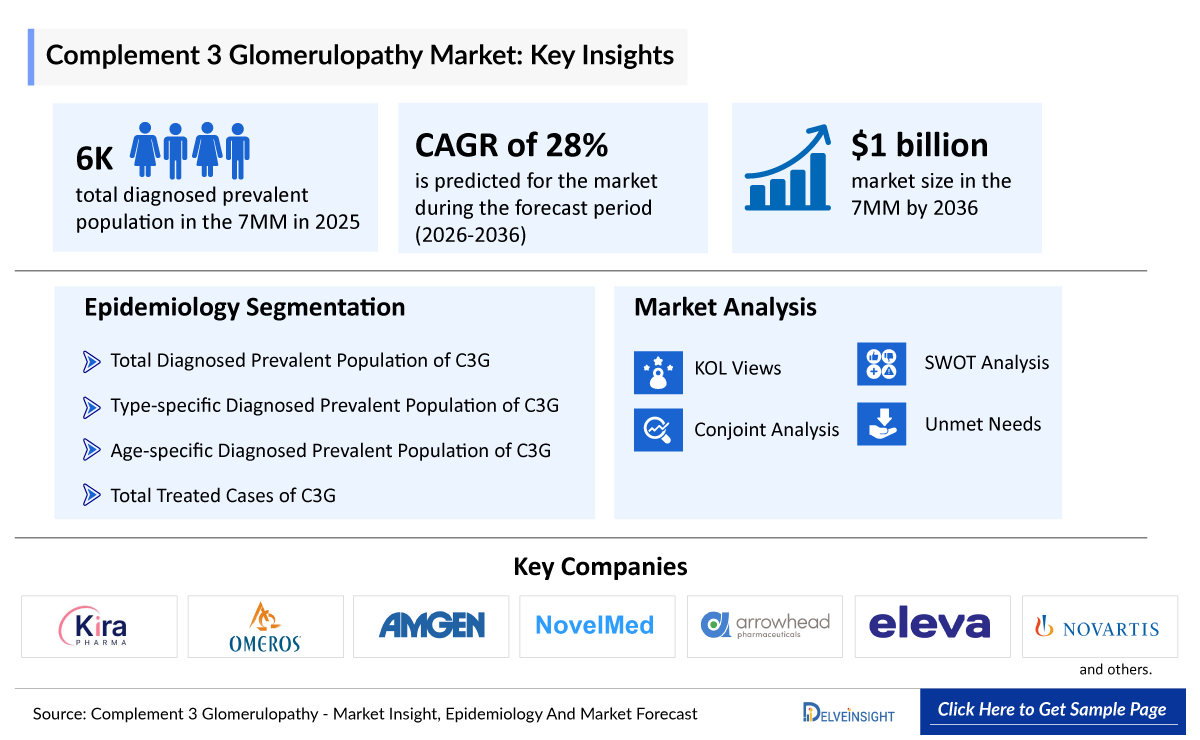
- The Complement 3 Glomerulopathy Diagnosed Prevalent Population in the 7MM is expected to grow between 2025 and 2036, driven by advancements in complement biology and enhanced diagnostic capabilities. Greater use of genetic testing, complement assays, and renal biopsy interpretation supported by multidisciplinary collaboration is enabling earlier and more accurate diagnosis.
- The management of Complement 3 Glomerulopathy is predominantly reliant on off-label use of various prescription drugs, reflecting the unmet need for approved, targeted therapies. Current treatment options include immunosuppressants, corticosteroids, Renin Angiotensin Aldosterone System (RAAS) inhibitors, and other supportive agents such as calcineurin inhibitors and antibodies.
- Additional off-label treatments include monoclonal antibodies such as Eculizumab and Rituximab. These antibodies specifically target the terminal complement pathway by inactivating C5, which can improve renal function and reduce proteinuria.
- FABHALTA became the first therapy approved for the treatment of Complement 3 Glomerulopathy, followed by EMPAVELI/ASPAVELI from Apellis Pharmaceuticals and Sobi. However, a significant challenge remains in the form of a black box warning for life-threatening infections caused by encapsulated organisms (e.g., Neisseria meningitidis, Streptococcus pneumoniae, and Haemophilus influenzae type b) and necessitating vaccination at least 2 weeks before treatment initiation.
- EMPAVELI/ASPAVELI presents a promising therapeutic option for C3G by targeting C3 directly and proximally within the complement cascade. It has demonstrated notable clinical efficacy, nearly doubling the outcomes observed with FABHALTA, thereby distinguishing itself in terms of therapeutic effectiveness.
- Emerging Complement 3 Glomerulopathy Therapies targeting novel mechanisms such as dual complement inhibitors (C5 and Factor H (KP104), MASP-3 inhibitors (Zaltenibart), RNA interference (RNAi) therapeutics targeting complement C3 (ARO-C3), and others are showing promise as potential treatment options.
Complement 3 Glomerulopathy Market Size and Forecast in the 7MM
| 2036 Projected Complement 3 Glomerulopathy Market Size | ~USD 1 billion |
| Complement 3 Glomerulopathy Growth Rate (2026–2036) | 28% CAGR |
Key Factors Driving the Growth of the Complement 3 Glomerulopathy Market
- A deeper understanding of complement dysregulation has led to more targeted and innovative therapies.
- Widespread use of complement assays, genetic testing, and renal biopsy interpretation is enabling earlier and more accurate diagnoses.
- Increased reporting and retrospective chart reviews in nephrology centres suggest that C3G is more common than previously believed, especially in regions with improved access to specialized diagnostics.
- High progression rates to ESKD and lack of approved therapies highlight strong demand for effective treatments.
DelveInsight's ‘Complement 3 Glomerulopathy Market Insights, Epidemiology and Market Forecast – 2036’ report delivers an in-depth understanding of C3G, historical and forecasted epidemiology, as well as the Complement 3 Glomerulopathy Therapeutics Market Trends in the United States, EU4 (Germany, Spain, Italy, and France) and the United Kingdom, and Japan.
The Complement 3 Glomerulopathy Therapeutics Market Report delivers a comprehensive analysis of the current treatment landscape, including standards of care, clinical practices, and evolving therapeutic algorithms. It evaluates Complement 3 Glomerulopathy patient burden trends, revenue & market share dynamics, peak patient share & therapy uptake analysis, and provides an in-depth Complement 3 Glomerulopathy Market Size Assessment, and growth rate projections (Historical & Forecast 2022–2036) across global regions. The Complement 3 Glomerulopathy Therapeutics Market Report highlights key unmet medical needs in C3G and maps the competitive and clinical landscape to uncover high-value opportunities, providing a clear outlook on future market growth potential.
Scope of the Complement 3 Glomerulopathy Market Report | |
|
Study Period |
2022–2036 |
|
Historical Year |
2022–2025 |
|
Forecast Period |
2026–2036 |
|
Base Year |
2026 |
|
Geographies Covered |
|
|
Complement 3 Glomerulopathy Market CAGR (Study period) |
27.4% (2022-2036) |
|
Complement 3 Glomerulopathy Epidemiology Segmentation Analysis |
Patient Burden Assessment
|
|
Complement 3 Glomerulopathy Companies |
|
|
Complement 3 Glomerulopathy Therapies |
|
|
Complement 3 Glomerulopathy Market |
Segmented by
|
|
Analysis |
|
Complement 3 Glomerulopathy Understanding and Treatment Algorithm
Complement 3 Glomerulopathy Overview and Diagnosis
Complement 3 Glomerulopathy, a term established by expert consensus in 2013, refers to a group of rare kidney diseases caused by dysregulation of the alternative complement pathway. It is characterized by predominant C3 deposition in the glomeruli with minimal or absent immunoglobulin, C1q, and C4, making this the key diagnostic feature in patients presenting with glomerulonephritis.
Clinically, C3G presents with proteinuria, hematuria, reduced urine output, low blood protein levels, and edema. Due to its rarity, epidemiological estimates remain uncertain. Diagnosis typically requires a kidney biopsy with evaluation through light microscopy, immunofluorescence (showing dominant C3 staining), and electron microscopy, which further classifies the disease into dense deposit disease (DDD) or C3 Glomerulonephritis, additional assessments include urine and blood tests and glomerular filtration rate (GFR) measurement.
Complement 3 Glomerulopathy Treatment Landscape
Optimal Complement 3 Glomerulopathy treatment has not been established yet, since no treatment has proven effective and beneficial for C3G. All patients diagnosed with C3G should be treated with renoprotective measures, including lifestyle advice, an angiotensin-converting enzyme inhibitor or angiotensin-receptor blocker to control hypertension and proteinuria, and lipid-lowering treatment.
Such medication alone has not been shown to protect against progression to end-stage renal disease but may improve the protective effect of immunosuppressive medication.
Due to the absence of approved Complement 3 Glomerulopathy Treatment/Therapies, as well as therapies that can attack the cause of Complement 3 Glomerulopathy, the treatment regimen focuses on slowing the process of kidney damage from C3G. This treatment regimen may include corticosteroids (often called “steroids”), immunosuppressive drugs, ACE inhibitors and ARBs, diet changes, and complement inhibitors.
FABHALTA became the first FDA-approved therapy for C3G, targeting the alternative complement pathway by inhibiting Factor B. It was followed by EMPAVELI/ASPAVELI, a C3 inhibitor offering broader upstream blockade, expanding treatment options for complement-mediated kidney diseases.
Further details related to treatment are provided in the report…
Complement 3 Glomerulopathy Unmet Needs
The section “unmet needs of C3G” outlines the critical gaps between the current state of patient care, diagnosis, and the ideal & effective management of the disease. It highlights the obstacles experienced by patients, clinicians, and researchers and identifies potential solutions for future progress.
- Overlap with other glomerulopathies - There is a significant chance of misdiagnosis in C3G due to its similarities with IC-MPGN and lupus nephritis
- Absence of early biomarker - Currently no reliable noninvasive biomarker for early or subclinical detection of C3G
- Limited long-term efficacy data - There is a significant gap in long-term real-world evidence of efficacy
- High disease burden associated with C3G progression - Substantial physical and emotional burden on patients and caregivers
.png)
Complement 3 Glomerulopathy Epidemiology
The disease epidemiology covered in the report provides historical as well as forecasted epidemiology segmented by total diagnosed prevalent population of C3G, type-specific diagnosed prevalent population of C3G, age-specific diagnosed prevalent population of C3G, and total treated cases of C3G in the 7MM market covering the United States, EU4 (Germany, France, Italy, and Spain) and the United Kingdom and Japan from 2022 to 2036.
Key Findings from Complement 3 Glomerulopathy Epidemiological Analyses and Forecast
- In 2025, the Complement 3 Glomerulopathy Diagnosed Prevalent Population in the 7MM was around 6,000. This number is expected to rise through 2036, driven by advances in complement biology, improved diagnostics, and wider use of genetic testing, complement assays, and multidisciplinary biopsy evaluation.
- The Complement 3 Glomerulopathy Diagnosed Prevalent Population in the US was around 3,500 in 2025.
- In 2025, Complement 3 Glomerulopathy predominantly affected adults in the US, with 90% of the cases, while the paediatric population accounted for the remaining 10%.
- In Japan, adults are more prevalent in Complement 3 Glomerulopathy compared to paediatrics.
Complement 3 Glomerulopathy Epidemiology Segmentation in the 7MM
- Total Complement 3 Glomerulopathy Diagnosed Prevalent Population
- Complement 3 Glomerulopathy Type-specific Diagnosed Prevalent Population
- Complement 3 Glomerulopathy Age-specific Diagnosed Prevalent Population
- Total Complement 3 Glomerulopathy Treated Cases
Complement 3 Glomerulopathy Market Recent Breakthroughs and Developments
- In January 2026, Sobi announced that the European Commission had approved ASPAVELI for the treatment of adult and adolescent patients aged 12 to 17 years with C3G or primary Immune-Complex Membranoproliferative Glomerulonephritis (IC-MPGN) in combination with a Renin-Angiotensin System (RAS) inhibitor, unless RAS inhibitor treatment is not tolerated or contraindicated.
- In June 2025, Apellis Pharmaceuticals presented new data from the open-label period of the Phase III (VALIANT) study, investigating pegcetacoplan for C3G and primary IC-MPGN. The data were presented as part of a late-breaking session at the ERA Congress.
Complement 3 Glomerulopathy Drug Analysis & Competitive Landscape
The Complement 3 Glomerulopathy drug chapter provides a detailed, market-focused review of approved therapies and the emerging Complement 3 Glomerulopathy Pipeline across Phase I–II clinical trials. It covers the Complement 3 Glomerulopathy Mechanism of Action, clinical trial data, regulatory approvals, patents, collaborations, strategic partnerships, and upcoming key catalysts for each therapy, along with their advantages, limitations, and recent developments.
This section offers critical insights into the Complement 3 Glomerulopathy Treatment landscape, supporting market assessment, competitive analysis, and growth forecasting for the Complement 3 Glomerulopathy Drugs Market.
Complement 3 Glomerulopathy Marketed Drugs
Iptacopan is an oral Factor B inhibitor of the alternative complement pathway. In C3G, overactivation of the alternative complement pathway leads to C3 cleavage within the glomeruli, resulting in C3 deposition and inflammation, which are thought to contribute to the pathogenesis of C3G. By binding to Factor B, iptacopan inhibits the alternative pathway.
-
- In April 2025, the Committee for Medicinal Products for Human Use (CHMP) of the European Medicines Agency (EMA) had adopted a positive opinion and recommended granting a marketing authorization for iptacopan for the treatment of adults with C3G.
- In March 2025, Iptacopan has received US FDA approval for the treatment of adults with C3G.
-
Pegcetacoplan (EMPAVELI/ ASPAVELI): Apellis Pharmaceuticals and Sobi
Pegcetacoplan is a targeted C3 therapy designed to regulate excessive activation of the complement cascade, part of the body’s immune system, which can lead to the onset and progression of many serious diseases. It is approved for the treatment of C3G and primary IC-MPGN in the United States. The therapy is also under investigation for other rare diseases like focal segmental glomerulosclerosis (FSGS).
-
- In January 2026, Sobi announced that the European Commission (EC) has approved pegcetacoplan for the treatment of adult and adolescent patients aged 12 to 17 years with C3G in combination with a renin-angiotensin system (RAS) inhibitor, unless RAS inhibitor treatment is not tolerated or contraindicated.
- In July 2025, the US FDA approved pegcetacoplan as the first treatment for C3G or primary IC-MPGN in patients 12 years of age and older.
- In February 2025, the EMA has validated an indication extension application for pegcetacoplan for the treatment of C3G and primary IC-MPGN.
|
Drug |
Developer |
MoA |
RoA |
Molecule Type |
Patient segment |
Approval year |
|
Iptacopan (FABHALTA/ FABIHARTA) |
Novartis |
CFB inhibitor |
Oral |
Small molecule |
Adults with C3G, to reduce proteinuria |
US: 2025 EU: 2025 JP: 2025 |
|
Pegcetacoplan (EMPAVELI/ ASPAVELI) |
Apellis Pharmaceuticals and Sobi |
C3 inhibitor |
SC |
Cyclic peptide conjugated to a linear polyethylene glycol molecule |
Adult and pediatric patients aged 12 years and older with C3G or primary IC-MPGN, to reduce proteinuria |
US: 2025 |
Complement 3 Glomerulopathy Pipeline Analysis
-
KP104: Kira Pharmaceuticals
KP104 is a potent, first-in-class bifunctional biologic designed to simultaneously and selectively block the alternative and terminal pathways, providing a powerful and synergistic method of targeting validated drivers of complement disease. KP104 is entering Phase II proof-of-concept trials across multiple indications with significant unmet need, including IgAN, C3G, SLE-TMA, and PNH. Phase II trials will be conducted globally, including in the US, China, Australia, and South Korea.
-
Zaltenibart (OMS906): Omeros Corporation
Zaltenibart is an investigational human monoclonal antibody targeting Mannan-binding lectin-associated Serine Protease-3 (MASP-3), the key and most proximal activator of the complement system’s alternative pathway. Following completion of the Phase II study, and assuming strong evidence of efficacy, Omeros Corporation plans to initiate a Phase III trial in C3G.
|
Product |
Company |
Mechanism of Action |
Phase |
ROA |
Anticipated Launch in the US |
|
KP104 |
Kira Pharmaceuticals |
Dual-targeting complement inhibitor (C5 and Factor H) |
II |
IV and SC |
2030 |
|
Zaltenibart (OMS906) |
Novo Nordisk/ Omeros Corporation |
MASP-3 inhibitor |
II |
IV |
Information is available in the full report |
|
TAVNEOS (avacopan) |
Amgen |
Complement 5a Receptor 1 (C5aR1) antagonist |
II |
Oral | |
|
ARO-C3 |
Arrowhead Pharmaceuticals |
RNA interference (RNAi) therapeutic targeting complement C3 |
I/IIa |
SC | |
|
CPV-104*** |
Eleva |
Recombinant proteins |
I |
IV and SC |
Complement 3 Glomerulopathy Companies
- Novartis
- Apellis Pharmaceuticals
- Sobi
- Kira Pharmaceuticals
- Novo Nordisk/Omeros Corporation
- Arrowhead Pharmaceuticals, and others
 Complement 3 Glomerulopathy Market Outlook
The management of C3G is predominantly reliant on off-label use of various prescription drugs, reflecting the unmet need for approved, targeted therapies. Current treatment options include immunosuppressants, corticosteroids, Renin Angiotensin Aldosterone System (RAAS) inhibitors, and other supportive agents such as calcineurin inhibitors and antibodies.
Additional off-label treatments include calcineurin inhibitors, other immunosuppressive agents, and monoclonal antibodies such as eculizumab and rituximab. These antibodies specifically target the terminal complement pathway by inactivating C5, which can improve renal function and reduce proteinuria. Patients with evidence of terminal pathway activation, indicated by high levels of C5b-9 in circulation and kidney biopsies, may particularly benefit from these therapies, a profile commonly observed in C3G.
The treatment landscape for C3G saw a breakthrough in March 2025 with the FDA approval of Iptacopan, the first targeted therapy for this condition. In July 2025, the FDA approved pegcetacoplan for the treatment of C3G and primary IC-MPGN in patients aged 12 years and older. This marks a significant expansion in targeted therapies for complement-mediated kidney diseases.
Key Findings from Complement 3 Glomerulopathy Market Forecast Report
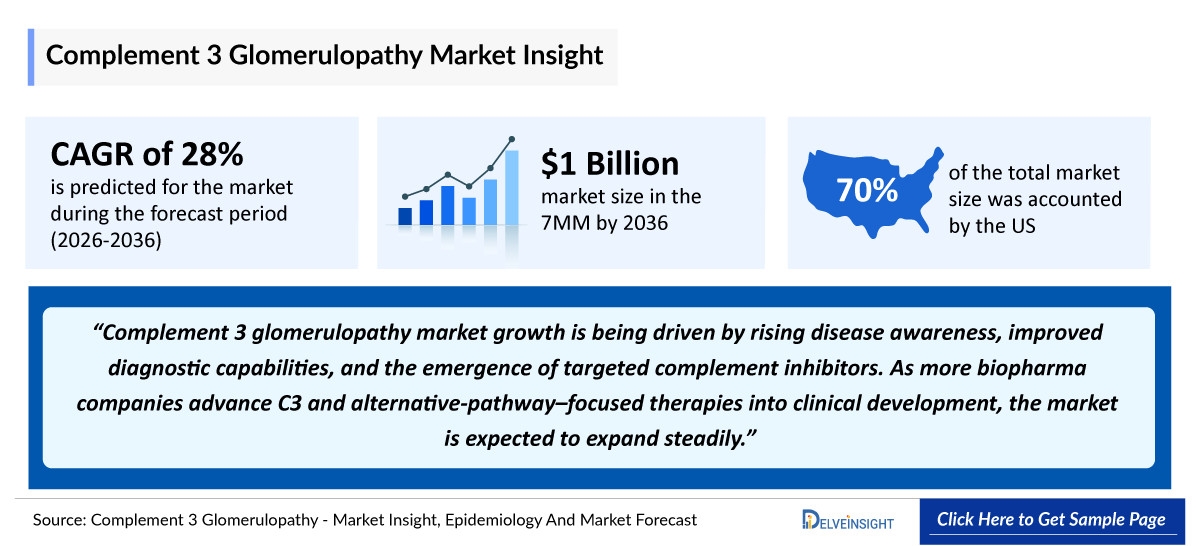
- The US accounts for the largest Complement 3 Glomerulopathy Treatment Market Size, in comparison to EU4 and the UK, and Japan, i.e., ~70% of the 7MM.
- The emerging Complement 3 Glomerulopathy Pipeline holds a few significant products in development by prominent key Complement 3 Glomerulopathy Companies include Kira Pharmaceuticals (KP104), Novo Nordisk/Omeros Corporation (Zaltenibart [OMS906]), Arrowhead Pharmaceuticals (ARO-C3), and others. These therapies are expected to create an upward shift in the C3G treatment market after their launch in the coming years, in the 7MM.
Complement 3 Glomerulopathy Drug Class/Insights into Leading Emerging and Marketed Therapies (2022–2036 Forecast)
The Complement 3 Glomerulopathy Therapeutics Market comprises bifunctional fusion proteins, small molecules, RNAi therapeutics, and other, each targeting different aspects of C3. MASP-3 inhibitor: Zaltenibart is an investigational human monoclonal antibody targeting Mannan-binding Lectin-associated Serine Protease-3 (MASP-3), the key and most proximal activator of the complement system’s alternative pathway.
On the other hand, ruxoprubart, an engineered human immunoglobulin, exhibits dual specificity: It blocks only the Alternative Pathway, dysregulated by the disease, and binds Bb, which has no binding to Factor B. Dual-targeting complement inhibitor (C5 and Factor H): KP104 is a potent, first-in-class bifunctional biologic designed to simultaneously and selectively block the alternative and terminal pathways, providing a powerful and synergistic method of targeting validated drivers of complement disease.
Monoclonal Antibodies and small molecules together define the core innovation landscape, with peptides currently commercially validated and small molecules driving pipeline growth.
Complement 3 Glomerulopathy Drugs Uptake
This section focuses on the uptake rate of potential Complement 3 Glomerulopathy drugs expected to be launched in the market during 2026–2036, which depends on the competitive landscape, safety, efficacy data, and order of entry. It is important to understand that the key players evaluating their novel therapies in the pivotal and confirmatory trials should remain vigilant when selecting appropriate comparators to stand the greatest chance of a positive opinion from regulatory bodies, leading to approval, smooth launch, and rapid uptake.
Following the approvals of Iptacopan and Pegcetacoplan, the Complement 3 Glomerulopathy Treatment Market Landscape is rapidly evolving, with several complement-targeted therapies in clinical development. These investigational agents aim to address unmet needs such as long-term kidney preservation, broader patient eligibility (e.g., pediatrics, transplant), and alternative mechanisms of action.
Further detailed analysis of emerging therapies, drug uptake in the report…
Complement 3 Glomerulopathy Market Access and Reimbursement of Approved Therapies
The Complement 3 Glomerulopathy Therapeutics Market Report provides detailed insights on the country-wise accessibility and reimbursement scenarios, programs making accessibility easier and out-of-pocket costs more affordable, insights on patients insured under federal or state government prescription drug programs, etc.
Reimbursement is a crucial factor that affects the drug’s access to the market. Often, the decision to reimburse comes down to the price of the drug relative to the benefit it produces in treated patients. To reduce the healthcare burden of these high-cost therapies, many payment models are being considered by payers and other industry insiders.
FABHALTA Co-pay Plus
- If eligible, Co-pay Plus may help patients pay for their FABHALTA, including refills. Co-pay Plus is not health insurance, but it can help cover out-of-pocket expenses related to their prescription.
- Pay as little as USD 0 with Co-pay Plus
- Eligible patients with private insurance may pay as little as USD 0
- Annual benefit limit of USD 20,000 per calendar year
Complement 3 Glomerulopathy Therapies Price Scenario & Trends
Pricing and analogue assessment of Complement 3 Glomerulopathy Therapies highlights evolving price dynamics structures. This section summarizes the cost of approved treatments, closest and most approproiate analogue selection for emerging therapies, and understanding of how pricing influences market access, adherence, and long-term uptake.
Pricing of Complement 3 Glomerulopathy Approved Drugs
EMPAVELI is administered subcutaneously at 1,080 mg (20 mL) twice weekly. Following a 26-week controlled phase, patients may enter a 26-week open-label extension. At USD 4,535.96 per dose (2023 WAC), the estimated annual cost is USD 500,469.
Latest KOL Views on Complement 3 Glomerulopathy
To keep up with the real-world scenario in current and emerging market trends, we take opinions from Key Industry leaders working in the domain through primary research to fill the data gaps and validate our secondary research. Industry Experts contacted for insights on the evolving treatment landscape, patient reliance on conventional therapies, patient therapy switching acceptability, and drug uptake, along with challenges related to accessibility, including Medical/scientific writers, nephrologists, Consultant Nephrologists, and Honorary Associate Professor at University Hospitals of Leicester NHS Trust, and Others.
Delveinsight’s analysts connected with 20+ KOLs to gather insights; however, interviews were conducted with 10+ KOLs in the 7MM. Their opinion helps understand and validate current and emerging therapy treatment patterns or Complement 3 Glomerulopathy market trends.
|
Region |
Key Opinion Leaders (KOLs) and Subject Matter Experts (SMEs) |
|
United States |
“Complement inhibition is showing promising results in the treatment of C3G as well as other complement-mediated disorders. This strategy has the potential to provide patients with targeted therapy and possibly avoid the toxicity from nonspecific immunosuppressive agents such as corticosteroids.” - MD, Columbia University, US |
|
United Kingdom |
“Lack of compliance and loss of follow-up were frequent pitfalls. Optimal kidney protection with renin-angiotensin-aldosterone inhibitors (and now gliflozins) or immunosuppressive regimen (e.g., mycophenolate mofetil and glucocorticoids) was not reached in all patients, blurring its evaluation in the long term.” - MD, Center University Hospital of Toulouse, France |
Complement 3 Glomerulopathy Report Qualitative Analysis: SWOT and Conjoint Analysis
- We perform qualitative and Complement 3 Glomerulopathy Therapeutics Market Intelligence analysis using various approaches, such as SWOT analysis and conjoint analysis.
- In the SWOT analysis of Complement 3 Glomerulopathy, strengths, weaknesses, opportunities, and threats in terms of disease diagnosis, patient awareness, patient burden, Complement 3 Glomerulopathy Competitive Landscape, cost-effectiveness, and geographical accessibility of therapies are provided.
- Conjoint analysis analyzes emerging therapies based on relevant attributes such as safety, efficacy, frequency of administration, route of administration, and order of entry. Scoring is given based on these parameters to analyze the effectiveness of therapy.
- The team of analysts analyzes promising Complement 3 Glomerulopathy Emerging Therapies based on relevant attributes such as safety, efficacy, frequency of administration, route of administration, and order of entry. In efficacy, the trial’s primary and secondary outcome measures are evaluated, whereas the therapies’ safety is evaluated, wherein the acceptability, tolerability, and adverse events are majorly observed.
- In addition, the scoring is also based on the route of administration, order of entry, probability of success, and the addressable patient pool for each therapy. According to these parameters, the final weightage score and the ranking of the emerging therapies are decided.
Scope of the Complement 3 Glomerulopathy Market Report
- The Complement 3 Glomerulopathy Therapeutics Market Report covers a segment of key events, an executive summary, a descriptive overview, explaining their causes, signs and symptoms, pathogenesis, and currently available treatments.
- Comprehensive insight has been provided into the epidemiology segments and forecasts, the future growth potential of the diagnosis rate, and disease progression along Complement 3 Glomerulopathy Treatment guidelines.
- Additionally, an all-inclusive account of both the current and emerging treatments, along with the elaborative profiles of late-stage and prominent therapies, will have an impact on the current Complement 3 Glomerulopathy Treatment landscape.
- A detailed review of the Complement 3 Glomerulopathy Therapeutics Market, historical and forecasted Complement 3 Glomerulopathy Market Size, Complement 3 Glomerulopathy Drugs Market Share by therapies, detailed assumptions, and rationale behind our approach is included in the report, covering the 7MM drug outreach.
- The Complement 3 Glomerulopathy Therapeutics Market Report provides an edge while developing business strategies by understanding trends through SWOT analysis and expert insights/KOL views, patient journey, and treatment preferences that help in shaping and driving the 7MM Complement 3 Glomerulopathy Drugs Market.
Complement 3 Glomerulopathy Market Report Insights
- Complement 3 Glomerulopathy Patient Population Forecast
- Complement 3 Glomerulopathy Therapeutics Market Size
- Complement 3 Glomerulopathy Pipeline Analysis
- Complement 3 Glomerulopathy Market Size and Trends
- Complement 3 Glomerulopathy Market Opportunity (Current and Forecasted)
Complement 3 Glomerulopathy Market Report Key Strengths
- Epidemiology-based (Epi-based) Bottom-up Forecasting
- Artificial Intelligence (AI)-enabled Market Research Report
- 11-year forecast
- C3G Market Outlook (North America, Europe, Asia-Pacific)
- Patient Burden Trends (by geography)
- Complement 3 Glomerulopathy Treatment Addressable Market (TAM)
- Complement 3 Glomerulopathy Competitive Landscape
- Complement 3 Glomerulopathy Major Companies InSIGHTS
- Complement 3 Glomerulopathy Price Trends and Analogue Assessment
- Complement 3 Glomerulopathy Therapies Drug Adoption/Uptake
- Complement 3 Glomerulopathy Therapies Peak Patient Share Analysis
Complement 3 Glomerulopathy Market Report Assessment
- Complement 3 Glomerulopathy Current Treatment Practices
- Complement 3 Glomerulopathy Unmet Needs
- Complement 3 Glomerulopathy Clinical Development Analysis
- Complement 3 Glomerulopathy Emerging Drugs Product Profiles
- Complement 3 Glomerulopathy Market Attractiveness
- Complement 3 Glomerulopathy Qualitative Analysis (SWOT and Conjoint Analysis)
Key Questions Answered in the Complement 3 Glomerulopathy Treatment Market Report
Complement 3 Glomerulopathy Therapeutics Market Insights
- What was the Complement 3 Glomerulopathy Treatment Market Size, the Complement 3 Glomerulopathy Market Size by therapies, Complement 3 Glomerulopathy Drugs Market Share (%) distribution in 2025, and what would it look like by 2036? What are the contributing factors for this growth?
- What are the anticipated pricing variations among different geographies for the emerging therapies in the future?
- What can be the future treatment paradigm of C3G?
- What are the disease risks, burdens, and unmet needs of Complement 3 Glomerulopathy?
- What will be the growth opportunities across the 7MM concerning the patient population with C3G?
- Who is the major future competitor in the market, and how will the competitors affect their market share?
- What are the current options for the treatment of C3G? What are the current guidelines for treating C3G in the US, Europe, and Japan?
Reasons to Buy the Complement 3 Glomerulopathy Therapeutics Market Report
- The Complement 3 Glomerulopathy Therapeutics Market Report will help in developing business strategies by understanding the latest trends and changing treatment dynamics driving the Complement 3 Glomerulopathy Drugs Market.
- Insights on patient burden/disease Complement 3 Glomerulopathy Incidence, evolution in diagnosis, and factors contributing to the change in the epidemiology of the disease during the forecast years.
- Understand the existing Complement 3 Glomerulopathy Drugs Market opportunities in varying geographies and the growth potential over the coming years.
- Identifying strong upcoming players in the Complement 3 Glomerulopathy Drugs Market will help devise strategies to help get ahead of competitors.
- Detailed analysis, ranking of class-wise potential current, and emerging therapies under the conjoint analysis section to provide visibility around leading classes.
- To understand KOLs’ perspectives on the accessibility, acceptability, and compliance-related challenges of existing treatment to overcome barriers in the future.
- Detailed insights on the unmet needs of the existing Complement 3 Glomerulopathy Drugs Market so that the upcoming players can strengthen their development and launch strategy.
- This Artificial Intelligence (AI) enabled report summarize and simplify complex datasets within the report into clear, actionable insights for stakeholders, investors, and healthcare providers, enabling faster, data driven decisions.
Stay updated with us for Recent Articles