
Dementia-related Psychosis Market Summary
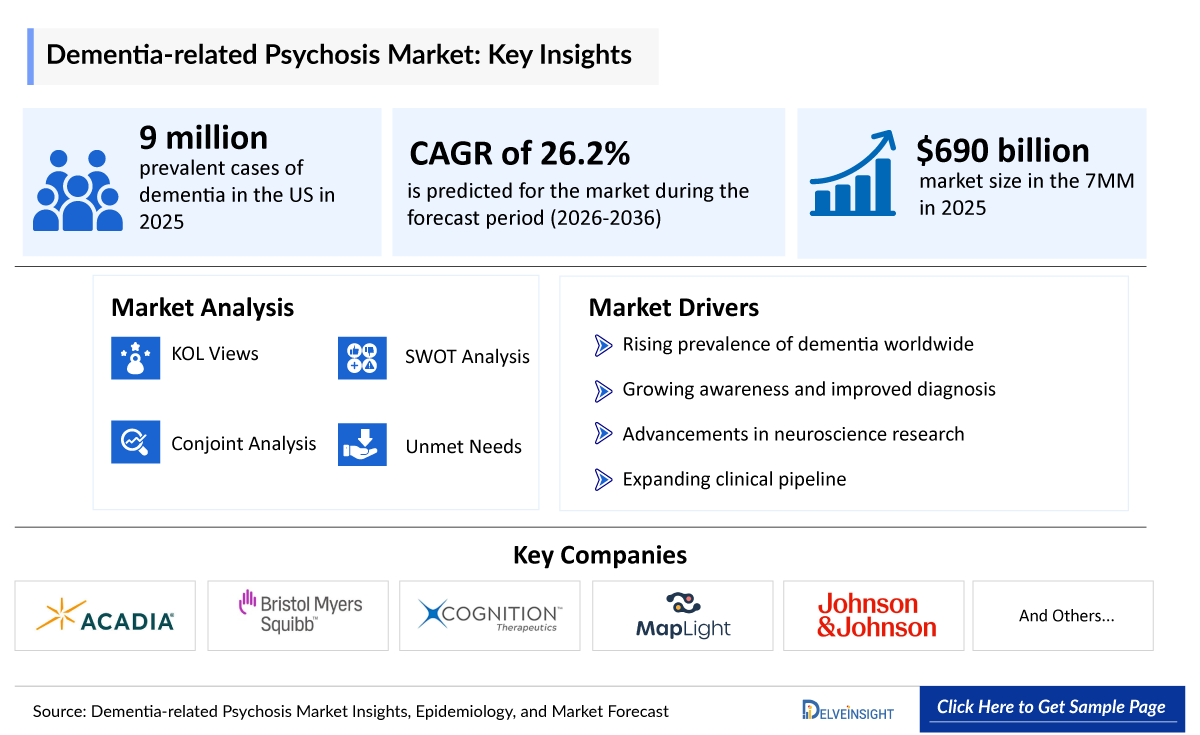
- According to DelveInsight’s analysis, the Dementia-related Psychosis Therapeutics Market Size accounted for approximately USD 700 million in the leading markets (the United States, the EU4 (Germany, France, Italy, and Spain), the United Kingdom, and Japan) in 2025.
- The leading Dementia-related Psychosis Companies include Acadia Pharmaceuticals, Bristol Myers Squibb, Cognition Therapeutics, MapLight Therapeutics, Johnson & Johnson/ Intra-Cellular Therapies, AgeneBio, and others.
Dementia-related Psychosis Market and Epidemiology Analysis
- DRP reported more than 5 million diagnosed prevalent cases in the 7MM in 2025. In the US, more than 2 million cases were reported, of which Alzheimer’s disease Dementia reported the maximum number of cases.
- Diagnosis is primarily clinical and relies on structured assessment tools such as the Neuropsychiatric Inventory (NPI) and Brief Psychiatric Rating Scale (BPRS), along with caregiver-reported observations to evaluate the presence, frequency, and severity of hallucinations and delusions and their impact on daily functioning.
- Despite its high clinical burden, DRP management remains constrained by a continued reliance on off-label antipsychotics, antidepressants, and sedatives, underscoring a critical lack of therapies specifically approved for this indication. While pimavanserin (NUPLAZID) is approved for hallucinations and delusions associated with Parkinson’s Disease Psychosis, it was unable to secure approval for broader dementia-related psychosis; nevertheless, it continues to be used off-label in DRP settings, reflecting the limited availability of targeted and approved treatment options.
- The emerging Dementia-related Psychosis Pipeline is diverse and mechanism-driven, including Remlifanserin (ACP-204), COBENFY (KarXT), Zervimesine (CT1812), ML-007C-MA, among others, reflecting increasing focus on serotonergic, cholinergic, synaptic, and neuromodulatory pathways that may drive future advancements in the management of DRP.
- A significant Dementia-related Psychosis Unmet Need is the absence of therapies specifically approved for this indication; the only available agent is approved for psychosis in Parkinson’s disease dementia rather than DRP broadly. Moreover, the clinical pipeline remains limited and largely focused on individual subtypes such as psychosis in Alzheimer’s disease, dementia with Lewy bodies and Parkinson’s disease, with no therapies being directly developed for DRP as a unified condition, thereby restricting comprehensive treatment advancement.
Dementia-related Psychosis Market Size and Forecast
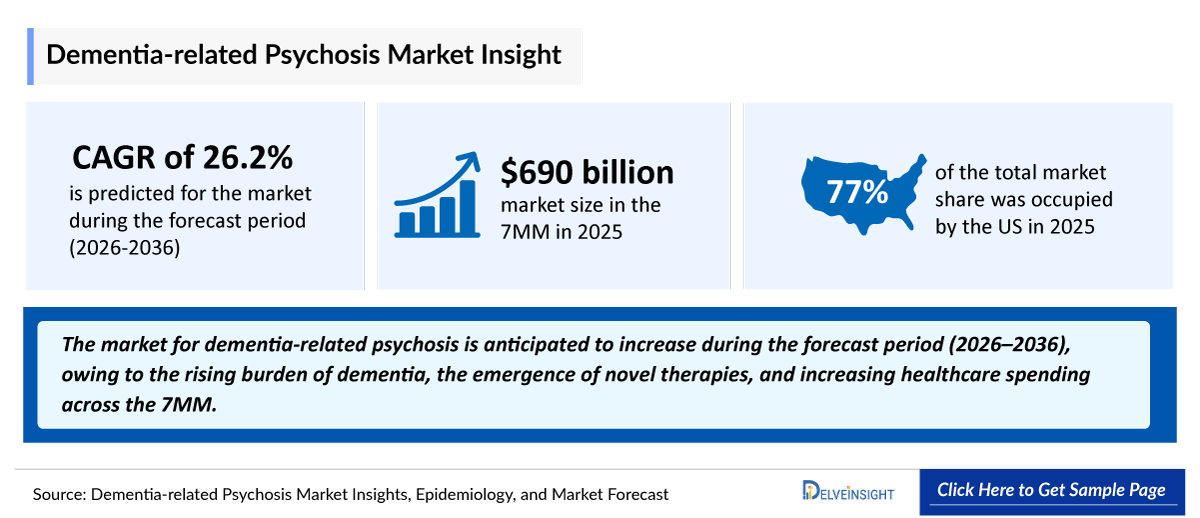
| 2025 Dementia-related Psychosis Market Size in the 7MM | ~USD 690 Million |
| 2036 Projected Dementia-related Psychosis Market Size in the 7MM | ~USD 7 Billion |
| Dementia-related PsychosisGrowth Rate (2026-2036) | 26.2% CAGR |
Key Factors Driving the Growth of Dementia-related Psychosis Market
-
Rising Prevalence of Dementia across Aging Populations
One of the primary drivers of the dementia-related psychosis market is the growing global burden of dementia, particularly among the elderly. As life expectancy increases worldwide, the incidence of neurodegenerative disorders such as Alzheimer's disease, Lewy body dementia, vascular dementia, and Parkinson's disease dementia continues to rise. A significant proportion of these patients develop psychotic symptoms, including hallucinations and delusions, creating a substantial unmet clinical need for effective therapies.
-
Increasing Awareness and Improved Diagnosis
Healthcare providers and caregivers are becoming more aware of the neuropsychiatric complications associated with dementia. Improved screening tools, standardized diagnostic criteria, and greater education among clinicians have enhanced the identification of dementia-related psychosis (DRP). Earlier diagnosis allows for timely intervention, increasing the number of patients eligible for pharmacological and supportive treatment.
-
Growing Demand for Safe and Effective Therapies
Historically, treatment options for dementia-related psychosis have been limited, with off-label use of antipsychotics often associated with serious safety concerns, including increased mortality in elderly patients. The demand for therapies specifically developed and approved for DRP is driving research investments and market expansion. Novel treatments with improved efficacy and safety profiles are expected to transform patient management and fuel market growth.
-
Advancements in Drug Development and Clinical Research
The dementia-related psychosis pipeline has expanded considerably in recent years, supported by advances in neuroscience, biomarker research, and a better understanding of disease mechanisms. Pharmaceutical companies are investigating innovative therapeutic approaches targeting serotonergic, dopaminergic, glutamatergic, and other neurological pathways. Continuous clinical trials and regulatory progress are expected to introduce new treatment options, strengthening the overall market landscape.
-
Favorable Regulatory Support and Expedited Approvals
Regulatory agencies are increasingly recognizing the urgent need for effective treatments for neuropsychiatric disorders associated with dementia. Programs such as Breakthrough Therapy, Fast Track, and Priority Review have encouraged pharmaceutical companies to accelerate the development of innovative therapies. Supportive regulatory frameworks reduce development timelines and promote faster market access for promising candidates.
-
Increasing Caregiver Burden Driving Treatment Adoption
Psychotic symptoms significantly increase caregiver stress, hospitalization rates, and institutionalization among dementia patients. Families and healthcare providers are actively seeking treatments that can reduce behavioral disturbances and improve patients' quality of life. This growing caregiver burden is encouraging broader acceptance of both pharmacological and non-pharmacological interventions, thereby supporting market growth.
DelveInsight’s “Dementia-related Psychosis Market Insights, Epidemiology, and Market Forecast – 2036” report delivers an in-depth understanding of DRP, historical and forecasted epidemiology, as well as the DRP market trends in the United States, EU4 (Germany, France, Italy, and Spain), the United Kingdom, and Japan.
The Dementia-related Psychosis Treatment Market Report delivers a comprehensive analysis of the current treatment landscape, including standards of care, clinical practices, and evolving therapeutic algorithms. It evaluates DRP patient burden trends, revenue & market share dynamics, peak patient share & therapy uptake analysis, and provides an in-depth market size assessment, and growth rate projections (Historical & Forecast 2022–2036) across the 7MM regions. The report highlights key unmet medical needs in DRP and maps the competitive and clinical landscape to uncover high-value opportunities, providing a clear outlook on future market growth potential.
Scope of the Dementia-related Psychosis Market Report | |
|
Study Period |
2022–2036 |
|
Historical Year |
2022–2025 |
|
Forecast Period |
2026–2036 |
|
Base Year |
2025 |
|
Geographies Covered |
|
|
Dementia-related Psychosis Market CAGR (Forecast period) | |
|
Dementia-related Psychosis Epidemiology Segmentation Analysis |
Patient Burden Assessment
|
|
Dementia-related Psychosis Companies |
And more |
|
Dementia-related Psychosis Therapies |
And more |
|
Dementia-related Psychosis Market |
Segmented by
|
|
Analysis |
|
Dementia-related Psychosis Understanding
Dementia-related Psychosis Overview
Dementia is not merely about memory loss; it is a clinical syndrome where majority of patients experience Behavioral and Psychological Symptoms (BPSD). The most distressing of these is Dementia-related Psychosis, defined by hallucinations and delusions that persist for at least one month.
Clinical signs vary by subtype: Alzheimer’s often involves delusions of theft, while Lewy Body or Parkinson’s dementia is marked by vivid visual hallucinations. Beyond these, patients often face personality shifts, apathy, anxiety, and “sundowning” (worsening symptoms in the evening), all of which significantly increase the burden on caregivers.
Dementia-related Psychosis Diagnosis
Accurate diagnosis is crucial for delivering targeted interventions, such as appropriate antipsychotic medications, and for avoiding harm caused by misdiagnosis (e.g., treating pain-related agitation with antipsychotics instead of pain management). Current clinical criteria state that hallucinations and delusions must be present for at least 1-month to support a diagnosis of psychosis in dementia. Experts also agree that the duration and the severity of the symptoms should be addressed as separate clinical factors.
Current Dementia-related Psychosis Treatment Landscape
- Nonpharmacological interventions: They are the preferred first-line approach for managing psychotic symptoms because they address underlying triggers without medication side effects. Key strategies include improving the environment (better lighting, DRPep regulation, familiar surroundings, and correcting sensory impairments), using behavioral approaches (personalized activities and validation therapy to reduce distress), and enhancing sensory engagement (music therapy and familiar video recordings) to calm patients and reduce hallucinations and delusions.
- Pharmacological interventions: Pharmacological measures are considered second-line therapy, reserved for situations where non-pharmacological efforts are insufficient or when the patient’s behavior poses an immediate risk of harm. The emergence of NUPLAZID marks a significant milestone in DRP treatment, offering a specialized approach for patients with Parkinson’s, Alzheimer’s, and Lewy Body-related psychosis. By selectively targeting 5-HT2A receptors without blocking dopamine, it addresses the urgent need for a therapy that treats psychotic symptoms while preserving motor stability.
Further details related to country-based variations are provided in the report…
Dementia-related Psychosis Unmet Needs
The section “unmet needs of DRP” outlines the critical gaps between the current state of patient care, diagnosis, and the ideal & effective management of the disease. It highlights the obstacles experienced by patients, clinicians, and researchers and identifies potential solutions for future progress.
- Scarcity of Approved and Targeted Therapies in DRP
- Efficacy Limitations and Safety Constraints in DRP Treatment
- Subtype Heterogeneity Limits Standardized DRP Care
- Diagnostic Overlap Delays DRP Identification and others…..
Note: Comprehensive unmet needs insights in DRP and their strategic implications are provided in the full report…
Dementia-related Psychosis Epidemiology
Key Findings from Dementia-related Psychosis Epidemiological Analysis and Forecast
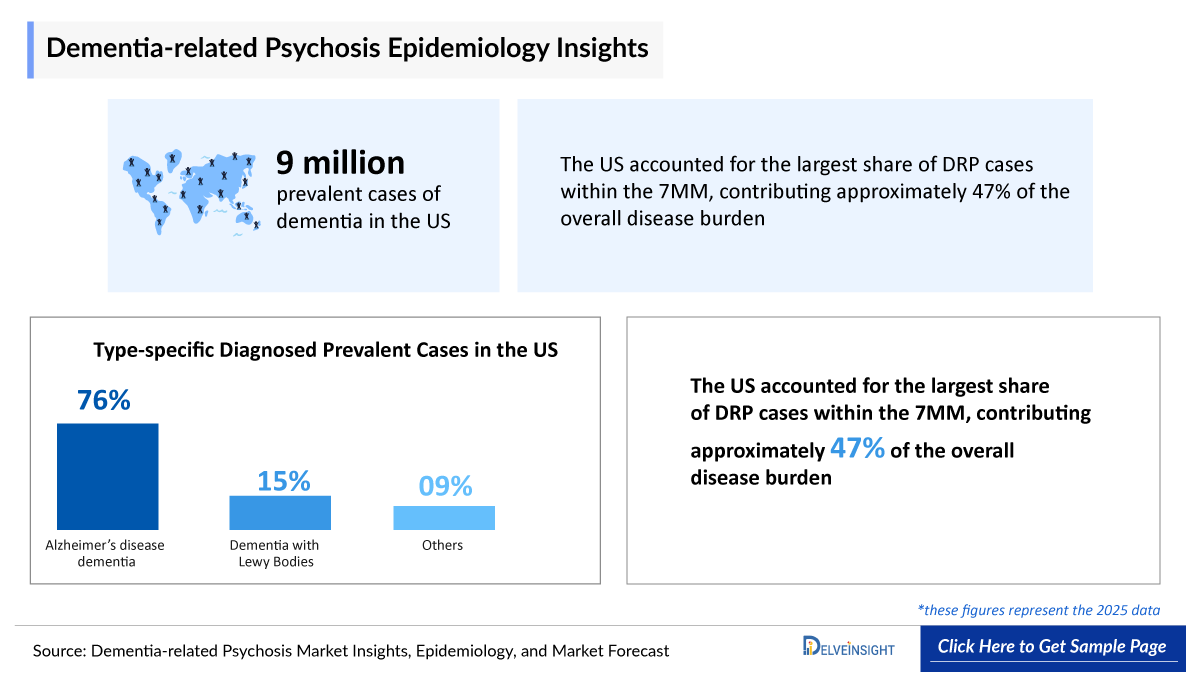
- The US accounted for the largest share of DRP cases within the 7MM, contributing approximately 47% of the overall disease burden, reflecting higher diagnosed prevalence, greater clinical recognition of psychotic symptoms, and more comprehensive reporting practices compared to other regions.
- In 2025, the diagnosed prevalent cases of dementia in the US were distributed by type, with Alzheimer’s disease dementia accounting for more than 5 million cases, followed by others with more than 1 million cases, and DLB with nearly 590,000 cases.
- Among EU4 and the UK, Germany accounted for the highest share of total diagnosed prevalent cases of dementia, contributing approximately 32% of the total cases, followed by France with 22%. In 2025, the total diagnosed prevalent cases of dementia in EU4 and the UK were more than 5 million.
- In 2025, apathy accounted for the largest share of symptoms-specific diagnosed prevalent dementia cases in Japan, with more than 1 million cases, followed by others, delusions, and hallucinations. Cases across all symptom categories are expected to increase by 2036, reflecting a rising burden and improved recognition.
Dementia-related Psychosis Epidemiology Segmentation in the 7MM
- Total Diagnosed Prevalent Cases of Dementia
- Type-specific Diagnosed Prevalent Cases of Dementia
- Type-specific Diagnosed Prevalent Cases of Dementia-related Psychosis
- Total Diagnosed Prevalent Cases of Dementia-related psychosis
- Symptoms-specific Diagnosed Prevalent Cases in Dementia
- Dementia Related Psychosis Treated Cases
Dementia-related Psychosis Market Recent Breakthroughs and Developments
- In December 2025, Bristol Myers Squibb announced the continuation of the ADEPT-2 Phase III trial in Alzheimer’s disease psychosis (ADP) following a site-level data review and recommendation from the independent Data Monitoring Committee.
- In November 2023, Acadia Pharmaceuticals announced the initiation of a Phase II clinical study to evaluate the efficacy and safety of ACP-204 for the treatment of hallucinations and delusions associated with ADP.
Dementia-related Psychosis Drug Analysis & Competitive Landscape
The DRP drug chapter provides a detailed, market-focused review of approved therapies and the emerging Dementia-related Psychosis pipeline across Phase I-III clinical trials. It covers the mechanism of action, clinical trial data, regulatory approvals, patents, collaborations, strategic partnerships, upcoming key catalysts for each therapy, along with their advantages, limitations, and recent developments. This section offers critical insights into the Dementia-related Psychosis treatment landscape, supporting market assessment, competitive analysis, and growth forecasting for the Dementia-related Psychosis Therapeutics market.
Dementia-related Psychosis Approved Therapies
-
Pimavanserin (NUPLAZID): Acadia Pharmaceuticals
Pimavanserin (NUPLAZID) is an atypical antipsychotic indicated for the treatment of hallucinations and delusions associated with PDP. It is the first and only prescription medication approved by the US Food and Drug Administration (FDA) for the treatment of hallucinations and delusions associated with PDP.
The effect of pimavanserin could be mediated through a combination of inverse agonist and antagonist activity at serotonin 5-HT2A receptors and, to a lesser extent, at serotonin 5-HT2C receptors. It is used off-label in dementia-related psychosis as well to treat hallucinations and delusions.
- In April 2016, the US FDA approved NUPLAZID as the first drug approved for the treatment of hallucinations and delusions associated with PDP.
Dementia-related Psychosis Marketed/Approved Therapies | ||||||
|
Drug/Therapy |
Company |
Indication |
Molecule Type |
MoA |
RoA |
Marketed Region |
|
Pimavanserin (NUPLAZID) |
Acadia Pharmaceuticals |
Hallucinations and delusions associated with PDP |
Small Molecule |
Serotonin 2A receptor inverse agonists; Serotonin 5-HT2A receptor antagonists |
Oral |
US: 2016 |
Dementia-related Psychosis Pipeline Analysis
-
ACP-204 (Remlifanserin): Acadia Pharmaceuticals
ACP-204 (Remlifanserin) is a novel, highly selective 5-HT2A receptor inverse agonist being developed for the treatment of psychosis associated with Alzheimer’s disease. By selectively modulating serotonergic pathways implicated in neuropsychiatric symptomatology, the therapy aims to provide effective symptom control with an improved tolerability profile compared with traditional antipsychotics.
Acadia Pharmaceuticals has recently initiated a Phase III clinical trial to further evaluate the efficacy and safety of ACP-204 in this patient population, with a key clinical readout anticipated in mid-2026.
Competitive Landscape of Dementia-related Psychosis Pipeline Drugs | ||||||
|
Drug Name |
Company |
Highest Phase |
Indication |
RoA |
MoA |
Anticipated Launch in the US |
|
ACP-204 (Remlifanserin) |
Acadia Pharmaceuticals |
III |
ADP & LBDP |
Oral |
5HT2A Receptor Inverse Agonist |
2030 |
|
KarXT (COBENFY) |
Karuna Therapeutics/BMS |
III |
Psychosis associated with Alzheimer’s disease |
Oral |
Muscarinic M1/M4 receptor agonists |
Information is available in the full report |
|
Note: Launch insights are provisional and may change with future report updates or the occurrence of major key catalysts. | ||||||
Dementia-related Psychosis Market Outlook
Current pharmacological management of DRP continues to rely heavily on off-label use of antipsychotic agents, primarily aimed at short-term behavioral stabilization and reduction of severe symptoms. While these agents may provide symptomatic relief, their use is constrained by modest efficacy, safety concerns, and limited durability of benefit, necessitating careful risk–benefit evaluation in clinical practice.
Typical antipsychotics, such as haloperidol, are sometimes used in DRP to manage hallucinations and delusions, particularly in acute settings. Overall, the current pharmacological paradigm for DRP remains largely centered on the use of antipsychotic therapies, often extending beyond their primary indications, to achieve control of hallucinations and delusions in a vulnerable patient population.
Key Findings from Dementia-related Psychosis Market Forecast Report
- In 2025, the Dementia-related Psychosis Treatment Market Size in the US was around USD 530 million. This figure is expected to grow significantly with the introduction of emerging therapies.
- The Dementia-related Psychosis Treatment Market Size of EU4 and the UK was estimated to be more than USD 91 million in 2025.
- Among EU4 and the UK, Germany accounted for the highest Dementia-related Psychosis Drugs Market Share with approximately USD 30 million in 2025, followed by France with more than USD 20 million in the respective year, and the UK capturing the least market with nearly USD 10 million in 2025.
- In 2025, the Dementia-related Psychosis Treatment Market Size was more than USD 65 million in Japan, which is anticipated to increase during the forecast period (2026–2036).
Dementia-related Psychosis Companies
- Acadia Pharmaceuticals
- Karuna Therapeutics/BMS
- Cognition Therapeutics
- MapLight Therapeutics
- Johnson & Johnson/ Intra-Cellular Therapies
- AgeneBio
- AbbVie
Dementia-related Psychosis Drug Class/Insights into Leading Emerging Therapies (2022–2036 Forecast)
Small Molecule: Small molecules are low–molecular weight drugs that can easily cross the blood–brain barrier and target specific receptors involved in neurological disorders. In dementia-related psychosis, small-molecule therapies are designed to reduce hallucinations and delusions while minimizing cognitive decline and motor side effects. An important example is pimavanserin (NUPLAZID), a selective serotonin 5-HT2A receptor inverse agonist approved for Parkinson’s disease psychosis and investigated for dementia-related psychosis. Unlike traditional antipsychotics, pimavanserin does not significantly block dopamine receptors, which helps lower the risk of worsening movement disorders and sedation in elderly patients.
Dementia-related Psychosis Drug Uptake
This section focuses on the uptake rate of potential drugs expected to be launched in the market during the forecast period (2026–2036). The analysis covers the DRP drug’s uptake, performance at peak, factors affecting performance during prime years of growth, patient uptake by therapy, and anticipated sales generated by each drug.
Among the emerging therapies, xanomeline–trospium chloride (COBENFY), developed by Bristol Myers Squibb, is being investigated for psychosis associated with Alzheimer’s disease; however, psychosis associated with Alzheimer's disease-specific efficacy data remain unavailable. Current evidence is largely derived from schizophrenia studies, and no definitive clinical efficacy outcomes have yet been established in Alzheimer’s populations.
Detailed insights of emerging therapies' drug uptake is included in the report…
Dementia-related Psychosis Market Access and Reimbursement of Therapies
The report further provides detailed insights on the country-wise accessibility and reimbursement scenarios, cost-effectiveness scenario of therapies, programs making accessibility easier and out-of-pocket costs more affordable, insights on patients insured under federal or state government prescription drug programs, etc.
The US
The US Reimbursement of Dementia-related Psychosis Therapies Approved | |
|
Drug/Therapy |
Reimbursement Program |
|
Pimavanserin (NUPLAZID) |
USD 0 Co-pay |
Reimbursement is a crucial factor that affects the drug’s access to the market. Often, the decision to reimburse comes down to the price of the drug relative to the benefit it produces in treated patients. To reduce the healthcare burden of these high-cost therapies, many payment models are being considered by payers and other industry insiders.
NOTE: Further Details are provided in the final report.
Dementia-related Psychosis Therapies Price Scenario & Trends
Pricing and analogue assessment of DRP therapies highlights evolving price dynamics structures. This section summarizes the cost of approved treatments, the closest and most appropriate analogue selection for emerging therapies, and understanding of how pricing influences market access, adherence, and long-term uptake.
Pricing of Dementia-related Psychosis Approved Drugs
The treatment course cost of the current standard of care in the US is around USD 150.
Dementia-related Psychosis Industry Experts and Physician Views
To keep up with Dementia-related Psychosis Therapeutics Market Trends, we take Key Opinion Leaders (KOLs) and Subject Matter Experts (SMEs) opinions working in the domain through primary research to fill the data gaps and validate our secondary research. Industry Experts were contacted for insights on the DRP emerging therapies, evolving treatment landscape, patient adherence to conventional therapies, therapy switching trends, drug adoption and uptake, accessibility challenges, and epidemiology and real-world prescription patterns in DRP, including MD, PhD, Instructor, Postdoctoral Researcher, Professor, Researcher, and others.
DelveInsight’s analysts connected with 8+ KOLs to gather insights at country level. Centers such as the Yale School of Medicine, Gerontological Society of America, Massachusetts General Hospital, Neu-Ulm University of Applied Sciences, Paris City University, etc. were contacted.
Their opinion helps understand and validate current and emerging DRP therapies, highlight unmet medical needs, provide epidemiological context, and support strategic decisions for market access, therapy adoption, and pipeline prioritization in DRP.
Region |
Key Opinion Leaders (KOLs) and Subject Matter Experts (SMEs) |
|
United States |
“Dementia-related psychosis is a common and clinically significant neuropsychiatric feature associated with increased plaque and tangle burden and altered dopaminergic activity, representing a distinct dimension of disease progression. Diagnostic challenges and limited efficacy with safety concerns of current treatments highlight the need for more precise and effective therapeutic approaches.” |
|
Japan |
“Management of psychosis in dementia with antipsychotics remains clinically limited, as both typical and atypical agents demonstrate only minimal or negligible benefits on psychotic symptoms. These marginal effects, often comparable to natural symptom fluctuation, are accompanied by increased risks of somnolence, extrapyramidal symptoms, and other adverse outcomes, underscoring the restricted therapeutic value of this class in dementia.” |
Dementia-related Psychosis Report Qualitative Analysis: SWOT and Attribute Analysis
We perform qualitative and Dementia-related Psychosis Therapeutics Market Intelligence analysis using various approaches, such as SWOT analysis and attribute analysis. In the SWOT analysis of DRP, strengths, weaknesses, opportunities, and threats in terms of disease diagnosis, patient awareness, patient burden, competitive landscape, cost-effectiveness, and geographical accessibility of therapies are provide attribute analysis analyzes emerging therapies based on relevant attributes such as safety, efficacy, frequency of administration, route of administration, and order of entry. Scoring is given based on these parameters to analyze the effectiveness of therapy.
The team of analysts analyzes promising Dementia-related Psychosis Emerging Therapies based on relevant attributes such as safety, efficacy, frequency of administration, route of administration, and order of entry. In efficacy, the trial’s primary and secondary outcome measures are evaluated, whereas the therapies’ safety is evaluated, wherein the acceptability, tolerability, and adverse events are majorly observed.
In addition, the scoring is also based on the route of administration, order of entry, probability of success, and the addressable patient pool for each therapy. According to these parameters, the final weightage score and the ranking of the emerging therapies are decided.
Scope of the Dementia-related Psychosis Market Report
- The Dementia-related Psychosis Therapeutics Market Report covers a segment of key events, an executive summary, a descriptive overview, explaining their causes, signs and symptoms, pathogenesis, and currently available treatments.
- Comprehensive insight has been provided into the Dementia-related Psychosis Epidemiology segments and forecasts, the future growth potential of the diagnosis rate, and disease progression along Dementia-related Psychosis Treatment guidelines.
- Additionally, an all-inclusive account of both the current and emerging treatments, along with the elaborative profiles of late-stage and prominent therapies, will have an impact on the current Dementia-related Psychosis Treatment Landscape.
- A detailed review of the Dementia-related Psychosis Therapeutics Market, historical and forecasted Dementia-related Psychosis Treatment Market Size, Dementia-related Psychosis Drugs Market Share by therapies, detailed assumptions, and rationale behind our approach is included in the report, covering the 7MM drug outreach.
- The Dementia-related Psychosis Therapeutics Market Report provides an edge while developing business strategies by understanding trends through SWOT analysis and expert insights/KOL views, patient journey, and treatment preferences that help in shaping and driving the 7MM Dementia-related Psychosis Drugs Market.
Dementia-related Psychosis Market Report Insights
- Dementia-related Psychosis Patient Population Forecast
- Dementia-related Psychosis Therapeutics Market Size
- Dementia-related Psychosis Pipeline Analysis
- Dementia-related Psychosis Market Size and Trends
- Dementia-related Psychosis Market Opportunity (Current and Forecasted)
Dementia-related Psychosis Market Report Key Strengths
- Epidemiology-based (Epi-based) Bottom-up Forecasting
- Artificial Intelligence (AI) - enabled Market Research Report
- 11-year forecast
- Dementia-related Psychosis Market Outlook (North America, Europe, Asia-Pacific)
- Patient Burden Trends (by geography)
- Dementia-related Psychosis Treatment Addressable Market (TAM)
- Dementia-related Psychosis Competitive Landscape
- Dementia-related Psychosis Major Companies Insights
- Dementia-related Psychosis Price Trends and Analogue Assessment
- Dementia-related Psychosis Therapies Drug Adoption/Uptake
- Dementia-related Psychosis Therapies Peak Patient Share analysis
Dementia-related Psychosis Market Report Assessment
- Dementia-related Psychosis Current Treatment Practices
- Dementia-related Psychosis Unmet Needs
- Dementia-related Psychosis Clinical Development Analysis
- Dementia-related Psychosis Emerging Drugs Product Profiles
- Dementia-related Psychosis Therapeutics Market Attractiveness
- Dementia-related Psychosis Qualitative Analysis (SWOT and Attribute analysis)
Key Questions Answered in the Dementia-related Psychosis Therapeutics Market Report
Dementia-related Psychosis Treatment Market Insights
- What was the DRP market size, the market size by therapies, market share (%) distribution in 2025, and what would it look like by 2036? What are the contributing factors for this growth?
- What are the anticipated pricing variations among different geographies for the emerging therapies in the future?
- What can be the future treatment paradigm of DRP?
- What are the disease risks, burdens, and unmet needs of Dementia-related Psychosis?
- What will be the growth opportunities across the 7MM concerning the patient population with Dementia-related Psychosis?
- Who is the major future competitor in the market, and how will the competitors affect their market share?
- What are the current options for the treatment of Dementia-related Psychosis?
- What are the current guidelines for treating DRP in the US, Europe, and Japan?
Reasons to Buy the Dementia-related Psychosis Therapeutics Market Report
- The Dementia-related Psychosis Therapeutics Market Report will help in developing business strategies by understanding the latest trends and changing treatment dynamics driving the Dementia-related Psychosis Drugs Market.
- Bottom up forecasting builds from the affected population to product forecasts, delivering a robust, data driven approach ideal for new therapies and novel classes.
- Insights on patient burden/disease Dementia-related Psychosis Prevalence, evolution in diagnosis, and factors contributing to the change in the epidemiology of the disease during the forecast years.
- Understand the existing market opportunities in varying geographies and the growth potential over the coming years.
- Identifying strong upcoming players in the Dementia-related Psychosis Drugs Market will help devise strategies to help get ahead of competitors.
- Detailed analysis and ranking of class-wise potential current and Dementia-related Psychosis Emerging Therapies under the attribute analysis section to provide visibility around leading classes.
- To understand KOLs’ perspectives on the accessibility, acceptability, and compliance-related challenges of existing treatment to overcome barriers in the future.
- Detailed insights on the unmet needs of the existing Dementia-related Psychosis Drugs Market so that the upcoming players can strengthen their development and launch strategy.
- This Artificial Intelligence (AI) enabled report summarize and simplify complex datasets with in the report into clear, actionable insights for stakeholders, investors, and healthcare providers, enabling faster, data driven decisions.
Stay updated with us for Recent Articles @ New DelveInsight Blogs