
Minimally Invasive Surgical Devices Market Summary
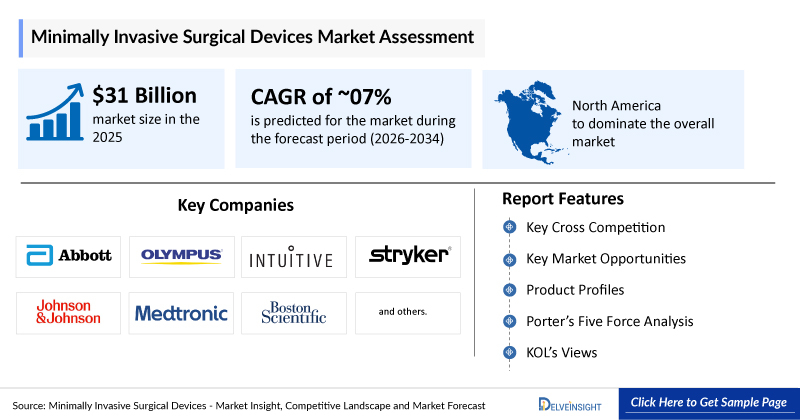
- The global minimally invasive surgical devices market is expected to increase from USD 30,798.01 million in 2025 to USD 53,259.85 million by 2034, reflecting strong and sustained growth.
- The global minimally invasive surgical devices market is growing at a CAGR of 7.13% during the forecast period from 2026 to 2034.
Minimally Invasive Surgical Devices Market Trends & Insights
- The market of minimally invasive surgical devices is being primarily driven by the rising prevalence of chronic diseases such as cancer, cardiovascular disorders, increasing technological advancement in surgical devices, and an increase in product development activities among the key market players globally.
- The leading companies operating in the minimally invasive surgical devices market include Abbott, Olympus, Intuitive Surgical Inc., Stryker, JOHNSON & JOHNSON MEDICAL DEVICES COMPANIES, Medtronic, Boston Scientific Corporation, CONMED Corporation, KARL STORZ GmbH, CooperSurgical, Inc., Cook, AngioDynamics, FUJIFILM Corporation, Symmetry Surgical Inc., B. Braun Melsungen AG, BD, Shenzhen Mindray Bio-Medical Electronics Co., Ltd., Zimmer Biomet, Richard Wolf GmbH, Microport Scientific Corporation, and others.
- North America is expected to dominate the overall minimally invasive surgical devices market. The region's market growth is primarily driven by the increasing prevalence of various cancers, the increasing prevalence of degenerative bone disorders, and rising government initiatives regarding disease treatment awareness.
- In the device type segment of the minimally invasive surgical devices market, the surgical robotic system category is estimated to account for the largest Minimally Invasive Surgical Devices market share in 2025.
Minimally Invasive Surgical Devices Market Size and Forecasts
- 2025 Market Size: USD 30,798.01 million
- 2034 Projected Market Size: USD 53,259.85 million
- Growth Rate (2026-2034): 7.12% CAGR
- Largest Market: North America
- Fastest Growing Market: Asia-Pacific
- Market Structure: Moderately Concentrated
Factors Contributing to the Growth of the Minimally Invasive Surgical Devices Market
Market Driver - The rising prevalence of chronic diseases leading to a surge in the MIS devices market
The rising prevalence of chronic diseases such as cancer, cardiovascular disorders, diabetes, and obesity is significantly accelerating the growth of the minimally invasive surgical (MIS) devices market. As these conditions often require surgical intervention, healthcare providers are increasingly opting for MIS techniques due to their reduced trauma, faster recovery times, and lower risk of complications compared to traditional open surgeries. For instance, cardiovascular procedures like angioplasty and valve repair are now frequently performed using catheter-based or robotic-assisted MIS tools, which minimize hospital stays and improve patient outcomes. Thus, the hospitals and clinics are adopting these innovations not only for their clinical benefits but also for their cost-effectiveness, making MIS a preferred choice across diverse specialties such as oncology, orthopedics, and gastroenterology.
Market Driver - Increasing technological advancement in surgical devices
Innovations such as robotic-assisted systems, AI-powered imaging, and advanced electrosurgical instruments have significantly enhanced surgical precision, reduced operative time, and improved patient outcomes. These devices allow surgeons to perform complex procedures through tiny incisions, minimizing trauma and accelerating recovery. For example, robotic platforms offer superior dexterity and visualization, enabling delicate operations in areas previously considered too risky for MIS. Additionally, the integration of 3D visualization and real-time navigation systems has expanded the scope of MIS across specialties like cardiology, neurology, and oncology, also fostering the market growth of the minimally invasive surgical devices.
Market Driver - Patient Preference for Faster Recovery
As awareness of MIS benefits such as reduced postoperative pain, minimal scarring, and shorter hospital stays continues to rise, patients are increasingly opting for these procedures over traditional open surgeries. This shift in demand is prompting hospitals and surgical centers to invest in advanced MIS technologies to remain competitive and meet patient expectations. Studies show that laparoscopic and robotic-assisted surgeries can reduce recovery time by up to 50% compared to conventional methods, allowing individuals to return to daily activities and work much sooner.
Minimally Invasive Surgical Devices Market Report Segmentation
This minimally invasive surgical devices market report offers a comprehensive overview of the global minimally invasive surgical devices market, highlighting key trends, growth drivers, challenges, and opportunities. It covers detailed market segmentation by Device Type (Electrosurgical Devices, Endoscopes [Laparoscopes, Neuroendoscopy Systems, and Others], Inflation Devices, Handheld Instruments, Surgical Robotic Systems, and Others), Application (Cosmetic, Orthopedic, Neurological, Gynecological, Cardiovascular, and Others), End User (Hospitals, Ambulatory Surgical Centers, and Others), and geography. The report provides valuable insights into the competitive landscape, regulatory environment, and market dynamics across major markets, including North America, Europe, and Asia-Pacific. Featuring in-depth profiles of leading industry players and recent product innovations, this report equips businesses with essential data to identify market potential, develop strategic plans, and capitalize on emerging opportunities in the rapidly growing minimally invasive surgical devices market.
Minimally invasive surgical (MIS) devices are specialized medical tools designed to perform surgical procedures through small incisions or natural body openings, reducing trauma to the body. These devices include laparoscopes, endoscopes, robotic instruments, and energy-based tools that enable precise operations with minimal damage to surrounding tissues, leading to faster recovery, less pain, and shorter hospital stays.
The demand for minimally invasive surgical devices is being primarily driven by the rising prevalence of chronic diseases such as cancer, cardiovascular disorders, among others. Additionally, the global increase in the number of surgical procedures being performed using minimally invasive techniques, coupled with growing technological advancements and an increase in product development activities among the key market players, are key factors contributing to the positive growth of the minimally invasive surgical devices market during the forecast period from 2026 to 2034.
What are the latest Minimally Invasive Surgical Devices Market Dynamics and Trends?
The market for minimally invasive surgical devices is gaining pace at present, owing to the growing cases of chronic disorders, an increase in technological advancement across the globe, and an increase in patient preference for faster recovery is fueling the market. According to DelveInsight’s analysis, the incidence of new cancer cases burden is going to cross 33 million by 2045 across the globe. Minimally invasive techniques such as laparoscopic tumor resections, robotic-assisted surgeries, and interventional oncology procedures like ablation and embolization are becoming standard practice, especially for hard-to-reach organs like the liver, pancreas, and lungs. These methods offer reduced recovery time, lower infection risk, and better post-operative outcomes, which are critical for immunocompromised cancer patients. Therefore, hospitals and cancer specialty centers are increasingly adopting MIS technologies.
Additionally, our analysts estimate that by 2050, nearly 855 million people worldwide will be living with diabetes. Diabetes-related complications such as peripheral artery disease, diabetic retinopathy, kidney dysfunction, and obesity-related conditions require surgical intervention. For example, procedures like laparoscopic bariatric surgery for obesity management or endovascular interventions for vascular complications are commonly performed using MIS devices. The growing demand for safer, more efficient surgical solutions among diabetic patients is prompting hospitals and surgical centers to invest in advanced MIS technologies.
The players are focusing their efforts on developing advanced minimally invasive surgical device technologies to improve surgical outcomes. For instance, in January 2025, Biobot Surgical (Singapore) received CE certification for the Mona Lisa 2.0, a robotic platform enhancing precision in prostate biopsy and ablation. Mona Lisa 2.0 is part of a minimally invasive surgical system designed specifically for prostate cancer diagnosis and treatment. It is a robotic-assisted needle planning and positioning platform that enables precise transperineal access for procedures like MRI/ultrasound fusion biopsies and tissue ablation.
While the demand for Minimally Invasive Glaucoma Surgery (MIGS) devices is soaring, the market faces significant challenges that could impede its full potential. The high cost of these advanced surgical devices, coupled with the substantial expense of maintenance and service, can be a major barrier to adoption, particularly in developing economies or smaller healthcare facilities with limited capital budgets. This cost-prohibitive nature can restrict accessibility and slow the penetration of these innovative technologies. Furthermore, the stringent and often lengthy regulatory approval process in key markets, such as the U.S. and Europe, creates a bottleneck for new product innovation. This rigorous scrutiny, while necessary for patient safety, delays the commercialization of new and improved devices, making it difficult for manufacturers to quickly bring the next generation of MIGS technology to market. These factors combined could limit the growth of the minimally invasive surgical devices market despite the clear clinical benefits they offer.
Minimally Invasive Surgical Devices Market Segment Analysis
Minimally Invasive Surgical Devices Market by Device Type (Electrosurgical Devices, Endoscopes [Laparoscopes, Neuroendoscopy Systems, and Others], Inflation Devices, Handheld Instruments, Surgical Robotic Systems, and Others), Application (Cosmetic, Orthopedic, Neurological, Gynecological, Cardiovascular, and Others), End-User (Hospitals, Ambulatory Surgical Centers, and Others), and Geography (North America, Europe, Asia-Pacific, and Rest of the World)
Minimally Invasive Surgical Devices Market Segmentation By Device Type
By Device Type: Surgical Robotic System Category Dominates the Market
In the device type segment of the minimally invasive surgical devices market, the surgical robotic system category is estimated to account for the largest market share in 2024. These systems offer surgeons unparalleled dexterity, tremor filtration, and 3DHD visualization, allowing for complex procedures to be performed through tiny incisions with millimeter-level accuracy. This has dramatically improved patient outcomes, reducing blood loss, infection risk, and recovery time, which in turn has fueled demand for MIS procedures in general, urological, gynecological, and oncological surgeries. Moreover, the integration of AI, real-time imaging, and haptic feedback into robotic systems is pushing the boundaries of MIS devices, enabling more personalized and data-driven surgical care. For instance, in March 2024, Intuitive Surgical’s “da Vinci 5”, the fifth-generation multiport robotic system, secured FDA 510(k) clearance, representing a significant upgrade in surgical robotics. Its full commercial rollout began in early 2025, marking a major milestone in robotic-assisted soft tissue surgery.
Minimally Invasive Surgical Devices Market Segmentation By Application
By Application: Cardiovascular Category Dominates the Market
In the application segment of the minimally invasive surgical devices market, the cardiovascular category is estimated to account for the largest market share in 2024. Cardiovascular diseases like coronary artery disease and atrial fibrillation are rising, especially among older adults and sedentary individuals. According to our analysts' estimates, approximately half a billion people are affected by cardiovascular diseases. Minimally invasive cardiac procedures such as TAVR, mitral valve repair, and robotic CABG offer quicker recovery and fewer complications than traditional surgery. These advantages are driving hospitals to adopt advanced MIS technologies like robotic systems and catheter-based tools, boosting the overall market growth. Additionally, the increase in product development activities in this category is further boosting the overall market. For instance, in April 2025, CardioVia’s ViaOne System received FDA clearance. This innovative device enables safe, needle-free access to the heart’s surface (pericardial space) for diagnostic and therapeutic procedures, reducing the risk of heart perforation. Previously granted Breakthrough Device Designation, ViaOne is now entering clinical use across major cardiac centers.
Minimally Invasive Surgical Devices Market Segmentation By End-User
By End-User: Hospitals Category Dominates the Market
As the demand for faster recovery, reduced hospital stays, and lower complication rates grows, hospitals are increasingly adopting MIS techniques across various specialties, cardiac, orthopedic, gastrointestinal, and gynecological surgeries. For example, many tertiary care hospitals now offer robotic-assisted surgeries using systems like the da Vinci Surgical System, which enhances precision and reduces trauma. These institutions are also integrating AI-powered visualization tools and single-port laparoscopic systems to improve outcomes and streamline workflows.
Minimally Invasive Surgical Devices Market Regional Analysis
North America Minimally Invasive Surgical Devices Market Trends
North America is projected to hold the largest share of the global minimally invasive surgical devices market in 2025, supported by a combination of structural and strategic advantages. The region's market growth is primarily driven by the increasing prevalence of chronic disorders such as cardiovascular disease, orthopedic, neurological, and oncological disorders, among others, along with technological advancements across the region. Moreover, an increasing number of surgical procedures performed along with continuous technological innovation and robust R&D initiatives by key industry players further contribute to the strong expansion of the minimally invasive surgical devices market in North America.
According to our analyst estimates the number of cancer cases in the United States is expected to rise to approximately 2.8 million cases by 2030. In addition, data from the U.S Centers for Disease Control and Prevention (2025), the percentage of adults who have ever been diagnosed with coronary heart disease was 5.0%. Therefore, a rise in cases of cancer and cardiovascular disorders is driving the market in the region. Both conditions remain among the leading causes of morbidity and mortality, creating an urgent need for effective yet less invasive treatment options. Minimally invasive procedures for tumor removal, laparoscopic oncology surgeries, and advanced catheter-based interventions for cardiovascular disorders such as angioplasty, valve replacement, and ablation are increasingly preferred due to their shorter recovery times, reduced hospital stays, and lower risk of complications compared to traditional open surgeries.
Additionally, the increase in product development activities among the key market players is further boosting the overall market. For instance, in February 2024, Virtual Incision’s MIRA Surgical System, the world’s first miniaturized robotic-assisted surgery device, received FDA marketing authorization for adult colectomy procedures via the De Novo pathway
Therefore, the factors mentioned above are expected to drive the growth of the minimally invasive surgical devices market in North America.
Europe Minimally Invasive Surgical Devices Market Trends
Europe is driving growth in the minimally invasive surgical (MIS) devices market through advanced healthcare infrastructure, rapid adoption of robotic-assisted and laparoscopic systems, and supportive government initiatives. High prevalence of chronic diseases, an aging population, and rising healthcare spending are fueling demand for MIS procedures that reduce recovery time and costs. Strong regulatory standards further enhance patient trust and physician confidence, positioning Europe as a major contributor to global MIS market expansion. For instance, in April 2025, the UK’s National Institute for Health and Care Excellence (NICE) approved robotic surgery systems for 11 new types of operations, including joint replacements, tumor removals, hernia repairs, and gallbladder surgeries. This expansion aims to reduce wait times, enhance surgical precision, and improve patient outcomes across NHS centers.
Asia-Pacific Minimally Invasive Surgical Devices Market Trends
Asia Pacific is becoming a key growth hub for minimally invasive surgical (MIS) devices, fueled by rapid healthcare modernization, rising prevalence of chronic diseases, and growing surgical volumes in large and aging populations across China, Japan, and India. Increasing medical tourism, government initiatives for better healthcare access, patient awareness of MIS benefits, and cost-effective device availability are further boosting adoption. Collaborations between global and local players are strengthening the market, making the Asia-Pacific one of the fastest-growing regions for MIS devices. For instance, in February 2025, Olympus announced the wider rollout of the iTind™ device, a minimally invasive solution for benign prostatic hyperplasia (BPH), across six major APAC markets, including India, Singapore, Thailand, Australia, Hong Kong, and Korea. The outpatient procedure can be performed under local anesthesia, easing hospital capacity constraints.
Who are the major players in the Minimally Invasive Surgical Devices Market?
The following are the leading companies in the minimally invasive surgical devices market. These companies collectively hold the largest market share and dictate industry trends.
Minimally Invasive Surgical Devices Companies
- Abbott
- Olympus Corporation
- Intuitive Surgical Inc.
- Stryker
- JOHNSON & JOHNSON MEDICAL DEVICES COMPANIES
- Medtronic
- Boston Scientific Corporation
- CONMED Corporation
- KARL STORZ GmbH
- CooperSurgical, Inc.
- Cook
- AngioDynamics
- FUJIFILM Corporation
- Symmetry Surgical Inc
- B. Braun Melsungen AG
- BD
- Shenzhen Mindray Bio-Medical Electronics Co., Ltd.
- Zimmer Biomet
- Richard Wolf GmbH
- Microport Scientific Corporation
- Others
How is the competitive landscape shaping the Minimally Invasive Surgical Devices Market?
The competitive landscape of the Minimally Invasive Surgical Devices (MIS) market is moderately concentrated, with a few global leaders such as Medtronic, Johnson & Johnson (Ethicon), Stryker, and Boston Scientific dominating through strong portfolios, advanced R&D, and broad distribution networks. The competitive landscape of the minimally invasive surgical devices market is evolving rapidly, driven by technological innovation, strategic collaborations, and a growing emphasis on patient-centric care. Leading global companies are leveraging advanced engineering, AI integration, and robotics to enhance precision and reduce recovery times, while also expanding their reach through partnerships with healthcare providers and academic institutions. At the same time, regional players and startups are gaining ground by offering adaptable, cost-effective solutions tailored to local clinical needs, especially in emerging economies. The race to improve surgical outcomes, streamline procedures, and meet rising demand for outpatient care is intensifying competition, prompting continuous product refinement and diversification across the industry.
Recent Developmental Activities in the Minimally Invasive Surgical Devices Market
- In March 2026, Monteris Medical announced that a newly published randomized prospective study in Nature Communications had suggested that laser interstitial thermal therapy (LITT) using NeuroBlate could enhance the effectiveness of the immunotherapy drug pembrolizumab (KEYTRUDA) in patients with recurrent high-grade astrocytoma, including glioblastoma (GBM).
- In January 2026, Butterfly Medical, a developer of a proprietary non-surgical solution for benign prostatic hyperplasia (BPH), announced the successful completion of the final 12-month follow-up for all patients enrolled in its international pivotal clinical study.
- In January 2026, MellingMedical announced a strategic partnership with Applied Medical, a next-generation medical device firm recognized for its innovative minimally invasive surgical technologies. Through this collaboration, the Alexandria-based company will utilize its designation as a Small Business Administration (SBA)-Verified Service-Disabled Veteran-Owned Small Business (SDVOSB) to help deliver Applied Medical’s advanced solutions to federal healthcare providers supporting U.S. veterans, active-duty service members, and their families.
- In September 2025, Brainlab received U.S. FDA 510(k) clearance and launched its Spine Mixed Reality Navigation system. This advanced tool combines mixed reality with optical navigation, giving surgeons real-time, in-field visuals to aid accurate pedicle screw placement, even in complex or minimally invasive procedures.
- In August 2025, Cleveland Clinic Abu Dhabi became the first in the MENA region to use the Artisse Intrasaccular Flow Modulator, a minimally invasive device for treating wide-necked brain aneurysms.
- In May 2025, the EnVisio X1 In-Body Spatial Intelligence System from Elucent Medical received the FDA’s Breakthrough Device designation, aiming to improve localization and navigation in minimally invasive soft-tissue cancer surgery.
- In January 2025, Triopsy Medical (USA) earned FDA 510(k) clearance for its Integrated Biopsy System, a streamlined solution for prostate tissue sampling.
- In January 2025, EndoQuest Robotics was granted an FDA IDE (Investigational Device Exemption) to begin pivotal trials (the PARADIGM study) for its Endoluminal Surgical (ELS) System, modernizing colorectal MI.
- In January 2025, France's NEOSYAD received the CE mark under the EU MDR for its AdiMate system, a single-platform solution combining infiltration, fat extraction, and tissue preparation for liposuction and lipofilling procedures.
Scope of the Minimally Invasive Surgical Devices Market | |
|
Report Metrics |
Details |
|
Study Period |
2023 to 2034 |
|
Base Year |
2025 |
|
Forecast Period |
2026 to 2034 |
|
Minimally Invasive Surgical Devices Market CAGR |
7.13% |
|
Key Companies in the Minimally Invasive Surgical Devices Market |
Abbott, Olympus Corporation, Intuitive Surgical Inc., Stryker, JOHNSON & JOHNSON MEDICAL DEVICES COMPANIES, Medtronic, Boston Scientific Corporation, CONMED Corporation, KARL STORZ GmbH, CooperSurgical, Inc., Cook, AngioDynamics, FUJIFILM Corporation, Symmetry Surgical Inc., B. Braun Melsungen AG, BD, Shenzhen Mindray Bio-Medical Electronics Co., Ltd, Zimmer Biomet, Richard Wolf GmbH, Microport Scientific Corporation, and others |
|
Minimally Invasive Surgical Devices Market Segments |
by Device Type, by Application, by End-user, and by Geography |
|
Minimally Invasive Surgical Devices Regional Scope |
North America, Europe, Asia Pacific, Middle East, Africa, and South America |
|
Minimally Invasive Surgical Devices Country Scope |
U.S., Canada, Mexico, Germany, United Kingdom, France, Italy, Spain, China, Japan, India, Australia, South Korea, and key Countries |
Minimally Invasive Surgical Devices Market Segmentation
Minimally Invasive Surgical Devices by Device Type Exposure
- Electrosurgical Devices
- Endoscopes
- Laparoscopes
- Neuroendoscopy System
- Others
- Inflation Devices
- Handheld Instruments
- Surgical Robotic Systems
- Others
Minimally Invasive Surgical Devices Application Exposure
- Cosmetic
- Orthopedic
- Neurological
- Gynecological
- Cardiovascular
- Others
Minimally Invasive Surgical Devices End-Users Exposure
- Hospitals
- Ambulatory Surgical Centers
- Others
Minimally Invasive Surgical Devices Geography Exposure
- North America Minimally Invasive Surgical Devices Market
- United States Minimally Invasive Surgical Devices Market
- Canada Minimally Invasive Surgical Devices Market
- Mexico Minimally Invasive Surgical Devices Market
- Europe Minimally Invasive Surgical Devices Market
- United Kingdom Minimally Invasive Surgical Devices Market
- Germany Minimally Invasive Surgical Devices Market
- France Minimally Invasive Surgical Devices Market
- Italy Minimally Invasive Surgical Devices Market
- Spain Minimally Invasive Surgical Devices Market
- Rest of Europe
- Asia-Pacific Minimally Invasive Surgical Devices Market
- China Minimally Invasive Surgical Devices Market
- Japan Minimally Invasive Surgical Devices Market
- India Minimally Invasive Surgical Devices Market
- Australia Minimally Invasive Surgical Devices Market
- South Korea Minimally Invasive Surgical Devices Market
- Rest of Asia-Pacific
- Rest of the World
- South America Minimally Invasive Surgical Devices Market
- Middle East Minimally Invasive Surgical Devices Market
- Africa Minimally Invasive Surgical Devices Market
Minimally Invasive Surgical Devices Market Recent Industry Trends and Milestones (2022-2025) | |
|
Category |
Key Developments |
|
Minimally Invasive Surgical Devices Product Launches |
Mona Lisa 2.0 by Biobot Surgical, da Vinci 5 by Intuitive Surgical, CardioVia’s ViaOne System by CardioVia Ltd. |
|
Minimally Invasive Surgical Devices Regulatory Approvals |
Biobot Surgical - Mona Lisa 2. (CE), Intuitive Surgical’s - da Vinci 5 (FDA), Surgical Science - da Vinci 5 Integration (FDA), CardioVia Ltd. - CardioVia’s ViaOne System (FDA) |
|
Partnerships in the Minimally Invasive Surgical Devices Market |
Miura Partners with Saesco Medical, IRCAD North America and Medtronic, MMI, and ab medica |
|
Acquisitions in the Minimally Invasive Surgical Devices Market |
Stryker acquires NICO Corporation, CooperSurgical acquires Select Cook Medical® Assets |
|
Company Strategy |
CMR Surgical: U.S. expansion and potential sale strategy, Intuitive Surgical: Advanced da Vinci 5 with force feedback capabilities, Stryker: In-House Expansion via Digital & Image-Tech Acquisitions |
|
Setbacks in the Minimally Invasive Surgical Devices Market |
CMR Surgical Grapples with Scale and Losses, Cost Barriers Hinder Adoption, Training Deficit and Operational Challenges |
|
Emerging Technology |
Robotic-Assisted Surgery, Single-Incision Laparoscopic Surgery, Natural Orifice Transluminal Endoscopic Surgery, AI-Enabled Surgical Systems, 3D and 4K Imaging Systems |
Impact Analysis
What is the impact of AI on the Minimally Invasive Surgical Devices Market?
AI-Powered Innovations and Applications:
Artificial Intelligence (AI) is transforming the landscape of minimally invasive surgical (MIS) devices by enhancing precision, efficiency, and clinical outcomes through data-driven decision-making and real-time assistance. AI-powered innovations are increasingly being integrated into robotic-assisted surgery, advanced imaging, and intraoperative navigation systems, allowing surgeons to visualize anatomical structures with greater clarity and execute procedures with higher accuracy. Machine learning algorithms analyze patient-specific data to personalize surgical plans, predict potential complications, and optimize instrument positioning during procedures. Furthermore, AI-based image recognition and augmented reality (AR) overlays are improving detection of tumors, vessel mapping, and tissue differentiation in complex surgeries. A recent example is Medtronic’s Hugo™ robotic-assisted surgery (RAS) platform, which incorporates AI-driven analytics and cloud connectivity to support surgeon decision-making, monitor procedural efficiency, and facilitate continuous learning. Similarly, Intuitive Surgical is leveraging AI in its da Vinci system to provide surgeons with advanced analytics and predictive insights that improve clinical workflows. These AI-powered applications are not only reducing surgical errors and recovery times but also expanding the scope of MIS to more complex interventions, reinforcing their role as a cornerstone of next-generation surgical care.
U.S. Tariff Impact Analysis on the Minimally Invasive Surgical Devices Market
The U.S. tariff impact on the minimally invasive surgical (MIS) devices market is multifaceted, primarily inflating costs, disrupting supply chains, and potentially hindering innovation. A significant portion of MIS devices, including robotic systems, laparoscopic tools, and imaging components, are either manufactured abroad or rely on imported raw materials like titanium, semiconductors, and specialized plastics. Newly imposed tariffs, which range from 10% to as high as 145% on goods from China and other regions, are driving up manufacturing costs and leading to increased prices for hospitals and patients. Industry giants are taking a financial hit: Johnson & Johnson anticipates around $400 million in tariff-related costs in 2025, predominantly impacting its medical and surgical device divisions. Another major device-maker, Medtronic, has also revised expectations to reflect a lower tariff burden down to approximately $185 million for the year, indicating some resilience amid the challenges.
Hospitals are already beginning to feel the strain. Many are freezing new procurement or re-evaluating capital expenditures as they brace for higher equipment and consumable costs, especially for indispensable items like surgical tools. In essence, U.S. tariffs are not only increasing production and procurement costs but also triggering strategic shifts in manufacturing and sourcing. These changes may slow innovation in MIS technologies, exacerbate access issues, and reshape the competitive landscape in healthcare delivery.
How This Analysis Helps Clients
- Cost Management: By understanding the tariff landscape, clients can anticipate cost increases and adjust pricing strategies accordingly, ensuring profitability.
- Supply Chain Optimization: Clients can identify alternative sourcing options and diversify their supply chains to reduce dependency on high-tariff regions, enhancing resilience.
- Regulatory Navigation: Expert guidance on navigating the evolving regulatory environment helps clients maintain compliance and avoid potential legal challenges.
- Strategic Planning: Insights into tariff impacts enable clients to make informed decisions about manufacturing locations, partnerships, and market entry strategies.
Startup Funding & Investment Trends in Minimally Invasive Surgical Devices Market | ||||
|
Company Name |
Total Funding |
Main Products |
Stage of Development |
Core Technology |
|
SURGAR (France) |
€11 million |
AI- and AR-enabled navigation system for laparoscopic surgeries |
Seed |
Real-time 3D imaging with laparoscopic views for precision. |
|
Symphera (Germany) |
€2.4 million |
Laparoscopic systems |
Seed |
Develop automated tool-switching systems for laparoscopic surgeries |
|
SafeHeal (Europe) |
€35 million |
Colovac® |
Series C |
Alternative to a temporary diverting ostomy for patients undergoing colorectal cancer resection. |
|
Phantom Neuro |
$19 million |
Peripheral neural interfaces to control prosthetics and robotics are key for MIS robotics |
Series A |
minimally invasive neural interface technology |
Key takeaways from the minimally invasive surgical devices market report study
- Market size analysis for the current minimally invasive surgical devices market size (2025), and market forecast for 8 years (2026 to 2034)
- Top key product/technology developments, mergers, acquisitions, partnerships, and joint ventures happened over the last 3 years.
- Key companies dominating the minimally invasive surgical devices market.
- Various opportunities available for the other competitors in the minimally invasive surgical devices market space.
- What are the top-performing segments in 2025? How these segments will perform in 2036?
- Which are the top-performing regions and countries in the current minimally invasive surgical devices market scenario?
- Which are the regions and countries where companies should have concentrated on opportunities for the minimally invasive surgical devices market growth in the future?

