
Recurrent Pericarditis Pipeline Summary
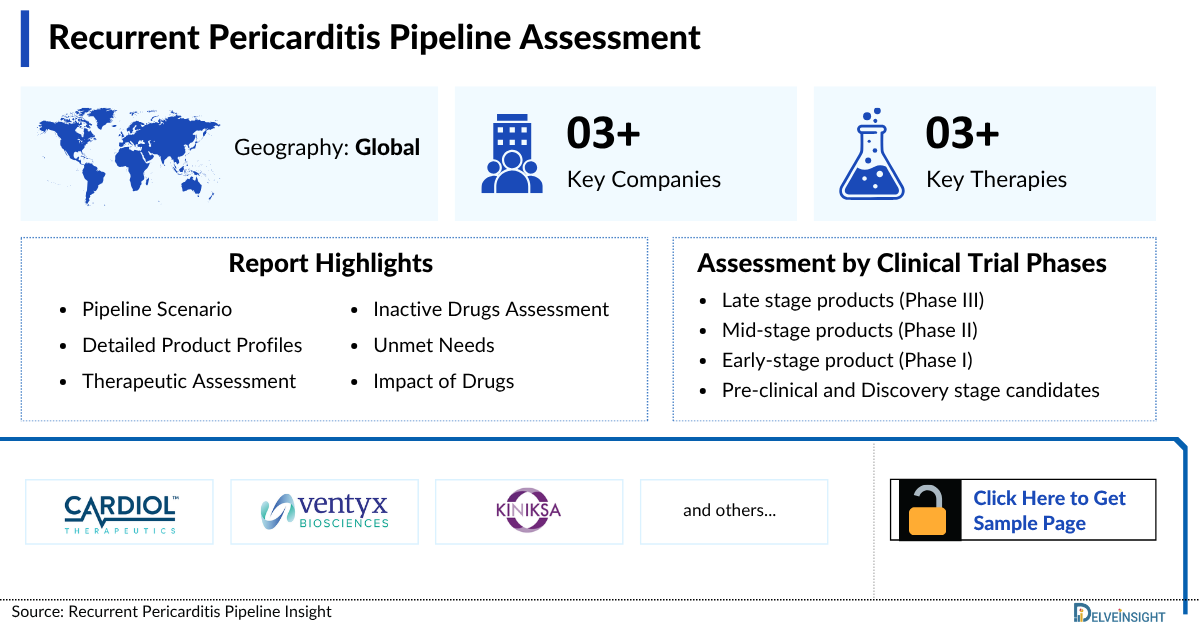
DelveInsight’s, “Recurrent Pericarditis Pipeline Insight, 2026” report provides comprehensive insights about 3+ companies and 3+ pipeline drugs in Recurrent Pericarditis pipeline landscape. It covers the pipeline drug profiles, including clinical and nonclinical stage products. It also covers the therapeutics assessment by product type, stage, route of administration, and molecule type. It further highlights the inactive pipeline products in this space.
Geography Covered
- Global coverage
Recurrent Pericarditis Disease Understanding
Recurrent Pericarditis Overview
Recurrent pericarditis is a chronic inflammatory condition characterized by the return of pericardial inflammation after a symptom-free period following an initial episode of acute pericarditis. The disease is primarily driven by persistent immune-mediated and autoinflammatory mechanisms, particularly excessive interleukin-1 (IL-1) signaling. It is characterized by recurrent episodes of sharp chest pain, elevated inflammatory markers, and, in some cases, pericardial effusion, which can significantly impair quality of life and increase healthcare utilization. Standard treatment includes nonsteroidal anti-inflammatory drugs (NSAIDs) and colchicine, while corticosteroids are reserved for selected patients because of their association with a greater risk of recurrence. Recent advances in disease understanding have led to the development of targeted IL-1 inhibitors, providing an effective therapeutic option for patients with refractory or corticosteroid-dependent recurrent pericarditis.
Pericarditis may result from infectious, noninfectious, or secondary causes, although most cases are idiopathic and presumed to be viral. Viral infections are the most common cause, while bacterial infections, particularly tuberculosis in endemic regions, as well as fungal and parasitic pathogens, are less frequent. Noninfectious causes include malignancies, autoimmune disorders, and metabolic conditions. It can also occur following trauma, myocardial infarction, cardiac surgery, certain medications, immune checkpoint inhibitors, and, rarely, mRNA COVID-19 vaccination. Other uncommon causes include infiltrative disorders such as amyloidosis and sarcoidosis. Despite its diverse etiologies, most cases remain idiopathic. Recurrent Recurrent Pericarditis is increasingly recognized as an IL-1–mediated autoinflammatory condition, providing the rationale for targeted therapies such as rilonacept.
The pericardium is a fibroelastic sac that anchors the heart, protects it from external infections, and supports normal cardiac function, although it is not essential for survival, as individuals with congenital absence of the pericardium can remain asymptomatic with normal cardiac function. Acute Recurrent Pericarditis is believed to result from inflammasome activation, triggering inflammatory cytokines such as IL-1ß, while persistent immune dysregulation may lead to recurrent disease. The richly innervated parietal pericardium makes inflammation highly painful, explaining why chest pain is the predominant symptom of acute Recurrent Pericarditis. Pericardial inflammation can also cause fluid accumulation, and the clinical impact depends more on the rate of fluid buildup than its volume, with rapid accumulation potentially causing life-threatening cardiac tamponade, whereas slow accumulation may remain asymptomatic until significant compression develops.
The pericardium is a fibroelastic sac that anchors the heart, protects it from external infections, and supports normal cardiac function, although it is not essential for survival, as individuals with congenital absence of the pericardium can remain asymptomatic with normal cardiac function. Acute Recurrent Pericarditis is believed to result from inflammasome activation, triggering inflammatory cytokines such as IL-1ß, while persistent immune dysregulation may lead to recurrent disease. The richly innervated parietal pericardium makes inflammation highly painful, explaining why chest pain is the predominant symptom of acute Recurrent Pericarditis. Pericardial inflammation can also cause fluid accumulation, and the clinical impact depends more on the rate of fluid buildup than its volume, with rapid accumulation potentially causing life-threatening cardiac tamponade, whereas slow accumulation may remain asymptomatic until significant compression develops.
The diagnosis of acute pericarditis begins with excluding other life-threatening causes of chest pain, such as acute coronary syndrome, aortic dissection, myocarditis, and pulmonary embolism. Initial evaluation includes history, physical examination, ECG, echocardiography, chest X-ray, and laboratory tests, including inflammatory markers and cardiac troponins. Diagnosis is supported by characteristic chest pain, a pericardial friction rub, typical ECG changes, elevated inflammatory markers, pericardial effusion, or imaging evidence of pericardial inflammation. Echocardiography is the primary imaging modality, while cardiac MRI Scans and CT Scans are used when the diagnosis is uncertain or myocardial involvement is suspected. Pericardiocentesis is indicated for cardiac tamponade and selected cases with suspected infectious, malignant, or large pericardial effusions, whereas additional diagnostic tests are guided by the suspected underlying cause.
Management of acute pericarditis focuses on treating the underlying cause while relieving inflammation and preventing recurrence. Most cases are idiopathic and can be managed on an outpatient basis with activity restriction and first-line therapy comprising high-dose nonsteroidal anti-inflammatory drugs (NSAIDs) or aspirin combined with colchicine, which significantly reduces symptom persistence and recurrence. Corticosteroids are reserved for patients who cannot tolerate or do not respond to first-line therapy, as they are associated with a higher risk of recurrence. Patients with high-risk features, including fever, large pericardial effusion, cardiac tamponade, immunosuppression, or myoRecurrent Pericarditis, should be hospitalized for further evaluation and management. In patients with persistent inflammatory disease refractory to conventional therapy, IL-1 inhibitors such as rilonacept and anakinra have emerged as effective targeted treatments. Recurrent Recurrent Pericarditis is typically managed with prolonged colchicine therapy, while corticosteroid-dependent or refractory cases may require immunosuppressive agents or IL-1 inhibitors. Pericardiectomy is reserved as a last-line option for patients with severe, treatment-resistant disease.
"Recurrent Pericarditis Pipeline Insight, 2026" report by DelveInsight outlays comprehensive insights of present scenario and growth prospects across the indication. A detailed picture of the Recurrent Pericarditis pipeline landscape is provided which includes the disease overview and Recurrent Pericarditis treatment guidelines. The assessment part of the report embraces, in depth Recurrent Pericarditis commercial assessment and clinical assessment of the pipeline products under development. In the report, detailed description of the drug is given which includes mechanism of action of the drug, clinical studies, NDA approvals (if any), and product development activities comprising the technology, Recurrent Pericarditis collaborations, licensing, mergers and acquisition, funding, designations and other product related details.
Recurrent Pericarditis Pipeline Report Highlights
The companies and academics are working to assess challenges and seek opportunities that could influence Recurrent Pericarditis R&D. The therapies under development are focused on novel approaches to treat/improve Recurrent Pericarditis.
Recurrent Pericarditis Emerging Drugs Chapters
This segment of the Recurrent Pericarditis report encloses its detailed analysis of various drugs in different stages of clinical development, including Phase III, II, I, Preclinical and Discovery. It also helps to understand clinical trial details, expressive pharmacological action, agreements and collaborations, and the latest news and press releases.
Recurrent Pericarditis Emerging Drugs
CardiolRx: Cardiol Therapeutics
CardiolRx™ is an investigational oral cannabidiol formulation being developed by Cardiol Therapeutics for the treatment of recurrent Recurrent Pericarditis. The therapy is designed to reduce inflammation by inhibiting activation of the NLRP3 inflammasome and other pro-inflammatory signaling pathways implicated in pericardial inflammation and fibrosis. CardiolRx has received U.S. FDA Orphan Drug Designation for the treatment of recurrent pericarditis and has demonstrated a favorable safety and tolerability profile in Phase I studies. In the Phase II MAvERIC-Pilot trial, the therapy produced meaningful reductions in recurrent pericarditis-related pain, normalized inflammatory markers in most patients with elevated C-reactive protein, and supported corticosteroid tapering in eligible patients. Based on these encouraging findings, Cardiol Therapeutics has advanced CardiolRx into the pivotal Phase III MAVERIC trial to evaluate its efficacy in preventing recurrent pericarditis in patients at high risk of relapse and to support potential regulatory approval.
Further product details are provided in the report...
Recurrent Pericarditis Therapeutic Assessment
This segment of the report provides insights about the different Recurrent Pericarditis drugs segregated based on following parameters that define the scope of the report, such as:
Major Players in Recurrent Pericarditis
There are approx. 3+ key companies which are developing the therapies for Recurrent Pericarditis. The companies which have their Recurrent Pericarditis drug candidates in the most advanced stage, i.e. Phase III include, Cardiol Therapeutics.
Recurrent Pericarditis Pipeline Drug Phases
DelveInsight’s report covers around 3+ products under different phases of clinical development like
- Late stage products (Phase III)
- Mid-stage products (Phase II)
- Early-stage product (Phase I) along with the details of
- Pre-clinical and Discovery stage candidates
- Discontinued & Inactive candidates
Recurrent Pericarditis Drugs Route of Administration
Recurrent Pericarditis pipeline report provides the therapeutic assessment of the pipeline drugs by the Route of Administration. Products have been categorized under various ROAs such as
- Oral
- Intravenous
- Subcutaneous
- Parenteral
- Topical
Recurrent Pericarditis Drugs Molecule Type
Products have been categorized under various Molecule types such as
- Recombinant fusion proteins
- Small molecule
- Monoclonal antibody
- Peptide
- Polymer
- Gene therapy
Recurrent Pericarditis Pipeline Product Type
- Drugs have been categorized under various product types like Mono, Combination and Mono/Combination.
Recurrent Pericarditis Pipeline Development Activities
The Recurrent Pericarditis Pipeline report provides insights into different therapeutic candidates in Phase III, II, I, preclinical and discovery stage. It also analyses Recurrent Pericarditis therapeutic drugs key players involved in developing key drugs.
Recurrent Pericarditis Clinical Trials and Development Activities
The Recurrent Pericarditis clinical trial analysis report covers the detailed information of collaborations, acquisition and merger, licensing along with a thorough therapeutic assessment of emerging Recurrent Pericarditis drugs.
Recurrent Pericarditis Pipeline Report Insights
- Recurrent Pericarditis Pipeline Analysis
- Recurrent Pericarditis Therapeutic Assessment
- Recurrent Pericarditis Unmet Needs
- Impact of Recurrent Pericarditis Drugs
Recurrent Pericarditis Pipeline Report Assessment
- Recurrent Pericarditis Pipeline Product Profiles
- Recurrent Pericarditis Therapeutic Assessment
- Recurrent Pericarditis Pipeline Assessment
- Inactive Recurrent Pericarditis drugs assessment
- Recurrent Pericarditis Unmet Needs
Explore the Recurrent Pericarditis market forecast landscape, epidemiology trends, emerging therapies, and forecasts through 2032 to support strategic decision-making.
Key Questions Answered in the Recurrent Pericarditis Pipeline Report:
- Current Treatment Scenario and Emerging Therapies:
- How many companies are developing Recurrent Pericarditis drugs?
- How many Recurrent Pericarditis drugs are developed by each company?
- How many emerging drugs are in mid-stage, and late-stage of development for the treatment of Recurrent Pericarditis?
- What are the key collaborations (Industry–Industry, Industry–Academia), Mergers and acquisitions, licensing activities related to the Recurrent Pericarditis therapeutics?
- What are the recent trends, drug types and novel technologies developed to overcome the limitation of existing therapies?
- What are the clinical studies going on for Recurrent Pericarditis and their status?
- What are the key designations that have been granted to the emerging drugs?
Key Recurrent Pericarditis Companies
- Cardiol Therapeutics Inc.
- Ventyx Biosciences
- Kiniksa Pharmaceuticals International, plc
Key Recurrent Pericarditis Pipeline Products
- CardiolRx
- VTX-2735
- KLP-387