Specular Microscope Market Summary
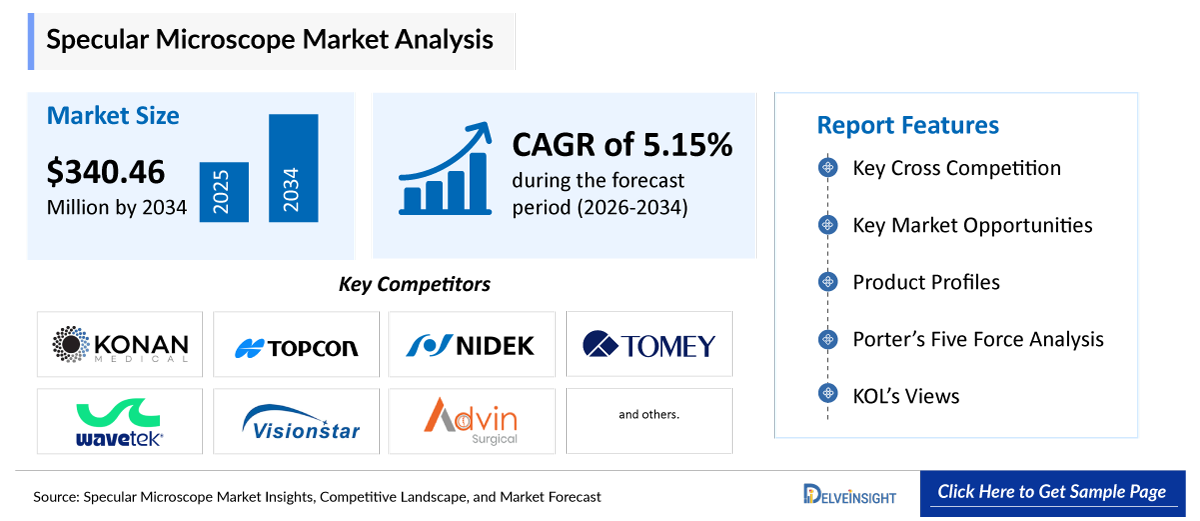
- The Global Specular Microscope Market was valued at USD 218.7 million in 2025 and is projected to reach USD 340.46 million by 2034, reflecting steady and sustained growth driven by the escalating global burden of corneal diseases and vision impairment, rising volumes of cataract surgery and corneal transplantation requiring pre- and post-operative endothelial cell assessment, continuous technological advances in non-contact and AI-integrated specular microscopy platforms, and expanding global eye banking infrastructure.
- The Global Specular Microscope Market is growing at a CAGR of 5.15% during the forecast period from 2026 to 2034.
Specular Microscope Market Insights & Forecast
- The rising global burden of vision impairment with the World Health Organization (WHO, 2023) documenting at least 2.2 billion people worldwide affected by vision impairment or blindness, increasing incidence of corneal diseases including Fuchs' endothelial dystrophy, keratoconus, and Glaucoma requiring precision endothelial cell assessment, growing volumes of corneal transplantation with the American Academy of Ophthalmology (AAO, June 2024) reporting 185,000 corneal transplants performed annually requiring specular microscopy for donor and recipient evaluation, and continuous technological advances in non-contact platforms and AI-powered automated cell analysis expanding clinical utility and enabling earlier disease detection are collectively driving the Specular Microscope Market through the forecast period from 2026 to 2034.
- The leading Specular Microscope Companies include Konan Medical USA, Inc., Topcon Corporation, NIDEK Co., Ltd., Tomey Corporation, Wavetek, HAI Laboratories, Inc., Hy Vision Star (Chongqing Vision Star Optical Co., Ltd.), Advin Health Care, CSO Italia S.r.l., Haag-Streit AG, Reichert Technologies (AMETEK, Inc.), Optovue, Inc., Carl Zeiss Meditec AG, Inami & Co., Ltd., and others.
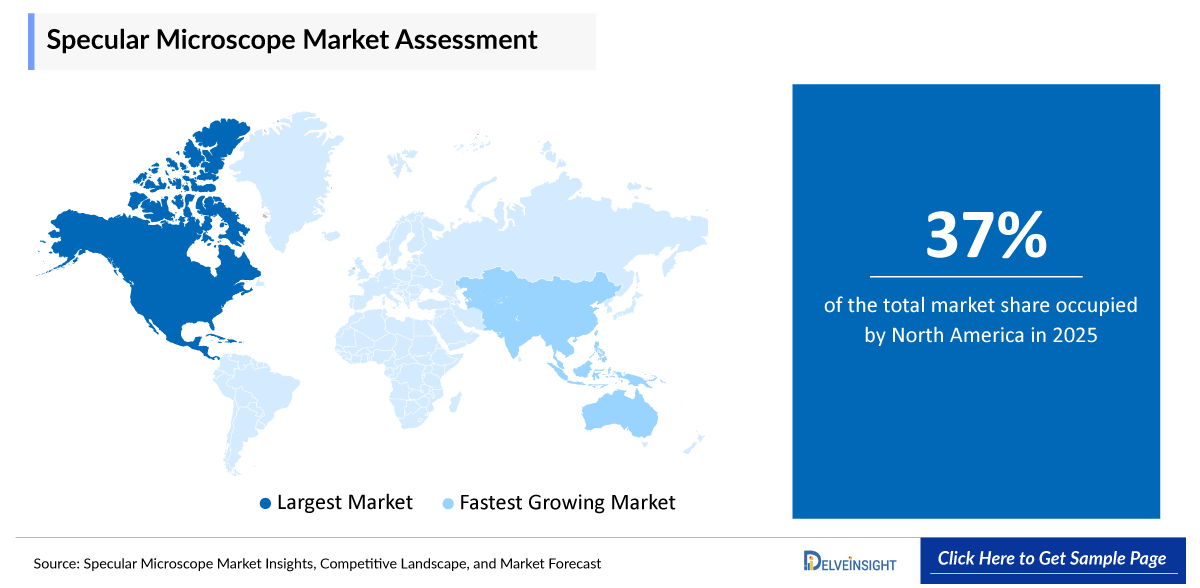
- North America is expected to dominate the specular microscope market with 37% of Global Specular Microscope Market revenue in 2025, driven by the highest per-capita cataract surgery rates globally, well-developed corneal transplantation infrastructure with the United States accounting for a significant share of the 284,000 corneas procured in 82 countries annually (AAO, June 2024), strong National Eye Institute (NIH) investment in corneal research, FDA-regulated adoption of advanced non-contact and AI-enabled specular platforms, and the presence of leading manufacturers including Konan Medical USA, Inc. headquartered in the United States.
- In the product type segment of the specular microscope market, the non-contact specular microscope category accounted for 42% of total global Specular Microscope Market revenue in 2025, driven by its non-invasive examination modality eliminating corneal contact risk, superior patient comfort enabling routine clinical use in high-volume settings, high-resolution automated endothelial cell imaging with automatic focus and analysis, and strong preference among hospital ophthalmology departments and ophthalmic clinics for platforms combining diagnostic precision with operational convenience.
Request for unlocking the report of the @ Specular Microscope Market
Specular Microscope Market Size and Forecasts
|
Report Metrics |
Details |
|
2025 Specular Microscope Market Size | |
|
2034 Projected Specular Microscope Market Size | |
|
Specular Microscope Growth Rate (2026-2034) | |
|
Largest Specular Microscope Market |
North America |
|
Fastest Growing Specular Microscope Market |
Asia-Pacific |
|
Specular Microscope Market Structure |
Moderately Concentrated |
Factors Contributing to the Growth of the Specular Microscope Market
-
Rising global burden of corneal diseases and vision impairment driving diagnostic demand
The escalating global prevalence of corneal diseases and vision impairment is the primary structural growth driver for the specular microscope market. According to the World Health Organization (WHO, 2023), at least 2.2 billion people worldwide have a vision impairment or blindness, with corneal diseases representing one of the leading preventable causes of visual loss globally. Fuchs' endothelial corneal dystrophy affects an estimated 1 in 2,000 people in Europe and North America, requiring regular specular microscopy for disease monitoring and surgical planning.
Glaucoma affects 7.6 million people worldwide at risk of corneal endothelial changes from intraocular pressure and surgical interventions. Keratoconus, with increasing prevalence particularly in younger populations, requires regular corneal endothelial assessment. The WHO estimates that cataracts affect 94 million people globally, with cataract surgery creating the largest single source of demand for pre- and post-operative specular microscopy.
-
Growing volumes of corneal transplantation and cataract surgery requiring endothelial cell assessment
Rising surgical volumes in both corneal transplantation and cataract surgery represent a direct, non-discretionary, and continuously growing demand driver for specular microscopy. According to data published by the American Academy of Ophthalmology (AAO, June 2024), approximately 185,000 corneal transplants are performed annually, with approximately 284,000 corneas procured in 116 and 82 countries, respectively, with 55% of all corneas procured in India and the United States.
Every donor cornea evaluated by an eye bank requires specular microscopy to assess endothelial cell density and morphology before determining suitability for transplantation, creating a mandatory and volume-proportional demand for specular microscopy instruments. In cataract surgery, with over 20 million procedures performed annually worldwide (WHO), specular microscopy is routinely performed pre-operatively to document baseline endothelial cell count, as cataract surgery causes measurable endothelial cell loss that must be quantified for surgical risk assessment.
-
Technological advances in non-contact platforms, AI-powered cell analysis, and portable field-deployable systems
Continuous innovation in specular microscope technology is expanding both the clinical utility and the addressable market for these instruments by improving diagnostic accuracy, operational convenience, and deployment flexibility. Non-contact specular microscopes eliminate the risk of corneal contact while providing high-resolution automated endothelial cell imaging with automatic focus, automated cell density counting, and morphological analysis. AI-powered automated cell analysis integration is improving measurement accuracy and reducing operator dependency in endothelial cell counting, a historically operator-sensitive process.
In 2025, integrated pachymetry software bundles adding central corneal thickness measurement were added to three premium specular microscope product lines. Portable field units weighing under 6.0 kg entered clinical use in 2025, enabling outreach programs to access specular microscopy capabilities without fixed clinical infrastructure.
What are the Latest Specular Microscope Market Dynamics and Trends?
The rising global burden of corneal diseases and vision impairment, growing volumes of corneal transplantation and cataract surgery creating mandatory endothelial assessment demand, continuous innovation in non-contact imaging and AI-powered cell analysis, expanding global eye banking infrastructure, and portable field-deployable platform development are collectively driving sustained growth in the Global Specular Microscope Market.
According to the World Health Organization (WHO, 2023), at least 2.2 billion people worldwide have a vision impairment or blindness, with corneal diseases representing a major preventable cause. The American Academy of Ophthalmology (AAO, June 2024) published data documenting that 185,000 corneal transplants are performed annually, with 284,000 corneas procured across 116 countries, with approximately 55% of all corneas procured in India and the United States - creating enormous non-discretionary demand for specular microscopy in eye bank settings, where every procured cornea must be evaluated by specular microscopy before being cleared for transplantation.
Over 1.8 million endothelial cell assessments are performed annually, with specular microscopy the standard of care for endothelial evaluation across surgical ophthalmology and eye banking worldwide. Specular microscopy is used in over 82% of eye examinations conducted in secondary and tertiary ophthalmic care facilities globally (PMC/NCBI literature data, 2024). Eye banks represent 42% of the global specular microscope end-user market by installed base, reflecting the instrument's indispensable role in corneal procurement and donor tissue quality assessment.
The technology evolution of specular microscopes from contact-based manual instruments to non-contact automated and AI-integrated platforms is the most commercially significant market trend. Non-contact specular microscopes are growing at a faster CAGR than contact instruments, reflecting the clinical and operational advantages of non-contact imaging: no risk of corneal abrasion or infection transmission, superior patient comfort enabling routine use in broader patient populations including pre-surgical cataract patients, fully automated image capture and focusing without operator-dependent image quality, and one-step automated endothelial cell density calculation with cell morphology metrics.
Konan Medical's CellChek XL and Konan Noncon Robo SP-800 are leading non-contact platforms validated in peer-reviewed comparative studies (PMC/NCBI). NIDEK's CEM-530 and Topcon's SP-series are also widely deployed automated non-contact platforms. In 2025, Topcon Corporation introduced the new Specular Microscope SP-1P featuring a fully automatic capture procedure with a modern ergonomic design, including a large 10.4-inch rotatable touch panel monitor and joystick-free operation - representing the current generation of fully automated clinical specular microscopy.
Tomey Corporation's EM-4000 and Tomey's EM-3000 with color touchscreen interface represent the competitive alternative in automated non-contact specular microscopy. The peer-reviewed literature published on PubMed/NCBI has extensively validated these platforms in comparative studies, supporting their clinical credibility with ophthalmologists and eye bank directors.
Portable and field-deployable specular microscopy represents an emerging and rapidly growing market opportunity, particularly relevant for developing market healthcare systems and community screening programs where fixed clinical infrastructure is unavailable. In 2025, two portable specular microscope models weighing under 6.0 kg entered field clinical use, delivering stable endothelial imaging in environments of 18-30 degrees Celsius and humidity up to 70%, with complete drop-to-report workflows under 3 minutes across 14 outreach programs.
This portability milestone dramatically expands the addressable deployment context for specular microscopy beyond traditional hospital and eye bank settings. Additionally, in 2025, a software update added integrated central corneal thickness (pachymetry) measurement capability (range 380-700 micrometers) to three premium specular microscope product lines, expanding single-instrument diagnostic utility for pre-operative cataract surgery assessment.
AI-powered automated endothelial cell counting and morphological analysis algorithms published in peer-reviewed ophthalmology journals are being integrated into commercial specular microscope platforms, reducing operator-dependent variability in cell density measurement and enabling more consistent diagnostic results across different operators and institutions.
However, the specular microscope market faces several growth constraints. The relatively high acquisition cost of advanced non-contact and AI-integrated specular microscopes limits adoption among smaller independent ophthalmic clinics and healthcare facilities in low- and middle-income countries where manual slit-lamp evaluation or lower-cost contact instruments remain the accessible diagnostic option. Long instrument replacement cycles - typically 7 to 10 years for installed specular microscopes - moderate annual revenue growth by limiting the frequency of procurement events.
Regulatory requirements for FDA clearance and CE marking create compliance cost barriers for new entrants and can delay commercialization timelines for AI-enhanced platforms. Limited ophthalmologist availability in rural and underserved regions globally restricts geographic deployment even where instruments are available.
Specular Microscope Market Report Segmentation
This specular microscope market report offers a comprehensive overview of the global market, highlighting key trends, growth drivers, challenges, and opportunities. It covers detailed market segmentation by Product Type (Contact Specular Microscope and Non-contact Specular Microscope), Form Factor (Tabletop Specular Microscope and Portable Specular Microscope), Technology (Conventional Specular Microscope and AI-Integrated/Digital Specular Microscope), Application (Corneal Disease Diagnosis, Pre-operative Assessment, Post-operative Monitoring, Eye Bank Donor Evaluation, and Research Applications), End-User (Hospitals, Eye Banks, Ophthalmic Clinics, and Research Institutes and Academic Centers), and Geography.
The Specular Microscope market report provides valuable insights into the competitive landscape, regulatory environment, and market dynamics across major markets, including North America, Europe, and Asia-Pacific.
A specular microscope is a specialized non-invasive ophthalmic diagnostic instrument used to image and quantitatively analyze the corneal endothelium, the single innermost layer of cells lining the posterior surface of the cornea. By exploiting the specular reflection of light from the interface between the aqueous humor and the endothelial cell membranes, the instrument generates magnified photomicrographs of individual endothelial cells, enabling clinical measurement of endothelial cell density (cells per square millimeter), cell size distribution, and cell morphology metrics, including coefficient of variation and percentage of hexagonal cells.
These measurements are clinically essential for diagnosing endothelial dystrophies such as Fuchs' endothelial corneal dystrophy, monitoring corneal graft health after keratoplasty, assessing surgical risk before cataract and intraocular lens procedures that cause endothelial cell loss, evaluating donor cornea quality in eye bank settings before transplantation, and monitoring long-term contact lens effects on endothelial cell populations. Specular microscopes are classified into contact instruments, where a microscope objective is placed in direct contact with the corneal surface, and non-contact instruments, which image the endothelium through the air without any corneal touch, offering superior patient comfort and eliminating infection risk.
The specular microscope market is driven by the convergence of the global vision impairment burden affecting 2.2 billion people (WHO, 2023), the growing surgical volumes in corneal transplantation and cataract surgery creating mandatory endothelial assessment demand, and continuous technological innovation in non-contact and AI-integrated platforms enabling wider clinical adoption.
These forces ensure that specular microscope demand grows in direct proportion to global ophthalmic surgical volumes and corneal disease prevalence, while technology-driven replacement cycles generate additional commercial momentum as eye banks and clinical practices upgrade from older contact instruments to modern non-contact and AI-enabled platforms.
Get More Insights into the Report @ Specular Microscope Market
Specular Microscope Market Segment Analysis
Specular Microscope Market by Product Type (Contact Specular Microscope and Non-contact Specular Microscope), Form Factor (Tabletop Specular Microscope and Portable Specular Microscope), Technology (Conventional Specular Microscope and AI-Integrated/Digital Specular Microscope), Application (Corneal Disease Diagnosis, Pre-operative Assessment, Post-operative Monitoring, Eye Bank Donor Evaluation, and Research Applications), End-User (Hospitals, Eye Banks, Ophthalmic Clinics, and Research Institutes and Academic Centers), and Geography (North America, Europe, Asia-Pacific, and Rest of the World).
-
Specular Microscope Market Segmentation By Product Type
The Non-contact Specular Microscope category is expected to dominate the market by revenue growth rate, with 42% share in 2025. In the product type segment of the specular microscope market, the non-contact specular microscope category accounted for 42% of total global market revenue in 2025 and is expected to grow at the fastest CAGR among product types through 2034.
Non-contact specular microscopes have achieved dominant growth momentum through their decisive clinical and operational advantages over contact instruments in modern ophthalmic practice environments: the elimination of any corneal contact removes the risk of abrasion, keratitis, or cross-infection associated with contact microscope heads; fully automated image capture and focus adjustment eliminates operator-dependent image quality variability; higher-resolution imaging capability enabled by advanced optical systems; and superior patient comfort enabling routine use across broader patient populations including pediatric patients and patients with corneal sensitivity.
Non-contact platforms, including the Konan Medical CellChek XL, NIDEK CEM-530, Topcon SP-series, and Tomey EM-4000, all employ non-contact imaging with automated cell density analysis, representing the current generation of clinically deployed specular microscopy. The contact specular microscope segment held 35.4% of market revenue in 2025, reflecting the significant installed base of contact instruments in eye banks globally, where the ex vivo contact imaging technique remains clinically validated for donor cornea endothelial evaluation.
Contact instruments, including Konan's wide-field ex vivo specular microscope platform for eye bank applications, provide specialized capability for evaluating donor corneas removed from the eye, enabling assessment of a larger area of the endothelial surface than non-contact in vivo systems can achieve. The peer-reviewed Cornea Donor Study, published in PMC/NCBI, utilized contact specular microscopes from multiple manufacturers, including Konan Medical Corp., Tomey Corp., and Nidek, to conduct five-year longitudinal endothelial cell density measurements post-transplant, illustrating the clinical research validation of contact instruments in the eye bank segment.
Replacement purchases represent 55% of total specular microscope procurement, with new installations accounting for 45%, reflecting the long 7-10 year instrument replacement cycle.
-
Specular Microscope Market Segmentation By Application
Eye Bank Donor Evaluation is the dominant application by instrument deployment. In the application segment of the specular microscope market, eye bank donor evaluation accounted for 42% of global installations in 2025, reflecting the mandatory and volume-proportional link between corneal procurement volumes and specular microscopy utilization.
Every donor cornea evaluated by an eye bank requires at a minimum one specular microscopy examination to quantify endothelial cell density as part of the quality assessment protocol, determining tissue suitability for transplantation.
The AAO June 2024 data documenting 185,000 annual corneal transplants performed, from 284,000 corneas procured, means that all procured corneas undergo specular microscopic evaluation, while the accepted corneas require at least one additional recipient pre-operative evaluation before transplantation, creating a multiplied annual examination volume directly linked to surgical volumes.
Pre-operative assessment for cataract surgery represents the second major application, driven by the global volume exceeding 20 million cataract surgeries performed annually (WHO). Standard pre-operative cataract assessment protocols routinely include specular microscopy to document baseline endothelial cell density before phacoemulsification, as this procedure causes measurable endothelial cell loss, particularly in cases with surgical complications or dense cataracts.
Post-operative monitoring following both cataract surgery and corneal transplantation represents a growing recurring application, as transplant recipients require annual specular microscopy follow-up to monitor graft endothelial cell density trends as a primary measure of graft health and predictor of graft failure. Research applications are expanding as the development of AI-powered automated cell analysis algorithms requires large validated datasets of specular microscopy images, creating academic and pharmaceutical research demand for specular microscope platforms beyond pure clinical use.
-
Specular Microscope Market Segmentation By End-User
The Eye Bank category dominates with the largest installed base share. In the end-user segment of the specular microscope market, eye banks accounted for 42% of global specular microscope installations in 2025, representing the largest single end-user category by installed base.
Eye banks represent the most consistent, non-discretionary, and volume-proportional end-user for specular microscopes, as every procured donor cornea must be evaluated by specular microscopy to assess endothelial cell density and morphological quality before clearance for surgical use. The AAO's June 2024 data documenting 284,000 corneas procured annually across 82 countries directly translates to a minimum of 284,000 mandatory specular microscopy evaluations per year from eye bank procurement alone.
The Eye Bank Association of America standards mandate specular microscopy as part of the standard donor cornea evaluation protocol, making specular microscope deployment a regulatory requirement rather than an elective clinical decision for accredited eye banks. Konan Medical's CellChek XL and wide-field ex vivo specular microscope platforms are specifically designed for the eye bank workflow, providing the large-field corneal imaging capability needed for comprehensive ex vivo donor tissue evaluation.
HAI Laboratories, Inc. is another specialized provider of specular microscopy systems targeting eye bank applications. Hospitals represent the second-largest end-user category, holding 45% of the installed base, driven by the high volume of cataract surgeries and corneal procedures in hospital ophthalmology departments requiring pre- and post-operative endothelial cell assessment. Ophthalmic clinics represent 38% of installed units among hospitals and advanced clinics combined, with growing adoption driven by increasing clinic-based cataract screening programs and Fuchs' dystrophy monitoring.
Research institutes and academic centers hold a smaller but growing share, driven by expanding corneal biology research programs and AI-algorithm development requiring large endothelial image datasets.
Specular Microscope Market Regional Analysis
-
North America Specular Microscope Market Trends
North America accounted for 37% of the global specular microscope market revenue in 2025, representing the highest regional market share globally. North America's leadership reflects the United States' position as one of the world's highest-volume corneal transplantation markets, with the AAO June 2024 data indicating the U.S. accounts for a significant share of the 55% of corneas procured in India and the United States combined.
The U.S. is home to the Eye Bank Association of America (EBAA), which mandates specular microscopy as part of standard donor cornea evaluation at accredited eye banks, creating institutional procurement standards for specular microscope quality and deployment. The National Eye Institute (NIH) provides substantial research funding supporting corneal biology research programs that drive academic and research center specular microscope procurement.
The United States leads global specular microscope adoption with over 19.6% of the global unit installation share, supported by high cataract surgery rates, well-developed corneal transplantation infrastructure, FDA-regulated adoption of AI-enabled platforms, and the presence of Konan Medical USA, Inc. as the global market leader with approximately 28% global share, headquartered in the United States.
Investment trends strongly favor North American continued market leadership, with 45% of new specular microscope investments in the past three years originating from private hospitals and specialized ophthalmic clinics.
-
Europe Specular Microscope Market Trends
Europe accounted for 21% of the global specular microscope market revenue in 2025, representing the second-largest regional market. Europe's market is supported by well-developed corneal transplantation programs and eye banking infrastructure across Germany, France, the United Kingdom, and the Nordic countries, combined with aging populations with increasing rates of Fuchs' endothelial dystrophy, keratoconus, and cataract requiring corneal endothelial monitoring.
Germany holds 10.4% of the global non-contact specular microscope market share, reflecting its advanced ophthalmic care system and strong eye bank infrastructure. European eye banking networks, including the European Eye Bank Association, coordinate corneal procurement and distribution across member countries, creating standardized specular microscopy quality requirements across the region.
European ophthalmic device manufacturers, including Haag-Streit AG (Switzerland) and CSO Italia S.r.l. (Italy) contribute to regional manufacturing capability. The EU MDR regulatory framework creates rigorous quality standards that drive systematic instrument upgrade cycles in European hospitals and eye banks toward certified non-contact and AI-integrated platforms.
The growing prevalence of Fuchs' endothelial corneal dystrophy in aging European populations creates long-term structured diagnostic demand for specular microscopy.
-
Asia-Pacific Specular Microscope Market Trends
Asia-Pacific accounted for 22% of the global specular microscope market revenue in 2025 and is the fastest-growing regional market, expected to register a CAGR of 3.5% through 2034 at the device market level, with broader regional ophthalmic infrastructure investment driving faster absolute revenue growth.
Japan and Southeast Asia collectively account for 38% of global specular microscope unit sales, reflecting the region's significance in global specular microscopy procurement. Japan leads the Asia-Pacific market with a sophisticated ophthalmic care infrastructure and high cataract surgery volumes reflecting its uniquely aged population.
India's dual role as one of the world's largest corneal tissue procurement nations, contributing a significant portion of the 55% of corneas procured in India and the U.S. combined, per AAO 2024 data, and a rapidly growing private ophthalmic care market. South Korea accounts for 8.6% of Asia-Pacific installations, driven by advanced healthcare technology adoption and growing medical tourism in ophthalmic procedures.
The Chinese government's five-year plan on vision care promotion by the National Health Commission (NHC) targets 90% coverage rates for vision tests and eye care for children aged six and below by 2025, directly supporting ophthalmic equipment procurement, including specular microscopes across the country's expanding pediatric eye screening programs.
-
Rest of World Specular Microscope Market Trends
The Rest of World region, encompassing the Middle East, Africa, and South America, accounted for 20% of global specular microscope market revenue in 2025 and represents a growing opportunity as eye care infrastructure expands and corneal transplantation programs develop. The Middle East, particularly in Gulf Cooperation Council countries, is investing in advanced ophthalmic diagnostic equipment as private healthcare networks expand.
The growing corneal procurement programs in various Middle Eastern countries require specular microscopy for donor tissue quality assessment. South America's growing private ophthalmic care sector, anchored by Brazil's large population and expanding eye care access, is creating new demand for diagnostic ophthalmic instruments, including specular microscopes. Sub-Saharan Africa represents a longer-term development opportunity as WHO and international programs expand eye care access and local eye banking capacity develops to reduce dependence on imported donor tissue.
Who are the Major Players in the Specular Microscope Market?
Specular Microscope Companies
- Konan Medical USA, Inc.
- Topcon Corporation
- NIDEK Co., Ltd.
- Tomey Corporation
- Wavetek
- HAI Laboratories, Inc.
- Hy Vision Star (Chongqing Vision Star Optical Co., Ltd.)
- Advin Health Care
- CSO Italia S.r.l.
- Haag-Streit AG
- Reichert Technologies (AMETEK, Inc.)
- Optovue, Inc.
- Carl Zeiss Meditec AG
- Inami & Co., Ltd.
- Others.
How is the Competitive Landscape Shaping the Specular Microscope Market?
The competitive landscape of the specular microscope market is Moderately Concentrated, with Konan Medical USA, Inc. and Topcon Corporation collectively commanding dominant market positions. Together, these two leaders control 50% of global specular microscope revenue, though a broader ecosystem of specialized manufacturers, including NIDEK, Tomey, Wavetek, and HAI Laboratories, contributes significant competitive volume.
Konan Medical occupies the undisputed global market leadership position through its comprehensive non-contact specular microscope portfolio anchored by the CellChek XL and Noncon Robo SP-800, which have established the clinical standard for non-contact specular microscopy in both eye bank and clinical settings.
Konan's specialized focus on non-contact endothelial imaging, validated by extensive peer-reviewed literature on PMC/NCBI, including comparative studies and the Cornea Donor Study, gives it deep clinical credibility with ophthalmic surgeons and eye bank directors globally.
Topcon Corporation competes through its AI-enabled imaging and connectivity solutions, with its SP-1P non-contact specular microscope featuring fully automatic capture, a large 10.4-inch rotatable touch panel, and joystick-free operation, representing the current premium clinical platform standard.
Topcon's broader ophthalmic diagnostic portfolio - spanning retinal imaging, corneal topography, and anterior segment OCT - enables it to offer specular microscopy as part of comprehensive ophthalmic diagnostic workstation packages, leveraging cross-selling opportunities within established hospital and clinic customer relationships. NIDEK Co., Ltd. competes through its CEM-530 non-contact specular microscope with AI-powered cell analysis integration, validated in comparative studies against Konan platforms in peer-reviewed literature.
Tomey Corporation's EM-4000 and EM-3000 platforms with color touchscreen interfaces compete on user experience and automated cell analysis capability.
HAI Laboratories, Inc. occupies a specialized competitive niche targeting the eye bank application segment with instruments specifically designed for ex vivo donor cornea evaluation workflows. Geographic reach represents a significant competitive differentiator - Konan Medical maintains the broadest global distribution network for specular microscopes, while Topcon leverages its comprehensive global ophthalmic instrument distribution infrastructure. Manufacturing capabilities at Konan, Topcon, and NIDEK benefit from Japanese precision instrument engineering heritage.
Innovation focus across all market participants is converging on AI-powered automated cell counting algorithm integration, non-contact imaging quality improvement, software-based pachymetry bundle expansion, and portable field-deployable platform development for outreach and developing market deployment. Replacement and upgrade projects represent 55% of total specular microscope purchases, with emerging economies in Asia-Pacific and the Middle East projected to expand equipment procurement by 35% over the next replacement cycle.
Specular Microscope Market Recent Breakthroughs and Developments
- In June 2026, peer-reviewed research published in PLOS Digital Health reviewed AI-based methodologies for the analysis of in vivo human corneal endothelium through specular microscopy, identifying breakthrough approaches in AI-assisted corneal endothelial cell segmentation and density measurement that substantially reduce operator-dependent variability in cell counting - validating the next generation of AI-integrated commercial specular microscope platforms. Strategic significance: Provides the academic and clinical validation basis for AI integration in commercial specular microscope platforms from leading manufacturers.
- In April 2026, Topcon Corporation announced enhanced connectivity features for its SP-series specular microscopes, enabling direct electronic health record (EHR) integration and cloud-based endothelial cell database management for multi-site ophthalmic practice networks. Strategic significance: Advances the digital connectivity positioning of Topcon's specular microscope platform and strengthens its competitive differentiation against standalone instruments lacking EHR integration capability.
- In 2025, two portable specular microscope models weighing under 6.0 kilograms entered clinical field use, delivering stable endothelial imaging in environments of 18 to 30 degrees Celsius and humidity up to 70%, with complete drop-to-report workflows under 3 minutes across 14 outreach programs globally. Strategic significance: Establishes a new deployment paradigm for specular microscopy in community eye care and developing market settings previously inaccessible to fixed clinical instruments.
- In 2025, a software update added integrated central corneal thickness pachymetry measurement capability (range 380-700 micrometers) to three premium specular microscope product lines, expanding single-instrument diagnostic utility and lifting combined pachymetry adoption to 26% of active specular microscope users. Strategic significance: Increases the clinical value and revenue generation potential of premium specular microscope platforms by enabling combined endothelial cell density and corneal thickness assessment in a single examination session.
- In 2025, Konan Medical USA, Inc. continued active deployment of its CellChek XL non-contact specular microscope platform across eye bank and hospital applications, maintaining its position as the global market leader with 28% market share through continued clinical validation and distribution network expansion across North America, Europe, and Asia-Pacific. Strategic significance: Reinforces Konan's dominant market position and clinical reference standard status for non-contact specular microscopy in both eye banking and clinical ophthalmic settings.
- In 2025, Topcon Corporation introduced the SP-1P Specular Microscope with a fully automatic capture procedure, a 10.4-inch rotatable touch panel monitor, joystick-free operation, and a modern ergonomic design optimized for high-volume clinical workflow efficiency. Strategic significance: Sets a new standard for clinical usability in non-contact specular microscopy and strengthens Topcon's competitive positioning against Konan and NIDEK in the premium clinical segment.
- In June 2024, the American Academy of Ophthalmology published data confirming approximately 185,000 corneal transplants performed annually, with 284,000 corneas procured across 116 countries, with 55% of corneas procured in India and the United States. Strategic significance: Provides the foundational quantitative basis for the mandatory specular microscopy demand driven by eye bank corneal procurement volumes, confirming the sustained growth of the most reliable single demand driver for the market.
- In 2024, NIDEK Co., Ltd. continued development and deployment of its CEM-530 non-contact specular microscope with AI-powered endothelial cell analysis, validated in peer-reviewed comparative studies against Konan platforms published on PMC/NCBI, establishing independent clinical credibility for the platform's automated cell density measurement accuracy. Strategic significance: Strengthens NIDEK's competitive position by providing peer-reviewed evidence of CEM-530 diagnostic performance comparable to the market reference standard.
- In August 2023, a peer-reviewed comparative study published in PMC/NCBI evaluated the Nidek CEM-530 against the Konan CellCheckXL across 50 healthy eyes, contributing to the growing body of independent clinical evidence on the comparative performance of leading non-contact specular microscope platforms and informing procurement decisions by ophthalmology departments and eye banks. Strategic significance: Provided independent clinical validation data that informs rational procurement decision-making by hospital ophthalmology departments and eye banks across multiple global markets.
- In 2023, the Tomey EM-4000 specular microscope was evaluated alongside the Konan CellChek XL in a clinical study at ClinicalTrials.gov observational research protocol, with smartphone-based specular imaging validated against the Tomey EM-4000 in subsequent PMC/NCBI-published research, confirming the Tomey platform's clinical reference standard status and establishing the performance benchmark against which emerging low-cost imaging approaches are compared. Strategic significance: Demonstrates Tomey's ongoing clinical research engagement and the continued validation of its instruments as clinical reference platforms in specular microscopy research.
|
Report Metrics |
Details |
|
Study Period |
2023 to 2034 |
|
Base Year |
2025 |
|
Forecast Period |
2026 to 2034 |
|
Specular Microscope Market CAGR | |
|
Specular Microscope Companies |
Konan Medical USA, Inc., Topcon Corporation, NIDEK Co., Ltd., Tomey Corporation, Wavetek, HAI Laboratories, Inc., Hy Vision Star (Chongqing Vision Star Optical Co., Ltd.), Advin Health Care, CSO Italia S.r.l., Haag-Streit AG, Reichert Technologies (AMETEK, Inc.), Optovue, Inc., Carl Zeiss Meditec AG, Inami & Co., Ltd., and others. |
|
Specular Microscope Market Segments |
By Product Type, By Form Factor, By Technology, By Application, By End-User, and By Geography |
|
Regional Scope |
North America, Europe, Asia Pacific, the Middle East, Africa, and South America |
|
Country Scope |
U.S., Canada, Mexico, Germany, United Kingdom, France, Italy, Spain, China, Japan, India, Australia, South Korea, and key countries |
Specular Microscope Market Segmentation
Specular Microscope Market by Product Type
- Contact Specular Microscope
- Non-contact Specular Microscope
Specular Microscope Market by Form Factor
- Tabletop Specular Microscope
- Portable Specular Microscope
Specular Microscope Market by Technology
- Conventional Specular Microscope
- AI-Integrated/Digital Specular Microscope
Specular Microscope Market by Application
- Corneal Disease Diagnosis
- Pre-operative Assessment
- Post-operative Monitoring
- Eye Bank Donor Evaluation
- Research Applications
Specular Microscope Market by End-User
- Hospitals
- Eye Banks
- Ophthalmic Clinics
- Research Institutes and Academic Centers
Specular Microscope Market by Geography
- North America Specular Microscope Market
- United States Specular Microscope Market Size in USD million (2023-2034)
- Canada Specular Microscope Market Size in USD million (2023-2034)
- Mexico Specular Microscope Market Size in USD million (2023-2034)
- Europe Specular Microscope Market
- Germany Specular Microscope Market Size in USD million (2023-2034)
- United Kingdom Specular Microscope Market Size in USD million (2023-2034)
- France Specular Microscope Market Size in USD million (2023-2034)
- Italy Specular Microscope Market Size in USD million (2023-2034)
- Spain Specular Microscope Market Size in USD million (2023-2034)
- Rest of Europe Specular Microscope Market Size in USD million (2023-2034)
- Asia-Pacific Specular Microscope Market
- China Specular Microscope Market Size in USD million (2023-2034)
- Japan Specular Microscope Market Size in USD million (2023-2034)
- India Specular Microscope Market Size in USD million (2023-2034)
- Australia Specular Microscope Market Size in USD million (2023-2034)
- South Korea Specular Microscope Market Size in USD million (2023-2034)
- Rest of Asia-Pacific Specular Microscope Market Size in USD million (2023-2034)
- Rest of the World (RoW) Specular Microscope Market
- Middle East Specular Microscope Market Size in USD million (2023-2034)
- Africa Specular Microscope Market Size in USD million (2023-2034)
- South America Specular Microscope Market Size in USD million (2023-2034)
Specular Microscope Market Recent Industry Trends and Milestones (2023-2026)
|
Category |
Key Developments |
|
Specular Microscope Market Product Approval |
Topcon SP-1P specular microscope with fully automatic capture, 10.4-inch rotatable touch panel, and joystick-free operation launched (2025); Portable specular microscope models under 6.0 kg entered field clinical use in 14 outreach programs (2025); AI-assisted corneal endothelial analysis reviewed in PLOS Digital Health peer-reviewed publication (June 2026); integrated pachymetry bundle software update added to 3 premium product lines (2025) |
|
Specular Microscope Market Product Expansion |
Konan Medical maintained 28% global market leadership through CellChek XL non-contact platform and eye bank specialized instruments (ongoing through 2025); Topcon enhanced EHR connectivity and cloud-based endothelial cell database management for multi-site practices (April 2026); AAO June 2024 publication confirming 185,000 annual corneal transplants from 284,000 procured corneas across 82 countries, sustaining non-discretionary eye bank specular microscopy demand. |
|
Specular Microscope Market Product Investment |
NHC China's five-year vision care plan targeting 90% coverage for children aged 6 and below, driving Asia-Pacific ophthalmic equipment procurement expansion; 45% of new specular microscope investments from private hospitals and specialized clinics; emerging economies in Asia-Pacific and the Middle East projected to expand equipment procurement by 35% over next replacement cycle; replacement purchases represent 55% of total procurement with 7-10 year replacement cycles |
|
Company Strategy |
Konan Medical USA, Inc. (28% share): Non-contact specular microscopy market leadership through CellChek XL clinical validation and eye bank workflow specialization. Topcon Corporation (22% share): AI-enabled imaging and EHR connectivity, competitive differentiation within a comprehensive ophthalmic diagnostic portfolio. NIDEK Co., Ltd.: AI-powered CEM-530 platform with peer-reviewed comparative study validation. Tomey Corporation: EM-series color touchscreen platforms validated in clinical reference studies. HAI Laboratories, Inc.: Specialized eye bank application positioning complementary to hospital-focused competitors. |
|
Emerging Technologies |
AI-powered automated endothelial cell segmentation and density measurement algorithms reviewed in PLOS Digital Health (June 2026); portable field-deployable specular microscopes under 6.0 kg with sub-3-minute drop-to-report workflows; integrated pachymetry software bundles combining corneal thickness with endothelial cell density measurement; smartphone-based specular imaging validated against clinical reference instruments in PMC/NCBI literature (2023-2024); EHR and cloud-based endothelial image database management for multi-site ophthalmic networks; OCT-specular microscopy combination instruments for comprehensive anterior segment assessment |
Key Takeaways from the Specular Microscope Market Report Study
- Market size analysis for the current specular microscope market size (2025), and market forecast for 9 years (2026 to 2034).
- Top key product/technology developments, mergers, acquisitions, partnerships, and joint ventures that happened over the last 3 years.
- Key companies dominating the global specular microscope market.
- Various opportunities available for competitors in the specular microscope market space.
- What are the top-performing segments in 2025? How will these segments perform in 2034?
- Which are the top-performing regions and countries in the current specular microscope market scenario?
- Which are the regions and countries where companies should concentrate their opportunities for the specular microscope market growth in the future?
Startup Funding & Investment Trends
|
Company Name |
Total Funding |
Funding Stage |
Main Product |
Core Technology |
|
Hy Vision Star / Chongqing Vision Star Optical Co., Ltd. (China) |
Private (Growth Stage) |
Growth Stage |
Cost-competitive non-contact specular microscopes targeting Asia-Pacific and emerging market ophthalmic care markets |
Advanced optical engineering for non-contact corneal endothelial imaging at accessible price points; competitive positioning 30% below established Western brand benchmarks, targeting developing market procurement |
|
Advin Health Care (India) |
Private (Growth Stage) |
Growth Stage |
Specular microscope platforms targeting Indian and South Asian ophthalmic care markets with price-competitive offerings |
Precision endothelial imaging systems designed for Indian clinical conditions and budget constraints, supporting India's growing private ophthalmic care sector and eye banking infrastructure expansion |
|
Wavetek |
Private (Early Growth) |
Early Growth Stage |
Portable and compact specular microscope solutions for community eye care, outreach programs, and clinic-based corneal endothelial assessment |
Lightweight portable specular microscopy enabling field-deployable endothelial assessment with simplified operating procedures for non-specialist clinical environments |
Stay updated with us for Recent Articles @ New DelveInsight Blogs

