Download Case Study to Unlock Valuable Insights
Fill out the form to gain access to exclusive content and data-driven strategies

How a Top Pharma Company Used DelveEpiAI to Forecast NSCLC Patient Pools by Biomarker Type Across the 7MM
A successful Epidemiology Forecasting Strategy
- Home
- case study
- nsclc epidemiology forecasting
Client Overview
A leading global pharmaceutical company sought to refine its strategic planning for non-small cell lung cancer (NSCLC) by gaining a deeper understanding of biomarker-specific patient populations across the seven major markets (the US, EU4, the UK, and Japan). With the increasing complexity of targeted therapies and precision medicine, the company required a robust, scalable, and data-driven solution to accurately estimate and forecast patient pools segmented by biomarkers.
Challenge
Traditional epidemiology approaches were insufficient to meet the company’s needs for dynamic, granular, and real-time insights. The company faced several limitations:
- Lack of an integrated epidemiology dashboard to consolidate multi-country data
- Limited access to real-world epidemiology data for biomarker-level segmentation
- Inability to perform country-wise disease prevalence and incidence comparisons effectively
- Static datasets that did not support epidemiology trends analysis or long-term forecasting
- Difficulty in visualizing complex datasets within a unified healthcare epidemiology dashboard
Solution: DelveEpiAI
To overcome these challenges, the company adopted DelveEpiAI, an advanced Epidemiology Intelligence Platform designed to transform epidemiological analysis into an interactive and insight-driven experience. DelveEpiAI enabled the pharmaceutical company to:
- Access a comprehensive global epidemiology dashboard covering NSCLC across the 7MM
- Utilize an interactive epidemiology dashboard for real-time data exploration
- Leverage a centralized epidemiology database platform for structured and validated datasets
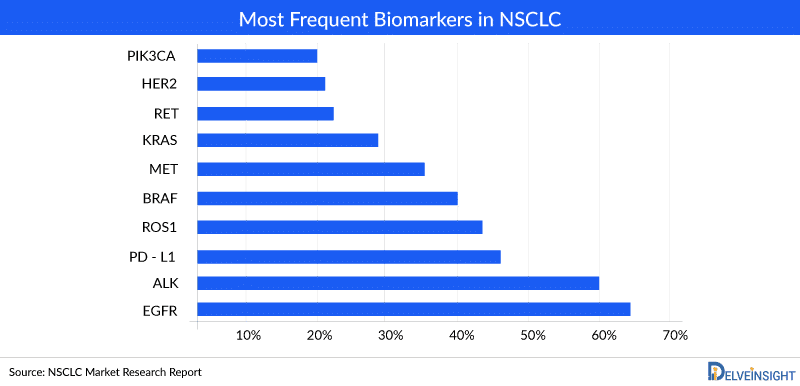
- Conduct in-depth epidemiology segmentation analysis based on biomarkers such as EGFR, ALK, ROS1, and others
- Visualize data through advanced epidemiology data visualization tools
Some of the key findings from the analysis are:
- ~539K incident cases of NSCLC in the 7MM in 2025 (~304K in men and ~235K in women)
- Patients ≥65 years accounted for ~139K cases in the US in 2025
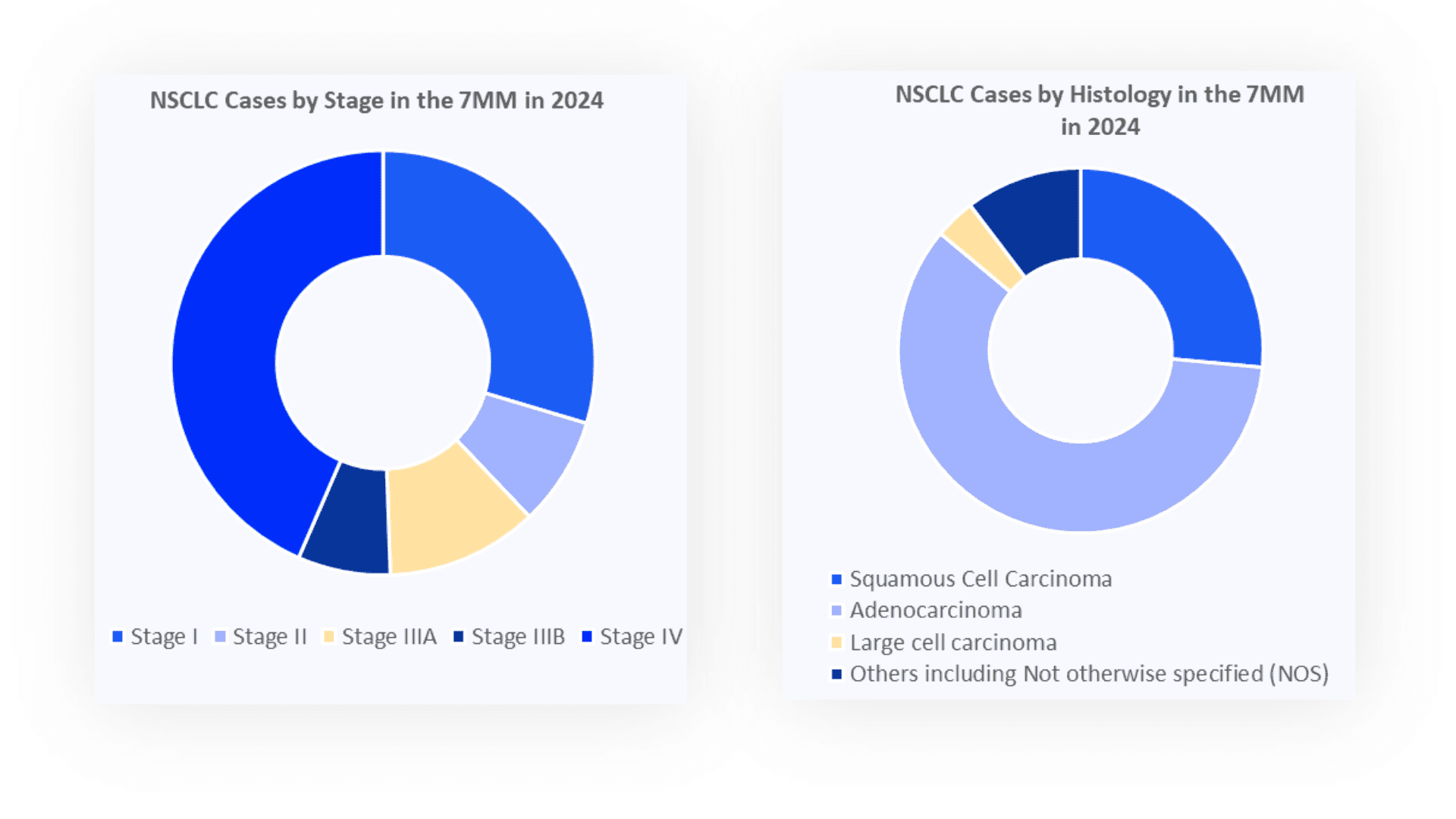
- The majority of the cases were found to be of adenocarcinoma, comprising ~57% of total cases in the US
- PD-L1 had the highest prevalence, followed by MET, KRAS, HER2, and EGFR
- NTRK1/2/3 fusions were rare (446 cases in the US).
- Most cases of NSCLC are diagnosed at advanced Stage IV
Key Features & Capabilities
Advanced Dashboarding
The platform delivered a unified disease epidemiology dashboard and patient population dashboard, allowing stakeholders to:
- Monitor disease incidence dashboard and disease prevalence dashboard metrics
- Explore 7MM epidemiology data in a single interface
- Customize views tailored for internal teams using the epidemiology dashboard for pharma companies, biotech, and market research
Forecasting & Analytics
Using AI-driven epidemiology forecasting tools, the company generated:
- Accurate projections through an epidemiology dashboard with forecast data
- Long-term insights via an epidemiology dashboard with 11-year forecast
- Actionable epidemiology market insights for commercial and clinical strategy
The epidemiology statistics dashboard enabled precise modeling of patient pools segmented by biomarker types across all key markets.
Data-Driven Insights
DelveEpiAI integrated epidemiology data dashboard capabilities with real-world evidence to:
- Deliver actionable insights via an epidemiology insights dashboard
- Enable cross-country comparisons using country-wise disease prevalence
- Support strategic decisions through comprehensive epidemiology trends analysis
Impact
By implementing DelveEpiAI, the pharma company achieved:
- Enhanced accuracy in forecasting biomarker-specific NSCLC patient populations
- Improved strategic planning for targeted therapies across the 7MM
- Faster decision-making through an interactive epidemiology dashboard
- Seamless integration of real-world epidemiology data into forecasting models
- Greater visibility into epidemiological patterns via a unified epidemiology analytics platform
Conclusion:
DelveEpiAI transformed how the company approached NSCLC epidemiology by providing a next-generation epidemiology dashboard for pharma companies. Through its powerful combination of epidemiology data visualization, forecasting, and analytics, the platform enabled precise patient pool estimation by biomarker type, empowering data-driven decision-making in an increasingly competitive oncology landscape.
This case exemplifies how modern epidemiology intelligence platforms can unlock deeper insights and drive strategic advantage through advanced analytics, interactive dashboards, and comprehensive global data integration.
Our Related Services
Sample Visuals
Get Visuals