Adrenoleukodystrophy Market Summary
Adrenoleukodystrophy (ALD) Disease Insights and Trends
- Childhood cerebral adrenoleukodystrophy remains the most severe disease phenotype, with rapid neurological deterioration leading to significant disability and mortality if intervention is not initiated at an early stage.
- Increasing adoption of newborn screening and genetic testing has improved early identification of at-risk individuals, enabling timely surveillance and intervention before irreversible neurological damage occurs.
- Current management remains centered on supportive care, adrenal hormone replacement, and hematopoietic stem cell transplantation (HSCT), with HSCT continuing to be the standard disease-modifying treatment for eligible patients with early cerebral disease.
- The approval of elivaldogene autotemcel (SKYSONA) marked a significant advancement in the treatment landscape by introducing the first gene therapy for patients with early active cerebral adrenoleukodystrophy who lack a suitable matched donor for transplantation.
- In 2025, updated FDA safety labeling for SKYSONA, following reports of hematologic malignancies, highlighted the importance of long-term safety monitoring and careful patient selection in gene therapy use.
- Despite recent therapeutic advances, substantial unmet need persists, particularly among patients with adrenomyeloneuropathy (AMN) and advanced disease, where effective disease-modifying treatment options remain limited.
- The development pipeline is increasingly focused on therapies targeting very-long-chain fatty acid metabolism, neuroinflammation, mitochondrial dysfunction, and neurodegeneration, reflecting a shift toward mechanism-based treatment approaches.
Adrenoleukodystrophy (ALD) Disease Market Size and Forecast in the 7MM
- 2025 ALD Disease Market Size: ~USD XX million
- 2036 Projected ALD Disease Market Size: ~USD XX million
- ALD Disease Growth Rate (2026–2036): XX% CAGR
DelveInsight's ‘Adrenoleukodystrophy (ALD) Disease Market Insights, Epidemiology and Market Forecast – 2036’ report delivers an in-depth understanding of the ALD Disease, historical and forecasted epidemiology, as well as the ALD Disease market trends in the United States, EU4 (Germany, Spain, Italy, and France), and the United Kingdom, and Japan.
The Adrenoleukodystrophy (ALD) Disease market report delivers a comprehensive analysis of the current treatment landscape, including standards of care, clinical practices, and evolving therapeutic algorithms. It evaluates ALD Disease patient burden trends, revenue & market share dynamics, peak patient share & therapy uptake analysis, and provides an in-depth market size assessment, and growth rate projections (Historical & Forecast 2022–2036) across global regions. The report highlights key unmet medical needs in ALD Disease and maps the competitive and clinical landscape to uncover high‑value opportunities, providing a clear outlook on future market growth potential.
|
Study Period |
2022–2036 |
|
Historical Year |
2022–2025 |
|
Forecast Period |
2026–2036 |
|
Base Year |
2026 |
|
Geographies Covered |
|
|
ALD Disease Market CAGR (Forecast period) |
XX% (2026–2036) |
|
ALD Disease Epidemiology Segmentation Analysis |
Patient Burden Assessment
|
|
ALD Disease Companies |
|
|
ALD Disease Therapies |
|
|
ALD Disease Market |
Segmented by
|
|
Analysis |
|
|
|
Key Factors Driving the Adrenoleukodystrophy (ALD) Disease Market
Persistent high unmet medical need due to severe, progressive multi-system disease
Adrenoleukodystrophy is a rare genetic disorder characterized by progressive neurologic decline, adrenal dysfunction, and significant long-term disability, with severe forms causing rapid disease progression and high mortality despite available treatments.
Expansion of newborn screening is increasing the diagnosed and treatable population
Widespread newborn screening enables presymptomatic diagnosis, earlier intervention, and expansion of the identifiable ALD disease patient population.
Well-defined molecular biology enabling targeted therapeutic development
A well-characterized genetic basis and measurable biomarkers enable early diagnosis and drive the development of targeted therapies for adrenoleukodystrophy.
Adrenoleukodystrophy (ALD) Disease Understanding and Treatment Algorithm
Adrenoleukodystrophy (ALD) Disease Overview
ALD is a rare X-linked peroxisomal disorder caused by mutations in the ABCD1 gene, leading to impaired degradation and accumulation of very-long-chain fatty acids. This results in progressive inflammatory demyelination in the central nervous system, spinal cord degeneration, and adrenal cortex dysfunction, producing a broad clinical spectrum. The disease commonly presents as childhood cerebral ALD, a rapidly progressive neurodegenerative form with severe cognitive and motor decline; adrenomyeloneuropathy, a slowly progressive adult-onset spinal cord disorder causing spastic paraparesis and isolated adrenal insufficiency. Overall, it is a progressive multisystem disease with highly variable onset and severity driven by toxic lipid accumulation and neuroinflammation.
Adrenoleukodystrophy (ALD) Disease Diagnosis
Diagnosis of adrenoleukodystrophy is based on biochemical testing, genetic confirmation, and neuroimaging assessment. The key screening test is elevated plasma very-long-chain fatty acids, reflecting impaired peroxisomal metabolism. Definitive diagnosis is established by identification of pathogenic variants in the ABCD1 gene. In cerebral disease, brain MRI is used to detect characteristic white matter demyelination, often with posterior predominance and contrast enhancement in active inflammatory lesions. Adrenal function testing is also performed to assess associated primary adrenal insufficiency. Together, these investigations enable early and accurate diagnosis, including presymptomatic detection through newborn screening programs.
Further details are provided in the report.
Adrenoleukodystrophy (ALD) Disease Treatment
Treatment of adrenoleukodystrophy is centered on early disease-modifying intervention, prevention of cerebral disease progression, and lifelong management of endocrine and neurological complications. In early cerebral adrenoleukodystrophy, the primary disease-modifying options are HSCT and ex vivo lentiviral gene therapy (elivaldogene autotemcel), both of which can stabilize or slow inflammatory demyelination when administered before advanced neurologic decline.
Supportive therapy includes lifelong glucocorticoid replacement for primary adrenal insufficiency, which is common across phenotypes. Patients with adrenomyeloneuropathy are managed with symptomatic and rehabilitative care, including physical therapy, spasticity management, and bladder symptom control, as no disease-modifying therapy is currently established for this phenotype.
Further details related to country-based variations are provided in the report.
Adrenoleukodystrophy (ALD) Disease Unmet Needs
The section “unmet needs of ALD Disease” outlines the critical gaps between the current state of patient care, diagnosis, and the ideal & effective management of the disease. It highlights the obstacles experienced by patients, clinicians, and researchers and identifies potential solutions for future progress.
- Limited disease-modifying options are restricted to early cerebral disease
- Narrow therapeutic window in cerebral adrenoleukodystrophy
- Progressive neurological decline despite current interventions in advanced disease
- No approved therapy targeting adrenomyeloneuropathy progression, and others…..
Note: Comprehensive unmet needs insights in ALD Disease and their strategic implications are provided in the full report.
Adrenoleukodystrophy (ALD) Disease Membrane Epidemiology
Key Findings from Adrenoleukodystrophy (ALD) Disease Epidemiological Analysis and Forecast
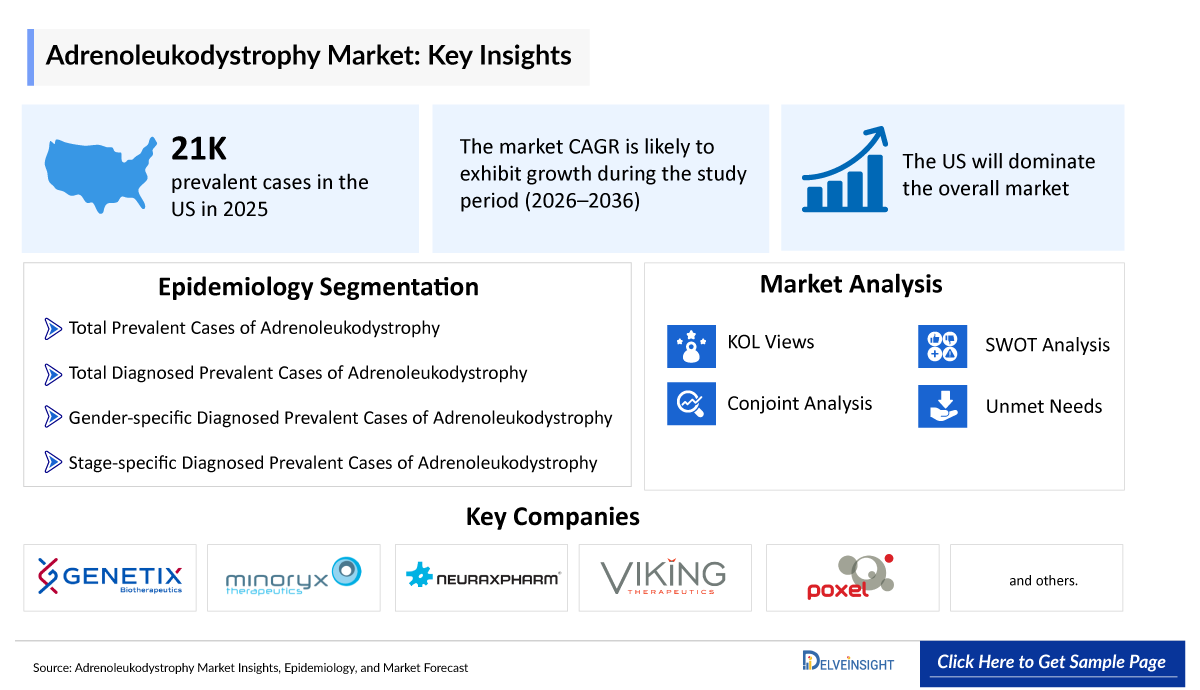
- In 2025, the prevalence of ALD in the United States was estimated at nearly 21,000 cases, while the diagnosed patient population was approximately 6,000, according to DelveInsight.
- The most prevalent genetic disorder affecting peroxisomes has been reported in approximately 1 in 20,000 to 1 in 50,000 individuals worldwide, whereas N-ALD affects about 1 in 50,000 newborns.
- ALD affects approximately 1 in 18,000 individuals; 35–40% of boys carrying an ABCD1 mutation develop cerebral disease, while carrier mothers have a 50% risk of transmitting the mutation to their children.
- Childhood cerebral demyelinating ALD is the most common form, accounting for about 45% of cases, and is characterized by inflammatory destruction of myelin that leads to rapid neurological decline, often resulting in a vegetative state or death within five years.
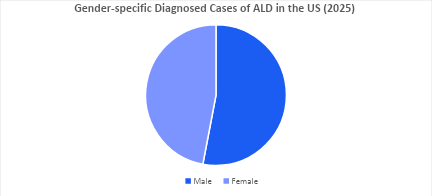
- About 1 in 20,000 males are born with ALD. Females are typically only carriers. Females may have no or very mild symptoms.
Adrenoleukodystrophy (ALD) Disease Drug Analysis & Competitive Landscape
The ALD Disease drug chapter provides a detailed, market-focused review of the approved and emerging pipeline across Phase I–III clinical trials. It covers the mechanism of action, clinical trial data, regulatory approvals, patents, collaborations, and strategic partnerships for each therapy, along with their advantages, limitations, and recent developments. This section offers critical insights into the ALD Disease treatment landscape, supporting market assessment, competitive analysis, and growth forecasting for the ALD Disease therapeutics market.
Approved Therapies for Adrenoleukodystrophy (ALD) Disease
Elivaldogene autotemcel (SKYSONA): Genetix Biotherapeutics
SKYSONA is an autologous hematopoietic stem cell gene therapy designed to correct the underlying ABCD1 gene defect in adrenoleukodystrophy. As the first approved gene therapy for cerebral adrenoleukodystrophy, it represents a significant shift from supportive care and transplantation-based approaches toward targeted disease modification, particularly for patients without a suitable donor for hematopoietic stem cell transplantation.
The therapy received US FDA approval in September 2022 for boys aged 4–17 years with early active cerebral adrenoleukodystrophy who lack an HLA-matched donor. However, broader adoption may be constrained by its specialized administration, limited eligible patient population, and evolving safety profile. In August 2025, the FDA required updated safety labeling following reports of hematologic malignancies, reinforcing the need for long-term safety monitoring and careful patient selection.
Note: Detailed marketed therapies assessment of therapies will be provided in the final report.
Table 1: ALD Disease Marketed/Approved Therapies | ||||||
|
Drug |
Company |
Indication |
Molecule Type |
MoA |
RoA |
Marketed Region |
|
SKYSONA |
Genetix Biotherapeutics |
ALD Disease |
Gene therapy |
ABCD1 gene replacement |
IV |
US: 2022 |
Adrenoleukodystrophy (ALD) Disease Pipeline Analysis
Leriglitazone (MIN-102): Minoryx Therapeutics and Neuraxpharm
Leriglitazone is an investigational, brain-penetrant, selective PPAR-γ agonist designed to modulate pathways involved in mitochondrial function, lipid metabolism, neuroinflammation, and oxidative stress. The therapy aims to address key pathogenic mechanisms of X-linked ALD by improving cellular energy homeostasis and reducing neuroinflammatory processes associated with very-long-chain fatty acid (VLCFA) accumulation. Leriglitazone is being developed for both cerebral adrenoleukodystrophy (cALD) and adrenomyeloneuropathy (AMN).
Minoryx Therapeutics reported that leriglitazone met the primary endpoint of the pivotal NEXUS trial in pediatric cALD, supporting its potential as a disease-modifying therapy. Based on these results, the company submitted a Marketing Authorization Application (MAA) to the European Medicines Agency (EMA) for the treatment of pediatric and adult male patients with cALD. The application was validated by the EMA in July 2025.
VK0214: Viking Therapeutics
VK0214 is an oral thyroid hormone receptor-β (TRβ) agonist designed to reduce the accumulation of very-long-chain fatty acids in patients with X-linked ALD. By selectively activating TRβ pathways, the drug enhances metabolic pathways that promote the breakdown of very-long-chain fatty acids (VLCFA), which are central to ALD disease pathology. VK0214 is being investigated primarily for patients with AMN, the adult form of ALD. Received orphan drug designation (ODD) from the FDA for VK0214 for the treatment of X-ALD in December 2016.
Table 2: Competitive Landscape of Pipeline Drugs | ||||||
|
Drug |
Company |
Indication |
Molecule Type |
MoA |
RoA |
Anticipated Launch in the US |
|
Leriglitazone (MIN-102) |
Minoryx Therapeutics |
ALD Disease |
Gene therapy |
PPAR-γ agonist |
IV |
Information is available in the full report |
|
VK0214 |
Viking Therapeutics |
ALD Disease |
Small Molecule |
Thyroid hormone receptor beta agonists |
Oral |
Information is available in the full report |
|
PXL065 |
Poxel |
ALD Disease |
Small molecule |
Mitochondrial metabolism modulator |
Oral |
Information is available in the full report |
|
PXL770 |
Poxel |
ALD Disease |
Small molecule |
AMPK activator |
Oral |
Information is available in the full report |
Adrenoleukodystrophy (ALD) Disease Key Players, Market Leaders, and Emerging Companies
- Genetix Biotherapeutics
- Minoryx Therapeutics and Neuraxpharm
- Viking Therapeutics
- Poxel
Adrenoleukodystrophy (ALD) Disease Drug Updates
- In July 2025, Minoryx Therapeutics announced that leriglitazone met the primary endpoint in the pivotal NEXUS trial in pediatric cerebral ALD patients, demonstrating stabilization of neurological disease progression. Following these results, the company submitted an MAA to the EMA.
- In October 2024, Viking Therapeutics announced the positive data from the Phase Ib clinical trial of VK0214 in patients with X-linked ALD. The Results from this study showed VK0214 to be safe and well-tolerated following once-daily dosing over the 28-day study period.
Adrenoleukodystrophy (ALD) Disease Market Outlook
The adrenoleukodystrophy market remains significantly underserved, with current treatment options largely limited to HSCT for eligible patients with early cerebral disease and supportive care for most other phenotypes. Patients with adrenomyeloneuropathy (AMN) and advanced cerebral disease continue to face substantial unmet needs due to the absence of approved disease-modifying therapies, creating a strong demand for novel therapeutic approaches.
The treatment landscape has evolved with the approval of SKYSONA, the first gene therapy for early active cerebral adrenoleukodystrophy. While SKYSONA has demonstrated the potential of gene-based disease modification, its adoption is expected to be limited by narrow patient eligibility, specialized treatment requirements, and the need for long-term safety monitoring, leaving significant opportunities for therapies with broader applicability.
The pipeline is increasingly focused on metabolic and neuroprotective approaches targeting very-long-chain fatty acid metabolism, neuroinflammation, and mitochondrial dysfunction. Emerging therapies such as Leriglitazone and VK0214 have the potential to expand treatment options, particularly for patients with AMN, where no approved disease-modifying therapies currently exist.
-
The United States is expected to account for the largest market share of ALD Disease among the 7MM, with projected significant growth through 2036.
Further details will be provided in the report….
Drug Class/Insights into Leading Emerging and Marketed Therapies in Adrenoleukodystrophy (ALD) Disease (2022–2036 Forecast)
The ALD treatment landscape is evolving from supportive management toward gene replacement and metabolic-targeted therapies designed to address the underlying consequences of ABCD1 dysfunction, including very-long-chain fatty acid accumulation, mitochondrial impairment, and neurodegeneration.
ABCD1 gene replacement: Gene therapy represents the only approved disease-modifying therapeutic class in adrenoleukodystrophy. SKYSONA restores functional ABCD1 expression through autologous gene-modified hematopoietic stem cells, aiming to stabilize cerebral disease progression in eligible patients with early active cerebral adrenoleukodystrophy.
PPAR-γ agonists: This class is represented by Leriglitazone, which is being developed to address neuroinflammation, mitochondrial dysfunction, and neurodegeneration associated with adrenoleukodystrophy. The class is intended to provide a disease-modifying approach beyond the narrow treatment window of transplantation and gene therapy.
Thyroid hormone receptor beta agonists: VK0214 is designed to increase expression of ABCD2, a compensatory transporter that may partially substitute for defective ABCD1 function, thereby enhancing very-long-chain fatty acid metabolism and reducing lipid accumulation.
Overall, gene replacement therapies currently represent the most advanced disease-modifying approach in adrenoleukodystrophy, while emerging metabolic-targeted classes, including PPAR-γ agonists, thyroid hormone receptor beta agonists, and AMPK activators, are expanding the pipeline with the potential to address broader patient populations, particularly those with adrenomyeloneuropathy and advanced disease.
Adrenoleukodystrophy (ALD) Disease Drug Uptake
This section focuses on the uptake rate of potential drugs expected to be launched in the market during the forecast period (2026–2036). The analysis covers the ALD Disease drug’s uptake, performance at peak, factors affecting performance during prime years of growth, patient uptake by therapy, and anticipated sales generated by each drug.
The uptake of therapies in ALD is expected to remain centered on HSCT and SKYSONA for eligible patients with early cerebral disease. HSCT is anticipated to maintain consistent use due to its established clinical benefit when administered before significant neurological progression, while SKYSONA is expected to see gradual adoption as the first approved gene therapy for cerebral adrenoleukodystrophy. However, uptake of SKYSONA is likely to remain limited by narrow patient eligibility, specialized treatment requirements, and the need for long-term safety monitoring.
Future treatment uptake is expected to be driven by emerging therapies such as Leriglitazone and VK0214, particularly in adrenomyeloneuropathy, where no approved disease-modifying therapies currently exist. Their adoption will depend on demonstrating meaningful clinical benefits on disease progression, neurological function, and long-term safety, while increasing newborn screening and earlier diagnosis are expected to support broader treatment utilization.
Detailed insights into emerging therapies' drug uptake are included in the report.
Market Access and Reimbursement of Adrenoleukodystrophy (ALD) Disease
Reimbursement is a crucial factor that affects the drug’s access to the market. Often, the decision to reimburse comes down to the price of the drug relative to the benefit it produces in treated patients. To reduce the healthcare burden of these high-cost therapies, many payment models are being considered by payers and other industry insiders.
US Reimbursement for ALD Disease | |
|
Drug/Therapy |
Access Program |
|
SKYSONA |
|
NOTE: Further Details are provided in the final report….
Adrenoleukodystrophy (ALD) Disease Therapies Price Scenario & Trends
Pricing and analogue assessment of ALD Disease therapies highlights evolving price dynamics structures. This section summarizes the cost of approved treatments, the closest and most appropriate analogue selection for emerging therapies, and the understanding of how pricing influences market access, adherence, and long-term uptake.
Further details are provided in the final report….
Industry Experts and Physician Views for Adrenoleukodystrophy (ALD) Disease
To keep up with ALD disease market trends, we take Key Opinion Leaders (KOLs) and Subject Matter Experts (SMEs) opinions working in the domain through primary research to fill the data gaps and validate our secondary research. Industry experts were contacted for insights on the emerging ALD disease therapies, evolving treatment landscape, patient adherence to conventional therapies, therapy switching trends, drug adoption and uptake, accessibility challenges, and epidemiology and real-world prescription patterns in ALD disease, including MD, PhD, Instructor, Postdoctoral Researcher, Professor, Researcher, and others.
DelveInsight’s analysts connected with 10+ KOLs to gather insights at the country level. Centers such as the Professor, Nephrologist, etc., were contacted. Their opinion helps understand and validate current and emerging ALD disease therapies, highlight unmet medical needs, provide epidemiological context, and support strategic decisions for market access, therapy adoption, and pipeline prioritization in ALD disease.
|
Region |
Key Opinion Leaders (KOLs) and Subject Matter Experts (SMEs) |
|
Germany |
“Early detection through newborn screening has significantly improved outcomes in ALD, as it enables clinicians to identify patients before neurological symptoms develop and initiate timely monitoring and intervention.” |
|
United States |
“Gene therapy has emerged as a promising treatment strategy for cerebral ALD, particularly for patients who lack a suitable donor for hematopoietic stem cell transplantation.” |
Qualitative Analysis: SWOT and Conjoint Analysis
We perform qualitative and market Intelligence analysis using various approaches, such as SWOT analysis and conjoint analysis.
In the SWOT analysis of ALD Disease, strengths, weaknesses, opportunities, and threats in terms of disease diagnosis, patient awareness, patient burden, competitive landscape, cost-effectiveness, and geographical accessibility of therapies are provided.
Conjoint analysis analyzes emerging therapies based on relevant attributes such as safety, efficacy, frequency of administration, route of administration, and order of entry. Scoring is given based on these parameters to analyze the effectiveness of therapy.
The team of analysts analyzes promising emerging therapies based on relevant attributes such as safety, efficacy, frequency of administration, route of administration, and order of entry. In efficacy, the trial’s primary and secondary outcome measures are evaluated, whereas the therapies’ safety is evaluated, wherein the acceptability, tolerability, and adverse events are mainly observed. In addition, the scoring is also based on the route of administration, order of entry, probability of success, and the addressable patient pool for each therapy. According to these parameters, the final weightage score and the ranking of the emerging therapies are decided.
Scope of the Report
- The report covers a segment of key events, an executive summary, a descriptive overview of ALD Disease, explaining its causes, signs and symptoms, pathogenesis, and currently available treatments.
- Comprehensive insight has been provided into the epidemiology segments and forecasts, the future growth potential of the diagnosis rate, and disease progression along treatment guidelines.
- Additionally, an all-inclusive account of both the current and emerging treatments, along with the elaborate profiles of late-stage and prominent therapies, will have an impact on the current treatment landscape.
- A detailed review of the ALD Disease market, historical and forecasted market size, market share by therapies, detailed assumptions, and rationale behind our approach is included in the report, covering the 7MM drug outreach.
- The report provides an edge while developing business strategies by understanding trends through SWOT analysis and expert insights/KOL views, patient journey, and treatment preferences that help in shaping and driving the 7MM ALD Disease market.
Report Insights
- Adrenoleukodystrophy (ALD) Disease Patient Population Forecast
- Adrenoleukodystrophy (ALD) Disease Therapeutics Market Size
- Adrenoleukodystrophy (ALD) Disease Pipeline Analysis
- Adrenoleukodystrophy (ALD) Disease Market Size and Trends
- Adrenoleukodystrophy (ALD) Disease Market Opportunity (Current and forecasted)
Report Key Strengths
- Epidemiology‑based (Epi‑based) Bottom‑up Forecasting
- Artificial Intelligence (AI)-Enabled Market Research Report
- 11-Year Forecast
- Adrenoleukodystrophy (ALD) Disease Market Outlook (North America, Europe, Asia-Pacific)
- Patient Burden Trends (By Geography)
- Adrenoleukodystrophy (ALD) Disease Treatment Addressable Market (TAM)
- Adrenoleukodystrophy (ALD) Disease Competitive Landscape
- Adrenoleukodystrophy (ALD) Disease Major Companies Insights
- Adrenoleukodystrophy (ALD) Disease Price Trends and Analogue Assessment
- Adrenoleukodystrophy (ALD) Disease Therapies Drug Adoption/Uptake
- Adrenoleukodystrophy (ALD) Disease Therapies Peak Patient Share Analysis
Report Assessment
- Adrenoleukodystrophy (ALD) Disease Current Treatment Practices
- Adrenoleukodystrophy (ALD) Disease Unmet Needs
- Adrenoleukodystrophy (ALD) Disease Clinical Development Analysis
- Adrenoleukodystrophy (ALD) Disease Emerging Drugs Product Profiles
- Adrenoleukodystrophy (ALD) Disease Market Attractiveness
- Adrenoleukodystrophy (ALD) Disease Qualitative Analysis (SWOT and conjoint analysis)
FAQs
Market Insights
- What was the ALD disease market size, the market size by therapies, the market share (%) distribution in 2025, and what would it look like by 2036? What are the contributing factors for this growth?
- What are the anticipated pricing variations among different geographies for the emerging therapies in the future?
- What can be the future treatment paradigm of ALD disease?
- What are the disease risks, burdens, and unmet needs of ALD disease? What will be the growth opportunities across the 7MM concerning the patient population with ALD disease?
- Who is the major future competitor in the market, and how will the competitors affect their market share?
- What are the current options for the treatment of ALD disease? What are the current guidelines for treating ALD disease in the US, Europe, and Japan?
Reasons to Buy
- The report will help in developing business strategies by understanding the latest trends and changing treatment dynamics driving the ALD disease market.
- Bottom-up forecasting builds from the affected population to product forecasts, delivering a robust, data-driven approach ideal for new therapies and novel classes.
- Insights on patient burden/disease incidence, evolution in diagnosis, and factors contributing to the change in the epidemiology of the disease during the forecast years.
- Understand the existing market opportunities in varying geographies and the growth potential over the coming years.
- Identifying strong upcoming players in the market will help devise strategies to help get ahead of competitors.
- Detailed analysis and ranking of class-wise potential current and emerging therapies under the conjoint analysis section to provide visibility around leading classes.
- To understand KOLs’ perspectives on the accessibility, acceptability, and compliance-related challenges of existing treatment to overcome barriers in the future.
- Detailed insights into the unmet needs of the existing market so that the upcoming players can strengthen their development and launch strategy.
- This Artificial Intelligence (AI)-enabled report summarizes and simplifies complex datasets within the report into clear, actionable insights for stakeholders, investors, and healthcare providers, enabling faster, data-driven decisions.