
Dyslipidemia Market Summary
- The Dyslipidemia market is projected to experience a rise in Compound Annual Growth Rate (CAGR) during the forecast period (2024–2034). Market revenue growth is largely fueled by the increasing burden of Dyslipidemia, including hospitalizations, mortality, and significant healthcare costs, alongside the aging global population. This scenario is driving greater demand for both preventive and treatment options.
- The dynamics of the Dyslipidemia market are anticipated to change in the coming years owing to the improvement in novel treatment options to treat Dyslipidemia, increasing healthcare spending across the world. Key Dyslipidemia Market players in the treatment and prevention landscape Lipigon Pharmaceuticals AB, and others.
Dyslipidemia Market and Epidemiology Analysis
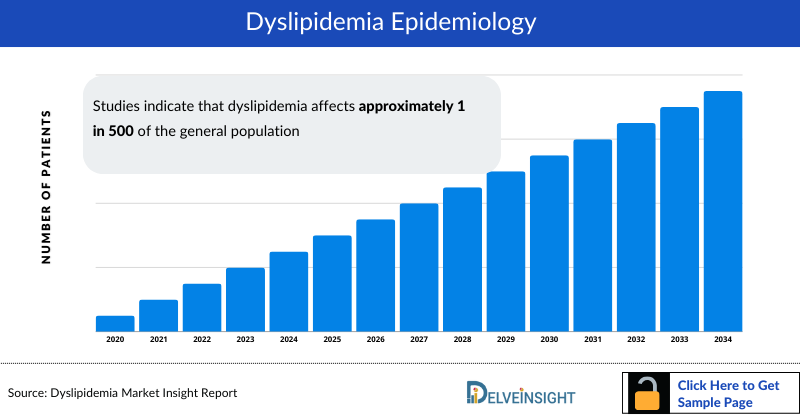
- Dyslipidemia affects approximately 1 in 500 people in the general population, with higher prevalence observed among individuals who have underlying medical conditions or genetic predispositions. The condition is reported more frequently in men than in women.
- Studies suggest that nearly 65% of patients with dyslipidemia may progress to more severe cardiovascular complications, emphasizing its significant long-term health risks.
- Additionally, around 25% of cases show complications that can be detected through advanced imaging techniques, with disease progression often occurring before the age of 16.
- The Dyslipidemia market faces several unmet needs, including the demand for more effective non-surgical treatments that can relieve pain and improve mobility without the risks associated with surgery. Current therapies often fall short in providing long-term relief, and many patients struggle with the progression of the condition. There is also a need for better diagnostic tools to detect Dyslipidemia earlier and more accurately. Additionally, personalized treatment approaches are lacking, as current therapies do not adequately address the varying severity and underlying causes of the condition. Addressing these gaps could significantly enhance patient outcomes.
Key Factors Driving the Growth of the Dyslipidemia Market
Rising Prevalence of Cardiovascular Diseases
The increasing incidence of heart disease and stroke worldwide is a primary driver for the demand for effective lipid-lowering treatments. DelveInsight analysts project that the prevalence of dyslipidemia is expected to grow during the forecast period (2024-2034), attributed to a rise in cardiovascular diseases and an aging population. This trend is influenced by the increased consumption of processed foods, sugary drinks, and foods high in saturated and trans fats, all of which negatively impact lipid profiles.
Advancements in Diagnostic Technologies
Technological innovations in lipid profiling, genetic testing, and telemedicine platforms have enhanced early detection and monitoring of dyslipidemia. These advancements facilitate timely interventions and personalized treatment plans, increasing the adoption of lipid-lowering therapies.
Emergence of New Dyslipidemia Drug Classes
Development of new classes of drugs, such as CETP inhibitors (NewAmsterdam Pharma’s Obicetrapib), ANGPTL3 Inhibitor, and gene-based therapies, holds promise for better management of dyslipidemia.
Launch of Emerging Dyslipidemia Drugs
The dyslipidemia drugs market is anticipated to be driven in the coming years due to the rise in novel drugs and therapies such as AZD0780 (AstraZeneca), Obicetrapib (NewAmsterdam Pharma), Plozasiran (ARO-APOC3) (Arrowhead Pharmaceuticals), Zodasiran (ARO-ANG3) (Arrowhead Pharmaceuticals), and others.
Request a sample to unlock the CAGR for "Dyslipidemia Market Forecast"
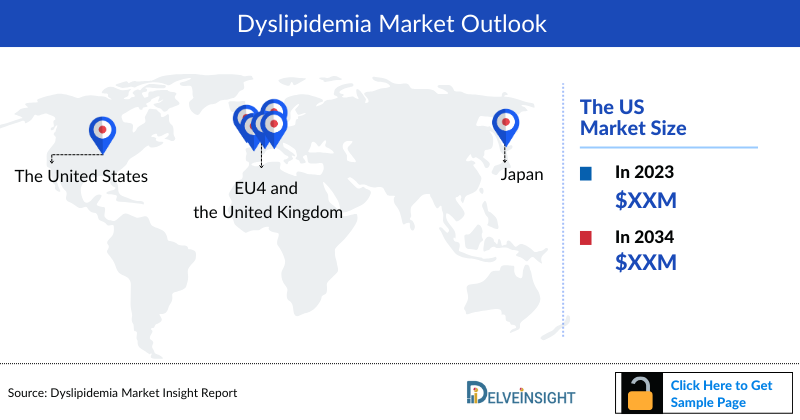
DelveInsight’s comprehensive report titled “Dyslipidemia Market Insights, Epidemiology, and Market Forecast 2034” offers a detailed analysis of Dyslipidemia. The report presents historical and projected epidemiological data covering Total Prevalent Cases of Dyslipidemia, Gender-specific Prevalent Cases of Dyslipidemia, Age-specific Prevalent Cases of Dyslipidemia, and Treatable Cases of Dyslipidemia. In addition to epidemiology, the market report encompasses various aspects related to the patient population. These aspects include the diagnosis process, prescription patterns, physician perspectives, market accessibility, treatment options, and prospective developments in the market across seven major markets: the United States, EU4 (Germany, France, Italy, and Spain), the United Kingdom, and Japan, spanning from 2020–2034.
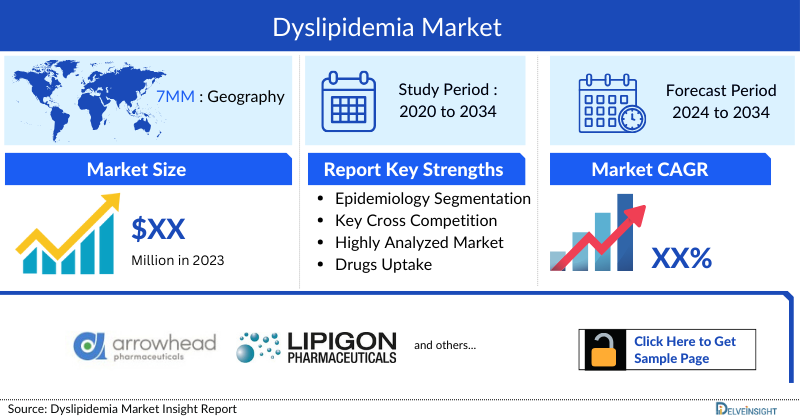
The Dyslipidemia Market report analyzes the existing treatment practices and unmet medical requirements in Dyslipidemia. It evaluates the market potential and identifies potential business prospects for enhancing therapies or interventions. This valuable information enables stakeholders to make well-informed decisions regarding product development and strategic planning for the market.
Scope of the Dyslipidemia Market Report | |
|---|---|
| Category | Details |
| Study Period | 2020–2034 |
| Forecast Period | 2024–2034 |
| Geographies Covered | The US, EU4 (Germany, France, Italy, Spain), the UK, and Japan |
| Dyslipidemia Epidemiology |
• Total Prevalent Cases of Dyslipidemia • Gender-specific Prevalent Cases of Dyslipidemia • Age-specific Prevalent Cases of Dyslipidemia • Diagnosed and Treatable Cases of Dyslipidemia |
| Dyslipidemia Market |
• Total Market Size • Market Size by Therapies |
| Dyslipidemia Market Analysis |
• Conjoint Analysis • SWOT Analysis • Unmet Needs |
| Dyslipidemia Market Players |
• Arrowhead, Inc. • Lipigon Pharmaceuticals AB • Others |
| Dyslipidemia Market Future Opportunity | The Dyslipidemia market shows strong growth potential driven by advancements in novel lipid-lowering therapies, increasing disease awareness, public health prioritization, and innovative diagnostic technologies improving early detection and treatment outcomes. |
Dyslipidemia Treatment Market
Dyslipidemia Overview
Dyslipidemia refers to an abnormal level of lipids (fats) in the bloodstream, which significantly increases the risk of cardiovascular diseases. This condition can stem from a variety of causes, including genetic predispositions, lifestyle choices, and underlying health issues. Dyslipidemia is typically classified into several types based on the nature of the lipid abnormalities present. These include primary dyslipidemia, which is genetically inherited; secondary dyslipidemia, which results from other medical conditions such as diabetes or hypothyroidism; familial hypercholesterolemia, characterized by extremely high cholesterol levels; familial combined hyperlipidemia, involving both high cholesterol and triglycerides; mixed dyslipidemia, which includes abnormal levels of both cholesterol and triglycerides; and hypertriglyceridemia, marked specifically by elevated triglyceride levels.
Symptoms of dyslipidemia are often subtle or nonexistent, making it difficult to detect without routine blood tests. However, in some cases, individuals may experience fatigue, chest pain, or more severe cardiovascular events such as angina or stroke. Diagnosis is primarily achieved through blood tests that measure lipid levels, alongside an evaluation of the patient's medical history and risk factors. Management typically involves lifestyle modifications like dietary changes and increased physical activity, as well as medications designed to normalize lipid levels and mitigate cardiovascular risk.
Dyslipidemia Diagnosis
The diagnosis of dyslipidemia begins with a thorough patient evaluation, including a detailed medical history and physical examination. Key indicators for suspicion include abnormal lipid levels detected through routine blood tests, as well as associated risk factors such as obesity, diabetes, or a family history of cholesterol disorders. To confirm the diagnosis and assess the extent of lipid abnormalities, a lipid profile is performed, measuring levels of triglycerides.
Advanced diagnostic techniques may also be employed to evaluate any underlying conditions contributing to dyslipidemia. For example, additional tests might be used to assess liver function or thyroid health, as these can influence lipid levels. The diagnosis is often refined by distinguishing between different types of dyslipidemia, whether it is primary, secondary, familial, or mixed, allowing for a tailored treatment approach.
Dyslipidemia Treatment
Treatment for dyslipidemia generally follows a multifaceted approach. Initial management focuses on lifestyle modifications, including dietary changes, increased physical activity, and weight management, to help normalize lipid levels. Statins and other lipid-lowering medications are commonly prescribed to further manage cholesterol levels and reduce cardiovascular risk. In cases where lifestyle changes and medications are insufficient, more aggressive interventions such as newer classes of drugs or, in rare cases, therapeutic procedures might be considered. The choice of treatment depends on factors such as the patient’s lipid profile, overall health, and response to initial therapies.
According to DelveInsight’s analysis, the observed increase in dyslipidemia prevalence in recent years can be attributed to enhanced awareness and improved diagnostic techniques. Advances in medical technology and greater public awareness have led to more accurate detection and better management of the condition, which may have previously gone undiagnosed or misdiagnosed.
Dyslipidemia Epidemiology
The Dyslipidemia epidemiology section of the Dyslipidemia market report provides comprehensive insights into patient populations across the seven major markets, detailing both historical and projected trends. This section explores the dynamics of diagnosed cases, shedding light on past and anticipated patterns within these regions. Key opinion leader perspectives from physicians and clinical experts are integral to understanding the factors influencing these trends, including shifts in diagnosis rates and treatment approaches.
The Dyslipidemia Market report includes a variety of data presentations, such as tables and graphs, to offer a clear and detailed depiction of Dyslipidemia prevalence. It also outlines the assumptions used in the analysis, enhancing the transparency of data interpretation and presentation. By providing these insights, the epidemiology section helps elucidate the overall disease burden and its impact on patient populations across different geographic areas, offering valuable information for stakeholders and decision-makers in the healthcare sector.
Key Findings from Dyslipidemia Epidemiological Analyses and Forecast
- Studies indicate that dyslipidemia affects approximately 1 in 500 of the general population, with higher prevalence noted among individuals with specific risk factors, such as those with underlying health conditions or genetic predispositions. The condition is more frequently observed in men compared to women. According to various associations and research, around 65% of patients with dyslipidemia may experience progression to more severe cardiovascular complications, which are detectable in about 25% of cases through advanced imaging techniques; notably, this progression often occurs before the age of 16.
- The classification of dyslipidemia severity often utilizes established systems to quantify lipid abnormalities and their impact. The specific levels of dyslipidemia are categorized based on lipid profiles, with various grades reflecting the degree of lipid imbalance and associated cardiovascular risk.
- Research highlights that dyslipidemia is notably prevalent among specific age groups, with pediatric populations showing significant incidence rates, particularly for certain types of dyslipidemia such as familial or mixed dyslipidemia. Current estimates suggest that about 6 to 7% of individuals by the age of 18 may be affected by familial dyslipidemia, while up to 18% of adult patients undergoing Magnetic Resonance Imaging (MRI) of the cardiovascular system may show evidence of lipid-related abnormalities.
According to the American Journal of Physical Anthropology, certain forms of dyslipidemia, such as familial hypercholesterolemia, are more common in younger populations but may remain undiagnosed until symptoms manifest later in life. Males are generally more affected by these conditions, reflecting a higher prevalence rate compared to females.
Dyslipidemia Market Recent Developments and Breakthrough
- In March 2025, positive results from the Phase IIb PURSUIT trial were presented at the American College of Cardiology's Annual Scientific Session and Expo (ACC) and simultaneously published in the Journal of the American College of Cardiology (JACC). The findings showed that AstraZeneca's oral PCSK9 inhibitor, AZD0780, led to a statistically significant reduction in low-density lipoprotein cholesterol (LDL-C) when added to standard-of-care statin therapy.
Get detailed insights into the historical as well as forecasted epidemiology trends in the 7MM, at: Dyslipidemia Epidemiology Forecast
Dyslipidemia Drug Analysis
Dyslipidemia Emerging Drugs
Plozasiran (ARO-APOC3): Arrowhead Pharmaceuticals, Inc.
Plozasiran (formerly ARO-APOC3) is designed to reduce the production of the protein Apolipoprotein-CIII (ApoC3) through the natural RNA interference (RNAi) mechanism. ApoC3 is a protein that is produced in liver cells and inhibits the formation and clearance of various lipids and lipoproteins, including triglycerides.
The goal of treatment with plozasiran is to reduce the level of ApoC3 thereby reducing triglycerides and restoring lipids to more normal levels.
Dyslipidemia Emerging Drugs | ||||
|
Drug |
MoA |
RoA |
Company |
Phase |
|
Plozasiran (ARO-APOC3) |
APOC3-protein-expression-inhibitors |
XX |
Arrowhead Pharmaceuticals, Inc. |
II |
|
XXX |
XX |
XX |
XX |
XX |
Dyslipidemia Market Outlook
Medical management for dyslipidemia encompasses both pharmacologic and lifestyle interventions, tailored to the severity and underlying causes of the condition. Treatment strategies are generally divided into non-pharmacologic and pharmacologic approaches.
Dyslipidemia Competitive Landscape
The dyslipidemia competitive landscape is shaped by a mix of long-established lipid-lowering drugs and innovative therapies targeting unmet needs. Statins (e.g., atorvastatin, pitavastatin) dominate first-line treatment due to proven efficacy and wide adoption. Non-statin agents such as ezetimibe and bempedoic acid expand options for patients not at LDL-C goal on statins. Biologic PCSK9 inhibitors (e.g., evolocumab/Repatha) and newer entrants like lerodalcibep lead advanced therapy segments, with large players Amgen, Sanofi/Regeneron, Pfizer, Merck & Co., Novartis, AstraZeneca active in development and commercialization. Oral PCSK9 inhibitors (e.g., enlicitide) are emerging competitive threats to injectables, while generics and biosimilars intensify price competition and broaden access. Strategic R&D, partnerships, and fixed-dose combinations further drive rivalry in this dynamic market.
Key Dyslipidemia Companies
• Arrowhead, Inc.
• Lipigon Pharmaceuticals AB
• Others
Dyslipidemia Drugs Uptake
This section focuses on the sales uptake of potential Dyslipidemia drugs that have recently been launched or are anticipated to be launched in the Dyslipidemia market between 2020 and 2034. It estimates the market penetration of Dyslipidemia drugs for a given country, examining their impact within and across classes and segments. It also touches upon the financial and regulatory decisions contributing to the probability of success (PoS) of the drugs in the Dyslipidemia market.
Note: Detailed assessment of drug uptake and attribute analysis will be provided in the full report on Dyslipidemia.
Dyslipidemia Clinical Trials Activities
The Dyslipidemia Market report provides insights into different therapeutic candidates in Phase III, Phase II, and Phase I stage. It also analyzes key players involved in developing targeted therapeutics.
Dyslipidemia Pipeline Development Activities
The Dyslipidemia Market report covers information on collaborations, acquisitions and mergers, licensing, and patent details for Dyslipidemia emerging therapies.
Latest KOL Views on Dyslipidemia
To keep up with current Dyslipidemia market trends and fill gaps in secondary findings, we interview KOLs and SMEs working in the Dyslipidemia domain. Their opinion helps understand and validate current and emerging therapies and treatment patterns for Dyslipidemia market trends. This will support the clients in potential upcoming novel treatments by identifying the overall scenario of the market of Dyslipidemia unmet needs.
Dyslipidemia: KOL Insights
DelveInsight’s analysts connected with 50+ KOLs to gather insights; however, interviews were conducted with 15+ KOLs in the 7MM. These KOLs were from organizations, institutes, and hospitals, such as Mayo Clinic in Rochester, the Cleveland Clinic in Ohio, John Hopkins Hospital, Universitätsmedizin Berlin, the University Hospital of Heidelberg, the University Hospital of Freiburg, Stanford Health Care, Massachusetts General Hospital, University of California, San Francisco (UCSF), The Spine Center at Duke University, Cedars-Sinai Medical Center, University of Michigan Health System and others.
“Targeted medicine is essential for effective management of dyslipidemia. Customizing treatments to fit individual patient profiles, such as statins and other lipid-lowering agents for cholesterol control, lifestyle modifications for overall health improvement, and advanced therapies for severe cases, significantly boosts treatment effectiveness while reducing the risk of adverse effects. Tailoring these approaches to the specific needs of each patient ensures better lipid management and overall cardiovascular health.”
Note: Detailed assessment of KOL Views will be provided in the full report on Dyslipidemia.
Dyslipidemia Market Report Qualitative Analysis
We perform Qualitative and market Intelligence analysis using various approaches, such as SWOT and Conjoint Analysis. In the SWOT analysis, strengths, weaknesses, opportunities, and threats in terms of disease diagnosis, patient awareness, patient burden, competitive landscape, cost-effectiveness, and geographical accessibility of therapies are provided. These pointers are based on the Analyst’s discretion and assessment of the patient burden, cost analysis, and existing and evolving treatment landscape.
Conjoint Analysis analyzes multiple approved and emerging therapies based on relevant attributes such as safety, efficacy, frequency of administration, route of administration, and order of entry. Scoring is given based on these parameters to analyze the effectiveness of therapy.
Further, the therapies’ safety is evaluated wherein the acceptability, tolerability, and adverse events are majorly observed, and it sets a clear understanding of the side effects posed by the drug in the trials. In addition, the scoring is also based on the route of administration, order of entry and designation, probability of success, and the addressable patient pool for each therapy. According to these parameters, the final weightage score and the ranking of the emerging therapies are decided.
Dyslipidemia Market Access and Reimbursement
The high cost of therapies for the treatment is a major factor restraining the growth of the global drug market. Because of the high cost, the economic burden is increasing, leading the patient to escape from proper treatment.
The Dyslipidemia Market report further provides detailed insights on the country-wise accessibility and reimbursement scenarios, cost-effectiveness scenario of approved therapies, programs making accessibility easier and out-of-pocket costs more affordable, insights on patients insured under federal or state government prescription drug programs, etc.
Scope of the Dyslipidemia Market Report
- The Dyslipidemia Market report covers the descriptive overview of Dyslipidemia, explaining its signs and symptoms, causes, classification, and currently available therapies.
- Comprehensive insight has been provided into the Dyslipidemia epidemiology and treatment.
- Additionally, an all-inclusive account of both the current and emerging therapies for Dyslipidemia is provided, along with the assessment of new therapies, which will have an impact on the current treatment landscape.
- A detailed review of the Dyslipidemia market; historical and forecasted is included in the report, covering the 7MM drug outreach.
- The Dyslipidemia Market report provides an edge while developing business strategies, by understanding trends shaping and driving the 7MM Dyslipidemia market.
Dyslipidemia Market Report Highlights
- The robust pipeline with novel MOA and oral ROA will positively drive the Dyslipidemia market.
- The companies and academics are working to assess challenges and seek opportunities that could influence Dyslipidemia Research and Development. The therapies under development are focused on novel approaches to treat/improve the disease condition and underlying cause.
- Major players are involved in developing therapies for Dyslipidemia. The launch of emerging therapies will significantly impact the Dyslipidemia market.
- Our in-depth analysis of the pipeline assets across different stages of development, different emerging trends, and comparative analysis of pipeline products with detailed clinical profiles, key cross-competition, and launch date along with product development activities will support the clients in the decision-making process regarding their therapeutic portfolio by identifying the overall scenario of the research and development activities.
Dyslipidemia Market Report Insights
- Dyslipidemia Patient Population
- Therapeutic Approaches
- Dyslipidemia Pipeline Analysis
- Dyslipidemia Market Size and Trends
- Dyslipidemia Market Opportunities
- Impact of Upcoming Therapies
Dyslipidemia Market Report Key Strengths
- 11 Years Forecast
- The 7MM Coverage
- Dyslipidemia Epidemiology Segmentation
- Key Cross Competition
- Highly Analyzed Dyslipidemia Market
- Dyslipidemia Drugs Uptake
Dyslipidemia Market Report Assessment
- Dyslipidemia Current Treatment Practices
- Dyslipidemia Market Unmet Needs
- Dyslipidemia Pipeline Product Profiles
- Dyslipidemia Market Attractiveness
Key Questions Answered in the Dyslipidemia Market Report
- How common is Dyslipidemia?
- What are the key findings of Dyslipidemia epidemiology across the 7MM, and which country will have the highest number of patients during the study period (2020–2034)?
- What are the currently available treatments for Dyslipidemia?
- What is the disease risk, burden, and unmet needs of Dyslipidemia?
- At what CAGR is the Dyslipidemia market and its epidemiology expected to grow in the 7MM during the forecast period (2024–2034)?
- How would the unmet needs impact the Dyslipidemia market dynamics and subsequently influence the analysis of the related trends?
- What would be the forecasted patient pool of Dyslipidemia in the 7MM covering the United States, EU4 (Germany, France, Italy, and Spain), the United Kingdom, and Japan?
- Among EU4 and the UK, which country will have the highest number of patients during the forecast period (2024–2034)?
- How many companies are currently developing therapies for the treatment Dyslipidemia?