
Nontuberculous Mycobacterial Infections Market Summary
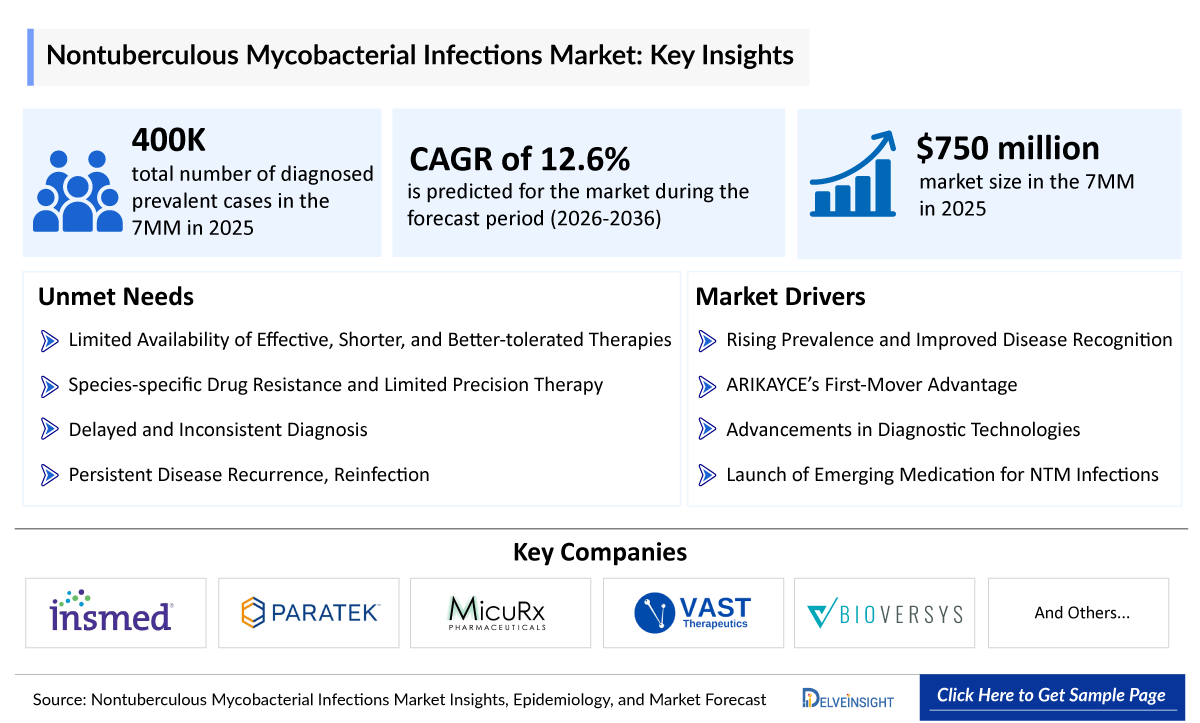
- According to DelveInsight’s analysis, the Nontuberculous Mycobacteria Infections Treatment Market Size was more than USD 750 million in the leading markets (the United States, the EU4 (Germany, France, Italy, and Spain), the United Kingdom, and Japan) in 2025.
- The leading Nontuberculous Mycobacteria Infections Companies include Insmed, Paratek Pharmaceuticals, MicuRx Pharmaceuticals, Vast Therapeutics, BioVersys, AN2 Therapeutics, and others.
Nontuberculous Mycobacteria Infections Market and Epidemiology Analysis
- In 2025, the total number of diagnosed prevalent cases of Nontuberculous Mycobacteria Infections in the 7MM was ~400,000. Among the 7MM countries, the US accounted for the highest number of diagnosed prevalent cases
- The Nontuberculous Mycobacteria Infections Treatment landscape is expected to evolve through species-specific therapeutic innovation rather than direct product competition. Amikacin Liposome Inhalation Suspension (ARIKAYCE) is expected to remain the cornerstone therapy for refractory Mycobacterium avium complex (MAC)-associated NTM pulmonary disease due to its established role in treatment and lack of direct competitors for this patient population. Its targeted inhaled delivery and continued clinical adoption are expected to sustain its position in the marketed treatment landscape.
- The future Nontuberculous Mycobacteria Infections Treatment landscape is expected to evolve through species-specific therapeutic innovation rather than direct product competition. Omadacycline (NUZYRA), if approved, is expected to primarily address the high unmet need in Mycobacterium abscessus infections as a first-line monotherapy, reflecting the shift toward pathogen-specific treatment approaches and expansion of therapeutic options beyond MAC disease.
- An aging population and rising rates of comorbid conditions that predispose patients to NTM colonization (Bronchiectasis, COPD, Cystic Fibrosis) widen the structural substrate every year. Commercially, that means the addressable population is a moving target that keeps getting larger — an unusually favorable position for any NTM therapy entering now rather than a decade ago.
- The Nontuberculous Mycobacteria Infections Pipeline remains limited, with few late-stage, pathogen-specific therapies capable of replacing prolonged multidrug regimens. Most emerging agents are being developed as add-on treatments rather than curative alternatives, highlighting the continued need for novel therapies with broader species coverage, improved efficacy, shorter treatment durations, and better tolerability.
- Delayed diagnosis, inconsistent referral practices, and unequal access to specialist care remain among the most significant barriers to optimal NTM-PD management, often having a greater impact on patient outcomes than the limitations of currently available therapies.
Nontuberculous Mycobacteria Infections Market Size and Forecast
| 2025 Nontuberculous Mycobacteria Infections Market Size in the 7MM | ~USD 750 million |
| 2036 Projected Nontuberculous Mycobacteria Infections Market Size in the 7MM | ~USD 2.5 billion |
| Nontuberculous Mycobacteria Infections Growth Rate (2026-2036) | 12.6% CAGR |
Key Factors Driving the Growth of Nontuberculous Mycobacteria Infections Market
-
Rising Prevalence of Nontuberculous Mycobacteria Infections
The increasing incidence and prevalence of nontuberculous mycobacterial infections are major factors driving market growth. Rising awareness, improved diagnostic capabilities, and a growing population of susceptible individuals, particularly those with chronic lung diseases and weakened immune systems, are contributing to the expanding patient pool.
-
Growing Burden of Chronic Respiratory Diseases
The increasing prevalence of underlying respiratory conditions such as bronchiectasis, chronic obstructive pulmonary disease, cystic fibrosis, and asthma has significantly increased the risk of NTM infections. As these chronic diseases become more common, the demand for effective NTM infection therapies continues to rise.
-
Advancements in Diagnostic Technologies
Significant improvements in molecular diagnostics, next-generation sequencing, Polymerase Chain Reaction (PCR)-based assays, and advanced culture techniques have enhanced the timely and accurate diagnosis of NTM infections. Earlier detection supports prompt treatment initiation and contributes to higher treatment adoption.
-
Significant Unmet Medical Needs
Current treatment regimens for NTM infections are often prolonged, complex, and associated with variable clinical outcomes and adverse effects. The limited availability of highly effective therapies has created substantial unmet medical needs, encouraging the development of safer and more efficacious treatment options.
-
Expanding Pipeline of Novel Therapeutics
Pharmaceutical and biotechnology companies are actively developing innovative antibiotics, inhaled therapies, host-directed therapies, and combination regimens to improve treatment outcomes for NTM infections. A growing clinical pipeline is expected to diversify future therapeutic options and support market expansion.
-
Rising Antimicrobial Resistance Concerns
The emergence of antimicrobial resistance among mycobacterial species has increased the need for new therapies with novel mechanisms of action. The growing focus on overcoming treatment resistance is encouraging continued innovation and investment in next-generation antimicrobial drug development.
DelveInsight’s “Nontuberculous Mycobacteria Infections Market Insights, Epidemiology, and Market Forecast – 2036” report delivers an in-depth understanding of NTM, historical and forecasted epidemiology, as well as the NTM market trends in the United States, EU4 (Germany, France, Italy, and Spain), the United Kingdom, and Japan.
The Nontuberculous Mycobacteria Infections Treatment Market Report delivers a comprehensive analysis of the current treatment landscape, including standards of care, clinical practices, and evolving therapeutic algorithms. It evaluates NTM patient burden trends, revenue & market share dynamics, peak patient share & therapy uptake analysis, and provides an in-depth market size assessment and growth rate projections (Historical & Forecast 2022–2036) across the 7MM regions. The report highlights key unmet medical needs in NTM and maps the competitive and clinical landscape to uncover high-value opportunities, providing a clear outlook on future market growth potential.
Scope of the Nontuberculous Mycobacteria Infections Market Report | |
|
Study Period |
2022–2036 |
|
Historical Year |
2022–2025 |
|
Forecast Period |
2026–2036 |
|
Base Year |
2025 |
|
Geographies Covered |
|
|
Nontuberculous Mycobacteria Infections Market CAGR (Forecast period) |
12.6% (2022-2036) |
|
Nontuberculous Mycobacteria Infections Epidemiology Segmentation Analysis |
Patient Burden Assessment
|
|
Nontuberculous Mycobacteria Infections Companies |
And more |
|
Nontuberculous Mycobacteria Infections Therapies |
And more |
|
Nontuberculous Mycobacteria Infections Market |
Segmented by
|
|
Analysis |
|
Nontuberculous Mycobacteria Infections Understanding
Nontuberculous Mycobacteria Infections Overview
NTM infections are diseases caused by bacteria in the genus Mycobacterium, excluding those that cause Tuberculosis (M. tuberculosis complex) or leprosy/Hansen's disease (M. leprae). The main risk factors for NTM infection include pre-existing lung disease, reduced ciliary function, heterozygosity for mutations in the Cystic Fibrosis Transmembrane conductance Regulator (CFTR) gene, breaches in the skin or soft tissues, and immunodeficiency. Environmental factors, such as water sources and reservoirs, and NTM growth characteristics under different climatic conditions also contribute to risk.
Nontuberculous Mycobacteria Infections Diagnosis
NTM lung disease is diagnosed based on a combination of clinical symptoms, radiographic findings, and microbiological evidence. For the detection of NTM, staining and culture methods are primary laboratory techniques. Acid-fast staining methods, such as Ziehl-Neelsen or fluorochrome (auramine) staining, are used to identify acid-fast bacilli (AFB) in clinical samples. Radiologically, imaging typically reveals nodular-bronchiectatic or fibrocavitary patterns. For diagnosing NTM-PD, sputum samples are usually sufficient for the fibrocavitary form, but bronchoalveolar lavage (BAL) culture is more sensitive for the nodular bronchiectatic form.
Further details related to country-based variations are provided in the report…
Current Nontuberculous Mycobacteria Infections Treatment Landscape
Current standard therapy for the most common NTM infection, MAC, involves a three-drug regimen taken for approximately 18 months. However, the rates of culture conversion with this approach are only 45–70%, and relapse or reinfection rates can be as high as 60%. Effective treatment of NTM infections requires a holistic, patient-centered approach, with close monitoring for drug side effects and adherence. For rapidly growing NTM species like M. abscessus, intravenous antibiotics may be necessary initially.
In some cases, surgery may be recommended to remove localized areas of disease, such as in individuals with bronchiectasis, cavitary disease, or refractory hemoptysis. However, the optimal timing and selection of surgical candidates are not well defined. Supportive measures can also help manage NTM lung disease, such as techniques to improve mucus clearance (e.g., nebulized hypertonic saline, chest physical therapy, flutter devices) and maintaining proper nutrition. Aerobic exercise may also be beneficial.
Further details related to country-based variations are provided in the report…
Nontuberculous Mycobacteria Infections Drug Uptake
This section focuses on the uptake rate of potential Nontuberculous Mycobacteria Infections drugs expected to be launched in the market during the forecast period (2026–2036). The analysis covers the NTM drug’s uptake, performance at peak, factors affecting performance during prime years of growth, patient uptake by therapy, and anticipated sales generated by each drug.
Among the emerging therapies, omadacycline (NUZYRA; Paratek Pharmaceuticals) being the only investigational therapy in active Phase II clinical development. The drug is being evaluated for M. abscessus pulmonary disease and represents the most advanced emerging candidate with the potential to address the unmet need for safer, orally administered treatment options.
Detailed insights of emerging therapies' drug uptake is included in the report…
Nontuberculous Mycobacteria Infections Unmet Needs
The section “unmet needs of NTM” outlines the critical gaps between the current state of patient care, diagnosis, and the ideal & effective management of the disease. It highlights the obstacles experienced by patients, clinicians, and researchers and identifies potential solutions for future progress.
- Limited Availability of Effective, Shorter, and Better-tolerated Therapies
- Species-specific Drug Resistance and Limited Precision Therapy
- Delayed and Inconsistent Diagnosis
- Persistent Disease Recurrence, Reinfection, and others…
Note: Comprehensive unmet needs insights in NTM and their strategic implications are provided in the full report…
Nontuberculous Mycobacteria Infections Epidemiology
Key Findings from NTM Epidemiological Analysis and Forecast
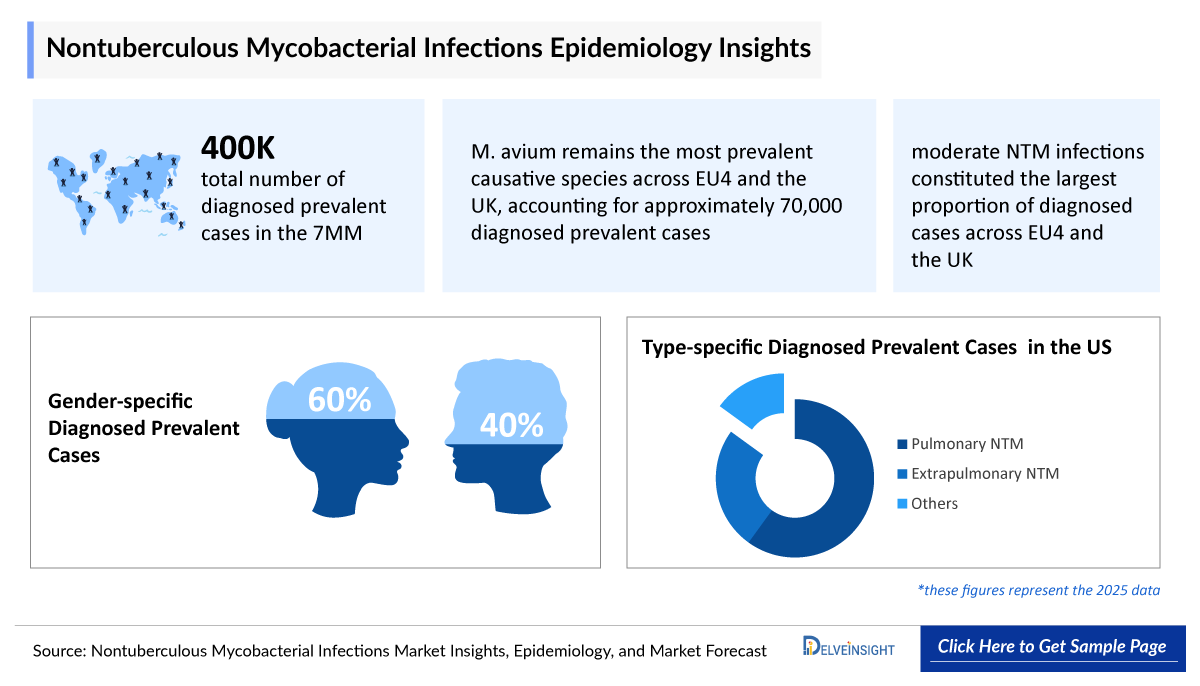
- In 2025, the total number of diagnosed prevalent cases of Nontuberculous Mycobacteria Infections in the 7MM was around 400,000. Among the 7MM countries, the US accounted for the highest number of diagnosed prevalent cases, contributing approximately 125,000 cases.
- According to DelveInsight analysis, more than 40,000 males and 80,000 females were affected with NTM infections in the US in 2025, depicting a clear gender disparity due to hormonal factors.
- M. avium remains the most prevalent causative species across EU4 and the UK, accounting for approximately 70,000 diagnosed prevalent cases in 2025. In comparison, M. abscessus represents a smaller yet clinically significant proportion, with more than 17,000 diagnosed prevalent cases, while other NTM species collectively contribute around 120,000 cases.
- According to DelveInsight’s analysis, moderate NTM infections constituted the largest proportion of diagnosed cases across EU4 and the UK in 2025, with approximately 115,000 cases, followed by mild (70,000) and severe (26,000) cases.
- Pulmonary NTM infections accounted for the majority of diagnosed prevalent cases in Japan in 2025, with approximately 60,000 cases, compared with approximately 6,500 cases of extrapulmonary NTM infections.
- In 2025, Japan reported approximately 8,000 refractory cases of NTM infections. The growing burden of refractory disease is largely attributable to the prolonged duration and complexity of NTM treatment, where extended multidrug regimens are frequently associated with treatment discontinuation, adverse events, and incomplete microbiological clearance.
Nontuberculous Mycobacteria Infections Epidemiology Segmentation in the 7MM
- Total Nontuberculous Mycobacteria Infections Diagnosed Prevalent Cases
- Nontuberculous Mycobacteria Infections Gender-specific Diagnosed Prevalent Cases
- Nontuberculous Mycobacteria Infections Species-specific Diagnosed Prevalent Cases
- Nontuberculous Mycobacteria Infections Severity-specific Diagnosed Prevalent Cases
- Nontuberculous Mycobacteria Infections Type-specific Diagnosed Prevalent Cases
- Total Nontuberculous Mycobacteria Infections Treated Cases
- Nontuberculous Mycobacteria Infections Refractory Cases
Nontuberculous Mycobacteria Infections Market Recent Breakthroughs and Developments
- In August 2026, researchers from the National Tuberculosis Institute and collaborating Indian medical centers evaluated a multiplex real-time PCR assay for the simultaneous detection of Mycobacterium tuberculosis, NTM, and drug resistance.
- In October 2025, Paratek Pharmaceuticals announced that new clinical data for NUZYRA was presented at IDWeek 2025 and CHEST 2025, including microbiological findings from a Phase II study evaluating the therapy in patients with NTM-PD caused by MABc.
- In May 2025, Paratek Pharmaceuticals reported that clinical data for NUZYRA was presented at the American Thoracic Society (ATS) 2025 International Conference and ESCMID Global 2025 in April 2025, including first presentations from a Phase IIb study in patients with NTM-PD caused by MABc.
Nontuberculous Mycobacteria Infections Drug Analysis & Competitive Landscape
The Nontuberculous Mycobacteria Infections drug chapter provides a detailed, market-focused review of approved therapies and the emerging Nontuberculous Mycobacteria Infections pipeline across Phase I-III clinical trials. It covers Nontuberculous Mycobacteria Infections mechanism of action, clinical trial data, regulatory approvals, patents, collaborations, strategic partnerships upcoming key catalyst for each therapy, along with their advantages, limitations, and recent developments. This section offers critical insights into the Nontuberculous Mycobacteria Infections Treatment Market Landscape, supporting market assessment, competitive analysis, and growth forecasting for the Nontuberculous Mycobacteria Infections Therapeutics Market.
Nontuberculous Mycobacteria Infections Approved Therapies
-
Amikacin Liposome Inhalation Suspension (ARIKAYCE): Insmed
ARIKAYCE is the first FDA-approved therapy indicated for the treatment of MAC lung disease as part of a combination antibacterial drug regimen for adult patients with limited or no alternative treatment options. ARIKAYCE is a novel, inhaled, once-daily formulation of amikacin, an established antibiotic historically administered intravenously and associated with severe toxicity to hearing, balance, and kidney function.
-
- In March 2021, Japan's Ministry of Health, Labour and Welfare approved ARIKAYCE for the treatment of NTM lung disease caused by MAC in patients who had an insufficient response to prior Multidrug Regimen (MDR) therapy.
- In October 2020, the European Commission granted marketing authorization to ARIKAYCE by Insmed for the treatment of NTM lung infections caused by MAC in adult patients without cystic fibrosis who have limited treatment options.
- In January 2018, the US FDA approved ARIKAYCE, specifically indicated for the treatment of refractory MAC lung disease in adult patients with limited treatment options.
Nontuberculous Mycobacteria Infections Marketed/Approved Therapies | ||||||
|
Drug/Therapy |
Company |
Indication |
Molecule Type |
MoA |
RoA |
Marketed Region |
|
Amikacin Liposome Inhalation Suspension (ARIKAYCE) |
Insmed |
Refractory MAC lung disease |
Small Molecule |
Protein 30S ribosomal subunit inhibitors |
Inhalation |
US: 2018 EU: 2020 JP: 2021 |
Nontuberculous Mycobacteria Infections Pipeline Analysis
-
Omadacycline (NUZYRA): Paratek Pharmaceuticals
NUZYRA, developed by Paratek Pharmaceuticals, is a novel antibiotic currently in Phase II of clinical development for the treatment of NTM pulmonary disease M. abscessus complex (MABc). A modernized tetracycline, NUZYRA is specifically designed to overcome tetracycline resistance and exhibits activity across a spectrum of bacteria, including gram-positive, gram-negative, atypical, and other drug-resistant strains
-
- In November 2024, Paratek Pharmaceuticals announced positive topline results from a Phase IIb trial evaluating NUZYRA in adults with NTM-PD caused by MABc.
Competitive Landscape of Nontuberculous Mycobacteria Infections Pipeline Drugs | ||||||
|
Drug Name |
Company |
Highest Phase |
Indication |
RoA |
MoA |
Anticipated Launch in the US |
|
Omadacycline (NUZYRA) |
Paratek Pharmaceuticals |
II |
NTM |
Oral |
Protein synthesis inhibitor |
2030 |
|
MRX-5 |
MicuRx Pharmaceuticals |
IIa |
M. abscessus pulmonary disease |
Oral |
Leucyl-tRNA synthetase (LeuRS) inhibitor |
Information is available in the full report |
Nontuberculous Mycobacteria Infections Market Outlook
Treatment practices remain heterogeneous in NTM infections despite established ATS/ERS/ESCMID/IDSA guidelines, with considerable geographic variation in physician testing, treatment initiation, and access to specialized mycobacteriology laboratories. Current management of NTM-PD relies on prolonged multidrug antibiotic regimens regimens selected according to infecting species, antimicrobial susceptibility, disease severity, and treatment tolerance administered for at least 12 months after sputum culture conversion, often resulting in treatment durations exceeding 18 months.
These complex regimens are associated with substantial pill burden, frequent adverse events, and poor treatment adherence, contributing to low culture conversion rates, high recurrence, and the emergence of antimicrobial resistance.
Key findings from Nontuberculous Mycobacteria Infections Market Forecast Report
- In 2025, the Nontuberculous Mycobacteria Infections Treatment Market Size in the US was around USD 400 million. This figure is expected to grow significantly with the introduction of emerging therapies.
- The Nontuberculous Mycobacteria Infections Treatment Market Size of EU4 and the UK was estimated to be more than USD 200 million in 2025.
- Among EU4 and the UK, Germany accounted for the highest Nontuberculous Mycobacteria Infections Drugs Market Share with approximately USD 60 million in 2025, followed by the UK with approximately USD 50 million in the respective year, and France capturing the least market with nearly USD 30 million in 2025.
- In 2025, the Nontuberculous Mycobacteria Infections Treatment Market Size was more than USD 150 million in Japan, which is anticipated to increase during the forecast period (2026–2036).
Nontuberculous Mycobacteria Infections Companies
- Insmed
- Paratek Pharmaceuticals
- MicuRx Pharmaceuticals
- Vast Therapeutics
- BioVersys
- AN2 Therapeutics
- And more
Nontuberculous Mycobacteria Infections Drug Class/Insights into Leading Emerging Therapies (2022–2036 Forecast)
Small Molecule: Small molecules are low-molecular-weight therapies capable of penetrating infected tissues and targeting critical bacterial pathways, making them central to NTM treatment. Most approved and investigational therapies, including inhaled liposomal amikacin (ARIKAYCE), leverage this approach. By delivering amikacin directly to the lungs, ARIKAYCE enhances local drug exposure while reducing systemic toxicities, such as ototoxicity and nephrotoxicity, associated with prolonged intravenous administration.
Nontuberculous Mycobacteria Infections Market Access and Reimbursement of Therapies
The report further provides detailed insights on the country-wise accessibility and reimbursement scenarios, cost-effectiveness scenario of therapies, programs making accessibility easier and out-of-pocket costs more affordable, insights on patients insured under federal or state government prescription drug programs, etc.
EU4 and the UK
The UK Reimbursement of Therapies Approved for Nontuberculous Mycobacteria Infections | |
|
Drug/Therapy |
National Institute for Health and Care Excellence (NICE) Reimbursement |
|
Amikacin Liposome Inhalation Suspension (ARIKAYCE) |
ARIKAYCE is routinely reimbursed across the National Health Service (NHS) for eligible adults with treatment-refractory MAC-NTM lung disease. |
Reimbursement is a crucial factor that affects the drug’s access to the market. Often, the decision to reimburse comes down to the price of the drug relative to the benefit it produces in treated patients. To reduce the healthcare burden of these high-cost therapies, many payment models are being considered by payers and other industry insiders.
NOTE: Further Details are provided in the final report.
Nontuberculous Mycobacteria Infections Therapies Price Scenario & Trends
Pricing and analogue assessment of NTM therapies highlights evolving price dynamics structures. This section summarizes the cost of approved treatments, closest and most appropriate analogue selection for emerging therapies, and understanding of how pricing influences market access, adherence, and long-term uptake.
Pricing of NTM Approved Drugs
The treatment course cost of Rifamycin/Rifampin in the US is around USD 300 in 2025.
Industry Experts and Physician Views for Nontuberculous Mycobacteria Infections
To keep up with NTM market trends, we take Key Opinion Leaders (KOLs) and Subject Matter Experts (SMEs) opinions working in the domain through primary research to fill the data gaps and validate our secondary research. Industry Experts were contacted for insights on the NTM emerging therapies, evolving treatment landscape, patient adherence to conventional therapies, therapy switching trends, drug adoption and uptake, accessibility challenges, and epidemiology and real-world prescription patterns in NTM, including MD, PhD, Instructor, Postdoctoral Researcher, Professor, Researcher, and others.
DelveInsight’s analysts connected with 30+ KOLs to gather insights at country level. Centers such as the National Jewish Health, Oregon Health & Science University, Hannover Medical School, University of Sassari, and Barcelona University etc. were contacted.
Region |
Key Opinion Leaders (KOLs) and Subject Matter Experts (SMEs) |
|
United States |
“NTM infections in people with cystic fibrosis represent a significant unmet clinical challenge because they adversely affect prognosis, complicate treatment, and remain incompletely understood in terms of their pathogenic mechanisms. Beyond causing chronic infection, NTM is increasingly recognized for its ability to disrupt the respiratory microbiome by altering lung microbial diversity and composition, even in individuals receiving CFTR modulator therapies. Improving the understanding of NTM–host–microbiome interactions is considered essential for developing more effective therapeutic strategies.” |
|
Japan |
“NTM is rare in healthy children, with lymphadenitis being the most common presentation. Immunocompromised populations are known to be at high risk, but the clinical picture of NTM infection in pediatric hematology/oncology patients is unclear. Epidemiological data show that NTM infection has been increasing worldwide in recent years, and in some countries, including Japan, the infection rate of NTM has surpassed that of tuberculosis.” |
Their opinion helps understand and validate current and emerging NTM therapies, highlight unmet medical needs, provide epidemiological context, and support strategic decisions for market access, therapy adoption, and pipeline prioritization in NTM.
Nontuberculous Mycobacteria Infections Report Qualitative Analysis: SWOT and Attribute Analysis
We perform qualitative and Nontuberculous Mycobacteria Infections Therapeutics Market Intelligence analysis using various approaches, such as SWOT analysis and attribute analysis. In the SWOT analysis of NTM, strengths, weaknesses, opportunities, and threats in terms of disease diagnosis, patient awareness, patient burden, competitive landscape, cost-effectiveness, and geographical accessibility of therapies are provided.
Attribute analysis analyzes emerging therapies based on relevant attributes such as safety, efficacy, frequency of administration, route of administration, and order of entry. Scoring is given based on these parameters to analyze the effectiveness of therapy.
The team of analysts analyzes promising Nontuberculous Mycobacteria Infections Emerging Therapies based on relevant attributes such as safety, efficacy, frequency of administration, route of administration, and order of entry. In efficacy, the trial’s primary and secondary outcome measures are evaluated, whereas the therapies’ safety is evaluated, wherein the acceptability, tolerability, and adverse events are majorly observed.
In addition, the scoring is also based on the route of administration, order of entry, probability of success, and the addressable patient pool for each therapy. According to these parameters, the final weightage score and the ranking of the emerging therapies are decided.
Scope of the Nontuberculous Mycobacteria Infections Market Report
- The Nontuberculous Mycobacteria Infections Therapeutics Market Report covers a segment of key events, an executive summary, a descriptive overview, explaining their causes, signs and symptoms, pathogenesis, and currently available treatments.
- Comprehensive insight has been provided into the epidemiology segments and forecasts, the future growth potential of the diagnosis rate, and disease progression along Nontuberculous Mycobacteria Infections Treatment guidelines.
- Additionally, an all-inclusive account of both the current and emerging treatments, along with the elaborative profiles of late-stage and prominent therapies, will have an impact on the current Nontuberculous Mycobacteria Infections Treatment landscape.
- A detailed review of the Nontuberculous Mycobacteria Infections Therapeutics Market, historical and forecasted Nontuberculous Mycobacteria Infections Treatment Market Size, Nontuberculous Mycobacteria Infections Drugs Market Share by therapies, detailed assumptions, and rationale behind our approach is included in the report, covering the 7MM drug outreach.
- The Nontuberculous Mycobacteria Infections Therapeutics Market Report provides an edge while developing business strategies by understanding trends through SWOT analysis and expert insights/KOL views, patient journey, and treatment preferences that help in shaping and driving the 7MM Nontuberculous Mycobacteria Infections Drugs Market.
Nontuberculous Mycobacteria Infections Market Report Insights
- Nontuberculous Mycobacteria Patient Population Forecast
- Nontuberculous Mycobacteria Therapeutics Market Size
- Nontuberculous Mycobacteria Pipeline Drugs Analysis
- Nontuberculous Mycobacteria Market Size and Trends
- Nontuberculous Mycobacteria Therapeutics Market Opportunity (Current and Forecasted)
Nontuberculous Mycobacteria Infections Market Report Key Strengths
- Epidemiology-based (Epi-based) Bottom-up Forecasting
- Artificial Intelligence (AI) - enabled Market Research Report
- 11-year forecast
- Nontuberculous Mycobacteria Market Outlook (North America, Europe, Asia-Pacific)
- Patient Burden Trends (by geography)
- Nontuberculous Mycobacteria Treatment Addressable Market (TAM)
- Nontuberculous Mycobacteria Competitive Landscape
- Nontuberculous Mycobacteria Major Companies Insights
- Nontuberculous Mycobacteria Price Trends and Analogue Assessment
- Nontuberculous Mycobacteria Therapies Drug Adoption/Uptake
- Nontuberculous Mycobacteria Therapies Peak Patient Share Analysis
Nontuberculous Mycobacteria Infections Market Report Assessment
- Nontuberculous Mycobacteria Current Treatment Practices
- Nontuberculous Mycobacteria Unmet Needs
- Nontuberculous Mycobacteria Clinical Development Analysis
- Nontuberculous Mycobacteria Emerging Drugs Product Profiles
- Nontuberculous Mycobacteria Market Attractiveness
- Nontuberculous Mycobacteria Qualitative Analysis (SWOT and Attribute analysis)
Key Questions Answered in the Nontuberculous Mycobacteria Infections Treatment Market Report
Nontuberculous Mycobacteria Infections Therapeutics Market Insights
- What was the Nontuberculous Mycobacteria Infections Treatment Market Size, the Nontuberculous Mycobacteria Infections Market Size by therapies, Nontuberculous Mycobacteria Infections Drugs Market Share (%) distribution in 2025, and what would it look like by 2036? What are the contributing factors for this growth?
- What are the anticipated pricing variations among different geographies for the emerging therapies in the future?
- What can be the future treatment paradigm of NTM?
- What are the disease risks, burdens, and unmet needs of Nontuberculous Mycobacteria Infections?
- What will be the growth opportunities across the 7MM concerning the patient population with Nontuberculous Mycobacteria Infections?
- Who is the major future competitor in the market, and how will the competitors affect their market share?
- What are the current options for the treatment of NTM? What are the current guidelines for treating NTM in the US, Europe, and Japan?
Reasons to Buy the Nontuberculous Mycobacteria Infections Therapeutics Market Report
- The Nontuberculous Mycobacteria Infections Therapeutics Market Report will help in developing business strategies by understanding the latest trends and changing treatment dynamics driving the Nontuberculous Mycobacteria Infections Drugs Market.
- Bottom up forecasting builds from the affected population to product forecasts, delivering a robust, data driven approach ideal for new therapies and novel classes.
- Insights on patient burden/disease Nontuberculous Mycobacteria Infections Prevalence, evolution in diagnosis, and factors contributing to the change in the epidemiology of the disease during the forecast years.
- Understand the existing Nontuberculous Mycobacteria Infections Drugs Market opportunities in varying geographies and the growth potential over the coming years.
- Identifying strong upcoming players in the Nontuberculous Mycobacteria Infections Drugs Market will help devise strategies to help get ahead of competitors.
- Detailed analysis, ranking of class-wise potential current, and emerging therapies under the attribute analysis section to provide visibility around leading classes.
- To understand KOLs’ perspectives on the accessibility, acceptability, and compliance-related challenges of existing treatment to overcome barriers in the future.
- Detailed insights on the unmet needs of the existing Nontuberculous Mycobacteria Infections Drugs Market so that the upcoming players can strengthen their development and launch strategy.
- This Artificial Intelligence (AI) enabled report summarize and simplify complex datasets with in the report into clear, actionable insights for stakeholders, investors, and healthcare providers, enabling faster, data driven decisions.
Stay updated with us for Recent Articles
- Bridging the gap: Nontuberculous mycobacterium Infections Drug Pipeline
- Nontuberculous Mycobacteria Infection Market: Current status of NTM infection drug discovery and development
- Lack of effective therapy: A major Nontuberculous Mycobacteria Infection Market Driver
- Rising Nontuberculous Mycobacterial Infection Prevalence Poses A Major Public Health Concern
- Nontuberculous Mycobacteria Infections Market Infographics
- New DelveInsight Blogs
-infections-pipeline.png&w=256&q=75)