
Pharmaceuticals Market Summary
- The pharmaceuticals market size is estimated at USD 1.77 trillion in 2025 and is projected to reach USD 3.05 trillion by 2034. Growth is anchored in the rising global chronic disease burden, rapid expansion of biologics and precision medicine, and broadening healthcare access across emerging markets.
- The global Pharmaceuticals market is growing at a CAGR of 6.2% during the forecast period from 2026 to 2034.
- By modality type, the small molecule segment dominated the pharmaceuticals market with a 58% share in 2025.
- By product type, the branded segment dominated the pharmaceuticals market with an 84% share in 2025.
- By drug type, the prescription drugs segment dominated the Pharmaceuticals market with an 86% share in 2025.
- By route of administration, the oral segment dominated the Pharmaceuticals market with a 57% share in 2025.
- By therapy area, the oncology segment dominated the Pharmaceuticals market with a 19% share in 2025.
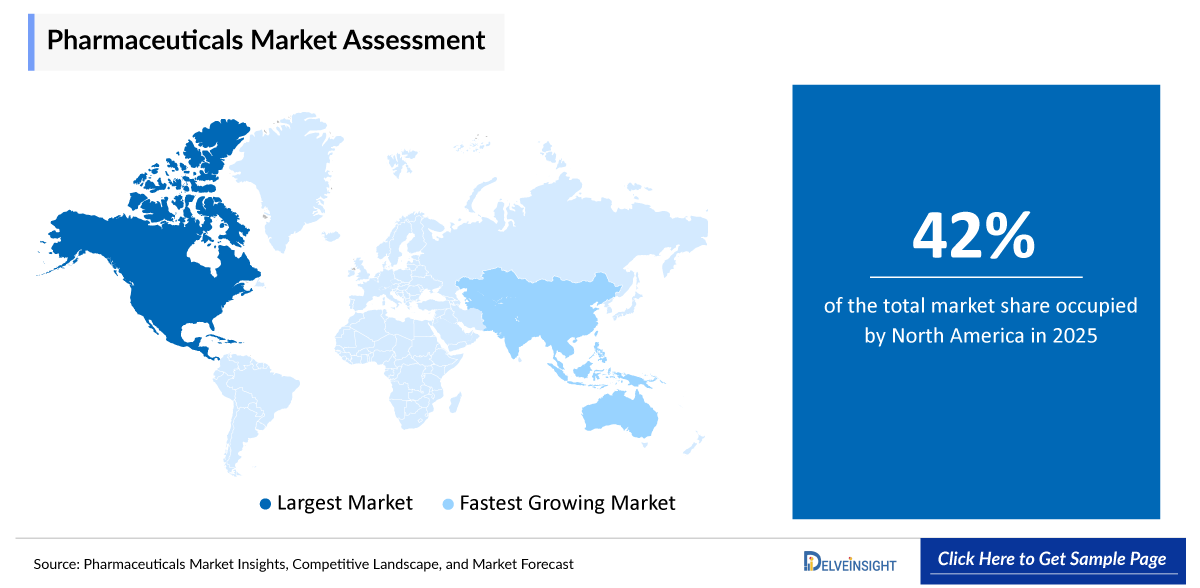
- North America dominated the global Pharmaceuticals market revenue with a 42% share in 2025, representing the highest regional market share globally.
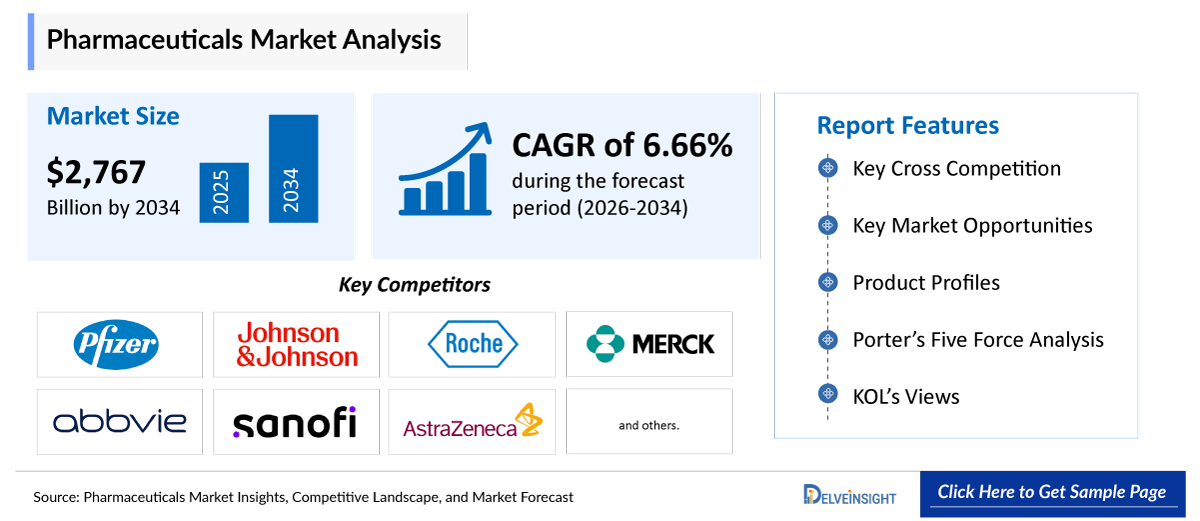
The pharmaceuticals market encompasses the discovery, development, manufacturing, marketing, and distribution of medicines used for the prevention, diagnosis, and treatment of human disease, spanning both conventional small molecule drugs and advanced biologics. As global disease burden rises and treatment paradigms shift toward greater precision, pharmaceutical companies are investing heavily across modalities, from established oral small molecules to monoclonal antibodies, antibody drug conjugates, peptide drug conjugates, nucleic acid medicines, and vaccines.
The market is organized by modality type across small molecule and biologics; by product type across branded and generic; by drug type across prescription and over-the-counter; by formulation across solid, semi-solid, and liquid dosage forms; by route of administration, led by oral and parenteral delivery; and by therapy area, led by oncology, alongside cardiology, neurology, immunology, endocrinology, and infectious disease. Driven by the rising global chronic disease burden, the rapid commercial rise of GLP-1-based metabolic therapeutics, accelerating regulatory approvals, and a resurgence in mergers and acquisitions among large pharmaceutical companies, the global pharmaceuticals industry remains the essential infrastructure underpinning modern healthcare delivery.
Pharmaceuticals Market Key Growth Drivers
- The rising global burden of chronic and lifestyle diseases, including diabetes, cardiovascular disease, and cancer, is expanding demand for prescription and specialty pharmaceuticals, with GLP-1-based obesity and diabetes therapies alone reshaping global manufacturing priorities.
- The rapid clinical and commercial expansion of biologics, including monoclonal antibodies, antibody drug conjugates, and nucleic acid medicines, is driving a structural shift toward higher-value, precision-targeted therapeutics.
- Expanding healthcare access and rising pharmaceutical spending across emerging economies, particularly India and China, are broadening the addressable patient population for both branded and generic medicines.
- Accelerating regulatory approvals and label expansions across the United States, Europe, and Japan are increasing the pace at which new therapies reach patients and generate recurring manufacturing and distribution demand.
- A resurgence in mergers, acquisitions, and licensing activity among large pharmaceutical companies is strengthening late-stage pipelines and offsetting looming patent cliffs on blockbuster brands.
- The growth of e-commerce and quick-commerce pharmacy platforms is accelerating access to both prescription and over-the-counter medicines, particularly across urban and semi-urban populations.
- Increasing localization of active pharmaceutical ingredient production in India and China is strengthening global supply chain resilience and reducing dependency on concentrated Western manufacturing hubs.
Key Companies in Pharmaceuticals Market
The competitive landscape is led by the following active drug manufacturers:
- Johnson & Johnson Services, Inc.
- Pfizer Inc.
- Eli Lilly and Company
- F. Hoffmann-La Roche Ltd.
- Merck & Co., Inc.
- AbbVie, Inc.
- Sanofi
- AstraZeneca
- Novartis AG
- GSK plc., and others
For illustrative purposes, only the top 10 companies are listed in the Table of Contents. The report may include analysis and references to additional companies relevant to the market assessment.
Pharmaceuticals Market Size
The following snapshot summarizes the principal report metrics for the pharmaceuticals market.
|
Report Metrics |
Details |
|
2025 Market Size |
USD 1.77 trillion |
|
2034 Projected Market Size |
USD 3.05 trillion |
|
Growth Rate (2026-2034) |
6.2% CAGR |
|
Largest Market |
North America |
|
Fastest Growing Market |
Asia-Pacific |
|
Market Structure |
Highly Competitive |
All market values are expressed in USD and represent DelveInsight estimates synthesized from primary and secondary research.
Factors Contributing to the Growth of the Pharmaceuticals Market
Pharmaceuticals Market Drivers
- Rising Global Chronic Disease Burden and Aging Population: The single most powerful driver of the pharmaceuticals market is the accelerating global burden of chronic and age-related disease. Cardiovascular disease, diabetes, cancer, and neurological disorders continue to rise in prevalence as populations age and lifestyle-related risk factors expand, particularly across North America, Europe, and increasingly urbanized parts of Asia-Pacific. This growing disease burden sustains recurring, high-volume demand for prescription medicines across virtually every therapy area, from long-term cardiometabolic management to oncology and neurology. As life expectancy rises and multimorbidity becomes more common among older adults, the average patient requires a broader and more sustained course of pharmaceutical treatment, directly enlarging the addressable market for both branded innovator drugs and established generics through the forecast period.
- Rapid Expansion of Biologics and Precision Medicine: The pharmaceuticals market is undergoing a structural shift toward biologics, including monoclonal antibodies, antibody drug conjugates, peptide drug conjugates, and nucleic acid medicines. These modalities offer greater specificity and often superior efficacy compared with conventional small molecules, and they are increasingly central to oncology, immunology, and rare disease treatment. Commercial biologics continue to command premium pricing and strong physician adoption, and a deep pipeline of next-generation antibody and RNA-based therapeutics is advancing through clinical development. As biomanufacturing capacity scales and biosimilar competition matures alongside continued innovation, the biologics segment is expected to grow markedly faster than conventional small molecules, reinforcing its role as the primary engine of incremental market value through 2034.
- Growth of GLP-1 and Obesity or Metabolic Therapeutics: Demand for GLP-1 receptor agonists and related metabolic therapies is expanding faster than global manufacturing capacity can currently absorb, creating one of the most significant growth pockets in the pharmaceuticals market. Originally developed for type 2 diabetes, these injectable and increasingly oral therapies have become central to obesity management, driving major capital investment in fill-finish, device assembly, and parenteral manufacturing capacity among large pharmaceutical companies. The scale of patient demand, combined with expanding label indications into cardiovascular and metabolic comorbidities, is pulling forward investment across the value chain and is expected to remain a defining growth driver for the market through the forecast period.
- Expanding Access to Healthcare in Emerging Markets: Rising healthcare expenditure, expanding insurance coverage, and improving healthcare infrastructure across emerging economies are broadening the addressable population for pharmaceuticals. India and China, in particular, combine large patient populations with growing domestic manufacturing capability and increasing government investment in universal healthcare access. As diagnostic capacity improves and treatment rates for chronic and infectious disease rise across these markets, demand for both affordable generics and increasingly for branded specialty medicines is accelerating, positioning emerging markets, and Asia-Pacific in particular, as the principal source of incremental volume growth for the global pharmaceuticals market through 2034.
- Accelerating Regulatory Approvals and Label Expansions: A steady cadence of new drug approvals and label expansions across the United States, Europe, and Japan continues to widen the pool of treatable indications and eligible patients. Regulatory agencies have expanded pathways for expedited review of therapies addressing serious and rare conditions, while established brands regularly receive label expansions that meaningfully enlarge their eligible patient populations. Each approval and expansion creates durable, recurring demand for manufacturing, distribution, and commercial support, and because most large pharmaceutical companies rely on a mix of in-house and outsourced production and distribution infrastructure, this regulatory momentum flows directly into sustained market growth across the forecast period.
- Surging Mergers, Acquisitions, and Licensing Activity: Large pharmaceutical companies are aggressively pursuing acquisitions, licensing deals, and strategic collaborations to replenish late-stage pipelines ahead of a wave of patent expirations on major branded therapies. Billion-dollar transactions spanning oncology, immunology, respiratory, and neuroscience have become routine, as companies with substantial cash reserves compete for a limited pool of differentiated clinical-stage assets. This consolidation both concentrates commercial capability among leading players and accelerates the flow of innovative therapies to market, and it is expected to remain a defining feature of industry structure and competitive dynamics through 2034.
- Growth of E-Commerce and Digital Pharmacy Channels: The rapid expansion of e-commerce and quick-commerce pharmacy platforms is reshaping how patients access both prescription and over-the-counter medicines. Improved consumer health awareness, growing comfort with digital health services, and the convenience of home delivery are accelerating adoption of online pharmacy channels, particularly for chronic maintenance therapies and self-selected OTC products. While hospital and retail pharmacies remain the dominant distribution channel by volume, the online channel is growing at the fastest rate as pharmaceutical companies and distributors invest in digital storefronts, teleconsultation partnerships, and direct-to-patient delivery infrastructure across both developed and emerging markets.
Pharmaceuticals Market Restraints
Despite strong underlying momentum, the pharmaceuticals market faces material constraints. Pricing pressure and cost-containment measures imposed by governments and payers, including reference pricing, mandatory rebates, and most-favored-nation pricing frameworks in the United States, compress margins and complicate long-term revenue forecasting for branded therapies. Patent expirations on blockbuster drugs expose incumbents to rapid generic and biosimilar erosion, requiring sustained investment in pipeline replenishment to offset lost revenue. Lengthy and increasingly complex regulatory pathways, particularly for biologics and novel modalities, raise development costs and timelines, while rising manufacturing costs for complex biologics, sterile injectables, and advanced drug delivery systems pressure profitability. Supply chain concentration in active pharmaceutical ingredient production, particularly in a small number of manufacturing hubs, creates vulnerability to disruption, and counterfeit and substandard medicines remain a persistent challenge in several emerging markets. Reimbursement and market access remain uneven across geographies, and a shortage of skilled biomanufacturing talent constrains the pace of capacity expansion for advanced modalities. Together, these pricing, regulatory, supply chain, and workforce barriers temper the pace of growth, even as the underlying drivers of disease burden, biologics adoption, and emerging-market access remain firmly intact.
Pharmaceuticals Market Segment Analysis
The Pharmaceuticals by Modality Type (Small Molecule and Biologics [Monoclonal Antibodies, Antibody Drug Conjugates, Peptide Drug Conjugates, Nucleic Acid Medicines, Vaccines, and Others]), Product Type (Branded and Generic), Drug Type (Prescription Drugs and Over-the-Counter (OTC) Drugs), Formulation (Solid Dosage Forms, Semi-solid Dosage Forms, and Liquid Dosage Forms), Route of Administration (Oral, Parenteral, and Others), Therapy Area (Oncology, Cardiology, Neurology, Immunology, Endocrinology, Infectious Disease, and Others), Distribution Channel (Hospital & Retail Pharmacies and Online Pharmacies), and Geography (North America, Europe, Asia-Pacific, and Rest of World).
By Modality Type
Dominant Subsegment: Small Molecule. The Small Molecule category is expected to dominate the market.
Dominant: Small Molecule ~ 58%
The small molecule segment accounted for 58% of the pharmaceuticals market in 2025. Small molecules remain the leading modality because they underpin the vast majority of approved and prescribed medicines across every major therapy area, benefit from mature, low-cost manufacturing infrastructure, and are amenable to convenient oral administration that supports patient adherence and high-volume, recurring prescriptions. Their well-established regulatory pathways, broad generic availability once patents expire, and applicability across cardiovascular, infectious disease, neurology, and endocrinology treatment sustain great and dependable demand. At the same time, biologics, spanning monoclonal antibodies, antibody drug conjugates, peptide drug conjugates, nucleic acid medicines, and vaccines, represent the fastest-growing modality, propelled by their specificity, strong clinical outcomes in oncology and immunology, and the rapid commercial rise of GLP-1-based peptide therapeutics. While biologics command a rapidly expanding share of market value, the sheer breadth, affordability, and prescribing volume of small molecule medicines secure the segment's leadership across the forecast period.
By Product Type
Dominant Subsegment: Branded. The Branded category is expected to dominate the market.
Dominant: Branded ~ 84%
The branded segment accounted for 84% of the pharmaceuticals market in 2025. Branded medicines lead the market because innovator companies capture premium pricing during patent-protected exclusivity periods, supported by significant investment in clinical development, regulatory approval, and physician and patient engagement. Blockbuster branded therapies across oncology, immunology, and metabolic disease, including leading GLP-1 and biologic franchises, continue to generate outsized revenue relative to unit volume. Generic medicines, by contrast, are the fastest-growing product type, as an accelerating wave of patent expirations on major branded drugs, combined with cost-containment pressure from payers and governments, drives rapid uptake of lower-cost generic alternatives once exclusivity lapses. Nonetheless, the scale of branded innovator revenue, continually replenished through new product launches and label expansions, secures the branded segment's leadership across the forecast period.
By Drug Type
Dominant Subsegment: Prescription Drugs. The Prescription Drugs category is expected to dominate the market.
Dominant: Prescription Drugs ~ 86%
The prescription drugs segment accounted for 86% of the pharmaceuticals market in 2025. Prescription medicines dominate because they address the diagnosis and treatment of serious, chronic, and complex conditions that require physician oversight, including cancer, cardiovascular disease, diabetes, and autoimmune disorders, and because these therapies typically command substantially higher per-unit pricing than self-selected products. The expanding biologics and specialty pipeline is concentrated almost entirely within the prescription category, reinforcing its scale. Over-the-counter drugs are the fastest-growing drug type, supported by rising self-medication trends, improved consumer health literacy, and the expansion of e-commerce and quick-commerce pharmacy platforms that make non-prescription products more accessible. Even so, the clinical necessity, pricing power, and breadth of the prescription category keep it the dominant drug type throughout the forecast period.
By Route of Administration
Dominant Subsegment: Oral. The Oral category is expected to dominate the market.
Dominant: Oral ~ 57%
The oral segment accounted for 57% of the pharmaceuticals market in 2025 by route of administration. Oral medicines lead the market because they offer superior patient convenience, support long-term adherence for chronic disease management, and benefit from well-established, cost-efficient manufacturing processes for tablets, capsules, and other solid dosage forms. Their applicability across nearly every therapy area, from cardiology to infectious disease, sustains broad and recurring demand. Parenteral administration is the fastest-growing route, driven by the rapid commercial expansion of injectable biologics, monoclonal antibodies, and GLP-1 therapies that require subcutaneous or intravenous delivery to achieve therapeutic efficacy. As biologics and advanced modalities continue to gain share, parenteral administration is narrowing the gap, but the sheer scale and convenience advantage of oral therapies secure their leadership across the forecast period.
By Therapy Area
Dominant Subsegment: Oncology. The Oncology category is expected to dominate the market.
Dominant: Oncology ~ 19%
The oncology segment accounted for 19% of the pharmaceuticals market in 2025, the largest share among therapy areas. Oncology leads the market because cancer remains among the highest-burden disease categories globally, and because oncology therapeutics, spanning targeted small molecules, monoclonal antibodies, antibody drug conjugates, and cell and gene therapies, command premium pricing reflecting their clinical complexity and value. Sustained innovation, a deep late-stage pipeline, and continual label expansions into earlier treatment lines keep oncology at the forefront of pharmaceutical company research and commercial investment. Immunology and endocrinology, the latter propelled by GLP-1-based metabolic therapies, are among the fastest-growing therapy areas, while cardiology, neurology, and infectious disease continue to generate substantial, steady demand. Nonetheless, the depth of the oncology pipeline and the premium value of targeted cancer therapeutics secure its clear leadership across the forecast period.
By Distribution Channel
Dominant Subsegment: Hospital & Retail Pharmacies. The Hospital & Retail Pharmacies category is expected to dominate the market.
Dominant: Hospital & Retail Pharmacies ~ 81%
The hospital and retail pharmacies segment accounted for 81% of the pharmaceuticals market in 2025. This channel leads the market because it remains the primary point of dispensing for both acute and chronic prescription therapies, benefits from established relationships with healthcare providers and insurers, and is essential for medicines requiring in-clinic administration, cold-chain handling, or pharmacist counseling. Hospital pharmacies in particular anchor the distribution of complex biologics and injectable oncology therapies. Online pharmacies are the fastest-growing distribution channel, supported by expanding e-commerce and quick-commerce platforms, growing consumer comfort with digital health services, and the convenience of home delivery for chronic maintenance medicines and OTC products. While online penetration is rising quickly, particularly in developed markets and increasingly across urban Asia-Pacific, the established infrastructure and clinical necessity of hospital and retail pharmacies secure the channel's leadership across the forecast period.
Pharmaceuticals Market Region Analysis
Dominant Region: North America
Dominant: North America ~ 42% (Largest)
North America accounted for 42% of the global Pharmaceuticals market revenue in 2025, representing the highest regional market share globally. The region's dominance reflects advanced healthcare infrastructure, the highest per-capita pharmaceutical spending globally, a deep clinical-research base, and a regulatory environment under the FDA that continues to support rapid approval of innovative therapies. North America hosts the largest concentration of major pharmaceutical company headquarters and commercial operations, and sponsors benefit from proximity to leading contract manufacturers and a dense biotechnology innovation ecosystem. Continued investment in domestic manufacturing capacity for GLP-1 therapies and biologics, combined with evolving federal drug-pricing frameworks, anchors the region's continued leadership across the forecast period.
Fastest Growing Region: Asia-Pacific
Asia-Pacific is the fastest-growing region in the Pharmaceuticals market. The region's elevated CAGR is driven by rising chronic and infectious disease burden, rapid expansion of healthcare infrastructure and insurance coverage, and growing healthcare investment across China, Japan, India, South Korea, and Australia. China is expanding its domestic biopharmaceutical innovation and licensing activity with global partners, Japan continues to pivot toward specialty and innovative medicines, India leverages its position as a leading low-cost generic and API manufacturing hub, and South Korea and Australia are expanding biomanufacturing and clinical-trial capacity. Government healthcare investment, expanding chronic disease patient populations, and growing pharmaceutical manufacturing activity are accelerating adoption, positioning Asia-Pacific as the principal source of incremental growth over the forecast period.
Pharmaceuticals Regional Commentary
North America
North America accounted for 42% of the global pharmaceuticals market revenue in 2025. The United States dominates on the strength of its advanced healthcare infrastructure, high per-capita pharmaceutical spending, robust clinical research base, and a regulatory environment under the FDA that continues to support rapid approval of innovative therapies. The region hosts the largest concentration of large pharmaceutical company headquarters and commercial operations, and continued investment in domestic manufacturing capacity for GLP-1 therapies and biologics, alongside evolving drug-pricing frameworks negotiated with the federal government, is reinforcing the region's leadership.
Europe
Europe is a large and mature regional market, supported by established EMA regulatory frameworks, strong universal healthcare systems, and a deep base of pharmaceutical research and manufacturing across Germany, France, the United Kingdom, Italy, and Spain. Continued consolidation among European and global pharmaceutical companies, alongside growing investment in biologics and vaccine manufacturing capacity, reinforces the region's role as both a major consumption market and an important manufacturing and export hub for the global pharmaceutical supply chain.
Asia-Pacific
Asia-Pacific is the fastest-growing region, propelled by rising chronic and infectious disease burden, expanding healthcare access and insurance coverage, and growing government healthcare investment across China, Japan, India, South Korea, and Australia. China's expanding domestic biopharmaceutical industry and licensing activity with global partners, Japan's mature but innovation-focused market, India's position as a leading low-cost generic and API manufacturing hub, and rising healthcare spending across Southeast Asia are accelerating both consumption and production growth across the region.
Rest of World
The Rest of World region, spanning Latin America, the Middle East, and Africa, is an emerging growth frontier for the pharmaceuticals market. Expanding healthcare infrastructure, rising government investment in universal health coverage, and growing demand for both affordable generic medicines and increasingly for branded specialty therapies are gradually broadening access, while efforts to align regulatory frameworks with international GMP standards support the development of regional manufacturing capacity and reduce reliance on imports.
Pharmaceuticals Market Competitive Landscape
The Pharmaceuticals market is classified as Highly Competitive with a Concentrated Innovator Tier. A group of large, diversified pharmaceutical companies, including Pfizer, Johnson & Johnson, Roche, Merck, and AbbVie, anchors the top tier through broad commercial portfolios, global manufacturing networks, and sustained R&D investment, while Sanofi, AstraZeneca, Novartis, Bristol-Myers Squibb, and GSK compete through deep therapy-area specialization, licensing partnerships, and an accelerating pace of mergers and acquisitions, intensifying competition in the fastest-growing segments such as oncology, immunology, and metabolic disease.
The competitive landscape can be evaluated across the following dimensions:
- Market concentration: Highly competitive, with a concentrated tier of large innovator companies alongside a broad, fragmented field of generic and specialty manufacturers.
- Leading players: Pfizer, Johnson & Johnson, Roche, Merck, and AbbVie anchor the top tier through diversified portfolios and global commercial reach.
- Geographic reach: Leaders operate global manufacturing and commercial networks spanning branded, generic, and biologics production across every major region.
- Product portfolio strength: Top players offer diversified portfolios spanning small molecules, biologics, vaccines, and specialty therapeutics across multiple therapy areas.
- Pipeline depth: Ownership of late-stage clinical assets and continual replenishment through licensing and acquisition is a decisive competitive advantage ahead of patent cliffs.
- Strategic partnerships: Licensing and co-development agreements with biotechnology innovators, such as Bristol-Myers Squibb's collaboration with Hengrui Pharma and Roche's partnership with Zealand Pharma, extend pipeline reach.
- M&A activity: Active consolidation, including AbbVie's acquisition of Apogee Therapeutics, Merck's acquisition of Verona Pharma, and Johnson & Johnson's acquisition of Intra-Cellular Therapies.
- Manufacturing capabilities: Scaled biologics, sterile injectable, and fill-finish capacity, alongside expanding GLP-1 production infrastructure, are key competitive moats.
- Innovation focus: Biologics and precision medicine scale-up, GLP-1 and metabolic therapeutics expansion, AI-driven drug discovery, and digital pharmacy channel investment.
Pharmaceuticals Market Recent Developmental Activities
- In May 2026, Bristol-Myers Squibb Company entered a global strategic collaboration and licensing agreement with Hengrui Pharma spanning 13 early-stage oncology, hematology, and immunology programs, in a deal with a potential total value of approximately USD 15.2 billion. Strategic significance: Substantially deepens BMS's early-stage oncology and immunology pipeline and expands its global development partnerships in China.
- In 2026, Novartis AG agreed to acquire United Kingdom-based antibody drug conjugate developer Myricx Bio, strengthening its oncology pipeline with next-generation targeted drug conjugate technology. Strategic significance: Reinforces Novartis's position in precision oncology and advanced targeted therapeutics.
- In June 2026, AbbVie, Inc. agreed to acquire Apogee Therapeutics, including its atopic dermatitis candidate zumilokibart, in a deal valued at USD 10.9 billion. Strategic significance: Expands AbbVie's immunology pipeline as it works to offset biosimilar erosion of its legacy immunology franchise.
- In 2025, Merck & Co., Inc. agreed to acquire respiratory-focused biotechnology company Verona Pharma in a deal valued at approximately USD 10 billion, adding the approved COPD therapy Ohtuvayre to its portfolio. Strategic significance: Diversifies Merck's revenue base into respiratory disease ahead of anticipated oncology patent exposure.
- In 2025, Johnson & Johnson Services, Inc. completed its USD 14.6 billion acquisition of Intra-Cellular Therapies, gaining the bipolar disorder and schizophrenia therapy Caplyta. Strategic significance: Strengthens J&J's neuroscience franchise with a commercial-stage, revenue-generating psychiatric medicine.
- In 2026, Sanofi completed its acquisition of vaccines developer Dynavax Technologies, expanding its vaccines research and commercial platform. Strategic significance: Broadens Sanofi's vaccines pipeline following the earlier separation of its consumer health business.
- In March 2025, F. Hoffmann-La Roche Ltd. entered a partnership with Zealand Pharma to co-develop the amylin analog petrelintide for obesity and metabolic disease. Strategic significance: Extends Roche's entry into the fast-growing obesity and metabolic therapeutics category alongside its existing pipeline.
- In 2025, Pfizer Inc. entered a licensing agreement with Summit Therapeutics for the investigational bispecific antibody ivonescimab and separately reached an agreement with the U.S. administration on a framework to align U.S. drug prices with those paid in other developed markets. Strategic significance: Adds a differentiated oncology asset to Pfizer's pipeline while addressing U.S. drug-pricing policy exposure.
- In 2025, AstraZeneca reached an agreement with the U.S. administration on drug-pricing alignment and announced expanded investment in U.S. manufacturing capacity. Strategic significance: Secures continued U.S. market access while reinforcing domestic supply chain resilience.
- In 2026, GSK plc provided updates on the Phase III CALM-1 and CALM-2 trials evaluating camlipixant for refractory chronic cough and advanced preparations for the relaunch of Blenrep in multiple myeloma. Strategic significance: Broadens GSK's respiratory and hematology-oncology pipeline ahead of anticipated regulatory decisions.
Pharmaceuticals Market Segmentation
- Pharmaceuticals Market by Modality Type
- Small Molecule
- Biologics
- Monoclonal Antibodies
- Antibody Drug Conjugates
- Peptide Drug Conjugates
- Nucleic Acid Medicines
- Vaccines
- Others
- Pharmaceuticals Market by Product Type
- Branded
- Generic
- Pharmaceuticals Market by Drug Type
- Prescription Drugs
- Over-the-Counter (OTC) Drugs
- Pharmaceuticals Market by Formulation
- Solid Dosage Forms
- Semi-solid Dosage Forms
- Liquid Dosage Forms
- Pharmaceuticals Market by Route of Administration
- Oral
- Parenteral
- Others
- Pharmaceuticals Market by Therapy Area
- Oncology
- Cardiology
- Neurology
- Immunology
- Endocrinology
- Infectious Disease
- Others
- Pharmaceuticals Market by Distribution Channel
- Hospital & Retail Pharmacies
- Online Pharmacies
Pharmaceuticals Market by Geography
- North America Pharmaceuticals Market
- United States Pharmaceuticals Market Size in USD million (2023-2034)
- Canada Pharmaceuticals Market Size in USD million (2023-2034)
- Mexico Pharmaceuticals Market Size in USD million (2023-2034)
- Europe Pharmaceuticals Market
- Germany Pharmaceuticals Market Size in USD million (2023-2034)
- United Kingdom Pharmaceuticals Market Size in USD million (2023-2034)
- France Pharmaceuticals Market Size in USD million (2023-2034)
- Italy Pharmaceuticals Market Size in USD million (2023-2034)
- Spain Pharmaceuticals Market Size in USD million (2023-2034)
- Rest of Europe Pharmaceuticals Market Size in USD million (2023-2034)
- Asia-Pacific Pharmaceuticals Market
- China Pharmaceuticals Market Size in USD million (2023-2034)
- Japan Pharmaceuticals Market Size in USD million (2023-2034)
- India Pharmaceuticals Market Size in USD million (2023-2034)
- Australia Pharmaceuticals Market Size in USD million (2023-2034)
- South Korea Pharmaceuticals Market Size in USD million (2023-2034)
- Rest of Asia-Pacific Pharmaceuticals Market Size in USD million (2023-2034)
- Rest of the World (RoW) Pharmaceuticals Market
- Middle East Pharmaceuticals Market Size in USD million (2023-2034)
- Africa Pharmaceuticals Market Size in USD million (2023-2034)
- South America Pharmaceuticals Market Size in USD million (2023-2034)
Pharmaceuticals Market Recent Industry Trends and Milestones (2023-2026):
|
Category |
Key Developments |
|
Pharmaceuticals Market Product Approval |
Regulatory momentum continues to expand the pool of treatable indications. Major regulators approved and expanded labels for leading oncology, immunology, and metabolic therapies through 2025 and 2026, while GLP-1-based obesity and diabetes therapies received expanded indications covering cardiovascular and metabolic comorbidities. Each approval and label expansion creates durable, recurring demand for manufacturing, distribution, and commercial infrastructure across both branded and, eventually, generic supply chains. |
|
Pharmaceuticals Market Expansion |
Large pharmaceutical companies broadened manufacturing capacity across biologics, sterile injectables, and fill-finish operations to meet surging demand for GLP-1 and other injectable therapies. Continued investment in domestic U.S. and European manufacturing, alongside expanding API and generic production capacity in India and China, addressed both supply security and cost-competitiveness objectives across the industry. |
|
Pharmaceuticals Market Investment |
Mergers, acquisitions, and licensing activity accelerated sharply through 2025 and 2026, including AbbVie's USD 10.9 billion acquisition of Apogee Therapeutics, Merck's USD 10 billion acquisition of Verona Pharma, Johnson & Johnson's USD 14.6 billion acquisition of Intra-Cellular Therapies, and Bristol-Myers Squibb's USD 15.2 billion strategic collaboration with Hengrui Pharma. Industry-wide deal value among the top pharmaceutical companies reached multi-decade highs as companies raced to replenish pipelines ahead of patent cliffs. |
|
Company Strategy |
Pfizer Inc. and AstraZeneca: Securing U.S. market access through drug-pricing agreements while expanding oncology and metabolic pipelines. Johnson & Johnson Services, Inc. and Merck & Co., Inc.: Pipeline diversification through large-scale acquisitions in neuroscience and respiratory disease. F. Hoffmann-La Roche Ltd. and Novartis AG: Expansion into obesity therapeutics and next-generation oncology modalities. AbbVie, Inc.: Immunology pipeline replenishment ahead of biosimilar erosion. Sanofi: Vaccines platform expansion. Bristol-Myers Squibb Company and GSK plc.: Broadening oncology, immunology, and respiratory portfolios through licensing and clinical advancement. |
|
Emerging Technologies |
Biologics and precision medicine remain the leading edge of innovation, with monoclonal antibodies, antibody drug conjugates, and nucleic acid medicines advancing rapidly through clinical pipelines. GLP-1 and next-generation oral peptide therapeutics for obesity and metabolic disease are attracting the heaviest investment. AI-driven drug discovery and development is expanding across the industry, while continued growth of e-commerce and digital pharmacy platforms is reshaping distribution, and sustainability initiatives in manufacturing are gaining broader adoption among leading companies. |
Pharmaceuticals Market Startup Funding and Investment Trends
Investment in the pharmaceuticals ecosystem has concentrated on biologics and immunology pipeline acquisition, GLP-1 and metabolic therapeutics, and respiratory and neuroscience assets. The following transactions illustrate recent funding and investment activity and technology focus.
|
Company |
Total Funding |
Funding Stage |
Main Offering |
Core Technology |
|
Apogee Therapeutics |
USD 10.9 billion acquisition |
Acquired by AbbVie (2026) |
Immunology biologics |
Monoclonal antibody therapeutics |
|
Verona Pharma |
USD 10 billion acquisition |
Acquired by Merck & Co. (2025) |
Respiratory therapeutics |
Small molecule COPD treatment |
|
Request for unlocking the report of the @ Pharmaceuticals Market Insights | ||||
Key Takeaways from the Pharmaceuticals Market Report Study
- Market size analysis for the current pharmaceuticals market size (2025), and market forecast for 9 years (2026 to 2034).
- Top key product/technology developments, mergers, acquisitions, partnerships, and joint ventures that happened over the last 3 years.
- Key companies dominating the global pharmaceuticals market.
- Various opportunities available for competitors in the pharmaceuticals market space.
- What are the top-performing segments in 2025? How will these segments perform in 2034?
- Which are the top-performing regions and countries in the current pharmaceuticals market scenario?
- Which are the regions and countries where companies should concentrate their opportunities for pharmaceuticals market growth in the future?
Target audience who can benefit from this pharmaceuticals market report study
- Pharmaceuticals product providers
- Research organizations and consulting companies
- Pharmaceuticals-related organizations, associations, forums, and other alliances
- Government and corporate offices
- Start-up companies, venture capitalists, and private equity firms
- Distributors and traders dealing in Pharmaceuticals
- Various end-users who want to know more about the Pharmaceuticals market and the latest technological developments in the pharmaceuticals market.
Frequently Asked Questions
Q1. What is the growth rate of the pharmaceuticals market?
The Pharmaceuticals market is projected to expand at a CAGR of 6.2% during the forecast period from 2026-2034.
Q2. What is the market size of the pharmaceuticals market?
The pharmaceuticals market size is estimated at USD 1.77 trillion in 2025 and is projected to reach USD 3.05 trillion by 2034.
Q3. Which region dominates the pharmaceuticals market?
North America dominated the pharmaceuticals market with a 42% share of global revenue in 2025, supported by advanced healthcare infrastructure, the highest per-capita pharmaceutical spending globally, a deep clinical-research base, and FDA regulatory clarity. Asia-Pacific is the fastest-growing region over the forecast period.
Q4. What are the key drivers of the pharmaceuticals market?
The principal drivers are the rising global chronic disease burden and aging population; the rapid clinical and commercial expansion of biologics and precision medicine; the surging demand for GLP-1 and metabolic therapeutics; expanding healthcare access across emerging markets; accelerating regulatory approvals and label expansions; and a resurgence in mergers, acquisitions, and licensing activity among large pharmaceutical companies.
Q5. Who are the major players in the pharmaceuticals market?
The leading Pharmaceuticals companies in the market - include Pfizer Inc., Johnson & Johnson Services, Inc., F. Hoffmann-La Roche Ltd., Merck & Co., Inc., AbbVie, Inc., Sanofi, AstraZeneca, Novartis AG, Eli Lilly and Company, and GSK plc, among others.