
Cataract Surgery Devices Market Summary
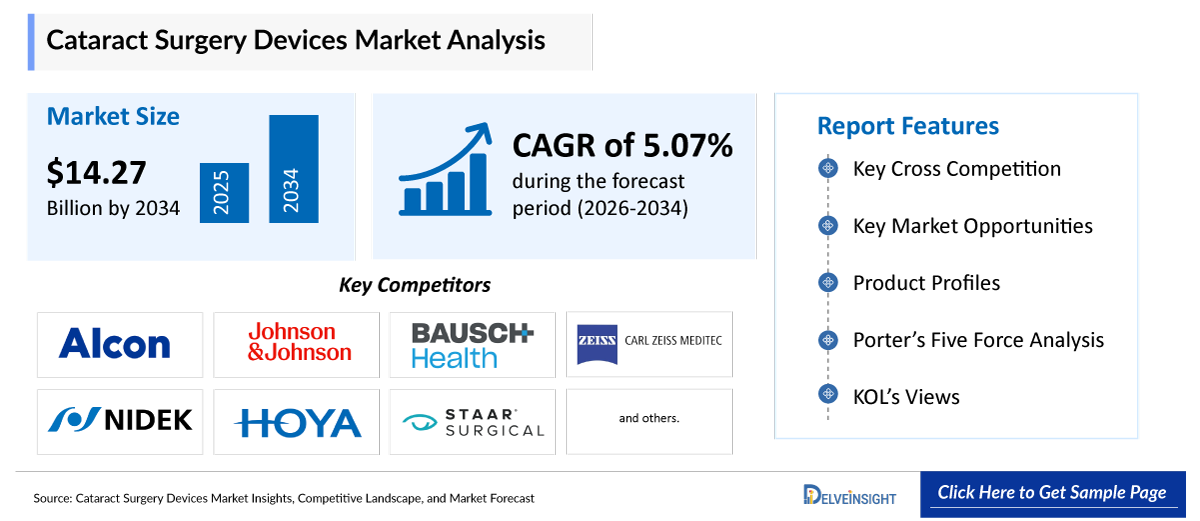
- The global cataract surgery devices market size was valued at USD 9.15 billion in 2025 and is projected to reach USD 14.27 billion by 2034.
- The market is expected to expand at a CAGR of 5.07% during the forecast period 2026-2034, supported by the growing prevalence of cataracts and vision impairment, the rising burden of lifestyle disorders that accelerate cataract development, an expanding geriatric population, and rising product development activity among key manufacturers.
- By product type, the intraocular lenses segment dominated the cataract surgery devices market with a 47% share in 2025.
- By end-user, the hospitals segment dominated the cataract surgery devices market with a 45% share in 2025.
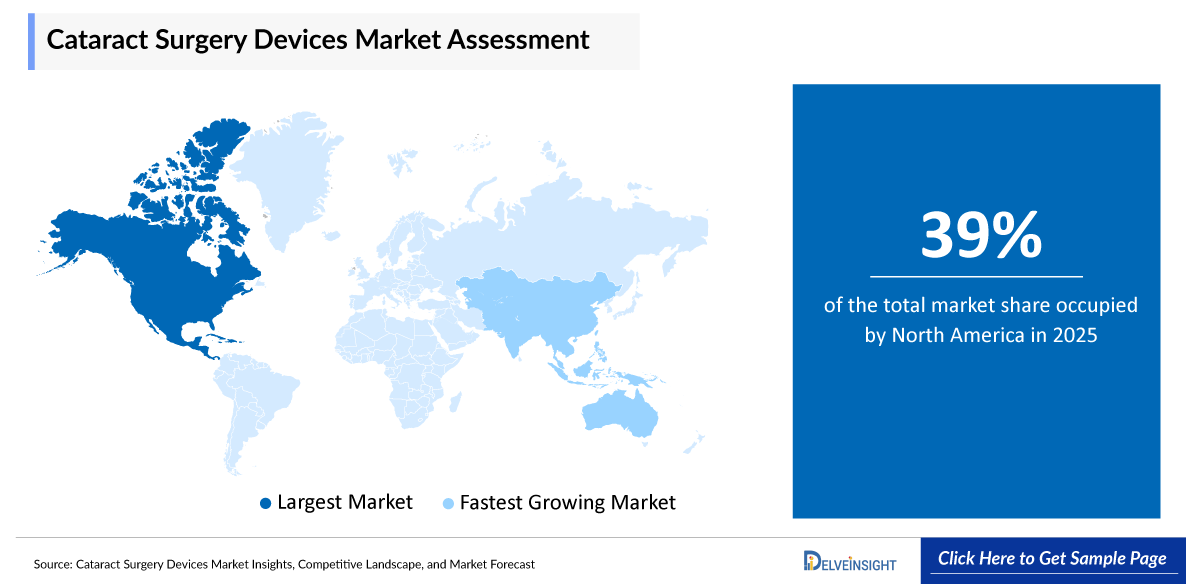
- North America accounted for the largest share of the cataract surgery devices market at 39% in 2025, while Asia-Pacific is anticipated to register the fastest growth through 2034.
Cataract surgery devices encompass the full range of instruments, equipment, and artificial implants used by ophthalmologists to treat cataracts, the clouding of the eye's natural lens that is a leading cause of reversible blindness worldwide. The primary objective of these devices is to remove the clouded natural lens and replace it with a clear artificial intraocular lens to restore vision, and the market is organized upon the devices used across the surgical workflow. Phacoemulsification systems use ultrasonic energy to break up and aspirate the cataractous lens through a small incision and are the mainstay of modern cataract surgery. Femtosecond lasers enable a bladeless, computer-guided approach to key surgical steps including the corneal incision, capsulotomy, and lens fragmentation, underpinning femtosecond laser-assisted cataract surgery.
Intraocular lenses are the artificial implants that replace the natural lens, spanning monofocal, toric, multifocal, and extended depth-of-focus designs, and they represent the largest device category. Ophthalmic viscosurgical devices are the viscoelastic gels that protect intraocular tissue and maintain space during surgery, and a range of additional instruments, consumables, and surgical microscopes complete the portfolio. Demand is anchored by the very high and rising global volume of cataract surgery, and the contemporary market is defined by the shift toward premium refractive cataract surgery, the adoption of femtosecond laser and robotic-assisted platforms, and the integration of artificial intelligence into surgical planning and guidance.
Cataract Surgery Devices Market Key Growth Drivers
- Growing prevalence of cataracts and vision impairment, with DelveInsight estimating that some 2.4 billion people globally are affected by near or distance vision impairment.
- A large treatment gap, with only 17% of those with cataract-related impairment having access to effective intervention, underscoring substantial unmet need.
- Rising prevalence of lifestyle disorders such as diabetes, obesity, and hypertension that accelerate the early onset of cataracts.
- A rapidly aging global population, with the share aged 60 and above projected to rise from 12% in 2015 to 22% by 2050, reaching 2.1 billion people.
- Rising patient awareness and preference for premium intraocular lenses that reduce spectacle dependence and improve visual outcomes.
- Continuous technological advancement, including femtosecond laser-assisted surgery, advanced intraocular lenses, robotic-assisted platforms, and AI-driven surgical planning.
- Rising product development activity and regulatory approvals among the leading manufacturers, refreshing phacoemulsification and laser platforms.
Key Companies in Cataract Surgery Devices Market
The competitive field is led by a small group of large ophthalmic companies operating full cataract surgery portfolios that span phacoemulsification systems, femtosecond lasers, intraocular lenses, and viscosurgical devices, challenged by specialists in surgical platforms, lenses, and viscoelastics and by regional manufacturers competing on cost and access. The leading participants in the cataract surgery devices market include the following:
- Alcon Inc.
- Johnson & Johnson Services, Inc.
- Bausch Health Companies Inc.
- Carl Zeiss Meditec AG (ZEISS Group)
- NIDEK CO., LTD.
- HOYA Corporation
- STAAR Surgical Company
- Ziemer Ophthalmic Systems AG
- Topcon Corporation
- Oertli Instrumente AG, and others
For illustrative purposes, only the top 10 companies are listed in the Table of Contents. The report may include analysis and references to additional companies relevant to the market assessment.
Cataract Surgery Devices Market Size
The following table summarizes the headline market metrics for the global cataract surgery devices market across the base year and the forecast horizon.
|
Report Metrics |
Details |
|
2025 Market Size |
USD 9.15 billion |
|
2034 Projected Market Size |
USD 14.27 billion |
|
Growth Rate (2026-2034) |
5.07% CAGR |
|
Largest Market |
North America (39% share in 2025) |
|
Fastest Growing Market |
Asia-Pacific |
|
Market Structure |
Moderately Concentrated |
All market values are expressed in USD and represent DelveInsight estimates synthesized from primary and secondary research.
Factors Contributing to the Growth of the Cataract Surgery Devices Market
Cataract Surgery Devices Market Drivers
- Growing Prevalence of Cataracts and Vision Impairment: The foundational driver of the cataract surgery devices market is the growing global prevalence of cataracts and vision impairment, which generates the surgical volume on which the entire category depends. Cataract, the clouding of the eye's natural lens, remains one of the leading causes of blindness and reversible visual impairment worldwide, and DelveInsight estimates that some 2.4 billion people globally are affected by near or distance vision impairment. Critically, a large treatment gap persists, with only 17% of those with cataract-related impairment having access to effective intervention, which underscores an enormous unmet need and a substantial reservoir of latent demand that expands as awareness and access improve. Because cataract surgery with intraocular lens implantation is the only definitive treatment and is among the most commonly performed surgical procedures in the world, the rising prevalence translates directly into a large and predictable volume of procedures, each of which consumes a phacoemulsification pack, an intraocular lens, viscoelastic, and, increasingly, femtosecond laser time. Increasing awareness, improved access to healthcare, and advances in surgical technology have led to a steady rise in surgical procedures, and healthcare systems increasingly prioritize effective and minimally invasive solutions to restore vision. As the global population ages and as surgical capacity expands into underserved regions, the cataract-driven base of the market is expected to grow steadily throughout the forecast period.
- Increasing Prevalence of Lifestyle Disorders: The rising global prevalence of lifestyle-related metabolic disorders, particularly diabetes, obesity, and hypertension, is a significant driver of the cataract surgery devices market because these conditions accelerate the onset and progression of cataracts and enlarge the treated population at younger ages. Diabetes in particular is strongly associated with the earlier development of cataracts, and diabetic patients frequently develop lens opacities years or decades before the typical age-related onset, while obesity and hypertension contribute to the metabolic and oxidative stress that hastens lens degeneration. As the global prevalence of these conditions continues to climb, driven by dietary change, sedentary lifestyles, and urbanization, the pool of patients developing cataracts expands and shifts toward younger age groups, escalating the demand for cataract surgery and the devices it requires. This younger, often working-age population brings heightened expectations for visual outcomes and a greater interest in premium intraocular lenses that restore a full range of vision, reinforcing the shift in mix toward higher-value devices. Because the metabolic-disease epidemic is a durable and worsening global trend that is particularly pronounced in the same emerging markets where surgical access is expanding, it adds a large and growing source of demand to the traditional age-related cataract base and supports the sustained expansion of the market over the forecast period.
- Rising Geriatric Population: Demographic aging is a structural driver of the cataract surgery devices market, because cataract is overwhelmingly a disease of later life and the population at greatest risk is growing faster than the population as a whole. The prevalence of cataract rises sharply through the sixth, seventh, and eighth decades of life, and the global population aged 60 and above is projected to almost double from 12% in 2015 to 22% by 2050, reaching 2.1 billion people, a demographic shift that is expected to substantially increase the demand for cataract procedures. The effect is particularly pronounced in the developed markets and in the rapidly aging societies of East Asia, and it is increasingly significant in the large developing economies where surgical capacity is expanding to meet rising need. As the number of individuals living longer increases, the number requiring cataract treatment rises steadily, driving advancements and sales in surgical devices such as intraocular lenses and phacoemulsification equipment. Aging simultaneously increases the prevalence of presbyopia and refractive change that drive demand for premium multifocal and extended depth-of-focus lenses, so the demographic trend enlarges both the volume base and the premium mix of the market. Because aging is a slow, predictable, and effectively irreversible trend, it provides an unusually stable foundation for long-term demand that is largely independent of economic cycles and underpins the steady growth expected across every segment.
- Technological Advancement in Devices and Procedures: Continuous technological advancement in cataract surgery devices and procedures is a central driver of the market, raising the value delivered per procedure and improving the precision, safety, and outcomes of surgery. The most consequential advances span the surgical platform and the implant. On the platform side, next-generation phacoemulsification systems deliver improved fluidics, energy efficiency, and stability, exemplified by the launch of integrated cataract and vitreoretinal systems that combine advanced phaco technology with intelligent fluidics to improve efficiency and reduce energy use, and femtosecond laser-assisted cataract surgery has introduced bladeless, computer-guided precision to the corneal incision, capsulotomy, and lens fragmentation. On the implant side, advances in intraocular lens technology, including multifocal, trifocal, toric, and extended depth-of-focus designs, have significantly enhanced patient outcomes by improving near, intermediate, and distance vision and by reducing spectacle dependence. The frontier is now defined by robotic-assisted surgical platforms and by the integration of artificial intelligence into intraocular lens power calculation, surgical guidance, and imaging analysis, which improve refractive predictability and standardize outcomes. Because the installed base of surgeons and operating capacity is relatively fixed, growth comes disproportionately from raising the sophistication and value of the devices used, which makes continuous technological advancement the principal commercial lever available to manufacturers and a powerful driver of market value.
- Rising Product Development and Premiumization: A sustained cadence of product development and regulatory approval is directly expanding the cataract surgery devices market by refreshing the surgical platforms and by broadening the premium intraocular lens portfolio that increasingly defines the value of the market. Manufacturers compete substantially on the currency and breadth of their platforms and lenses, since surgeons select systems for their efficiency, safety, and refractive performance, and each new launch either captures share or upgrades an existing platform. Recent activity illustrates the pace and breadth of this dynamic, including regulatory approval and launch of integrated cataract and vitreoretinal surgical systems with first-to-market phaco and fluidics technologies, the clearance of next-generation anterior cataract surgery platforms with advanced fluidics and vacuum control, the approval of a full range of vision intraocular lenses, and the migration of leading extended depth-of-focus lenses onto advanced hydrophobic acrylic materials. This continuous premiumization raises the average selling price and the value captured per procedure even where surgical volume grows only modestly, and it is reinforced by rising patient awareness of and preference for premium refractive cataract surgery. Because the intraocular lens and the surgical platform are differentiated and increasingly refractive products rather than commodities, the pace of product development and premiumization is among the most direct determinants of market growth.
- Emergence of Robotic-Assisted and Laser Surgeries: The emergence of robotic-assisted and laser-based cataract surgery is an increasingly important driver, addressing the operator dependence and variability of manual surgery and extending advanced capability to a broader range of surgeons. Femtosecond laser-assisted cataract surgery has already introduced bladeless, computer-guided precision to key surgical steps, improving the reproducibility of the corneal incision, capsulotomy, and lens fragmentation, and the frontier is now defined by robotic surgical platforms that combine robotics, advanced imaging, and artificial intelligence to enhance precision and efficiency. The strategic significance of this shift is underscored by the acquisition of robotic laser platforms by the leading manufacturers, positioning them to improve workflow, safety, and outcomes, and by the entry of venture-backed robotic surgery innovators developing dedicated ophthalmic platforms. Robotic and laser assistance offers reproducible precision, the potential to standardize complex steps across operators of varying experience, and integration with the artificial-intelligence surgical planning and guidance that is becoming central to refractive cataract surgery. As these platforms mature, integrate with premium lens workflows, and demonstrate value in high-volume settings, they are positioned to move from specialized centers toward broader adoption, adding a further layer of capital and consumable demand to the market. Because they raise procedural value, differentiate competing systems, and align with the broader movement toward digitally enabled surgery, robotic and laser assistance is an accelerating contributor to market growth.
- Expanding Healthcare Access and Cataract Outreach: The expansion of healthcare access and the scaling of cataract-outreach efforts across emerging markets are significant drivers of the cataract surgery devices market, converting a very large and previously undertreated burden of cataract blindness into treated procedures and adding a fast-growing demand base to the mature markets. A substantial share of the global burden of cataract-related visual impairment is avoidable and stems from a lack of access to surgery, and governments and public health organizations across Asia-Pacific, Africa, and Latin America are addressing the huge backlog of untreated cataracts through subsidies, awareness campaigns, and surgical-outreach programs, supported by partnerships between manufacturers and nonprofit organizations dedicated to providing eye care in low-resource settings. The Asia-Pacific market in particular is defined by a high volume of procedures and significant unmet need, with a tiered structure in which urban centers rapidly adopt advanced femtosecond laser and premium lens technology while rural areas rely on more traditional and affordable methods, and the coexistence of high-end international manufacturers and low-cost domestic players broadens access across the price spectrum. The growth of medical tourism in countries such as India and Singapore, which offer high-quality yet affordable care, further boosts demand for advanced surgical devices. Because these markets combine very large populations, a high untreated cataract burden, rapid aging, and improving access, they are expected to grow faster than the developed markets and to become an increasingly important source of incremental demand over the forecast period.
Cataract Surgery Devices Market Restraints
Despite a broad and demographically durable demand base, the cataract surgery devices market faces material constraints that temper the pace and mix of growth. The most prominent is the risk of surgical complications associated with cataract surgery. While cataract surgery is among the safest and most effective procedures in medicine, it carries risks including posterior capsule opacification, which is the most common late complication and can require a secondary laser procedure, as well as cystoid macular edema, retinal detachment, endophthalmitis and other infections, refractive surprise, and lens dislocation or decentration. These complications increase the cost and complexity of care, can compromise the visual outcome that justifies premium devices, and create caution among surgeons and patients in adopting the newest technologies. The second constraint is regulatory and reimbursement-related. Stringent and lengthy regulatory pathways from authorities such as the United States Food and Drug Administration and the European Union Medical Device Regulation raise the cost and time of introducing new devices and create a high barrier for smaller innovators, while reimbursement structures shape the addressable market in decisive ways. In most health systems, public and private insurance covers cataract surgery with a standard monofocal lens but not the substantial additional cost of premium presbyopia-correcting and toric lenses or of femtosecond laser assistance, which the patient must pay out of pocket, and this coverage gap restricts the premium market to those able and willing to pay and exposes it to economic cycles. Additional constraints include the high cost of advanced surgical platforms, lasers, and premium lenses, which limits penetration in cost-sensitive and developing markets; pricing pressure from competitive markets and high-volume public procurement; and the volatility that tariffs on imported components and finished devices add to cost and supply. Together, these clinical, regulatory, and economic factors ensure that growth, while structurally supported, proceeds unevenly across segments and geographies. Source: peer-reviewed ophthalmology literature; regulatory authorities; company disclosures.
Cataract Surgery Devices Market Segment Analysis
The global cataract surgery devices market is segmented by product type (phacoemulsification systems, femtosecond lasers, intraocular lenses, viscosurgical devices, and others); by end-user (hospitals, specialty clinics, and ambulatory surgical centers); and by geography (North America, Europe, Asia-Pacific, and the Rest of the World).
By Product Type
Dominant Subsegment: Intraocular Lenses.
The intraocular lenses category is expected to dominate the market.
Dominant: Intraocular Lenses ~ 47%
The intraocular lenses segment accounted for a 47% share of the cataract surgery devices market in 2025. Intraocular lenses dominate the product-type structure because they are the artificial implant that replaces the natural lens in every cataract procedure, making them indispensable and the single highest-value consumable in most cases. Their critical role in restoring vision after cataract removal, combined with the very high global volume of cataract surgery, concentrates market value in this category, and advances in lens technology have reinforced its leadership by raising the average selling price. Multifocal, trifocal, toric, and extended depth-of-focus designs have significantly enhanced patient outcomes by improving near, intermediate, and distance vision and by reducing spectacle dependence, and rising patient awareness of premium lens options, coupled with the demand for advanced refractive cataract surgery, is driving adoption toward these higher-value lenses. Strong product pipelines from the leading manufacturers and continuous innovation in lens materials and designs, exemplified by the approval of a full range of vision lenses and the migration of extended depth-of-focus optics onto advanced hydrophobic acrylic materials, reinforce the leadership of the segment. Phacoemulsification systems form the second product category and the capital anchor of the operating room; femtosecond lasers constitute the fastest-growing platform category through femtosecond laser-assisted cataract surgery; and ophthalmic viscosurgical devices are an essential high-volume consumable. Intraocular lenses are expected to remain the primary revenue contributor and to retain their leading share throughout the forecast period, supported by premiumization.
By End-User
Dominant Subsegment: Hospitals.
The hospitals category is expected to dominate the market.
Dominant: Hospitals ~ 45%
The hospitals segment accounted for a 45% share of the cataract surgery devices market in 2025. Hospitals dominate the end-user structure because they serve as the primary centers for surgical intervention, post-operative care, and patient management, and because they possess the advanced infrastructure, skilled ophthalmic surgeons, and access to cutting-edge technologies such as phacoemulsification systems, femtosecond lasers, and premium intraocular lenses that cataract surgery requires. This infrastructure enables the rapid adoption of innovative surgical solutions, and hospitals also contribute to raising awareness through outreach programs, eye camps, and public health initiatives that expand patient access to timely diagnosis and treatment. The increasing preference for hospital-based cataract procedures, driven by their ability to offer comprehensive care, higher safety standards, and favorable reimbursement, together with growing investment in modern surgical equipment and the rising demand for minimally invasive and precision-based procedures, further strengthens their role in device utilization. Ambulatory surgical centers form the fastest-growing end-user segment, as the minimally invasive and high-throughput nature of cataract surgery suits them ideally to the outpatient setting and as favorable reimbursement and improving technology support the migration of procedures into dedicated ambulatory facilities that offer efficiency, convenience, and lower cost. Specialty clinics play a substantial role in diagnosis, patient selection, premium refractive cataract surgery, and long-term management. Hospitals are expected to retain their leading share throughout the forecast period, even as ambulatory surgical centers grow faster.
Cataract Surgery Devices Market Region Analysis
Dominant Region: North America
Dominant: North America ~ 39% (Largest)
North America accounted for a 39% share of the global cataract surgery devices market in 2025. The region leads the global market, driven by the rising prevalence of cataracts and other vision-impairing disorders, coupled with risk factors such as an aging population, diabetes, and hypertension. According to the National Institutes of Health, over 50% of individuals aged 80 and above in the United States had cataracts or had undergone cataract surgery, and data from the Centers for Disease Control and Prevention indicate that an estimated 20.5 million Americans aged 40 and older were affected by cataracts in 2022, a substantial patient pool that continues to fuel demand for advanced surgical technologies including phacoemulsification systems, intraocular lenses, femtosecond lasers, and ophthalmic viscosurgical devices. Demographic trends further amplify market growth, as the Population Reference Bureau estimates that the number of Americans aged 65 and older will rise from 58 million in 2022 to 82 million by 2050, making age-related eye conditions increasingly prevalent, and hospitals and specialty eye clinics are adopting advanced cataract surgery platforms supported by favorable reimbursement and high healthcare spending. Ongoing research and development and product innovation strengthen the market further, exemplified by the United States clearance of a next-generation anterior cataract surgery system with advanced fluidics and vacuum control, and the strong presence of leading global manufacturers and continuous patient-awareness programs reinforce regional leadership. The region is expected to retain its dominant position throughout the forecast period.
Fastest Growing Region: Asia-Pacific
Asia-Pacific is projected to register the fastest compound annual growth rate in the cataract surgery devices market through 2034. The region is defined by a high volume of procedures and significant unmet medical need, driven by its large and aging population, and it is emerging as the principal growth engine of the market. The market exhibits a tiered structure, with a stark divide between urban centers that are rapidly adopting advanced technologies such as femtosecond laser-assisted cataract surgery and premium intraocular lenses, and rural areas that rely on more traditional and affordable methods; a key trend is the coexistence of high-end international manufacturers and low-cost domestic players that together broaden access across the price spectrum. The region is seeing a rapid shift toward modern phacoemulsification techniques and is at the forefront of adopting digital health solutions and artificial intelligence for surgical planning. Governments and public health organizations play a crucial role by providing subsidies and launching awareness campaigns to address the huge backlog of untreated cataracts, and the growth of medical tourism in countries such as India and Singapore, which offer high-quality yet affordable care, further boosts demand for advanced surgical devices. China contributes the largest incremental volume, supported by a vast aging population and a growing domestic industry; India combines a very large cataract burden with a high-volume, cost-efficient surgical model and significant domestic manufacturing; and Japan and South Korea contribute high-value, premium-weighted markets. Regional growth is expected to exceed the global average across every segment.
Cataract Surgery Devices Regional Commentary
North America
North America leads on value and premium adoption, holding a 39% share in 2025. The region combines a large cataract patient pool with advanced infrastructure, favorable reimbursement, and high healthcare spending. The National Institutes of Health reports that over 50% of those aged 80 and above have had cataracts or cataract surgery, and the Centers for Disease Control and Prevention estimate 20.5 million Americans aged 40 and older were affected in 2022, while the Population Reference Bureau projects those aged 65 and older rising to 82 million by 2050. The United States is the reference market for new platform and lens approvals. Near-term dynamics are shaped by premiumization, femtosecond laser and robotic adoption, AI-driven surgical planning, and the outpatient migration of surgery.
Europe
Europe is a large and innovation-oriented market, supported by an aging population, advanced healthcare infrastructure, and high patient awareness of eye care, with a large pool of geriatric patients increasingly seeking cataract surgery. According to the Government of the United Kingdom, over 516,073 people were admitted to hospitals for cataract surgery in England in 2023, illustrating the scale of demand. Strong government support, favorable reimbursement, and continuous innovation by key manufacturers enhance outcomes and access, exemplified by the CE Mark approval and European rollout of an extended depth-of-focus lens on an advanced material platform. The European Union Medical Device Regulation has raised the evidentiary burden for new device approvals.
Asia-Pacific
Asia-Pacific is the fastest-growing region, defined by a high volume of procedures and significant unmet need driven by a large and aging population. The market is tiered, with urban centers rapidly adopting femtosecond laser surgery and premium lenses while rural areas rely on traditional and affordable methods, and high-end international and low-cost domestic players coexist. The region is shifting rapidly toward modern phacoemulsification and adopting AI for surgical planning, supported by government subsidies and awareness campaigns addressing the cataract backlog. China contributes the largest incremental volume, India combines a large burden with a cost-efficient model and domestic manufacturing, and medical tourism in India and Singapore further boosts demand. Growth exceeds the global average across every segment.
Rest of World
The Rest of the World comprises the Middle East, Africa, and South America. Access is highly stratified. The Gulf Cooperation Council states and the larger South American markets, particularly Brazil, have invested in ophthalmic surgical capacity and increasingly perform premium refractive cataract surgery, representing growing markets, while much of Africa carries a very high burden of cataract blindness alongside a severe shortage of ophthalmologists and surgical infrastructure, so a large share of cataract need is unmet. Cost and limited reimbursement constrain premium adoption. Regional growth will be driven by cataract-outreach programs, investment in surgical capacity, rising awareness, and lower-cost devices from regional and Asian manufacturers.
Cataract Surgery Devices Market Competitive Landscape
The global cataract surgery devices market is classified as Moderately Concentrated. A few key global players, including Alcon, Johnson & Johnson Vision, Bausch + Lomb, and Carl Zeiss Meditec, dominate the market through comprehensive portfolios spanning surgical platforms, lasers, and intraocular lenses, strong brand recognition among surgeons, global distribution, and continuous research and development. These companies maintain leadership through product innovation, strategic partnerships, mergers and acquisitions, and geographic expansion, while emerging players offering specialized or cost-effective solutions increase competition and drive technological advancement.
The competitive landscape is evaluated across the following dimensions:
- Market concentration: Moderately concentrated, with a small group of large ophthalmic companies holding the majority of global revenue through full-line surgical and lens portfolios, alongside a substantial tier of platform, lens, and viscoelastic specialists and regional high-volume manufacturers.
- Leading players: Alcon and Johnson & Johnson Vision lead the market with comprehensive surgical and lens portfolios, Bausch + Lomb and Carl Zeiss Meditec hold strong positions, and specialists including NIDEK, HOYA, STAAR Surgical, Ziemer, Topcon, and Oertli compete across platforms and lenses.
- Geographic reach: The leading participants operate global commercial and surgeon-education organizations, while high-volume regional manufacturers such as Aurolab serve large domestic and developing markets at low cost, and the tiered Asia-Pacific market supports both.
- Product portfolio strength: Competitive advantage rests on offering an integrated portfolio spanning the phacoemulsification platform, femtosecond laser, premium intraocular lenses, and viscoelastics, since surgeons increasingly select an end-to-end refractive cataract solution rather than individual components.
- Pipeline strength: Development is concentrated in next-generation phacoemulsification and integrated cataract-vitreoretinal platforms, femtosecond laser and robotic surgery, premium and full range of vision intraocular lenses, advanced materials, and AI-driven surgical planning.
- Strategic partnerships: Collaboration spans surgeon education and training, integration of lenses with diagnostic biometry and surgical platforms, cataract-outreach alliances with nonprofit organizations, and partnerships that extend access in emerging markets.
- M&A activity: Acquisition is a defining dynamic, exemplified by the Alcon acquisition of a robotic laser platform and the EssilorLuxottica acquisition of the Optegra ophthalmic clinic network, as the leaders build platform breadth and access.
- Innovation focus: Innovation is shifting toward robotic and femtosecond laser-assisted surgery, premium and spectacle-independent intraocular lenses, AI-driven lens-power calculation and surgical guidance, and miniaturized and efficient surgical devices.
- Regulatory standing: United States premarket approval and 510(k) clearance and European Union Medical Device Regulation certification are decisive competitive credentials, and the sequence of platform and premium-lens approvals has become a principal axis of competition among the leaders.
Cataract Surgery Devices Market Recent Developmental Activities
- In April 2025, Alcon Inc. announced the launch of the UNITY Vitreoretinal Cataract System and the UNITY Cataract System, offering a versatile platform with both a combined console and a standalone cataract system, featuring first-to-market technologies including UNITY 4D Phaco, HYPERVIT 30K, and the UNITY Intelligent Fluidics system, designed to improve efficiency and surgical outcomes for cataract and vitreoretinal procedures. Strategic significance: the launch of a next-generation integrated platform by the market leader reinforced the strategic emphasis on combining advanced phaco technology with intelligent fluidics to deliver greater precision, stability, and efficiency with reduced energy use.
- In March 2025, Alcon Inc. announced that Vivity, the widely implanted extended depth-of-focus intraocular lens, became available on its advanced Clareon lens material, with the Clareon Vivity having received CE Mark approval and beginning its commercial rollout across Europe in the second quarter of 2025. Strategic significance: migrating a leading extended depth-of-focus optic onto an advanced hydrophobic acrylic material combined premium optical performance with a material engineered to reduce posterior capsule opacification and glistenings, illustrating the dual axis of optical and material innovation in the premium lens segment.
- In October 2024, Bausch & Lomb Incorporated announced U.S. Food and Drug Administration approval of the enVista Envy full range of vision intraocular lens, designed to deliver improved visual outcomes for cataract patients. Strategic significance: entry into the full range of vision category broadened the premium portfolio of a major manufacturer and intensified competition in the presbyopia-correcting segment, where full range of vision lenses seek to deliver continuous vision from near to distance.
- In September 2024, LensTech Inc. launched the ClearView 3 Lens, a dual-lens design intended to reduce glare and halos and to offer a seamless visual experience. Strategic significance: the launch illustrated continued innovation in intraocular lens optical design aimed at addressing the photic phenomena that affect some premium lenses, reflecting the competitive emphasis on improving the quality and predictability of premium visual outcomes.
- In July 2024, Oertli Instrumente AG received U.S. Food and Drug Administration 510(k) clearance for its Faros anterior cataract surgery system, a next-generation platform offering advanced fluidics and vacuum control to optimize outcomes across varying cataract hardness levels. Strategic significance: the clearance of an advanced anterior surgery platform by a specialist manufacturer expanded the competitive field in phacoemulsification systems and underscored the importance of fluidics and vacuum control in modern cataract surgery.
- In June 2024, Alcon Inc. received U.S. Food and Drug Administration 510(k) clearance for its UNITY Cataract System and UNITY Vitreoretinal Cataract System, which integrate advanced technologies including UNITY 4D Phaco to deliver greater surgical precision, stability, and efficiency with reduced energy usage. Strategic significance: the United States clearance of the next-generation integrated platform positioned the market leader to refresh its large installed base and to compete on efficiency, energy reduction, and the integration of cataract and vitreoretinal surgery on a single console.
- In 2024 and 2025, Alcon Inc. advanced its acquisition of a robotic laser platform, positioning the company to expand into robotic-assisted cataract surgery to improve workflow, safety, and outcomes. Strategic significance: the move into surgical robotics by the market leader signaled the strategic importance of robotic and laser assistance as the next frontier of cataract surgery, combining robotics, advanced imaging, and artificial intelligence to standardize and enhance the procedure.
- In 2024 and 2025, EssilorLuxottica announced the acquisition of the Optegra ophthalmic clinic network from MidEuropa, comprising over 70 eye hospitals across five European countries offering services including cataract surgery, refractive lens replacement, and laser eye surgery. Strategic significance: the acquisition of a large ophthalmic clinic network by a major eye-care group illustrated vertical integration into cataract surgery delivery, extending the reach of the group across the care pathway and reinforcing the strategic value of controlling surgical access.
- In 2024 and 2025, Johnson & Johnson Vision showcased its cataract and refractive surgery innovations at the American Academy of Ophthalmology annual meeting, highlighting advances across its intraocular lens and surgical portfolio. Strategic significance: the emphasis on cataract and refractive innovation by one of the two global leaders reinforced the competitive premiumization of the market and the strategic focus on advanced intraocular lenses and integrated surgical solutions.
- In 2024 and 2025, HOYA Surgical Optics pursued expansion of its global presence by capitalizing on the rising number of cataract surgeries worldwide, extending the reach of its intraocular lens and surgical portfolio. Strategic significance: the growth strategy of a major lens specialist reflected the durable global expansion of cataract surgery volume and the opportunity for focused manufacturers to gain share by broadening geographic access to their premium and standard lens portfolios.
- In 2024 and 2025, Alcon Inc. partnered with Eyes of the World, an organization dedicated to providing eye care to underserved populations, supporting medical missions and expanding access to cataract surgery in low-resource settings. Strategic significance: the partnership underscored the role of cataract-outreach collaboration in converting untreated cataract blindness into treated procedures, aligning social-impact objectives with the long-term expansion of the addressable market in developing regions.
- In 2024 and 2025, the leading manufacturers advanced the integration of artificial intelligence across cataract surgery, including AI-powered intraocular lens power calculation, AI-driven surgical guidance systems such as adaptive cataract treatment platforms that assist with corneal incisions and capsulotomy centration, and AI analysis of multimodal imaging for pre-operative planning. Strategic significance: the pervasive integration of artificial intelligence across planning, guidance, and imaging signaled the shift of competitive differentiation toward intelligent software and refractive predictability, positioning artificial intelligence as a key factor in improving outcomes and in the continued growth of the market.
Cataract Surgery Devices Market Segmentation
- Cataract Surgery Devices Market Assessment by Product Type
- Phacoemulsification Systems
- Femtosecond Lasers
- Intraocular Lenses
- Viscosurgical Devices
- Others
- Cataract Surgery Devices Market Assessment by End-User
- Hospitals
- Specialty Clinics
- Ambulatory Surgical Centers
Cataract Surgery Devices Market Assessment by Geography
- North America Cataract Surgery Devices Market Assessment
- United States Cataract Surgery Devices Market Size in USD million (2023-2034)
- Canada Cataract Surgery Devices Market Size in USD million (2023-2034)
- Mexico Cataract Surgery Devices Market Size in USD million (2023-2034)
- Europe Cataract Surgery Devices Market Assessment
- France Cataract Surgery Devices Market Size in USD million (2023-2034)
- Germany Cataract Surgery Devices Market Size in USD million (2023-2034)
- United Kingdom Cataract Surgery Devices Market Size in USD million (2023-2034)
- Italy Cataract Surgery Devices Market Size in USD million (2023-2034)
- Spain Cataract Surgery Devices Market Size in USD million (2023-2034)
- Rest of Europe Cataract Surgery Devices Market Size in USD million (2023-2034)
- Asia-Pacific Cataract Surgery Devices Market Assessment
- China Cataract Surgery Devices Market Size in USD million (2023-2034)
- Japan Cataract Surgery Devices Market Size in USD million (2023-2034)
- India Cataract Surgery Devices Market Size in USD million (2023-2034)
- Australia Cataract Surgery Devices Market Size in USD million (2023-2034)
- South Korea Cataract Surgery Devices Market Size in USD million (2023-2034)
- Rest of Asia-Pacific Cataract Surgery Devices Market Size in USD million (2023-2034)
- Rest of the World Cataract Surgery Devices Market Assessment
- Middle East Cataract Surgery Devices Market Size in USD million (2023-2034)
- Africa Cataract Surgery Devices Market Size in USD million (2023-2034)
- South America Cataract Surgery Devices Market Size in USD million (2023-2034)
Cataract Surgery Devices Market Recent Industry Trends and Milestones (2023-2026):
|
Category |
Key Developments |
|
Cataract Surgery Devices Market Product Approval |
The 2023 to 2026 period produced a dense sequence of platform and lens approvals. Alcon received United States clearance for its UNITY Cataract System and UNITY Vitreoretinal Cataract System in June 2024, featuring UNITY 4D Phaco and intelligent fluidics, and launched the systems commercially in April 2025. Oertli Instrumente received clearance for its Faros anterior cataract surgery system in July 2024. In the lens segment, Bausch + Lomb obtained approval for the enVista Envy full range of vision lens in October 2024, Alcon secured CE Mark for the Clareon Vivity extended depth-of-focus lens with European rollout in the second quarter of 2025, and LensTech launched the ClearView 3 dual-lens in September 2024. Together, these approvals concentrated competition in advanced surgical platforms and premium presbyopia-correcting lenses. |
|
Cataract Surgery Devices Market Product Expansion |
Product expansion advanced along three axes. The first is the surgical platform, as manufacturers extended next-generation phacoemulsification systems with advanced fluidics, vacuum control, and energy efficiency, and integrated cataract and vitreoretinal surgery on combined consoles. The second is optical and material innovation, as premium intraocular lens portfolios broadened across the full range of vision, extended depth-of-focus, trifocal, and toric designs, and as leading optics migrated onto advanced hydrophobic acrylic materials engineered to reduce posterior capsule opacification. The third is robotics and intelligence, as the leaders moved into robotic-assisted surgery and integrated artificial intelligence into lens-power calculation, surgical guidance, and imaging analysis. Femtosecond laser-assisted cataract surgery continued to broaden, and surgical planning tools and diagnostic biometry were increasingly integrated with lens selection. |
|
Cataract Surgery Devices Market Investment |
Investment was shaped by the move into surgical robotics and by consolidation across platforms and clinic networks. Alcon advanced its acquisition of a robotic laser platform to enter robotic-assisted cataract surgery, and EssilorLuxottica acquired the Optegra network of over 70 eye hospitals across five European countries, integrating vertically into surgical delivery. The leading manufacturers invested in next-generation phacoemulsification, femtosecond laser, and premium lens development and in artificial-intelligence surgical planning, while venture capital concentrated on robotic ophthalmic surgery innovators such as ForSight Robotics and Horizon Surgical Systems and on accommodating-lens developers such as Adaptilens. Regional manufacturers in Asia invested in cost-efficient production to serve high-volume domestic cataract programs, and manufacturers pursued cataract-outreach partnerships that expand access in low-resource settings. |
|
Company Strategy |
The unifying strategic theme is the assembly of integrated, premium, and increasingly robotic refractive cataract solutions. Alcon is extending its UNITY platform, migrating its Clareon material across its lens families, and moving into surgical robotics. Johnson & Johnson Vision is advancing its cataract and refractive portfolio and premium lenses. Bausch + Lomb is expanding its premium lens range through the enVista Envy platform. Carl Zeiss Meditec is integrating lenses with diagnostic and surgical visualization, and HOYA Surgical Optics is expanding its global lens presence. Specialists including NIDEK, STAAR Surgical, Ziemer, Topcon, and Oertli pursue focused leadership in surgical platforms and lenses, while high-volume regional manufacturers such as Aurolab serve large domestic and developing markets at low cost. |
|
Emerging Technologies |
The defining emerging technologies are femtosecond laser-assisted cataract surgery, which brings bladeless, computer-guided precision to the corneal incision, capsulotomy, and lens fragmentation; robotic surgical platforms that combine robotics, advanced imaging, and artificial intelligence to enhance precision and standardize outcomes; advanced intraocular lenses, including full range of vision, extended depth-of-focus, trifocal, and toric designs on improved materials; and the integration of artificial intelligence and augmented reality, spanning AI-powered lens-power calculation, AI-driven surgical guidance for incisions and capsulotomy centration, AI analysis of multimodal imaging for pre-operative planning, and AR overlays of phase-specific cues during surgery. Supporting these are miniaturized and energy-efficient surgical devices and next-generation fluidics. Across these, the trajectory is toward cataract surgery that is more precise, more automated, more refractively predictable, and increasingly spectacle-independent. |
Cataract Surgery Devices Market Startup Funding and Investment Trends
Investment in the cataract surgery devices field has concentrated on technologies that bring robotics, artificial intelligence, and next-generation optics to a procedure defined by very high volume and demanding precision, namely robotic surgical platforms that standardize the operation, and accommodating and advanced intraocular lenses that restore a full range of vision. Because the core market is dominated by large ophthalmic companies with entrenched surgeon relationships and comprehensive portfolios, most innovators pursue a differentiated platform or lens technology that a strategic acquirer can absorb. The table below summarizes representative companies advancing the next generation of cataract surgery devices.
|
Company |
Total Funding |
Funding Stage |
Main Product/Offering |
Core Technology |
|
ForSight Robotics |
Over USD 125 million |
Series B |
ORYOM robotic platform |
AI and computer-vision surgical robotics |
|
Horizon Surgical Systems |
Over USD 30 million |
Series A |
Polaris microsurgery platform |
Robotics, imaging, and AI |
|
Request for unlocking the report of the @ Cataract Surgery Devices Market Insights | ||||
Capital formation in this field is shaped by the difficulty of competing directly against the large ophthalmic companies, whose comprehensive surgical and lens portfolios, surgeon relationships, and global distribution create high barriers, so investors have favored companies that introduce a differentiated platform or lens technology suited to acquisition or partnership rather than those contesting the commodity segments. Robotic surgical platforms are the clearest technology thesis, seeking to standardize the high-volume cataract procedure and improve precision through robotics, imaging, and artificial intelligence, and the substantial funding raised by robotic ophthalmic surgery innovators reflects investor conviction in the category, reinforced by the entry of the market leader into surgical robotics through acquisition. Accommodating and advanced intraocular lenses that seek to restore the natural focusing ability of the eye represent a second high-value thesis that continues to attract clinical-stage capital despite the technical difficulty, and post-operatively adjustable lenses address the refractive-surprise limitation of conventional implants. The archetypal outcome is acquisition by one of the leading ophthalmic companies seeking to add a differentiated platform or optic, which provides a defined exit that sustains earlier-stage investment. The principal risks are the lengthy regulatory pathway for surgical platforms and implanted devices, the capital intensity of clinical validation, and the entrenched surgeon relationships and portfolio breadth of the incumbents. Source: company disclosures.
Key Takeaways from the Cataract Surgery Devices Market Report Study
- Market size analysis for the current cataract surgery devices market size (2025), and market forecast for 9 years (2026 to 2034).
- Top key product/technology developments, mergers, acquisitions, partnerships, and joint ventures that happened over the last 3 years.
- Key companies dominating the global cataract surgery devices market.
- Various opportunities available for competitors in the cataract surgery devices market space.
- What are the top-performing segments in 2025? How will these segments perform in 2034?
- Which are the top-performing regions and countries in the current cataract surgery devices market scenario?
- Which are the regions and countries where companies should concentrate their opportunities for cataract surgery devices market growth in the future?
Target audience who can benefit from this Cataract Surgery Devices market report study
- Herbal medicines product providers
- Research organizations and consulting companies
- Herbal medicines-related organizations, associations, forums, and other alliances
- Government and corporate offices
- Start-up companies, venture capitalists, and private equity firms
- Distributors and traders dealing in cataract surgery devices
- Various end-users who want to know more about the cataract surgery devices market and the latest technological developments in the cataract surgery devices market.
Frequently Asked Questions
Q1. At what rate is the cataract surgery devices market expected to grow?
The global cataract surgery devices market is projected to grow at a compound annual growth rate of 5.07% during the forecast period from 2026 to 2034.
Q2. What is the current and projected size of the cataract surgery devices market?
The global cataract surgery devices market size was valued at USD 9.15 billion in 2025 and is projected to reach USD 14.27 billion by 2034.
Q3. Which region dominates the cataract surgery devices market?
North America dominated the cataract surgery devices market with a 39% share in 2025, driven by the high prevalence of cataracts among an aging population, advanced healthcare infrastructure, strong adoption of femtosecond lasers and premium intraocular lenses, favorable reimbursement, and the presence of leading manufacturers, with the National Institutes of Health reporting that over 50% of those aged 80 and above have had cataracts or cataract surgery. Asia-Pacific is projected to record the fastest compound annual growth rate through 2034, driven by a large and aging population, significant unmet need, and expanding surgical capacity across China, India, and the wider region.
Q4. What are the key factors driving growth in the cataract surgery devices market?
The principal drivers are the growing prevalence of cataracts and vision impairment, with DelveInsight estimating some 2.4 billion people affected by vision impairment and a large treatment gap; the rising prevalence of lifestyle disorders such as diabetes and hypertension that accelerate cataract development; an aging global population, with the share aged 60 and above projected to reach 22% by 2050; rising preference for premium intraocular lenses; and continuous technological advancement including femtosecond laser-assisted surgery, robotic platforms, and AI-driven surgical planning.
Q5. Who are the major players in the cataract surgery devices market?
The leading Cataract Surgery Devices companies in the market is moderately concentrated and led by Alcon Inc. and Johnson & Johnson Vision, followed by Bausch + Lomb and Carl Zeiss Meditec, alongside specialists including NIDEK CO., LTD., HOYA Corporation, STAAR Surgical Company, Ziemer Ophthalmic Systems AG, Topcon Corporation, and Oertli Instrumente AG. Additional participants including Abbott Laboratories, Aurolab, Hanita Lenses Ltd., Bohus BioTech AB, Eyekon Medical, and Lumenis compete across the surgical platform, lens, and viscoelastic segments.