_aase-syndrome-market.png&w=256&q=75)
Diamond Blackfan Anemia Market Summary
Diamond Blackfan Anemia Market Insights and Trends
- Approximately 75% of DBA cases involve heterozygous mutations in ribosomal protein genes, classifying it as a ribosomopathy, with RPS19 being the most frequently mutated gene.
- Exome sequencing identified GATA1 mutations in 2012 as the first non-ribosomal protein gene mutations causing DBA. This preceded discoveries like TSR2 mutations in 2014, which affect a chaperone for RPS26.
- DBA can cause congenital abnormalities and anemia symptoms, such as fatigue and pale skin. Children may also experience delayed growth, puberty, and increased cancer risk. Milder cases show symptoms later.
- Current treatments include glucocorticosteroids, blood transfusions, and hematopoietic stem cell transplantation, with HSCT being the only curative option.
- Glucocorticosteroids, despite being commonly used, may lose effectiveness over time, particularly in patients who become non-responsive to long-term treatment. Moreover, long-term or high-dose therapies with glucocorticosteroids can lead to a range of adverse effects, including Osteoporosis, skin atrophy, Diabetes, abdominal Obesity, Glaucoma, cataracts, avascular necrosis and infection, growth retardation, and Hypertension.
- HSCT is the only curative treatment for DBA, but it is limited by the availability of suitable donors and associated risks, such as Graft-versus-host Disease infertility, immunosuppressive therapy related, and long-term complications. It is most effective in younger patients, but finding Human Leukocyte Antigen (HLA)-matched donors remains a challenge.
- Recent advances in gene therapy, particularly lentiviral vector–based approaches, offer promising potential for DBA by delivering functional copies of mutated genes into patients’ cells. Ongoing research, including CRISPR/Cas9 gene editing strategies, aims to correct the underlying genetic defects driving the disease.
Diamond Blackfan Anemia Market Size and Forecast in the 7MM
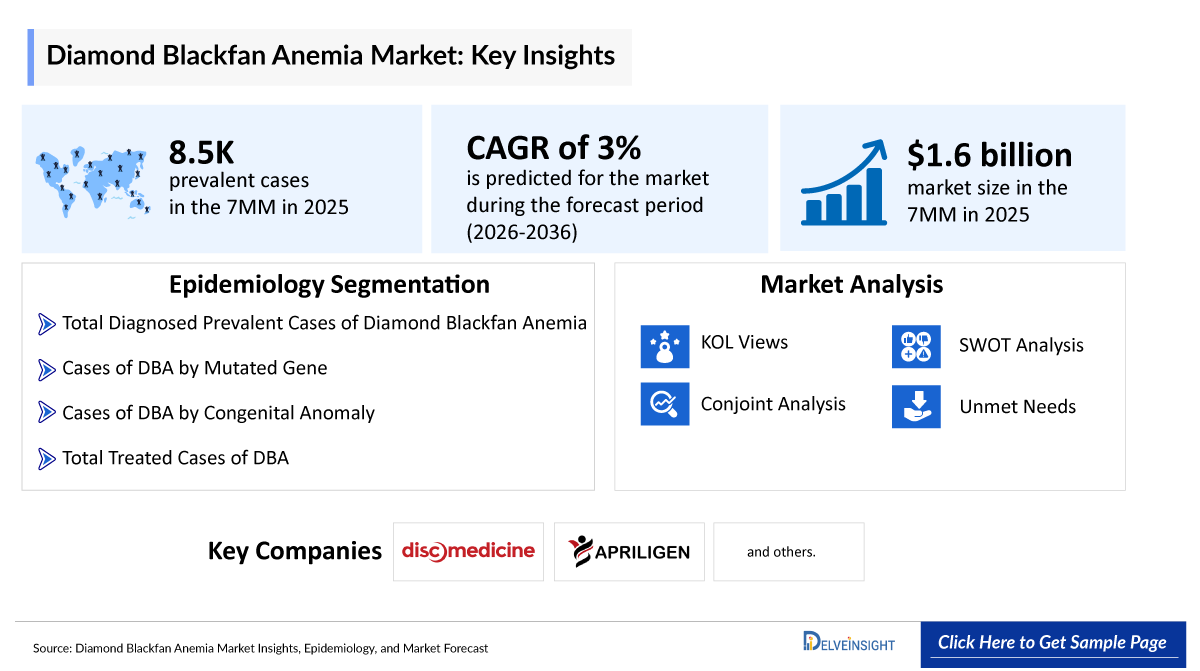
- 2025 Diamond Blackfan Anemia Market Size: ~USD 1.6 Million
- 2036 Projected Diamond Blackfan Anemia Market Size: ~USD XXXX
- Diamond Blackfan Anemia Growth Rate (2026–2036): 3% CAGR
Request for Unlocking the Sample Page of the "Diamond Blackfan Anemia Treatment Market"
Key Factors Driving the Diamond Blackfan Anemia Market Growth by DelveInsight
-
Rising Awareness and Early Diagnosis
Improved understanding of rare diseases among healthcare professionals is leading to earlier identification of patients. Advancements in genetic testing are enabling accurate and timely diagnosis, expanding the treated patient pool.
-
Advancements in Genetic and Molecular Research
Growing research in ribosomal protein gene mutations is enhancing disease understanding. Increasing focus on targeted therapies and precision medicine is opening new treatment avenues.
-
Emerging Novel Therapies
Development of innovative treatment approaches, including gene therapy and stem cell-based therapies. Pipeline therapies aiming to reduce transfusion dependency and improve long-term outcomes are gaining traction.
-
Increasing Healthcare Expenditure
Rising investments in rare disease research and treatment infrastructure across major markets. Improved reimbursement frameworks in developed regions are supporting patient access to therapies.
-
Strong Pipeline and Clinical Trials Activity
A robust pipeline with multiple investigational therapies in different stages of development. Increased clinical trial activity is accelerating drug development timelines.
-
Role of Patient Advocacy Groups
The growing involvement of rare disease organizations is improving disease awareness and funding. Advocacy groups are supporting research collaborations and patient access initiatives.
-
Expansion of Healthcare Infrastructure in Emerging Markets
Improving diagnostic capabilities and access to specialized care in developing regions. Increasing penetration of advanced therapies in previously underserved markets.
DelveInsight's ‘Diamond Blackfan Anemia Market Insights, Epidemiology and Market Forecast – 2036’ report delivers an in-depth understanding of the diamond blackfan anemia, historical and forecasted epidemiology, as well as the diamond blackfan anemia market trends in the United States, EU4 (Germany, Spain, Italy, and France) and the United Kingdom, and Japan.
The Diamond Blackfan Anemia Treatment Market Report delivers a comprehensive analysis of the current treatment landscape, including standards of care, clinical practices, and evolving therapeutic algorithms. It evaluates diamond blackfan anemia patient burden trends, revenue & market share dynamics, peak patient share & therapy uptake analysis, and provides an in-depth market size assessment, and growth rate projections (Historical & Forecast 2022–2036) across global regions. The report highlights key unmet medical needs in diamond blackfan anemia and maps the competitive and clinical landscape to uncover high‑value opportunities, providing a clear outlook on future market growth potential.
Scope of the Diamond Blackfan Anemia Market Report | |
|
Study Period |
2022–2036 |
|
Historical Year |
2022–2025 |
|
Forecast Period |
2026–2036 |
|
Base Year |
2026 |
|
Geographies Covered |
|
|
Diamond Blackfan Anemia Market CAGR |
3% (2026–2036) |
|
Diamond Blackfan Anemia Epidemiology Segmentation Analysis |
Patient Burden Assessment
|
|
Diamond Blackfan Anemia Companies |
|
|
Diamond Blackfan Anemia Therapies |
|
|
Diamond Blackfan Anemia Market |
Segmented by
|
|
Analysis |
|
Diamond Blackfan Anemia Understanding and Treatment Algorithm
Diamond Blackfan Anemia Overview
DBA is a rare inherited bone marrow disorder that typically presents in infancy and is characterized by a failure of red blood cell production due to mutations in ribosomal protein genes. It leads to severe macrocytic anemia with symptoms such as pallor, fatigue, poor feeding, and growth delay. Around 40%–50% of patients also have congenital abnormalities, including craniofacial defects, thumb malformations, short stature, and cardiac anomalies. The disease varies in severity and may also be associated with developmental issues and an increased risk of malignancies later in life.
Diamond-Blackfan Anemia Diagnosis
Diamond Blackfan Anemia Diagnosis is based on clinical presentation and laboratory findings, typically identified in infancy. It is characterized by severe macrocytic anemia with very low reticulocyte counts, while white blood cells and platelets are usually normal. Bone marrow examination shows a marked reduction or absence of erythroid precursors. Elevated fetal hemoglobin (HbF) levels and increased erythrocyte adenosine deaminase (eADA) activity are supportive findings. Confirmation is achieved through genetic testing, which identifies mutations in ribosomal protein genes in the majority of cases.
Further details are provided in the report.
Diamond Blackfan Anemia Treatment
Diamond Blackfan Anemia Treatment primarily focuses on managing anemia and maintaining adequate hemoglobin levels. First-line therapy typically involves corticosteroids, which can stimulate red blood cell production in many patients. Those who do not respond or cannot tolerate steroids often require regular blood transfusions, which may lead to iron overload over time and necessitate iron chelation therapy. Hematopoietic stem cell transplantation (HSCT) is currently the only curative option, particularly for severe or transfusion-dependent cases. Supportive care and long-term monitoring are essential due to potential complications and disease variability.
Diamond Blackfan Anemia Unmet Needs
The section “unmet needs of Diamond Blackfan Anemia” outlines the critical gaps between the current state of patient care, diagnosis, and the ideal & effective management of the disease. It highlights the obstacles experienced by patients, clinicians, and researchers and identifies potential solutions for future progress.
- Lack of curative therapies
- Transfusion burden and iron overload
- Delayed or missed diagnosis
- Steroid-related toxicity, and others…..
Comprehensive unmet needs insights in Diamond Blackfan Anemia and their strategic implications are provided in the full report.
Diamond Blackfan Anemia Epidemiology
Key Findings from Diamond Blackfan Anemia Epidemiological Analysis and Forecast
- Among the 7MM, the United States accounted for the highest number of Diamond Blackfan Anemia Diagnosed Prevalent Cases in 2025, with nearly 6,000 cases. These cases are anticipated to increase by 2036.
- In the United States, the RPS19 mutation accounted for ~25% cases in 2025 among diamond blackfan anemia cases by mutation.
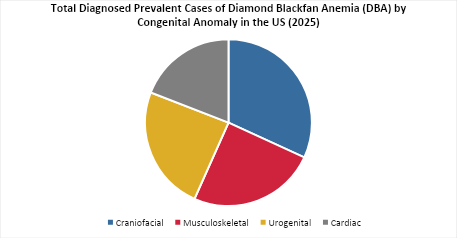
- Among the EU4 and the UK, approximately 25% of diamond blackfan anemia cases in 2025 were reported to be of the craniofacial type, followed by cases with musculoskeletal, urogenital, and other congenital anomalies.
- In Japan, among the congenital anomalies associated with Diamond-Blackfan anemia, craniofacial anomalies were the most prevalent, with almost 50 cases reported in 2025, followed by musculoskeletal anomalies.
Diamond Blackfan Anemia Epidemiological Segmentation in the 7MM
- Total Diagnosed Prevalent Cases of Diamond-Blackfan Anemia
- Total Diagnosed Prevalent Cases of Diamond-Blackfan Anemia by Mutated Gene
- Total Diagnosed Prevalent Cases of Diamond-Blackfan Anemia by Congenital Anomaly
- Total Treated Cases of Diamond Blackfan Anemia
Diamond Blackfan Anemia Drug Analysis & Competitive Analysis
The Diamond Blackfan Anemia drug chapter provides a detailed, market-focused review of the emerging pipeline across Phase I-III Diamond Blackfan Anemia Clinical Trials. It covers the Diamond Blackfan Anemia mechanism of action, clinical trial data, patents, collaborations, and strategic partnerships for each therapy, along with their advantages, limitations, and recent developments. This section offers critical insights into the diamond blackfan anemia treatment landscape, supporting market assessment, competitive analysis, and growth forecasting for the diamond blackfan anemia therapeutics market.
Diamond Blackfan Anemia Pipeline Analysis
-
Bitopertin: Disc Medicines
Bitopertin is an oral, selective inhibitor of GlyT1, a key membrane transporter required to supply developing red blood cells with sufficient glycine to support heme synthesis. Heme biosynthesis is a multistep, enzymatic process that begins with glycine, which is a critical component of heme. By limiting glycine uptake, bitopertin can regulate downstream heme synthesis. These hematologic effects have been established in numerous preclinical and clinical studies of bitopertin. Disc obtained global rights to bitopertin under a license agreement from Roche in May 2021.
In July 2023, Disc Medicine announced that the first patient had been enrolled in the National Institutes of Health-sponsored Phase I/II clinical trial of bitopertin in steroid-refractory DBA.
-
APR-2020: Apriligen
APR-2020, Apriligen’s lead therapeutic candidate is an autologous solution for RPS19-deficient DBA patients. It has been granted Orphan Drug, Rare Pediatric Disease, Fast Track and Rare Disease Evidence Principles (RDEP) designations by the US Food and Drug Administration (FDA) and Orphan Drug Designation by the European Medicines Agency (EMA).
The IND for APR-2020 was filed with the FDA in August 2025, and in September 2025, the FDA issued Apriligen a safe to proceed letter for APR-2020. Phase I FDA human clinical trials of APR-2020 began in 1Q2026. Trial sites have been selected in the United States. European trial sites are expected to open towards the end of 2H2026.
Comparison of Emerging Drugs Under Development | ||||||
|
Drug Name |
Company |
Indication |
Highest Phase |
RoA |
MoA |
Anticipated Launch in the US |
|
Bitopertin |
Disc Medicines |
Steroid-refractory DBA |
I/II |
Oral |
inhibitor of GlyT1 |
Information is available in the full report |
|
APR-2020 |
Apriligen |
RPS19 deficient DBA patient |
I |
IV infusion |
Autologous gene therapy |
Information is available in the full report |
|
Note: Launch insights are provisional and may change with future report updates or the occurrence of major key catalysts. | ||||||
Note: A detailed emerging therapies assessment will be provided in the final report
Diamond Blackfan Anemia Companies, Market Leaders and Emerging Companies
- Disc Medicines
- Apriligen, and others
Diamond Blackfan Anemia Drug Updates
- In August 2025, Apriligen announced the filing of an Investigational New Drug (IND) application with the US FDA for APR-2020.
- In September 2025, the US FDA granted a “safe to proceed” clearance to Apriligen for APR-2020, enabling the initiation of clinical studies.
- In November 2024, researchers at Harvard Medical School developed a universal gene therapy for diamond-blackfan anemia designed to work across different genetic mutations.
Diamond Blackfan Anemia Market Outlook
DBA is a rare blood disorder diagnosed in infancy, where the bone marrow fails to produce enough red blood cells. Current treatments, including glucocorticosteroids, blood transfusions, and HSCT, have limitations. Steroids can lose effectiveness over time and cause severe side effects, such as osteoporosis and diabetes. Blood transfusions risk iron overload, while HSCT, the only curative treatment, presents challenges like finding compatible donors and immunological complications.
Corticosteroid (also called steroid) medicines: Steroids improve anemia and red blood cell counts in about 80% of patients with DBA. Steroids are strong medicines with potentially serious side effects. Steroid therapy may be lifelong for many patients with DBA.
Blood transfusions: Blood transfusions are often needed for anemia at diagnosis and usually for the first year of life. Transfusions may be given every three to four weeks as needed to increase the red blood cell count and provide adequate hemoglobin for growth and development. For patients who do not ultimately respond to treatment with steroids, blood transfusions are lifelong, along with management of iron overload. These patients may be candidates for a stem cell transplant or potentially gene therapy.
Stem cell transplant: Stem cells are cells in the bone marrow that can become all types of blood cells. If an appropriately matched donor is found, then the donor’s stem cells are given to the person with DBA. This may be a close family member, but the donor must be confirmed not to have DBA first. Sometimes an unrelated stem cell donor is used. A successful stem cell transplant will alleviate the anemia of DBA. However, rejection or infection is possible. So, a stem cell transplant is usually only done if steroids are not effective and the patient is receiving red cell transfusions every 3-4 weeks.
Approximately 80% of patients are initially responsive to corticosteroids with an improvement of their anemia, whereas 20% will not respond and will require red blood cell transfusions. Only about half of them will sustain to discontinue corticosteroid. The only curative therapy for the anemia associated with a therapeutic response at a tolerable dose, and the remainder will have to resort to transfusions for life. Overall, ~20% of the patients may ultimately be able to undergo DBA at this time, which is allogeneic HSCT. Overall, the DBA therapeutics market is expected to increase in the forecast period (2026–2036).
- The market size of DBA in the 7MM is USD 1.6 million in 2025, which is expected to rise in the forecast period (2026–2036).
- According to the estimates, the largest market size of DBA is to be from the United States in 2025.
Further details will be provided in the report….
Diamond Blackfan Anemia Drug Class/Insights into Leading Emerging and Marketed Therapies (2026–2036 Forecast)
The Diamond Blackfan Anemia Therapeutics Market Landscape remains largely supportive; however, recent advances in genetic and molecular research have initiated a shift toward disease-modifying, mechanism-driven approaches aimed at correcting the underlying defects in ribosomal function.
- Gene therapies: Emerging gene therapy strategies aim to introduce functional copies of mutated ribosomal protein genes, thereby restoring normal erythropoiesis. These approaches hold promise for addressing the root cause of DBA, though they are still in early clinical development.
- Cell and regenerative therapies: Approaches such as hematopoietic stem cell transplantation and gene-corrected autologous stem cell therapies are being explored to reconstitute healthy red blood cell production. While these strategies offer curative potential, challenges related to donor availability, safety, and long-term durability persist.
- Targeted and novel therapies: Investigational agents, including modulators of erythropoiesis and therapies targeting defective ribosomal pathways, are under evaluation. These therapies aim to reduce transfusion dependence and steroid burden, marking a shift toward more precise and effective disease management.
Further details will be provided in the report….
Diamond Blackfan Anemia Drug Uptake
This section focuses on the uptake rate of potential Diamond Blackfan Anemia drugs expected to be launched in the market during the forecast period (2026–2036). The analysis covers the Diamond Blackfan Anemia market's uptake by drugs, patient uptake by therapy, and sales of each drug.
Diamond Blackfan Anemia Drug uptake is expected to be led by bitopertin from Disc Medicine, driven by its novel mechanism and potential to improve erythropoiesis. Its disease-modifying approach and promising clinical outcomes are likely to support strong physician interest and early adoption upon approval.
Further detailed analysis of emerging therapies' drug uptake in the report…
Diamond Blackfan Anemia Market Access and Reimbursement
Reimbursement is a crucial factor that affects the drug’s access to the market. Often, the decision to reimburse comes down to the price of the drug relative to the benefit it produces in treated patients. To reduce the healthcare burden of these high-cost therapies, many payment models are being considered by payers and other industry insiders.
Further details are provided in the final report….
Diamond Blackfan Anemia Therapies Price Scenario & Trends
Pricing and analogue assessment of diamond blackfan anemia therapies highlights evolving price dynamics structures. This section summarizes the cost of approved treatments, the closest and most appropriate analogue selection for emerging therapies, and the understanding of how pricing influences market access, adherence, and long-term uptake.
- Pricing of Diamond Blackfan Anemia Approved Drugs
There is currently no approved disease-specific drug for DBA. Management relies on supportive therapies such as corticosteroids, with treatment costs for corticosteroid therapy estimated at around USD 250, depending on dosage and regimen.
Further details are provided in the final report….
Diamond Blackfan Anemia Industry Experts and Physician Views
To keep up with Diamond Blackfan Anemia market trends, we take Key Opinion Leaders (KOLs) and Subject Matter Experts (SMEs) opinions working in the domain through primary research to fill the data gaps and validate our secondary research. Industry experts were contacted for insights on the Diamond Blackfan Anemia emerging therapies, evolving treatment landscape, patient adherence to conventional therapies, therapy switching trends, drug adoption and uptake, accessibility challenges, and epidemiology and real-world prescription patterns in Diamond Blackfan Anemia, including MD, PhD, Instructor, Postdoctoral Researcher, Professor, Researcher, and others.
DelveInsight’s analysts connected with 10+ KOLs to gather insights; however, interviews were conducted with 6+ KOLs in the 7MM. Centers such as the University of North Carolina at Chapel Hill, the Berlin Institute of Health at Charité, and the University of Nottingham, etc. were contacted. Their opinion helps understand and validate current and emerging Diamond Blackfan Anemia therapies, highlight unmet medical needs, provide epidemiological context, and support strategic decisions for market access, therapy adoption, and pipeline prioritization in Diamond Blackfan Anemia.
Region |
Key Opinion Leaders (KOLs) and Subject Matter Experts (SMEs) |
|
United States |
“Effective management of DBA demands a cohesive, interprofessional strategy that prioritizes patient-centred care, safety, and long-term outcomes. Given the chronic nature and complexity of DBA, physicians, advanced practitioners, nurses, pharmacists, and other health professionals must collaborate closely to implement evidence-based treatment strategies.” |
|
Germany |
“Most adults with DBA are diagnosed in childhood, but in some cases, an underlying genetic defect is not detected during this period due to limited access to genetic testing before the last decade and an ever-expanding repertoire of genes implicated in DBA. Whenever an adult is referred to adult services with a diagnosis of DBA, historical data and results of genetic screening are advised to ensure confirmation of the genetic diagnosis.” |
Diamond Blackfan Anemia Qualitative Analysis: SWOT and Conjoint Analysis
We perform qualitative and market Intelligence analysis using various approaches, such as SWOT analysis and conjoint analysis.
In the SWOT analysis of Diamond Blackfan Anemia, strengths, weaknesses, opportunities, and threats in terms of disease diagnosis, patient awareness, patient burden, competitive landscape, cost-effectiveness, and geographical accessibility of therapies are provided.
Conjoint analysis analyzes emerging therapies based on relevant attributes such as safety, efficacy, frequency of administration, route of administration, and order of entry. Scoring is given based on these parameters to analyze the effectiveness of therapy.
The team of analysts analyzes promising emerging therapies based on relevant attributes such as safety, efficacy, frequency of administration, route of administration, and order of entry. In efficacy, the trial’s primary and secondary outcome measures are evaluated, whereas the therapies’ safety is evaluated, wherein the acceptability, tolerability, and adverse events are mainly observed. In addition, the scoring is also based on the route of administration, order of entry, probability of success, and the addressable patient pool for each therapy. According to these parameters, the final weightage score and the ranking of the emerging therapies are decided.
Scope of the Diamond Blackfan Anemia Market Report
- The Diamond Blackfan Anemia Therapeutics Market Report covers a segment of key events, an executive summary, a descriptive overview, explaining its causes, signs and symptoms, pathogenesis, and currently available treatments.
- Comprehensive insight has been provided into the Diamond Blackfan Anemia Epidemiology segments and forecasts, the future growth potential of the diagnosis rate, and disease progression along treatment guidelines.
- Additionally, an all-inclusive account of both the current and emerging treatments, along with the elaborative profiles of late-stage and prominent therapies, will have an impact on the current Diamond Blackfan Anemia Treatment landscape.
- A detailed review of the Diamond Blackfan Anemia Therapeutics Market, historical and forecasted Diamond Blackfan Anemia Treatment Market Size, Diamond Blackfan Anemia Drugs Market Share by therapies, detailed assumptions, and rationale behind our approach is included in the report, covering the 7MM drug outreach.
- The Diamond Blackfan Anemia Therapeutics Market Report provides an edge while developing business strategies by understanding trends through SWOT analysis and expert insights/KOL views, patient journey, and treatment preferences that help in shaping and driving the 7MM Diamond Blackfan Anemia Drugs Market.
Diamond Blackfan Anemia Market Report Insights
- Diamond Blackfan Anemia Patient Population Forecast
- Diamond Blackfan Anemia Therapeutics Market Size
- Diamond Blackfan Anemia Pipeline Analysis
- Diamond Blackfan Anemia Market Size and Trends
- Diamond Blackfan Anemia Market Opportunity (Current and Forecasted)
Diamond Blackfan Anemia Market Report Key Strengths
- Epidemiology‑based (Epi‑based) Bottom‑up Forecasting
- Artificial Intelligence (AI)-enabled Market Research Report
- 11-year forecast
- Diamond Blackfan Anemia Market Outlook (North America, Europe, Asia-Pacific)
- Patient Burden Trends (by geography)
- Diamond Blackfan Anemia Treatment Addressable Market (TAM)
- Diamond Blackfan Anemia Competitive Landscape
- Diamond Blackfan Anemia Major Companies Insights
- Diamond Blackfan Anemia Price Trends and Analogue Assessment
- Diamond Blackfan Anemia Therapies Drug Adoption/Uptake
- Diamond Blackfan Anemia Therapies Peak Patient Share analysis
Diamond Blackfan Anemia Market Report Assessment
- Current Diamond Blackfan Anemia Treatment Practices
- Diamond Blackfan Anemia Unmet Needs
- Diamond Blackfan Anemia Clinical Development Analysis
- Diamond Blackfan Anemia Emerging Drugs Product Profiles
- Diamond Blackfan Anemia Market Attractiveness
- Diamond Blackfan Anemia Qualitative Analysis (SWOT and Conjoint Analysis)
Key Questions Answered in the Diamond Blackfan Anemia Market Report
Diamond Blackfan Anemia Market Insights
- What was the Diamond Blackfan Anemia Treatment Market Size, the Diamond Blackfan Anemia Market Size by therapies, market share (%) distribution in 2025, and what would it look like by 2036? What are the contributing factors for this growth?
- What are the anticipated pricing variations among different geographies for the emerging therapies in the future?
- What can be the future treatment paradigm of Diamond-Blackfan anemia?
- What are the disease risks, burdens, and unmet needs of Diamond-Blackfan anemia? What will be the growth opportunities across the 7MM concerning the patient population with Diamond-Blackfan anemia?
- Who is the major future competitor in the market, and how will the competitors affect their Diamond Blackfan Anemia Market Share?
- What are the current options for the treatment of Diamond-Blackfan anemia? What are the current guidelines for treating diamond blackfan anemia in the US, Europe, and Japan?
Reasons to Buy the Diamond Blackfan Anemia Market Report
- The Diamond Blackfan Anemia Therapeutics Market Report will help in developing business strategies by understanding the latest trends and changing treatment dynamics driving the Diamond Blackfan Anemia Drugs Market.
- Bottom-up forecasting builds from the affected population to product forecasts, delivering a robust, data-driven approach ideal for new therapies and novel classes.
- Insights on patient burden/disease Diamond Blackfan Anemia Incidence, evolution in diagnosis, and factors contributing to the change in the epidemiology of the disease during the forecast years.
- Understand the existing Diamond Blackfan Anemia Drugs Market opportunities in varying geographies and the growth potential over the coming years.
- Identifying strong upcoming players in the Diamond Blackfan Anemia Drugs Market will help devise strategies to help get ahead of competitors.
- Detailed analysis and ranking of class-wise potential current and Diamond Blackfan Anemia emerging therapies under the conjoint analysis section to provide visibility around leading classes.
- To understand KOLs’ perspectives on the accessibility, acceptability, and compliance-related challenges of existing treatment to overcome barriers in the future.
- Detailed insights into the unmet needs of the existing Diamond Blackfan Anemia Drugs Market so that the upcoming players can strengthen their development and launch strategy.
- This Artificial Intelligence (AI)-enabled report summarize and simplify complex datasets within the report into clear, actionable insights for stakeholders, investors, and healthcare providers, enabling faster, data-driven decisions.
Stay updated with us for Recent Articles:-



