
Oncology-Based In-Vivo CRO Market Summary
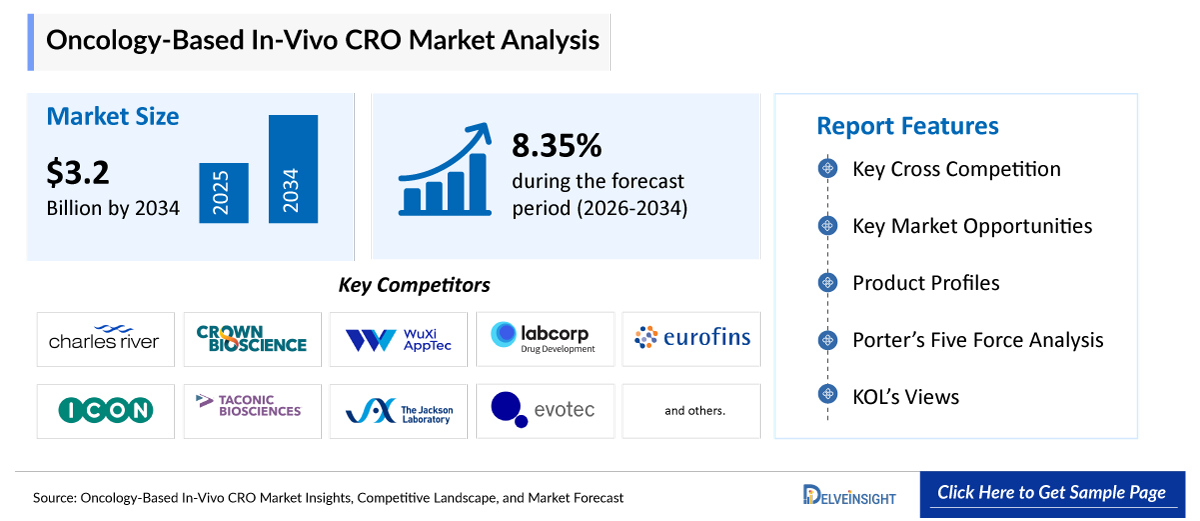
- The Global Oncology-Based In-Vivo CRO Market is expected to increase from USD 1,579.52 million in 2025 to USD 3,236.29 million by 2034, reflecting strong and sustained growth.
- The Global Oncology-Based In-Vivo CRO Market is growing at a CAGR of 8.35% during the forecast period from 2026 to 2034.
Oncology-Based In-Vivo CRO Market Size and Forecasts
- The increasing global incidence of cancer, highlighted by organizations such as the World Health Organization, is creating a strong and sustained demand for new and more effective oncology therapies, which in turn is directly expanding the need for preclinical in vivo testing services. As more patients are diagnosed across both solid tumors and hematological malignancies, pharmaceutical and biotechnology companies are rapidly accelerating their R&D efforts, leading to the continuous expansion of oncology drug pipelines.
- Regulatory momentum from authorities like the U.S. Food and Drug Administration further reflects this surge, with a growing number of oncology candidates progressing toward clinical trials, each requiring robust in vivo validation. At the same time, advancements in tumor models, particularly Patient-Derived Xenograft (PDX) and humanized mouse models developed by companies such as Crown Bioscience and Champions Oncology, are significantly improving the predictive accuracy and translational relevance of preclinical studies. These advanced models better replicate human tumor biology and immune responses, making them indispensable for evaluating modern therapies like immuno-oncology and targeted treatments.
- Collectively, these factors are creating a reinforcing cycle, rising cancer burden drives drug discovery, expanding pipelines increase the volume of compounds requiring testing, and improved model technologies enhance the reliability of outcomes, thereby substantially boosting the overall demand and growth of the oncology-based in-vivo CRO market.
- The leading Oncology-Based In-Vivo CRO Companies include Charles River Laboratories, Crown Bioscience, WuXi AppTec, Labcorp Drug Development, Eurofins Scientific, ICON plc, Taconic Biosciences, The Jackson Laboratory, Evotec SE, Champions Oncology, MI Bioresearch, Xentech, Syneos Health, IQVIA, Medpace, Pentagrit, and Inotiv, and others.
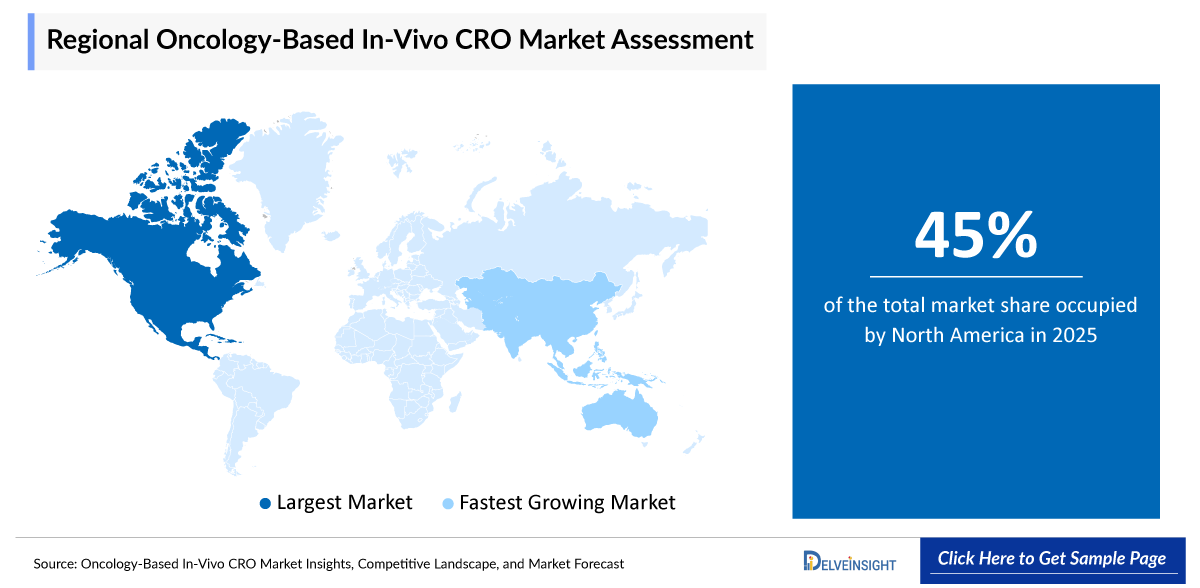
- North America is expected to dominate the oncology-based in-vivo CRO market due to the strong presence of leading CROs such as Charles River Laboratories and Labcorp Drug Development, along with a well-established pharmaceutical and biotechnology ecosystem. The region benefits from high oncology R&D investments supported by organizations like the National Institutes of Health, a rapidly expanding oncology drug pipeline, and early adoption of advanced tumor models such as PDX and humanized systems. Additionally, a strong regulatory framework led by the U.S. Food and Drug Administration and increasing outsourcing of preclinical research further contribute to the region’s market dominance.
- In the indication segment of the oncology-based in-vivo CRO market, the solid tumors category is estimated to account for the largest market share in 2025.
Request for unlocking the report of the @ Oncology-Based In-Vivo CRO Market
Oncology-Based In-Vivo CRO Market Size and Forecasts
|
Report Metrics |
Details |
|
2025 Oncology-Based In-Vivo CRO Market Size | |
|
2034 Projected Oncology-Based In-Vivo CRO Market Size | |
|
Oncology-Based In-Vivo CRO Growth Rate (2026-2034) | |
|
Largest Oncology-Based In-Vivo CRO Market |
North America |
|
Fastest Growing Oncology-Based In-Vivo CRO Market |
Asia-Pacific |
|
Market Structure |
Moderately Concentrated |
Factors Contributing to the Growth of the Oncology-Based In-Vivo CRO Market
-
The increasing incidence of cancer worldwide is leading to a surge in oncology-based in-vivo CRO
The increasing incidence of cancer worldwide is one of the strongest drivers for oncology-based in-vivo CRO services. According to organizations like the World Health Organization, cancer cases continue to grow due to aging populations, lifestyle changes, and environmental factors. This surge is pushing pharmaceutical and biotechnology companies to accelerate oncology drug development, thereby increasing demand for in vivo preclinical testing services to evaluate drug efficacy and safety before clinical trials.
-
The rapid expansion of oncology drug pipelines
The rapid expansion of oncology drug pipelines, especially in targeted therapies, immunotherapies, and precision medicine, is significantly boosting the demand for specialized in-vivo CRO services. Regulatory bodies such as the U.S. Food and Drug Administration have also been approving a higher number of oncology drugs annually, which reflects increased R&D activity. Each drug candidate requires extensive in vivo validation, driving outsourcing to CROs with advanced tumor models.
-
Advancements in tumor models (PDX, Humanized Models)
Technological advancements in in-vivo tumor models, such as Patient-Derived Xenograft (PDX) and humanized mouse models, are enhancing the predictive accuracy of preclinical studies. Companies like Crown Bioscience and Champions Oncology are leading in developing clinically relevant models that better mimic human tumor biology. These innovations are increasing reliance on CROs that can offer sophisticated and translationally relevant in-vivo platforms.
What are the latest Oncology-Based In-Vivo CRO Market Dynamics and Trends?
The growth of the oncology-based in-vivo CRO market is being significantly boosted by the increasing incidence of solid tumors such as lung cancer, breast cancer, prostate cancer, colorectal cancer, among others, and the blood cancer such as Leukemia and Lymphoma.
According to the data provided by the Global Burden of Disease (2026), new breast cancer cases in women were predicted to rise by a third globally from 2.3 million in 2023 to more than 3.5 million by 2050.
Additionally, according to the data provided by the International Agency for Research on Cancer (2026), the estimated new cases of prostate cancer would rise to 18,29,988 by 2030 globally. The rising incidence and clinical complexity of breast and prostate cancers are significantly boosting the Oncology-Based In-Vivo CRO market by driving sustained demand for preclinical testing services.
Breast cancer, one of the most commonly diagnosed cancers globally, and prostate cancer, a leading cancer type among men, are both characterized by high patient populations and diverse molecular subtypes, which require continuous development of targeted and personalized therapies. This has led to a strong expansion in oncology drug pipelines, particularly in areas such as hormone therapies, targeted treatments, and immuno-oncology.
As a result, pharmaceutical and biotechnology companies increasingly rely on in-vivo CROs to evaluate these therapies using advanced tumor models like xenografts, patient-derived xenografts (PDX), and humanized systems that can accurately mimic disease biology. Additionally, the need to study drug resistance, metastasis, and long-term efficacy in these cancers further intensifies the use of in vivo models. Collectively, the high prevalence, ongoing innovation, and complex treatment landscape of breast and prostate cancers are driving greater outsourcing of preclinical research, thereby accelerating the Oncology-Based In-Vivo CRO Market Growth.
Additionally, the rapid expansion of oncology drug pipelines is a major force accelerating the growth of the oncology-based in-vivo CRO market, as an increasing number of drug candidates require robust preclinical validation before entering clinical trials.
Pharmaceutical and biotech companies are actively investing in innovative cancer therapies, including targeted drugs, immunotherapies, and cell-based treatments, which significantly increases the volume and complexity of compounds that must be tested in live animal models. This surge in pipeline activity directly drives outsourcing to specialized CROs that can deliver advanced in-vivo efficacy, PK/PD, and toxicity studies.
For instance, in May 2025, Crown Bioscience entered a strategic collaboration with Jiangsu Hengrui Medicine to co-develop and validate PDX models, strengthening preclinical support for oncology drug discovery. Thus, the factors mentioned above are expected to boost the overall market of oncology-based in-vivo CRO market during the forecast period.
However, the high cost of in-vivo studies and stringent ethical and animal welfare regulations are key factors limiting the growth of the oncology-based in-vivo CRO market. Advanced oncology models such as PDX and humanized mice require significant investment in animal procurement, specialized facilities, and skilled personnel, making studies expensive and less accessible, especially for small and mid-sized biotech firms.
At the same time, strict oversight by bodies like the Institutional Animal Care and Use Committee enforces rigorous protocols for animal handling and experimentation, which increases approval timelines, administrative burden, and operational costs. Together, these factors slow down study initiation, reduce flexibility in research, and can discourage extensive use of in-vivo CRO services, thereby acting as a restraint on overall market growth.
Oncology-Based In-Vivo CRO Market Report Segmentation
This oncology-based in-vivo CRO market report offers a comprehensive overview of the global oncology-based in-vivo CRO market, highlighting key trends, growth drivers, challenges, and opportunities. It covers detailed market segmentation by Indication (Solid Tumors, Blood Cancer, and Others), Model Type (Xenograft Models, Patient-Derived Xenograft (PDX) Models, Syngeneic Models, and Others), Animal Model (Rodent Models and Non-Rodent Models), End-Users (Pharmaceutical Companies, Biotechnology Companies, and Others), and geography.
The Oncology-Based In-Vivo CRO Market Report provides valuable insights into the competitive landscape, regulatory environment, and market dynamics across major markets, including North America, Europe, and Asia-Pacific. Featuring in-depth profiles of leading industry players and recent product innovations, this report equips businesses with essential data to identify market potential, develop strategic plans, and capitalize on emerging opportunities in the rapidly growing oncology-based in-vivo CRO market.
An oncology-based in-vivo CRO is a specialized contract research organization that conducts preclinical cancer studies in live animal models to evaluate the safety, efficacy, and biological behavior of new oncology drugs before they enter human clinical trials. The increasing global incidence of cancer, highlighted by organizations such as the World Health Organization, is creating a strong and sustained demand for new and more effective oncology therapies, which in turn is directly expanding the need for preclinical in vivo testing services.
As more patients are diagnosed across both solid tumors and hematological malignancies, pharmaceutical and biotechnology companies are rapidly accelerating their R&D efforts, leading to the continuous expansion of oncology drug pipelines. Regulatory momentum from authorities like the U.S. Food and Drug Administration further reflects this surge, with a growing number of oncology candidates progressing toward clinical trials, each requiring robust in vivo validation.
At the same time, advancements in tumor models, particularly Patient-Derived Xenograft (PDX) and humanized mouse models developed by companies such as Crown Bioscience and Champions Oncology, are significantly improving the predictive accuracy and translational relevance of preclinical studies.
These advanced models better replicate human tumor biology and immune responses, making them indispensable for evaluating modern therapies like immuno-oncology and targeted treatments. Collectively, these factors are creating a reinforcing cycle, rising cancer burden drives drug discovery, expanding pipelines increase the volume of compounds requiring testing, and improved model technologies enhance the reliability of outcomes, thereby substantially boosting the overall demand and growth of the oncology-based in-vivo CRO market.
Get More Insights into the Report @ Oncology-Based In-Vivo CRO Market
Oncology-Based In-Vivo CRO Market Segment Analysis
Oncology-Based In-Vivo CRO Market by Indication (Solid Tumors, Blood Cancer, and Others), Model Type (Xenograft Models, Patient-Derived Xenograft (PDX) Models, Syngeneic Models, and Others), Animal Model (Rodent Models and Non-Rodent Models), End-Users (Pharmaceutical Companies, Biotechnology Companies, and Others), and Geography (North America, Europe, Asia-Pacific, and Rest of the World).
-
Oncology-Based In-Vivo CRO Market Segmentation By Indication
Solid tumors under the segment indication are expected to dominate the market with the largest revenue share
In the indication segment of the oncology-based in-vivo CRO market, the solid tumors category is contributing to 48% of total market revenue in 2025, due to its high global prevalence, extensive drug development activity, and strong demand for preclinical validation. Solid tumors, including breast, lung, colorectal, and prostate cancers, account for the largest share of oncology cases worldwide, which directly translates into a higher volume of drug candidates requiring in vivo testing.
This dominance is further reinforced by the fact that solid tumors require complex evaluation of tumor microenvironment, metastasis, and treatment response, making advanced in vivo models such as PDX and orthotopic xenografts essential. Leading CROs like Crown Bioscience and Charles River Laboratories are actively expanding their solid tumor model portfolios to meet this demand; for instance, Crown Bioscience reported in December 2025 the increasing integration of high-fidelity translational models and antibody drug conjugate (ADC) research to support solid tumor drug development pipelines.
Similarly, companies such as WuXi AppTec and Champions Oncology have continued expanding their PDX and immuno-oncology capabilities in recent years to support the growing number of solid tumor-focused therapies. Additionally, the surge in precision medicine and biomarker-driven treatments has further increased reliance on in-vivo CROs for solid tumor studies, as these cancers often require patient-specific modeling approaches. Collectively, the high incidence, complex biology, and continuous innovation in solid tumor therapies are driving disproportionate demand for in-vivo CRO services, thereby ensuring the segment’s dominance in the overall market.
-
Oncology-Based In-Vivo CRO Market Segmentation By Model Type
Xenograft models category dominates the market
Within the model type segment of the oncology-based in-vivo CRO market, the xenograft models category is anticipated to dominate, accounting for around 47% of the market share in 2025, due to their strong balance of biological relevance, scalability, and cost-efficiency in preclinical cancer research.
These models, which involve implanting human tumor cells into immunocompromised animals, are widely regarded as the industry standard for evaluating anti-cancer drug efficacy, tumor growth inhibition, and combination therapies. Their dominance is further supported by the availability of both cell line-derived xenograft (CDX) and more advanced patient-derived xenograft (PDX) models, enabling researchers to study a broad spectrum of tumor types with varying complexity.
Compared to other model types, xenografts offer relatively faster study timelines and are easier to standardize, making them highly suitable for high-throughput screening of large oncology drug pipelines. Additionally, their ability to provide reproducible and quantifiable results has made them a preferred choice for regulatory submissions and early-stage decision-making.
As pharmaceutical and biotechnology companies continue to expand their oncology pipelines and demand rapid yet reliable preclinical validation, the reliance on xenograft-based studies is increasing, thereby driving their dominance within the model type segment of the oncology-based in-vivo CRO market.
-
Oncology-Based In-Vivo CRO Market By Animal Model
Rodent models category dominates the market
Within the animal model segment of the oncology-based in-vivo CRO market, the rodent model category is anticipated to dominate, accounting for around 79% of the market share in 2025, due to its strong scientific relevance, cost efficiency, and widespread acceptance in preclinical oncology research. Rodents are extensively used because they share significant genetic, biological, and disease pathway similarities with humans, enabling reliable evaluation of tumor growth, drug efficacy, and toxicity.
Additionally, their small size, rapid breeding cycle, and ease of genetic manipulation, especially with technologies like CRISPR make them ideal for large-scale and high-throughput oncology testing. The growing complexity of cancer therapies, particularly in immuno-oncology and precision medicine, has further increased reliance on advanced rodent models such as humanized mice and genetically engineered mouse models (GEMMs), which offer improved translational relevance.
Recent company-specific developments further highlight this dominance
For instance, genOway announced its “Route 50+” strategic growth plan in December 2025, focusing on expanding its portfolio of genetically engineered mouse and rat models to support oncology and immunotherapy research. Similarly, major CROs like Charles River Laboratories, Taconic Biosciences, and The Jackson Laboratory have been continuously investing in advanced rodent model development, including humanized and transgenic mice, to meet the rising demand for predictive preclinical platforms. Moreover, industry data indicate that rodents account for a dominant share of in-vivo CRO usage due to their extensive application across oncology studies and regulatory acceptance.
Collectively, the combination of biological relevance, scalability, technological advancements, and continuous investment by leading CROs ensures that rodent models remain the cornerstone of oncology in vivo research, thereby driving their dominance within the animal model segment of the oncology-based in vivo CRO market.
-
Oncology-Based In-Vivo CRO Market By End-Users
The pharmaceutical companies category dominates the market
In the end-user segment of the oncology-based in-vivo CRO market, the pharmaceutical companies category dominates the market due to their large-scale investment in oncology drug development and continuous expansion of cancer therapy pipelines. Pharmaceutical companies are actively engaged in developing novel treatments, including targeted therapies, immunotherapies, and combination drugs, all of which require extensive in vivo preclinical validation before entering clinical trials.
This creates a strong and consistent demand for CRO services to conduct efficacy, toxicity, and PK/PD studies. Additionally, many pharmaceutical firms prefer outsourcing these complex and resource-intensive studies to specialized CROs such as Charles River Laboratories and WuXi AppTec to reduce operational costs, accelerate timelines, and access advanced tumor models and technical expertise.
Furthermore, stringent regulatory requirements for preclinical data and the need for faster drug approval timelines push pharmaceutical companies to rely heavily on external partners. Collectively, high R&D spending, robust oncology pipelines, and increasing outsourcing trends are key factors driving the dominance of pharmaceutical companies within this segment.
Oncology-Based In-Vivo CRO Market Regional Analysis
-
North America Oncology-Based In-Vivo CRO Market Trends
North America is expected to account for the highest proportion of 45% of the oncology-based in-vivo CRO market in 2025, out of all regions. North America is expected to dominate the oncology-based in-vivo CRO market due to the strong presence of leading CROs such as Charles River Laboratories and Labcorp Drug Development, along with a well-established pharmaceutical and biotechnology ecosystem.
The region benefits from high oncology R&D investments supported by organizations like the National Institutes of Health, a rapidly expanding oncology drug pipeline, and early adoption of advanced tumor models such as PDX and humanized systems. Additionally, a strong regulatory framework led by the U.S. Food and Drug Administration and increasing outsourcing of preclinical research further contribute to the region’s market dominance.
According to the data provided by the American Cancer Society (2026), about 229,410 new cases of lung cancer (110,910 in men and 118,500 in women) are projected to occur in the United States in 2026.
Additionally, according to the data provided by the Breast Cancer Organization (2026), breast cancer was the most common cancer diagnosed among women in the U.S. Each year, about 32% of all newly diagnosed cancers in women were breast cancer. These cancers represent some of the most commonly diagnosed and high-mortality indications globally, leading to a strong expansion of drug development pipelines, particularly in targeted therapies and immuno-oncology.
As a result, pharmaceutical and biotechnology companies increasingly rely on in-vivo CROs to evaluate these therapies using advanced tumor models such as xenografts and patient-derived xenografts (PDX). Additionally, the need to study tumor heterogeneity, metastasis, and drug resistance in these cancers further increases the use of in vivo testing.
Advancements in tumor models, particularly patient-derived xenograft (PDX) and humanized mouse models, are significantly boosting the oncology-based in-vivo CRO market in North America by enhancing the predictive accuracy and clinical relevance of preclinical studies. These advanced models better replicate human tumor biology, genetic heterogeneity, and immune system interactions, making them essential for evaluating modern therapies such as immuno-oncology drugs, targeted therapies, and cell & gene treatments.
As a result, pharmaceutical and biotechnology companies are increasingly outsourcing to CROs that offer these sophisticated capabilities.
For instance, in January 2026, Charles River Laboratories joined the EU-backed EASYGEN Consortium to improve CAR-T therapy delivery by developing an automated, hospital-based platform aimed at producing treatments within 24 hours, reducing delays associated with centralized manufacturing. As part of this initiative, the company contributed its expertise through a 3D ex vivo screening platform, utilizing its patient-derived xenograft (PDX) model biobank and advanced imaging technologies. This approach enabled earlier insights, improved workflow efficiency, and supported the rapid optimization and safety evaluation of CAR-T candidates during the preclinical phase.
However, in January 2026, Taconic Biosciences announced the acquisition of TransCure BioServices SAS, a provider of preclinical research services using humanized immune system (HIS) mouse models. This acquisition enabled Taconic to establish a unified global platform offering end-to-end solutions, including humanized models, cohort generation, and in vivo studies. The integration combined Taconic’s expertise in genetically engineered and humanized mouse models with TransCure’s capabilities in translational pharmacology, immune profiling, and advanced imaging, thereby enhancing support for oncology and immuno-oncology research.
Thus, the factors mentioned above are expected to boost the overall market of oncology-based in-vivo CRO during the forecast period.
-
Europe Oncology-Based In-Vivo CRO Market Trend
The oncology-based in-vivo CRO market in Europe is witnessing strong and sustained growth, driven by a combination of rising cancer burden, increasing outsourcing trends among pharmaceutical and biotechnology companies, and the region’s well-established research infrastructure. According to the data provided by the International Agency for Research on Cancer (2026), the estimated new cases of blood cancer (leukaemia) would rise to 1,16,636 by 2030 in Europe.
This growth is largely fueled by the growing complexity of oncology drug pipelines, which increasingly require advanced in-vivo models such as xenograft and patient-derived xenograft (PDX) systems to evaluate efficacy, toxicity, and translational relevance. Additionally, European pharmaceutical companies are increasingly outsourcing in-vivo studies to CROs to reduce operational costs, accelerate timelines, and leverage specialized expertise, rather than maintaining expensive in-house facilities.
The region also benefits from strong government and EU-level funding initiatives such as Horizon Europe and other public-private partnerships, which support translational oncology research and create continuous demand for CRO services. Countries like Germany, the UK, and France are leading contributors due to favorable regulatory frameworks, high R&D investments, and the presence of major CRO players such as Charles River Laboratories, Eurofins Scientific, Evotec SE, and ICON plc.
Furthermore, Europe’s strict regulatory standards and ethical frameworks for animal studies enhance the credibility and global acceptance of preclinical data, making the region a preferred outsourcing destination despite relatively higher costs. The increasing focus on personalized medicine, immuno-oncology, and targeted therapies is also driving demand for sophisticated in-vivo oncology models, further strengthening market expansion. Overall, the convergence of scientific innovation, regulatory rigor, collaborative research ecosystems, and strategic outsourcing is enabling the European oncology in-vivo CRO market to maintain consistent and long-term growth momentum.
-
Asia-Pacific Oncology-Based In-Vivo CRO Market Trends
The Asia Pacific (APAC) region is emerging as a major growth driver for the Oncology-Based In-Vivo CRO (CDMO) market due to a compelling mix of cost advantages, expanding pharmaceutical and biotechnology ecosystems, and rapidly improving research infrastructure. Countries such as China, India, Japan, and South Korea are witnessing significant growth in oncology research activities, driven by rising cancer incidence and increasing demand for novel therapeutics.
The region offers substantial cost efficiency compared to Western markets, encouraging global pharmaceutical companies to outsource preclinical oncology studies, including in vivo testing, to APAC-based CROs and CDMOs. Additionally, governments across APAC are actively supporting life sciences through funding initiatives, regulatory reforms, and the establishment of biotech parks and innovation hubs, which are accelerating drug discovery and development.
The presence of a large patient pool and diverse genetic populations also enhances the relevance of oncology research conducted in the region, particularly for translational and personalized medicine studies. Moreover, the growing expertise of regional players such as WuXi AppTec, Pharmaron, and Syngene International in advanced in-vivo models, including xenograft and patient-derived xenograft (PDX) systems, has strengthened APAC’s position as a competitive outsourcing destination. Strategic collaborations, increasing clinical trial activity, and the integration of AI and digital tools in preclinical research further support market expansion, making APAC one of the fastest-growing regions in the global oncology in-vivo CRO (CDMO) landscape.
Who are the major players in the Oncology-Based In-Vivo CRO Market?
Oncology-Based In-Vivo CRO Companies
- Charles River Laboratories
- Crown Bioscience
- WuXi AppTec
- Labcorp Drug Development
- Eurofins Scientific
- ICON plc
- Taconic Biosciences
- The Jackson Laboratory
- Evotec SE
- Champions Oncology
- MI Bioresearch
- Xentech
- Syneos Health
- IQVIA
- Medpace
- Pentagrit
- Inotiv
- Others
How is the competitive landscape shaping the Oncology-Based In-Vivo CRO Market?
The competitive landscape of the oncology-based in-vivo CRO market is becoming increasingly dynamic and intense, shaped by a mix of large global CROs, specialized niche players, and emerging regional firms competing on innovation, scale, and service differentiation. Established leaders such as Charles River Laboratories, Labcorp Drug Development, ICON plc, and Eurofins Scientific dominate the market with extensive global infrastructure, integrated service portfolios, and strong expertise in oncology research, allowing them to secure long-term contracts with major pharmaceutical companies.
At the same time, specialized players like Crown Bioscience and Taconic Biosciences are gaining traction by focusing on advanced in-vivo models such as patient-derived xenografts (PDX) and genetically engineered mouse models, enabling them to compete through scientific depth and niche capabilities.
The Oncology-Based In-Vivo CRO Market is also witnessing a rise in mergers, acquisitions, and strategic partnerships as companies seek to expand their geographic reach, enhance technological capabilities, and strengthen their oncology service offerings, which is further intensifying competition and consolidation trends. Additionally, increasing outsourcing by pharmaceutical and biotech firms, driven by cost pressures and the need for faster drug development, has lowered entry barriers for mid-sized and regional CROs, making the market more fragmented yet highly competitive.
Technological advancements, including AI-driven analytics, automation, and digital platforms, are also emerging as key differentiators among competitors, pushing companies to continuously innovate to maintain their market position. Overall, the competitive landscape is evolving toward a balance between large full-service CROs leveraging scale and smaller specialized firms offering high-value, oncology-focused expertise, creating a highly competitive and innovation-driven market environment.
Oncology-Based In-Vivo CRO Market Recent Breakthroughs and Developments
- In January 2026, Taconic Biosciences announced the acquisition of TransCure BioServices SAS, a provider of preclinical research services using humanized immune system (HIS) mouse models. This acquisition enabled Taconic to establish a unified global platform offering end-to-end solutions, including humanized models, cohort generation, and in vivo studies. The integration combined Taconic’s expertise in genetically engineered and humanized mouse models with TransCure’s capabilities in translational pharmacology, immune profiling, and advanced imaging, thereby enhancing support for oncology and immuno-oncology research.
- In January 2026, Charles River Laboratories joined the EU-backed EASYGEN Consortium to improve CAR-T therapy delivery by developing an automated, hospital-based platform aimed at producing treatments within 24 hours, reducing delays associated with centralized manufacturing. As part of this initiative, the company contributed its expertise through a 3D ex vivo screening platform, utilizing its patient-derived xenograft (PDX) model biobank and advanced imaging technologies.
- In May 2025, Crown Bioscience entered a strategic collaboration with Jiangsu Hengrui Medicine to co-develop and validate PDX models, strengthening preclinical support for oncology drug discovery.
- In March 2025, Thermo Fisher Scientific expanded its oncology capabilities by acquiring Cognate BioServices, enhancing its PDX modeling and cell therapy development platform.
|
Report Metrics |
Details |
|
Study Period |
2023 to 2034 |
|
Base Year |
2025 |
|
Forecast Period |
2026 to 2034 |
|
Human Papillomavirus Vaccines Market CAGR | |
|
Key Companies in the Human Papillomavirus Vaccines Market |
Charles River Laboratories, Crown Bioscience, WuXi AppTec, Labcorp Drug Development, Eurofins Scientific, ICON plc, Taconic Biosciences, The Jackson Laboratory, Evotec SE, Champions Oncology, MI Bioresearch, Xentech, Syneos Health, IQVIA, Medpace, Pentagrit, Inotiv, and others. |
|
Human Papillomavirus Vaccines Market Segments |
by Indication, by Model Type, by Animal Model, by End-Users, and by Geography |
|
Human Papillomavirus Vaccines Regional Scope |
North America, Europe, Asia Pacific, Middle East, Africa, and South America |
|
Human Papillomavirus Vaccines Country Scope |
U.S., Canada, Mexico, Germany, United Kingdom, France, Italy, Spain, China, Japan, India, Australia, South Korea, and key Countries |
Oncology-Based In-Vivo CRO Market Segmentation
- Oncology-Based In-Vivo CRO by Indication Exposure
- Solid Tumors
- Blood Cancer
- Others
- Oncology-Based In-Vivo CRO Model Type Exposure
- Xenograft Models
- Patient-Derived Xenograft (PDX) Models
- Syngeneic Models
- Others
- Oncology-Based In-Vivo CRO Animal Model Exposure
- Rodent Models
- Non-Rodent Models
- Oncology-Based In-Vivo CRO End-Users Exposure
- Pharmaceutical Companies
- Biotechnology Companies
- Others
- Oncology-Based In-Vivo CRO Geography Exposure
- North America Oncology-Based In-Vivo CRO Market
- United States Oncology-Based In-Vivo CRO Market
- Canada Oncology-Based In-Vivo CRO Market
- Mexico Oncology-Based In-Vivo CRO Market
- Europe Oncology-Based In-Vivo CRO Market
- United Kingdom Oncology-Based In-Vivo CRO Market
- Germany Oncology-Based In-Vivo CRO Market
- France Oncology-Based In-Vivo CRO Market
- Italy Oncology-Based In-Vivo CRO Market
- Spain Oncology-Based In-Vivo CRO Market
- Rest of Europe Oncology-Based In-Vivo CRO Market
- Asia-Pacific Oncology-Based In-Vivo CRO Market
- China Oncology-Based In-Vivo CRO Market
- Japan Oncology-Based In-Vivo CRO Market
- India Oncology-Based In-Vivo CRO Market
- Australia Oncology-Based In-Vivo CRO Market
- South Korea Oncology-Based In-Vivo CRO Market
- Rest of Asia-Pacific Oncology-Based In-Vivo CRO Market
- Rest of the World Oncology-Based In-Vivo CRO Market
- South America Oncology-Based In-Vivo CRO Market
- Middle East Oncology-Based In-Vivo CRO Market
- Africa Oncology-Based In-Vivo CRO Market
- North America Oncology-Based In-Vivo CRO Market
Oncology-Based In-Vivo CRO Market Recent Industry Trends and Milestones (2023-2026)
|
Category |
Key Developments |
|
Oncology-Based In-Vivo CRO Product Collaboration |
Crown Bioscience entered a strategic collaboration with Jiangsu Hengrui Medicine to co-develop and validate PDX models, strengthening preclinical support for oncology drug discovery. |
|
Oncology-Based In-Vivo CRO Product Acquisition |
Taconic Biosciences announced the acquisition of TransCure BioServices SAS, a provider of preclinical research services using humanized immune system (HIS) mouse models. |
|
Company Strategy |
Charles River Laboratories
Crown Bioscience
|
|
Emerging Technology |
Patient-Derived Xenograft (PDX) Models, Humanized Mouse Models (HIS Models), Genetically Engineered Mouse Models (GEMMs) & CRISPR Technologies, Syngeneic and Orthotopic Tumor Models, Tumor Microenvironment (TME) Modeling & 3D In-Vivo Systems, and others |
Impact Analysis
AI-Powered Innovations and Applications:
AI-powered innovations are rapidly transforming the oncology-based in-vivo CRO market by enhancing the precision, efficiency, and predictive power of preclinical cancer research. Advanced machine learning and deep learning algorithms are increasingly used to design optimized in-vivo studies, predict drug efficacy, and identify potential toxicities before clinical trials, significantly reducing time and cost.
AI also plays a crucial role in biomarker discovery and multi-omics data integration, where large datasets from genomics, proteomics, and transcriptomics are analyzed to identify patient-specific therapeutic targets and improve translational accuracy. In addition, AI-driven digital pathology and image analysis enable automated interpretation of histopathology slides and in vivo imaging data (such as MRI and PET scans), allowing CROs to monitor tumor progression and treatment response in real time with higher accuracy.
Another key application is the use of AI in predictive modeling of tumor behavior and drug response, particularly in advanced models like patient-derived xenografts (PDX) and humanized mouse systems, helping researchers simulate clinical outcomes more reliably. Furthermore, AI supports workflow automation and smart lab operations, streamlining data management, reducing human error, and improving reproducibility across studies.
Some CROs are also integrating AI into virtual screening and in-silico modeling platforms, which complement in-vivo experiments by narrowing down promising drug candidates before animal testing. Overall, AI is enabling oncology CROs to shift toward data-driven, faster, and more cost-efficient drug development processes, while also supporting the broader transition toward precision oncology and reduced animal usage.
U.S. Tariff Impact Analysis on Oncology-Based In-Vivo CRO Market
The U.S. tariff environment is having a notable but indirect impact on the Oncology-Based In-Vivo CRO Market, primarily through cost pressures, supply chain disruptions, and strategic shifts in outsourcing and research operations. Recent U.S. tariff policies, such as up to 100% tariffs on patented pharmaceuticals and associated inputs, with partial exemptions for certain regions and generics, are increasing the cost of imported drugs, reagents, and comparator materials used in preclinical and translational oncology studies.
Since oncology in-vivo CROs heavily rely on such imported materials for tumor models, toxicology studies, and efficacy testing, these tariffs are raising operational costs and forcing CROs to renegotiate contracts, diversify suppliers, and adopt dual-sourcing strategies. Additionally, tariffs are creating budget inflation in drug development programs, particularly in early-stage and preclinical research, which may delay project timelines or reduce the number of outsourced studies.
At the same time, broader tariffs on life sciences imports are further disrupting global supply chains and increasing procurement complexity for CROs and sponsors. However, these challenges are also driving strategic realignment in the market, including increased localization of research activities in the U.S., greater reliance on domestic CROs, and restructuring of global outsourcing models.
Moreover, pharmaceutical companies are incorporating tariff-risk clauses, scenario-based budgeting, and supply chain mapping into CRO agreements to mitigate uncertainty. Overall, while U.S. tariffs introduce cost and operational challenges for oncology in-vivo CROs, they are simultaneously reshaping the competitive and outsourcing landscape by accelerating regionalization, supply chain resilience strategies, and more flexible CRO engagement models.
How This Analysis Helps Clients
- Cost Management: By understanding the tariff landscape, clients can anticipate cost increases and adjust pricing strategies accordingly, ensuring profitability.
- Supply Chain Optimization: Clients can identify alternative sourcing options and diversify their supply chains to reduce dependency on high-tariff regions, enhancing resilience.
- Regulatory Navigation: Expert guidance on navigating the evolving regulatory environment helps clients maintain compliance and avoid potential legal challenges.
- Strategic Planning: Insights into tariff impacts enable clients to make informed decisions about manufacturing locations, partnerships, and market entry strategies.
Startup Funding & Investment Trends
|
Company Name |
Total Funding |
Stage of Development |
Main Product |
Core Technology |
|
Crown Bioscience |
$85.9 million |
- |
HuPrime PDX platform (patient-derived xenograft models) |
Large-scale PDX model libraries + translational oncology platforms enabling in vivo drug efficacy testing. |
Key Takeaways from the Oncology-Based In-Vivo CRO Market Report Study
- Market size analysis for the current oncology-based in-vivo CRO market size (2025), and market forecast for 8 years (2026 to 2034)
- Top key product/technology developments, mergers, acquisitions, partnerships, and joint ventures happened over the last 3 years.
- Key companies dominating the oncology-based in-vivo CRO market.
- Various opportunities available for the other competitors in the oncology-based in-vivo CRO market space.
- What are the top-performing segments in 2025? How these segments will perform in 2034?
- Which are the top-performing regions and countries in the current oncology-based in-vivo CRO market scenario?
- Which are the regions and countries where companies should have concentrated on opportunities for the oncology-based in-vivo CRO market growth in the future.
Stay updated with us for Recent Articles @ New DelveInsight Blogs

