AQNEURSA Leads a New Chapter in Ataxia-Telangiectasia as the Pipeline Faces Its Next Test
Oct 02, 2026
Table of Contents
Summary
- Ataxia-telangiectasia is a rare, progressive genetic disorder affecting an estimated 1 in 40,000–100,000 people worldwide.
- AQNEURSA received FDA approval on September 18, 2026, becoming the first and only approved treatment for ataxia in patients with ataxia-telangiectasia and marking the first disease-specific treatment milestone for ataxia-telangiectasia after decades without a dedicated therapy.
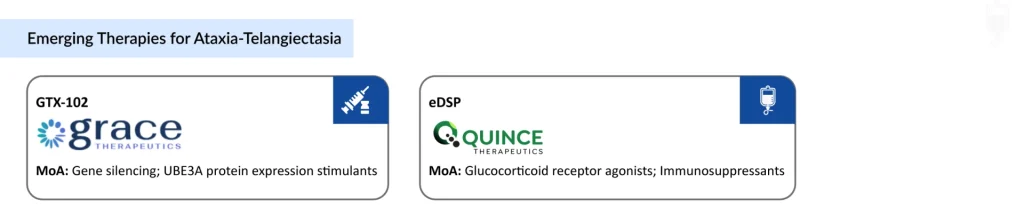
- Key companies, including Grace Therapeutics with GTX-102 and Quince Therapeutics with eDSP, along with other players, are advancing their respective candidates to compete with IntraBio’s AQNEURSA.
Ataxia-telangiectasia is one of those conditions that quietly upends entire families. It’s rare enough that most people have never heard of it, yet devastating enough that it touches nearly every system in the body: the nervous system, the immune system, and even cancer risk. Ataxia-telangiectasia affects an estimated 1 in 40,000 to 100,000 people worldwide. Onset is typically in early childhood, with balance and coordination problems often emerging around toddler age as children begin to walk.
Downloads
Click Here To Get the Article in PDF

For decades, families living with ataxia-telangiectasia had one option: watch, wait, and manage symptoms as best they could, because no therapy targeted the disease itself. That changed in September 2026. For the first time ever, anywhere in the world, a treatment has been approved specifically for ataxia in Ataxia-telangiectasia, a milestone that rare disease advocates, clinicians, and patient families have been waiting for for more than 60 years since the disorder was first described.
AQNEURSA Gets the Green Light: The First-Ever Approved Treatment for Ataxia-Telangiectasia
The U.S. Food and Drug Administration has approved IntraBio’s AQNEURSA (levacetylleucine) for oral suspension to treat ataxia in adults and pediatric patients with ataxia-telangiectasia weighing at least 15 kg (about 33 pounds). The approval was announced on September 18, 2026, and represents a watershed moment for a disease that has never had a dedicated therapy. AQNEURSA is now the first and only drug approved for the treatment of ataxia-telangiectasia anywhere in the world. This makes AQNEURSA the first treatment approved for ataxia in patients with ataxia-telangiectasia.
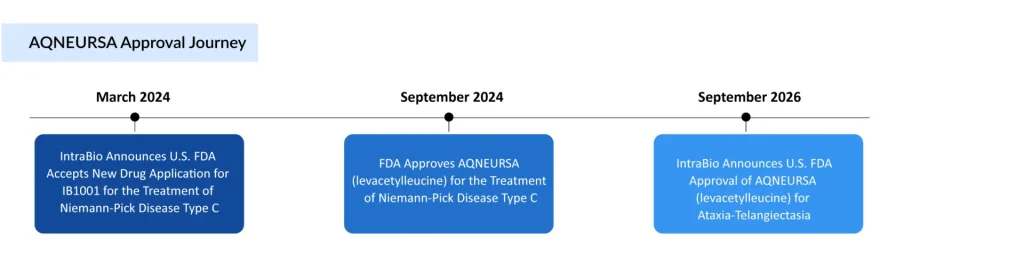
It’s worth noting this isn’t the drug’s first rodeo. AQNEURSA was previously approved in 2024 to treat the neurological manifestations of Niemann-Pick disease type C. The ataxia-telangiectasia indication marks the second FDA-approved use for the medicine. Levacetylleucine, the active ingredient, is a modified amino acid taken orally rather than infused or injected, a meaningful convenience factor for a patient population that already juggles many medical appointments.
The approval of AQNEURSA rests on a single pivotal trial, making it important to understand both what the study demonstrated and what its design could not establish. The approval is based on data from the Phase 3 IB1001-303 trial (NCT06673056), which evaluated AQNEURSA against placebo in 73 patients aged 4 to 50 years with genetically confirmed ataxia-telangiectasia. Conducted across 10 international sites, the study was designed as a pivotal, randomized, double-blind, placebo-controlled crossover trial, with results published in the July 2026 issue of The Lancet Neurology.
The trial met its primary and key secondary endpoints and demonstrated a favorable safety profile, with improvements in the signs and symptoms of ataxia and functional benefits becoming evident within 12 weeks of treatment. SARA (Scale for the Assessment and Rating of Ataxia) scores improved by a treatment difference of −1.9 points compared with placebo, while the FDA-assessed functional SARA (fSARA) also showed improvement, with a treatment difference of −0.6 points. The SARA improvement of −1.9 points versus placebo was statistically significant (P<.001), and the treatment effect was generally consistent across secondary endpoints and patient subgroups, with no meaningful difference in response observed between pediatric and adult patients.
However, the duration of the treatment assessment is an important consideration when interpreting these findings. Functional improvements were observed within the 12-week treatment window used in the crossover study, representing a relatively short follow-up period for a chronic and progressive disorder such as ataxia-telangiectasia. Consequently, the trial was not designed or powered to determine whether the observed benefits can be sustained over several years or whether AQNEURSA can meaningfully alter the underlying long-term trajectory of the disease.
From a tolerability perspective, commonly reported adverse reactions for the ataxia-telangiectasia indication include abdominal pain, dysphagia, upper respiratory tract infections, and vomiting. The prescribing information also advises against concomitant use with N-acetyl-DL-leucine or N-acetyl-D-leucine and recommends monitoring for adverse reactions when AQNEURSA is administered alongside P-glycoprotein substrate medications. In addition, for females of reproductive potential, the label recommends confirming pregnancy status before initiating treatment and using effective contraception during therapy and for seven days after treatment discontinuation.
Beyond AQNEURSA: What Else Is Happening in the Ataxia-Telangiectasia Pipeline?
AQNEURSA’s approval doesn’t mean the search for ataxia-telangiectasia treatments is over, far from it. Two other programs have been closely watched by the ataxia-telangiectasia community, with very different recent trajectories worth knowing about.
Grace Therapeutics’ GTX-102
GTX-102 is an oral mucosal spray of betamethasone designed to improve neurological symptoms of ataxia-telangiectasia, developed to be sprayed conveniently over the tongue of ataxia-telangiectasia patients, who often have difficulties swallowing. The FDA previously provided end-of-Phase-1 guidance on the design of a single pivotal efficacy and safety trial, including the neurological assessment scale to be used as the primary endpoint, that could, with appropriate confirmatory evidence, support a future new drug application.
However, the program’s momentum has since stalled. Grace Therapeutics has deprioritized further development of GTx-102 in favor of focusing on its lead asset, GTx-104, and as of June 2026, the company determined it would not resume internal development funding for GTx-102 under its current operating plan, concluding that the asset’s remaining carrying value was no longer recoverable on an internal-development basis. The company has indicated it is also possible that GTx-102 could be licensed or sold to another party rather than advanced in-house. In short: GTX-102 remains a scientifically interesting concept for ataxia-telangiectasia, but its near-term clinical future is currently uncertain.
Quince Therapeutics’ eDSP
eDSP, dexamethasone sodium phosphate encapsulated in autologous red blood cells, previously known as EryDex, was evaluated in the pivotal Phase 3 NEAT trial, an international, multicenter, randomized, double-blind, placebo-controlled study conducted under a Special Protocol Assessment agreement with the FDA, with treatment consisting of six infusions scheduled every 21 to 30 days.
Unfortunately, the results were disappointing. In the NEAT study, which randomized 105 participants, the primary endpoint, change from baseline to month six using the Rescored modified International Cooperative Ataxia Rating Scale (RmICARS) compared with placebo, did not reach statistical significance. The mean change from baseline to month six was 0.94 in the active arm compared with 2.24 in the placebo arm, a difference of −1.30, with a p-value of 0.0851. eDSP was generally well tolerated with no clinically meaningful safety concerns identified, but the primary and key secondary endpoints did not achieve statistical significance, and the company announced it would cease clinical development of eDSP for ataxia-telangiectasia, while working to preserve cash and explore other options.
This is an important reminder that rare-disease drug development is high-risk: for every approval like AQNEURSA’s, there are programs like eDSP’s that fall short in the final stretch, even after years of patient and family investment in clinical trial participation.
The Future Outlook for Ataxia-Telangiectasia Treatment
The approval of AQNEURSA is a genuine inflection point, not because it solves ataxia-telangiectasia, but because it finally gives clinicians and families a starting point that didn’t exist before. It establishes a regulatory and scientific precedent: ataxia-telangiectasia is now a disease with an approved, symptom-directed therapy, backed by a randomized controlled trial, an FDA label, and post-marketing obligations. That precedent matters for every company and researcher still working on the disease, including those whose earlier efforts, like eDSP, didn’t pan out.
Looking ahead, the field will likely focus on a few key questions: How durable is AQNEURSA’s benefit over years, not weeks? Will real-world use confirm the trial’s functional improvements across the full range of ataxia-telangiectasia severity? Will companies with paused or shelved programs, like GTX-102, find new partners or funding to pick the work back up? And will ataxia-telangiectasia future research start to move beyond symptom management toward therapies that address the ATM mutation itself, through gene therapy, small-molecule ATM modulation, or other disease-modifying approaches still in earlier stages of exploration?
For now, the ataxia-telangiectasia community has something it didn’t have a year ago: a real, FDA-approved treatment option, grounded in controlled clinical evidence, and a clearer signal that pharmaceutical investment in this rare disease is paying off. It’s not the finish line, but for families who have waited decades, it’s a real and hard-won first step.