Digital Migraine Treatment Devices: How Technology Is Rewriting the Rules of Migraine Care
Sep 30, 2026
Table of Contents
Migraine has always been treated as a pill problem. Take something, wait, and hope it works before the pain peaks. Digital migraine treatment devices are quietly upending that assumption, offering people a way to interrupt an attack or prevent one from building in the first place, using electrical, magnetic, or sensor-driven technology instead of a prescription pad alone. Digital migraine treatment devices are FDA-cleared or CE-marked medical technologies that use neuromodulation, sensors, software, or connected apps to treat or prevent migraine without relying on drugs as the primary mechanism. Most work by delivering a precisely calibrated electrical or magnetic pulse to a nerve pathway implicated in migraine, the trigeminal nerve, the vagus nerve, or peripheral sensory nerves in the arm, to interrupt the pain signaling and neuroinflammatory processes that drive an attack.
What separates these devices from a household TENS unit is specificity and clinical validation. They are engineered, dosed, and tested for the migraine brain, not general muscle or joint pain, and many pair the hardware with a companion app that logs attacks, tracks triggers, adjusts stimulation parameters, and shares data with a treating physician.
Downloads
Click Here To Get the Article in PDF

Recent Articles
- Neuroscience Highlights – 17/07/2018
- Teva’s AJOVY Expanded by FDA as First Anti-CGRP Preventive for Pediatric Episodic Migraine; NRx P...
- Potential of Digital therapeutics and increasing CVDs
- Migraine Market: How Pharma Companies are trying to Uncomplicate the Disease and Bring in Novel T...
- US approval to Lundbeck’s Vyepti for preventive migraine care; Esperion’s cholesterol-lowering dr...
The Global Migraine Burden: A Problem Too Big for Pills Alone
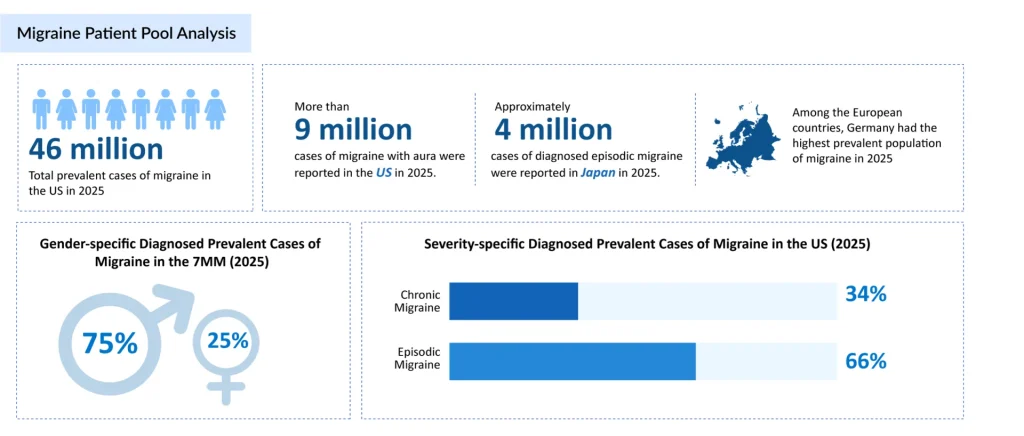
Migraine is not a niche complaint; it is one of the most disabling conditions in medicine, and one of the most under-treated. Migraine affects roughly one in seven people worldwide, making it one of the most common neurological disorders on the planet, with a disproportionate impact on women during their prime working and caregiving years. The total prevalent cases of migraine in the US accounted for the highest among the 7MM, with approximately 46 million cases in 2025, and are expected to show a steep rise soon due to improvements in diagnostic testing and an increasing population, as per DelveInsight.
Episodic migraine accounted for more than 2 million diagnosed cases of migraine in the UK population in 2025, and continues to cause significant issues to people’s lives and health. The pooled prevalence of migraine symptoms was marginally higher in women compared to men, with 35 million cases in women in 2025 in the US. Women are more likely to experience migraine with higher attack frequency and greater disability, whereas men are more likely to have lower attack prevalence but similar severity when affected.
The World Health Organization has repeatedly ranked migraine among the leading causes of years lived with disability globally, placing it in the same disability bracket as many chronic, life-altering conditions. Beyond the personal toll, migraine drains economies through absenteeism and “presenteeism”, people who show up to work but function at a fraction of capacity during an attack. Employers and health systems lose billions annually to missed workdays, reduced output, and disability claims tied to migraine.
A large share of people living with migraine either don’t respond adequately to available medications, can’t tolerate their side effects, are advised against certain drug classes (pregnancy, cardiovascular risk, medication-overuse concerns), or simply never receive a formal diagnosis and go untreated. This combination, high prevalence, high disability, high economic cost, and a persistent treatment gap, is exactly the vacuum digital migraine devices are stepping into.
The Rise of Non-Invasive, Drug-Free, Personalized Migraine Therapy
Three major shifts are converging to make digital devices increasingly mainstream in migraine management rather than niche solutions. First, growing patient demand for drug-free options is encouraging people to seek alternatives to long-term medication use, driven by concerns around medication dependence, side effects, and the risk of medication-overuse headache. At the same time, advances in miniaturization and wearable technology are making neuromodulation more accessible, with therapies that once required clinic-based equipment now being delivered through compact forehead patches, armbands, or lightweight headsets that can be worn during a commute or throughout the workday. Adding another layer of transformation, software-driven personalization is enabling apps and embedded algorithms to adjust stimulation parameters based on an individual’s response over time, effectively turning static devices into adaptive therapies that can become more tailored with continued use. Together, these forces are shifting migraine management away from a reactive, trial-and-error prescription model toward a more proactive, quantified, and personalized approach.
Types of Digital Migraine Treatment Devices
The digital migraine device landscape spans several distinct technology families, each targeting a different neural pathway or use case.
Transcutaneous Electrical Nerve Stimulation (TENS)
General-purpose TENS units deliver low-voltage electrical current through skin electrodes to modulate pain signaling. While originally designed for musculoskeletal pain, TENS principles laid the groundwork for the cranially-specific devices that followed, and some broader neuromodulation products still build on this base technology.
External Trigeminal Nerve Stimulation (eTNS)
eTNS devices apply an adhesive electrode to the forehead to stimulate branches of the trigeminal nerve, the primary pain pathway implicated in migraine. Unlike generic TENS, these are engineered with cranial-specific waveforms and intensities, and are used for both acute relief and daily preventive sessions.
Non-Invasive Vagus Nerve Stimulation (nVNS)
Handheld nVNS devices are placed against the neck to stimulate the cervical vagus nerve, which plays a role in modulating pain and inflammatory pathways linked to migraine and cluster headache. These devices are typically used at the onset of an attack and can also be used preventively on a scheduled basis.
Transcranial Magnetic Stimulation (TMS)
Single-pulse TMS devices deliver a brief magnetic pulse to the back of the head to disrupt the cortical spreading depression believed to underlie migraine with aura. TMS represents one of the earliest neuromodulation approaches to receive regulatory clearance for migraine.
Remote Electrical Neuromodulation (REN)
REN devices are worn on the upper arm rather than the head, stimulating peripheral sensory nerves to trigger the body’s own descending pain-inhibition pathways. This “remote” approach, treating away from the head entirely, has made REN especially popular for its discretion and its 45-minute app-guided sessions that work for both acute and preventive use.
Wearable Migraine-Treatment Devices
Beyond the categories above, a broader wave of wearables, headbands, arm cuffs, and multi-electrode headsets combine neuromodulation with continuous wear, allowing treatment to blend into daily life rather than requiring a dedicated clinical moment.
Smartphone-Connected and App-Enabled Migraine Devices
Nearly every modern device now ships with a companion app that controls stimulation intensity, logs attack frequency and duration, records potential triggers (sleep, weather, diet, stress), and generates reports clinicians can use to fine-tune a treatment plan, turning a single device into an ongoing feedback loop.
Digital Therapeutics and Biofeedback-Based Technologies
Software-only and biofeedback-based tools, including heart-rate-variability training, guided relaxation programs, and cognitive behavioral therapy delivered through an app, are increasingly classified as digital therapeutics for migraine, used either standalone or alongside a hardware device to address the stress and physiological triggers that compound attack frequency.
AI, Machine Learning, and Predictive-Analytics-Enabled Devices
The newest generation of devices layers artificial intelligence on top of neuromodulation hardware, analyzing accumulated attack data to predict oncoming migraines before symptoms fully develop, auto-adjust stimulation dose, and flag patterns worth a physician’s attention, shifting the category from reactive treatment to predictive, pre-emptive care.
Advantages of Digital Migraine Treatment Devices
Digital migraine treatment devices offer a non-invasive and increasingly convenient approach to managing migraine symptoms. These devices use technologies such as neuromodulation, electrical stimulation, or digital therapeutic interventions to target neural pathways associated with migraine. Unlike conventional medications, many of these solutions can reduce reliance on systemic drugs and may be particularly beneficial for patients who experience medication-related side effects, contraindications, or inadequate response to pharmacological treatments.
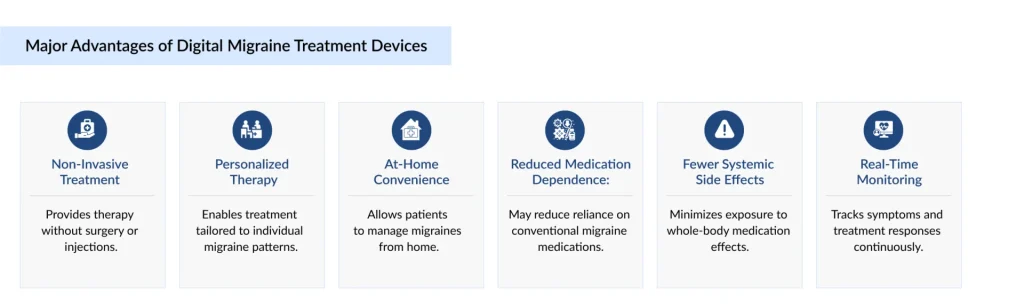
Another major advantage is personalized and patient-centric treatment. Several digital migraine devices can be used at home, allowing patients to administer therapy according to their individual needs without frequent clinical visits. Connected devices and companion applications may also help users monitor symptoms, treatment frequency, triggers, and outcomes, enabling better tracking of disease patterns. This combination of at-home accessibility and digital monitoring can improve treatment adherence and support more informed conversations between patients and healthcare providers.
Digital migraine treatment devices also have the potential to address the growing demand for convenient, drug-free, and preventive migraine management options. Their portability and ease of use can allow patients to incorporate treatment into daily routines, including during work or travel. As digital health technologies continue to advance, integration with mobile applications, remote monitoring, and data-driven personalization could further enhance their role in comprehensive migraine management.
Limitations and Challenges with Digital Migraine Treatment Devices
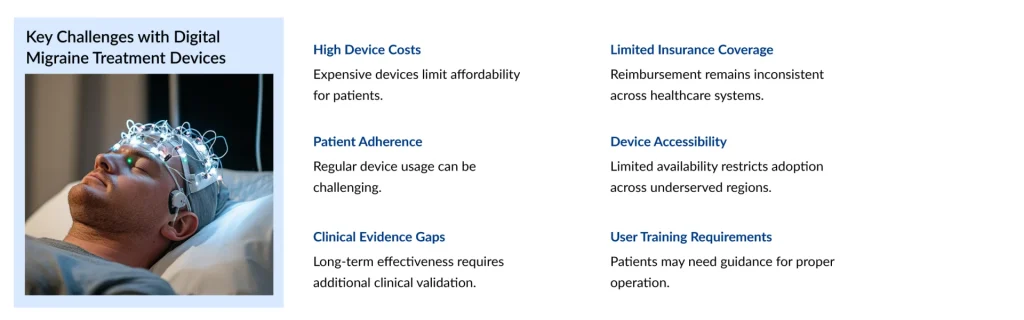
Despite the growing demand for precision-driven forecasting, several limitations can affect the accuracy and applicability of market and disease forecasts. Limited availability of reliable real-world evidence (RWE), fragmented datasets, inconsistent data quality, and variations in data collection practices can make it challenging to generate robust insights, particularly in rare, complex, and underserved disease areas. In addition, small patient populations and limited clinical evidence may increase uncertainty around epidemiology, treatment patterns, and long-term outcomes.
Forecasting in emerging and rapidly evolving markets also faces challenges from changing regulatory environments, shifting treatment paradigms, evolving clinical trial landscapes, and the introduction of novel therapies. Unexpected changes in reimbursement policies, competitor strategies, clinical development timelines, or regulatory decisions can significantly alter market dynamics and create difficulties in maintaining long-term forecast accuracy.
Another key challenge is translating complex and diverse evidence into actionable insights while accounting for regional differences in healthcare systems, patient access, physician preferences, and treatment adoption. Addressing these challenges requires continuous data validation, scenario-based modeling, incorporation of multiple evidence sources, and regular forecast refinement to ensure that strategic recommendations remain relevant as market conditions evolve.
Digital Health and AI Integration: The Next Layer of Migraine Management
Digital health and artificial intelligence (AI) are emerging as important tools in the evolution of migraine management, enabling a shift from episodic treatment toward more personalized, continuous, and data-driven care. Migraine is highly variable across patients, with differences in attack frequency, triggers, symptoms, treatment response, and disease burden. Digital platforms can capture this variability through headache diaries, symptom tracking, wearable devices, and patient-reported outcomes, providing clinicians with a more comprehensive view of disease patterns and treatment effectiveness.
AI can further enhance these capabilities by analyzing large volumes of patient-generated and clinical data to identify patterns that may be difficult to recognize through conventional assessments. Machine learning algorithms can potentially help predict migraine attacks, identify individual triggers, assess treatment response, and support patient stratification. By integrating information such as sleep, stress, physical activity, medication use, and headache characteristics, AI-enabled platforms may provide personalized insights and facilitate earlier intervention before symptoms escalate.
The integration of digital therapeutics and connected devices is also expanding the range of non-pharmacological options available to patients. Smartphone applications can support behavioral interventions, medication adherence, relaxation techniques, and lifestyle modification, while wearable technologies can continuously monitor parameters associated with migraine onset or severity. These tools can complement established pharmacological therapies, including preventive and acute treatments, by encouraging patients to actively participate in disease management and enabling clinicians to monitor outcomes beyond the traditional clinic setting.
Going forward, the convergence of AI, real-world data, telemedicine, and digital therapeutics could become a significant differentiator in the migraine treatment landscape. However, broader adoption will depend on demonstrating clinical validity, data privacy and security, interoperability with healthcare systems, and meaningful improvements in patient outcomes. As these technologies mature, AI-powered migraine management could support more precise treatment selection, proactive disease monitoring, and individualized care pathways, creating opportunities for healthcare providers and pharmaceutical companies to integrate digital solutions alongside conventional therapies.
Future Outlook: Market Momentum and the Companies Driving It
The digital migraine treatment device space is one of the more active corners of neuromodulation right now, driven by rising patient demand for drug-free options, expanding FDA clearances, and growing payer familiarity with the category. The digital migraine treatment devices market was valued at approximately USD 142.50 million in 2025 and is projected to reach USD 612.40 million by 2034, expanding at a CAGR of 17.6% during the forecast period from 2026 to 2034. Market growth is driven by the rapid clinical adoption of non-invasive neuromodulation technologies as drug-free alternatives to conventional pharmacological migraine treatment, increasing FDA clearances and label expansions, and the growing integration of connected, app-controlled digital therapies into routine migraine management.
Market momentum is also expected to be shaped by companies that are investing heavily in research and development, expanding clinical pipelines, and pursuing strategic partnerships to accelerate commercialization. Key players in the market include CEFALY Technology, Theranica Bio-Electronics, electroCore, Inc., Neurolief Ltd., eNeura, Inc., WAT Medical Technology, Soterix Medical, Inc., Nu Eyne Co., Ltd., Ybrain, Inc., and Shenzhen Dongdixin Technology Co., Ltd., along with other notable companies. Among these, CEFALY Technology, Theranica Bio-Electronics, and electroCore maintain leading positions, supported by early regulatory clearances and extensive real-world clinical evidence.
Competitive dynamics will increasingly depend on companies’ ability to demonstrate meaningful clinical benefits, address safety and tolerability considerations, and navigate evolving regulatory requirements efficiently. Organizations with strong clinical development capabilities, robust evidence-generation strategies, and scalable manufacturing infrastructure are expected to be better positioned to capture emerging opportunities. At the same time, companies addressing underserved patient populations and areas with limited treatment options may gain a competitive advantage as healthcare systems place greater emphasis on improving outcomes and reducing disease burden.
Looking ahead, the market is expected to evolve from a landscape driven primarily by established therapies toward one increasingly influenced by innovative assets, data-driven decision-making, and strategic commercialization models. Companies that can combine scientific innovation with strong market access, patient-centric development, and effective partnerships will be well positioned to drive the next phase of market growth. As the competitive landscape matures, continued pipeline expansion and the entry of novel products are likely to sustain market momentum and reshape treatment paradigms over the coming years.

Downloads
Article in PDF
Recent Articles
- Incyte’s ZYNYZ Approved as First-Line Treatment for Advanced Anal Cancer; Amneal Gets FDA Nod for...
- BMS Sells NY Biologics Plant; FDA Approves Mitsubishi Tanabe’s Radicava, Love Pharma Acquires Mic...
- Kallyope’s Elismetrep Achieves Primary and Secondary Endpoints in Phase 2b Clinical Study; IDEAYA...
- Neuromodulation Devices Observed to Reshape the Migraine Treatment Dynamics
- PTC Therapeutics’ Gene Therapy Upstaza; Sanofi and Regeneron’s Dupixent; Bayer CAR-T Collaboratio...