
Physiotherapy Equipment Market Summary
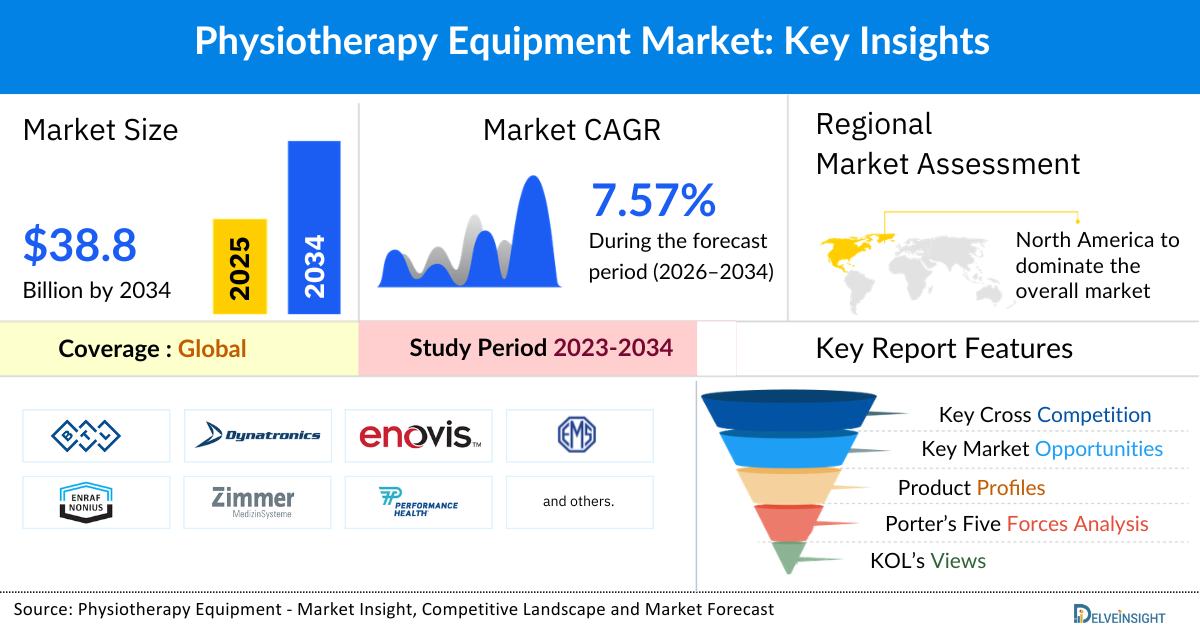
- The Global Physiotherapy Equipment Market size is expected to increase from USD 21,718.96 million in 2025 to USD 38,835.63 million by 2034, reflecting strong and sustained growth.
- The Global Physiotherapy Equipment Market is growing at a CAGR of 7.57% during the forecast period from 2026 to 2034.
- The leading Physiotherapy Equipment Companies such as BTL Industries, Dynatronics Corporation, Enovis Corporation, EMS Physio Ltd., Enraf-Nonius B.V., Zimmer MedizinSysteme GmbH, Performance Health, Storz Medical AG, Life Care Systems, Zynex, Inc., Biodex Medical Systems, Inc., Invacare Corporation, HMS Medical Systems, Medline Industries, LP, and others.
Physiotherapy Equipment Market Trends & Insights
- The Global Physiotherapy Equipment Market is expanding rapidly due to the rising prevalence of chronic diseases and musculoskeletal disorders, a growing geriatric population, and an increasing number of sports and work-related injuries. The surge in chronic pain and mobility issues is driving demand for non-invasive rehabilitation solutions, while the aging population requires ongoing therapy for age-related conditions. At the same time, the rise in injuries among athletes and workers is boosting the need for advanced physiotherapy devices that support faster recovery and functional restoration. Together, these factors are fueling the adoption of innovative physiotherapy technologies across hospitals, clinics, and home care settings.
- North America is expected to dominate the Physiotherapy Equipment Market due to the convergence of an aging population and a soaring national burden of chronic pain and musculoskeletal conditions, alongside significant technological advancements in non-invasive care.
- In the product type segment of the Physiotherapy Equipment market, the electrotherapy category is estimated to account for the largest market share in 2025.
Request for unlocking the report of the @ Physiotherapy Equipment Market Insights
 Physiotherapy Equipment Market Size and Forecasts:
Report Metrics |
Details |
|
2025 Market Size |
USD 21,718.96 million |
|
2034 Projected Market Size |
USD 38,835.63 million |
|
Growth Rate (2026-2034) |
7.57% CAGR |
|
Largest Market |
North America |
|
Fastest Growing Market |
Asia-Pacific |
|
Market Structure |
Moderately Concentrated |
Factors Contributing to the Growth of the Physiotherapy Equipment Market
- Rising incidence of chronic diseases and musculoskeletal disorders is leading to a surge in Physiotherapy Equipment: The growing prevalence of chronic diseases and musculoskeletal disorders is one of the primary factors driving the expansion of the Physiotherapy Equipment Market. Conditions such as arthritis, chronic back pain, stroke, and postural dysfunctions are increasingly common due to sedentary lifestyles, Obesity, and aging-related degeneration. Physiotherapy plays a critical role in managing these conditions by alleviating pain, improving flexibility, and restoring mobility through non-invasive methods. As the number of patients requiring long-term rehabilitation continues to rise, the demand for advanced Physiotherapy Equipment, including electrotherapy units, ultrasound devices, and therapeutic exercise systems, has surged across hospitals, clinics, and home care settings. This trend highlights the growing importance of physiotherapy as an essential component of chronic disease management and functional recovery.
- Growing geriatric population: The expanding geriatric population worldwide is significantly boosting the demand for Physiotherapy Equipment, as aging individuals are more prone to mobility issues, joint degeneration, post-surgical rehabilitation, and neurological conditions such as Parkinson’s disease or stroke. Physiotherapy is increasingly recognized as a vital intervention to maintain independence, improve quality of life, and reduce the risk of falls among older adults. Consequently, healthcare facilities are investing in modern rehabilitation devices such as balance training systems, robotic-assisted therapy equipment, and low-impact exercise tools tailored to the specific needs of elderly patients. Moreover, the growing preference for home-based physiotherapy among seniors is further driving the adoption of compact, user-friendly, and connected devices designed to support continuous therapy and remote monitoring.
- Increasing Sports and Work-Related Injuries: The rising incidence of sports and occupational injuries is another key driver accelerating the Physiotherapy Equipment Market. Athletes, fitness enthusiasts, and workers in physically demanding jobs frequently experience injuries such as sprains, fractures, ligament tears, and repetitive strain disorders, all of which require structured rehabilitation programs for complete recovery. Physiotherapy Equipment, ranging from cryotherapy and heat therapy units to strength training machines and laser therapy devices, plays a pivotal role in facilitating faster healing and restoring optimal performance. Additionally, the growing popularity of sports medicine and the emphasis on injury prevention have led to the widespread integration of physiotherapy practices in sports clubs, gyms, and corporate wellness programs. As awareness of early intervention and physical rehabilitation grows, the Physiotherapy Equipment Market is poised to expand further, supported by increased investments in athletic recovery and workplace health management.
Physiotherapy Equipment Market Report Segmentation
This Physiotherapy Equipment Market report offers a comprehensive overview of the global Physiotherapy Equipment Market, highlighting key trends, growth drivers, challenges, and opportunities. It covers detailed market segmentation by Product Type (Electrotherapy, Ultrasound Therapy, Shockwave Therapy, Laser Therapy, and Others), Application (Musculoskeletal Disorders, Neurology Disorders, Cardiovascular Disorders, and Others), End-Users (Hospitals, Physiotherapy Centers, Rehabilitation Centers, and Others, and Geography.
The Physiotherapy Equipment Market Report provides valuable insights into the competitive landscape, regulatory environment, and market dynamics across major markets, including North America, Europe, and Asia-Pacific. Featuring in-depth profiles of leading industry players and recent product innovations, this report equips businesses with essential data to identify market potential, develop strategic plans, and capitalize on emerging opportunities in the rapidly growing Physiotherapy Equipment Market.
Physiotherapy Equipment refers to a range of medical devices and tools used to restore, maintain, and improve patients’ physical function, mobility, and strength following injury, surgery, or chronic conditions. These devices include electrotherapy units, ultrasound therapy machines, heat and cold therapy systems, traction devices, exercise therapy equipment, and rehabilitation robots. Designed to support pain management, muscle re-education, and joint recovery, Physiotherapy Equipment plays a vital role in both clinical and home-based rehabilitation settings, helping enhance patient outcomes through non-invasive, targeted therapeutic interventions.
The Physiotherapy Equipment Market is experiencing steady growth driven by multiple converging factors, including the rising incidence of chronic diseases and musculoskeletal disorders, the growing geriatric population, and the increasing prevalence of sports and work-related injuries. The surge in chronic conditions such as arthritis, back pain, and stroke has heightened the demand for physiotherapy as a non-invasive and effective method for pain relief, mobility restoration, and long-term rehabilitation. Simultaneously, the aging global population is fueling the need for advanced physiotherapy solutions to address age-related functional decline, post-surgical recovery, and balance disorders, with a growing preference for home-based and easy-to-use rehabilitation devices.
Additionally, the rising rate of sports injuries and occupational strain among both athletes and working professionals is propelling the use of specialized Physiotherapy Equipment designed to accelerate healing and prevent reinjury. Collectively, these factors are reinforcing the importance of physiotherapy as an essential component of preventive and restorative healthcare, driving continuous advancements and widespread adoption of innovative, technology-enabled Physiotherapy Equipment across clinical and home care settings.
Get More Insights into the Report @ Physiotherapy Equipment Market Trends
What are the latest Physiotherapy Equipment Market Dynamics and Trends?
The global surge in chronic diseases, musculoskeletal disorders (MSDs), a growing geriatric population, and an increasing cases of sports and work-related injuries have collectively become key drivers of the Physiotherapy Equipment market. Chronic illnesses such as Diabetes, cardiovascular diseases, and obesity frequently lead to complications like neuropathy, amputations, and limited mobility, all of which demand long-term rehabilitation and physiotherapeutic care. Similarly, MSDs, including lower back pain, arthritis, neck pain, and joint injuries, continue to impose a significant burden on global health systems.
According to the World Health Organization (WHO), musculoskeletal disorders affect more than 1.71 billion people worldwide, making them the leading contributor to disability, with low back pain alone recognized as the foremost cause of disability in over 160 countries. The Global Burden of Disease (GBD) Study further reveals that nearly one in three adults experiences some form of musculoskeletal pain each year, underscoring the critical need for continuous and accessible physiotherapy services.
The rising global burden of diabetes has further boosted the demand for Physiotherapy Equipment, thereby propelling the market. According to the Delveinsight analysis (2025), approximately 589.5 million adults aged 20-79 years are living with diabetes worldwide, underscoring the urgent need for advanced therapeutics and large-scale production capabilities. Diabetes often leads to severe complications such as diabetic neuropathy, peripheral vascular disease, and lower-limb amputations, which require structured physiotherapy interventions for rehabilitation and mobility restoration. As a result, Physiotherapy Equipment such as electrotherapy systems, balance training devices, and continuous passive motion (CPM) machines are increasingly being adopted in diabetic rehabilitation programs to restore strength, coordination, and flexibility.
In addition, the global rise in the elderly population is significantly fueling demand for Physiotherapy Equipment. Aging individuals are more susceptible to conditions such as Osteoporosis, joint degeneration, post-surgical complications, and stroke-related mobility issues, all of which require consistent physiotherapy intervention to restore function, improve balance, and enhance overall quality of life. The demand for geriatric rehabilitation has, in turn, driven greater adoption of advanced physiotherapy solutions, including robotic-assisted systems and exercise therapy devices designed for safe and effective use among older adults.
Furthermore, the growing incidence of sports and work-related injuries is creating additional momentum in the market. Increased participation in athletic activities and physically demanding occupations has led to a surge in cases involving ligament tears, fractures, repetitive strain injuries, and muscle trauma, all of which necessitate targeted rehabilitation and recovery programs. Physiotherapy equipment, such as cryotherapy units, laser therapy systems, and neuromuscular stimulation devices are widely used to accelerate healing and restore functionality following such injuries.
Together, these factors are reshaping the global Physiotherapy Equipment landscape, driving demand for technologically advanced, non-invasive, and patient-centered rehabilitation solutions across hospitals, rehabilitation centers, and home care settings. The convergence of chronic disease management, aging demographics, and injury rehabilitation is reinforcing physiotherapy’s critical role in preventive and restorative healthcare, ensuring sustained growth and innovation in this evolving market.
However, the Physiotherapy Equipment Market faces notable challenges stemming from a shortage of skilled professionals and the high cost of advanced equipment, which together constrain its broader adoption and accessibility. The lack of adequately trained physiotherapists and technicians, particularly in developing regions, limits the effective utilization of sophisticated rehabilitation technologies, reducing treatment efficiency and patient throughput in healthcare facilities.
Simultaneously, the high capital investment required for advanced physiotherapy devices such as robotic rehabilitation systems, AI-integrated motion analysis tools, and computerized electrotherapy units creates financial barriers for smaller clinics and rehabilitation centers. This often results in uneven access to modern physiotherapy care, with premium technologies concentrated in urban or well-funded institutions. Despite these constraints, ongoing efforts in workforce training, government support for healthcare infrastructure, and innovations in cost-efficient device manufacturing are expected to gradually mitigate these challenges, fostering broader availability and more equitable growth within the Physiotherapy Equipment market.
Physiotherapy Equipment Market Segment Analysis
Physiotherapy Equipment Market by Product Type (Electrotherapy, Ultrasound Therapy, Shockwave Therapy, Laser Therapy, and Others), Application (Musculoskeletal Disorders, Neurology Disorders, Cardiovascular Disorders, and Others), End-Users (Hospitals, Physiotherapy Centers, Rehabilitation Centers, and Others), and Geography (North America, Europe, Asia-Pacific, and Rest of the World)
By Product Type: Electrotherapy Category Dominates the Market
In the product type segment of the Physiotherapy Equipment Market, the electrotherapy category is estimated to account for the largest market share in 2025 of 35%. The key factor driving the growth of the electrotherapy equipment market is the increasing preference for non-invasive treatment options for pain management and rehabilitation. Electrotherapy devices provide effective, drug-free solutions for managing acute and chronic pain, muscle stimulation, and functional recovery, making them a favorable alternative to invasive surgical interventions or long-term medication use. This patient preference for safer and non-invasive modalities is significantly boosting the adoption of electrotherapy equipment in physiotherapy clinics and rehabilitation centers worldwide.
Furthermore, the rising prevalence of musculoskeletal disorders, including arthritis, back pain, and sports-related injuries, continues to fuel market expansion. These conditions are becoming increasingly common due to factors such as sedentary lifestyles, poor posture, aging populations, and growing participation in recreational sports. Electrotherapy devices offer targeted therapeutic benefits, such as pain reduction, improved circulation, and accelerated tissue healing, making them an essential part of modern physiotherapy practices.
In addition, continuous technological advancements and product development activities are creating new opportunities for market growth. For instance, in 2024, Enovis Corporation launched the Intelect Legend 2 and Transport 2 electrotherapy systems, addressing clinical and mobile physiotherapy settings with advanced multi-channel and usability features, signalling both product innovation and widening adoption of non-invasive rehabilitation modalities.
Therefore, the combination of growing preference for non-invasive pain management, rising incidence of musculoskeletal conditions, and ongoing product innovations is expected to drive substantial growth in the electrotherapy equipment market during the forecast period from 2026 to 2034.
By Application: Musculoskeletal Disorders Category Dominates the Market
In the application segment of the Physiotherapy Equipment market, the musculoskeletal disorders category is estimated to account for the largest market share in 2025 of 53%. The musculoskeletal disorders (MSDs) category accounts for the largest share in the application segment of the Physiotherapy Equipment market, primarily due to the rising global incidence of conditions such as arthritis, back pain, osteoporosis, and joint degeneration. These disorders are among the leading causes of disability and reduced mobility, creating a sustained demand for physiotherapy as a primary mode of treatment and functional restoration.
Physiotherapy Equipment such as electrotherapy units, ultrasound devices, laser therapy systems, and therapeutic exercise machines plays a crucial role in alleviating pain, improving joint flexibility, and strengthening muscles affected by MSDs. The non-invasive nature of these treatments, combined with their proven efficacy in managing chronic pain and enhancing mobility, has made physiotherapy an essential component of musculoskeletal care.
The increasing prevalence of age-related bone and joint conditions, sedentary lifestyles, and sports-related injuries has further accelerated the adoption of physiotherapy interventions across clinical and home care settings. Moreover, the integration of advanced technologies, including AI-driven motion analysis, robotic-assisted therapy, and wearable rehabilitation systems, is enhancing precision and recovery outcomes for patients with MSDs. Hospitals, rehabilitation centers, and outpatient clinics are increasingly incorporating such innovations to offer personalized treatment plans and track progress in real time.
Therefore, the dominance of the musculoskeletal disorders category underscores the growing recognition of physiotherapy as a cornerstone in managing chronic pain, restoring physical function, and improving quality of life for millions affected by these conditions worldwide.
By End-Users: Hospitals Category Dominates the Market
In the end-user segment of the Physiotherapy Equipment market, the hospitals category is estimated to account for the largest market share in 2025 of 49%. The hospitals category accounts for the largest share of the Physiotherapy Equipment market, owing to their comprehensive rehabilitation infrastructure and ability to deliver advanced, multidisciplinary care. Hospitals serve as primary centers for post-surgical recovery, trauma rehabilitation, and the management of neurological and musculoskeletal disorders, utilizing a wide range of equipment such as electrotherapy units, ultrasound systems, and robotic rehabilitation devices. Their higher patient volumes and stronger financial capacity enable greater adoption of cutting-edge technologies like AI-based motion analysis and virtual therapy systems. Moreover, hospitals emphasize early-stage, supervised rehabilitation for optimal recovery outcomes, reinforcing their dominance as key end users in the Physiotherapy Equipment market.
Physiotherapy Equipment Market Regional Analysis
North America Physiotherapy Equipment Market Trends
North America is expected to account for the largest market share of 40% in 2025 of the global Physiotherapy Equipment market, out of all regions. The North American Physiotherapy Equipment market is experiencing robust growth, primarily driven by the convergence of an aging population and a soaring national burden of chronic pain and musculoskeletal conditions, alongside significant technological advancements in non-invasive care. The demand for equipment like electrotherapy units, therapeutic exercise machines, and ultrasound devices is amplified by the fact that an estimated 21.9% of U.S. adults (or 51.5 million people) experienced chronic pain in 2021, according to the Delveinsight analysis, with a substantial portion of this pain being high-impact and limiting daily activities.
Furthermore, the high prevalence of musculoskeletal disorders (MSDs) serves as a major growth driver, with approximately 126.5 million individuals, nearly half of the U.S. adult population, affected by these conditions. Among them, arthritis remains one of the most common, impacting around 21.2% of adults nationwide. As the geriatric population expands, so does the incidence of age-related issues such as post-surgical recovery, stroke, and joint degeneration, for which physical therapy is the preferred non-pharmacological solution. This clinical need is met by market trends like the integration of AI-enabled virtual reality (VR) and wearable sensors into equipment, which enables more personalized and effective treatment across settings, from dedicated rehabilitation centers to the growing segment of patient-preferred home-based care.
Increased healthcare expenditure, greater insurance coverage for rehabilitation services, and advancements in robotic-assisted rehabilitation and AI-driven physiotherapy solutions are further enhancing market growth. Moreover, the rise in home-based physiotherapy and tele-rehabilitation platforms has expanded access to care, supporting the adoption of portable and connected Physiotherapy Equipment across the country.
Europe Physiotherapy Equipment Market Trends
The Europe Physiotherapy Equipment Market is witnessing steady growth, driven by a strong emphasis on rehabilitation medicine, an aging population, and the increasing prevalence of chronic and lifestyle-related conditions. European countries such as Germany, the United Kingdom, France, and Italy are leading in the adoption of advanced physiotherapy technologies, supported by well-established healthcare systems and high awareness of preventive care. The region is seeing a significant transition toward evidence-based and technology-enabled physiotherapy solutions, including robotic rehabilitation systems, AI-assisted motion analysis tools, and connected electrotherapy devices that enhance treatment precision and patient engagement.
Additionally, the growing demand for personalized and home-based rehabilitation is fostering the development of portable and smart Physiotherapy Equipment, enabling greater accessibility and convenience for patients. Reimbursement support for physiotherapy services across several European healthcare systems is also contributing to increased utilization of advanced devices in both clinical and outpatient settings. Moreover, collaborations between medical device manufacturers, research institutions, and digital health companies are driving innovation in sensor-based rehabilitation monitoring and tele-physiotherapy solutions. With sustainability and regulatory compliance gaining importance, manufacturers are also focusing on eco-friendly designs and adherence to EU medical device standards. Overall, the European Physiotherapy Equipment market continues to evolve toward more intelligent, patient-centric, and data-integrated rehabilitation solutions, reinforcing the region’s position as a leader in modern physiotherapy care.
Asia-Pacific Physiotherapy Equipment Market Trends
The Asia-Pacific Physiotherapy Equipment Market is experiencing robust growth, driven by rising awareness of physical rehabilitation, expanding healthcare infrastructure, and the increasing prevalence of musculoskeletal and neurological disorders. The region is witnessing a strong shift toward technologically advanced and patient-centered physiotherapy solutions, with countries such as China, Japan, India, and Australia emerging as key growth hubs. Growing investments in rehabilitation centers, coupled with government initiatives promoting early intervention and physical therapy programs, are further accelerating market expansion. Moreover, the adoption of AI-powered rehabilitation systems, robotic-assisted therapy devices, and wearable Physiotherapy Equipment is transforming traditional treatment models, enabling more precise, data-driven, and efficient patient care.
In addition, the rising geriatric population and the growing incidence of sports injuries are fueling the demand for Physiotherapy Equipment designed for pain management, post-surgical recovery, and mobility restoration. Home-based rehabilitation is also gaining traction, supported by the proliferation of Telehealth platforms and compact, easy-to-use physiotherapy devices that facilitate remote monitoring and continuity of care. Local manufacturers are increasingly focusing on cost-effective, high-performance equipment to meet the region’s diverse healthcare needs, while international players are expanding through strategic partnerships and localized manufacturing to capture emerging opportunities.
Therefore, the Asia-Pacific Physiotherapy Equipment market is evolving rapidly, shaped by technological integration, rising healthcare expenditure, and a growing emphasis on preventive and restorative rehabilitation care.
Who are the major players in the Physiotherapy Equipment Market?
The following are the leading companies in the Physiotherapy Equipment Market. These companies collectively hold the largest market share and dictate industry trends.
- BTL Industries
- Dynatronics Corporation
- Enovis Corporation
- EMS Physio Ltd.
- Enraf-Nonius B.V.
- Zimmer MedizinSysteme GmbH
- Performance Health
- Storz Medical AG
- Life Care Systems
- Zynex, Inc.
- Biodex Medical Systems, Inc.
- Invacare Corporation
- HMS Medical Systems
- Medline Industries, LP, and others
How is the competitive landscape shaping the Physiotherapy Equipment Market?
The competitive landscape of the Physiotherapy Equipment Market is characterized by a blend of established global manufacturers and emerging innovators focusing on specialized rehabilitation technologies. The market is moderately consolidated, with a few dominant players such as Enraf-Nonius B.V., BTL Industries, DJO Global, Zimmer MedizinSysteme, and Dynatronics Corporation holding a substantial share through their extensive product portfolios, strong distribution networks, and consistent investment in R&D. These companies are increasingly emphasizing advanced technologies such as AI-driven rehabilitation systems, robotic therapy devices, and connected physiotherapy platforms to maintain a competitive edge.
At the same time, smaller and mid-sized firms are entering the space with niche innovations in wearable physiotherapy devices, tele-rehabilitation solutions, and portable electrotherapy equipment, intensifying competition and driving technological diversification. Strategic collaborations, product launches, and mergers and acquisitions have become key growth strategies, enabling companies to expand geographic reach and strengthen their service offerings. Additionally, the growing demand for personalized and home-based physiotherapy solutions has prompted manufacturers to focus on ergonomic designs, user-friendly interfaces, and wireless connectivity. Overall, the market’s competitive dynamics are evolving toward innovation-driven differentiation, with players striving to balance technological advancement, affordability, and clinical efficacy in an increasingly digital and patient-centric rehabilitation environment.
|
Report Metrics |
Details |
|
Study Period |
2023 to 2034 |
|
Base Year |
2025 |
|
Forecast Period |
2026 to 2034 |
|
Physiotherapy Equipment Market CAGR | |
|
Key Companies in the Physiotherapy Equipment Market |
BTL Industries, Dynatronics Corporation, Enovis Corporation, EMS Physio Ltd., Enraf-Nonius B.V., Zimmer MedizinSysteme GmbH, Performance Health, Storz Medical AG, Life Care Systems, Zynex, Inc., Biodex Medical Systems, Inc., Invacare Corporation, HMS Medical Systems, Medline Industries, LP, and others. |
|
Physiotherapy Equipment Market Segments |
by Product Type, by Application, by End-Users, and by Geography |
|
Physiotherapy Equipment Regional Scope |
North America, Europe, Asia Pacific, Middle East, Africa, and South America |
|
Physiotherapy Equipment Country Scope |
U.S., Canada, Mexico, Germany, United Kingdom, France, Italy, Spain, China, Japan, India, Australia, South Korea, and key Countries |
Physiotherapy Equipment Market Segmentation
- Physiotherapy Equipment by Product Type Exposure
- Electrotherapy
- Ultrasound Therapy
- Shockwave Therapy
- Laser Therapy
- Others
- Physiotherapy Equipment by Application Exposure
- Musculoskeletal Disorders
- Neurology
- Cardiovascular
- Others
- Physiotherapy Equipment by End-Users Exposure
- Hospitals
- Physiotherapy Centers
- Rehabilitation Centers
- Others
Physiotherapy Equipment Geography Exposure
- North America Physiotherapy Equipment Market
- United States Physiotherapy Equipment Market
- Canada Physiotherapy Equipment Market
- Mexico Physiotherapy Equipment Market
- Europe Physiotherapy Equipment Market
- United Kingdom Physiotherapy Equipment Market
- Germany Physiotherapy Equipment Market
- France Physiotherapy Equipment Market
- Italy Physiotherapy Equipment Market
- Spain Physiotherapy Equipment Market
- Rest of Europe Physiotherapy Equipment Market
- Asia-Pacific Physiotherapy Equipment Market
- China Physiotherapy Equipment Market
- Japan Physiotherapy Equipment Market
- India Physiotherapy Equipment Market
- Australia Physiotherapy Equipment Market
- South Korea Physiotherapy Equipment Market
- Rest of Asia-Pacific Physiotherapy Equipment Market
- Rest of the World Physiotherapy Equipment Market
- South America Physiotherapy Equipment Market
- Middle East Physiotherapy Equipment Market
- Africa Physiotherapy Equipment Market
Physiotherapy Equipment Market Recent Industry Trends and Milestones (2023-2026):
|
Category |
Key Developments |
|
Company Strategy |
• Leading Physiotherapy Equipment manufacturers are focusing on AI-integrated, robotic-assisted, and connected rehabilitation devices to enhance treatment precision and patient engagement. • Companies such as BTL Industries, Enraf-Nonius, and Zimmer MedizinSysteme are investing in digital transformation and R&D to introduce intelligent, data-driven physiotherapy systems suitable for both hospitals and home care settings. • Market players are pursuing strategic mergers, acquisitions, and partnerships to expand their geographic presence and strengthen product portfolios, especially in fast-growing regions such as Asia-Pacific and Latin America. |
|
Emerging Technology |
• Digital transformation is reshaping the Physiotherapy Equipment market, with manufacturers increasingly integrating artificial intelligence (AI), Internet of Things (IoT), and data analytics to enable real-time monitoring, remote rehabilitation, and personalized treatment programs. • Robotics and automation are being adopted in advanced rehabilitation systems to enhance precision, track patient progress, and support repetitive motion training for faster recovery. • Virtual reality (VR) and augmented reality (AR) technologies are gaining traction in physiotherapy settings, providing immersive and interactive rehabilitation experiences that improve patient motivation and engagement. • Wearable sensors and smart devices are emerging as key innovations, enabling continuous tracking of muscle activity, joint movement, and posture for data-driven therapy adjustments. • Cloud-based connectivity and tele-rehabilitation platforms are expanding access to physiotherapy services beyond clinical environments, supporting remote care and improving therapy adherence. |
Impact Analysis
AI-Powered Innovations and Applications:
Artificial intelligence (AI) has emerged as a transformative force in the Physiotherapy Equipment Market, revolutionizing patient assessment, treatment personalization, and rehabilitation outcomes. AI-powered technologies are increasingly being integrated into devices such as robotic exoskeletons, motion analysis systems, and virtual rehabilitation platforms to enhance precision and efficiency in physiotherapy care. Through advanced algorithms and machine learning models, these systems can analyze a patient’s movement patterns, detect abnormalities, and tailor therapy sessions in real time, significantly improving treatment accuracy and recovery timelines. For instance, AI-driven gait and posture analysis systems are enabling physiotherapists to monitor progress remotely and make data-based adjustments to exercise regimens, fostering a more patient-centric approach to care.
Moreover, the incorporation of AI into wearable rehabilitation devices and smart physiotherapy tools allows for continuous monitoring of muscle activity, joint angles, and biofeedback, empowering patients to engage in home-based therapy with clinical-level oversight. This not only enhances patient adherence but also alleviates the burden on healthcare facilities by reducing the need for frequent in-person visits. Additionally, predictive analytics powered by AI are being used to forecast recovery trajectories and identify patients at risk of delayed rehabilitation, enabling early intervention and improved outcomes.
From a broader perspective, AI-powered applications are driving operational efficiencies in physiotherapy practices by automating documentation, optimizing resource allocation, and integrating data from multiple sources—including imaging, biomechanics, and patient records into unified clinical dashboards. These innovations are collectively advancing the shift toward precision rehabilitation, where therapy plans are adaptive, data-driven, and outcome-focused. As AI technologies continue to mature, their integration within Physiotherapy Equipment is expected to redefine standards of rehabilitation care, enhance accessibility, and position AI-enabled physiotherapy solutions at the forefront of digital healthcare transformation.
U.S. Tariff Impact Analysis on Physiotherapy Equipment Market
The imposition of U.S. tariffs on imported medical devices and components has had a significant impact on the Physiotherapy Equipment Market, influencing both pricing dynamics and supply chain strategies. Many physiotherapy devices, including ultrasound therapy systems, electrotherapy units, traction machines, and rehabilitation accessories, rely on imported components from countries such as China, Germany, and Japan. The introduction of tariffs on these imports has led to a noticeable increase in manufacturing and procurement costs for U.S.-based Physiotherapy Equipment manufacturers. Consequently, several domestic producers have been forced to either absorb the additional costs, affecting profit margins, or pass them on to end users, leading to higher prices for hospitals, rehabilitation centers, and home care providers.
Moreover, the tariffs have disrupted established global supply chains, compelling manufacturers to explore alternative sourcing strategies or localize production to mitigate dependency on tariff-affected imports. While this has encouraged some reshoring and investment in domestic manufacturing, it has also created short-term bottlenecks and logistical challenges, particularly for small and mid-sized enterprises with limited flexibility. The uncertainty surrounding trade policies has further discouraged long-term procurement planning and slowed down product innovation cycles, as companies prioritize cost management over R&D spending.
However, the tariff environment has also catalyzed a gradual shift toward strengthening domestic supply networks and promoting partnerships with North American suppliers. U.S. manufacturers focusing on advanced physiotherapy technologies such as robotic-assisted rehabilitation systems, AI-based motion analysis tools, and wearable therapy devices are increasingly seeking tariff-independent production pathways. In the long run, while tariffs have initially increased operational costs and market volatility, they may inadvertently stimulate local innovation and enhance the resilience of the U.S. Physiotherapy Equipment sector by encouraging diversification and regional manufacturing sustainability.
How This Analysis Helps Clients
- Cost Management: By understanding the tariff landscape, clients can anticipate cost increases and adjust pricing strategies accordingly, ensuring profitability.
- Supply Chain Optimization: Clients can identify alternative sourcing options and diversify their supply chains to reduce dependency on high-tariff regions, enhancing resilience.
- Regulatory Navigation: Expert guidance on navigating the evolving regulatory environment helps clients maintain compliance and avoid potential legal challenges.
- Strategic Planning: Insights into tariff impacts enable clients to make informed decisions about manufacturing locations, partnerships, and market entry strategies.
Key Takeaways from the Physiotherapy Equipment Market report study
- Market size analysis for the current Physiotherapy Equipment Market size (2025), and market forecast for 8 years (2026 to 2034)
- Top key product/technology developments, mergers, acquisitions, partnerships, and joint ventures happened over the last 3 years.
- Key companies dominating the Physiotherapy Equipment Market.
- Various opportunities available for the other competitors in the Physiotherapy Equipment Market space.
- What are the top-performing segments in 2025? How these segments will perform in 2034?
- Which are the top-performing regions and countries in the current Physiotherapy Equipment Market scenario?
- Which are the regions and countries where companies should have concentrated on opportunities for the Physiotherapy Equipment Market growth in the future?
Stay updated with us for Recent Articles @ New DelveInsight Blogs

