
Regenerative Medicine Market Summary
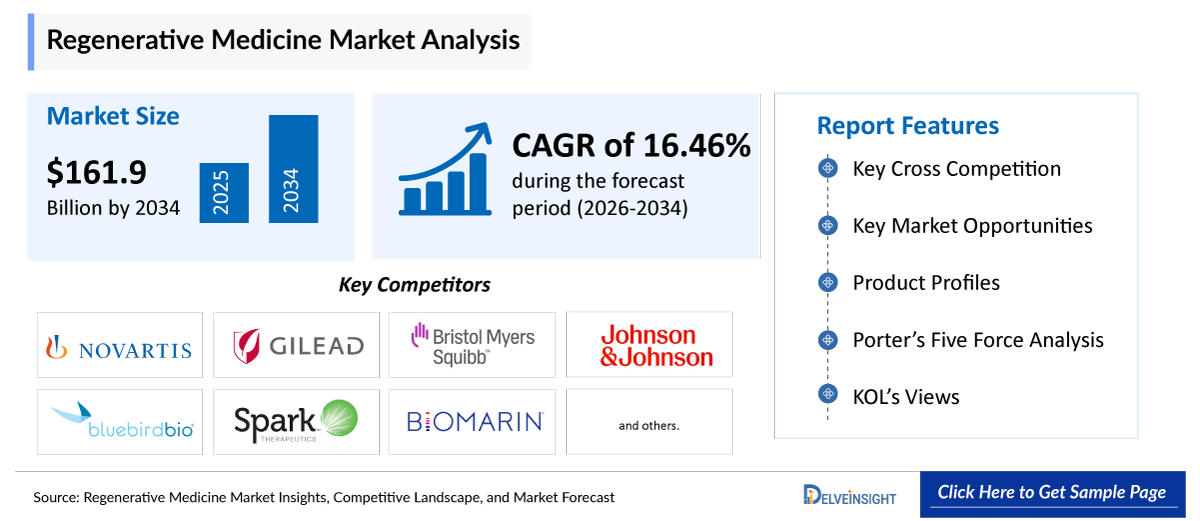
- The Global Regenerative Medicine Market is expected to increase from USD 41,358.32 million in 2025 to USD 161,988.00 million by 2034, reflecting strong and sustained growth.
- The Global Regenerative Medicine Market is growing at a CAGR of 16.46% during the forecast period from 2026 to 2034.
Regenerative Medicine Market Size and Forecast
- The rising prevalence of chronic diseases and degenerative disorders such as cancer, cardiovascular diseases, Diabetes, orthopedic conditions, and neurological disorders is significantly increasing the demand for advanced regenerative treatment solutions worldwide. At the same time, the growing adoption of stem cell therapies and gene therapies is transforming modern healthcare by enabling targeted tissue repair, cellular regeneration, and long-term disease management.
- In addition, increasing investments and funding from governments, biotechnology companies, and pharmaceutical firms are accelerating research activities, clinical trials, manufacturing expansion, and commercialization of innovative Regenerative Medicine products. Collectively, these factors are driving rapid technological advancements and expanding the global Regenerative Medicine market.
- The leading Regenerative Medicine Companies include Novartis AG, Gilead Sciences, Inc., Bristol-Myers Squibb Company, Johnson & Johnson Services, Inc., bluebird bio, Inc., Spark Therapeutics, Inc., BioMarin Pharmaceutical Inc., CSL Behring LLC, Vertex Pharmaceuticals Incorporated, Vericel Corporation, Organogenesis Holdings Inc., Smith & Nephew plc, MiMedx Group, Inc., Stryker Corporation, Zimmer Biomet Holdings, Inc., Integra LifeSciences Holdings Corporation, Mesoblast Limited, Takeda Pharmaceutical Company Limited, Anterogen Co., Ltd., MEDIPOST Co., Ltd., Holostem Terapie Avanzate S.r.l., Osiris Therapeutics, Inc., Orthocell Limited, Cook Biotech Incorporated, AbbVie Inc., AstraZeneca PLC, Fate Therapeutics, Inc., Adaptimmune Therapeutics plc, 3M Health Care, Regen Lab SA, EmCyte Corporation, Arthrex, Inc., RTI Surgical Holdings, Inc., BioTissue Holdings, Inc., Gamida Cell Ltd., Krystal Biotech, Inc., and others.
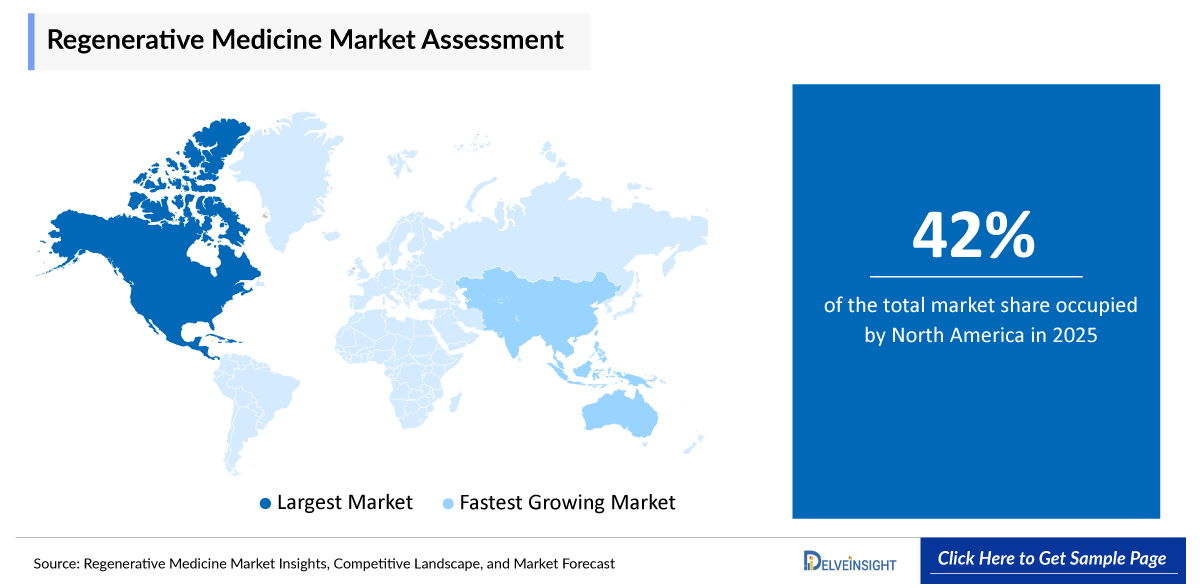
- North America is expected to dominate the Regenerative Medicine Market due to the strong presence of leading biotechnology and pharmaceutical companies, advanced healthcare infrastructure, and increasing investments in stem cell and gene therapy research. The region also benefits from a high number of clinical trials, favorable regulatory support, growing adoption of personalized medicine, and rising prevalence of chronic and degenerative diseases. Additionally, continuous technological advancements and strong funding from government and private organizations are further supporting market growth in the region.
- In the therapy type segment of the Regenerative Medicine Market, the cell therapy category is estimated to account for the largest market share in 2025.
Request for unlocking the report of the @ Regenerative Medicine Market
Regenerative Medicine Market Size and Forecasts
|
Report Metrics |
Details |
|
2025 Regenerative Medicine Market Size | |
|
2034 Projected Regenerative Medicine Market Size | |
|
Regenerative Medicine Growth Rate (2026-2034) | |
|
Largest Regenerative Medicine Market |
North America |
|
Fastest Growing Regenerative Medicine Market |
Asia-Pacific |
|
Regenerative Medicine Market Structure |
Moderately Concentrated |
Factors Contributing to the Growth of the Regenerative Medicine Market
-
Rising prevalence of chronic diseases and degenerative disorders
The increasing prevalence of chronic diseases and degenerative disorders, such as cancer, cardiovascular diseases, diabetes, Osteoarthritis, and neurological conditions, is significantly driving the demand for Regenerative Medicine worldwide.
Conventional treatment approaches often focus on symptom management rather than tissue restoration, creating a strong need for advanced regenerative therapies that can repair or replace damaged cells and tissues. As the global aging population continues to grow, the incidence of these long-term diseases is further increasing, thereby accelerating the adoption of Regenerative Medicine products and therapies.
-
Growing adoption of stem cell and gene therapies
The growing adoption of stem cell therapies and gene therapies is playing a major role in expanding the Regenerative Medicine Market. These advanced therapies offer targeted and personalized treatment approaches by repairing damaged tissues, regenerating cells, and correcting genetic abnormalities.
Their increasing clinical success in treating conditions such as blood disorders, cancer, spinal cord injuries, and rare genetic diseases is encouraging healthcare providers and patients to adopt regenerative treatment options. In addition, continuous advancements in cell engineering and gene-editing technologies are further improving therapeutic effectiveness and expanding clinical applications.
-
Increasing investments and funding from governments, biotechnology firms, and pharmaceutical companies
Increasing investments and funding from governments, biotechnology firms, and pharmaceutical companies are significantly accelerating the growth of the Regenerative Medicine Market. Financial support is enabling companies and research institutions to expand clinical trials, strengthen manufacturing capabilities, and develop innovative regenerative therapies.
Governments across several countries are also supporting Regenerative Medicine research through grants, public-private partnerships, and favorable regulatory initiatives. Furthermore, rising strategic collaborations, mergers, and venture capital investments are helping companies commercialize next-generation stem cell, gene therapy, and tissue engineering products more rapidly.
What are the latest Regenerative Medicine Market Dynamics and Trends?
The rising prevalence of cancer and other chronic disorders is significantly increasing the demand for novel and effective therapies, thereby accelerating the Regenerative Medicine market worldwide.
According to the data provided by the International Agency for Research on Cancer (2026)
Cancer: The estimated new cases of cancer would rise to 32.6 million by 2045 across the world. Cancer is a major driver of the Regenerative Medicine market due to the increasing global incidence of both solid tumors and hematological malignancies.
Regenerative Medicine approaches such as cell therapies, stem cell transplantation, gene therapies, and immunotherapies are transforming cancer treatment by improving treatment precision, enhancing immune responses against cancer cells, and supporting tissue regeneration following aggressive treatments such as chemotherapy and radiation. The growing demand for advanced oncology therapies and the increasing number of approved cell and gene therapy products continue to accelerate the Regenerative Medicine market growth.
- Neurological Conditions: According to the data provided by the World Health Organization (2025), neurological conditions are the leading cause of ill health and disability, affecting over 1 in 3 people worldwide. The rising prevalence of neurological disorders, including Alzheimer's Disease, Parkinson's Disease, stroke, and spinal cord injuries, is driving demand for Regenerative Medicine solutions. Conventional treatments often provide only symptomatic relief, whereas regenerative therapies aim to repair damaged nerve cells and restore neurological function. Advances in stem cell therapy, gene therapy, and neuroregenerative technologies are expanding treatment possibilities, making neurological disorders a key application area for Regenerative Medicine.
- Metabolic Disorders: According to the data provided by the International Diabetes Federation (2026), in 2025, approximately 590 million people worldwide had diabetes, and the projections further estimated that these cases would rise to 853 million by 2050. The growing burden of metabolic disorders such as diabetes, obesity, and inherited metabolic diseases is boosting the Regenerative Medicine market. Regenerative therapies offer the potential to restore damaged tissues and improve metabolic function rather than simply managing symptoms.
For example, stem cell-based approaches are being explored to regenerate insulin-producing pancreatic cells and address the underlying causes of diabetes. As the prevalence of metabolic diseases continues to increase globally, demand for innovative regenerative treatment options is rising significantly.
Orthopedic & Musculoskeletal Conditions: According to the data provided by the Global Alliance for Musculoskeletal Health (2026), approximately 619 million people across the world had Back pain, 203 million had neck pain, 595 million had Osteoarthritis, 494 million had musculoskeletal conditions, and 18 million had Rheumatoid Arthritis. Orthopedic and musculoskeletal disorders, including osteoarthritis, bone fractures, cartilage defects, sports injuries, tendon injuries, and joint degeneration, are significantly driving the demand for Regenerative Medicine therapies.
Advanced treatments such as stem cell therapies, platelet-rich plasma (PRP), tissue-engineered scaffolds, and biologic products are increasingly being used to promote tissue repair, accelerate healing, restore mobility, and improve patient outcomes. The growing aging population, rising incidence of sports-related injuries, and increasing prevalence of chronic musculoskeletal conditions are further boosting the adoption of Regenerative Medicine solutions in this segment.
Additionally, the growing adoption of cell therapies and gene therapies is a major factor driving the expansion of the Regenerative Medicine market. These advanced therapies address the underlying causes of disease by repairing, replacing, or regenerating damaged cells and tissues, rather than simply managing symptoms.
Cell therapies, including stem cell and CAR-T cell therapies, are demonstrating strong clinical success in oncology, autoimmune disorders, and tissue regeneration, while gene therapies offer the potential for long-term or even curative treatment of genetic diseases. As clinical outcomes improve and regulatory approvals increase, healthcare providers and patients are increasingly embracing Regenerative Medicine, accelerating Regenerative Medicine market growth and investment worldwide.
Recent approvals further highlight this momentum. In April 2025, the U.S. FDA approved Zevaskyn (prademagene zamikeracel) from Abeona Therapeutics, the first autologous cell-based gene therapy for treating wounds associated with Recessive Dystrophic Epidermolysis Bullosa. Additionally, in December 2024, the FDA approved Ryoncil (remestemcel-L-rknd) from Mesoblast, the first FDA-approved mesenchymal stromal cell (MSC) therapy for pediatric patients with steroid-refractory acute graft-versus-host disease.
These approvals demonstrate the increasing commercialization of regenerative therapies and reinforce confidence in the long-term growth potential of the Regenerative Medicine market. Thus, the factors mentioned above are expected to boost the overall Regenerative Medicine Market during the forecast period.
However, the Regenerative Medicine market faces significant challenges from the risk of immune rejection and adverse effects, as well as stringent regulatory requirements. Cell- and gene-based therapies may trigger immune responses or unexpected safety concerns, necessitating extensive clinical evaluation and long-term patient monitoring.
At the same time, regulatory agencies impose rigorous standards for safety, efficacy, and manufacturing quality, resulting in lengthy approval timelines and high development costs. Collectively, these factors increase the complexity and expense of bringing Regenerative Medicine products to market, thereby limiting their widespread adoption and slowing overall market growth.
Regenerative Medicine Market Report Segmentation
This Regenerative Medicine market report offers a comprehensive overview of the global Regenerative Medicine market, highlighting key trends, growth drivers, challenges, and opportunities. It covers detailed market segmentation by Therapy Type (Cell Therapy {Stem Cell Therapy [Autologous and Allogenic], Immunotherapy, and Others), Gene Therapy, Tissue Engineering, and Platelet Rich Plasma & Biologic Therapy), By Application (Orthopedic & Musculoskeletal Disorders, Neurological Disorders, Cardiovascular Diseases, Dermatology, Wound Healing, Oncology, Ophthalmology, and Others), End-Users (Hospitals & Clinics, Specialty Care Centers, Biotechnology & Pharmaceutical Companies, and Others), and geography.
The Regenerative Medicine market report provides valuable insights into the competitive landscape, regulatory environment, and market dynamics across major markets, including North America, Europe, and Asia-Pacific. Featuring in-depth profiles of leading industry players and recent product innovations, this report equips businesses with essential data to identify market potential, develop strategic plans, and capitalize on emerging opportunities in the rapidly growing Regenerative Medicine market.
Regenerative Medicine is a branch of healthcare focused on repairing, replacing, or regenerating damaged cells, tissues, and organs to restore normal body function. It combines advanced technologies such as stem cell therapy, gene therapy, tissue engineering, and biologics to treat chronic diseases, injuries, and degenerative conditions. Unlike traditional treatments that mainly manage symptoms, Regenerative Medicine aims to address the root cause of disease by promoting natural healing and tissue regeneration.
The rising prevalence of chronic diseases and degenerative disorders, such as cancer, cardiovascular diseases, diabetes, orthopedic conditions, and neurological disorders, is significantly increasing the demand for advanced regenerative treatment solutions across the globe. Traditional therapies often focus on managing symptoms rather than restoring damaged tissues or organ function, creating a strong need for regenerative approaches that promote long-term healing and recovery.
Additionally, the growing aging population is further contributing to the increasing burden of degenerative diseases, thereby expanding the patient pool for Regenerative Medicine therapies.
At the same time, the growing adoption of stem cell therapies and gene therapies is transforming modern healthcare by enabling targeted tissue repair, cellular regeneration, and long-term disease management. These therapies are increasingly being utilized in the treatment of complex conditions such as spinal cord injuries, blood disorders, autoimmune diseases, and certain cancers, where conventional treatments have shown limited effectiveness.
Continuous advancements in cell engineering, gene editing technologies, and tissue engineering are also improving therapeutic outcomes and expanding the scope of Regenerative Medicine applications.
Furthermore, increasing investments and funding from governments, biotechnology companies, pharmaceutical firms, and private investors are accelerating research activities, clinical trials, manufacturing expansion, and commercialization of innovative Regenerative Medicine products. Public and private organizations are actively supporting the development of advanced cell and gene therapies through strategic collaborations, research grants, and infrastructure expansion.
The growing number of regulatory approvals and clinical studies is further strengthening market confidence and encouraging broader adoption of regenerative therapies worldwide. Collectively, these factors are driving rapid technological advancements and significantly expanding the global Regenerative Medicine market.
Get More Insights into the Report @ Regenerative Medicine Market
Regenerative Medicine Market Segment Analysis
Regenerative Medicine Market by Therapy Type (Cell Therapy {Stem Cell Therapy [Autologous and Allogenic], Immunotherapy, and Others), Gene Therapy, Tissue Engineering, and Platelet Rich Plasma & Biologic Therapy), Application (Orthopedic & Musculoskeletal Disorders, Neurological Disorders, Cardiovascular Diseases, Dermatology, Wound Healing, Oncology, Ophthalmology, and Others), End-Users (Hospitals & Clinics, Specialty Care Centers, Biotechnology & Pharmaceutical Companies, and Others), and Geography (North America, Europe, Asia-Pacific, and Rest of the World)
-
Regenerative Medicine Market Segmentation By Therapy Type
Cell therapy is expected to dominate the market with the largest revenue share. In the therapy type segment of the Regenerative Medicine market, the cell therapy category is contributing to 45% of total market revenue in 2025, due to its ability to repair, replace, or regenerate damaged cells and tissues across a wide range of diseases. Cell therapies, including stem cell therapies, CAR-T therapies, TCR-T therapies, and tumor-infiltrating lymphocyte (TIL) therapies, are increasingly being adopted for the treatment of cancer, autoimmune disorders, hematological diseases, neurological conditions, and tissue injuries.
Their potential to provide long-term therapeutic benefits and address the underlying causes of disease has attracted substantial investments from biotechnology companies, pharmaceutical manufacturers, and healthcare providers. Furthermore, advancements in cell processing technologies, manufacturing capabilities, and personalized medicine are accelerating the commercialization of cell-based products and expanding their clinical applications. The growing number of regulatory approvals is also strengthening market adoption.
For example, in February, 2024, the U.S. FDA approved Amtagvi (lifileucel) from Iovance Biotherapeutics, Inc., the first tumor-infiltrating lymphocyte (TIL) cell therapy for unresectable or metastatic melanoma. Additionally, in August, 2024, the FDA approved Tecelra (afamitresgene autoleucel) from Adaptimmune LLC, the first engineered T-cell receptor (TCR) therapy for advanced Synovial Sarcoma. These milestones demonstrate the increasing clinical and commercial success of cell therapies, making them a key growth driver for the Regenerative Medicine market.
-
Regenerative Medicine Market Segmentation By Application
The Oncology disorders category dominates the market. Within the application segment of the Regenerative Medicine market, the oncology category is anticipated to dominate, accounting for around 28% of the market share in 2025, due to the rapidly increasing burden of cancer worldwide, strong clinical success of cell and gene therapies, and continuous innovation in CAR-T therapies, tumor-infiltrating lymphocytes (TILs), stem cell–based immunotherapies, and gene-modified cellular platforms.
Oncology represents the most advanced and commercially mature area of Regenerative Medicine because it has consistently demonstrated high response rates in otherwise treatment-resistant cancers such as hematologic malignancies and solid tumors, driving strong adoption by clinicians and regulatory support for expedited pathways like Breakthrough Therapy Designation and RMAT designation. The segment is further strengthened by the rising number of biologic and advanced therapy approvals, with regenerative oncology products increasingly moving from experimental to standard-of-care in specific indications.
For instance, in July 2025, the FDA accelerated approval of linvoseltamab-gcpt (Lynozyfic), a bispecific T-cell engager for relapsed or refractory multiple myeloma, reflecting continued dominance of immune-cell–based regenerative approaches in cancer treatment. Additionally, multiple approvals of cell and gene therapy, based on oncology drugs, including CAR-T therapies and engineered antibodies, have reinforced oncology as the leading application area, supported by high unmet medical need, strong reimbursement potential, and rapid clinical translation of regenerative technologies.
-
Regenerative Medicine Market By End-Users
The hospitals and clinics category dominates the market. Hospitals and clinics play a crucial role in boosting the Regenerative Medicine market as they serve as the primary centers for the administration, monitoring, and management of advanced therapies such as stem cell treatments, cell therapies, gene therapies, and tissue-engineered products. Their access to specialized healthcare professionals, advanced medical infrastructure, and patient populations enables the effective delivery of regenerative treatments across a wide range of conditions.
Additionally, the increasing adoption of regenerative therapies in hospitals and clinics, coupled with growing participation in clinical trials and specialized treatment programs, is driving demand for Regenerative Medicine products and supporting overall market growth.
Regenerative Medicine Market Regional Analysis
-
North America Regenerative Medicine Market Trends
North America is expected to account for the highest proportion of 42% of the Regenerative Medicine market in 2025, out of all regions. North America dominates the global Regenerative Medicine market due to its highly advanced healthcare infrastructure, strong presence of leading biotechnology and pharmaceutical companies, substantial research and development investments, favorable reimbursement environment, and supportive regulatory framework for advanced therapies.
The region leads in the number of clinical trials involving cell therapies, gene therapies, and stem cell-based products, while also benefiting from extensive collaborations between academic institutions, healthcare providers, and industry participants. In addition, the rising prevalence of cancer, neurological disorders, cardiovascular diseases, and musculoskeletal conditions continues to drive demand for regenerative therapies across the United States and Canada.
Recent regulatory approvals further reinforce North America's leadership position.
- In April 2025, the U.S. FDA approved Zevaskyn from Abeona Therapeutics, Inc., a cell-based gene therapy for patients with recessive dystrophic epidermolysis bullosa (RDEB).
- In November 2024, the FDA approved Aucatzyl from Autolus Therapeutics plc, a CAR-T cell therapy for relapsed or refractory B-cell acute lymphoblastic leukemia, while Ryoncil from Mesoblast Limited received FDA approval in December 2024 as the first mesenchymal stromal cell (MSC) therapy for pediatric steroid-refractory acute graft-versus-host disease. These approvals highlight the region's strong regulatory and commercialization environment for Regenerative Medicine products. North America is also witnessing substantial investment activity in Regenerative Medicine.
- In May 2025, Somite AI raised US$47 million in Series A funding to advance AI-driven cell replacement therapies and Regenerative Medicine platforms. In June 2025, Celltrio secured US$15 million in funding to expand automation technologies supporting cell and gene therapy manufacturing.
- Additionally, In April 2025, Tr1X, Inc. received an US$8 million grant from the California Institute for Regenerative Medicine (CIRM) to advance its engineered regulatory T-cell therapy program, and in May 2025, Stately Bio raised US$12 million in seed funding to develop next-generation regenerative therapies using machine-learning-powered cellular imaging technologies.
These investments are strengthening innovation, manufacturing capabilities, and clinical development across North America, further solidifying the region's dominance in the Regenerative Medicine market.
-
Europe Regenerative Medicine Market Trends
The European Regenerative Medicine market is witnessing strong and sustained growth due to increasing investments in advanced therapies, a rising prevalence of chronic and degenerative diseases, strong academic research capabilities, and supportive regulatory initiatives from the European Union and the European Medicines Agency (EMA).
The region has become a key hub for the development of cell therapies, gene therapies, and tissue-engineered products, supported by extensive collaborations between biotechnology companies, research institutes, and healthcare organizations. Europe is also benefiting from growing adoption of personalized medicine and an expanding pipeline of advanced therapy medicinal products (ATMPs), which is accelerating market expansion.
Recent developments further highlight the region's momentum. In April 2025, the European Commission approved the gene therapy Vyjuvek (beremagene geperpavec) from Krystal Biotech, Inc. for the treatment of dystrophic epidermolysis bullosa (DEB), marking the first corrective gene therapy approved in Europe for this rare genetic skin disorder. Additionally, in May 2025, the European Medicines Agency (EMA) and the Alliance for Regenerative Medicine held a high-level meeting focused on accelerating access to cell and gene therapies, improving manufacturing scalability, and enhancing regulatory clarity across Europe.
Furthermore, in August 2025, a major EU-backed consortium launched an automated hospital-based manufacturing platform to streamline personalized cell and gene therapy production, strengthening the region's Regenerative Medicine infrastructure. These developments demonstrate Europe's continued commitment to advancing Regenerative Medicine innovation and commercialization.
-
Asia-Pacific Regenerative Medicine Market Trends
The Asia Pacific (APAC) region is emerging as a major growth driver for the Regenerative Medicine market due to increasing healthcare expenditure, a large patient population, rising prevalence of chronic and degenerative diseases, and growing investments in biotechnology and life sciences research. Countries such as China, Japan, India, and South Korea are actively supporting the development of cell therapies, gene therapies, and stem cell-based treatments through favorable government initiatives, research funding, and regulatory reforms.
The region is also witnessing an expansion of Regenerative Medicine manufacturing facilities, increasing clinical trial activity, and growing collaborations between academic institutions and biotechnology companies. Furthermore, the rising demand for advanced therapies, improving healthcare infrastructure, and increasing adoption of personalized medicine are positioning APAC as one of the fastest-growing markets for Regenerative Medicine globally.
Who are the major players in the Regenerative Medicine Market?
Regenerative Medicine Companies
- Novartis AG
- Gilead Sciences, Inc.
- Bristol-Myers Squibb Company
- Johnson & Johnson Services, Inc.
- bluebird bio, Inc.
- Spark Therapeutics, Inc.
- BioMarin Pharmaceutical Inc.
- CSL Behring LLC
- Vertex Pharmaceuticals Incorporated
- Vericel Corporation
- Organogenesis Holdings Inc.
- Smith & Nephew plc
- MiMedx Group, Inc.
- Stryker Corporation
- Zimmer Biomet Holdings, Inc.
- Integra LifeSciences Holdings Corporation
- Mesoblast Limited
- Takeda Pharmaceutical Company Limited
- Anterogen Co., Ltd.
- MEDIPOST Co., Ltd.
- Holostem Terapie Avanzate S.r.l.
- Osiris Therapeutics, Inc.
- Orthocell Limited
- Cook Biotech Incorporated
- AbbVie Inc.
- AstraZeneca PLC
- Fate Therapeutics, Inc.
- Adaptimmune Therapeutics plc
- 3M Health Care
- Regen Lab SA
- EmCyte Corporation
- Arthrex, Inc.
- RTI Surgical Holdings, Inc.
- BioTissue Holdings, Inc.
- Gamida Cell Ltd.
- Krystal Biotech, Inc.
- Others.
How is the competitive landscape shaping the Regenerative Medicine Market?
The competitive landscape of the Regenerative Medicine Market is highly dynamic and characterized by intense innovation, strategic collaborations, and significant investments in research and development. Leading Regenerative Medicine Companies such as Novartis AG, Gilead Sciences, Inc., Johnson & Johnson, Bluebird Bio, Inc., Vericel Corporation, and Mesoblast Limited are actively expanding their Regenerative Medicine portfolios through the development of advanced cell therapies, gene therapies, stem cell therapies, and tissue-engineered products.
Regenerative Medicine Companies are increasingly focusing on clinical trial expansion, regulatory approvals, manufacturing scale-up, and commercialization of next-generation therapies to strengthen their market positions. Strategic partnerships between biotechnology firms, pharmaceutical companies, academic institutions, and Contract Development and Manufacturing Organizations (CDMOs) are accelerating product development and improving market access.
In addition, the growing number of startups entering the field with innovative gene-editing, cell-engineering, and regenerative technology platforms is intensifying competition and driving continuous technological advancement. As a result, innovation, regulatory success, manufacturing capabilities, and strategic collaborations remain the key factors shaping competition in the global Regenerative Medicine market.
Regenerative Medicine Market Recent Breakthroughs and Developments
- In June 2025, Celltrio secured US$15 million in funding to expand automation technologies supporting cell and gene therapy manufacturing.
- In May 2025, Somite AI raised US$47 million in Series A funding to advance AI-driven cell replacement therapies and Regenerative Medicine platforms.
- In May 2025, the European Medicines Agency (EMA) and the Alliance for Regenerative Medicine held a high-level meeting focused on accelerating access to cell and gene therapies, improving manufacturing scalability, and enhancing regulatory clarity across Europe.
- In April 2025, the European Commission approved the gene therapy Vyjuvek (beremagene geperpavec) from Krystal Biotech, Inc. for the treatment of dystrophic epidermolysis bullosa, marking the first corrective gene therapy approved in Europe for this rare genetic skin disorder.
- In April 2025, the U.S. FDA approved Zevaskyn (prademagene zamikeracel) from Abeona Therapeutics, the first autologous cell-based gene therapy for treating wounds associated with recessive dystrophic epidermolysis bullosa (RDEB).
- In December 2024, the FDA approved Ryoncil (remestemcel-L-rknd) from Mesoblast, the first FDA-approved mesenchymal stromal cell (MSC) therapy for pediatric patients with steroid-refractory acute graft-versus-host disease (SR-aGVHD).
- In November 2024, the FDA approved Aucatzyl from Autolus Therapeutics plc, a CAR-T cell therapy for relapsed or refractory B-cell acute lymphoblastic leukemia.
- In October 2024, FDA 510(k) cleared RejuvaKnee™ by Regenity Biosciences, a regenerative collagen-based meniscal implant designed to facilitate native meniscus tissue regeneration and repair.
- In August, 2024, the FDA approved Tecelra (afamitresgene autoleucel) from Adaptimmune LLC, the first engineered T-cell receptor (TCR) therapy for advanced synovial sarcoma.
- In February, 2024, the U.S. FDA approved Amtagvi (lifileucel) from Iovance Biotherapeutics, Inc., the first Tumor-infiltrating lymphocyte (TIL) cell therapy for unresectable or metastatic melanoma.
|
Report Metrics |
Details |
|
Study Period |
2023 to 2034 |
|
Base Year |
2025 |
|
Forecast Period |
2026 to 2034 |
|
Regenerative Medicine Market CAGR | |
|
Regenerative Medicine Companies |
Novartis AG, Gilead Sciences, Inc., Bristol-Myers Squibb Company, Johnson & Johnson Services, Inc., bluebird bio, Inc., Spark Therapeutics, Inc., BioMarin Pharmaceutical Inc., CSL Behring LLC, Vertex Pharmaceuticals Incorporated, Vericel Corporation, Organogenesis Holdings Inc., Smith & Nephew plc, MiMedx Group, Inc., Stryker Corporation, Zimmer Biomet Holdings, Inc., Integra LifeSciences Holdings Corporation, Mesoblast Limited, Takeda Pharmaceutical Company Limited, Anterogen Co., Ltd., MEDIPOST Co., Ltd., Holostem Terapie Avanzate S.r.l., Osiris Therapeutics, Inc., Orthocell Limited, Cook Biotech Incorporated, AbbVie Inc., AstraZeneca PLC, Fate Therapeutics, Inc., Adaptimmune Therapeutics plc, 3M Health Care, Regen Lab SA, EmCyte Corporation, Arthrex, Inc., RTI Surgical Holdings, Inc., BioTissue Holdings, Inc., Gamida Cell Ltd., Krystal Biotech, Inc., and others. |
|
Regenerative Medicine Market Segments |
by Therapy Type, by Application, by End-Users, and by Geography |
|
Regenerative Medicine Regional Scope |
North America, Europe, Asia Pacific, Middle East, Africa, and South America |
|
Regenerative Medicine Country Scope |
U.S., Canada, Mexico, Germany, United Kingdom, France, Italy, Spain, China, Japan, India, Australia, South Korea, and key Countries |
Regenerative Medicine Market Segmentation
- Regenerative Medicine by Therapy Type Exposure
- Cell Therapy
- Stem Cell Therapy
- Autologous
- Allogenic
- Immunotherapy
- Others
- Gene Therapy
- Tissue Engineering
- Platelet Rich Plasma & Biologic Therapy
- Regenerative Medicine Application Exposure
- Orthopedic & Musculoskeletal Disorders
- Neurological Disorders
- Cardiovascular Diseases
- Dermatology
- Wound Healing
- Oncology
- Ophthalmology
- Others
- Regenerative Medicine End-Users Exposure
- Hospitals & Clinics
- Specialty Care Centers
- Biotechnology & Pharmaceutical Companies
- Others
- Regenerative Medicine Geography Exposure
- United States Regenerative Medicine Market
- Canada Regenerative Medicine Market
- Mexico Regenerative Medicine Market
- United Kingdom Regenerative Medicine Market
- Germany Regenerative Medicine Market
- France Regenerative Medicine Market
- Italy Regenerative Medicine Market
- Spain Regenerative Medicine Market
- Rest of Europe Regenerative Medicine Market
- China Regenerative Medicine Market
- Japan Regenerative Medicine Market
- India Regenerative Medicine Market
- Australia Regenerative Medicine Market
- South Korea Regenerative Medicine Market
- Rest of Asia-Pacific Regenerative Medicine Market
- South America Regenerative Medicine Market
- Middle East Regenerative Medicine Market
- Africa Regenerative Medicine Market
- North America Regenerative Medicine Market
- Europe Regenerative Medicine Market
- Asia-Pacific Regenerative Medicine Market
- Rest of the World Regenerative Medicine Market
Regenerative Medicine Market Recent Industry Trends and Milestones (2023-2026)
|
Category |
Key Developments |
|
Regenerative Medicine Product Investments |
Celltrio secured US$15 million, and Somite AI raised US$47 million in Series A funding. |
|
Regenerative Medicine Product Approvals |
European Commission approved the gene therapy Vyjuvek, U.S. FDA approved Zevaskyn, and FDA approved Ryoncil. |
|
Company Strategy |
Vericel Corporation
Novartis AG
|
|
Emerging Technology |
Stem Cell Therapy, Induced Pluripotent Stem Cell (iPSC) Technology, Gene Therapy, Gene Editing Technologies (CRISPR-Cas9, Base Editing, Prime Editing), CAR-T Cell Therapy, TCR-T Cell Therapy, Tumor-Infiltrating Lymphocyte (TIL) Therapy, Allogeneic Cell Therapy, Autologous Cell Therapy, Tissue Engineering, 3D Bioprinting, Organ-on-a-Chip Technology, Biofabrication, Regenerative Biomaterials, and others |
Key Takeaways from the Regenerative Medicine Market Report Study
- Market size analysis for the current Regenerative Medicine Market Size (2025), and market forecast for 8 years (2026 to 2034)
- Top key product/technology developments, mergers, acquisitions, partnerships, and joint ventures happened over the last 3 years.
- Key companies dominating the Regenerative Medicine market.
- Various opportunities available for the other competitors in the Regenerative Medicine market space.
- What are the top-performing segments in 2025? How these segments will perform in 2034?
- Which are the top-performing regions and countries in the current Regenerative Medicine market scenario?
- Which are the regions and countries where companies should have concentrated on opportunities for the Regenerative Medicine market growth in the future.
Startup Funding & Investment Trends
|
Company Name |
Total Funding |
Stage of Development |
Main Product |
Core Technology |
|
Neurona Therapeutics |
US$120 Million |
- |
NRTX-1001 regenerative cell therapy |
Neurological disorders and epilepsy treatment |
Stay updated with us for Recent Articles

