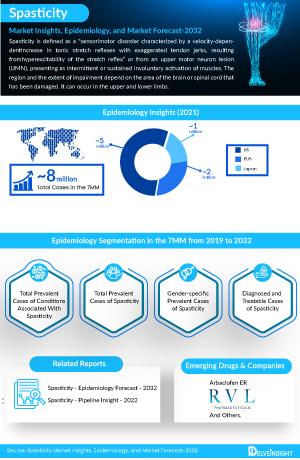
Spasticity Market Summary
- According to DelveInsight’s analysis, the Spasticity Therapeutics Market in the 7MM is expected to grow steadily during the forecast period, supported by improved diagnosis and treatment rates, increasing access to specialized rehabilitation services, and the emergence of innovative therapies aimed at providing longer-lasting symptom control and enhanced functional outcomes.
- The leading Spasticity Companies include Ipsen Biopharmaceuticals, Inc, RVL Pharmaceuticals, Merz Pharmaceuticals, Allergan, Inc, Jazz Pharmaceuticals, Metacel Pharmaceuticals, Piramal, Amneal Pharmaceuticals, Azurity, Daiichi Pharmaceutical Co., Ltd., and others.
Spasticity Market and Epidemiology Analysis
- Spasticity may occur due to several conditions, including Spinal Cord Injury, Multiple Sclerosis, Cerebral Palsy, stroke, brain or head injury, Amyotrophic Lateral Sclerosis, hereditary spastic paraplegias, Adrenoleukodystrophy, Phenylketonuria, and Krabbe disease.
- Spasticity affects 43% of the stroke patients at 12 months after onset.
- Women are more likely to develop spasticity due to conditions like multiple sclerosis, which is more common in women. Spasticity can significantly impact daily activities, mobility, and overall quality of life. Women with spasticity may face unique challenges, including managing household responsibilities and caregiving roles. Treatment approaches for spasticity do not differ significantly between genders.
- Electrical stimulation of the spinal cord is a promising strategy for reestablishing walking after spinal cord injury. But for patients suffering from muscle spasms, the stimulation protocols have a limited effect due to the unpredictable behavior of involuntary muscle stiffness related to spasticity.
- Over the past two to three decades, there has been little progress in the development of new, effective oral medications for spasticity, leaving physicians with only a limited set of treatment options. Most currently available oral therapies are associated with side effects such as drowsiness, which can restrict their daytime use and reduce overall utility.
- Baclofen is available in multiple branded formulations, including the original tablet formulation, LIORESAL (approved in 1977; patent expired), the oral solution OZOBAX (approved in 2019; formulation patent expires in August 2039), and the oral suspension FLEQSUVY (approved in 2022; formulation patents expire in September 2037), reflecting continued lifecycle management through novel formulations despite the availability of generic baclofen.
- Various treatments are available for controlling spasticity; nonmedical treatments, including physical, occupational, and complementary and alternative medicine, are effective adjuncts to mainstream agents like Baclofen (LIORESAL/FLEQSUVY/OZOBAX), IncobotulinumtoxinA (XEOMIN), AbobotulinumtoxinA (DYSPORT), and others.
- There are emerging therapies in the Spasticity Pipeline include BMS-986368 (Bristol-Myers Squibb), SL-1002 (Saol Therapeutics), DAXXIFY (Revance), IPN10200 (Ipsen Biopharmaceuticals), BFB-101 (BlackfinBio), SRx-T001 (Sania Therapeutics), and IOVERA (Pacira Pharmaceuticals).
- Current spasticity treatments provide symptomatic relief but often fail to deliver sustained functional improvement and long-term disease control.
Request for Unlocking the Sample Page of the "Spasticity Treatment Market"
Spasticity Market Size and Forecast in the 7MM
| 2025 Spasticity Market Size | ~USD XX million |
| 2036 Projected Spasticity Market Size | ~USD XX million |
|
Spasticity Growth Rate (2026–2036) | ~XX% CAGR |
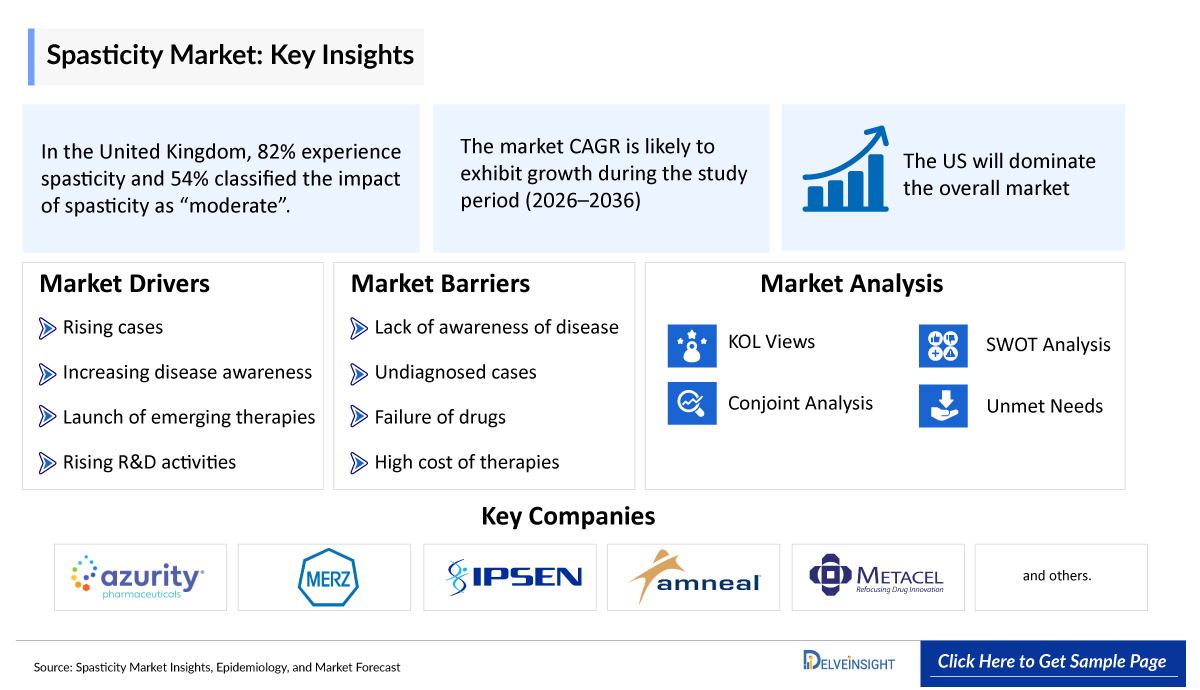
Key Factors Driving the Spasticity Market
-
Increasing Prevalence of Neurological Disorders
The rising incidence of neurological conditions such as stroke, multiple sclerosis, cerebral palsy, traumatic brain injury, and spinal cord injury is expanding the pool of patients affected by spasticity, thereby driving demand for effective treatment options.
-
Advancements in Rehabilitation and Multidisciplinary Care
The increasing integration of pharmacological treatments with physical therapy and rehabilitation programs is improving patient outcomes and supporting broader utilization of spasticity therapies.
-
Emerging Novel Therapies and Long-Acting Formulations
Ongoing research into innovative therapeutics and longer-acting treatment options has the potential to improve symptom control, reduce treatment burden, and address unmet patient needs.
DelveInsight's ‘Spasticity Market Insights, Epidemiology and Market Forecast – 2036’ report delivers an in-depth understanding of the Spasticity, historical and forecasted epidemiology, as well as the Spasticity market trends in the United States, EU4 (Germany, Spain, Italy, and France), the United Kingdom, and Japan.
The Spasticity Treatment Market Report delivers a comprehensive analysis of the current treatment landscape, including standards of care, clinical practices, and evolving therapeutic algorithms. It evaluates Spasticity patient burden trends, revenue & market share dynamics, peak patient share & therapy uptake analysis, and provides an in-depth market size assessment, and growth rate projections (historical & forecast 2022–2036) across global regions. The report highlights key unmet medical needs in Spasticity and maps the competitive and clinical landscape to uncover high‑value opportunities, providing a clear outlook on future market growth potential.
Scope of the Spasticity Therapeutics Market Report | |
|
Study Period |
2022–2036 |
|
Historical Year |
2022–2025 |
|
Forecast Period |
2026–2036 |
|
Base Year |
2026 |
|
Geographies Covered |
|
|
Spasticity Market CAGR (Forecast period) |
~XX% (2026–2036) |
|
Spasticity Epidemiology Segmentation Analysis |
Patient Burden Assessment
|
|
Spasticity Companies |
|
|
Spasticity Therapies |
|
|
Spasticity Market |
Segmented by
|
|
Analysis |
|
Spasticity Understanding and Treatment Algorithm
Spasticity Overview and Diagnosis
Spasticity is a neurological disorder characterized by increased muscle tone, stiffness, and involuntary muscle spasms resulting from damage to the brain or spinal cord. It commonly occurs in conditions such as multiple sclerosis, cerebral palsy, stroke, Traumatic Brain Injury, and spinal cord injury, leading to impaired mobility, pain, and reduced quality of life.
Diagnosis is primarily based on clinical neurological examination using assessment tools such as the Modified Ashworth Scale (MAS) and Tardieu Scale, supported by imaging techniques like MRI or CT scans when necessary. Management involves a multidisciplinary approach, including physical therapy, oral antispastic agents, botulinum toxin injections, and intrathecal therapies, with emerging treatments aiming to improve long-term functional outcomes.
Further details are provided in the report.
Current Spasticity Treatment Landscape
Treatment of spasticity focuses on reducing muscle stiffness, improving mobility, preventing complications, and enhancing quality of life. Management typically involves a multidisciplinary approach, combining pharmacologic, physical, and sometimes surgical interventions. Physical and occupational therapy are first-line strategies, including stretching, strengthening exercises, and mobility training to maintain range of motion and functional independence.
For localized or focal spasticity, botulinum toxin injections are commonly used to temporarily relax overactive muscles. Oral medications such as muscle relaxants (e.g., baclofen, tizanidine, or diazepam) may be prescribed to reduce widespread spasticity, though side effects like drowsiness and weakness may limit their use. In severe or generalized cases, intrathecal baclofen therapy (delivered via a pump into the spinal fluid) offers more targeted relief with fewer systemic effects.
When conservative measures fail, surgical interventions, including selective dorsal rhizotomy or orthopedic procedures, may be considered. Ongoing research into neuromodulation, regenerative therapies, and targeted biologics holds promise for more effective, personalized management of spasticity in the future.
Further details related to country-based variations are provided in the report.
Spasticity Unmet Needs
The section “unmet needs of Spasticity” outlines the critical gaps between the current state of patient care, diagnosis, and the ideal & effective management of the disease. It highlights the obstacles experienced by patients, clinicians, and researchers and identifies potential solutions for future progress.
- The short duration of effect and need for repeated interventions, particularly with botulinum toxin therapies, contribute to significant treatment burden.
- Delayed referral and limited access to multidisciplinary rehabilitation services.
- Many patients continue to experience persistent mobility limitations, pain, and reduced quality of life despite current standard-of-care treatments.
- Variability in treatment response and the lack of personalized treatment strategies and others…..
Note: Comprehensive unmet needs insights in Spasticity and their strategic implications are provided in the full report.
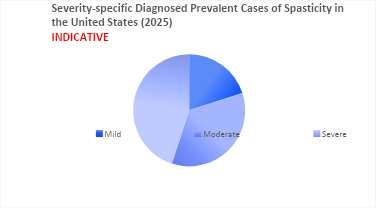
Spasticity Epidemiology
Key Findings from Spasticity Epidemiological Analysis and Forecast
- Spasticity affects approximately 35% of those with stroke, more than 90% with cerebral palsy, about 50% of traumatic brain injury patients, 40% of spinal cord injury patients, and between 37%, and 78% of multiple sclerosis patients.
- According to the National Multiple Sclerosis Society (2024), out of the 1,177 adults with multiple sclerosis, 80% of respondents reported that they experienced spasticity every day, or multiple times each day, and 34% had constant spasticity symptoms. Spasticity was mostly considered to be moderate to severe.
- In adults, approximately one in three stroke patients, one in three patients with spinal cord injury, one in six patients with traumatic brain injury, and two in three patients with multiple sclerosis will develop lower limb spasticity.
- In the United Kingdom, 82% experience spasticity and 54% classified the impact of spasticity as “moderate”. Greater than 80% of patients with multiple sclerosis report some degree of spasticity, with one third of these modifying or eliminating daily activities as a result.
Spasticity Epidemiology Segmentation
- Spasticity Specific Cases
- Total Spasticity Prevalent Cases
- Spasticity Severity-specific Cases
- Total Spasticity Treated Cases
Spasticity Market Recent Breakthroughs and Developments
- In May 2026, Ipsen reported results from the Phase IV DIRECTION trial, the only prospective head-to-head study comparing abobotulinumtoxinA with Botox (onabotulinumtoxinA) in adults with upper limb spasticity. The trial demonstrated a non-inferior safety profile and longer-lasting symptom control with Dysport, with findings presented at the ISPRM World Congress 2026.
- In April 2026 as per the company’s presentation, Bristol Myers Squibb anticipates reporting data from the Phase II BALANCE-MSS-1 trial evaluating the FAAH/MAGL inhibitor BMS-986368 for multiple sclerosis-associated spasticity in 2027, potentially advancing a novel endocannabinoid-modulating approach for spasticity management.
- In April 2025, BlackfinBio announced that the US Food and Drug Administration (FDA) had cleared its Investigational New Drug (IND) application for a Phase I/II clinical trial of its novel adeno-associated virus (AAV) gene therapy, BFB-101, in children with hereditary spastic paraplegia, Type 47 (SPG47).
Spasticity Drug Analysis & Competitive Landscape
The Spasticity drug chapter provides a detailed, market-focused review of approved therapies and the emerging Spasticity Pipeline across Phase I–III clinical trials. It covers the mechanism of action, clinical trial data, patents, collaborations, and strategic partnerships, upcoming key catalysts for each therapy, along with their advantages, limitations, and recent developments. This section offers critical insights into the Spasticity treatment landscape, supporting market assessment, competitive analysis, and growth forecasting for the Spasticity therapeutics market.
Spasticity Approved Therapies
-
Baclofen (LIORESAL/FLEQSUVY/OZOBAX): Azurity Pharmaceuticals/Metacel Pharmaceuticals/Amneal Pharmaceuticals
Baclofen is a GABA receptor agonist and centrally acting skeletal muscle relaxant indicated for the treatment of spasticity associated with neurological conditions such as multiple sclerosis, spinal cord injury, and other spinal cord disorders. It helps relieve muscle spasms, rigidity, clonus, and associated pain by inhibiting excitatory neurotransmission in the spinal cord. To improve patient convenience and administration, baclofen is available in multiple oral formulations, including tablets, oral solutions, and oral suspensions.
Formulations, Approval, and Patent Status:
LIORESAL (tablet): FDA approved in 1977; patent expired.
OZOBAX (oral solution): FDA approved in 2019; formulation patent expires in August 2039.
FLEQSUVY (oral suspension): FDA approved in 2022; formulation patents expire in September 2037.
-
IncobotulinumtoxinA (XEOMIN): Merz Pharmaceuticals
It is a prescription medicine that is injected into muscles and used to treat increased muscle stiffness in the arm because of upper limb spasticity in adults and also treat increased muscle stiffness in the arm in children aged 2–17 years with upper limb spasticity, excluding spasticity caused by cerebral palsy. It is a highly purified botulinum toxin type A formulation that inhibits acetylcholine signaling at neuromuscular junctions, reducing muscle hypertonia. Recently, XEOMIN got approval from Health Canada for treating spasticity in adults in the post-stroke lower limb.
In December 2015, incobotulinumtoxinA received US FDA approval for the treatment of adult upper limb spasticity.
|
Marketed Drugs Competitive Landscape | ||||||
|
Product |
Company |
Indication |
MoA |
Molecule Type |
RoA |
Approval Year |
|
Baclofen oral suspension (FLEQSUVY) |
Azurity Pharmaceuticals |
Spasticity |
GABA agonist |
Small molecule |
Oral |
US: 2022 |
|
IncobotulinumtoxinA (XEOMIN) |
Merz Pharmaceuticals |
Spasticity |
Acetylcholine release inhibitor |
Botulinum neurotoxin type A |
IV |
US: 2015 |
Spasticity Pipeline Analysis
-
BMS-986368: Bristol-Myers Squibb
It is an investigational oral small-molecule dual inhibitor of fatty acid amide hydrolase (FAAH) and monoacylglycerol lipase (MAGL) being evaluated for the treatment of multiple sclerosis (MS)-related spasticity. By inhibiting FAAH and MAGL, BMS-986368 increases endogenous levels of the endocannabinoids anandamide (AEA) and 2-arachidonoylglycerol (2-AG), thereby enhancing cannabinoid receptor signaling and potentially reducing neuronal hyperexcitability associated with spasticity.
The therapy is currently being investigated in the Phase II BALANCE-MSS-1 trial, a randomized, placebo-controlled study assessing its efficacy, safety, and tolerability in approximately 200 patients with MS-related spasticity. As a first-in-class oral endocannabinoid-modulating therapy, BMS-986368 has the potential to address limitations associated with existing antispastic treatments and expand the therapeutic landscape for patients with persistent symptoms.
-
SL-1002: Saol Therapeutics
SL1002 is an investigational, novel perineural chemoneurolytic injection that utilizes Saol’s proprietary CYCLOPHLE technology. It is currently being advanced in development for the treatment of limb spasticity in the adult population. It is currently being investigated in the Phase II for the treatment of patients with mild to severe limb spasticity. As per the company, spasticity data that was presented by the investigators received positive feedback from the leaders in the field.
In October 2024, Saol Therapeutics announced positive topline results from the SL-1002 (RAISE) trial, demonstrating a favorable safety profile in adult patients with limb spasticity.
|
Comparison of Emerging Drugs Under Development | ||||||
|
Drug Name |
Company |
Highest Phase |
Indication |
RoA |
Molecule Type |
Anticipated Launch in the US |
|
BMS-986368 |
Bristol-Myers Squibb |
II |
Spasticity |
Oral |
Small molecule |
2032 |
|
SL-1002 |
Saol Therapeutics |
II |
Spasticity |
IV |
Small molecule |
Information is available in the full report |
|
BFB-101 |
BlackfinBio |
I/II |
Spasticity |
Intra-cisterna magna (ICM) injection |
Adeno-associated virus (AAV) gene therapy |
Information is available in the full report |
|
Note: Launch insights are provisional and may change with future report updates or the occurrence of major key catalysts. | ||||||
Note: Detailed emerging therapies assessment will be provided in the final report.
Spasticity Companies, Market Leaders and Emerging Companies
- Azurity
- Merz Pharma
- Ipsen Pharmaceuticals
- Amneal Pharmaceuticals
- Bristol-Myers Squibb
- Saol Therapeutics
- BlackfinBio
- Sania Therapeutics
- Pacira Pharmaceuticals, and others
Spasticity Market Outlook
The Spasticity Therapeutics Market Landscape, a condition commonly associated with neurological disorders such as multiple sclerosis, cerebral palsy, spinal cord injury, and stroke, has evolved considerably, though it still relies heavily on conventional approaches. Historically, physical therapy and oral muscle relaxants like baclofen and tizanidine have served as the mainstay of treatment, aiming to reduce muscle stiffness and improve mobility.
For focal spasticity, botulinum toxin injections have become a standard intervention, providing temporary relief by inhibiting acetylcholine release at the neuromuscular junction. Intrathecal baclofen therapy is reserved for severe, generalized cases, offering more targeted action with fewer systemic side effects.
However, these treatments largely address the symptoms rather than the underlying neural dysregulation responsible for spasticity. Recent advances are shifting focus toward targeting the neural circuits and molecular pathways that drive spasticity. Investigational therapies include neuromodulation techniques, gene-based interventions, and receptor-specific agents designed to restore inhibitory-excitatory balance in the central nervous system. Agents modulating GABAergic, glutamatergic, or alpha-2 adrenergic signaling pathways are under exploration for their potential to offer more sustained control of spasticity with improved tolerability.
As the field progresses, the emphasis is increasingly on precision therapies tailored to the individual’s neurological condition, severity of spasticity, and response profile. These innovations aim to enhance functional outcomes, reduce treatment burden, and improve overall quality of life, offering hope for safer and more effective long-term spasticity management.
Further details will be provided in the report….
Spasticity Drug Class/Insights into Leading Emerging and Marketed Therapies (2022-2036)
The spasticity pipeline comprises therapies aimed at improving muscle tone control, reducing involuntary muscle contractions and spasms, enhancing mobility and functional outcomes, and minimizing treatment-related burden. Emerging approaches include novel neurotoxins, endocannabinoid modulators, advanced oral therapies, and targeted neuromodulatory interventions designed to provide longer-lasting symptom relief, improve quality of life, and address limitations associated with current symptomatic treatments.
- Acetylcholine release inhibitor: It reduce muscle overactivity by blocking the release of acetylcholine, the neurotransmitter responsible for transmitting signals from motor nerves to skeletal muscles at the neuromuscular junction. By preventing acetylcholine release, these agents inhibit muscle contraction, leading to temporary muscle relaxation and reduced spasticity. This mechanism is most commonly utilized by botulinum neurotoxins, which provide localized relief of focal spasticity, improve range of motion and functional ability, and reduce pain associated with excessive muscle tone while minimizing systemic adverse effects.
Acetylcholine release inhibitors, such as IncobotulinumtoxinA (XEOMIN), reduce muscle overactivity by blocking the presynaptic release of acetylcholine at the neuromuscular junction
- GABA agonist: Gamma-aminobutyric acid (GABA) agonists enhance the activity of GABA, the primary inhibitory neurotransmitter in the central nervous system, thereby suppressing excessive neuronal excitation. By activating GABA receptors, these agents reduce the transmission of excitatory signals within the spinal cord, resulting in decreased muscle tone, reduced muscle spasms, and improved control of spasticity. GABA agonists are widely used in the management of spasticity associated with neurological disorders such as multiple sclerosis, spinal cord injury, and cerebral palsy. Baclofen oral suspension (FLEQSUVY) is a GABA<sub>B</sub> receptor agonist that enhances inhibitory neurotransmission in the spinal cord, reducing muscle spasticity, spasms, and associated pain.
Spasticity Drug Uptake
This section focuses on the uptake rate of potential Spasticity drugs expected to be launched in the market during the forecast period (2026–2036). The analysis covers the spasticity drug’s uptake, performance at peak, factors affecting performance during prime years of growth, patient uptake by therapy, and anticipated sales generated by each drug.
Detailed insights into emerging therapies' drug uptake are included in the report.
Spasticity Market Access and Reimbursement of Approved Therapies
The Spasticity Therapeutics Market Report further provides detailed insights on the country-wise accessibility and reimbursement scenarios, cost-effectiveness scenario of approved therapies, programs making accessibility easier and out-of-pocket costs more affordable, insights on patients insured under federal or state government prescription drug programs, etc.
Reimbursement is a crucial factor that affects the drug’s access to the market. Often, the decision to reimburse comes down to the price of the drug relative to the benefit it produces in treated patients. To reduce the healthcare burden of these high-cost therapies, many payment models are being considered by payers and other industry insiders.
The programs available in the US are:
- Vaccines for Children Program (VFC)
- Children’s Health Insurance Program (CHIP)
- Medicare and Medicaid Coverage
NOTE: Further Details are provided in the final report….
Spasticity Therapies Price Scenario & Trends
Pricing and analogue assessment of spasticity therapies highlights evolving price dynamics structures. This section summarizes the cost of approved treatments, the closest and most appropriate analogue selection for emerging therapies, and the understanding of how pricing influences market access, adherence, and long-term uptake.
Spasticity Industry Experts and Physician Views
To keep up with spasticity market trends, we take Key Opinion Leaders (KOLs) and Subject Matter Experts (SMEs) opinions working in the domain through primary research to fill the data gaps and validate our secondary research. Industry Experts were contacted for insights on spasticity emerging therapies, evolving treatment landscape, patient adherence to conventional therapies, therapy switching trends, drug adoption and uptake, accessibility challenges, and epidemiology and real-world prescription patterns in spasticity, including MD, PhD, Instructor, Postdoctoral Researcher, Professor, Researcher, and others.
DelveInsight’s analysts connected with 10+ KOLs to gather insights; however, interviews were conducted with 6+ KOLs in the 7MM. Centers such as the Hillman Cancer Center, Université Centre Léon Bérard, Society of Hematology, Aichi Medical University, etc. were contacted. Their opinion helps understand and validate current and emerging spasticity therapies, highlight unmet medical needs, provide epidemiological context, and support strategic decisions for market access, therapy adoption, and pipeline prioritization in spasticity.
|
Region |
Key Opinion Leaders (KOLs) and Subject Matter Experts (SMEs) |
|
United States |
“Interventional techniques target many different neural mechanisms involved in cancer pain. Since patients can undergo various treatment options to block pain transmission anywhere from peripheral nerves to the spinal cord, interventional pain strategies are divided between peripheral and neuraxial interventions.” |
|
Spain |
“Although following the WHO analgesic ladder can help treat most patients, some individuals may need additional interventional pain therapies for pain relief and improvement in their quality of life. Interventional techniques should be used in conjunction with pharmacologic management for treatment of cancer pain symptoms.” |
Spasticity Qualitative Analysis Report: SWOT and Conjoint Analysis
We perform qualitative and Spasticity Therapeutics Market Intelligence analysis using various approaches, such as SWOT analysis and conjoint analysis. In the SWOT analysis of Spasticity, strengths, weaknesses, opportunities, and threats in terms of disease diagnosis, patient awareness, patient burden, competitive landscape, cost-effectiveness, and geographical accessibility of therapies are provided.
Conjoint analysis analyzes Spasticity Emerging Therapies based on relevant attributes such as safety, efficacy, frequency of administration, route of administration, and order of entry. Scoring is given based on these parameters to analyze the effectiveness of therapy.
The team of analysts analyzes promising emerging therapies based on relevant attributes such as safety, efficacy, frequency of administration, route of administration, and order of entry. In efficacy, the trial’s primary and secondary outcome measures are evaluated, whereas the therapies’ safety is evaluated, wherein the acceptability, tolerability, and adverse events are mainly observed. In addition, the scoring is also based on the route of administration, order of entry, probability of success, and the addressable patient pool for each therapy. According to these parameters, the final weightage score and the ranking of the emerging therapies are decided.
Scope of the Spasticity Market Report
- The Spasticity Therapeutics Market Report covers a segment of key events, an executive summary, a descriptive overview, explaining its causes, signs and symptoms, pathogenesis, and currently available treatments.
- Comprehensive insight has been provided into the Spasticity Epidemiology segments and forecasts, the future growth potential of the diagnosis rate, and disease progression along Spasticity Treatment guidelines.
- Additionally, an all-inclusive account of both the current and emerging treatments, along with the elaborative profiles of prominent therapies, will have an impact on the current treatment landscape.
- A detailed review of the Spasticity Therapeutics Market, historical and forecasted Spasticity Market Size, Spasticity Drugs Market Share by therapies, detailed assumptions, and rationale behind our approach is included in the report, covering the 7MM drug outreach.
- The Spasticity Therapeutics Market Report provides an edge while developing business strategies by understanding trends through SWOT analysis and expert insights/KOL views, patient journey, and treatment preferences that help in shaping and driving the 7MM Spasticity Drugs Market.
Spasticity Market Report Insights
- Spasticity Patient Population Forecast
- Spasticity Therapeutics Market Size
- Spasticity Pipeline Drugs Analysis
- Spasticity Market Size and Trends
- Spasticity Market Opportunity (Current and forecasted)
Spasticity Market Report Key Strengths
- Epidemiology‑based (Epi‑based) Bottom‑up Forecasting
- Artificial Intelligence (AI)-Enabled Market Research Report
- 11-Year Forecast
- Spasticity Market Outlook (North America, Europe, Asia-Pacific)
- Patient Burden Trends (By Geography)
- Spasticity Treatment Addressable Market (TAM)
- Spasticity Competitive Landscape
- Spasticity Major Companies Insights
- Spasticity Price Trends and Analogue Assessment
- Spasticity Therapies Drug Adoption/Uptake
- Spasticity Therapies Peak Patient Share Analysis
Spasticity Market Report Assessment
- Current Spasticity Treatment Practices
- Spasticity Unmet Needs
- Spasticity Clinical Development Analysis
- Spasticity Emerging Drugs Product Profiles
- Spasticity Market Attractiveness
- Spasticity Qualitative Analysis (SWOT and Conjoint analysis)
Key Questions Answered in the Spasticity Market Report
Spasticity Treatment Market Insights
- What was the Spasticity market size, the market size by therapies, market share (%) distribution in 2025, and what would it look like by 2036? What are the contributing factors for this growth?
- What are the anticipated pricing variations among different geographies for the emerging therapies in the future?
- What can be the future treatment paradigm of Spasticity?
- What are the disease risks, burdens, and unmet needs of Spasticity? What will be the growth opportunities across the 7MM concerning the patient population with Spasticity?
- Who is the major future competitor in the market, and how will the competitors affect their market share?
- What are the current options for the treatment of Spasticity? What are the current guidelines for treating Spasticity in the US, Europe, and Japan?
Reasons to Buy the Spasticity Market Report
- The Spasticity Therapeutics Market Report will help in developing business strategies by understanding the latest trends and changing treatment dynamics driving the Spasticity market.
- Bottom-up forecasting builds from the affected population to product forecasts, delivering a robust, data-driven approach ideal for new therapies and novel classes.
- Insights on patient burden/disease Spasticity Incidence, evolution in diagnosis, and factors contributing to the change in the epidemiology of the disease during the forecast years.
- Understand the existing Spasticity Drugs Market opportunities in varying geographies and the growth potential over the coming years.
- Identifying strong upcoming players in the Spasticity Drugs Market will help devise strategies to help get ahead of competitors.
- Detailed analysis and ranking of class-wise potential emerging therapies under the conjoint analysis section to provide visibility around leading classes.
- To understand KOLs’ perspectives on the accessibility, acceptability, and compliance-related challenges of existing treatment to overcome barriers in the future.
- Detailed insights on the unmet needs of the existing Spasticity Drugs Market so that the upcoming players can strengthen their development and launch strategy.
- This Artificial Intelligence (AI)-enabled report summarizes and simplifies complex datasets within the report into clear, actionable insights for stakeholders, investors, and healthcare providers, enabling faster, data-driven decisions.
Stay updated with us for Recent Articles