Exploring Growth Opportunities in the Hypophosphatasia Treatment Market: Navigating the Ultra-rare Disease Landscape
Mar 25, 2026
Table of Contents
Summary
- In 2023, the total diagnosed prevalent cases of hypophosphatasia, an ultra-rare disease, were approximately 6,200 in the 7MM. While almost 85% have less severe forms of the disease, severity may vary based on genetic and environmental factors.
- Due to the low number of diagnosed cases, few companies have shown interest in developing treatments for this condition. To date, only one drug, STRENSIQ, has been approved. However, a few others are in clinical trials, including Alexion’s, a subsidiary of AstraZeneca, ALXN1850 (efzimfotase alfa), AM-Pharma’s Ilofotase alfa, and PuREC’s REC-01.
- Historically, developing drugs for rare or ultra-rare diseases was considered impractical due to the limited patient pool. However, this perspective has shifted in recent years, with several rare disease therapies, including Alexion STRENSIQ approval, proving to be blockbuster hypophosphatasia drugs with revenues exceeding USD 1 billion. In 2023, hypophosphatasia STRENSIQ alone generated USD 1.1 billion in sales, marking a growth of over 20% from the previous year.
- The total market size of hypophosphatasia in the 7MM was close to USD 1 billion in 2023 and is projected to grow at a CAGR of 7.2% by 2034, driven by the anticipated launch of emerging therapies, such as ALXN1850 (efzimfotase alfa), and increased awareness of the disease.
- The primary unmet needs, such as the lack of curative and affordable therapies, universal treatment guidelines, and standardized diagnostic criteria, represent major barriers. Addressing these issues would facilitate market expansion and improve disease management.
Hypophosphatasia: Disease Background and Overview
Hypophosphatasia is a rare, inherited metabolic disorder characterized by persistently low serum alkaline phosphatase activity, also known as hypophosphatasemia. This condition arises due to loss-of-function mutations in the ALPL gene, which encodes tissue-nonspecific alkaline phosphatase (TNSALP). The TNSALP enzyme, anchored to the cell membrane via a glycosylphosphatidylinositol linkage, plays a critical role in hydrolyzing phosphate-containing compounds, such as inorganic pyrophosphate, an essential process for proper bone and dental mineralization. As a result, disruptions in this pathway lead to a spectrum of hypophosphatasia symptoms, primarily affecting skeletal and dental health.
Downloads
Click Here To Get the Article in PDF

Recent Articles
Clinically, hypophosphatasia is categorized into six distinct forms: perinatal, perinatal benign, infantile, childhood, adult, and odontohypophosphatasia, each varying in severity and presentation. The perinatal form represents the most severe manifestation, often diagnosed within the first year of life and associated with mortality rates of up to 50%. On the other end of the spectrum, odontohypophosphatasia is the mildest form, typically presenting with premature loss of primary teeth and severe dental complications. Milder adult-onset forms are frequently underdiagnosed, as they may lack overt skeletal abnormalities, complicating the treatment of hypophosphatasia and delaying access to appropriate care.
Historically, hypophosphatasia treatment has been largely supportive and symptomatic. Severely affected neonates may require respiratory support, while seizures, common in infantile cases, are often managed with vitamin B6, though resistance can occur. However, advancements in hypophosphatasia medication and growing awareness reflected in recent hypophosphatasia news are transforming the hypophosphatasia treatment market, offering more targeted therapeutic approaches.
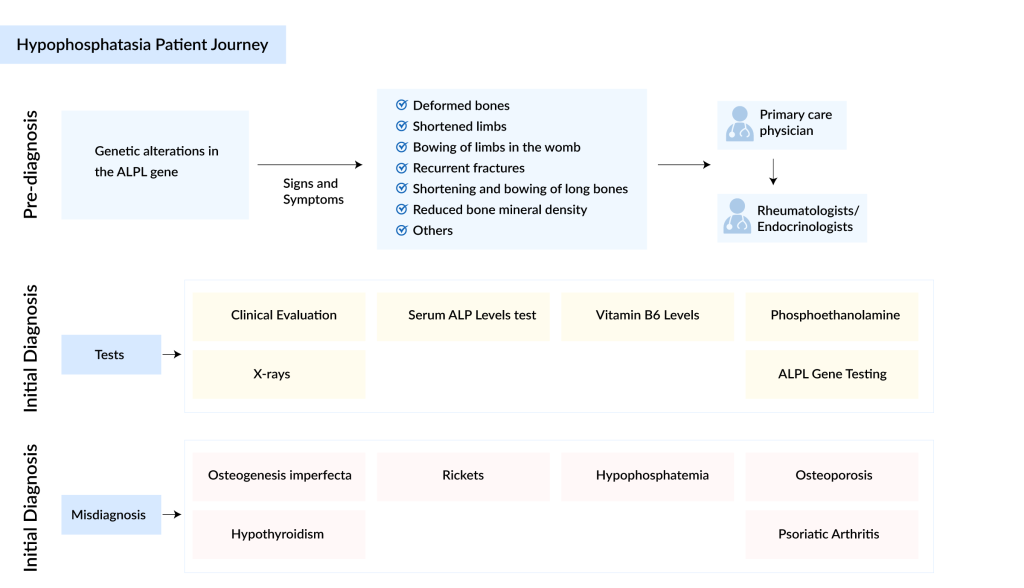
Effective treatment for hypophosphatasia requires a multidisciplinary care model. Pediatric patients benefit from pediatric specialists, while adults are typically managed by endocrinologists or rheumatologists experienced in metabolic bone disorders. Given the rarity of the condition, specialized centers often provide the best outcomes, contributing significantly to the evolving rare disease treatment market and the broader skeletal complications treatment market. In regions with limited access, a hub-and-spoke model enables local providers to collaborate with expert centers remotely.
The care team often includes orthopedic surgeons, dental specialists, pain management experts, and specialist nurses who play a pivotal role in patient education and support. Additionally, physiotherapy, occupational therapy, and psychological services are essential components of comprehensive care, particularly for patients facing long-term functional limitations.
With increasing innovation and awareness, the hypophosphatasia treatment options landscape is expanding, influencing the infantile juvenile onset hypophosphatemia treatment market and driving interest in the hypophosphatasia market globally. However, challenges such as high hypophosphatasia treatment costs and limited accessibility continue to impact patient outcomes, underscoring the need for continued research and market evolution.
In 2015, the FDA granted Alexion STRENSIQ (asfotase alfa) approval as the first medical hypophosphatasia treatment for perinatal, infantile, and juvenile-onset hypophosphatasia. In the US, patients of any age with pediatric-onset hypophosphatasia are eligible for this bone-targeted TNSALP replacement therapy given by subcutaneous injection. Other therapies used in the hypophosphatasia treatment include non-steroidal anti-inflammatory drugs (NSAIDs) like ibuprofen, acetaminophen, and others, Vitamin D3, Phosphate Binders (lanthanum carbonate and others), etc.
Hypophosphatasia Treatment Challenges
AstraZeneca’s STRENSIQ or Alexion STRENSIQ is currently the only approved therapy for hypophosphatasia (hypophosphatasia STRENSIQ), with its approval (STRENSIQ approval) primarily covering perinatal-, infantile-, and juvenile-onset forms of the disease. Despite this, a large proportion of patients, especially adults, remain without effective treatment options.
One of the biggest challenges limiting uptake is the exceptionally high STRENSIQ cost. The STRENSIQ price varies widely depending on patient weight because dosing is weight-based (2 mg/kg three times weekly or 1 mg/kg six times weekly). As a result, the cost of STRENSIQ increases substantially with body weight.
According to DelveInsight estimates, the STRENSIQ annual cost starts at around USD 290,000 for patients weighing between 0–9 kg, but can rise to nearly USD 2.5 million for those over 40 kg. For a typical 20 kg patient in the US, the STRENSIQ cost per year exceeds USD 1 million, making affordability a major concern and raising frequent questions about why is STRENSIQ so expensive.
In addition to pricing barriers, access to treatment is also limited. Given the rarity of hypophosphatasia, therapy is generally confined to specialized centers. Effective management often requires a multidisciplinary approach involving pediatricians, orthopedic surgeons, pedodontists, pain specialists, and other healthcare professionals, further complicating patient access and continuity of care.
Emerging Therapies to Improve Hypophosphatasia Treatment
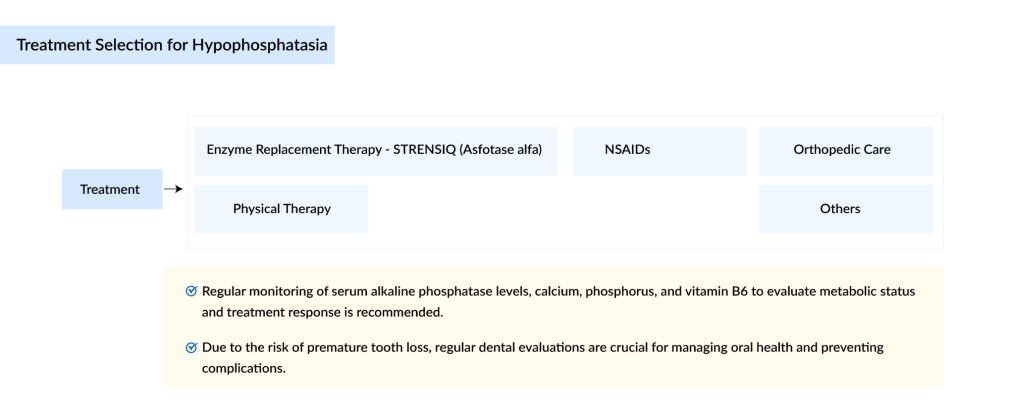
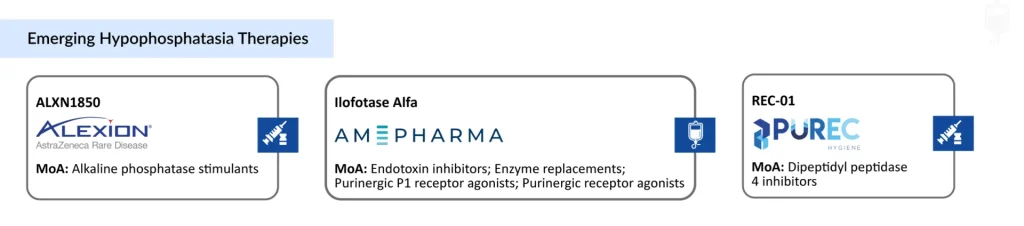
Emerging hypophosphatasia treatment options such as ALXN1850 are designed to improve drug bioavailability and extend shelf life, potentially lowering dosing frequency and overall hypophosphatasia treatment cost. Meanwhile, ilofotase alfa is being specifically developed to address the unmet need for treatment for hypophosphatasia in the adult population, which currently remains underserved within the broader hypophosphatasia market. In parallel, innovative approaches, including ARU-2801 and Engineered B Cell Medicines (ALP-BCM), are advancing in preclinical stages, reflecting growing momentum in the rare disease treatment market and expanding the future landscape of hypophosphatasia medication.
As research progresses, these emerging hypophosphatasia therapies are expected to reshape the hypophosphatasia treatment market, particularly across segments like the infantile juvenile onset hypophosphatemia treatment market, where disease burden and hypophosphatasia symptoms remain significant. Collectively, such advancements are driving renewed focus on the treatment of hypophosphatasia, positioning it within the evolving skeletal complications treatment market and generating notable traction in recent hypophosphatasia news.
AstraZeneca’s ALXN1850
Efzimfotase alfa is a next-generation ERT designed to restore deficient ALP activity, positioning itself as a promising hypophosphatasia treatment in the evolving hypophosphatasia market. By leveraging an advanced TNSALP platform, this therapy aims to improve bone mineralization and more effectively manage hypophosphatasia symptoms, addressing key unmet needs in the treatment of hypophosphatasia.
Compared to existing hypophosphatasia medication such as STRENSIQ, efzimfotase alfa is engineered for enhanced enzymatic activity, improved bioavailability, and a longer half-life, potentially offering differentiated hypophosphatasia treatment options. The drug is administered subcutaneously and is being closely tracked in recent hypophosphatasia news as a strong contender in the rare disease treatment market and skeletal complications treatment market.
Currently, efzimfotase alfa is in the recruiting stage across multiple Phase III studies, HICKORY, MULBERRY, and CHESTNUT, highlighting its growing importance in the hypophosphatasia treatment market. The MULBERRY trial focuses on treatment-naive pediatric patients in Spain, supporting advancements in the infantile juvenile onset hypophosphatemia treatment market. Meanwhile, the CHESTNUT study is evaluating efficacy in children across the US and Japan, and the HICKORY trial is assessing outcomes in adolescents, adults, and elderly populations in Japan.
As development progresses, efzimfotase alfa could significantly influence the hypophosphatasia treatment cost landscape and broaden access to effective treatment for hypophosphatasia, including cases linked to hypophosphatasemia, reinforcing its potential impact across the global hypophosphatasia market.
AM Pharma’s Ilofotase alfa
Ilofotase alfa is a proprietary recombinant alkaline phosphatase engineered from two human isoforms, designed as a promising hypophosphatasia treatment candidate. Across multiple clinical studies, including those targeting hypophosphatasia, it has demonstrated favorable tolerability, strong stability, and high enzymatic activity. Mechanistically, ilofotase alfa targets elevated levels of PLP and inorganic pyrophosphate (PPi), key biomarkers associated with hypophosphatasia symptoms, impaired bone mineralization, and pain, making it a potential treatment for hypophosphatasia and related skeletal complications.
Within the evolving hypophosphatasia treatment market and broader rare disease treatment market, ilofotase alfa represents an important investigational hypophosphatasia medication aimed at addressing unmet needs across patient segments, including those in the infantile juvenile onset hypophosphatemia treatment market. By targeting the underlying biochemical abnormalities, it may also contribute to advancements in the skeletal complications treatment market and expand available hypophosphatasia treatment options.
In September 2021, AM-Pharma entered into an exclusive licensing agreement with Kyowa Kirin, granting rights to develop and commercialize ilofotase alfa in Japan, marking a notable milestone in hypophosphatasia news and the global hypophosphatasia market landscape. The therapy has completed a Phase I/II clinical trial in patients for the treatment of hypophosphatasia, although no recent clinical updates have been disclosed.
Importantly, ilofotase alfa has received Orphan Drug Designation (ODD) from both the US FDA and the EMA, underscoring its potential significance in addressing this rare metabolic disorder, sometimes also referred to as hypophosphatasemia. As development progresses, it may play a key role in shaping the future hypophosphatasia treatment cost dynamics and improving access to innovative therapies.
PuREC’s REC-01
PuREC focuses on regenerative cell therapy leveraging MSCs, a multipotent cell type capable of differentiating into various mesenchymal lineages, including bone. Due to their low immunogenicity, MSCs have emerged as a highly promising modality in the rare disease treatment market, particularly for conditions such as hypophosphatasia and related skeletal disorders. Recent advancements in bone marrow cell isolation techniques have enabled the generation of an ultra-pure, rapidly expanding MSC population through clonal selection based on specific cell surface markers associated with highly clonogenic cells.
PuREC’s proprietary REC platform demonstrates enhanced self-renewal and multilineage differentiation capacity, making it a strong candidate for the treatment of hypophosphatasia and other disorders within the skeletal complications treatment market. Notably, early clinical findings from MSC infusion in patients with severe hypophosphatasia have shown encouraging improvements in bone mineralization and overall bone function, addressing critical hypophosphatasia symptoms and unmet needs in current hypophosphatasia treatment options.
As the hypophosphatasia treatment market evolves, particularly within the infantile juvenile onset hypophosphatemia treatment market, innovative cell-based therapies like REC could redefine the landscape of hypophosphatasia medication and influence the overall hypophosphatasia treatment cost paradigm. These developments are gaining traction in recent hypophosphatasia news, highlighting growing interest in next-generation regenerative approaches.PuREC is actively seeking global partners and licensing opportunities to expand its footprint in the hypophosphatasia market. Currently, a Phase I/II clinical study is underway in Japan, led by Shimane University with funding support from AMED, with leading hospitals already adopting PuREC’s REC technology as part of ongoing efforts to advance hypophosphatasia treatment and related indications, including conditions such as hypophosphatasemia.
Unmet Needs in Hypophosphatasia Treatment
There is a significant gap in addressing hypophosphatasia, from diagnosis to treatment. The rarity of hypophosphatasia, lack of awareness among physicians, and absence of pathognomonic symptoms lead to underdiagnoses or misdiagnoses, especially for mild and moderate forms. Also, estimating the prevalence of hypophosphatasia is challenging due to the scarcity of recent, country-specific epidemiological data.
Sadaf Javed, Manager of Forecasting at DelveInsight, said that in the absence of universal treatment guidelines and due to the high variability in phenotype, the physician treating the patient decides the treatment regimen for hypophosphatasia. This leads to wide variability in the prescribed treatment with no standard protocol, as per Javed.
In terms of hypophosphatasia treatment, although enzyme replacement therapy and supportive measures are available, hypophosphatasia continues to be associated with high morbidity and mortality rates, particularly in children. There is a pressing need for curative therapies to serve as alternatives to current hypophosphatasia treatments. Furthermore, the high cost of existing therapies restricts their accessibility, highlighting the critical need for the development of more affordable hypophosphatasia treatment options.
Hypophosphatasia Treatment Market Outlook for the Future
The hypophosphatasia treatment market presents a unique opportunity for innovative treatments that could potentially generate significant revenue, possibly exceeding USD 1 billion. This potential is exemplified by STRENSIQ, the only approved therapy, which has achieved substantial sales despite a relatively low number of diagnosed cases. In a value-based payment system, high-cost therapies can receive reimbursement if they demonstrate significant improvements in patient symptoms and quality of life.
According to Javed, the hypophosphatasia market is expected to increase due to an increase in disease prevalence and the expected launch of emerging therapies during the forecast period.
A significant future opportunity in the hypophosphatasia market lies in the development and commercialization of gene therapies, which could provide long-term or curative solutions for the disease. Current treatments, such as enzyme replacement therapy, mainly manage symptoms and require lifelong use. Gene therapy has the potential to transform the hypophosphatasia treatment landscape by targeting the genetic root of hypophosphatasia. This advancement could address not only severe cases but also milder forms, greatly expanding the market and meeting a crucial need for durable and effective hypophosphatasia treatment options.

Frequently Asked Questions
AstraZeneca’s STRENSIQ, the only approved hypophosphatasia therapy, is recommended for treating perinatal, infantile, and juvenile-onset hypophosphatasia. The majority of patients, particularly adults, still lack treatment options.
Key players like AstraZeneca (Alexion Pharmaceuticals) ALXN1850 (efzimfotase alfa), AM-Pharma (ilofotase alfa), PuREC’s REC-01, and others are developing drugs for the treatment of hypophosphatasia.
The total market size of hypophosphatasia in the 7MM was close to USD 1 billion in 2023 and is projected to grow at a CAGR of 7.2% by 2034, driven by the anticipated launch of emerging therapies, such as ALXN1850 (efzimfotase alfa), and increased awareness of the disease.
Hypophosphatasia therapy development is challenged by clinical heterogeneity and difficult diagnosis, along with limited treatment options for adult and milder patients. High therapy costs and restricted access further hinder uptake. Additionally, gaps remain in early diagnosis, long-term efficacy data, and standardized treatment approaches.
Some of the hypophosphatasia drugs under development include ALXN1850 (efzimfotase alfa) (AstraZeneca), Ilofotase Alfa (AM-Pharma), REC-01 (PuREC), and others.
Downloads
Article in PDF