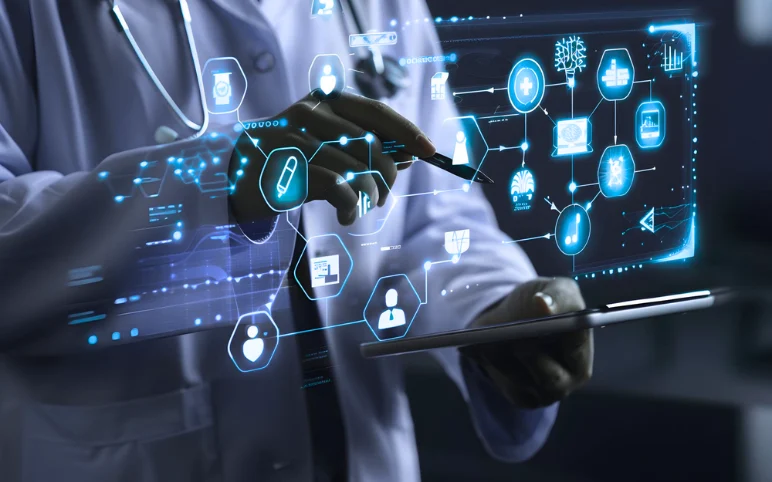
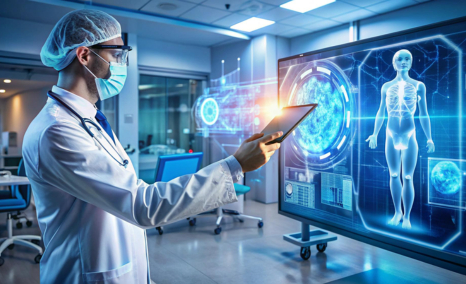
Healthcare used to be defined by devices you could hold: a stethoscope, an MRI scanner, an insulin pump. Increasingly, it's defined by devices you can't hold at all. An algorithm that flags a suspicious mole from a smartphone photo. A program that reads a chest CT and prioritizes the most urgent case in a radiologist's queue. An app that adjusts a diabetes management plan in real time based on continuous glucose data.
None of these tools are "software that comes with" a medical device; they are the medical device. This category is known as Software as a Medical Device (SaMD), and it has quietly become one of the fastest-growing and most consequential segments of th...