
Treg Cell-Based Therapies Pipeline Summary
- The Global Treg Cell-Based Therapies Pipeline is witnessing steady progress, driven by increasing research activities and the development of novel therapeutic candidates across various stages of clinical trials.
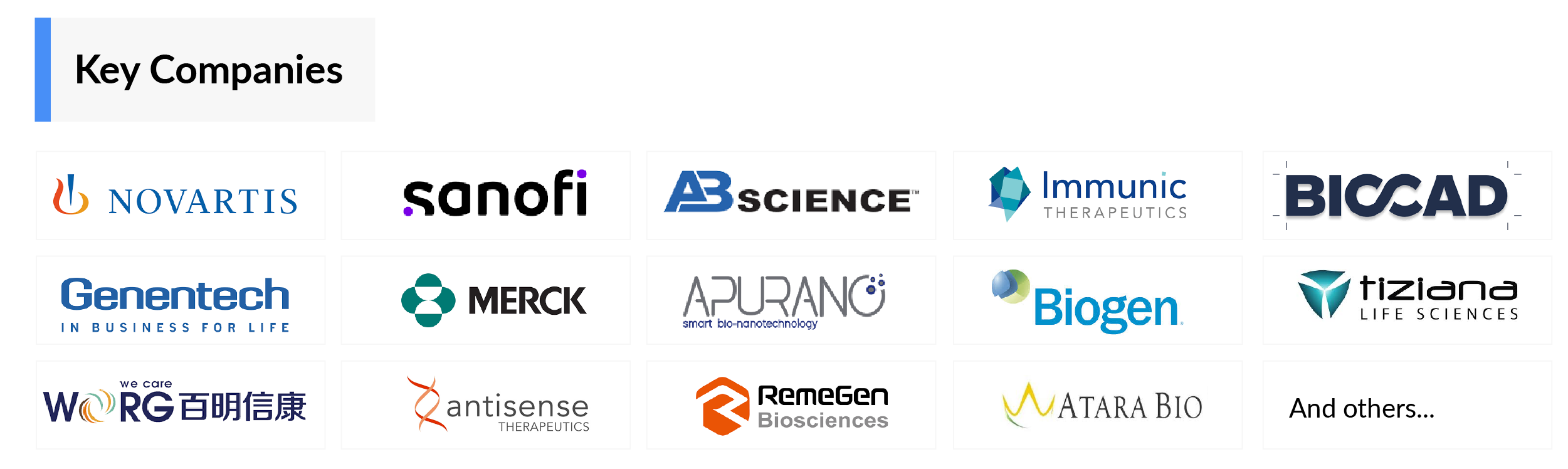
- The leading Treg Cell-Based Therapies Companies include Nektar Therapeutics, PolTREG S.A., Tr1x Bio, Quell Therapeutics, Cue Biopharma, GentiBio, Cellenkos, HCW Biologics, Inc., Cugene, Inc., Coya Therapeutics, Inc., TRexBio, Georgiamune Inc., Sonoma Biotherapeutics, Orca Bio, ActiTrexx, and others.
Request for Unlocking the Sample Page of the "Treg Cell-Based Therapies Pipeline"
Key Factors Driving the Treg Cell-Based Therapies Pipeline Growth
-
Rising Prevalence of Autoimmune Diseases
The increasing incidence of autoimmune disorders such as Type 1 Diabetes, Multiple Sclerosis, Rheumatoid Arthritis, and Lupus is driving demand for innovative immune-regulating therapies.
-
Growing Focus on Immune Tolerance Restoration
Unlike conventional immunosuppressive treatments, Treg cell-based therapies aim to restore immune tolerance, offering the potential for long-term disease control and improved patient outcomes.
-
Advancements in Cell Therapy Technologies
Innovations in cell isolation, expansion, engineering, and manufacturing processes are accelerating the development and scalability of Treg-based therapeutic platforms.
-
Expanding Clinical Applications
Treg cell therapies are being investigated across a broad spectrum of indications, including autoimmune diseases, organ transplantation, graft-versus-host disease, and inflammatory disorders.
-
Increasing Investment in Cell Therapy Research
Pharmaceutical companies, biotechnology firms, and academic institutions are significantly increasing investments in next-generation cell therapy programs, fueling pipeline growth.
-
Strong Clinical Development Activity
A growing number of early- and late-stage clinical trials are generating encouraging safety and efficacy data, supporting the advancement of Treg-based therapies.
-
Advances in Gene Editing and Cell Engineering
Technologies such as CAR-Treg engineering, CRISPR-based gene editing, and precision cell modification are enhancing the therapeutic potential and specificity of Treg therapies.
-
Unmet Need in Transplantation and Autoimmune Disorders
The lack of curative treatment options for many immune-mediated diseases continues to create strong demand for targeted and durable therapeutic approaches.
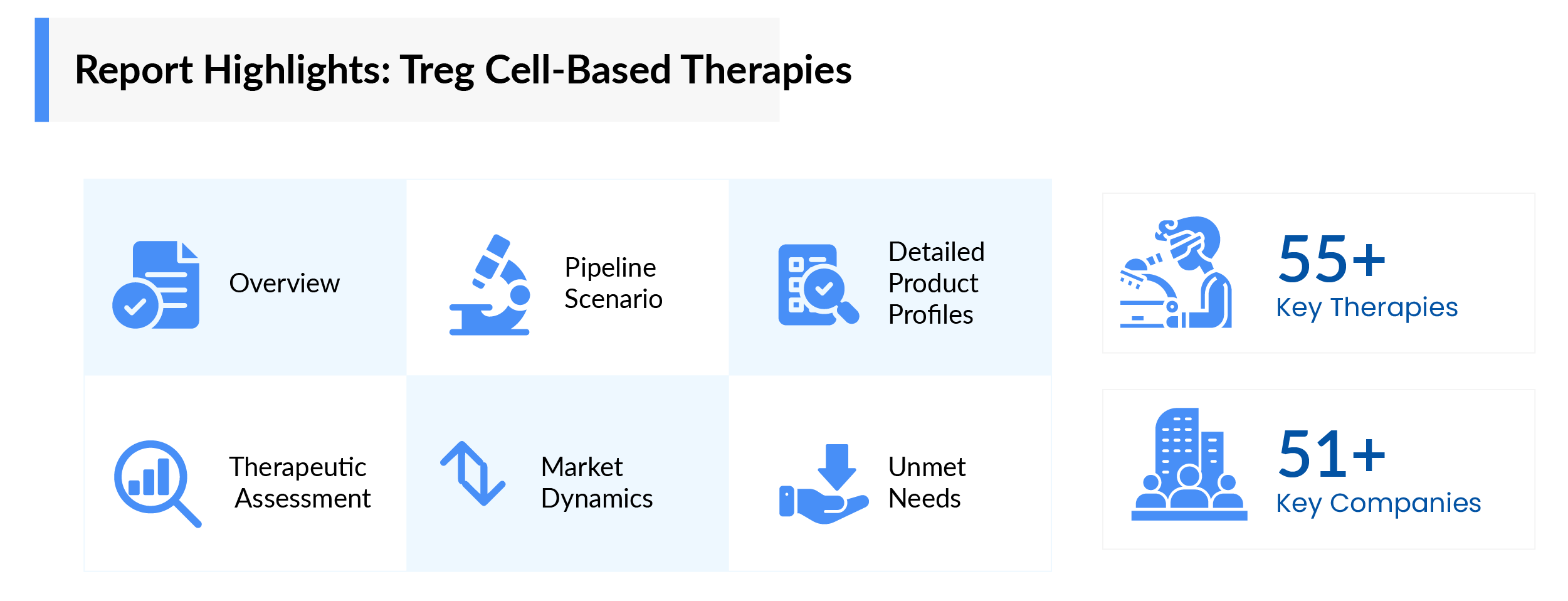
DelveInsight’s “Treg Cell-Based Therapies Pipeline Insight, 2026” report provides comprehensive insights about 45+ companies and 55+ pipeline drugs in Treg Cell-Based Therapies pipeline landscape. It covers the pipeline drug profiles, including clinical and nonclinical stage products. It also covers the therapeutics assessment by product type, stage, route of administration, and molecule type. It further highlights the inactive pipeline products in this space.
Geography Covered
- Global coverage
Treg Cell-Based Therapies Understanding
Treg Cell-Based Therapies Overview
Regulatory T cell (Treg) Therapy has emerged as a novel frontier in immunotherapy, aiming to re-establish immune tolerance by harnessing the body’s natural suppressor cells. Regulatory T cells (Tregs) represent a specialized subset of CD4+ T lymphocytes crucial for maintaining immune Homeostasis and preventing autoimmunity. Originally characterized by their high expression of CD25 (the IL-2 receptor α-chain) and the transcription factor FOXP3, Tregs play an essential role in dampening excessive immune responses and promoting tolerance to self-antigens.
The mechanism of Treg cell-based therapies involves suppression of pathogenic immune responses through multiple complementary pathways. Regulatory T cells inhibit the activation and proliferation of effector T cells, Dendritic cells, and other immune cells by secreting anti-inflammatory cytokines such as interleukin-10 (IL-10), transforming growth factor-beta (TGF-β), and IL-35. Tregs also consume IL-2, reducing the availability of this growth factor for inflammatory T cells, while immune checkpoint molecules such as CTLA-4, CD39, and CD73 further suppress immune activation.
Engineered antigen-specific Tregs can selectively migrate to inflamed tissues and exert localized immunosuppressive effects, thereby minimizing systemic immunosuppression. Additionally, Tregs can induce “infectious tolerance,” in which surrounding immune cells acquire suppressive properties, amplifying long-term immune regulation.
Therapeutically, Treg cell-based therapies are being explored across a broad range of immune-mediated diseases. Clinical and preclinical studies have demonstrated potential benefits in autoimmune disorders such as Type 1 Diabetes, Systemic Lupus Erythematosus, Multiple Sclerosis, Rheumatoid Arthritis, Inflammatory bowel disease, Autoimmune Hepatitis, and allergic diseases. Treg therapies are also being investigated to prevent organ transplant rejection and manage graft-versus-host disease following hematopoietic stem cell transplantation. Emerging research further suggests applications in neurological disorders, tissue repair, fibrosis, and regenerative medicine due to the anti-inflammatory and tissue-protective functions of Tregs.
The primary advantage of Treg-based therapy lies in its potential to restore immune tolerance with high specificity, thereby reducing the need for broad-spectrum immunosuppression and its associated toxicities. This targeted modulation enhances therapeutic potential by effectively suppressing autoreactive T cells while preserving overall immune competence. Advanced monitoring technologies now enable comprehensive tracking of Treg persistence, stability, and function in trials, representing significant progress in the field.
However, several disadvantages and limitations hinder widespread clinical application. A major challenge is the low frequency of Tregs in peripheral blood, making isolation and large-scale ex vivo expansion difficult and costly. Tregs also exhibit phenotypic instability, particularly in inflammatory microenvironments where they may lose FOXP3 expression or convert into effector cells. Additionally, the lack of selectivity in polyclonal products can lead to off-target effects and limited persistence. Significant manufacturing complexities, including the need for specialized GMP facilities and highly trained personnel, further present translational bottlenecks.
"Treg Cell-Based Therapies Pipeline Insight, 2026" report by DelveInsight outlays comprehensive insights of present scenario and growth prospects across the indication. A detailed picture of the Treg Cell-Based Therapies pipeline landscape is provided which includes the disease overview and Treg Cell-Based Therapies treatment guidelines. The assessment part of the report embraces, in depth Treg Cell-Based Therapies commercial assessment and clinical assessment of the pipeline products under development. In the report, detailed description of the drug is given which includes Treg Cell-Based Therapies mechanism of action of the drug, clinical studies, NDA approvals (if any), and product development activities comprising the technology, Treg Cell-Based Therapies collaborations, licensing, mergers and acquisition, funding, designations and other product related details.
Treg Cell-Based Therapies Pipeline Report Highlights
The Treg Cell-Based Therapies Companies and academics are working to assess challenges and seek opportunities that could influence Treg Cell-Based Therapies R&D. The Treg Cell-Based Therapies Therapies under development are focused on novel approaches to treat/improve Treg Cell-Based Therapies.
Treg Cell-Based Therapies Emerging Drugs Analysis
This segment of the Treg Cell-Based Therapies Pipeline Report encloses its detailed analysis of various drugs in different stages of clinical development, including phase II, I, preclinical and Discovery. It also helps to understand Treg Cell-Based Therapies Clinical Trial details, expressive pharmacological action, agreements and collaborations, and the latest news and press releases.
Treg Cell-Based Therapies Emerging Drugs
-
Rezpegaldesleukin: Nektar Therapeutics
Rezpegaldesleukin is an innovative biologic acting as an agonist to target Interleukin-2 Receptors located on regulatory T cells (Tregs). By targeting receptors on regulatory T cells, rezpegaldesleukin stimulates the proliferation of these cells, including FOX-P3+ Tregs. Regulatory T cells act as a master immune-modulator upstream of the pro-inflammatory cytokine pathways, which drive Th1, Th2, and Th17-mediated inflammatory disorders, such as Atopic Dermatitis or Eczema.
By increasing the number and functionality of regulatory T cells, this investigational therapy aims to reduce inflammation more effectively than specific antagonist mechanisms that may target only one pathway. Currently, the drug is being evaluated in the Phase II stage of its development for the treatment of Atopic Dermatitis, Alopecia Areata and Diabetes Mellitus.
-
TRX319: Tr1x Bio
TRX319 is an investigational allogeneic CAR-engineered Type 1 regulatory T-cell (CAR-Tr1 Treg) therapy being developed by Tr1X, Inc. for the treatment of progressive Multiple Sclerosis and other autoimmune diseases. The therapy is designed as an “off-the-shelf” cell therapy generated from healthy donor-derived CD4+ T cells that are engineered to mimic the immunoregulatory functions of Type 1 regulatory T cells (Tr1 cells).
Unlike conventional autologous cell therapies, TRX319 utilizes an allogeneic platform intended to improve scalability, manufacturing efficiency, and accessibility for broader clinical use. Currently, the drug is being evaluated in the Phase I/II stage of its development for the treatment of Progressive Multiple Sclerosis.
-
QEL-001: Quell Therapeutics
QEL-001 is an investigational autologous regulatory T cell (Treg) therapy being developed by Quell Therapeutics for the treatment of autoimmune and immune-mediated diseases. The therapy is part of Quell Therapeutics’ engineered Treg cell platform, which aims to restore immune tolerance by using genetically modified regulatory T cells capable of suppressing abnormal immune responses in a targeted manner.
QEL-001 is designed to enhance the natural immunosuppressive function of Tregs while improving their stability, persistence, and tissue-specific activity through advanced cell engineering technologies. The mechanism of QEL-001 involves the isolation of patient-derived Tregs followed by ex vivo expansion and genetic engineering to optimize their immunoregulatory properties. Currently, the drug is being evaluated in the Phase I/II stage of its development for the treatment of Liver Transplantation.
-
CUE-401: Cue Biopharma
CUE-401, a lead CUE-400 series candidate is designed to induce stable FOXP3+ regulatory immune T cells. FOXP3+Tregs (both nTregs and iTregs) are critical in maintaining immune tolerance and homeostasis of the immune system. CUE-401 has been demonstrated in multiple preclinical models to proliferate both FOXP3+ nTregs, as well as induce and proliferate FOXP3+ iTregs. Currently, the drug is being evaluated in the preclinical stage of its development for the treatment of Autoimmune & Inflammation.
Treg Cell-Based Therapies Drug Therapeutic Assessment
This segment of the Treg Cell-Based Therapies Pipeline Report provides insights about the different Treg Cell-Based Therapies drugs segregated based on following parameters that define the scope of the report, such as:
Major Treg Cell-Based Therapies Companies
There are approx. 45+ key companies which are developing the therapies for Treg Cell-Based Therapies. The companies which have their Treg Cell-Based Therapies drug candidates in the mid stage, i.e. Phase II include, Nektar Therapeutics.
Treg Cell-Based Therapies Clinical Trial Phases
DelveInsight’s Treg Cell-Based Therapies Pipeline Report covers around 55+ products under different phases of clinical development like
- Late stage products (Phase III)
- Mid-stage products (Phase II)
- Early-stage product (Phase I) along with the details of
- Pre-clinical and Discovery stage candidates
- Discontinued & Inactive candidates
Treg Cell-Based Therapies Route of Administration
Treg Cell-Based Therapies pipeline report provides the therapeutic assessment of the pipeline drugs by the Route of Administration. Products have been categorized under various ROAs such as
- Oral
- Intravenous
- Subcutaneous
- Parenteral
- Topical
Treg Cell-Based Therapies Product Molecule Type
Treg Cell-Based Therapies Products have been categorized under various Molecule types such as
- Recombinant fusion proteins
- Small molecule
- Monoclonal antibody
- Peptide
- Polymer
- Gene therapy
Treg Cell-Based Therapies Product Type
Drugs have been categorized under various product types like Mono, Combination and Mono/Combination.
Treg Cell-Based Therapies Clinical Trial Activities
The Treg Cell-Based Therapies pipeline report provides insights into different Treg Cell-Based Therapies clinical trials within phase II, I, preclinical and discovery stage. It also analyses Treg Cell-Based Therapies therapeutic drugs key players involved in developing key drugs.
Treg Cell-Based Therapies Pipeline Development Activities
The Treg Cell-Based Therapies clinical Trial analysis report covers the detailed information of collaborations, acquisition and merger, licensing along with a thorough therapeutic assessment of emerging Treg Cell-Based Therapies drugs.
Treg Cell-Based Therapies Pipeline Report Insights
- Treg Cell-Based Therapies Pipeline Analysis
- Treg Cell-Based Therapies Therapeutic Assessment
- Treg Cell-Based Therapies Unmet Needs
- Impact of Treg Cell-Based Therapies Drugs
Treg Cell-Based Therapies Pipeline Report Assessment
- Treg Cell-Based Therapies Pipeline Product Profiles
- Treg Cell-Based Therapies Therapeutic Assessment
- Treg Cell-Based Therapies Pipeline Assessment
- Treg Cell-Based Therapies Inactive drugs assessment
- Treg Cell-Based Therapies Market Unmet Needs
Key Questions Answered In The Treg Cell-Based Therapies Pipeline Report:
- Current Treatment Scenario and Emerging Therapies:
- How many companies are developing Treg Cell-Based Therapies drugs?
- How many Treg Cell-Based Therapies drugs are developed by each company?
- How many emerging drugs are in mid-stage, and late-stage of development for the treatment of Treg Cell-Based Therapies?
- What are the key collaborations (Industry–Industry, Industry–Academia), Mergers and acquisitions, licensing activities related to the Treg Cell-Based Therapies therapeutics?
- What are the recent trends, drug types and novel technologies developed to overcome the limitation of existing therapies?
- What are the clinical studies going on for Treg Cell-Based Therapies and their status?
- What are the key designations that have been granted to the emerging drugs?
Treg Cell-Based Therapies Companies
- Nektar Therapeutics
- PolTREG S.A.
- Tr1x Bio
- Quell Therapeutics
- Cue Biopharma
- GentiBio
- Cellenkos
- HCW Biologics, Inc.
- Cugene, Inc.
- Coya Therapeutics, Inc.
- TRexBio
- Georgiamune Inc
- Sonoma Biotherapeutics
- Orca Bio
- ActiTrexx
Treg Cell-Based Therapies Key Products
- Rezpegaldesleukin
- PTG-007
- TRX319
- QEL-001
- CUE-401
- GNTI-122
- CK0801
- HCW9302
- CUG252
- COYA302
- TRB-071
- GIM-407
- SBT-77-7101
- Orca-T
- ATX-002
Stay updated with us for Recent Articles @ New DelveInsight Blogs


