Bioelectric Medicine Market Summary
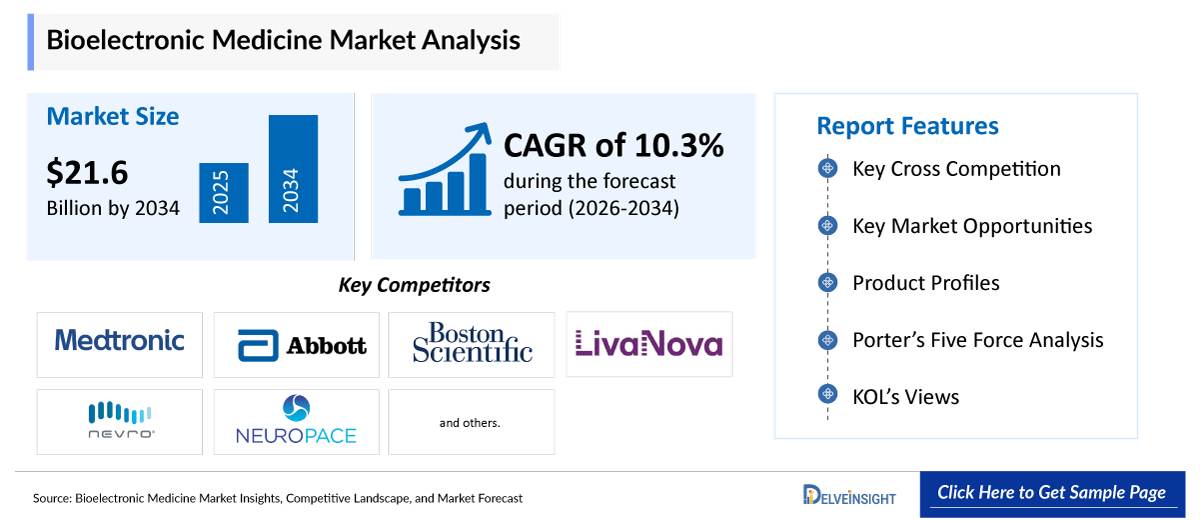
- The global bioelectronic medicine market size was valued at USD 8.9 billion in 2025 and is projected to reach USD 21.6 billion by 2034.
- The market is expected to expand at a CAGR of 10.3% during the forecast period 2026-2034, supported by regulatory validation of neuroimmune modulation for autoimmune disease, the rising prevalence of chronic pain, movement, and inflammatory disorders, the shift toward closed-loop and AI-adaptive stimulation platforms, and the expanding indications and reimbursement pathways for implantable neurostimulation.
- By product, the spinal cord stimulation systems segment dominated the bioelectronic medicine market with a 34% share in 2025.
- By application, the chronic pain management segment dominated the bioelectronic medicine market with a 30% share in 2025.
- By end-user, the hospitals segment dominated the bioelectronic medicine market with a 55% share in 2025.
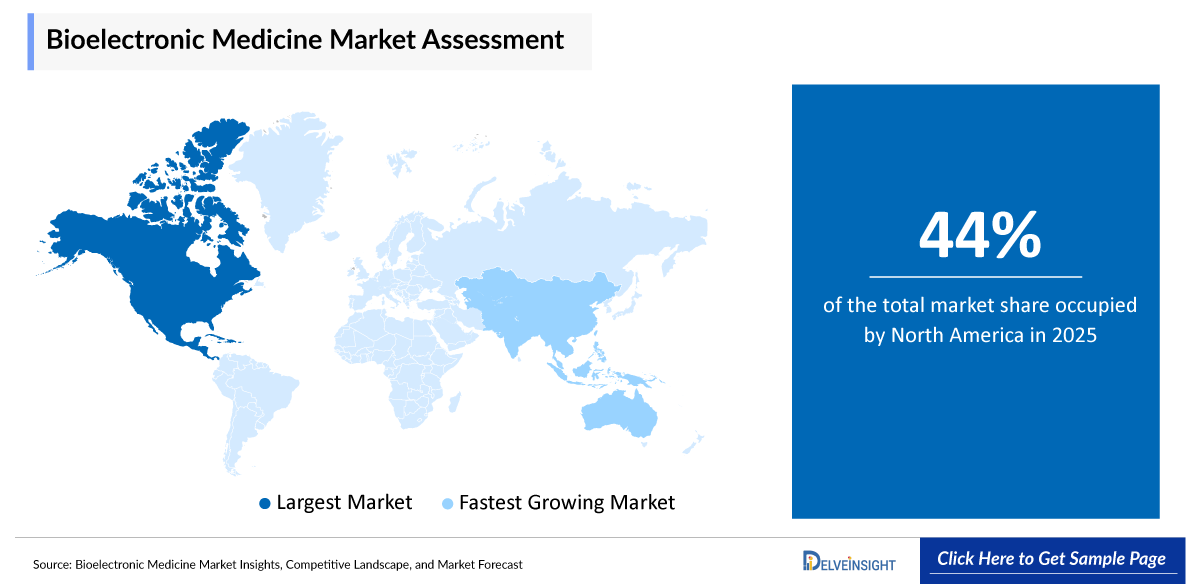
- North America accounted for the largest share of the bioelectronic medicine market at 44% in 2025, while Asia-Pacific is anticipated to register the fastest growth through 2034.
Bioelectronic medicine, also referred to as neuromodulation or electroceutical therapy, refers to implantable and non-invasive devices that deliver targeted electrical impulses to peripheral nerves, the spinal cord, or the brain to modulate neural circuits and treat chronic disease without pharmaceuticals. The scope encompasses spinal cord stimulation (SCS) systems for chronic pain from Medtronic, Boston Scientific, Abbott, and Nevro; deep brain stimulation (DBS) systems for Parkinson's disease and essential tremor from Medtronic, Boston Scientific, and Abbott; sacral and tibial neuromodulation systems for bladder and bowel dysfunction from Axonics (Boston Scientific) and Medtronic; vagus nerve stimulation (VNS) systems for drug-resistant epilepsy and depression from LivaNova, and for autoimmune and inflammatory disease from SetPoint Medical and Galvani Bioelectronics; responsive closed-loop neurostimulation for epilepsy from NeuroPace; hypoglossal nerve stimulation for obstructive sleep apnea from Inspire Medical Systems and LivaNova; and non-invasive transcutaneous vagus nerve stimulation from electroCore. The market is defined by the convergence of established neuromodulation categories with the emerging class of neuroimmune bioelectronic therapies, marked by the 2025 FDA approval of the first implanted vagus nerve stimulator for rheumatoid arthritis.
Bioelectronic Medicine Market Key Growth Drivers
- Regulatory validation of neuroimmune modulation, with the 2025 FDA premarket approval of the SetPoint System establishing the first regulatory pathway for an implanted bioelectronic device in autoimmune disease and opening a precedent for adjacent indications.
- Rising prevalence of chronic pain, movement disorders, and drug-resistant epilepsy that are inadequately controlled by pharmacological therapy alone.
- Shift toward closed-loop, sensing-enabled, and AI-adaptive neurostimulation platforms that personalize therapy and improve long-term outcomes.
- Expanding clinical evidence and reimbursement pathways that broaden patient access to implantable neuromodulation across pain, neurological, and urological indications.
- Growing incidence of obstructive sleep apnea and bladder and bowel dysfunction driving adoption of hypoglossal and sacral neuromodulation systems as alternatives to continuous positive airway pressure and pharmacological management.
- Sustained device miniaturization, extended battery life, and MRI-conditional labeling that broaden patient eligibility and reduce reintervention rates.
- Increasing investment from medical technology companies and pharmaceutical companies in neuroimmune and bioelectronic platforms, exemplified by the GSK-Verily joint venture Galvani Bioelectronics and corporate venture investment in specialist neuromodulation companies.
Key Companies in Bioelectronic Medicine Market
The leading participants in the bioelectronic medicine market include the following:
- Medtronic plc
- Boston Scientific Corporation
- Abbott Laboratories
- LivaNova PLC
- Nevro Corp.
- NeuroPace, Inc.
- Inspire Medical Systems, Inc.
- SetPoint Medical Corporation
- electroCore, Inc.
- Saluda Medical Pty Ltd, and others
For illustrative purposes, only the top 10 companies are listed in the Table of Contents. The report may include analysis and references to additional companies relevant to the market assessment.
Bioelectronic Medicine Market Size
The following table summarizes the headline market metrics for the global bioelectronic medicine market across the base year and the forecast horizon.
|
Report Metrics |
Details |
|
2025 Market Size |
USD 8.9 billion |
|
2034 Projected Market Size |
USD 21.6 billion |
|
Growth Rate (2026-2034) |
10.3% CAGR |
|
Largest Market |
North America (44% share in 2025) |
|
Fastest Growing Market |
Asia-Pacific |
|
Market Structure |
Moderately Consolidated |
All market values are expressed in USD and represent DelveInsight estimates synthesized from primary and secondary research.
Factors Contributing to the Growth of the Bioelectronic Medicine Market
Bioelectronic Medicine Market Drivers
- Regulatory Validation of Neuroimmune Modulation: The foundational driver reshaping the bioelectronic medicine market is the regulatory validation of neuroimmune modulation as a treatment modality. In July 2025, the FDA granted premarket approval to the SetPoint System from SetPoint Medical, the first implanted neurostimulation device approved for an autoimmune indication, specifically moderate-to-severe rheumatoid arthritis in adults who have had an inadequate response to, or cannot tolerate, biologic or targeted synthetic disease-modifying antirheumatic drugs. The approval was supported by the pivotal RESET-RA trial, a randomized, sham-controlled study, and establishes a regulatory pathway and a body of premarket approval precedent for neuroimmune bioelectronic devices. This approval follows decades of research into the cholinergic anti-inflammatory pathway, which established that stimulating the cervical vagus nerve activates the body's innate anti-inflammatory and immune-restorative mechanisms. The precedent set by the SetPoint System approval reduces regulatory uncertainty for adjacent programs, including Galvani Bioelectronics' splenic nerve stimulation platform and vagus nerve stimulation programs under investigation for Crohn's disease and other inflammatory conditions, and it signals to clinicians, payers, and investors that neuroimmune bioelectronic therapy has moved from investigational science to an approved standard of care option. The regulatory validation of neuroimmune modulation sustains demand and reshapes the addressable market for bioelectronic medicine across the forecast period.
- Rising Prevalence of Chronic Pain, Movement Disorders, and Drug-Resistant Epilepsy: The rising prevalence of chronic pain, movement disorders such as Parkinson's disease and essential tremor, and drug-resistant epilepsy sustains demand for established neuromodulation categories that anchor the bioelectronic medicine market. Chronic pain that is refractory to pharmacological management, including failed back surgery syndrome and vertebrogenic low back pain, drives adoption of spinal cord stimulation systems from Medtronic, Boston Scientific, Abbott, and Nevro, and the growing clinical evidence base for durable pain relief and opioid-sparing outcomes reinforces payer support. The aging of the population increases the prevalence of Parkinson's disease and essential tremor, driving adoption of deep brain stimulation systems, while roughly one in three patients with epilepsy do not achieve seizure control with medication alone, sustaining demand for vagus nerve stimulation and responsive neurostimulation. As the prevalence of these conditions grows and as patients and clinicians seek alternatives to escalating pharmacological regimens, demand for bioelectronic neuromodulation across pain, movement, and neurological indications is sustained across the forecast period.
- Shift toward Closed-Loop and AI-Adaptive Neurostimulation: The shift toward closed-loop, sensing-enabled, and AI-adaptive neurostimulation platforms is reshaping competition and expanding the value proposition of bioelectronic devices. Medtronic's Percept family incorporates BrainSense technology that records local field potentials to inform adaptive deep brain stimulation, and the FDA authorized an adaptive, self-adjusting configuration of the Percept system in 2025, the first of its kind for deep brain stimulation. Boston Scientific and Abbott have advanced directional leads and multiple independent current control technology in their Vercise Genus and Infinity and Liberta RC platforms, and Saluda Medical's Evoke system uses evoked compound action potentials to close the loop on spinal cord stimulation dosing. NeuroPace's RNS System continuously monitors electrocorticographic activity and delivers responsive stimulation at the seizure focus. These closed-loop capabilities improve titration accuracy, reduce side effects, and generate objective outcome data that supports reimbursement and long-term therapy optimization. As closed-loop and sensing-enabled platforms demonstrate superior symptom control and adherence, vendors compete increasingly on data and software capability rather than stimulation hardware alone, sustaining innovation-led growth across the forecast period.
- Expanding Clinical Evidence and Reimbursement Pathways: The expansion of clinical evidence and reimbursement pathways broadens patient access to bioelectronic therapy and sustains adoption across indications. Long-term registry and randomized trial data supporting spinal cord stimulation for chronic pain, deep brain stimulation for Parkinson's disease, and vagus nerve stimulation for drug-resistant epilepsy have strengthened clinical guideline recommendations and payer coverage policies in the United States, Europe, and Japan. Newer categories, including sacral and tibial neuromodulation for bladder and bowel dysfunction and hypoglossal nerve stimulation for obstructive sleep apnea, have built comparable evidence bases that have moved these therapies from niche to guideline-supported options. As clinical evidence accumulates and reimbursement coverage expands across public and private payers, referral patterns shift toward earlier consideration of bioelectronic therapy rather than treatment of last resort, sustaining demand across the forecast period.
- Growing Incidence of Obstructive Sleep Apnea and Bladder and Bowel Dysfunction: The growing incidence of obstructive sleep apnea and of urinary and bowel dysfunction drives adoption of hypoglossal and sacral and tibial neuromodulation as alternatives to continuous positive airway pressure and pharmacological management, for patients who cannot tolerate or do not adequately respond to first-line therapy. Hypoglossal nerve stimulation systems from Inspire Medical Systems and LivaNova stimulate the airway-opening muscles in synchrony with respiration, and Boston Scientific's 2024 acquisition of Axonics reinforced the commercial scale of sacral neuromodulation for overactive bladder and fecal incontinence alongside Medtronic's InterStim platform. As the prevalence of obesity-associated sleep apnea and of pelvic floor and bladder dysfunction increases with the aging population, demand for these bioelectronic alternatives grows across the forecast period.
- Investment from Medical Technology and Pharmaceutical Companies: Increasing investment from established medical technology companies and pharmaceutical companies in neuroimmune and bioelectronic platforms expands the pipeline and commercial scale of the market. Boston Scientific's 2024 acquisition of Axonics for approximately USD 3.7 billion and its earlier acquisition of Relievant Medsystems reinforced its neuromodulation portfolio, while the GSK-Verily joint venture Galvani Bioelectronics, backed by more than USD 700 million in committed investment, advances splenic and vagus nerve stimulation for inflammatory disease. In March 2025, Galvani and Johnson & Johnson announced a collaboration to develop graphene-based bioelectronic vagus nerve therapies for immune, metabolic, and inflammatory disorders. As established companies and pharmaceutical firms commit capital and clinical infrastructure to bioelectronic platforms, the pace of product development, clinical validation, and commercial scale-up accelerates across the forecast period.
Bioelectronic Medicine Market Restraints
The bioelectronic medicine market faces several interrelated restraints that temper its growth. The foremost is the high upfront cost of implantable systems and procedures, which require investment in the pulse generator, leads, surgical implantation, and follow-up programming, and payers in many geographies apply prior authorization and trial-stimulation requirements before approving permanent implantation. The invasiveness of surgical implantation and the associated risks of infection, lead migration, and hardware-related complications limit candidacy and drive some patients and clinicians to defer therapy in favor of continued pharmacological management. Reimbursement and regulatory pathways for the newest categories, particularly neuroimmune vagus nerve stimulation, remain in the early stages of establishment outside the United States, and coverage determinations, coding, and clinician familiarity will take time to mature. Device-related considerations, including battery longevity, the need for periodic replacement or recharging, and MRI-conditional labeling requirements, add ongoing burden for patients and health systems. Clinician training and the availability of specialized neuromodulation and neuroimmunology centers capable of implantation and long-term programming remain concentrated in leading academic and referral centers, constraining access in lower-resource and rural settings. Together, these factors moderate the pace of adoption and require vendors to demonstrate long-term safety, cost-effectiveness, and streamlined implantation and programming workflows to sustain growth.
Bioelectronic Medicine Market Segment Analysis
The global bioelectronic medicine market is segmented by product (spinal cord stimulation systems, deep brain stimulation systems, sacral and tibial neuromodulation systems, vagus nerve stimulation systems, responsive and closed-loop neurostimulation, hypoglossal nerve stimulation systems, and other peripheral and non-invasive bioelectronic devices), by application (chronic pain management, movement disorders, urinary and bowel dysfunction, obstructive sleep apnea, epilepsy, depression and psychiatric disorders, inflammatory and autoimmune disease, and others), by end-user (hospitals, ambulatory surgical centers, specialty neurology and pain clinics, and others), and by geography (North America, Europe, Asia-Pacific, and the Rest of the World).
By Product
Dominant Subsegment: Spinal Cord Stimulation Systems.
The spinal cord stimulation systems category is expected to dominate the market. The spinal cord stimulation segment accounted for a 34% share of the bioelectronic medicine market in 2025. Spinal cord stimulation systems, including the Medtronic Intellis and Inceptiv platforms, the Boston Scientific Precision and WaveWriter platforms, the Abbott Proclaim platform, the Nevro Senza platform, and the Saluda Medical Evoke closed-loop platform, are the leading product category because chronic pain is the largest single indication addressed by implantable neurostimulation and because the category benefits from the deepest and longest-established clinical evidence base and reimbursement coverage among bioelectronic therapies. The dominance of the segment reflects the breadth of competing platforms from the largest medical technology companies, the extension of indications to vertebrogenic low back pain and painful diabetic neuropathy, and the ongoing shift toward rechargeable, MRI-conditional, and closed-loop dosing systems. While deep brain stimulation, sacral and tibial neuromodulation, vagus nerve stimulation, and hypoglossal nerve stimulation are substantial and, in the case of neuroimmune vagus nerve stimulation, faster-growing categories, the scale, competitive depth, and reimbursement maturity of spinal cord stimulation sustain the leadership of the segment across the forecast period.
By Application
Dominant Subsegment: Chronic Pain Management.
The chronic pain management category is expected to dominate the market. The chronic pain management segment accounted for a 30% share of the bioelectronic medicine market in 2025. Chronic pain, including failed back surgery syndrome, complex regional pain syndrome, vertebrogenic low back pain, and painful diabetic neuropathy, is the leading application because it affects a substantial share of adults and because spinal cord stimulation and emerging peripheral nerve stimulation platforms, including the Neuros Medical Altius system, provide durable, opioid-sparing symptom control supported by extensive clinical evidence. The dominance of the segment reflects the size of the eligible patient population, the maturity of reimbursement coverage for spinal cord stimulation across major markets, and the policy emphasis on non-pharmacological pain management amid concern over opioid dependence. While movement disorders, urinary and bowel dysfunction, obstructive sleep apnea, epilepsy, and inflammatory and autoimmune disease are significant and, in several cases, faster-growing applications, the scale and reimbursement depth of chronic pain management sustain the leadership of the segment across the forecast period.
By End-User
Dominant Subsegment: Hospitals.
The hospitals category is expected to dominate the market. The hospitals segment accounted for a 55% share of the bioelectronic medicine market in 2025. Hospitals, including academic medical centers and comprehensive epilepsy and movement disorder centers, are the principal setting for bioelectronic device implantation because they provide the surgical, imaging, anesthesia, and multidisciplinary programming infrastructure required for deep brain stimulation, responsive neurostimulation, and neuroimmune vagus nerve stimulation, and because they concentrate the specialist referral base for complex candidacy evaluation. The dominance of the segment reflects the surgical complexity of implantation, the need for post-implant device programming and follow-up by specialized clinical teams, and the requirement for comprehensive epilepsy and movement disorder center accreditation for several device categories. While ambulatory surgical centers are an increasingly important setting for spinal cord stimulation and sacral neuromodulation implantation, and specialty neurology and pain clinics play a growing role in device programming and follow-up, the depth of surgical and multidisciplinary infrastructure in hospitals sustains the leadership of the segment across the forecast period.
Bioelectronic Medicine Market Region Analysis
Dominant Region: North America
North America accounted for a 44% share of the global bioelectronic medicine market in 2025, representing the highest regional market share globally. The leadership of the region reflects the concentration of the leading device manufacturers, the depth of FDA premarket approval activity, the advanced reimbursement coverage of neuromodulation therapies under Medicare and commercial payers, and the presence of the leading academic epilepsy, movement disorder, and pain centers. The United States is the largest national market, anchored by the 2025 FDA approval of the first neuroimmune vagus nerve stimulation device, the concentration of Medtronic, Boston Scientific, Abbott, Nevro, LivaNova, NeuroPace, Inspire Medical Systems, and SetPoint Medical commercial and research operations, and comprehensive coverage policies for spinal cord stimulation, deep brain stimulation, and sacral neuromodulation. The regulatory leadership, reimbursement maturity, and concentration of vendors and specialist centers reinforce the position of North America as the largest regional market across the forecast period.
Fastest Growing Region: Asia-Pacific
Asia-Pacific is projected to register the fastest compound annual growth rate through 2034. The region is expanding and modernizing its neurology, pain management, and urology infrastructure, increasing diagnosis rates for chronic pain, epilepsy, and movement disorders, and adopting spinal cord stimulation, deep brain stimulation, and sacral neuromodulation from a growing base. China, Japan, and India are the principal national markets, supported by the construction and modernization of hospitals, the expansion of neurosurgical and pain management specialist training, the aging of the population, and increasing awareness of bioelectronic alternatives to long-term pharmacological management. As hospitals build specialist neuromodulation programs and as awareness of bioelectronic therapy increases, the region increases its adoption of bioelectronic devices from a growing base, positioning Asia-Pacific as the fastest-growing regional market and attracting commercial investment from the leading global vendors.
Bioelectronic Medicine Market Regional Commentary
North America
North America leads the market, supported by the concentration of leading vendors, the depth of FDA regulatory activity and premarket approvals, and advanced reimbursement coverage for neuromodulation therapies. The United States dominates the region through its concentration of device manufacturers and specialist implant centers and through the 2025 approval of the first neuroimmune bioelectronic therapy.
Europe
Europe is a substantial market shaped by CE marking and national health technology assessment pathways, established reimbursement for spinal cord stimulation and deep brain stimulation, and the presence of vendors including Medtronic, Boston Scientific, Abbott, LivaNova, and Saluda Medical. Germany, the United Kingdom, France, Italy, and Spain are the principal national markets, and Galvani Bioelectronics' clinical programs for inflammatory disease are anchored in the region.
Asia-Pacific
Asia-Pacific is the fastest-growing region, driven by hospital modernization, the expansion of specialist neuromodulation and pain management centers, and the growth of the diagnosed patient population for chronic pain, epilepsy, and movement disorders across China, Japan, and India.
Rest of World
The Rest of World, spanning Latin America, the Middle East, and Africa, represents an emerging opportunity as specialist neurology, pain management, and urology infrastructure expands, though adoption varies by market and remains concentrated in leading private and academic hospitals.
Bioelectronic Medicine Market Competitive Landscape
The global bioelectronic medicine market is classified as Moderately Consolidated. A group of diversified medical technology companies holds a substantial share of the market through comprehensive neuromodulation portfolios spanning spinal cord stimulation, deep brain stimulation, and sacral neuromodulation, while specialist vendors compete on differentiated single-category platforms in vagus nerve stimulation, responsive neurostimulation, hypoglossal nerve stimulation, and neuroimmune bioelectronic therapy. Competition centers on the breadth of the neuromodulation portfolio, closed-loop and AI-adaptive stimulation capability, MRI-conditional labeling and device longevity, clinical evidence and reimbursement coverage, and the regulatory head start established by the first approved neuroimmune indication.
The competitive landscape is evaluated across the following dimensions:
- Market concentration: Moderately consolidated, with Medtronic, Boston Scientific, and Abbott holding a substantial share across spinal cord stimulation, deep brain stimulation, and sacral neuromodulation, alongside specialist vendors including Nevro, LivaNova, NeuroPace, Inspire Medical Systems, SetPoint Medical, electroCore, and Saluda Medical.
- Leading players: Medtronic, Boston Scientific, and Abbott lead across multiple neuromodulation categories; Nevro leads in dedicated spinal cord stimulation, LivaNova leads in vagus nerve stimulation for epilepsy and depression, Inspire Medical Systems leads in hypoglossal nerve stimulation, and SetPoint Medical leads the newly established neuroimmune vagus nerve stimulation category.
- Geographic reach: The leading diversified medical technology companies operate global commercial and regulatory organizations, while specialist vendors including SetPoint Medical, electroCore, and Saluda Medical maintain more concentrated geographic footprints centered on the United States and Europe.
- Product portfolio strength: Competitive advantage rests on the breadth across spinal cord stimulation, deep brain stimulation, sacral and tibial neuromodulation, vagus nerve stimulation, and hypoglossal nerve stimulation, and on closed-loop sensing and adaptive stimulation capability.
- Pipeline strength: Development is concentrated in closed-loop and AI-adaptive stimulation, neuroimmune vagus nerve stimulation for additional autoimmune and inflammatory indications, and miniaturized, longer-lived implantable platforms.
- Strategic partnerships: Collaboration spans the GSK-Verily Galvani Bioelectronics joint venture, the 2025 Galvani-Johnson & Johnson collaboration on graphene-based vagus nerve therapies, and clinical research partnerships with academic centers including the Feinstein Institutes for Medical Research.
- M&A activity: Consolidation has shaped the field, exemplified by Boston Scientific's 2024 acquisition of Axonics for sacral neuromodulation and its acquisition of Relievant Medsystems for vertebrogenic pain, alongside continued corporate venture investment in neuroimmune bioelectronic startups.
- Innovation focus: Innovation is concentrated in closed-loop and sensing-enabled stimulation, exemplified by Medtronic's adaptive Percept platform and Saluda Medical's evoked-response spinal cord stimulation, and in the expansion of neuroimmune vagus nerve stimulation to additional inflammatory indications.
- Regulatory standing: FDA premarket approval, CE marking, and alignment with the classification and safety guidance of the International Neuromodulation Society and the North American Neuromodulation Society are decisive competitive credentials, with the 2025 SetPoint System approval representing a landmark regulatory precedent.
Bioelectronic Medicine Market Recent Developmental Activities
- In July 2025, the FDA granted premarket approval to SetPoint Medical's SetPoint System, the first implanted neuroimmune modulation device approved for moderate-to-severe rheumatoid arthritis. Strategic significance: the approval established the first regulatory pathway for a neuroimmune bioelectronic device and set a precedent for adjacent autoimmune and inflammatory indications.
- In 2024, Boston Scientific completed its acquisition of Axonics, Inc. for approximately USD 3.7 billion, expanding its sacral neuromodulation portfolio for urinary and bowel dysfunction. Strategic significance: the acquisition reinforced Boston Scientific's position across multiple bioelectronic categories and consolidated the sacral neuromodulation segment.
- In January 2024, Medtronic received FDA approval for the Percept RC neurostimulator, and in 2025 the FDA authorized an adaptive, self-adjusting configuration of the Percept platform for deep brain stimulation. Strategic significance: the developments advanced closed-loop, sensing-enabled deep brain stimulation as a competitive differentiator.
- In March 2025, Galvani Bioelectronics and Johnson & Johnson announced a collaboration to develop graphene-based bioelectronic vagus nerve therapies for immune, metabolic, and inflammatory disorders. Strategic significance: the collaboration brought pharmaceutical-scale investment and expertise into splenic and vagus nerve neuroimmune bioelectronic development.
- In 2025, LivaNova received FDA premarket approval for the aura6000 hypoglossal nerve stimulation system for obstructive sleep apnea, extending its neuromodulation portfolio beyond vagus nerve stimulation. Strategic significance: the approval broadened LivaNova's addressable market into a second major bioelectronic category alongside Inspire Medical Systems and Nyxoah.
- In 2024 and 2025, Boston Scientific and Abbott advanced their deep brain stimulation portfolios, including the launch of Cartesia directional leads and the Lumina 3D programming algorithm by Boston Scientific and continued clinical investigation of DBS for treatment-resistant depression by Abbott through its TRANSCEND trial. Strategic significance: the developments reinforced closed-loop and directional stimulation as the defining axis of competition in deep brain stimulation.
- In 2024 and 2025, Nevro and Saluda Medical advanced their spinal cord stimulation platforms, with continued clinical evidence generation supporting evoked-response closed-loop dosing and expanded indications for vertebrogenic and neuropathic pain. Strategic significance: the developments sustained the competitive position of specialist spinal cord stimulation vendors against diversified competitors.
- In 2024 and 2025, the field of neuroimmune bioelectronic medicine expanded clinical investigation into inflammatory bowel disease and other autoimmune indications, including academic vagus nerve stimulation trials for Crohn's disease. Strategic significance: the expansion signaled the extension of the neuroimmune bioelectronic category beyond rheumatoid arthritis.
- In 2024 and 2025, the leading vendors advanced closed-loop and AI-adaptive stimulation, miniaturization, and neuroimmune modulation across the bioelectronic medicine market. Strategic significance: the convergence of the leaders on these axes confirmed them as the defining themes of competition and signaled a market advancing toward more personalized, data-driven, and disease-modifying bioelectronic therapy.
Bioelectronic Medicine Market Segmentation
- Bioelectronic Medicine Market Assessment by Product
- Spinal Cord Stimulation Systems
- Deep Brain Stimulation Systems
- Sacral and Tibial Neuromodulation Systems
- Vagus Nerve Stimulation Systems (Neurological and Neuroimmune)
- Responsive and Closed-Loop Neurostimulation
- Hypoglossal Nerve Stimulation Systems
- Other Peripheral and Non-Invasive Bioelectronic Devices
- Bioelectronic Medicine Market Assessment by Application
- Chronic Pain Management
- Movement Disorders (Parkinson's Disease and Essential Tremor)
- Urinary and Bowel Dysfunction
- Obstructive Sleep Apnea
- Epilepsy
- Depression and Psychiatric Disorders
- Inflammatory and Autoimmune Disease
- Others
- Bioelectronic Medicine Market Assessment by End-User
- Hospitals
- Ambulatory Surgical Centers
- Specialty Neurology and Pain Clinics
- Others
Bioelectronic Medicine Market Assessment by Geography
- North America Bioelectronic Medicine Market Assessment
- United States Bioelectronic Medicine Market Size in USD million (2023-2034)
- Canada Bioelectronic Medicine Market Size in USD million (2023-2034)
- Mexico Bioelectronic Medicine Market Size in USD million (2023-2034)
- Europe Bioelectronic Medicine Market Assessment
- Germany Bioelectronic Medicine Market Size in USD million (2023-2034)
- United Kingdom Bioelectronic Medicine Market Size in USD million (2023-2034)
- France Bioelectronic Medicine Market Size in USD million (2023-2034)
- Italy Bioelectronic Medicine Market Size in USD million (2023-2034)
- Spain Bioelectronic Medicine Market Size in USD million (2023-2034)
- Rest of Europe Bioelectronic Medicine Market Size in USD million (2023-2034)
- Asia-Pacific Bioelectronic Medicine Market Assessment
- China Bioelectronic Medicine Market Size in USD million (2023-2034)
- Japan Bioelectronic Medicine Market Size in USD million (2023-2034)
- India Bioelectronic Medicine Market Size in USD million (2023-2034)
- Australia Bioelectronic Medicine Market Size in USD million (2023-2034)
- South Korea Bioelectronic Medicine Market Size in USD million (2023-2034)
- Rest of Asia-Pacific Bioelectronic Medicine Market Size in USD million (2023-2034)
- Rest of the World Bioelectronic Medicine Market Assessment
- Middle East Bioelectronic Medicine Market Size in USD million (2023-2034)
- Africa Bioelectronic Medicine Market Size in USD million (2023-2034)
- South America Bioelectronic Medicine Market Size in USD million (2023-2034)
Bioelectronic Medicine Market Recent Industry Trends and Milestones (2023-2026):
|
Category |
Key Developments |
|
Bioelectronic Medicine Market Product Advancement |
The period was defined by the advancement of closed-loop and adaptive neurostimulation. Medtronic advanced the adaptive Percept platform, Boston Scientific launched Cartesia directional leads and the Lumina 3D algorithm, Saluda Medical advanced evoked-response spinal cord stimulation, and NeuroPace continued to advance responsive neurostimulation for epilepsy. Vendors advanced miniaturized, longer-lived, and MRI-conditional implants across categories, and SetPoint Medical achieved the first regulatory approval of a neuroimmune bioelectronic device. |
|
Bioelectronic Medicine Market Product Expansion |
Product expansion advanced along three axes. The first is closed-loop and AI-adaptive stimulation, as vendors advanced sensing-enabled platforms that personalize therapy. The second is neuroimmune modulation, as SetPoint Medical and Galvani Bioelectronics advanced vagus and splenic nerve stimulation for autoimmune and inflammatory disease. The third is portfolio broadening, as LivaNova extended into hypoglossal nerve stimulation and Boston Scientific extended into sacral neuromodulation through the Axonics acquisition. |
|
Bioelectronic Medicine Market Investment |
Investment was shaped by consolidation among diversified medical technology companies and by pharmaceutical-scale commitment to neuroimmune bioelectronics. Boston Scientific acquired Axonics and Relievant Medsystems, GSK and Verily sustained investment in Galvani Bioelectronics, and Johnson & Johnson entered a collaboration with Galvani on graphene-based vagus nerve therapies. Investment also flowed into closed-loop sensing technology and clinical evidence generation for neuroimmune indications. |
|
Company Strategy |
The unifying strategic theme is the delivery of personalized, closed-loop bioelectronic therapy validated by robust clinical evidence and extended into new disease areas beyond traditional neurology and pain. Medtronic, Boston Scientific, and Abbott are advancing broad neuromodulation portfolios, LivaNova and Inspire Medical Systems are advancing hypoglossal nerve stimulation, and SetPoint Medical, Galvani Bioelectronics, and electroCore are competing across neuroimmune and non-invasive vagus nerve stimulation. Across the field, strategy centers on closed-loop stimulation, portfolio breadth, and neuroimmune indication expansion. |
|
Emerging Technologies |
The defining emerging technologies are closed-loop and AI-adaptive neurostimulation that senses biomarkers to titrate therapy in real time; neuroimmune vagus and splenic nerve stimulation that treats autoimmune and inflammatory disease through the cholinergic anti-inflammatory pathway; miniaturized and graphene-based implant materials; and multifunctional platforms that combine sensing, stimulation, and remote patient monitoring. Across these, the trajectory is toward bioelectronic therapy that is more precise, more personalized, and applicable to a broader range of chronic disease. |
Bioelectronic Medicine Market Startup Funding and Investment Trends
Investment in the bioelectronic medicine field has concentrated on technologies and indications that extend neuromodulation beyond established pain and movement disorder categories, namely neuroimmune vagus and splenic nerve stimulation, closed-loop sensing platforms, and peripheral nerve stimulation for chronic pain. Because the market is moderately consolidated among diversified medical technology companies with comprehensive portfolios and installed bases, innovators pursue differentiated neuroimmune, closed-loop, or peripheral nerve stimulation technologies that serve defined needs or that a larger company can absorb. The table below summarizes representative companies advancing the next generation of bioelectronic therapy.
|
Company |
Total Funding |
Funding Stage |
Main Product/Offering |
Core Technology |
|
SetPoint Medical Corporation |
Over USD 200 million raised |
Commercial stage |
SetPoint System |
Implantable vagus nerve stimulation for neuroimmune modulation |
|
Galvani Bioelectronics |
Over USD 700 million committed (GSK/Verily) |
Clinical stage |
Splenic nerve stimulation platform |
Bioelectronic neuroimmune modulation |
|
Request for unlocking the report of the @ Bioelectronic Medicine Market Insights | ||||
Capital formation in this field is shaped by the presence of Medtronic, Boston Scientific, and Abbott with comprehensive portfolios and installed bases, so investors and acquirers have favored companies that introduce differentiated neuroimmune modulation, closed-loop sensing, or peripheral nerve stimulation that serves defined needs or that a larger company can absorb. Neuroimmune vagus and splenic nerve stimulation is a clear thesis, now validated by regulatory approval and addressing autoimmune and inflammatory disease outside traditional neuromodulation. Closed-loop and sensing-enabled stimulation constitutes a second thesis, and peripheral nerve stimulation for chronic pain a third. The archetypal outcome is acquisition by a diversified medical technology company or pharmaceutical company seeking to add capability, exemplified by Boston Scientific's acquisition of Axonics and the GSK-Verily-Johnson & Johnson collaboration around Galvani Bioelectronics, or continued growth as an independent specialist vendor following regulatory approval, as with SetPoint Medical. The principal risks are the comprehensive portfolios and installed bases of the leaders, the surgical and reimbursement complexity of new indications, and the dependence on continued clinical evidence generation and payer coverage decisions.
Key Takeaways from the Bioelectronic Medicine Market Report Study
- Market size analysis for the current bioelectronic medicine market size (2025), and market forecast for 9 years (2026 to 2034).
- Top key product and technology developments, mergers, acquisitions, partnerships, and joint ventures that happened over the last 3 years, including the 2025 FDA approval of the first neuroimmune bioelectronic device.
- Key companies dominating the global bioelectronic medicine market.
- Various opportunities available for competitors in the bioelectronic medicine market space, including closed-loop stimulation and neuroimmune indication expansion.
- What are the top-performing segments in 2025? How will these segments perform in 2034?
- Which are the top-performing regions and countries in the current bioelectronic medicine market scenario?
- Which are the regions and countries where companies should concentrate their opportunities for bioelectronic medicine market growth in the future?
Target audience who can benefit from this bioelectronic medicine market report study
- Bioelectronic medicine, neuromodulation, and medical device providers
- Research organizations and consulting companies
- Neurology, pain management, urology, and rheumatology-related organizations, associations, forums, and other alliances
- Government and corporate offices
- Start-up companies, venture capitalists, and private equity firms
- Distributors and traders dealing in bioelectronic medicine devices
- Various end-users who want to know more about the bioelectronic medicine market and the latest technological developments in the bioelectronic medicine market.