Epilepsy Market Summary
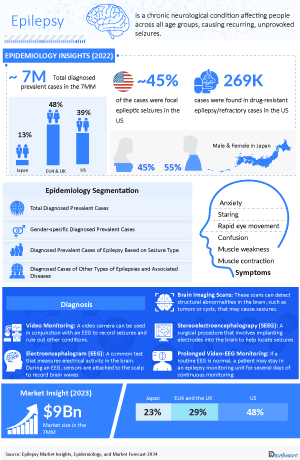
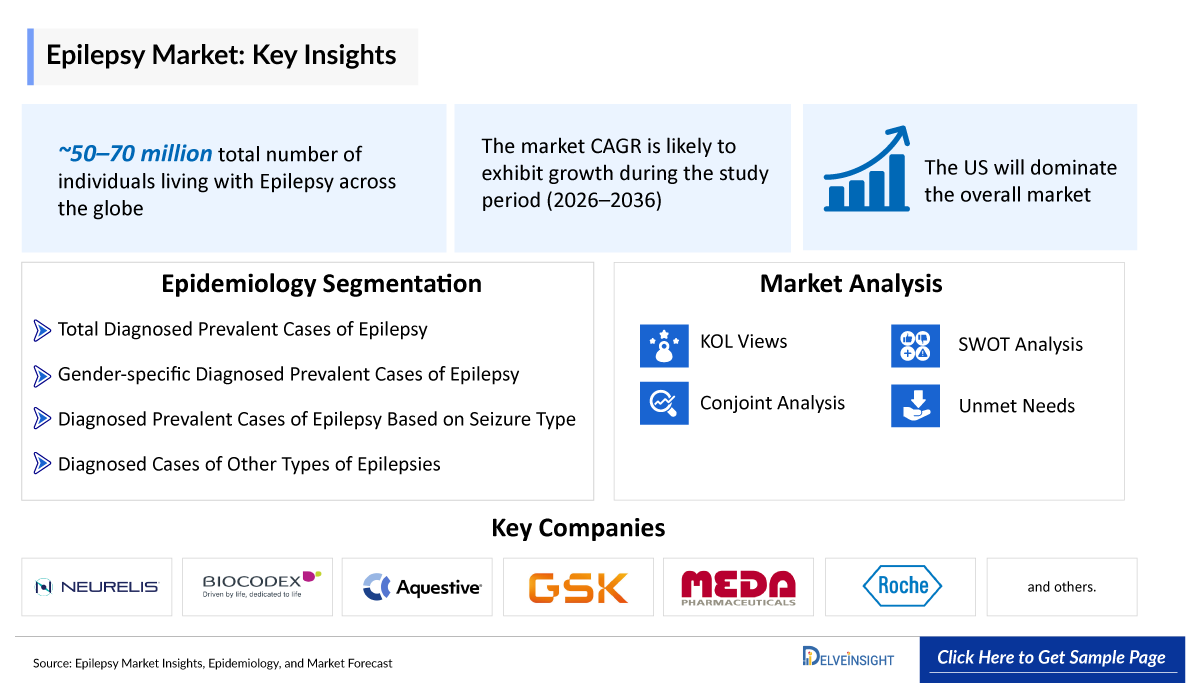
- The Epilepsy market size across the 7MM was valued at nearly USD 9 billion in 2023 and is expected to grow at a CAGR of 7% during 2026–2036, driven by advancing therapies and increasing disease prevalence.
- The leading Epilepsy companies developing therapies in the treatment market include - Neurelis, Biocodex, Aquestive Therapeutics, Ono Pharmaceutical, Biohaven Pharmaceuticals, Xenon Pharmaceuticals, Meda Pharmaceuticals, Autifony Therapeutics, Greenwich Biosciences, and others.
Epilepsy Market & Epidemiology Insights
- Epilepsy is a chronic neurological disorder characterized by recurrent, unprovoked seizures caused by abnormal, synchronized neuronal electrical activity in the brain, leading to transient alterations in behavior, consciousness, or motor function.
- Clinical presentation varies widely and includes focal seizures (with or without impaired awareness), generalized seizures, and seizure clusters, which may manifest as motor, sensory, autonomic, or cognitive symptoms depending on the brain region involved.
- The increasing use of EEG and advanced neuroimaging (MRI, CT Scans, PET MRI Scans) has significantly improved diagnostic accuracy and seizure localization, but also contributes to evolving classification and improved detection of milder or subclinical cases.
- Improved diagnostic sensitivity and broader screening have increased identified prevalence, which may partially influence observed epidemiological trends by capturing earlier and less severe disease forms.
- The management of epilepsy involves a comprehensive approach to reduce seizures, enhance quality of life, and manage associated issues, although no treatment provides a cure.
- Numerous anti-epileptic drugs (AEDs) have been approved, many available in generic form, such as lamotrigine, sodium valproate, carbamazepine, levetiracetam, and topiramate. Recently approved therapies include Azetukalner (XCOPRI), Ganaxolone (ZTALMY), Perampanel (FYCOMPA), Diazepam (LIBERVANT), Midazolam intranasal (NAYZILAM), Cannabidiol (EPIDIOLEX), Brivaracetam (BRIVIACT), and Clobazam oral soluble film (SYMPAZAN). First-line monotherapy AEDs act through sodium channel modulation, gamma-aminobutyric acid (GABA) receptor modulation, calcium channel blocking, or synaptic vesicle protein SV2A modulation. Second-line treatments include mono or combination AEDs, and adjunctive therapies may include cannabidiol (EPIDIOLEX), fenfluramine (FINTEPLA), and others.
- The pipeline for epilepsy is robust, and includes therapies like Azetukalner (XEN1101), Opakalim (BHV-7000), Relutrigine (PRAX-562), benzodiazepine (STACCATO alprazolam), and others.
- Despite therapeutic advancements, Epilepsy remains a high-burden neurological disorder with significant morbidity, psychosocial impact, and treatment resistance in ~30% of patients, representing a major unmet need.
Key Factors Driving the Epilepsy Market
- Expanding Therapeutic Landscape and Pipeline Innovation: The Epilepsy market is witnessing continuous innovation with next-generation anti-seizure medications (ASMs) and novel mechanisms such as neurosteroids, SV2A modulation, and GABAergic agents. Emerging pipeline assets, including ganaxolone (ZTALMY), soticlestat, and other targeted therapies, are expected to improve seizure control, particularly in drug-resistant epilepsy.
- Growing Burden of Drug-Resistant and Refractory Epilepsy: Approximately ~30% of patients remain inadequately controlled on current anti-seizure medications, creating a substantial unmet need and driving demand for advanced therapies, adjunctive treatments, and precision-based approaches in epilepsy management.
- Rising Awareness, Diagnosis, and Expanding Treatment Access: Improved access to EEG, MRI, and long-term neurological monitoring, along with increasing awareness of seizure disorders, is enhancing early diagnosis rates and expanding the treated patient pool across both developed and emerging healthcare systems.
DelveInsight's ‘Epilepsy Market Insights, Epidemiology and Market Forecast – 2036’ report delivers an in-depth understanding of the Epilepsy, historical and forecasted epidemiology, as well as the Epilepsy therapeutics market trends in the United States, EU4 (Germany, Spain, Italy, and France), and the United Kingdom, and Japan.
The Epilepsy market report delivers a comprehensive analysis of the current treatment landscape, including standards of care, clinical practices, and evolving therapeutic algorithms. It evaluates epilepsy patient burden trends, revenue & market share dynamics, peak patient share & therapy uptake analysis, and provides an in-depth market size assessment, and growth rate projections (Historical & Forecast 2022–2036) across global regions. The report highlights key unmet medical needs in epilepsy and maps the competitive and clinical landscape to uncover high‑value opportunities, providing a clear outlook on future market growth potential.
Scope of the Epilepsy Market Report | |
|
Study Period |
2022–2036 |
|
Historical Year |
2022–2025 |
|
Forecast Period |
2026–2036 |
|
Base Year |
2026 |
|
Geographies Covered |
|
|
Epilepsy Market CAGR (Forecast period) |
XX% (2026–2036) |
|
Epilepsy Epidemiology Segmentation Analysis |
Patient Burden Assessment
|
|
Epilepsy Companies |
|
|
Epilepsy Therapies |
|
|
Epilepsy Market |
Segmented by
|
|
Analysis |
|
|
| |
Epilepsy Disease Understanding
Epilepsy Overview
Epilepsy is a chronic neurological disorder characterized by recurrent, unprovoked seizures due to abnormal, excessive, and synchronous neuronal electrical activity in the brain. It typically presents with transient episodes of altered consciousness, motor, sensory, or behavioral disturbances, depending on the region of brain involvement. Epilepsy is broadly classified into focal onset seizures, generalized onset seizures, and unknown onset seizures. It arises from multiple etiologies, including genetic abnormalities, structural brain lesions, infections, traumatic brain injury, and metabolic or developmental causes, driven by an imbalance between excitatory and inhibitory neurotransmission. Despite advances in anti-seizure therapies, epilepsy remains a major neurological disorder, with a significant proportion of patients experiencing persistent or drug-resistant seizures.
Epilepsy Diagnosis
Diagnosis of Epilepsy is based on clinical history and seizure description, supported by EEG findings that detect abnormal brain electrical activity and help classify seizure type. Neuroimaging (MRI, CT, and PET) is used to identify structural or metabolic brain abnormalities underlying seizures. Blood tests help exclude metabolic, infectious, or genetic causes, while neurological and behavioral assessments evaluate disease impact and severity. Early and accurate diagnosis is critical for seizure classification and appropriate treatment initiation.
Further details are provided in the report.
Epilepsy Treatment
Treatment of Epilepsy is primarily based on long-term use of anti-seizure medications (ASMs) aimed at controlling recurrent seizures and improving quality of life. First-line therapies include sodium channel blockers (e.g., carbamazepine, lamotrigine), SV2A modulators (e.g., levetiracetam, brivaracetam), and GABAergic agents, selected based on seizure type and patient profile.
In drug-resistant cases, adjunctive therapies such as cannabidiol (Epidiolex), fenfluramine (Fintepla), and other syndrome-specific agents are used to reduce seizure frequency. For refractory epilepsy, non-pharmacological options include epilepsy surgery, vagus nerve stimulation (VNS), responsive neurostimulation (RNS), and ketogenic diet therapy.
Overall, management is individualized, with treatment selection guided by seizure classification, etiology, and response to prior therapies, as a significant proportion of patients may require multi-modal or long-term combination treatment strategies.
Further details related to country-based variations are provided in the report.
Epilepsy Unmet Needs
The section “unmet needs of Epilepsy” outlines the critical gaps between the current state of patient care, diagnosis, and the ideal & effective management of the disease. It highlights the obstacles experienced by patients, clinicians, and researchers and identifies potential solutions for future progress.
- Persistent treatment gap due to drug-resistant epilepsy (~30% of patients remain uncontrolled despite available anti-seizure medications)
- Delayed and inaccurate diagnosis due to under-recognition of focal and non-motor seizures and limited access to EEG and specialist care
- Lack of disease-modifying or preventive therapies, with current treatments primarily focused on symptom (seizure) suppression
- Inadequate utilization of advanced diagnostics and surgical evaluation (e.g., epilepsy surgery, long-term monitoring, neuroimaging)
- High psychosocial burden, comorbidities, and quality-of-life impairment, despite pharmacological treatment, and others…..
Note: Comprehensive unmet needs insights in Epilepsy and their strategic implications are provided in the full report.
Epilepsy Epidemiology
The Epilepsy epidemiology section provides insights about the historical and current Epilepsy patient pool and forecasted trends for individual seven major countries. It helps to recognize the causes of current and forecasted trends by exploring numerous studies and views of key opinion leaders. This part of the Epilepsy market report also provides the diagnosed patient pool and their trends along with assumptions undertaken.
Key Findings from Epilepsy Epidemiological Analysis and Forecast
- According to global epidemiological estimates, in 2025, the total number of individuals living with Epilepsy is ~50–70 million worldwide, making it one of the most common chronic neurological disorders globally.
- The US had the highest cases of epilepsy, of which nearly 67% of the cases were focal epileptic seizures, 31% were generalized epileptic seizures, while 2% of the cases were other determined or undetermined epileptic seizures.
- Epidemiological studies indicate that the prevalence of epilepsy in the general population is approximately ~0.5–1.0% (5–10 per 1,000 individuals), with a higher burden observed in low- and middle-income countries due to increased risk factors and limited access to care.
- Focal epilepsy accounts for ~67% of all cases, while generalized epilepsy represents ~20–30%, with the remaining cases classified as unknown or combined onset types.
- Secondary epidemiological analyses highlight that incidence follows a bimodal age distribution, with peaks in early childhood and adults over 60 years, largely driven by genetic causes in pediatric patients and cerebrovascular disease in older adults.
- The prevalence of epilepsy is reported to be slightly higher in males than females in several population-based studies, although gender differences are generally modest and vary by region and underlying etiology.
A significant proportion of epilepsy cases in low- and middle-income countries are associated with preventable causes such as perinatal injury, CNS infections, and traumatic brain injury, highlighting regional disparities in disease epidemiology.
Epilepsy Epidemiology Segmentation
- Total Prevalent Population of Epilepsy
- Total Diagnosed Prevalent Population of Epilepsy
- Gender-specific Diagnosed Prevalence of Epilepsy
- Diagnosed Prevalence of Epilepsy Based on Seizure Types in Adults
- Diagnosed Prevalence of Epilepsy Based on Seizure Types in Children
Recent Developments in the Epilepsy Treatment Landscape
- In March 2026, Xenon Pharmaceuticals announced positive topline results from the Phase III (X-TOLE2) study of azetukalner in focal onset seizures (FOS). Xenon anticipates submitting New Drug Application for azetukalner in FOS to the U.S. FDA in Q3 2026. If approved, azetukalner would be the only KV7 potassium channel opener available for the treatment of epilepsy.
- In January 2026, Biohaven Pharmaceuticals announced preliminary data from an ongoing open-label extension (OLE) study of opakalim, a selective Kv7 channel activator, in focal epilepsy, with pivotal results in the indication expected in 2026.
- In April 2025, Neurelis announced FDA approval of VALTOCO (diazepam nasal spray) for the short-term treatment of seizure clusters (acute repetitive seizures) in patients aged 2 years and older.
Epilepsy Drug Analysis & Competitive Landscape
The Epilepsy drug chapter provides a detailed, market-focused review of approved therapies and the emerging pipeline across Phase I–III Epilepsy clinical trials. It covers the mechanism of action, clinical trial data, regulatory approvals, patents, collaborations, and strategic partnerships for each therapy, along with their advantages, limitations, and recent developments. This section offers critical insights into the epilepsy treatment landscape, supporting market assessment, competitive analysis, and growth forecasting for the Epilepsy therapeutics market.
Approved Therapies for Epilepsy
Diazepam (VALTOCO): Neurelis/Aculys Pharma
Diazepam (VALTOCO), a nasal spray, is another approved benzodiazepine in the US indicated for the acute treatment of intermittent, stereotypic episodes of frequent seizure activity (i.e., seizure clusters, acute repetitive seizures) that are distinct from a patient’s usual seizure pattern; however, it is for patients 6 years of age and older. The exact mechanism of action for diazepam is not fully understood, but it is thought to involve the potentiation of GABAergic neurotransmission.
Cannabidiol (EPIDIOLEX): Greenwich Biosciences/Jazz Pharmaceuticals
Cannabidiol (EPIDIOLEX), developed by GW Pharmaceuticals a cannabidiol medication that was approved in the US by the FDA in 2018 and later by EMA in 2019 for patients’ ≥2 years of age with Dravet syndrome or LGS. While the mechanism of action of CBD underlying the reduction of seizures in humans is unknown, CBD possesses an affinity for multiple targets, including transient receptor potential vanilloid-1 (TRPV1), the orphan G protein-coupled receptor-55 (GPR55), and the equilibrative nucleoside transporter 1 (ENT-1), across a range of target classes, resulting in functional modulation of neuronal excitability, relevant to the pathophysiology of many disease types, including epilepsy.
Note: Detailed marketed therapies assessment of therapies will be provided in the final report.
Epilepsy Marketed/Approved Therapies | ||||||
|
Drug/Therapy |
Company |
Indication |
Molecule Type |
MoA |
RoA |
Marketed Region |
|
Ganaxolone (ZTALMY) |
Marinus Pharmaceuticals |
Epilepsy |
Small molecule |
GABA A receptor modulators |
Oral |
US: 2022 EU: 2023 |
|
Cannabidiol (EPIDIOLEX) |
Jazz Pharmaceuticals |
Epilepsy |
Small molecule |
Cannabinoid receptor CB1 inverse agonists; Cannabinoid receptor CB2 inverse agonists |
Oral |
US: 2018 EU:2019 |
|
Cenobamate (XCOPRI) |
SK Biopharmaceuticals |
Partial epilepsies |
Small molecule |
GABA A receptor modulators; Sodium channel antagonists |
Oral |
US: 2019 EU: 2021 |
Epilepsy Pipeline Analysis
Azetukalner (XEN1101): Xenon Pharmaceuticals
Azetukalner (XEN1101), developed by Xenon Pharmaceuticals, is a novel, orally administered, potent, selective KCNQ2/3 (Kv7.2/7.3) potassium channel opener being developed to treat epilepsy in focal onset seizures and primary generalized tonic–clonic seizures (PGTCS). It acts as a neuronal Kv7 voltage-gated potassium channel opener and has been developed to stabilize nerve cells, control action potential burst firing, and reduce brain hyper-excitability as a seizure treatment.
-
In April 2026, Xenon Pharmaceuticals Presented Azetukalner Phase III X-TOLE2 Study Results and 48-Month Long-term Data in Focal Onset Seizures at 2026 American Academy of Neurology Annual Meeting (AAN).
Opakalim (BHV-7000): Biohaven Pharmaceuticals
BHV-7000 is a potent, selective KCNQ2 potassium channel activator being developed for epilepsy and other neurological disorders. By stabilizing neuronal hyper-excitability, it targets the underlying mechanisms of seizures. Opakalim Consistently Demonstrates Exceptional Tolerability Across All Stages of Development. In focal epilepsy Phase II/III OLE, data showed a 50% responder rate comparable to other ASMs, along with low rates of adverse events (AEs). Pivotal results for opakalim in the treatment of focal epilepsy are expected in the second half of 2026.
Competitive Landscape of Epilepsy Pipeline Drugs | ||||||
|
Drug Name |
Company |
Highest Phase |
Indication |
RoA |
MoA |
Anticipated Launch in the US |
|
Opakalim (BHV-7000) |
Biohaven Pharmaceuticals |
III |
Epilepsy |
Oral |
KCNQ2 potassium channel activator |
Information is available in the full report |
|
Azetukalner (XEN1101) |
Xenon Pharmaceuticals |
III |
Focal onset seizures |
Oral |
Kv7 voltage-gated potassium channel opener |
Information is available in the full report |
|
Benzodiazepine (STACCATO alprazolam) |
UCB |
III |
Stereotypical prolonged seizures |
Oral inhalation |
GABA-A receptor positive allosteric modulator |
Information is available in the full report |
|
Bumetanide analogue (NPT 2042) |
Neuropro Therapeutics |
II |
Epilepsy |
Oral |
Sodium-potassium-chloride symporter inhibitors |
Information is available in the full report |
|
Note: Launch insights are provisional and may change with future report updates or the occurrence of major key catalysts. | ||||||
Note: Detailed emerging therapies assessment will be provided in the final report.
Epilepsy Key Players, Market Leaders, and Emerging Companies
- Neurelis
- Biocodex
- Aquestive Therapeutics
- Ono Pharmaceutical
- Biohaven Pharmaceuticals
- Xenon Pharmaceuticals
- Meda Pharmaceuticals
- Autifony Therapeutics
- Greenwich Biosciences, and others
Epilepsy Market Outlook
The epilepsy market is undergoing a progressive shift from broad-spectrum anti-seizure medications (ASMs) toward more targeted and mechanism-driven therapies, although sodium channel blockers and GABAergic agents such as levetiracetam, valproate, and lamotrigine continue to dominate first-line treatment. Despite the availability of multiple ASMs, nearly 30–40% of patients develop drug-resistant epilepsy (DRE), highlighting a significant unmet need and driving innovation toward therapies with novel mechanisms of action and improved tolerability. In parallel, the increasing use of rescue therapies such as diazepam nasal spray and midazolam nasal spray reflects a growing emphasis on outpatient seizure management and rapid intervention.
With the advancement of next-generation targeted therapies, the epilepsy landscape is evolving similarly to other neurological disorders, where innovation is driven by precision mechanisms and disease subtyping. Emerging agents such as cenobamate, ganaxolone, azetukalner, and opakalim are designed to address neuronal hyperexcitability through differentiated pathways, including selective potassium channel modulation and neurosteroid mechanisms. In addition, cannabidiol-based therapies such as cannabidiol have expanded treatment options for rare and severe epileptic syndromes, reinforcing the shift toward mechanism-specific and syndrome-targeted approaches.
- The United States continues to represent the largest epilepsy market, driven by a high diagnosed patient population, strong reimbursement frameworks, and rapid uptake of novel therapies, compared with EU4 and, the United Kingdom, and Japan. Increasing awareness, improved diagnosis rates, and expansion of treatment options for rare epileptic encephalopathies are further supporting market growth. Overall, the introduction of first-in-class and best-in-class therapies, along with innovation in rescue treatments and precision medicine, is expected to drive steady growth in the 7MM epilepsy market from 2022–2036, with significant commercial opportunities across both established and emerging therapies.
- The epilepsy treatment landscape is evolving from symptomatic seizure control to mechanism-driven and precision therapies, particularly in drug-resistant and rare epileptic syndromes.
- Drug-resistant epilepsy (~30–40% of patients) remains a major unmet need, driving the development of novel agents targeting ion channels, synaptic transmission, and neuroinflammation.
- Among marketed therapies, agents such as cenobamate are expected to generate significant revenue due to strong efficacy in refractory focal epilepsy and a differentiated clinical profile.
- The late-stage pipeline candidates such as azetukalner and opakalim is expected to intensify competition and expand treatment options, particularly in the DRE segment during the forecast period.
Further details will be provided in the report….
Drug Class/Insights into Leading Emerging and Marketed Therapies in Epilepsy (2022–2036 Forecast)
The epilepsy treatment landscape comprises anti-seizure medications (ASMs), rescue therapies, and adjunctive/targeted therapies, each addressing different aspects of seizure control, acute management, and underlying disease mechanisms.
- Anti-seizure medications (ASMs): Include broad-spectrum and targeted agents such as cenobamate, brivaracetam, and ganaxolone, which form the backbone of epilepsy management by reducing neuronal hyperexcitability through modulation of ion channels and neurotransmitter systems (e.g., GABAergic pathways). These therapies are used as monotherapy or adjunctive treatment, depending on seizure type, syndrome, and patient response.
- Rescue therapies: Include benzodiazepine-based treatments such as diazepam nasal spray, designed for the acute treatment of seizure clusters (acute repetitive seizures). These therapies enable rapid, noninvasive intervention in outpatient settings, helping prevent progression to prolonged or severe seizures and reducing hospitalization burden.
- Targeted and syndrome-specific therapies: Include agents such as cannabidiol and everolimus, which address specific epilepsy syndromes (e.g., Dravet syndrome, Lennox-Gastaut syndrome, tuberous sclerosis complex) through mechanism-driven approaches, including modulation of multiple neuronal targets or inhibition of the mTOR pathway. These therapies represent a shift toward precision medicine in rare and severe epilepsies.
Overall, anti-seizure medications define the current standard of care in epilepsy management, while rescue therapies support acute seizure control, and novel targeted and syndrome-specific treatments are expected to drive future innovation in the epilepsy treatment landscape.
Epilepsy Drug Uptake
This section focuses on the uptake rate of potential Epilepsy drugs expected to be launched in the market during the forecast period (2026–2036). The analysis covers the epilepsy drug’s uptake, performance at peak, factors affecting performance during prime years of growth, patient uptake by therapy, and anticipated sales generated by each drug.
The uptake of therapies in epilepsy is expected to vary across anti-seizure medications (ASMs), rescue therapies, and targeted/syndrome-specific treatments. Established ASMs such as cenobamate and brivaracetam are anticipated to maintain strong and sustained uptake due to their central role in long-term seizure control and broad applicability across epilepsy types. In parallel, rescue therapies such as diazepam nasal spray are expected to witness steady growth, driven by the increasing shift toward outpatient and at-home management of seizure clusters.
In contrast, targeted therapies such as cannabidiol are expected to demonstrate moderate but progressive uptake, supported by expanding clinical evidence and increasing diagnosis of rare epileptic syndromes. Therapies like ganaxolone are likely to see selective uptake, given their indication-specific use in rare pediatric populations. Adoption of these therapies is driven by the limitations of conventional ASMs in drug-resistant epilepsy and the growing need for mechanism-based treatment approaches.
In comparison, next-generation pipeline therapies such as azetukalner and opakalim are anticipated to show gradual but steady uptake as clinical evidence matures. Their future adoption will depend on demonstrated efficacy in refractory populations, safety/tolerability, and differentiation in achieving higher seizure freedom rates.
Detailed insights of emerging therapies' drug uptake is included in the report.
Epilepsy Market Access and Reimbursement Scenraio
The United States
The US Reimbursement for Epilepsy | |
|
Drug |
Access Program |
|
Cannabidiol (EPIDIOLEX) |
Epidiolex Engage Program |
Reimbursement is a crucial factor that affects the drug’s access to the market. Often, the decision to reimburse comes down to the price of the drug relative to the benefit it produces in treated patients. To reduce the healthcare burden of these high-cost therapies, many payment models are being considered by payers and other industry insiders.
NOTE: Further Details are provided in the final report….
Epilepsy Therapies Price Scenario & Trends
Pricing and analogue assessment of epilepsy therapies highlights evolving price dynamics structures. This section summarizes the cost of approved treatments, the closest and most appropriate analogue selection for emerging therapies, and understanding of how pricing influences market access, adherence, and long-term uptake.
Further details are provided in the final report….
Industry Experts and Physician Views for Epilepsy
To keep up with epilepsy market trends, we take Key Opinion Leaders (KOLs) and Subject Matter Experts (SMEs) opinions working in the domain through primary research to fill the data gaps and validate our secondary research. Industry experts were contacted for insights on the emerging epilepsy therapies, evolving treatment landscape, patient adherence to conventional therapies, therapy switching trends, drug adoption and uptake, accessibility challenges, and epidemiology and real-world prescription patterns in epilepsy, including MD, PhD, Instructor, Postdoctoral Researcher, Professor, Researcher, and others.
DelveInsight’s analysts connected with 10+ KOLs to gather insights at the country level. Centers such as the Epilepsy Foundation, US, the American Association of Neurological Surgeons, US, and the University of Leicester, UK, etc., were contacted. Their opinion helps understand and validate current and emerging epilepsy therapies, highlight unmet medical needs, provide epidemiological context, and support strategic decisions for market access, therapy adoption, and pipeline prioritization in epilepsy.
|
Region |
Key Opinion Leaders (KOLs) and Subject Matter Experts (SMEs) |
|
United States |
“Epilepsy is a brain disorder that causes seizures. A seizure is usually a sudden alteratzion of behavior due to a temporary change in the electrical functioning of the brain and can potentially be life-threatening. As per our analysis, the risk of Sudden Unexpected Death in Epilepsy (SUDEP) is a significant issue for certain individuals with epilepsy that can occur during or immediately after a seizure.” |
|
United Kingdom |
“Our lack of knowledge, or perhaps lack of suitable diagnostic tools, has made epilepsy economically significant. Moreover, the healthcare expenses and social stigma associated with the disease place a significant financial strain on households.” |
Epilepsy Report Qualitative Analysis: SWOT and Conjoint Analysis
We perform qualitative and market Intelligence analysis using various approaches, such as SWOT analysis and conjoint analysis.
In the SWOT analysis of Epilepsy, strengths, weaknesses, opportunities, and threats in terms of disease diagnosis, patient awareness, patient burden, competitive landscape, cost-effectiveness, and geographical accessibility of therapies are provided.
Conjoint analysis analyzes emerging therapies based on relevant attributes such as safety, efficacy, frequency of administration, route of administration, and order of entry. Scoring is given based on these parameters to analyze the effectiveness of therapy.
The team of analysts analyzes promising emerging therapies based on relevant attributes such as safety, efficacy, frequency of administration, route of administration, and order of entry. In efficacy, the trial’s primary and secondary outcome measures are evaluated, whereas the therapies’ safety is evaluated, wherein the acceptability, tolerability, and adverse events are majorly observed. In addition, the scoring is also based on the route of administration, order of entry, probability of success, and the addressable patient pool for each therapy. According to these parameters, the final weightage score and the ranking of the emerging therapies are decided.
Scope of the Epilepsy Market Report
- The report covers a segment of key events, an executive summary, a descriptive overview of epilepsy, explaining their causes, signs and symptoms, pathogenesis, and currently available treatments.
- Comprehensive insight has been provided into the epidemiology segments and forecasts, the future growth potential of the diagnosis rate, and disease progression along treatment guidelines.
- Additionally, an all-inclusive account of both the current and emerging treatments, along with the elaborate profiles of late-stage and prominent therapies, will have an impact on the current treatment landscape.
- A detailed review of the epilepsy market, historical and forecasted market size, market share by therapies, detailed assumptions, and rationale behind our approach is included in the report, covering the 7MM drug outreach.
- The report provides an edge while developing business strategies by understanding trends through SWOT analysis and expert insights/KOL views, patient journey, and treatment preferences that help in shaping and driving the 7MM epilepsy market.
Epilepsy Market Report Insights
- Epilepsy Patient Population Forecast
- Epilepsy Therapeutics Market Size
- Epilepsy Pipeline Analysis
- Epilepsy Market Size and Trends
- Epilepsy Market Opportunity (Current and forecasted)
Epilepsy Market Report Key Strengths
- Epilepsy Epidemiology‑based (Epi‑based) Bottom‑up Forecasting
- Artificial Intelligence (AI)-Enabled Market Research Report
- 11-Year Forecast
- Epilepsy Market Outlook (North America, Europe, Asia-Pacific)
- Epilepsy Patient Burden Trends (By Geography)
- Epilepsy Treatment Addressable Market (TAM)
- Epilepsy Competitive Landscape
- Epilepsy Major Companies Insights
- Epilepsy Price Trends and Analogue Assessment
- Epilepsy Therapies Drug Adoption/Uptake
- Epilepsy Therapies Peak Patient Share Analysis
Epilepsy Market Report Assessment
- Epilepsy Current Treatment Practices
- Epilepsy Unmet Needs
- Epilepsy Clinical Development Analysis
- Epilepsy Emerging Drugs Product Profiles
- Epilepsy Market Attractiveness
- Epilepsy Qualitative Analysis (SWOT and conjoint analysis)
- Epilepsy Market Drivers
- Epilepsy Market Barriers
FAQs Related to the Epilepsy Market Report:
Epilepsy Market Insights
- What was the Epilepsy market size, the market size by therapies, the market share (%) distribution in 2025, and what would it look like by 2036? What are the contributing factors for this growth?
- What are the anticipated pricing variations among different geographies for the emerging therapies in the future?
- What can be the future treatment paradigm of Epilepsy?
- What are the disease risks, burdens, and unmet needs of Epilepsy? What will be the growth opportunities across the 7MM concerning the Epilepsy patient population?
- Who is the major future competitor in the market, and how will the competitors affect their market share?
- What are the current options for the treatment of Epilepsy? What are the current guidelines for treating Epilepsy in the US, Europe, and Japan?
Reasons to Buy Epilepsy Market Forecast Report:
- The report will help in developing business strategies by understanding the latest trends and changing treatment dynamics driving the Epilepsy market.
- Bottom-up forecasting builds from the affected population to product forecasts, delivering a robust, data-driven approach ideal for new therapies and novel classes.
- Insights on patient burden/disease incidence, evolution in diagnosis, and factors contributing to the change in the epidemiology of the disease during the forecast years.
- Understand the existing market opportunities in varying geographies and the growth potential over the coming years.
- Identifying strong upcoming players in the market will help devise strategies to help get ahead of competitors.
- Detailed analysis and ranking of class-wise potential current and emerging therapies under the conjoint analysis section to provide visibility around leading classes.
- To understand KOLs’ perspectives on the accessibility, acceptability, and compliance-related challenges of existing treatment to overcome barriers in the future.
- Detailed insights into the unmet needs of the existing market so that the upcoming players can strengthen their development and launch strategy.
- This Artificial Intelligence (AI)-enabled report summarizes and simplifies complex datasets within the report into clear, actionable insights for stakeholders, investors, and healthcare providers, enabling faster, data-driven decisions.