Congenital Heart Defect Market Summary
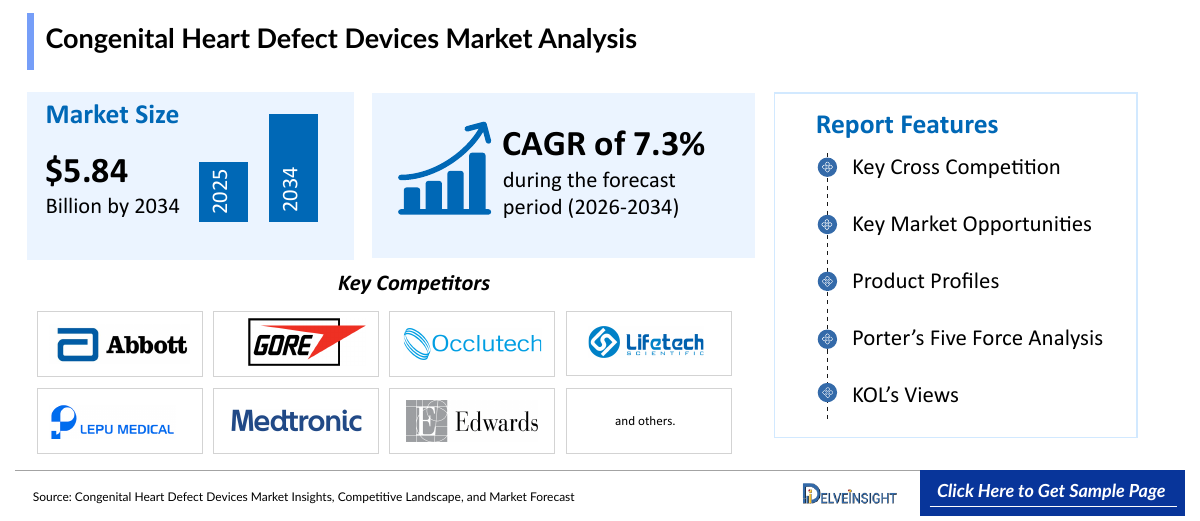
- The Congenital Heart Defect Devices market is estimated at USD 3.10 billion in 2025 and is projected to reach USD 5.84 billion by 2034. Growth is anchored in the rising prevalence and improved survival of congenital heart disease, the shift from open-heart surgery to minimally invasive transcatheter intervention, and continuous innovation in pediatric-specific implants and delivery systems.
- The global Congenital Heart Defect Devices market is growing at a CAGR of 7.3% during the forecast period from 2026 to 2034.
- By device type, the septal occlusion devices segment dominated the Congenital Heart Defect Devices market with a 34% share in 2025.
- By defect type, the atrial septal defect (ASD) segment dominated the Congenital Heart Defect Devices market with a 36% share in 2025.
- By procedure type, the transcatheter procedures segment dominated the Congenital Heart Defect Devices market with a 58% share in 2025.
- By end-user, the hospitals segment dominated the Congenital Heart Defect Devices market with a 44% share in 2025.
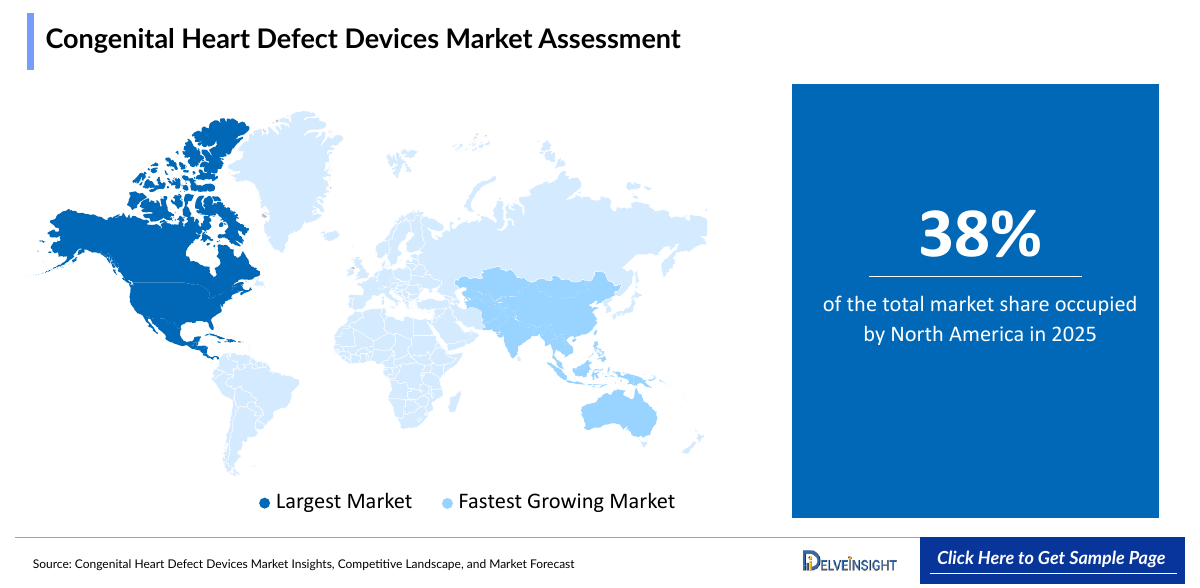
- North America dominated the global Congenital Heart Defect Devices market revenue with a 38% share in 2025, representing the highest regional market share globally.
Congenital heart defect (CHD) devices are implantable and procedural medical technologies used to close, repair, replace, or support structural abnormalities of the heart and great vessels that are present at birth. Congenital heart disease is the most common birth defect worldwide, affecting roughly 1 in 100 live births, and a growing population of survivors now reaches adulthood and requires lifelong, repeated intervention. Device-based therapy spans septal occluders for atrial and ventricular septal defects, patent ductus arteriosus (PDA) closure devices, congenital heart stents, transcatheter pulmonary and other congenital valve devices, specialized catheters and delivery systems, and surgical repair devices such as patches, conduits, and annuloplasty products. The market is organized by device type across septal occlusion devices, PDA closure devices, congenital heart stents, congenital heart valve devices, catheters and delivery systems, surgical repair devices, and others; by defect type across ASD, ventricular septal defect (VSD), PDA, atrioventricular septal defect (AVSD), and others; by procedure type across transcatheter, open-heart surgical, and hybrid procedures; and by end-user across hospitals, pediatric cardiac centers, specialty cardiac centers, cardiac catheterization laboratories, ambulatory surgical centers, and others. Driven by earlier diagnosis through neonatal screening, accelerating regulatory approvals of pediatric-specific devices, and expanding pediatric cardiac infrastructure in emerging economies, CHD devices have become essential infrastructure underpinning modern lifelong congenital cardiac care.
Congenital Heart Defect Devices Market Key Growth Drivers
- The rising prevalence of congenital heart disease and the growth of a surviving adult CHD population are expanding the treatable base, with about 40,000 infants born with CHD each year in the United States and an estimated 1.6 million adults living with the condition.
- The shift from open-heart surgery to minimally invasive transcatheter closure, stenting, and valve replacement is lowering procedural risk, shortening hospital stays, and broadening the eligible patient pool.
- Technological advances, including pediatric-specific delivery systems for premature infants, self-expanding transcatheter pulmonary valves, and softer, more conformable occluders, are expanding the range of defects that can be treated without surgery.
- Neonatal pulse-oximetry screening, fetal echocardiography, and improved imaging are enabling earlier detection and timely referral, increasing device-eligible procedure volumes.
- Accelerating regulatory approvals and new market entrants, including the 2024 U.S. launch of Occlutech's ASD occluder and Medtronic's 2025 CE Mark for the Harmony transcatheter pulmonary valve in congenital heart disease, are widening treatment choice.
- Expanding pediatric cardiac infrastructure, government funding, and rising local manufacturing capacity across China, India, and other Asia-Pacific markets are improving access to congenital cardiac care.
- The convergence of rising disease burden, minimally invasive adoption, product innovation, and infrastructure investment is expected to sustain steady growth in the market through 2034.
Key Companies in Congenital Heart Defect Devices Market
The competitive landscape is led by the following active manufacturers:
- Abbott Laboratories
- W. L. Gore & Associates, Inc.
- Occlutech Holding AG
- LifeTech Scientific Corporation
- Lepu Medical Technology (Beijing) Co., Ltd.
- Medtronic plc
- Edwards Lifesciences Corporation
- Venus Medtech (Hangzhou) Inc.
- Sahajanand Medical Technologies Limited
- Cardia, Inc.
For illustrative purposes, only the top 10 companies are listed in the Table of Contents. The report may include analysis and references to additional companies relevant to the market assessment.
Congenital Heart Defect Devices Market Size
The following snapshot summarizes the principal report metrics for the Congenital Heart Defect Devices market.
|
Report Metrics |
Details |
|
2025 Market Size |
USD 3.10 billion |
|
2034 Projected Market Size |
USD 5.84 billion |
|
Growth Rate (2026-2034) |
7.3% CAGR |
|
Largest Market |
North America |
|
Fastest Growing Market |
Asia-Pacific |
|
Market Structure |
Moderately Concentrated |
All market values are expressed in USD and represent DelveInsight estimates synthesized from primary and secondary research.
Factors Contributing to the Growth of the Congenital Heart Defect Devices Market
Market Drivers
Rising Prevalence of Congenital Heart Defects and a Growing Adult CHD Population
The most fundamental driver of the Congenital Heart Defect Devices market is the high and rising burden of congenital heart disease. Congenital heart disease is the most common birth defect, with roughly 1.3 million children born with a heart defect worldwide each year, about 40,000 infants affected annually in the United States and Europe, and an estimated 1.6 million adults in the United States and 2.3 million in Europe living with the condition. Advances in neonatal care and surgery mean that most children with CHD now survive into adulthood, creating a large and growing population that requires repeated interventions across the lifespan, including septal closure, conduit and valve replacement, and stenting. As survival improves and the prevalence of treated adult CHD rises, the cumulative demand for septal occluders, stents, valve devices, and delivery systems expands steadily, anchoring market growth through 2034.
Shift Toward Minimally Invasive Transcatheter Procedures
A structural shift from open-heart surgery toward catheter-based therapy is a central growth engine for the market. Transcatheter closure of ASD, VSD, and PDA, balloon-expandable stenting of vascular obstructions, and transcatheter pulmonary valve replacement avoid sternotomy and cardiopulmonary bypass, reduce procedural risk, shorten recovery, and lower the cumulative surgical burden for patients who need multiple interventions over a lifetime. Pediatric interventional cardiologists increasingly prefer device-based options where anatomy permits, and families favor less invasive care. As operator experience grows, imaging guidance improves, and new indications are approved, the proportion of defects treated by transcatheter approaches rises, directly expanding demand for occluders, stents, valves, and delivery systems across the forecast period.
Technological Advancements in Pediatric-Specific Device Design
Continuous innovation is expanding the range of lesions that can be treated without surgery. Abbott received U.S. FDA clearance and CE Mark for the Amplatzer Piccolo Delivery System in December 2025, optimized for procedures in premature babies, while Medtronic's Harmony transcatheter pulmonary valve, the first non-surgical valve approved in the United States for severe pulmonary regurgitation in the right ventricular outflow tract, gained CE Mark in January 2025 for congenital heart disease patients in Europe. Soft, self-centering occluders, lower-profile delivery systems, self-expanding pulmonary valves, and emerging bioresorbable and growth-accommodating implants address the unique needs of small and growing patients. Each design advance enlarges the eligible patient pool, supports earlier intervention, and sustains replacement and upgrade cycles through 2034.
Earlier Diagnosis Through Neonatal Screening and Improved Imaging
Broader neonatal screening, fetal echocardiography, and advances in echocardiographic, CT, and MRI imaging are enabling earlier and more accurate detection of congenital heart defects. Pulse-oximetry screening of newborns, now adopted across many countries, identifies critical defects before discharge, and prenatal diagnosis allows planned delivery at specialized centers. Earlier detection increases the number of patients referred for timely intervention, including device closure of defects such as ASD, VSD, and PDA in infancy and childhood. Improved three-dimensional imaging also supports precise device sizing and procedural planning, which improves outcomes and clinician confidence. As screening programs expand in Asia-Pacific and emerging markets, the volume of diagnosed and device-eligible patients rises, reinforcing demand for congenital heart devices across the forecast period.
Accelerating Regulatory Approvals and New Market Entrants
A steady stream of approvals and market entries is increasing competition and treatment choice. Occlutech's ASD Occluder and Pistol Pusher delivery system received U.S. FDA approval in the December 2023 to January 2024 period under an exclusive U.S. distribution partnership with B. Braun Interventional Systems, with commercial procedures beginning in 2024 and a full commercial rollout planned for September 2025, challenging a segment in which Abbott has historically held the large majority of global ASD occluder sales. In China, LifeTech Scientific had a congenital heart defect occluder admitted to the National Medical Products Administration's special examination and approval procedure in August 2025. Each approval validates a technology, broadens clinician options, and encourages competitive pricing and further investment in the category.
Expanding Pediatric Cardiac Infrastructure and Rising Healthcare Investment
Government funding and the build-out of dedicated pediatric cardiac programs are widening access to congenital cardiac care, particularly across China, India, and Southeast Asia. Large birth cohorts, rising healthcare spending, growing numbers of specialized pediatric heart centers and catheterization laboratories, and training initiatives are increasing procedure capacity. Domestic manufacturers in China and India are scaling production of cost-effective occluders, stents, and valves, improving affordability and local availability. Charitable and public programs that fund surgery and catheter-based care for underserved children further add to device demand. As infrastructure matures and reimbursement improves in emerging economies, Asia-Pacific and the Rest of the World become the principal source of incremental market growth over the forecast period.
Strategic Partnerships, Portfolio Expansion, and Strong Industry Investment
Leading manufacturers are investing in structural heart and congenital portfolios through internal development, clinical programs, and commercial partnerships. Large medical technology companies such as Abbott, Medtronic, and Edwards Lifesciences continue to extend their congenital and structural heart franchises, while specialized players such as Occlutech, Gore, LifeTech, and Lepu expand multi-indication occluder and delivery platforms and pursue regulatory approvals in new geographies. Distribution partnerships, such as Occlutech's with B. Braun in the United States, accelerate market access, and clinical registries and long-term follow-up data strengthen physician confidence. This combination of investment, partnerships, and evidence generation expands the commercial reach of congenital heart devices and supports sustained demand through 2034.
Market Restraints
Despite strong momentum, the Congenital Heart Defect Devices market faces material constraints. The high cost of implantable devices and uneven reimbursement, particularly in low- and middle-income countries, limit access, as many families bear a substantial share of costs and public programs cannot always fund transcatheter options. The relatively small and highly heterogeneous patient population, with a wide range of defect anatomies and patient sizes, makes it difficult to run large randomized trials, so regulatory approval of pediatric devices often depends on small studies, registries, and humanitarian pathways, slowing launches and limiting labeled indications. Many devices are used off-label in children because pediatric-specific products are scarce, and manufacturers face limited commercial incentive to develop for small markets. Device-related risks, including erosion, arrhythmia, residual shunts, thrombosis, and the long-term durability of implants in growing children, raise safety concerns and can prompt recalls or field actions, as seen with past delivery-system issues in the transcatheter pulmonary valve category. A shortage of trained pediatric interventional cardiologists, congenital surgeons, and specialized heart centers constrains procedure volumes, especially in emerging economies. Complex and diverging regulatory requirements across the United States, Europe, Japan, and China lengthen timelines and raise costs, and price pressure from domestic competitors compresses margins. Together, these cost, evidence, safety, workforce, and regulatory barriers temper the pace of growth, even as the underlying drivers of disease prevalence, transcatheter adoption, and innovation remain firmly intact.
Congenital Heart Defect Devices Market Segment Analysis
The Congenital Heart Defect Devices Market is segmented by device type (septal occlusion devices, pda closure devices, congenital heart stents, congenital heart valve devices, catheters & delivery systems, surgical repair devices, others), defect type (atrial septal defect (ASD), ventricular septal defect (VSD), patent ductus arteriosus (PDA), atrioventricular septal defect (AVSD), others), procedure type (transcatheter procedures, open-heart surgical procedures, hybrid procedures), end-user (hospitals, pediatric cardiac centers, specialty cardiac centers, cardiac catheterization laboratories, ambulatory surgical centers, others), and geography (North America, Europe, Asia-Pacific, and Rest of World).
By Device Type
Dominant Subsegment: Septal Occlusion Devices.
The septal occlusion devices segment accounted for 34% of the Congenital Heart Defect Devices market in 2025. Septal occlusion devices are the leading device type because atrial and ventricular septal defects are among the most common congenital heart lesions and are now routinely closed with transcatheter occluders rather than surgery. Self-expanding nitinol double-disc occluders from Abbott, Gore, Occlutech, LifeTech, Lepu, and Cardia are well established, supported by long-term clinical evidence, predictable procedural outcomes, and broad regulatory approvals across major regions. The recent U.S. entry of Occlutech's ASD occluder and ongoing delivery-system refinements are intensifying competition and widening choice, while high procedure volumes in both developed and emerging markets sustain recurring demand. PDA closure devices benefit from lower-profile systems suited to premature infants, congenital heart stents remain essential for vascular obstructions, and catheters and delivery systems grow alongside implant volumes. Congenital heart valve devices, led by transcatheter pulmonary valves such as Medtronic's Harmony, Edwards' platforms, and Venus Medtech's Venus P-valve, are the fastest-growing category. Nonetheless, the breadth of indications, procedure frequency, and mature evidence base secure the leadership of septal occlusion devices across the forecast period.
By Defect Type
Dominant Subsegment: Atrial Septal Defect (ASD).
The atrial septal defect (ASD) segment accounted for 36% of the Congenital Heart Defect Devices market in 2025. ASD is the leading defect type because it is one of the most common congenital heart defects, is frequently diagnosed in childhood and adulthood, and is highly suited to transcatheter closure with a single occluder, making it the highest-volume device-treated lesion. Many ASDs are detected incidentally by echocardiography in older children and adults, extending the treatable population well beyond infancy and supporting strong, recurring demand across hospitals and catheterization laboratories. Established devices, extensive clinical data, and the entry of additional manufacturers sustain a competitive, well-supplied segment. VSD, the most common congenital defect overall, represents a substantial segment, although many small defects close spontaneously and complex perimembranous lesions often still require surgery. PDA closure is expanding quickly in premature infants as smaller delivery systems become available, AVSD generally requires surgical repair and represents a smaller device segment, and other lesions such as tetralogy of Fallot, coarctation, and pulmonary stenosis drive stent and valve demand. Even so, the volume and ease of treatment of ASD secure its leadership across the forecast period.
By Procedure Type
Dominant Subsegment: Transcatheter Procedures.
The transcatheter procedures segment accounted for 58% of the Congenital Heart Defect Devices market in 2025. Transcatheter procedures are the leading procedure type because catheter-based closure, stenting, and valve implantation avoid sternotomy and cardiopulmonary bypass, reduce complications, shorten hospital stays, and are increasingly the first-line option for suitable anatomies. Technological progress, including smaller delivery systems for infants and self-expanding pulmonary valves, continues to extend the range of lesions that can be treated percutaneously, and growing operator experience improves outcomes and safety. Because each transcatheter procedure typically uses an implant plus catheters, sheaths, and balloons, the segment also captures high device value per case. Open-heart surgical procedures remain essential for complex lesions such as AVSD, large VSDs, and multi-component repairs, supporting steady demand for patches, conduits, and surgical valves, while hybrid procedures, which combine surgical access with catheter techniques, serve high-risk and very small patients and are a smaller but growing niche. Nonetheless, the safety, recovery, and cost advantages of transcatheter therapy secure its leadership across the forecast period.
By End-User
Dominant Subsegment: Hospitals.
The hospitals segment accounted for 44% of the Congenital Heart Defect Devices market in 2025. Hospitals are the leading end-user because they host the majority of congenital cardiac surgical and interventional programs, have the multidisciplinary teams, imaging, anesthesia, and intensive care capabilities required for pediatric and adult CHD care, and are the primary purchasers of implantable devices. General and tertiary hospitals manage a large share of septal closure, PDA closure, and surgical repair volumes, and benefit from established reimbursement and referral networks. Pediatric cardiac centers are an important and fast-growing channel, concentrating complex cases, clinical expertise, and early adoption of new devices, while specialty cardiac centers and cardiac catheterization laboratories handle a rising volume of elective transcatheter procedures. Ambulatory surgical centers play a smaller role given the complexity and monitoring needs of congenital interventions, although low-risk diagnostic and selected procedures may shift to outpatient settings over time. Nonetheless, the breadth of services, patient volumes, and procurement scale of hospitals secure their leadership across the forecast period.
Congenital Heart Defect Devices Market Region Analysis
Dominant Region: North America
North America accounted for 38% of the global Congenital Heart Defect Devices market revenue in 2025, representing the highest regional market share globally. The region's dominance reflects a mature pediatric and congenital cardiology ecosystem, high healthcare expenditure, early access to advanced devices, and clear FDA regulatory pathways, particularly in the United States. North America hosts a dense network of pediatric cardiac centers and catheterization laboratories, a large and growing adult CHD population, and strong reimbursement for transcatheter procedures, supporting high procedure volumes and rapid adoption of new technologies such as transcatheter pulmonary valves and pediatric-specific delivery systems. Major manufacturers including Abbott, Medtronic, Edwards, Gore, and Cardia maintain strong commercial and clinical presence, while new entrants such as Occlutech have expanded competition. Strong clinical-trial infrastructure, favorable reimbursement, and early approval of breakthrough devices anchor the region's continued leadership across the forecast period.
Fastest Growing Region: Asia-Pacific
Asia-Pacific is the fastest-growing region in the Congenital Heart Defect Devices market. The region's elevated CAGR is driven by large birth cohorts, rising healthcare investment, expanding neonatal screening, and rapid growth of pediatric cardiac infrastructure across China, India, Japan, South Korea, and Australia. China is rolling out catheterization capacity and benefits from domestic leaders such as LifeTech, Lepu, and Venus Medtech, whose innovative occluders and valves receive expedited regulatory review, while India leverages low-cost manufacturing and expanding access programs supported by companies such as Sahajanand Medical Technologies. Japan maintains advanced congenital cardiac care, and Australia and South Korea adopt new technologies early. Government funding, growing awareness, rising procedure volumes, and increasing affordability of locally produced devices are accelerating adoption, positioning Asia-Pacific as the principal source of incremental growth over the forecast period.
Regional Commentary
North America
North America accounted for 38% of the global Congenital Heart Defect Devices market revenue in 2025. The United States dominates on the strength of its pediatric cardiac infrastructure, reimbursement, FDA regulatory clarity, and early adoption of advanced devices, while Canada contributes steady growth through universal-access pediatric programs.
Europe
Europe is a large and advanced regional market, supported by established congenital cardiology networks, strong clinical research centers such as the German Heart Center in Munich, and CE Mark pathways that frequently bring devices to market ahead of the United States. Medtronic's January 2025 CE Mark for the Harmony transcatheter pulmonary valve and the strong European base of manufacturers such as Occlutech reinforce the region's role across Germany, France, the United Kingdom, Italy, and Spain.
Asia-Pacific
Asia-Pacific is the fastest-growing region, propelled by large birth cohorts, expanding neonatal screening, and growing healthcare investment across China, India, Japan, South Korea, and Australia. China's domestic innovators, India's cost-effective manufacturing, and rising pediatric cardiac capacity are accelerating regional procedure volumes and device adoption.
Rest of World
The Rest of World region, spanning Latin America, the Middle East, and Africa, is an emerging growth frontier. Expanding pediatric cardiac programs, rising awareness and screening, and charitable and government-funded initiatives are gradually broadening access to congenital cardiac care, while affordability and a shortage of specialized centers remain the principal constraints.
Congenital Heart Defect Devices Market Competitive Landscape
The Congenital Heart Defect Devices market is classified as Moderately Concentrated. A group of global medical technology leaders with broad structural heart and congenital portfolios, including Abbott Laboratories, Medtronic plc, Edwards Lifesciences Corporation, and W. L. Gore & Associates, anchors the top tier, with Abbott holding a leading position in septal occlusion, while specialized and fast-scaling providers such as Occlutech Holding AG, LifeTech Scientific Corporation, Lepu Medical Technology (Beijing) Co., Ltd., Venus Medtech (Hangzhou) Inc., Sahajanand Medical Technologies Limited, and Cardia, Inc. compete through multi-indication occluders, cost-competitive products, regional regulatory advantages, and niche congenital platforms, increasing competition across the fastest-growing device categories.
The competitive landscape can be evaluated across the following dimensions:
- Market concentration: Moderately concentrated, with global structural heart leaders anchoring the top tier and a growing field of specialized and regional manufacturers.
- Leading players: Abbott, Medtronic, Edwards Lifesciences, and Gore anchor the top tier through broad portfolios, clinical evidence, and global distribution.
- Geographic reach: Leaders operate global commercial networks, while Chinese and Indian manufacturers such as LifeTech, Lepu, Venus Medtech, and SMT strengthen domestic share and expand into emerging markets.
- Product portfolio strength: Top players offer occluders, PDA devices, stents, valves, and delivery systems, supported by long-term clinical data.
- Regulatory and clinical evidence: FDA, CE Mark, and NMPA approvals, pediatric indications, and registry data are decisive advantages in winning hospital adoption.
- Strategic partnerships: Distribution and clinical collaborations, such as Occlutech's exclusive U.S. partnership with B. Braun Interventional Systems, extend market reach.
- Product launches and approvals: Recent milestones include Abbott's Amplatzer Piccolo Delivery System clearance in December 2025, Medtronic's Harmony TPV CE Mark in January 2025, and LifeTech's special approval admission in August 2025.
- Manufacturing capabilities: Nitinol processing, precision delivery-system engineering, and quality systems for Class III implants are key competitive moats.
- Innovation focus: Pediatric-specific and low-profile delivery systems, transcatheter pulmonary valves, bioresorbable and growth-accommodating implants, and imaging-guided procedural planning.
Congenital Heart Defect Devices Market Recent Developmental Activities
- In October 2026, the US FDA approved the Autus Size-Adjustable Valve, developed by Autus Valve Technologies and Edwards Lifesciences, for pediatric patients with congenital pulmonary valve disease. The valve is designed to expand as children grow, increasing in diameter from approximately 13 mm to 22 mm using a balloon catheter. This technology could reduce the need for repeated open-heart surgeries and represents an important advancement in congenital heart defect treatment. The device had previously received FDA Breakthrough Device designation.
- In October 2026, Longeveron announced updated Phase 2b results from its ELPIS II clinical trial evaluating laromestrocel for hypoplastic left heart syndrome (HLHS). The trial evaluated laromestrocel as an adjunct therapy during Stage II palliative surgery in 40 infants. Although the trial did not meet its primary endpoint of improving right ventricular ejection fraction at 12 months, additional analysis showed a statistically significant reduction in major adverse cardiac events, with 8 events in the standard-of-care group versus 1 in the laromestrocel group (p=0.043). Longeveron plans to discuss the findings with the US FDA to determine potential next steps for the HLHS development programme.
- In August 2026, the US National Heart, Lung, and Blood Institute awarded funding to support the commercialization readiness of Starlight Cardiovascular's pulmonary flow restrictor for hypoplastic left heart syndrome (HLHS). The project, scheduled to run from August 10, 2026, to July 31, 2027, aims to advance a percutaneous device designed to regulate pulmonary blood flow in infants with congenital heart defects. The technology is being developed as a potential alternative to surgical pulmonary artery banding and could provide a less invasive approach to managing blood-flow imbalance before subsequent corrective surgeries.
- In June 2026, Ventripoint Diagnostics partnered with the Ollie Hinkle Heart Foundation to expand access to AI-powered cardiac imaging for children and adults with congenital and childhood-onset heart disease. The collaboration combines Ventripoint's VMS+ cardiac imaging platform with the foundation's Take Heart Collective Impact Model, bringing together healthcare providers, technology innovators, researchers, patients, and families to address barriers to advanced cardiac imaging and improve access to specialized cardiac care.
- In May 2026, Mezzion Pharmaceuticals secured strategic financing to advance its global Phase 3 FUEL-2 clinical trial evaluating udenafil in patients with Fontan circulation. The financing is intended to support the continued execution of the confirmatory Phase 3 programme in adolescents and young adults with single-ventricle congenital heart disease. The company is developing udenafil (JURVIGO) as a potential therapy for Fontan patients, addressing an important unmet treatment need in this population.
- In March 2026, Starlight Cardiovascular announced the clinical use of its Lifeline Ductus Arteriosus Stent System in a newborn with complex congenital heart disease. The device is being evaluated under an FDA Investigational Device Exemption (IDE) study and is designed to provide a minimally invasive option for maintaining blood flow to the lungs in infants with conditions such as pulmonary atresia and single-ventricle heart defects. The technology is intended to address limitations associated with conventional stents, particularly in newborns with highly curved ductal anatomy.
- In February 2026, Every 100th Heart was launched as a national coalition to strengthen congenital heart disease advocacy and healthcare policies in the United States. The coalition brings together organizations including the American Heart Association, Adult Congenital Heart Association, Children's Heart Foundation, and Mussallem CHD Alliance. Its priorities include improving insurance coverage, expanding access to congenital heart disease-specific therapies and devices, and increasing federal investment in cardiac innovation.
- In January 2026, the Linda and Mike Mussallem Foundation launched the Mussallem Congenital Heart Defect (CHD) Alliance, a new initiative aimed at improving lifelong care for people born with congenital heart defects. The alliance focuses on expanding access to specialized cardiac care, accelerating the development and adoption of innovative medical technologies, and addressing the long-term healthcare challenges faced by patients with congenital heart defects.
-
In 2026, Longeveron highlighted the FDA's Orphan Drug, Fast Track, and Rare Pediatric Disease designations for laromestrocel in hypoplastic left heart syndrome. These regulatory designations support the development of laromestrocel for this rare congenital heart defect. The company has also indicated that it intends to seek further FDA guidance following the ELPIS II Phase 2b results.
- In January 2026, the US FDA approved Stereotaxis' MAGiC Ablation Catheter for treating certain arrhythmias in patients with congenital heart disease. The device received Premarket Approval (PMA) on January 5, 2026. It is indicated for cardiac electrophysiological mapping, diagnostic pacing, and creation of endocardial lesions to treat supraventricular tachycardia in congenital heart disease patients whose anatomical abnormalities or previous surgeries limit conventional catheter access.
- In December 2025, Abbott Laboratories received U.S. FDA clearance and CE Mark for the Amplatzer Piccolo Delivery System, designed to optimize transcatheter PDA closure in premature babies. Strategic significance: Strengthens Abbott's leadership in pediatric structural heart care and extends its Amplatzer Piccolo franchise for the smallest patients.
- In September 2025, Occlutech Holding AG planned a full U.S. commercial rollout of its ASD Occluder at the Pediatric and Congenital Interventional Cardiovascular Society (PICS) annual symposium, following the start of U.S. commercial procedures in 2024. Strategic significance: Intensifies competition in the U.S. ASD occluder segment and broadens physician choice.
- In August 2025, LifeTech Scientific Corporation had an innovative congenital heart defect occluder admitted into China's Special Examination and Approval Procedure for innovative medical devices. Strategic significance: Accelerates regulatory review and reinforces LifeTech's position as a leading Chinese congenital device innovator.
- In January 2025, Medtronic plc received CE Mark for the Harmony Transcatheter Pulmonary Valve system for congenital heart disease patients with native or surgically repaired right ventricular outflow tracts. Strategic significance: Extends the first FDA-approved non-surgical pulmonary valve into the European market and expands minimally invasive options for CHD patients.
- In August 2024, Occlutech Holding AG announced the first commercial implantations of its ASD Occluder in the United States following FDA approval in December 2023. Strategic significance: Marks Occlutech's entry into the largest congenital and structural heart market and validates its soft, self-centering occluder design.
- In January 2024, Occlutech Holding AG announced FDA approval of its ASD Occluder and Pistol Pusher delivery system, to be commercialized through an exclusive U.S. partnership with B. Braun Interventional Systems. Strategic significance: Provides a differentiated alternative in a segment historically dominated by a single manufacturer.
- Ongoing, W. L. Gore & Associates, Inc., continues to expand its GORE CARDIOFORM septal occluder platform for ASD and PFO closure and to build clinical evidence supporting use across indications. Strategic significance: Reinforces Gore's position in septal occlusion with a conformable, differentiated device design.
- Ongoing, Edwards Lifesciences Corporation continues to advance its transcatheter pulmonary valve offerings, including SAPIEN-based use in dysfunctional right ventricular outflow tract conduits and the Alterra Adaptive Prestent. Strategic significance: Broadens Edwards' congenital valve portfolio and extends transcatheter options for patients with prior surgical repair.
- Ongoing, Venus Medtech (Hangzhou) Inc., continues to expand clinical use of its Venus P-valve for native right ventricular outflow tract disease in congenital heart patients. Strategic significance: Strengthens a leading Chinese transcatheter pulmonary valve platform with international ambitions.
- Ongoing, Lepu Medical Technology (Beijing) Co., Ltd., continues to expand its portfolio of transcatheter occluders and delivery systems for ASD, VSD, and PDA, supported by a large domestic hospital network. Strategic significance: Consolidates share in the fast-growing Chinese congenital device market.
- Ongoing, Sahajanand Medical Technologies Limited continues to broaden its cost-effective cardiovascular device portfolio from India to serve expanding domestic and emerging-market demand. Strategic significance: Supports affordability and access in price-sensitive markets and diversifies the competitive landscape.
- Ongoing, Cardia, Inc., continues to supply its septal and PDA occluder portfolio to congenital cardiac programs, focusing on pediatric-friendly designs. Strategic significance: Maintains a specialized U.S.-based presence in the congenital occluder niche.
Congenital Heart Defect Devices Market Segmentation
Congenital Heart Defect Devices Market by Device Type
- Septal Occlusion Devices
- PDA Closure Devices
- Congenital Heart Stents
- Congenital Heart Valve Devices
- Catheters & Delivery Systems
- Surgical Repair Devices
- Others
Congenital Heart Defect Devices Market by Defect Type
- Atrial Septal Defect (ASD)
- Ventricular Septal Defect (VSD)
- Patent Ductus Arteriosus (PDA)
- Atrioventricular Septal Defect (AVSD)
- Others
Congenital Heart Defect Devices Market by Procedure Type
- Transcatheter Procedures
- Open-Heart Surgical Procedures
- Hybrid Procedures
Congenital Heart Defect Devices Market by End-User
- Hospitals
- Pediatric Cardiac Centers
- Specialty Cardiac Centers
- Cardiac Catheterization Laboratories
- Ambulatory Surgical Centers
- Others
Congenital Heart Defect Devices Market by Geography
- North America Congenital Heart Defect Devices Market
- United States Congenital Heart Defect Devices Market Size in USD million (2023-2034)
- Canada Congenital Heart Defect Devices Market Size in USD million (2023-2034)
- Mexico Congenital Heart Defect Devices Market Size in USD million (2023-2034)
- Europe Congenital Heart Defect Devices Market
- Germany Congenital Heart Defect Devices Market Size in USD million (2023-2034)
- United Kingdom Congenital Heart Defect Devices Market Size in USD million (2023-2034)
- France Congenital Heart Defect Devices Market Size in USD million (2023-2034)
- Italy Congenital Heart Defect Devices Market Size in USD million (2023-2034)
- Spain Congenital Heart Defect Devices Market Size in USD million (2023-2034)
- Rest of Europe Congenital Heart Defect Devices Market Size in USD million (2023-2034)
- Asia-Pacific Congenital Heart Defect Devices Market
- China Congenital Heart Defect Devices Market Size in USD million (2023-2034)
- Japan Congenital Heart Defect Devices Market Size in USD million (2023-2034)
- India Congenital Heart Defect Devices Market Size in USD million (2023-2034)
- Australia Congenital Heart Defect Devices Market Size in USD million (2023-2034)
- South Korea Congenital Heart Defect Devices Market Size in USD million (2023-2034)
- Rest of Asia-Pacific Congenital Heart Defect Devices Market Size in USD million (2023-2034)
- Rest of the World (RoW) Congenital Heart Defect Devices Market
- Middle East Congenital Heart Defect Devices Market Size in USD million (2023-2034)
- Africa Congenital Heart Defect Devices Market Size in USD million (2023-2034)
- South America Congenital Heart Defect Devices Market Size in USD million (2023-2034)
Congenital Heart Defect Devices Market Recent Industry Trends and Milestones (2023-2026)
|
Category |
Key Developments |
|
Congenital Heart Defect Devices Market Product Approval |
Regulatory momentum is broadening treatment options across congenital cardiac care. Occlutech's ASD Occluder and Pistol Pusher received U.S. FDA approval in the December 2023 to January 2024 period, with U.S. commercial procedures beginning in 2024 and a full rollout planned for September 2025. Medtronic received CE Mark for the Harmony transcatheter pulmonary valve for congenital heart disease patients in January 2025, and Abbott's Amplatzer Piccolo Delivery System received FDA clearance and CE Mark in December 2025 for use in premature babies. In China, LifeTech's congenital heart defect occluder was admitted into the special examination and approval procedure in August 2025. Each approval expands clinician choice and the eligible patient pool. |
|
Congenital Heart Defect Devices Market Expansion |
Manufacturers broadened portfolios across the congenital care pathway. Septal occluder platforms from Abbott, Gore, Occlutech, LifeTech, Lepu, and Cardia were extended with refined delivery systems, while transcatheter pulmonary valves from Medtronic, Edwards, and Venus Medtech expanded options for patients with right ventricular outflow tract disease. Pediatric-specific and lower-profile systems enabled earlier intervention in smaller patients, and growing Asia-Pacific manufacturing capacity improved regional availability and affordability. |
|
Congenital Heart Defect Devices Market Investment |
Investment concentrated on structural heart and congenital portfolios, clinical evidence generation, and market access. Occlutech's exclusive U.S. distribution partnership with B. Braun Interventional Systems, ongoing clinical programs by global leaders, and expedited review pathways for Chinese innovators such as LifeTech reflect sustained commitment. Expanding pediatric cardiac infrastructure and government funding across Asia-Pacific are directing additional capital toward local manufacturing and clinical capacity. |
|
Company Strategy |
Abbott Laboratories: Leadership in septal occlusion and pediatric PDA closure through the Amplatzer franchise and Piccolo system. W. L. Gore & Associates, Inc.: Conformable septal occluders for ASD and PFO. Occlutech Holding AG: Soft, self-centering occluders and U.S. market entry via B. Braun. LifeTech Scientific Corporation and Lepu Medical Technology (Beijing) Co., Ltd.: Multi-indication occluders and fast regulatory access in China. Medtronic plc and Edwards Lifesciences Corporation: Transcatheter pulmonary valve platforms. Venus Medtech (Hangzhou) Inc.: Venus P-valve for native RVOT. Sahajanand Medical Technologies Limited: Cost-effective cardiovascular devices from India. Cardia, Inc.: Specialized septal and PDA occluders. |
|
Emerging Technologies |
Innovation is concentrated on pediatric-specific, low-profile delivery systems for premature infants and small children, self-expanding transcatheter pulmonary valves that adapt to varied right ventricular outflow tract anatomy, and softer, more conformable occluders. Bioresorbable and growth-accommodating implants, three-dimensional imaging, printing, and computational modeling for procedural planning, and AI-assisted imaging analysis are emerging. Collaborations between manufacturers, congenital heart centers, and academic institutions are accelerating clinical evidence and earlier translation of new devices into practice. |
Congenital Heart Defect Devices Market Startup Funding and Investment Trends
|
Company |
Total Funding |
Funding Stage |
Main Offering |
Core Technology |
|
Occlutech Holding AG |
Undisclosed (privately held) |
Commercial-stage |
ASD, VSD, PDA, and PFO occluders and delivery systems |
Self-expanding nitinol double-disc occluders |
|
Request to unlock the report on the @ Congenital Heart Defect Devices Market | ||||
Investment in the Congenital Heart Defect Devices ecosystem has concentrated on pediatric-specific delivery systems, transcatheter pulmonary valves, multi-indication occluders, and regional manufacturing capacity. The following companies illustrate recent investment activity and technology focus.
Capital and strategic partnerships are flowing toward manufacturers that combine strong clinical evidence with differentiated, pediatric-appropriate technology. Occlutech's exclusive U.S. distribution agreement with B. Braun Interventional Systems and its 2024 FDA approval illustrate how partnership models accelerate market entry, while LifeTech's admission into China's special review procedure shows the regulatory support available to local innovators. Global leaders such as Abbott, Medtronic, and Edwards continue to invest in congenital and structural heart programs, and regional players such as Lepu, Venus Medtech, and Sahajanand Medical Technologies are scaling manufacturing and clinical reach. Collectively, these investments signal conviction that pediatric-specific design, transcatheter valve technology, and regional manufacturing will define the next phase of competitive advantage in the global Congenital Heart Defect Devices market.
Key Takeaways from the Congenital Heart Defect Devices Market Report Study
- Market size analysis for the current Congenital Heart Defect Devices market size (2025), and market forecast for 9 years (2026 to 2034).
- Top key product/technology developments, mergers, acquisitions, partnerships, and joint ventures that happened over the last 3 years.
- Key companies dominating the global Congenital Heart Defect Devices market.
- Various opportunities available for competitors in the Congenital Heart Defect Devices market space.
- What are the top-performing segments in 2025? How will these segments perform in 2034?
- Which are the top-performing regions and countries in the current Congenital Heart Defect Devices market scenario?
- Which are the regions and countries where companies should concentrate their opportunities for Congenital Heart Defect Devices market growth in the future?
Target audience who can benefit from this Congenital Heart Defect Devices market report study
- Congenital Heart Defect Devices product providers
- Research organizations and consulting companies
- Congenital Heart Defect Devices -related organizations, associations, forums, and other alliances
- Government and corporate offices
- Start-up companies, venture capitalists, and private equity firms
- Distributors and traders dealing in Congenital Heart Defect Devices
- Various end-users who want to know more about the Congenital Heart Defect Devices market and the latest technological developments in the Congenital Heart Defect Devices market.