Intrahepatic Cholangiocarcinoma Market
- The approval of KEYTRUDA in combination with chemotherapy for BTC marks a significant advancement, enhancing competition. The distinct efficacy profiles and patent timelines of KEYTRUDA and IMFINZI could affect Intrahepatic Cholangiocarcinoma market share and influence long-term treatment strategies.
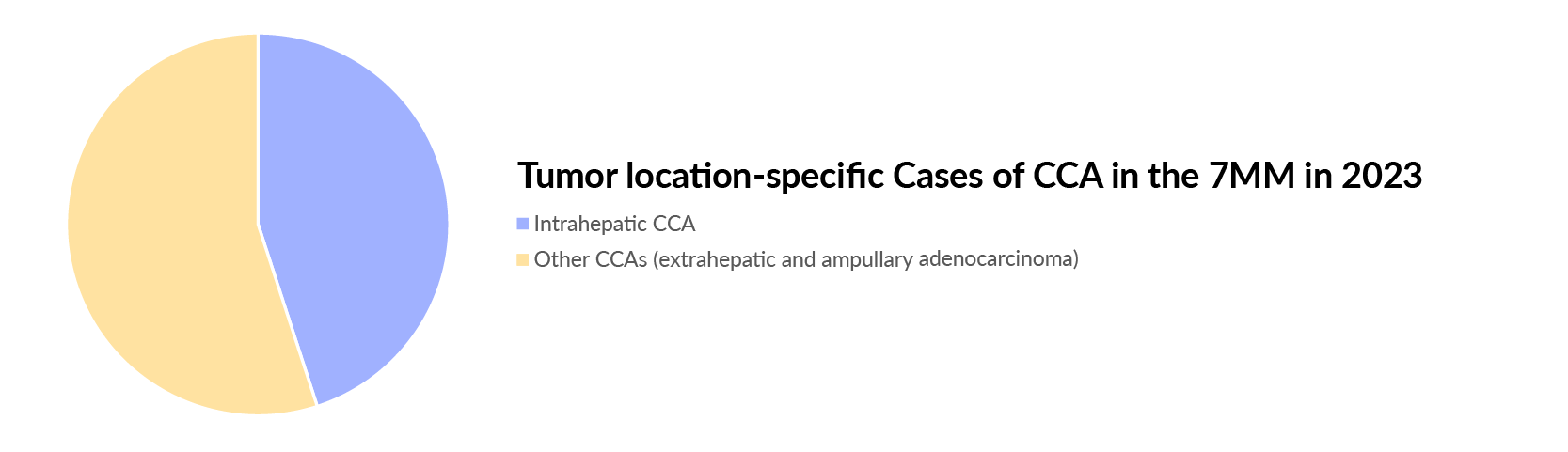
- Intrahepatic cholangiocarcinoma, also known as intrahepatic bile duct cancer, is a rare form of cancer that develops within the bile ducts inside the liver. It constitutes approximately 10% of all cases of cholangiocarcinoma. Although rare, the number of intrahepatic bile duct cancer cases is increasing at a CAGR of ~2% during the forecast period (2024-2034).
- In 2023, the United States captured approximately 50% of the total intrahepatic cholangiocarcinoma market size in the 7MM.
- Among the 7MM countries, as far as age-specific cases are concerned, ≥ 80 years age group accounted for the highest number of case of intrahepatic cholangiocarcinoma in 2023.
- As per mutation-specific cases of intrahepatic cholangiocarcinoma, it was observed that TP53 mutations accounted for the highest number of cases in 2023 across the 7MM.
- The difficulty in getting a decent patient pool and diagnostic samples in recurrence of disease pose hurdles to the effective development of translational research.
- Current cholangiocarcinoma treatment scenario, complete resection (gold standard), and first-line chemotherapy are associated with high disease relapse rate.
- In March 2024, the European Union authorized a Phase III clinical trial for cholangiocarcinoma, and the European Medicines Agency granted Orphan Drug Designation to Tinengotinib for the biliary tract cancer treatment.
- In April 2024, Compass Therapeutics received FDA Fast Track Designation for the investigation of CTX-009 in combination with paclitaxel for the treatment of patients with metastatic or locally advanced biliary tract tumors that have been previously treated.
- Key Intrahepatic Cholangiocarcinoma companies involved in developing targeted Intrahepatic Cholangiocarcinoma therapies to treat cholangiocarcinoma include CTX-009 (Compass Therapeutics), Tinengotinib (TransThera Sciences), CX-4945 (Senhwa Biosciences), and others. Some of these have recently entered the late stage of development; DelveInsight’s analysts anticipate their launch in the US market to treat cholangiocarcinoma.
-03.png)
DelveInsight’s "Intrahepatic Cholangiocarcinoma Therapeutics Market Insight, Epidemiology, and Market Forecast – 2034" report delivers an in-depth understanding of the intrahepatic cholangiocarcinoma historical and forecasted epidemiology as well as the intrahepatic cholangiocarcinoma therapeutics market trends in the United States, EU4 (Germany, France, Italy, and Spain) and the United Kingdom, and Japan.
The intrahepatic cholangiocarcinoma therapeutics market report provides current treatment practices, emerging drugs, intrahepatic cholangiocarcinoma market share of individual Intrahepatic Cholangiocarcinoma therapies, and current and forecasted intrahepatic cholangiocarcinoma market size from 2020 to 2034, segmented by seven major markets. The report also covers current intrahepatic cholangiocarcinoma treatment practices/algorithms and unmet medical needs to curate the best of the opportunities and assess the underlying potential of the market.
|
Study Period |
2020 to 2034 |
|
Forecast Period |
2024-2034 |
|
Geographies Covered |
|
|
Intrahepatic Cholangiocarcinoma Therapeutics Market |
|
|
Intrahepatic Cholangiocarcinomas Market Size | |
|
Intrahepatic Cholangiocarcinoma Companies |
Compass Therapeutics, TransThera Sciences, Incyte Corporation, Roche, Delcath Systems, Basilea Pharmaceutica, Agios Pharmaceuticals, Bayer, Loxo Oncology/Bayer, Qed Therapeutics, Janssen Pharmaceutical, Taiho Oncology, Redhill Biopharma, Glaxosmithkline, Merck/Glaxosmithkline, Eisai, Taiho Pharmaceutical/Servier, Bayer, Sorrento Therapeutics/Yuhan Corporation, Hutchison Medipharma, Jiangsu Hengrui Medicine, Astrazeneca, Eli Lilly, Servier Laboratories, Genoscience Pharma, Forma Therapeutics, Array Biopharma, and others. |
|
Intrahepatic Cholangiocarcinoma Epidemiology Segmentation |
|
Intrahepatic Cholangiocarcinoma Treatment Market
Intrahepatic Cholangiocarcinoma Overview
Intrahepatic cholangiocarcinoma is a rare and aggressive form of liver cancer that originates in the bile ducts within the liver. It accounts for 10-20% of all cholangiocarcinomas, which are malignancies arising from the biliary epithelium. Intrahepatic cholangiocarcinoma is distinct from other liver cancers due to its unique cellular origin and growth patterns.
This cancer is often silent in its early stages, making it difficult to detect until it has progressed significantly. Risk factors for intrahepatic cholangiocarcinoma include chronic liver conditions, such as cirrhosis and hepatitis B or hepatitis C infections, as well as exposure to certain toxins.
Despite advancements in research, intrahepatic cholangiocarcinoma remains challenging to study due to its heterogeneity—both in its molecular profile and its clinical presentation. Patients often experience nonspecific symptoms like weight loss, abdominal pain, and jaundice, which can delay diagnosis. The disease’s aggressive nature and late-stage presentation contribute to its poor prognosis.
Understanding the biology of intrahepatic cholangiocarcinoma is crucial for developing more effective Intrahepatic Cholangiocarcinoma therapies. Ongoing research is focused on unraveling the molecular pathways involved in its development and progression, with the hope of identifying new targets for treatment. However, the rarity of intrahepatic cholangiocarcinoma poses challenges in conducting large-scale studies, and there is a significant need for increased awareness and early detection to improve patient outcomes.
Intrahepatic Cholangiocarcinoma Diagnosis
The diagnosis of intrahepatic cholangiocarcinoma is challenging, as the disease often presents subtly, making early detection difficult. Typically, it begins with imaging studies, such as ultrasound, CT scans, or MRI, to identify liver lesions. However, these imaging techniques alone cannot definitively diagnose ICC. Biopsy remains the gold standard, where tissue samples are examined for malignant cells. Blood tests may reveal elevated levels of tumor markers like CA 19-9, but these are not specific to ICC.
Given the aggressive nature of ICC, early and accurate diagnosis is crucial. It allows for timely intervention, which can significantly impact patient outcomes. The diagnostic process must be approached with both precision and empathy, acknowledging the anxiety and uncertainty patients face during this time.
Further details related to diagnosis will be provided in the report…
Intrahepatic Cholangiocarcinoma Treatment
Surgical resection remains the primary curative approach for intrahepatic cholangiocarcinoma. However, only a small percentage of patients qualify for surgery due to the typically advanced stage at diagnosis. For those who can undergo resection, the five-year survival rate is significantly improved, though recurrence is common. Liver transplantation is considered for select patients with early-stage intrahepatic cholangiocarcinoma, especially those who meet strict criteria, including tumor size and absence of metastasis. While this offers a potential cure, the scarcity of donor organs limits its applicability. Systemic chemotherapy is the cornerstone for inoperable or advanced intrahepatic cholangiocarcinoma. Regimens typically include a combination of gemcitabine and cisplatin, which have shown modest efficacy in prolonging survival. However, the response rates remain low, highlighting the urgent need for more effective therapies. Targeted Intrahepatic Cholangiocarcinoma therapies are emerging as promising options. Agents targeting genetic mutations, such as FGFR2 or IDH1/2, have demonstrated clinical benefit in patients with these specific alterations. These therapies represent a shift towards personalized medicine in intrahepatic cholangiocarcinoma, offering hope for improved outcomes.
Further details related to treatment will be provided in the report…
Intrahepatic Cholangiocarcinoma Epidemiology
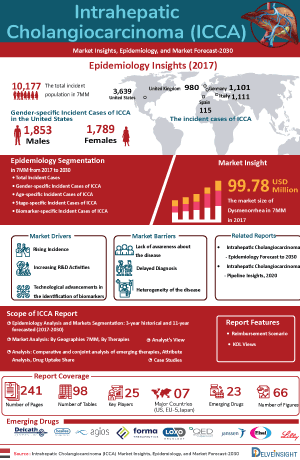
The intrahepatic cholangiocarcinoma epidemiology chapter in the report provides historical as well as forecasted epidemiology segmented by the Total Incident Cases of Cholangiocarcinoma, Total Incident Cases of Intrahepatic Cholangiocarcinoma, Mutation-specific Cases of Intrahepatic Cholangiocarcinoma, Age-specific Cases of Intrahepatic Cholangiocarcinoma, Stage-specific Cases of Intrahepatic Cholangiocarcinoma, and Total Treated Cases of Intrahepatic Cholangiocarcinoma in the 7MM covering the United States, EU4 (Germany, France, Italy, and Spain) and the United Kingdom, and Japan from 2020 to 2034.
- In 2023, the US accounted for ~30% of the total incident cases of cholangiocarcinoma in the 7MM.
- As per the analysis, there were ~6,400 cases of intrahepatic cholangiocarcinoma in Japan, in 2023.
- In 2023, the mutation-specific cases of intrahepatic cholangiocarcinoma were highest in TP53 mutations, followed by KRAS mutations in the US.
-02.png)
Intrahepatic Cholangiocarcinoma Drug Chapters
The drug chapter segment of the intrahepatic cholangiocarcinoma market report encloses a detailed analysis of the marketed, late-stage (Phase III), and mid-stage (Phase II) pipeline Intrahepatic Cholangiocarcinoma drugs. The marketed Intrahepatic Cholangiocarcinoma drugs segment encloses PEMAZYRE, ROZLYTREK, VITRAKVI, KEYTRUDA, IMFINZI, TIBSOVO, and others.
Furthermore, the current key Intrahepatic Cholangiocarcinoma companies for emerging Intrahepatic Cholangiocarcinoma drugs and their respective drug candidates include CTX-009 (Compass Therapeutics), Tinengotinib (TransThera Sciences), CX-4945 (Senhwa Biosciences) and others. The drug chapter also helps understand the intrahepatic cholangiocarcinoma clinical trials details, expressive pharmacological action, agreements and collaborations, approval and patent details, and the latest news and press releases.
Marketed Intrahepatic Cholangiocarcinoma Drugs
PEMAZYRE (pemigatinib): Incyte Corporation
PEMAZYRE (pemigatinib) is a kinase inhibitor indicated for the treatment of adults with previously treated, unresectable locally advanced or metastatic cholangiocarcinoma with a fibroblast growth factor receptor 2 (FGFR2) fusion or other rearrangement as detected by an FDA-approved test.
ROZLYTREK (entrectinib): Roche
ROZLYTREK (entrectinib) is a kinase inhibitor indicated for the treatment of adult patients with ROS1-positive metastatic non-small cell lung cancer (NSCLC) as detected by an FDA-approved test, adult and pediatric patients older than 1 month of age with solid tumors that have a neurotrophic tyrosine receptor kinase (NTRK) gene fusion, as detected by an FDA-approved test without a known acquired resistance mutation, are metastatic or where surgical resection is likely to result in severe morbidity, and have progressed following treatment or have no satisfactory alternative therapy..
TIBSOVO (ivosidenib): Servier/Agios Pharmaceuticals
TIBSOVO (ivosidenib) is an isocitrate dehydrogenase-1 (IDH1) inhibitor indicated for patients with a susceptible IDH1 mutation as detected by an FDA-approved test, for the treatment of adult patients with locally advanced or metastatic cholangiocarcinoma who have been previously treated. The recommended dosage of TIBSOVO is 500 mg taken orally once daily until disease progression or unacceptable toxicity.
|
Marketed Drug |
Company |
Molecule Type |
Intrahepatic Cholangiocarcinoma MoA |
RoA |
Approval Year |
|
PEMAZYRE (pemigatinib) |
Incyte Corporation |
Small molecule |
FGFR2 inhibitor |
Oral |
2020 (US), 2021 (EU), 2021 (JP) |
|
ROZLYTREK (entrectinib) |
Roche |
Small molecule |
TrkA/TrkB/TrkC/ROS1/ALK inhibitor |
Oral |
2023 (US), 2020 (EU), 2019 (JP) |
|
VITRAKVI (larotrectinib) |
Bayer |
Small molecule |
TrkA/TrkB/TrkC inhibitor |
Oral |
2018 (US), 2019 (EU), 2021 (JP) |
|
TIBSOVO (ivosidenib) |
Servier/Agios Pharmaceuticals |
Small molecule |
IDH1 inhibitor |
Oral |
2021 (US), 2023 (EU) |
Detailed Marketed therapy assessment will be provided in the final report...
Emerging Intrahepatic Cholangiocarcinoma Drugs
CTX-009: Compass Therapeutics
CTX-009 is a bispecific antibody that simultaneously blocks Delta-like ligand 4/Notch (DLL4) and vascular endothelial growth factor A (VEGF-A) signaling pathways, which are critical to angiogenesis and tumor vascularization. Preclinical and early clinical data of CTX-009 suggest that blockade of both pathways provides robust antitumor activity across several solid tumors, including colorectal cancer, gastric cancer, cholangiocarcinoma, pancreatic cancer, and non-small cell lung cancer. Partial responses to CTX-009 as monotherapy have been observed in heavily pre-treated patients with cancer who were resistant to currently approved anti-VEGF therapies.
Currently, CTX-009 is in the Phase III stage Intrahepatic Cholangiocarcinoma clinical trials for the treatment of cholangiocarcinoma.
Tinengotinib: TransThera Sciences
Tinengotinib is an innovative, global Phase III stage spectrum-selective kinase inhibitor that exerts antitumor effects by targeting tumor cells and improving the tumor microenvironment. Ongoing Intrahepatic Cholangiocarcinoma clinical trials in the US and China have revealed the potential of Tinengotinib to be efficacious in various solid tumors. It was granted the ODD and FTD by the FDA for the treatment of cholangiocarcinoma.
In November 2021, TransThera announced that the US FDA had granted FTD to its Phase II stage product TT-00420 (tinengotinib) for the treatment of patients with cholangiocarcinoma who have no standard treatment options. The grant of FTD is primarily based upon the trials Intrahepatic Cholangiocarcinoma clinical results of TT-00420 in its completed Phase I study, in which nine cholangiocarcinoma patients were enrolled and treated with TT-00420 at different dose levels.
Silmitasertib (CX-4945): Senhwa Biosciences
Silmitasertib (CX-4945), a synthetically derived small molecule, is provided as a sodium salt in hard gelatin capsule shells with oral administration. CK2 (Casein kinase 2) is a protein kinase that has elevated activity in many cancers and has a direct role in DNA damage repair. The DNA repair pathways enable tumor cells to survive damage induced by treatment with chemotherapeutic agents. Inhibitors of DNA repair pathways have been shown to increase the efficacy of DNA-damaging chemotherapeutic drugs when these are used in combination.
Silmitasertib, in combination with gemcitabine + cisplatin, yields promising preliminary evidence of efficacy in patients with locally advanced or metastatic cholangiocarcinoma. Based on Phase Ib/II, a randomized Phase III trial is planned.
|
Comparison of Emerging Therapies | |||||
|
Emerging Drug |
Company |
Phase |
Molecule Type |
Intrahepatic Cholangiocarcinoma MoA |
RoA |
|
Tinengotinib |
TransThera Sciences |
III |
Small molecule |
Multi-kinase inhibitor |
Oral |
|
Rilvegostomig |
AstraZeneca/ Compugen |
III |
Bispecific antibody |
Anti-PD-1/TIGIT |
IV |
|
CTX-009 + Paclitaxel |
Compass Therapeutics |
II/III |
Bispecific antibody |
DLL4 and VEGF-A inhibitors |
IV |
|
Silmitasertib (CX-4945) |
Senhwa Biosciences |
I/II |
Small molecule |
Casein kinase 2 (CK2) inhibitor |
Oral |
Detailed emerging therapies assessment will be provided in the final report...
Intrahepatic Cholangiocarcinoma Drug Class Insight
FGFR2 Inhibitors and IDH1 Inhibitors represent two promising drug classes in the treatment of intrahepatic cholangiocarcinoma (iCCA), particularly for patients with specific genetic alterations.
FGFR2 Inhibitors:
Fibroblast growth factor receptor 2 (FGFR2) fusions or rearrangements are present in a subset of intrahepatic cholangiocarcinoma cases. FGFR2 inhibitors, such as pemigatinib and futibatinib, target these aberrant signaling pathways, inhibiting tumor growth. Clinical trials have shown that these Intrahepatic Cholangiocarcinoma drugs can achieve meaningful responses in patients with FGFR2 alterations, with a significant disease control rate in some studies. However, resistance often develops, and side effects like hyperphosphatemia and ocular toxicity are common, necessitating careful patient selection and monitoring. FGFR2 inhibitors are a key step towards personalized therapy in intrahepatic cholangiocarcinoma, offering a new option for a subset of patients previously limited to conventional chemotherapy.
IDH1 Inhibitors:
Isocitrate dehydrogenase 1 (IDH1) mutations are commonly observed in a subset of intrahepatic cholangiocarcinoma (iCCA) cases. Ivosidenib, the first IDH1 inhibitor approved for this indication, blocks the abnormal enzyme activity caused by the mutation, thereby reducing the production of the oncometabolite 2-HG, which drives tumor progression. In clinical trials, ivosidenib has demonstrated a significant improvement in progression-free survival compared to placebo, although overall survival benefits remain modest. Tolerance is generally favorable, with manageable side effects such as nausea, diarrhea, and fatigue. While not curative, IDH1 inhibitors provide a targeted approach for patients with IDH1-mutant intrahepatic cholangiocarcinoma, marking another advance in the shift towards molecularly-driven cancer therapies.
Detailed drug class insights will be provided in the final report....
Intrahepatic Cholangiocarcinoma Treatment Market Outlook
The market for intrahepatic cholangiocarcinoma is evolving with promising advancements in targeted and personalized treatments. Although intrahepatic cholangiocarcinoma remains challenging due to late diagnosis and its rarity, the development of Intrahepatic Cholangiocarcinoma drugs targeting FGFR2 and IDH-1 mutations offers new hope. Increased research, improved molecular diagnostics, and the rise of precision medicine are driving market growth. However, high treatment costs and recruitment difficulties in clinical trials are ongoing challenges. The future outlook is positive, with expectations for expanded treatment options and improved patient outcomes as new therapies gain approval and become available.
Key Findings
- PEMAZYRE is anticipated to lead the market for FGFR-targeted therapies in bile tract cancer with a projected market share of approximately $285 million by 2034, largely due to its first-mover advantage and Incyte's plans to address frontline treatment.
- Drugs targeting HER2 mutations in BTC, including ENHERTU, zanidatamab, and tucatinib combined with HERCEPTIN, are expected to collectively generate around $60 million in sales across the 7MM by 2034.
- The approval of KEYTRUDA in combination with chemotherapy for BTC marks a significant advancement, enhancing competition. The distinct efficacy profiles and patent timelines of KEYTRUDA and IMFINZI could affect their market share and influence long-term treatment strategies.
- Real-world data indicates evolving treatment patterns and survival outcomes for BTC, revealing differences in regimen use across therapy lines. Challenges such as low overall survival rates, high mortality, and factors like age and disease stage complicate treatment decisions and impact patient outcomes.

Detailed market assessment will be provided in the final report...
Intrahepatic Cholangiocarcinoma Drug Uptake
This section focuses on the uptake rate of potential Intrahepatic Cholangiocarcinoma drugs expected to be launched in the market during 2024–2034, which depends on the competitive landscape, safety, and efficacy data along with order of entry. It is important to understand that the key Intrahepatic Cholangiocarcinoma companies evaluating their novel therapies in the pivotal and confirmatory trials should remain vigilant when selecting appropriate comparators to stand the greatest chance of a positive opinion from regulatory bodies, leading to approval, smooth launch, and rapid uptake.
Intrahepatic Cholangiocarcinoma Pipeline Development Activities
The Intrahepatic Cholangiocarcinoma market report provides insights into Intrahepatic Cholangiocarcinoma clinical trials within Phase III, Phase II, and Phase I/II. It also analyzes key Intrahepatic Cholangiocarcinoma players involved in developing targeted therapeutics. Intrahepatic Cholangiocarcinoma companies like TransThera Sciencesy, AstraZeneca/ Compugeny, Compass Therapeuticsy, Senhwa Biosciences and others are actively engaging their product in research and development efforts for intrahepatic cholangiocarcinoma. The pipeline of intrahepatic cholangiocarcinoma possesses many potential Intrahepatic Cholangiocarcinoma drugs and there is a positive outlook for the Intrahepatic Cholangiocarcinoma therapeutics market, with expectations of growth during the forecast period (2024–2034).
Pipeline Development Activities
The Intrahepatic Cholangiocarcinoma market report covers information on collaborations, acquisitions and mergers, licensing, and patent details for Intrahepatic Cholangiocarcinoma emerging therapy.
KOL- Views on Intrahepatic Cholangiocarcinoma
To keep up with current market trends, we take KOLs and SMEs’ opinions working in the domain through primary research to fill the data gaps and validate our secondary research. Industry Experts contacted for insights on the Intrahepatic Cholangiocarcinoma evolving treatment landscape, patient reliance on conventional therapies, patient therapy switching acceptability, and drug uptake, along with challenges related to accessibility, including Professors, Medical Oncologists, Surgical Oncologist, Hepatologists, and others.
DelveInsight’s analysts connected with 30+ KOLs to gather insights; however, interviews were conducted with 15+ KOLs in the 7MM. Centers such as the Johns Hopkins Hospital, Dana-Farber Cancer Institute, Memorial Sloan Kettering Cancer Center, Massachusetts General Hospital, etc., were contacted. Their opinion helps understand and validate current and emerging therapy treatment patterns or intrahepatic cholangiocarcinoma therapeutics market trends. This will support the clients in potential upcoming novel treatments by identifying the overall scenario of the market and the unmet needs.
|
KOL Views |
|
“Cancers of the biliary tract can be highly aggressive tumors, underscoring the need for additional treatment options for the growing number of patients facing this challenging disease. Today's approval of pembrolizumab in combination with chemotherapy offers patients with locally advanced unresectable or metastatic biliary tract cancer a new immunotherapy regimen that has demonstrated the potential to help these patients live longer.” |
|
“The vast majority of patients with cholangiocarcinoma are diagnosed with advanced disease, so I think that there are a lot of efforts underway looking at different biomarkers and other testing modalities to see if we can catch the disease earlier and diagnose it earlier in PSC patients. These are the patients that we can try to target with emerging diagnostic modalities and see if we can identify the subset of PSC patients who will go on to develop cholangiocarcinoma.” |
|
“Treatment of intrahepatic cholangiocarcinoma (iCCA) expands each year, with the most recent advance being the addition of immune checkpoint inhibitors to the gemcitabine/cisplatin backbone. Looking forward, there are multiple biomarkers which represent an opportunity for better treatment options.” |
Qualitative Analysis
We perform Qualitative and market Intelligence analysis using various approaches, such as SWOT and Conjoint Analysis. In the SWOT analysis, strengths, weaknesses, opportunities, and threats in terms of disease diagnosis, patient awareness, patient burden, competitive landscape, cost-effectiveness, and geographical accessibility of therapies are provided. These pointers are based on the Analyst’s discretion and assessment of the patient burden, cost analysis, and existing and evolving treatment landscape.
Intrahepatic Cholangiocarcinoma Market Access and Reimbursement
The Intrahepatic Cholangiocarcinoma market report provides detailed insights on the country-wise accessibility and reimbursement scenarios, cost-effectiveness scenario of currently used therapies, programs making accessibility easier and out-of-pocket costs more affordable, insights on patients insured under federal or state government prescription drug programs, etc.
Detailed market access and reimbursement assessment will be provided in the final report...
Scope of the Intrahepatic Cholangiocarcinoma Market Report
- The Intrahepatic Cholangiocarcinoma market report covers a segment of key events, an executive summary, and a descriptive overview of intrahepatic cholangiocarcinoma, explaining its causes, signs, symptoms, pathogenesis, and currently used therapies.
- Comprehensive insight into the epidemiology segments and forecasts, disease progression, and treatment guidelines has been provided.
- Additionally, an all-inclusive account of the emerging therapies and the elaborative profiles of late-stage and prominent therapies will impact the current treatment landscape.
- A detailed review of the intrahepatic cholangiocarcinoma therapeutics market, historical and forecasted market size, market share by therapies, detailed assumptions, and rationale behind our approach is included in the report, covering the 7MM drug outreach.
- The Intrahepatic Cholangiocarcinoma market report provides an edge while developing business strategies by understanding trends through SWOT analysis and KOL views, patient journey, and treatment preferences that help shape and drive intrahepatic cholangiocarcinoma treatment market.
Intrahepatic Cholangiocarcinoma Market Report Insights
- Intrahepatic Cholangiocarcinoma Patient Population
- Intrahepatic Cholangiocarcinoma Therapeutic Approaches
- Intrahepatic Cholangiocarcinoma Pipeline Analysis
- Intrahepatic Cholangiocarcinoma Market Size
- Intrahepatic Cholangiocarcinoma Market Trends
- Existing and Future Intrahepatic Cholangiocarcinoma Market Opportunity
Intrahepatic Cholangiocarcinoma Market Report Key Strengths
- Eleven Years Forecast
- The 7MM Coverage
- Intrahepatic Cholangiocarcinoma Epidemiology Segmentation
- Key Cross Competition
- Intrahepatic Cholangiocarcinoma Drugs Uptake
- Key Intrahepatic Cholangiocarcinoma Market Forecast Assumptions
Intrahepatic Cholangiocarcinoma Market Report Assessment
- Current Intrahepatic Cholangiocarcinoma Treatment Practices
- Intrahepatic Cholangiocarcinoma Unmet Needs
- Intrahepatic Cholangiocarcinoma Pipeline Product Profiles
- Intrahepatic Cholangiocarcinoma Market Attractiveness
- Qualitative Analysis (SWOT and Conjoint Analysis)
- Intrahepatic Cholangiocarcinoma Market Drivers
- Intrahepatic Cholangiocarcinoma Market Barriers
FAQs
- What was the intrahepatic cholangiocarcinoma market size, the market size by therapies, market share (%) distribution in 2020, and what would it look like by 2034? What are the contributing factors for this growth?
- What can be the future treatment paradigm for intrahepatic cholangiocarcinoma?
- What are the disease risks, burdens, and unmet needs of intrahepatic cholangiocarcinoma? What will be the growth opportunities across the 7MM concerning the patient population with intrahepatic cholangiocarcinoma?
- What are the current options for the treatment of intrahepatic cholangiocarcinoma? What are the current guidelines for treating intrahepatic cholangiocarcinoma in the 7MM?
- What are the recent novel therapies, targets, Intrahepatic Cholangiocarcinoma mechanism of action, and technologies being developed to overcome the limitations of existing therapies?
- What is the patient share in intrahepatic cholangiocarcinoma?
Reasons to Buy Intrahepatic Cholangiocarcinoma Market Forecast Report:
- The intrahepatic cholangiocarcinoma market report will help develop business strategies by understanding the latest trends and changing treatment dynamics driving the intrahepatic cholangiocarcinoma treatment market.
- Insights on patient burden/ intrahepatic cholangiocarcinoma prevalence, evolution in diagnosis, and factors contributing to the change in the epidemiology of the disease during the forecast years.
- Understand the existing intrahepatic cholangiocarcinoma market opportunities in varying geographies and the growth potential over the coming years.
- Identifying strong upcoming Intrahepatic Cholangiocarcinoma companies in the market will help devise strategies to help get ahead of competitors.
- Highlights of access and reimbursement policies of current therapies, and patient assistance programs.
- To understand Key Opinion Leaders’ perspectives around the accessibility, acceptability, and compliance-related challenges of existing treatment to overcome barriers in the future.
- Detailed insights on the unmet needs of the existing intrahepatic cholangiocarcinoma market so that the upcoming Intrahepatic Cholangiocarcinoma companies can strengthen their development and launch strategy.
Get detailed insights through our blog section @ DelveInsight Blogs