Radiopharmaceuticals Market Summary
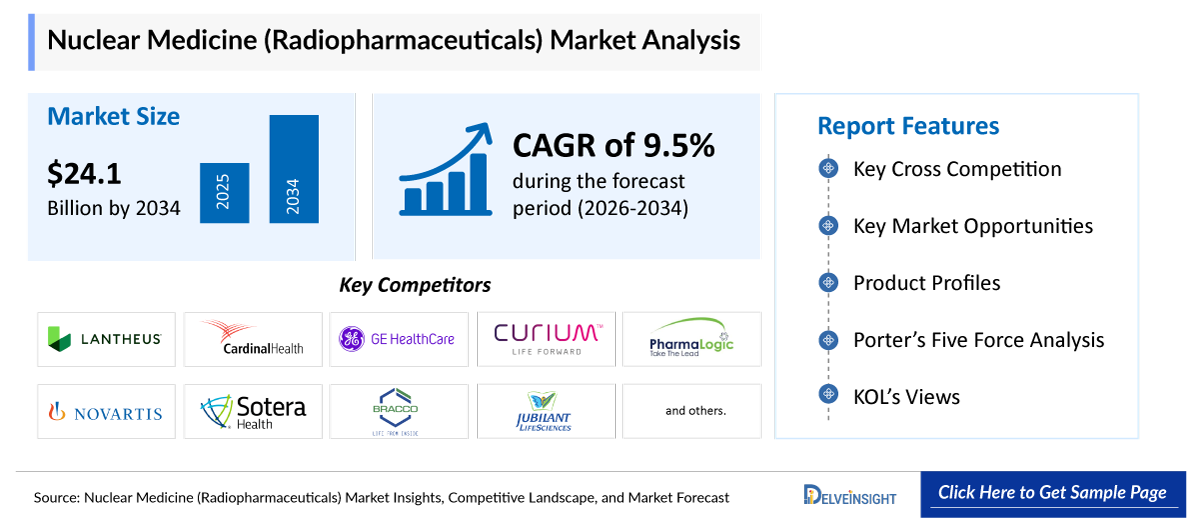
- The Global Radiopharmaceuticals Market is expected to increase from USD 10,746.92 million in 2025 to USD 24,152.35 million by 2034, reflecting strong and sustained growth.
- The Global Radiopharmaceuticals Market is growing at a CAGR of 9.50% during the forecast period from 2026 to 2034.
Radiopharmaceuticals Market Trends & Insights
- The Radiopharmaceuticals Market is primarily driven by the growing prevalence of chronic diseases such as cancer, cardiovascular disorders, and neurological conditions, which increases the demand for advanced diagnostic and therapeutic solutions. Additionally, technological advancements in imaging systems, radiotracer development, and theranostics have improved accuracy, safety, and patient outcomes. Moreover, expanding healthcare infrastructure, rising awareness about early disease detection, and favorable government initiatives consistently support the adoption of nuclear medicine procedures. Consequently, these factors collectively fuel the growth of the global Radiopharmaceuticals market.
- The leading Radiopharmaceuticals Companies such as Lantheus, Cardinal Health, GE Healthcare, Curium Pharma,Pharmalogic Holdings Corp., Novartis, Cambridge Isotope Laboatories, Inc., Sotera Health LLC, Bracco Imaging SpA, Jubilant Pharma Limited, NECSA Ltd., IBA Radiopharma Solutions, Bayer AG, Norgine, NorthStar Medical Radioisotopes, LLC, Eckert & Ziegler, Telix Pharmaceuticals Limited, ITM Isotope Technologies Munich SE, Mallinckrodt PLC, ROTOP Pharmaka GmbH and others.
- North America is expected to remain a leading region in the global Radiopharmaceuticals market due to a high prevalence of chronic diseases such as cancer and heart conditions, which drives demand for advanced diagnostic and therapeutic solutions. Additionally, the region has well-developed healthcare infrastructure and access to cutting-edge imaging technologies like PET and SPECT scanners. Moreover, supportive government policies, strong research and development activities, and increasing public awareness about early disease detection consistently boost the adoption of nuclear medicine procedures, making North America the largest market globally.
- In the product type segment of the Radiopharmaceuticals market, within diagnostic products segment, the iodine-125 category under single photon emission computed tomography (SPECT) is estimated to account for the largest market share in 2025.
Radiopharmaceuticals Market Size and Forecasts
|
Report Metrics |
Details |
|
2025 Market Size |
USD 10,746.92 million |
|
2034 Projected Market Size |
USD 24,152.35 million |
|
Growth Rate (2026-2034) |
9.50% CAGR |
|
Largest Market |
North America |
|
Fastest Growing Market |
Asia-Pacific |
| Market Structure |
Moderately Concentrated |
Request for unlocking the report of the @ Radiopharmaceuticals Market
Factors Contributing to the Growth of the Radiopharmaceuticals Market
-
Rising prevalence of cancer, cardiovascular, and other chronic diseases
The rising prevalence of cancer, cardiovascular, and other chronic diseases is a key driver for the Radiopharmaceuticals market. As the number of patients with conditions such as oncological disorder, cardiac, and neurological disorders increases, the demand for advanced diagnostic and therapeutic solutions grows. Nuclear medicine enables early and accurate detection, functional imaging of organs, and targeted treatment, which is critical for effective disease management. Consequently, the increasing burden of chronic diseases directly boosts the adoption of nuclear medicine procedures and radiopharmaceuticals, supporting the market’s steady growth.
-
Increasing demand for targeted radiotherapy
The increasing demand for targeted radiotherapy is a key driver of the Radiopharmaceuticals market. Targeted radiotherapy, also known as radioligand therapy, involves delivering radioactive compounds directly to cancerous cells, minimizing damage to healthy tissues and improving treatment precision. This approach is particularly effective for conditions such as neuroendocrine tumors, prostate cancer, and certain types of thyroid cancer and liver cancers, where conventional therapies may be less effective or cause significant side effects. The growing adoption of targeted radiotherapy is fueled by advancements in radiopharmaceutical development, improved imaging techniques, and increasing awareness among clinicians and patients about its efficacy and safety. As more hospitals and specialized cancer centers integrate these therapies into their treatment protocols, the demand for radiopharmaceuticals continues to rise, driving significant growth in the Global Radiopharmaceuticals market.
-
Growing adoption of PET and SPECT Imaging
The growing adoption of PET and SPECT imaging is a major driver of the Radiopharmaceuticals market. Advanced imaging technologies such as Positron Emission Tomography (PET) and Single Photon Emission Computed Tomography (SPECT) are widely used for the early detection, diagnosis, and monitoring of various diseases, including cancer, cardiovascular disorders, and neurological conditions. These imaging techniques rely on specialized radiopharmaceuticals to visualize metabolic and physiological processes within the body with high precision. Their ability to provide accurate, non-invasive, and functional imaging has increased their adoption in hospitals and diagnostic centers. As the demand for early and precise diagnosis continues to rise, the use of PET and SPECT imaging is expanding, thereby driving the growth of the Radiopharmaceuticals market.
Radiopharmaceuticals Market Report Segmentation
This Radiopharmaceuticals market report offers a comprehensive overview of the global Radiopharmaceuticals market, highlighting key trends, growth drivers, challenges, and opportunities. It covers detailed market segmentation by Product Type (Diagnostic Products [Single Photon Emission Computed Tomography (SPECT) {Technetium-99m, Iodine-125, Xenon-133, and Others} and Positron Emission Tomography (PET) {Flourine-18, Carbon-11, Gallium-68, and Others}], and Therapeutic Products [Alpha Emitters {Astatine-211, Actinium-225, Lead-212, and Others}, Beta Emitters {Lutetium-177, Iodine-131, Yttrium-90, and Others}, and Brachytherapy]), Application (Cardiology, Neurology, Oncology, and Others), End-User (Hospitals, Diagnostic Centers, and Others), and Geography.
The Radiopharmaceuticals Market Report provides valuable insights into the competitive landscape, regulatory environment, and market dynamics across major markets, including North America, Europe, and Asia-Pacific. Featuring in-depth profiles of leading industry players and recent product innovations, this report equips businesses with essential data to identify market potential, develop strategic plans, and capitalize on emerging opportunities in the rapidly growing Radiopharmaceuticals market.
Radiopharmaceuticals refer to a specialized field of medical imaging and therapy that uses small amounts of radioactive substances (radiopharmaceuticals) to diagnose and treat various diseases. These radioactive compounds are introduced into the body, where they accumulate in specific organs or tissues and emit radiation that can be detected using imaging systems such as PET or SPECT scanners. This enables physicians to visualize organ function, detect abnormalities at an early stage, and monitor disease progression. In addition to diagnosis, certain radiopharmaceuticals are also used in targeted treatments, particularly for conditions such as cancer, thyroid disorders, and some neurological diseases.
The Radiopharmaceuticals Market is witnessing substantial growth due to several key factors. One of the major drivers is the increasing prevalence of chronic diseases, including cancer and cardiovascular diseases, which has increased the need for advanced diagnostic and therapeutic solutions. In addition, the rising demand for targeted radiotherapy is supporting market expansion, as radiopharmaceuticals enable precise delivery of radiation to diseased cells while minimizing damage to surrounding healthy tissues.
Furthermore, the growing adoption of advanced imaging technologies, such as Positron Emission Tomography (PET) and Single Photon Emission Computed Tomography (SPECT), is enhancing disease detection and monitoring by providing detailed functional imaging. These factors collectively contribute to the increasing utilization of nuclear medicine procedures, thereby driving the growth of the Radiopharmaceuticals market.
Get More Insights into the Report @ Radiopharmaceuticals Market
What are the latest Radiopharmaceuticals Market Dynamics and Trends?
The Radiopharmaceuticals market is witnessing strong growth driven by the rising prevalence of cancer and cardiovascular diseases, increasing demand for targeted radiotherapy, and the expanding use of advanced imaging technologies such as Positron Emission Tomography (PET) and Single Photon Emission Computed Tomography (SPECT).
According to the Institute for Health Metrics and Evaluation (2025), there were 437 million cardiovascular disease (CVD) disability-adjusted life years (DALYs) globally in 2023.
Cardiovascular diseases (CVDs), being a leading cause of morbidity and mortality globally, have significantly increased the demand for precise diagnosis, risk evaluation, and treatment monitoring. Nuclear medicine imaging techniques, such as myocardial perfusion imaging performed using PET and SPECT scans, enable physicians to evaluate blood flow to the heart, detect coronary artery blockages, assess heart muscle function, and identify areas with reduced oxygen supply. Radiopharmaceuticals, including technetium-99m-based tracers and other cardiac imaging agents, are widely used to diagnose conditions such as coronary artery disease, myocardial ischemia, and heart failure, thereby contributing significantly to the growth of the Radiopharmaceuticals market.
Moreover, according to the International Agency for Research on Cancer (2026), the estimated number of new thyroid cancer cases globally was 863,000 in 2025 and is projected to reach 1.07 million by 2045. As per the same source, the estimated number of new cases of prostate cancer was 1.57 million in 2025 and is projected to increase to 2.63 million by 2045. These cancers often require advanced nuclear imaging and targeted radiotherapy for accurate diagnosis, staging, and treatment monitoring. In thyroid cancer, radiopharmaceuticals such as radioactive iodine are widely used for both diagnostic imaging and targeted treatment of cancerous thyroid tissue.
Similarly, in prostate cancer, imaging techniques like positron emission tomography (PET) using prostate-specific tracers help detect tumor spread and support effective treatment planning, thereby driving the growth of the Radiopharmaceuticals market. However, the increase in product development activities is further boosting the overall market of nuclear medicine/ radiopharmaceuticals.
For instance, in March 2025, Telix Pharmaceuticals Limited announced that the United States Food and Drug Administration (FDA) had approved its New Drug Application (NDA) for Gozellix® (TLX007‑CDx, a kit for the preparation of gallium‑68 [⁶⁸Ga] gozetotide injection), Telix’s next‑generation PSMA‑PET imaging agent for prostate cancer. Thus, the factors mentioned above are expected to boost the overall market of Radiopharmaceuticals during the forecast period from 2026 to 2034.
However, the growth of Radiopharmaceuticals is restrained by several challenges, including the short half-life of many radioisotopes, which makes storage and transportation difficult and requires production facilities to be located near healthcare centers. In addition, the high cost of specialized infrastructure, such as cyclotrons, PET/SPECT scanners, and radiation-shielded facilities, limits adoption in many hospitals. Strict regulatory and radiation safety requirements further complicate the manufacturing, handling, and approval of radiopharmaceuticals.
Moreover, concerns about radiation exposure, limited availability of skilled professionals, and occasional supply shortages of medical isotopes also restrict the wider use of nuclear medicine technologies in clinical practice.
Radiopharmaceuticals Market Segment Analysis
Radiopharmaceuticals Market by Product Type (Diagnostic Products [Single Photon Emission Computed Tomography (SPECT) {Technetium-99m, Iodine-125, Xenon-133, and Others} and Positron Emission Tomography (PET) {Flourine-18, Carbon-11, Gallium-68, and Others}], and Therapeutic Products [Alpha Emitters {Astatine-211, Actinium-225, Lead-212, and Others}, Beta Emitters {Lutetium-177, Iodine-131, Yttrium-90, and Others}, and Brachytherapy]), Application (Cardiology, Neurology, Oncology, and Others), End-User (Hospitals, Diagnostic Centers, and Others), and Geography (North America, Europe, Asia-Pacific, and Rest of the World).
Radiopharmaceuticals By Product Type
Within the diagnostic products segment, the iodine-125 category under single photon emission computed tomography (SPECT) are projected to account for the highest revenue share in the global market.
The diagnostic category dominates the market, accounting for 77% market share in 2025. Within the diagnostic product segmentation of the Radiopharmaceuticals market, the iodine-125 segment under Single Photon Emission Computed Tomography (SPECT) is projected to hold the largest revenue share. This growth is primarily driven by the segment’s multiple clinical advantages and its wide range of diagnostic applications.
Iodine-125 seed implantation is widely used in brachytherapy for radiation treatment of various tumors, including prostate cancer, uveal melanomas, brain tumors, rectal carcinoma, advanced pancreatic cancer, and non-small cell lung cancer.
Additionally, Iodine-125 is employed in the treatment of gastric cancer, colorectal cancer, liver cancer, gynecological tumors, urinary system tumors, nervous system tumors, and other malignancies.
Moreover, Iodine-125 is also used in thyroid scanning and imaging, and the isotope ¹²⁵I is valuable for glomerular filtration rate (GFR) testing, aiding in the diagnosis and monitoring of kidney disease. Major manufacturers contributing to the dominance of Iodine-125 include Bayer AG, which produces I-125 seeds for brachytherapy, GE Healthcare, offering radiopharmaceutical kits for thyroid imaging, and Jubilant Life Sciences, which supplies high-quality I-125 isotopes for clinical and research applications. Moreover, the consistent regulatory approvals, strong R&D pipelines, and rising demand for minimally invasive cancer treatments have collectively reinforced Iodine-125’s leading position in the global nuclear medicine market, driving substantial revenue growth.
As a result , the iodine-125 category is projected to witness substantial growth within the overall Radiopharmaceuticals market throughout the forecast period.
Radiopharmaceuticals By Application: Oncology Category Dominates the Market
The oncology category dominates the nuclear medicine market with a market share of 25% in 2025, primarily due to the rising global burden of cancer and the increasing reliance on nuclear imaging and targeted radiotherapy for accurate diagnosis, staging, and treatment monitoring. Nuclear medicine plays a crucial role in oncology because radiopharmaceuticals can selectively accumulate in cancerous tissues, enabling physicians to visualize tumors with high precision and deliver targeted radiation therapy. Imaging techniques such as PET and SPECT scans are widely used to detect cancers at early stages, evaluate tumor metabolism, and monitor treatment response.
Radiopharmaceuticals such as fluorodeoxyglucose (FDG-18F) manufactured by companies like GE HealthCare, Cardinal Health, and Curium Pharma are extensively used in PET imaging for diagnosing cancers including lung cancer, lymphoma, and colorectal cancer. In addition, therapeutic radiopharmaceuticals are increasingly being used for targeted cancer treatment. For instance, Lutathera® (lutetium-177 dotatate) developed by Novartis is used for the treatment of gastroenteropancreatic neuroendocrine tumors, while Pluvicto™ (lutetium-177 vipivotide tetraxetan) from Novartis is used for metastatic prostate cancer. Similarly, Xofigo® (radium-223 dichloride) developed by Bayer AG is used to treat prostate cancer with bone metastases.
These radiopharmaceuticals provide highly targeted therapy by delivering radiation directly to cancer cells while minimizing damage to surrounding healthy tissues. The increasing number of cancer cases, continuous development of innovative radiopharmaceuticals, and the growing adoption of PET/SPECT imaging in oncology are therefore significantly driving the dominance of the oncology segment in the Radiopharmaceuticals market.
Radiopharmaceuticals By End-Users: Hospitals Category Dominates the Market
The hospitals category dominates the Radiopharmaceuticals market because hospitals serve as the primary centers for advanced diagnostic imaging and therapeutic procedures. They have the necessary infrastructure, such as PET and SPECT scanners, cyclotrons, and radiation safety facilities, along with skilled nuclear medicine specialists and trained staff to handle radiopharmaceuticals safely and efficiently. Additionally, hospitals cater to a large and diverse patient population, including oncology, cardiology, and neurology patients, which consistently drives the demand for nuclear medicine procedures.
Moreover, hospitals benefit from collaborations with radiopharmaceutical manufacturers, government support, and research initiatives, enabling them to adopt the latest imaging agents and therapeutic isotopes promptly. Consequently, the combination of high patient volume, comprehensive healthcare services, technological capability, and accessibility ensures that hospitals remain the leading end-users in the Radiopharmaceuticals market, generating the highest revenue share.
Radiopharmaceuticals Market Regional Analysis
North America Radiopharmaceuticals Market Trends
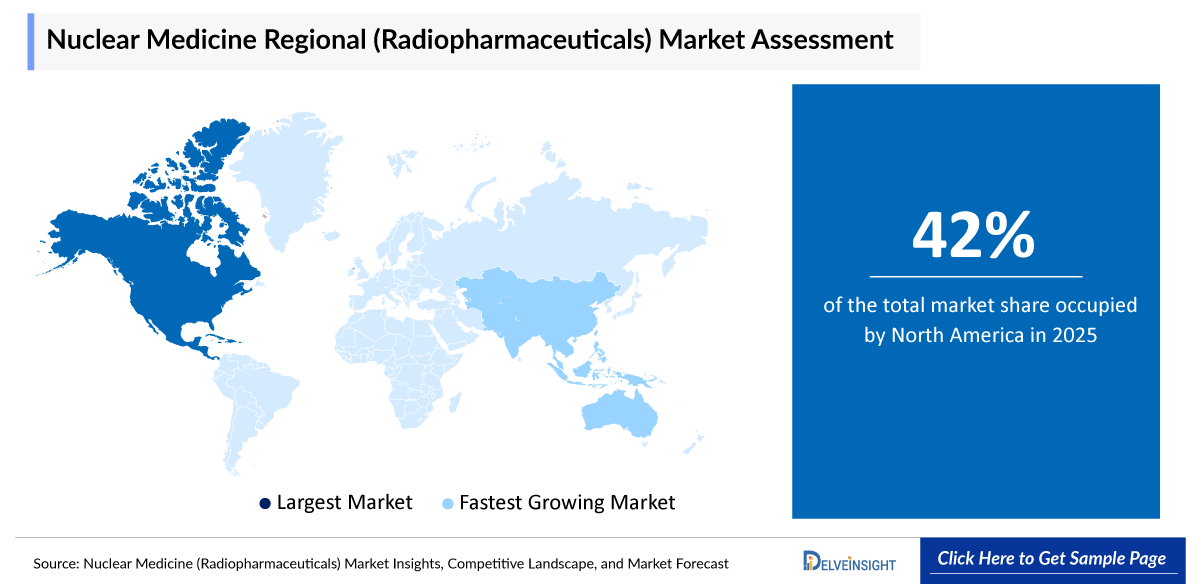
North America is expected to account for the highest proportion of 42% of the Radiopharmaceuticals market in 2025, out of all regions. This dominance is driven by the rising prevalence of cancer, cardiovascular, and other chronic diseases linked to lifestyle changes and high processed food consumption. Additionally, the presence of major local players and a growing geriatric population susceptible to chronic conditions further strengthens the market in the region.
According to the Centers for Disease Control and Prevention, in 2024, approximately 805,000 people in the United States experienced a heart attack. As per the same source, it was estimated that approximately 12.1 million people in the United States would have atrial fibrillation (AFib) by 2050. These cardiovascular conditions demand accurate diagnosis, risk evaluation, and ongoing monitoring of heart function, where nuclear imaging techniques such as PET (Positron Emission Tomography), SPECT (Single Photon Emission Computed Tomography), and myocardial perfusion scans play a vital role. Radiopharmaceuticals, integral to these imaging procedures, enable non-invasive detection of damaged heart tissue, assessment of blood flow, and evaluation of arrhythmias. This increasing reliance on advanced cardiac imaging is driving the growth of the Radiopharmaceuticals market.
Moreover, according to a 2022 study led by the Parkinson’s Foundation, nearly 90,000 people were diagnosed with Parkinson’s disease each year in the United States. The study also estimates that by 2030, approximately 1.2 million people in the U.S. will be living with Parkinson’s disease. Nuclear imaging techniques such as PET (Positron Emission Tomography) and SPECT (Single Photon Emission Computed Tomography) play a key role in detecting dopamine transporter activity and assessing brain function. Radiopharmaceuticals used in these scans allow clinicians to visualize neuronal loss and monitor disease progression non-invasively. As the number of Parkinson’s patients increases globally, demand for these advanced diagnostic tools rises, thereby driving growth in the Radiopharmaceuticals market.
However, the increase in product development activities is further boosting the overall market of Radiopharmeceuticals. For instance, in April 2024, Novartis’ radioligand therapy Lutathera® was approved by the FDA as the first medicine specifically for pediatric patients with gastroenteropancreatic neuroendocrine tumors.
Thus, all the above-mentioned factors are anticipated to propel the market for Radiopharmaceuticals in North America during the forecast period.
Europe Radiopharmaceuticals Market Trends
The Radiopharmaceuticals market in Europe is growing due to the rising prevalence of cancer, cardiovascular diseases, and neurodegenerative disorders, increasing demand for early diagnosis, and the adoption of advanced imaging technologies like PET and SPECT for accurate, non-invasive disease detection and monitoring.
According to the Organisation for Economic Co-operation and Development, in 2022, cardiovascular diseases affected an estimated 62 million people in Europe. Accurate diagnosis and monitoring of heart conditions, including heart attacks, coronary artery disease, and arrhythmias, rely on advanced imaging techniques such as PET (Positron Emission Tomography), SPECT (Single Photon Emission Computed Tomography), and myocardial perfusion scans. Radiopharmaceuticals play a crucial role in these procedures by enabling non-invasive assessment of blood flow, detection of damaged heart tissue, and evaluation of cardiac function, thereby driving the growth of the Radiopharmaceuticals market.
Additionally, according to the International Agency for Research on Cancer, the estimated number of new Liver Cancer cases in Europe was 78,600 in 2025, and it is projected to reach 75,500 by 2045. The diagnosis, staging, and treatment of Thyroid Cancer heavily depend on nuclear imaging techniques such as PET (Positron Emission Tomography) and SPECT (Single Photon Emission Computed Tomography), along with radioisotope-based therapies like radioactive iodine. Radiopharmaceuticals are essential for detecting malignant thyroid tissue, monitoring metastasis, and delivering targeted therapy, allowing for precise and non-invasive disease management. This growing reliance on nuclear medicine is driving the expansion of the radiopharmaceuticals market.
However, the increase in product development activities is further boosting the overall market of nuclear medicine/ radiopharmaceuticals. For instance, in November 2024, Eckert & Ziegler Radiopharma GmbH received approval from the European Commission for its proprietary non-carrier-added Lutetium-177 chloride, Theralugand®. Hence, all the factors mentioned above are expected to drive the market for Radiopharmaceuticals in Europe during the forecast period.
Asia-Pacific Radiopharmaceuticals Market Trends
The Radiopharmaceuticals market in the Asia-Pacific region is expanding, driven by the increasing incidence of cancer, cardiovascular, and neurodegenerative disorders, rising healthcare spending, enhanced diagnostic infrastructure, and wider adoption of advanced imaging techniques and radiopharmaceutical treatments.
According to the International Agency for Research on Cancer, the estimated number of new thyroid cancer cases in Japan was 16,400 in 2025 and is projected to reach 15,100 by 2045. Thyroid cancer diagnosis and treatment rely on nuclear imaging techniques like PET and SPECT, along with radioisotope therapies such as radioactive iodine. Radiopharmaceuticals help detect malignant tissue, monitor metastasis, and deliver targeted therapy, driving growth in the Radiopharmaceuticals market.
Thus, the factors mentioned above are expected to boost the market of Radiopharmaceuticals across the Asia-Pacific region.
Who are the major players in the Radiopharmaceuticals Market?
The following are the leading companies in the Radiopharmaceuticals market. These companies collectively hold the largest market share and dictate industry trends.
- Lantheus
- Cardinal Health
- GE Healthcare
- Curium Pharma
- Pharmalogic Holdings Corp.
- Novartis
- CambridgeIsotope Laboratories, Inc.
- Sotera health LLC
- Bracco Imaging SpA
- Jubilant Pharma Limited
- NECSA Ltd.
- IBA Radiopharma Solutions
- Bayer AG
- Norgine
- NorthStar Medical Radioisotopes, LLC
- Eckert & Ziegler
- Telix Pharmaceuticals Limited
- ITM Isotope Technologies Munich SE
- Mallinckrodt PLC
- ROTOP Pharmaka GmbH and others.
How is the Competitive Landscape shaping the Radiopharmaceuticals market?
The competitive landscape of the Radiopharmaceuticals market is shaped by the presence of several global and regional key players competing through product innovation, strategic collaborations, and geographic expansion. Leading companies such as GE Healthcare, Bayer AG, Novartis/Advanced Accelerator Applications, Jubilant Life Sciences, and Curium Pharma are heavily investing in research and development to introduce new radiopharmaceuticals for both diagnostic and therapeutic applications.
Additionally, mergers, acquisitions, and partnerships are enabling companies to expand their product portfolios, enhance distribution networks, and access new markets, particularly in emerging regions. Moreover, regulatory approvals for novel radiotracers and continuous advancements in imaging technologies like PET, SPECT, and theranostics are driving innovation and competitive differentiation. Smaller specialized firms are also entering the market with niche radiopharmaceuticals, increasing market fragmentation and innovation.
Consequently, the competitive environment is fostering rapid technological advancements, expanded product offerings, and improved accessibility, which together are shaping the growth trajectory of the global Radiopharmaceuticals market.
Radiopharmaceuticals Market Recent Breakthroughs and Developments
- In March 2025, Telix Pharmaceuticals Limited announced that the United States Food and Drug Administration (FDA) had approved its New Drug Application (NDA) for Gozellix® (TLX007‑CDx, a kit for the preparation of gallium‑68 [⁶⁸Ga] gozetotide injection), Telix’s next‑generation PSMA‑PET imaging agent for prostate cancer.
- In November 2024, Eckert & Ziegler Radiopharma GmbH received approval from the European Commission for its proprietary non-carrier-added Lutetium-177 chloride, Theralugand®.
- In April 2024, the Food and Drug Administration approved lutetium Lu 177 dotatate (Lutathera), developed by Advanced Accelerator Applications USA, Inc., a Novartis company, for pediatric patients aged 12 years and older with somatostatin receptor (SSTR)-positive gastroenteropancreatic neuroendocrine tumors (GEP-NETs), including foregut, midgut, and hindgut neuroendocrine tumors.
- In March 2022, the Food and Drug Administration approved Pluvicto (lutetium Lu 177 vipivotide tetraxetan), developed by Advanced Accelerator Applications USA, Inc., a Novartis company, for the treatment of adult patients with prostate-specific membrane antigen (PSMA)-positive metastatic castration-resistant prostate cancer (mCRPC).
|
Report Metrics |
Details |
|
Study Period |
2023 to 2034 |
|
Base Year |
2025 |
|
Forecast Period |
2026 to 2034 |
|
Radiopharmaceuticals Market CAGR |
9.50% |
|
Radiopharmaceuticals Companies |
Lantheus, Cardinal Health, GE Healthcare, Curium Pharma, Pharmalogic Holdings Corp., Novartis, Cambridge Isotope Laboatories, Inc., Sotera Health LLC, Bracco Imaging SpA, Jubilant Pharma Limited, NECSA Ltd., IBA Radiopharma Solutions, Bayer AG, Norgine, NorthStar Medical Radioisotopes, LLC, Eckert & Ziegler, Telix Pharmaceuticals Limited, ITM Isotope Technologies Munich SE, Mallinckrodt PLC, ROTOP Pharmaka GmbH and others. |
|
Radiopharmaceuticals Market Segments |
|
|
Radiopharmaceuticals Regional Scope |
|
|
Radiopharmaceuticals Country Scope |
U.S., Canada, Mexico, Germany, United Kingdom, France, Italy, Spain, China, Japan, India, Australia, South Korea, and key Countries |
Radiopharmaceuticals Market Segmentation
- Radiopharmaceuticals by Product Type Exposure
- Diagnostic Products
- Single Photon Emission Computed Tomography (SPECT)
- Technetium-99m
- Iodine-125
- Xenon-133
- Others
- Positron Emission Tomography (PET)
- Fluorine-18
- Carbon-11
- Gallium-68
- Others
- Therapeutics Products
- Alpha Emitters
- Astatine-211
- Actinium-225
- Lead-212
- Others
- Beta Emitters
- Lutetium-177
- Iodine-131
- Yttrium-90
- Others
- Brachytherapy
- Diagnostic Products
- Radiopharmaceuticals Application Exposure
- Cardiology
- Neurology
- Oncology
- Others
- Radiopharmaceuticals End-Users Exposure
- Hospitals
- Diagnostic Centers
- Others
- Radiopharmaceuticals Geography Exposure
- North America Radiopharmaceuticals Market
- United States Radiopharmaceuticals Market
- Canada Radiopharmaceuticals Market
- Mexico Radiopharmaceuticals Market
- Europe Radiopharmaceuticals Market
- United Kingdom Radiopharmaceuticals Market
- Germany Radiopharmaceuticals Market
- France Radiopharmaceuticals Market
- Italy Radiopharmaceuticals Market
- Spain Radiopharmaceuticals Market
- Rest of Europe Radiopharmaceuticals Market
- Asia-Pacific Radiopharmaceuticals Market
- China Radiopharmaceuticals Market
- Japan Radiopharmaceuticals Market
- India Radiopharmaceuticals Market
- Australia Radiopharmaceuticals Market
- South Korea Radiopharmaceuticals Market
- Rest of Asia-Pacific Radiopharmaceuticals Market
- Rest of the World Radiopharmaceuticals Market
- South America Radiopharmaceuticals Market
- Middle East Radiopharmaceuticals Market
- Africa Radiopharmaceuticals Market
- North America Radiopharmaceuticals Market
Radiopharmaceuticals Market Recent Industry Trends and Milestones (2022-2026)
|
Category |
Key Developments |
|
Radiopharmaceuticals Product Approvals |
Pluvicto (Lutetium Lu 177 vipivotide tetraxetan)-Novartis (FDA). Lutathera (Lutetium Lu 177 dotatate)- Novartis (FDA),Telix Pharmaceuticals- Gozellix® (FDA), |
|
Radiopharmaceuticals Product Launch |
GE HealthCare launched the MINItrace Magni. |
|
Acquisition in the Radiopharmaceuticals Market |
Novartis acquired Mariana Oncology, Eli Lilly and Company acquired POINT Biopharma Global Inc., Curium acquired Eczacıbaşı-Monrol Nuclear Product Co., GE HealthCare acquired Nihon Medi-Physics Co., Ltd. |
|
Company Strategy |
Lantheus - focuses on innovation in diagnostic and therapeutic imaging, expanding its portfolio of radiopharmaceuticals and imaging agents to address critical unmet clinical needs. The company invests in research and development to bring advanced products to market, strengthens its position through strategic partnerships and collaborations, and aims to broaden global access to its technologies. Cardinal Health- focuses on strengthening its position as a leading healthcare services and products provider by expanding its distribution network, enhancing supply chain capabilities, and broadening its portfolio of medical and pharmaceutical solutions, including radiopharmaceuticals and nuclear medicine products. |
|
Emerging Technology |
Theranostics, Targeted Alpha Therapy (TAT), Novel Radionuclides and Ligands, Artificial Intelligence (AI), Stimulus-Responsive Systems, Portable and point-of-care imaging systems and others. |
Impact Analysis
AI-Powered Innovations and Applications:
The adoption of AI-powered innovations is significantly transforming the Radiopharmaceuticals market by enhancing both diagnostic accuracy and operational efficiency. AI algorithms are being integrated into imaging systems, such as PET and SPECT scanners, to improve image reconstruction, reduce noise, and detect abnormalities with higher precision, allowing clinicians to identify diseases at earlier stages. Additionally, AI facilitates automated workflow management, including patient scheduling, radiopharmaceutical dose calculation, and quality control, reducing human error and optimizing resource utilization.
Moreover, AI applications in theranostics are enabling personalized treatment planning by analyzing large datasets to predict patient response to radiopharmaceutical therapies, such as targeted cancer treatments. The integration of AI also supports drug development, helping manufacturers design more effective radiotracers and accelerate regulatory approvals. Consequently, AI-driven innovations are improving clinical outcomes, reducing operational costs, and increasing the adoption of nuclear medicine procedures, thereby boosting the overall growth and efficiency of the Radiopharmaceuticals market.
U.S. Tariff Impact Analysis on the Radiopharmaceuticals Market
The U.S. tariffs on imported medical equipment and radiopharmaceuticals have had a notable impact on the Radiopharmaceuticals market. Increased import duties on raw materials, isotopes, and diagnostic kits have raised the cost of production for domestic manufacturers relying on global supply chains. Additionally, higher costs are often passed on to healthcare providers, potentially limiting the adoption of advanced nuclear imaging and therapeutic procedures in cost-sensitive hospitals and clinics.
Moreover, tariffs may prompt companies to invest in local manufacturing and supply chain diversification to reduce dependency on imports, which could increase initial capital expenditures but improve long-term market stability. Consequently, while tariffs may temporarily slow market growth due to higher prices, they also encourage strategic localization and innovation, shaping the competitive and operational landscape of the U.S. Radiopharmaceuticals market.
How This Analysis Helps Clients
- Cost Management: By understanding the tariff landscape, clients can anticipate cost increases and adjust pricing strategies accordingly, ensuring profitability.
- Supply Chain Optimization: Clients can identify alternative sourcing options and diversify their supply chains to reduce dependency on high-tariff regions, enhancing resilience.
- Regulatory Navigation: Expert guidance on navigating the evolving regulatory environment helps clients maintain compliance and avoid potential legal challenges.
- Strategic Planning: Insights into tariff impacts enable clients to make informed decisions about manufacturing locations, partnerships, and market entry strategies.
Startup Funding & Investment Trends
|
Company Name |
Total Funding |
Main Products |
Stage of Development |
Core Technology |
|
ARTBIO |
$132million |
Alpha Radioligand Therapies |
Series B |
involves the combination of high-energy, short-range alpha-emitting isotopes (such as Actinium-225 or Lead-212) with targeting vectors (antibodies, peptides, or small molecules) to selectively kill cancer cells while sparing healthy tissue. |
Key Takeaways from the Radiopharmaceuticals Market Report Study
- Market size analysis for the current Radiopharmaceuticals market size (2025), and market forecast for 8 years (2026 to 2034)
- Top key product/technology developments, mergers, acquisitions, partnerships, and joint ventures happened over the last 3 years.
- Key companies dominating the Radiopharmaceuticals market.
- Various opportunities available for the other competitors in the Radiopharmaceuticals market space.
- What are the top-performing segments in 2025? How will these segments perform in 2034?
- Which are the top-performing regions and countries in the current Radiopharmaceuticals market scenario?
- Which are the regions and countries where companies should have concentrated on opportunities for the Radiopharmaceuticals market growth in the future?
Stay updated with us for Recent Articles @ New DelveInsight Blogs

