The Evolution and Impact of Electronic Health Records (EHRs) in Modern Healthcare
Jun 18, 2026
Table of Contents
Electronic Health Records (EHRs) represent the most transformative advancement in modern healthcare since the advent of evidence-based medicine. By transitioning patient information from fragmented paper-based systems to comprehensive, interoperable digital platforms, EHRs have fundamentally reshaped how healthcare providers collect, store, access, and share clinical data. This article presents a thorough examination of EHR evolution, core functions, and impact on patient care, workflow integration, communication improvements, and the future trajectory of healthcare digitization.
- 96% of non-federal acute care hospitals, adopted certified EHR technology
- $58,781.78 Billion: Global EHR market size projected by 2034
- 54% reduction in medication errors with EHR adoption
- 86% of office-based physicians use EHR systems today
What Are Electronic Health Records?
An Electronic Health Record (EHR) is a digital version of a patient’s paper chart, containing real-time, patient-centered records that make information available instantly and securely to authorized users. Unlike simple digitized records, a true EHR system is far more than a repository of data; it is a living, dynamic tool that supports the full spectrum of clinical decision-making and administrative operations in healthcare.
Downloads
Click Here To Get the Article in PDF

Recent Articles
- The Automated Eye: How AI-Driven Diagnostics are Reshaping the Future of Medical Imaging
- Healthcare Asset Management: Optimizing Resources for Better Patient Care
- From Paper to Pixels: The Advantages and Challenges of Electronic Health Record
- Medication Management Systems: The Key to Optimizing Pharmaceutical Care
- The Promise of Big Data in Healthcare: Transforming Treatment and Outcomes
Definition and Scope
The Office of the National Coordinator for Health Information Technology (ONC) defines EHRs as “an electronic version of a patient’s medical history, maintained by the provider over time, and may include all of the key administrative clinical data relevant to that person’s care under a particular provider, including demographics, progress notes, problems, medications, vital signs, past medical history, immunizations, laboratory data and radiology reports.”
It is important to distinguish between three commonly confused terms:
|
Term |
Definition |
Scope |
|
EMR |
Electronic Medical Records are a digital version of paper charts in a clinician’s office. |
Single practice or provider |
|
EHR |
Electronic Health Records are a broader system that shares information across providers and organizations. |
Multiple providers, hospitals, labs, pharmacies |
|
PHR |
Personal Health Records are managed by the patient themselves |
Patient-controlled |
The Historical Evolution of EHRs
The journey from paper to digital health records spans more than six decades and reflects the broader digital transformation of society. Understanding this history is essential to appreciating both the current capabilities and the future potential of EHR technology.
|
Timeline of EHR Development |
|
|
Era |
Key Milestones in EHR Development |
|
1960s |
Early hospital information systems were developed. Lawrence Weed introduces the Problem-Oriented Medical Record (POMR). First experimental EHR systems at Massachusetts General Hospital (COSTAR) and the University of Vermont. |
|
1970s |
The Regenstrief Medical Record System emerges as one of the first widely implemented EHRs. Vocabulary standards begin development. The SOAP note format is widely adopted. |
|
1980s |
Personal computers create opportunities for clinic-based systems. HL7 (Health Level Seven) was founded in 1987, establishing interoperability standards. Commercial EHR vendors begin entering the market. |
|
1990s |
Internet expansion accelerates digital adoption. IOM report “The Computer-Based Patient Record” (1991) becomes a landmark document. HIPAA was enacted in 1996, setting privacy and security standards for electronic health data. |
|
2000s |
President Bush called for universal EHR adoption within 10 years (2004). ONC established. Meaningful Use program proposed. EHR adoption begins accelerating across hospital systems. |
|
2009-2015 |
The HITECH Act (2009) provides $27 billion in incentives for EHR adoption. Meaningful Use Stage 1, 2, and 3 implemented. EHR adoption rates jumped from ~9% (2008) to over 75% of office-based physicians by 2014. |
|
2016-2020 |
21st Century Cures Act (2016) addresses interoperability and information blocking. Meaningful Use transitions to Promoting Interoperability. Cloud-based EHRs become mainstream. Patient portal adoption accelerates. |
|
2021-Present |
AI and machine learning integration into EHR workflows. Interoperability mandates enforced. Telehealth expansion drives EHR connectivity. FHIR (Fast Healthcare Interoperability Resources) becomes the new standard. |
|
EHR Adoption Rate Among U.S. Office-Based Physicians (2008-2024) |
|
|
2008 |
17% |
|
2011 |
34% |
|
2013 |
57% |
|
2015 |
74% |
|
2017 |
80% |
|
2019 |
85% |
|
2021 |
88% |
|
2024 |
~90% |
Main Purpose of Electronic Health Records in Modern Healthcare
The primary purpose of EHR systems extends far beyond simply storing patient data. EHRs serve as the central nervous system of modern healthcare delivery, fulfilling interconnected clinical, administrative, and analytical functions that together improve health outcomes and operational efficiency.
Core Clinical Functions
At their foundation, EHRs fulfill the following essential clinical purposes:
- Comprehensive Patient Data Repository: Centralizing demographic information, medical history, diagnoses, medications, allergies, lab results, imaging, and clinical notes in a single accessible location.
- Clinical Decision Support (CDS): Providing real-time alerts, reminders, and evidence-based recommendations to clinicians at the point of care, reducing diagnostic errors and supporting appropriate treatment selection.
- Medication Management: Enabling electronic prescribing (e-prescribing), drug interaction checking, allergy alerts, and dosage guidance to prevent adverse drug events.
- Care Coordination: Facilitating seamless information sharing across the care continuum from primary care to specialists, emergency departments, hospitals, rehabilitation centers, and home health agencies.
- Preventive Care Tracking: Automating reminders for screenings, vaccinations, and chronic disease management to improve population health outcomes.
- Order Entry and Results Management: Supporting Computerized Physician Order Entry (CPOE) for lab tests, imaging studies, and referrals, with automated result delivery and notification.
Key Administrative Functions of EHR Systems
A key administrative function of EHR systems is to streamline the non-clinical operations that are essential to healthcare delivery but can consume significant resources if managed manually. Administrative EHR functions include:
|
Administrative Function |
Description & Impact |
|
Scheduling & Appointment Management |
Automated scheduling, reminder systems, and waitlist management reduce no-shows and improve resource utilization by up to 30%. |
|
Billing & Revenue Cycle |
Automated coding suggestions, charge capture, and insurance eligibility verification reduce claim denials and accelerate reimbursement cycles. |
|
Regulatory Compliance & Reporting |
Automated generation of reports for CMS quality measures, HEDIS, PQRS, and state public health reporting requirements. |
|
Document Management |
Elimination of paper records reduces physical storage needs, retrieval time, and transcription costs while improving document integrity. |
|
Patient Portal Management |
Online access to records, lab results, and secure messaging reduces administrative phone burden and improves patient engagement. |
|
Analytics & Reporting |
Population health dashboards, operational metrics, and quality improvement data support strategic clinical and administrative decisions. |
The Eight Core Functions (IOM Framework)
The Institute of Medicine (IOM) identified eight core functions that define a comprehensive EHR system, which remain the foundational framework for EHR evaluation:
- Health Information and Data Management
- Result Management (lab, imaging, consultation results)
- Order Management (CPOE for medications, labs, imaging, referrals)
- Decision Support (evidence-based alerts, reminders, protocols)
- Electronic Communication and Connectivity
- Patient Support (education, self-management tools, portals)
- Administrative Processes and Reporting
- Reporting and Population Health Management
How EHRs Improve Patient Care
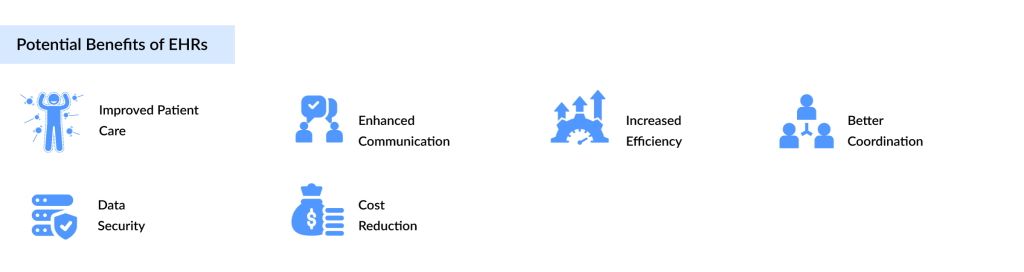
The ultimate measure of any healthcare technology is its impact on patient outcomes. Evidence from thousands of studies and implementation reports demonstrates that well-implemented EHR systems produce measurable improvements across multiple dimensions of patient care quality.
Patient Safety Improvements
EHRs have demonstrated significant safety benefits, particularly in preventing medication errors, one of the most common and costly types of medical harm:
SAFETY IMPACT: A landmark study published in the Journal of the American Medical Informatics Association found that hospitals with comprehensive EHR systems experienced a 54% reduction in adverse drug events and a 33% reduction in complications from care compared to facilities without EHRs.
- Alert fatigue mitigation through intelligent, context-sensitive warnings that prioritize high-risk situations
- Legibility improvement, eliminating misread handwritten prescriptions historically responsible for 1.5 million preventable injuries annually in the U.S.
- Complete allergy documentation preventing drug-allergy interactions
- Duplicate testing prevention through an accessible prior result history
- Fall risk assessment and infection control protocol reminders
Clinical Quality and Outcomes
EHR systems drive measurable quality improvements through systematic application of evidence-based protocols:
|
Clinical Quality Improvements Attributed to EHR Implementation |
|
|
Medication Errors Reduced |
54% |
|
Duplicate Lab Tests Eliminated |
49% |
|
Preventive Care Compliance |
45% |
|
Hospital Readmissions Reduced |
30% |
|
Diagnostic Accuracy Improved |
28% |
|
Patient Satisfaction Increase |
22% |
Chronic Disease Management
For the 60% of Americans living with at least one chronic condition, EHRs provide particularly powerful benefits:
- Diabetes Management: Automated HbA1c tracking, insulin adjustment alerts, retinal screening reminders, and foot exam documentation improve glycemic control across patient populations.
- Cardiovascular Disease: Blood pressure trending, lipid management protocols, anticoagulation monitoring, and cardiac medication adherence tracking reduce adverse cardiovascular events.
- COPD and Asthma: Spirometry tracking, inhaler technique documentation, and exacerbation action plans integrated into clinical workflows.
- Mental Health: Depression screening (PHQ-9) automation, suicide risk assessment documentation, and medication monitoring for psychiatric conditions.
Patient Engagement and Empowerment
Modern EHR systems include patient-facing components that fundamentally alter the patient-provider relationship:
- Patient Portals: Secure online access to lab results, visit summaries, medication lists, and immunization records. Studies show engaged portal users have 20-30% higher preventive care compliance rates.
- Secure Messaging: Direct communication with care teams without phone calls, reducing time to care and improving minor concern management.
- Patient Education: Condition-specific educational materials are automatically presented based on diagnoses and care plans.
- Remote Monitoring Integration: Connection of wearable devices, home blood pressure cuffs, and continuous glucose monitors to the EHR, enabling proactive intervention.
EHR Workflow and Medical Office Operations
Understanding the electronic health records specialist and the medical office workflow requires examining how EHR systems integrate into the daily operations of healthcare settings. The EHR workflow is not simply a digitized version of paper processes; it represents a fundamentally restructured approach to care delivery.
The Clinical Encounter Workflow
A typical ambulatory care encounter workflow with EHR integration proceeds through the following stages:
|
Workflow Stage |
EHR Functions & Activities |
|
Pre-Visit Preparation |
Automated appointment reminders sent; pre-visit intake forms completed via patient portal; prior records retrieved and flagged; insurance eligibility verified; preventive care gaps identified. |
|
Patient Arrival & Check-In |
Identity verification; demographic confirmation; chief complaint documentation; vital signs entry (often via integrated devices); problem list and medication list review. |
|
Clinical Assessment |
History of present illness (HPI) documentation; physical examination findings entered; clinical decision support alerts reviewed; previous visit notes and labs accessed. |
|
Diagnosis & Order Entry |
ICD-10 diagnosis coding; CPOE for medications, labs, imaging; referral generation; care gap alerts addressed; clinical protocols applied. |
|
Treatment & Documentation |
Clinical note completion (often via templates or voice recognition); medication reconciliation; patient education materials ordered; care plan updated. |
|
Checkout & Follow-Up |
Billing codes generated; follow-up appointments scheduled; referral letters created; after-visit summary provided; patient portal notification sent. |
|
Post-Visit Processes |
Results management and patient notification; quality measure documentation; care management outreach; population health reporting; billing submission. |
EHRs in Ambulatory Care Settings
EHR adoption has been particularly transformative in ambulatory care, outpatient clinics, physician offices, and community health centers. Electronic health records in ambulatory care settings have enabled:
- Panel management: Identifying all patients with a given condition who are due for screenings or follow-up, enabling proactive rather than reactive care.
- Visit efficiency: Pre-populated templates, smart text, and voice recognition reduce documentation time by 15-30 minutes per provider per day.
- Same-day appointment optimization: Real-time schedule visibility allows efficient slot utilization and reduces patient wait times.
- Referral management: Electronic referrals with attached clinical information replace phone and fax-based processes, reducing information loss.
The EHR Specialist: A Critical Organizational Role
The EHR specialist has emerged as a crucial position in healthcare organizations. Focusing on the role for organizational success, EHR specialists serve multiple functions:
|
EHR Specialist Function |
Organizational Impact |
|
System Configuration & Build |
Customizing EHR templates, workflows, and order sets to match organizational needs and clinical protocols |
|
Training & Education |
Developing role-specific training programs that reduce time-to-proficiency and minimize workflow disruption during implementation |
|
Data Quality Management |
Ensuring data integrity, standardized terminology, and accurate coding that support both clinical and reporting needs |
|
Go-Live Support |
Providing at-elbow support during critical implementation periods to minimize care disruption and staff frustration |
|
Optimization & Analysis |
Continuous identification of workflow inefficiencies and underutilized features to maximize system value |
How EHRs Impact Communication in Healthcare
Communication failures are responsible for approximately 70% of adverse events in healthcare. EHR systems have fundamentally transformed how healthcare professionals, patients, and organizations communicate, creating new channels while improving the quality and reliability of existing ones.
Interprofessional Communication
EHRs serve as the central communication platform for the entire care team:
- Shared Care Plans: All members of a multidisciplinary team access identical, real-time patient information, eliminating the “telephone game” of information transfer.
- Clinical Messaging: Integrated secure messaging allows nurse-to-physician, physician-to-pharmacist, and department-to-department communication within the EHR context.
- Handoff Documentation: Structured handoff notes and situational awareness tools (I-PASS, SBAR) embedded in EHRs improve care transitions between shifts and settings.
- Consult Management: Electronic consultation requests with attached clinical summaries replace phone consultations, creating documented, trackable communication trails.
EHRs and Nursing Communication
Electronic health records and nursing practice have an especially significant relationship. Nurses interact with EHR systems more frequently than any other clinical profession, up to 200+ interactions per shift. EHRs have transformed nursing by:
- Replacing paper medication administration records (MARs) with electronic systems that bar-code verify medications against patient wristbands.
- Enabling nursing documentation at the point of care through mobile devices, reducing transcription errors, and improving real-time data availability.
- Automating nursing assessments and escalation alerts, early warning scores (NEWS, MEWS) calculated from vital signs trigger automatic notifications.
- Supporting nursing care plans and standardized nursing language (NANDA, NIC, NOC) that enable evidence-based nursing practice.
KEY FINDING: Research published in the American Journal of Nursing found that EHR-enabled nursing documentation reduced medication administration errors by 41% and improved nursing assessment completion rates by 68% compared to paper-based systems.
Patient-Provider Communication
The patient-provider relationship has been transformed by EHR-enabled communication tools:
- After-Visit Summaries: Automatically generated visit summaries in plain language that patients can reference, reducing post-visit confusion.
- Patient Portal Messaging: Secure, asynchronous communication that has reduced unnecessary phone calls by up to 25% in practices with high portal adoption.
- Automated Health Reminders: System-generated reminders for chronic disease monitoring, preventive care, and medication refills improve care adherence.
- Telehealth Integration: EHR-embedded telehealth capabilities link virtual visit documentation directly to the permanent patient record.
Electronic Health Record Integration and Interoperability
Electronic health record integration, the ability of EHR systems to seamlessly exchange information with other systems and organizations, is widely considered the most important unresolved challenge in health IT. True interoperability remains elusive despite decades of effort, though significant progress has been made.
Integration Standards and Frameworks
|
Standard/Framework |
Role in EHR Integration |
|
HL7 v2.x |
Legacy messaging standard used for lab results, orders, and ADT (Admission/Discharge/Transfer) messages. Still widely used in hospital environments. |
|
HL7 FHIR |
Fast Healthcare Interoperability Resources is the modern REST-based API standard enabling app-based access to EHR data. Mandated by CMS for payer-to-provider data exchange. |
|
SNOMED-CT |
Comprehensive clinical terminology enabling semantic interoperability across systems and countries. |
|
LOINC |
Logical Observation Identifiers Names and Codes for standardizing lab and clinical observations across systems. |
|
IHE Profiles |
Integrating the Healthcare Enterprise, profiles that specify how standards should be implemented for specific use cases. |
|
SMART on FHIR |
Open authorization framework enabling third-party apps to connect to EHR data securely, powering the emerging digital health app ecosystem. |
Health Information Exchange (HIE)
Health Information Exchanges are network-based platforms that allow EHR data to flow between organizations. Three primary models of HIE exist:
- Directed Exchange: Secure point-to-point transmission of patient information between providers (analogous to a secure email system for health data).
- Query-Based Exchange: Provider-initiated requests for patient information from other organizations are used for emergency care, specialist consultations, and care transitions.
- Consumer-Mediated Exchange: Patient-controlled sharing of health information across providers, enabled by emerging data rights legislation.
EHR Applications in Clinical Settings
EHR applications used in the clinical setting include a broad range of specialized tools and modules that extend far beyond basic documentation. Modern clinical environments deploy a sophisticated ecosystem of EHR-integrated applications.
Specialty-Specific EHR Applications
|
Clinical Specialty |
Key EHR Applications and Features |
|
Emergency Medicine |
Rapid triage documentation, trauma flow sheets, real-time bed management, poison control integration, eDischarge summaries |
|
Oncology |
Chemotherapy order sets with dosing calculators, treatment protocol tracking, tumor registries, and oral chemotherapy adherence monitoring. |
|
Radiology |
PACS integration for image viewing within EHR, structured radiology reporting, critical result notification, and imaging order decision support |
|
Surgery |
Surgical checklists (WHO Safe Surgery), operative note templates, anesthesia documentation, and surgical site infection tracking |
|
Behavioral Health |
Psychiatric assessment tools (PHQ-9, GAD-7, Columbia Suicide Severity Rating Scale), therapy note templates, and medication monitoring |
|
Obstetrics |
Prenatal flowsheets, fetal monitoring integration, labor and delivery documentation, newborn record creation, and postpartum screening tools |
|
Pediatrics |
Growth chart integration with automated percentile calculation, immunization registry connectivity, weight-based medication dosing, and developmental screening tools |
Challenges and Limitations of EHR Implementation
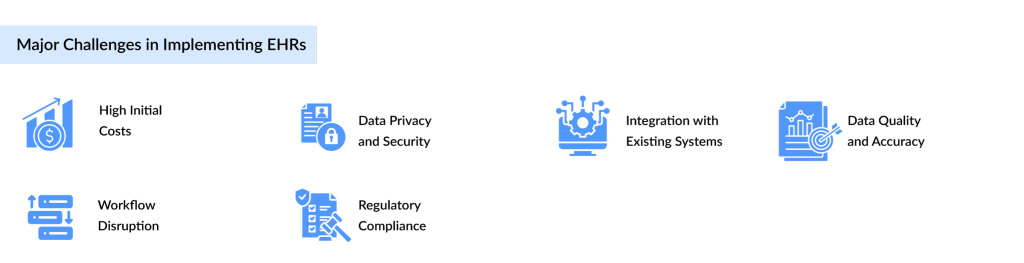
Despite their transformative potential, EHR systems present significant challenges that affect adoption, utilization, and effectiveness. Honest evaluation of these limitations is essential to understanding how EHR development should progress.
Physician Burden and Burnout
Perhaps the most significant unintended consequence of EHR adoption has been its contribution to physician burnout. Multiple studies indicate that physicians now spend more time interacting with EHR systems than with patients:
- “Note bloat” excessively long, auto-populated notes that obscure clinically relevant information
- Cognitive overload from alert fatigue, up to 90% of drug interaction alerts are overridden by physicians
- Screen-time domination of patient encounters reduces the quality of the therapeutic relationship
- Documentation requirements driven by billing compliance rather than clinical communication needs
Interoperability Gaps
- Despite two decades of efforts and significant regulatory pressure, true seamless data exchange between competing EHR systems remains inconsistent.
- Information blocking is the deliberate practice of preventing or discouraging access to electronic health information, which has been identified as a significant problem.
- Patients who receive care from providers using different EHR vendors frequently experience data fragmentation and care coordination failures.
Data Security and Privacy
- Healthcare data breaches reached record highs in 2023, with over 133 million patient records exposed.
- Ransomware attacks on hospital EHR systems have caused patient care disruptions and, in documented cases, contributed to patient harm.
- The concentration of sensitive patient data in centralized EHR systems creates high-value targets for cybercriminal organizations.
Implementation and Financial Barriers
- Average EHR implementation costs for a hospital system range from $1.5 million to over $100 million, depending on organization size.
- Small practices and rural hospitals face disproportionate financial burdens from EHR procurement, implementation, and ongoing maintenance.
- Productivity losses during the implementation phase (typically 3-12 months) can be severe, threatening the financial viability of smaller organizations.
Future Trends in EHR Development
The future of EHR technology is being shaped by artificial intelligence, precision medicine, patient-centered design, and regulatory mandates for interoperability. The next generation of EHR systems will be unrecognizable compared to their predecessors.
Artificial Intelligence and Machine Learning
AI integration represents the most transformative frontier in EHR development:
- Ambient Clinical Intelligence (ACI): AI systems that listen to patient encounters and automatically generate clinical documentation, freeing physicians from keyboard-dominated visits. Early studies show a 70-80% reduction in post-visit documentation time.
- Predictive Analytics: Machine learning models embedded in EHRs can identify patients at risk of sepsis hours before clinical deterioration, predict 30-day readmission risk, and flag patients likely to deteriorate in real time.
- Natural Language Processing (NLP): AI-powered extraction of clinical insights from unstructured clinical notes, enabling population health analysis without structured data requirements.
- Diagnostic Support: AI algorithms analyzing lab values, vital sign trends, and imaging results to suggest diagnoses or flag anomalies the human clinician might miss.
FHIR-Based Open Ecosystems
The mandatory adoption of FHIR APIs is creating an open ecosystem around EHRs analogous to how the smartphone created the app store model. Third-party developers can now build applications that connect to EHR data, enabling:
- Patient-facing apps that aggregate health data from multiple providers into a unified personal health record
- Specialized clinical decision support tools built by domain experts and integrated at the point of care
- Health system performance analytics platforms that draw on EHR data to optimize operations
Precision Medicine and Genomics Integration
EHR systems are increasingly integrating genomic data, whole genome or exome sequencing results, pharmacogenomic profiles, and hereditary risk assessments directly into clinical workflows. This enables:
- Pharmacogenomic alerts that warn clinicians when prescribing medications, a patient is likely to metabolize poorly based on their genetic profile
- Hereditary cancer risk management programs triggered by family history data in the EHR
- Targeted therapy selection for oncology based on tumor genomic analysis linked to treatment protocols
Social Determinants of Health (SDOH)
Modern EHR systems are incorporating SDOH screening and intervention tools that recognize healthcare outcomes are profoundly influenced by non-clinical factors:
- Systematic screening for food insecurity, housing instability, transportation barriers, and social isolation
- Integration with community resource directories that allow providers to connect patients with social services directly from the EHR
- SDOH data in population health dashboards, enabling targeted outreach to vulnerable populations
Digital Healthcare, EHR Marketing, and the Technology Landscape
The digital healthcare EHR market has evolved into a sophisticated industry with distinct market segments, competitive dynamics, and marketing strategies that influence how healthcare organizations select and implement these systems.
|
Major EHR Vendors and Market Dynamics |
||
|
Vendor |
Market Segment |
Key Strengths & Positioning |
|
Epic Systems |
Large hospitals, academic medical centers |
Largest U.S. market share, comprehensive platform, MyChart patient portal, strong interoperability |
|
Oracle Health (Cerner) |
Government, VA, large health systems |
VA/DoD contracts, cloud migration, strong analytics, international presence |
|
MEDITECH |
Community hospitals, rural health |
Cost-effective, KLAS-rated for usability, strong web-based platform |
|
Veeva/athenahealth |
Ambulatory, specialty practices |
Cloud-native architecture, strong billing performance, revenue cycle focus |
|
eClinicalWorks |
Small-to-mid practices |
Affordable pricing, telehealth integration, and AI-powered documentation |
Electronic Health Record: Market Overview and Dynamics
The global electronic health records (EHRs) market was valued at USD 35,644.94 million in 2025, growing at a CAGR of 5.81% during the forecast period from 2026 to 2034 to reach USD 58,781.78 million by 2034. The overall market for Electronic Health Records (EHR) is witnessing strong growth due to the rising prevalence of chronic diseases, which necessitates continuous monitoring, data tracking, and long-term care coordination. This growing need has driven demand for integrated healthcare systems that can seamlessly connect patient information across various departments and care settings. In response, governments around the world are implementing supportive initiatives and policies such as funding, mandates, and regulatory frameworks to accelerate EHR adoption and enhance healthcare efficiency. Additionally, key market players are intensifying their product development activities, introducing advanced, user-friendly, and interoperable EHR solutions that incorporate artificial intelligence and data analytics. Together, these factors are creating a favorable environment for the widespread deployment of EHR systems, ultimately boosting the market’s growth during the forecast period from 2026 to 2034.
Electronic Health Record: Market Dynamics
Market Drivers
Increasing Adoption of Healthcare Digitalization: Healthcare providers worldwide are transitioning from paper-based records to digital platforms to improve clinical efficiency, patient safety, and operational productivity. Government-led healthcare IT initiatives and increasing investments in digital transformation are driving widespread implementation of EHR systems across hospitals, clinics, and healthcare networks.
Growing Need for Interoperability and Data Exchange: The increasing demand for seamless sharing of patient information among healthcare providers, laboratories, pharmacies, and payers is significantly boosting EHR adoption. Advanced interoperability standards enable efficient healthcare coordination, reduce duplicate testing, and improve clinical decision-making.
Rising Administrative Workload and Demand for Workflow Automation: Healthcare organizations face growing administrative burdens related to patient documentation, billing, scheduling, coding, and compliance reporting. EHR systems automate many of these processes, reducing manual workload, minimizing errors, and improving operational efficiency.
Expansion of Value-Based Care and Population Health Management: Healthcare systems are increasingly shifting toward value-based care models that emphasize quality outcomes and cost efficiency. EHR platforms support population health management, patient engagement, risk stratification, and outcome tracking, making them essential tools for modern healthcare delivery.
Integration of Artificial Intelligence and Advanced Analytics: The incorporation of AI, machine learning, predictive analytics, and clinical decision support tools into EHR systems enhances diagnostic accuracy, treatment planning, and patient management. These technological advancements are increasing the value proposition of EHR platforms and encouraging healthcare organizations to upgrade their systems.
Government Regulations and Incentive Programs: Many governments worldwide have introduced regulations, funding programs, and incentives encouraging healthcare providers to adopt certified EHR systems. Regulatory requirements for healthcare documentation, interoperability, and data security continue to drive market expansion.
Market Restraints and Challenges
High Implementation and Maintenance Costs: The deployment of EHR systems often requires substantial investments in software, hardware, infrastructure upgrades, system integration, training, and ongoing maintenance. These costs can be a significant barrier for small healthcare facilities and resource-constrained providers.
Data Privacy and Cybersecurity Concerns: The increasing digitization of patient information raises concerns regarding data breaches, ransomware attacks, unauthorized access, and cybersecurity threats. Healthcare organizations must invest heavily in security measures and regulatory compliance, which can increase operational complexity.
Interoperability Challenges Across Systems: Despite technological advancements, many healthcare organizations continue to face challenges in exchanging data between different EHR platforms due to varying standards, legacy systems, and vendor-specific architectures. These interoperability limitations can hinder seamless care coordination.
User Resistance and Workflow Disruptions: Healthcare professionals may resist EHR adoption due to concerns about increased documentation requirements, workflow changes, and usability issues. Poorly designed systems can contribute to clinician burnout and reduced productivity during implementation phases.
Shortage of Skilled IT Professionals: Successful EHR deployment and management require skilled healthcare IT personnel, system administrators, cybersecurity experts, and clinical informatics specialists. The shortage of qualified professionals can delay implementation projects and affect system performance.
Limited Adoption in Developing Regions: Many developing countries continue to face challenges such as inadequate digital infrastructure, limited healthcare budgets, low awareness of healthcare IT benefits, and insufficient technical expertise. These factors restrict EHR adoption and slow market growth in emerging economies.
Conclusion
The evolution of Electronic Health Records from experimental hospital information systems of the 1960s to the AI-integrated, interoperable platforms of today represents one of the most consequential technological transformations in the history of healthcare. EHRs have fundamentally changed how healthcare is delivered, documented, communicated, and measured.
The evidence is clear: well-implemented EHR systems improve patient safety, enhance care quality, support clinical decision-making, enable population health management, and, when properly designed, improve operational efficiency. The 54% reduction in medication errors, 49% reduction in duplicate testing, and measurable improvements in chronic disease management represent meaningful advances in human health and well-being.
Yet the field remains a work in progress. Physician burnout driven by documentation burden, persistent interoperability gaps, cybersecurity vulnerabilities, and disparate access across healthcare settings represents challenges that the industry must urgently address. The next generation of EHR systems, with ambient AI documentation, FHIR-enabled open ecosystems, genomics integration, and SDOH-aware care management, offers genuine promise for systems that are not only more clinically powerful but also more humane to use.
For healthcare organizations, the imperative is clear: EHR technology is not optional infrastructure but a fundamental clinical tool whose effective deployment requires investment in training, workflow optimization, governance, and, critically, the expert EHR specialists who bridge the gap between technical capability and clinical reality. For patients, the promise of EHRs is a healthcare system that knows their complete history, coordinates their care seamlessly, catches errors before they cause harm, and empowers them as active participants in their own health.
The digital transformation of healthcare is irreversible. The question is no longer whether EHRs will be central to modern healthcare, but how rapidly the industry will optimize these systems to fulfill their transformative potential.

FAQs
Electronic health records (EHRs) are designed to digitally store and manage patients’ medical information in a centralized system. Their main purpose is to provide healthcare professionals with accurate, real-time, and comprehensive patient data, enabling better clinical decision-making, improved care coordination, and enhanced patient safety.
EHRs improve patient care by providing quick access to medical histories, test results, medications, and treatment plans, helping clinicians make informed decisions. They also streamline clinical workflows by reducing paperwork, automating documentation, facilitating e-prescribing, and improving communication among healthcare providers, leading to greater efficiency and reduced medical errors.
The major challenges of EHR implementation include high initial costs, complex system integration, staff training requirements, workflow disruptions during transition, and resistance to change among healthcare professionals. Additionally, concerns related to data privacy, cybersecurity, and maintaining regulatory compliance can further complicate implementation efforts.
Artificial intelligence is transforming EHR systems by enabling predictive analytics, clinical decision support, automated documentation, and personalized patient care recommendations. AI can analyze large volumes of patient data to identify disease risks, improve diagnostic accuracy, reduce administrative burdens, and support more proactive and data-driven healthcare delivery.
Interoperability allows different EHR systems and healthcare organizations to securely exchange and use patient information across various care settings. This seamless data sharing improves care coordination, reduces duplicate tests and procedures, enhances treatment continuity, and supports better clinical outcomes while promoting a more connected and efficient healthcare ecosystem.
Downloads
Article in PDF
Recent Articles
- Mapping the Mind: How Neurodiagnostics Is Redefining the Future of Brain Healthcare
- Decoding DNA, Redefining Dosage: How Pharmacogenomic Testing Services Are Rewriting the Rules of ...
- The Promise of Big Data in Healthcare: Transforming Treatment and Outcomes
- The Rise of Targeted Therapeutics in Modern Healthcare
- 8 Game-Changing Applications of Healthcare Mobility Solutions