FGFR Inhibitors: How a Once-Overlooked Target Became Precision Oncology’s Next Big Story
Oct 12, 2026
Table of Contents
Summary
- FGFR has evolved into a clinically validated oncology target, progressing from a relatively overlooked pathway to an important biomarker-driven treatment strategy across multiple solid tumors.
- Cholangiocarcinoma is the leading success story for FGFR-targeted therapy. FGFR2 fusions/rearrangements occur in a subset of intrahepatic cholangiocarcinoma, making molecular testing critical for identifying patients eligible for targeted treatment after chemotherapy.
- Three FGFR inhibitors are now FDA-approved for previously treated FGFR2-altered cholangiocarcinoma: Taiho Oncology’s LYTGOBI, Incyte’s PEMAZYRE, and Elevar’s LYRFIGTU.
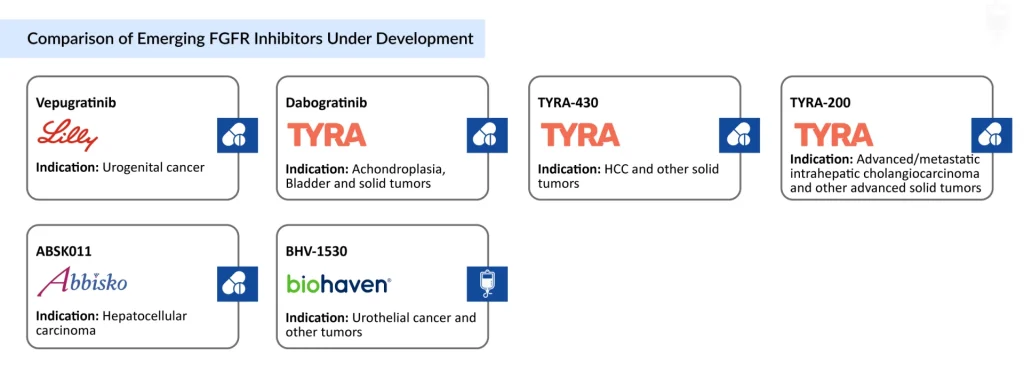
- The next-generation pipeline is increasingly diversified with therapies including Eli Lilly’s Vepugratinib; Tyra Biosciences’Dabogratinib, TYRA-430, and TYRA-200; Abbisko Therapeutics’ ABSK011 and ABSK061; Biohaven’s BHV-1530 and others.
For years, fibroblast growth factor receptors (FGFRs) were the quiet members of the oncology target family. While EGFR, ALK, and KRAS captured headlines, FGFR signaling was steadily being mapped as a driver of tumor growth, survival, and blood vessel formation across a surprising range of cancers. Today, that patient-by-patient detective work is paying off. FGFR inhibitors have moved from a niche idea to a clinically validated class, and the field is now entering its most dynamic chapter yet.
Downloads
Click Here To Get the Article in PDF

Recent Articles
- Evotec, Chinook Teams Up for CKD Therapy; HitGen & UPPTHERA in Drug Delivery Research; Artiv...
- Novo Nordisk Seeks FDA Approval for Higher-Dose 7.2 mg WEGOVY Injection; Ascendis Pharma Granted ...
- Zealand Pharma’s Phase III Results of Glepaglutide; FDA Approves Amylyx’s ALS Drug Relyvrio; Novo...
- Merck, Eisai in renal cancer market; G1 Therapeutics on Cosela’s approval; Takeda’s Maribav...
- Bile Duct Cancer (Cholangiocarcinoma) -Pipeline Insights, 2015
The Weight of the Wild Card: Why FGFR-Driven Cancers Leave Patients With So Few Options
FGFR genes encode a family of receptor tyrosine kinases (FGFR1 to FGFR4) that normally help regulate cell growth, tissue repair, and development. When they are altered through gene fusions, rearrangements, activating mutations, or amplification, the signal can be switched on permanently. The result is a tumor that grows with a built-in accelerator. Such alterations show up in a modest share of many solid tumors, but because they cut across tumor types, the absolute number of affected patients is meaningful.
Cholangiocarcinoma: A Rare Cancer With a Heavy Toll
Bile duct cancer, or cholangiocarcinoma, is the clearest illustration of the FGFR burden. According to the American Cancer Society, roughly 8,000 people are suffering from cholangiocarcinoma in the United States each year. It is often silent in its early stages, so many patients are diagnosed with disease that is already unresectable or metastatic. For these patients, first-line chemotherapy or chemoimmunotherapy is the usual starting point, and when disease progresses, options have historically been limited and the outlook difficult.
FGFR2 fusions and rearrangements are a defining molecular feature in a subset of intrahepatic cholangiocarcinoma. For those patients, comprehensive molecular testing is not a nice-to-have. It is the gateway to a targeted pill that can produce meaningful tumor shrinkage after chemotherapy has stopped working.
Urothelial Cancer and Beyond: FGFR3 Takes Center Stage
In the urinary tract, FGFR3 is the star. Tyra Biosciences notes that FGFR3 alterations occur in approximately 85% of low-grade upper tract urothelial cancer (LG-UTUC) cases, which is a striking rate for any oncogenic driver. FGFR3 alterations are also relevant in bladder cancer more broadly, which is why Lilly is testing its candidate alongside standard-of-care therapy in a global Phase 3 trial of untreated advanced disease.
FGFR4 plays a different role. In hepatocellular carcinoma (HCC), FGF19 overexpression activates FGFR4, and there are currently no approved biomarker-driven targeted therapies for the disease. That gap is exactly why multiple companies are racing to develop FGFR4-selective agents.
The Hidden Burden: Living With the Treatment
Disease burden is only part of the treatment challenge, as the burden associated with therapy itself also plays an important role. Because FGFR signaling contributes to normal physiological processes, its inhibition can result in several predictable class-related adverse effects. Hyperphosphatemia, a pharmacodynamic marker of FGFR inhibition, may require dietary modifications and phosphate-lowering therapy, while ocular toxicities such as retinal pigment epithelial detachment and dry eye necessitate regular ophthalmic examinations. Patients may also experience changes in the nails, skin, and hair, along with stomatitis and dry mouth. Gastrointestinal and systemic effects, including diarrhea, fatigue, and decreased appetite, can further affect quality of life, particularly during long-term treatment. Treatment resistance adds another layer of complexity, as secondary mutations within the kinase domain can enable tumors to evade the activity of first-generation FGFR inhibitors over time.
Taken together, these challenges have driven the industry toward two key objectives: achieving greater target selectivity to improve the therapeutic window and developing innovative drug designs capable of overcoming resistance. Against this backdrop, the drugs discussed below can be evaluated through the lens of these two central goals.
From Proof of Concept to Standard of Care: The Approved FGFR Inhibitors in Cholangiocarcinoma
Three targeted therapies are now approved by the FDA for previously treated, unresectable, locally advanced, or metastatic cholangiocarcinoma with an FGFR2 fusion or other rearrangement. Each takes a slightly different route to the same molecular driver.
Incyte’s PEMAZYRE (pemigatinib): The Pioneer That Opened the Door
PEMAZYRE earned its place in history on April 17, 2020, when it became the first FDA-approved targeted therapy for previously treated, unresectable locally advanced or metastatic cholangiocarcinoma with an FGFR2 fusion or other rearrangement, as detected by an FDA-approved test. That cholangiocarcinoma indication was granted under accelerated approval based on overall response rate and duration of response in the FIGHT-202 study.
PEMAZYRE is a selective, orally available inhibitor of FGFR1, FGFR2, and FGFR3, taken once daily. In August 2022, its label expanded beyond bile duct cancer to include adults with relapsed or refractory myeloid/lymphoid neoplasms (MLNs) with FGFR1 rearrangement, based on the FIGHT-203 study. That makes it a rare example of an FGFR inhibitor with approvals in both a solid tumor and a hematologic setting.
For the field, PEMAZYRE’s importance goes beyond its own sales. It demonstrated that biomarker-driven therapy was feasible in cholangiocarcinoma, helped establish routine FGFR2 testing, and built the regulatory and clinical playbook that later entrants have followed.
Taiho Oncology’s LYTGOBI (futibatinib): The Irreversible Challenger
LYTGOBI received accelerated approval from the FDA on September 30, 2022, for adults with previously treated, unresectable, locally advanced or metastatic intrahepatic cholangiocarcinoma harboring FGFR2 gene fusions or other rearrangements. The approval rested on the Phase 2 FOENIX-CCA2 trial, which enrolled 103 patients who received 20 mg of futibatinib orally once daily until progression or unacceptable toxicity.
What set LYTGOBI apart at launch was its mechanism. Earlier agents in this setting were reversible, ATP-competitive inhibitors. Futibatinib binds covalently and irreversibly to FGFR, which allows it to suppress FGFR-related signaling for a longer period. That property also fed interest in its ability to address certain acquired resistance mutations in the FGFR2 kinase domain. The prescribing information carries warnings for retinal pigment epithelial detachment, and hyperphosphatemia is an expected pharmacodynamic effect that clinicians manage proactively.
Outside the United States, LYTGOBI has also gained a foothold in Europe, where it has been positioned as an additional option alongside PEMAZYRE for patients whose cancer has progressed after at least one line of systemic therapy.
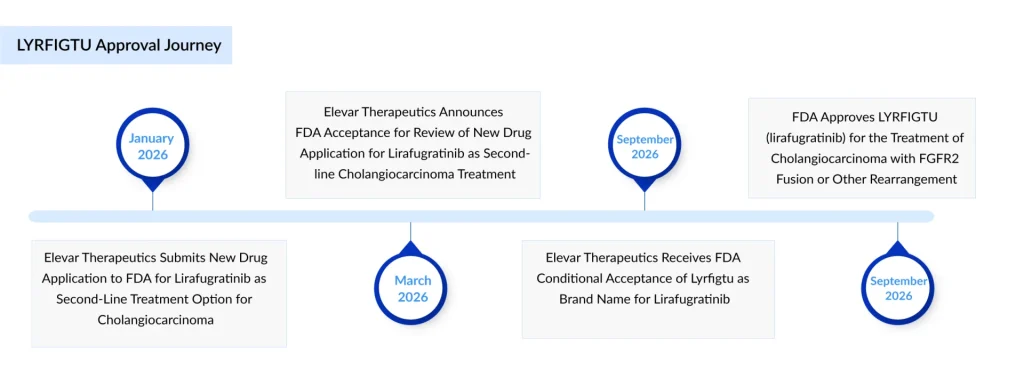
Elevar’s LYRFIGTU (lirafugratinib): The Newest Name in the Class
The most recent addition is also the most closely watched. On September 23, 2026, the FDA approved LYRFIGTU for adults with previously treated, unresectable, locally advanced or metastatic cholangiocarcinoma harboring an FGFR2 gene fusion or other rearrangement. The agency had granted the drug priority review in March 2026, alongside earlier breakthrough therapy and orphan drug designations. The approval was based on findings from the multicenter, single-arm Phase 1/2 REFOCUS trial, which evaluated the efficacy of the treatment in 116 patients who had previously received chemotherapy or chemoimmunotherapy but had not been treated with an FGFR inhibitor. Patients received the treatment orally at a dose of 70 mg once daily. According to Elevar, the trial demonstrated an objective response rate (ORR) of 46%, with a median duration of response of 11.8 months. The median progression-free survival (PFS) was 11.3 months, while the 12-month PFS rate was 49.2%.
LYRFIGTU was designed as a highly selective, irreversible FGFR2 inhibitor intended to minimize off-target effects on other FGFR family members. That selectivity matters because several of the class’s most troublesome adverse events are linked to hitting FGFR1 and FGFR4 as well. Still, it is not toxicity-free. The label includes warnings for ocular toxicity, hyperphosphatemia and soft tissue mineralization, and embryo-fetal toxicity. According to safety information released by Elevar, retinal pigment epithelial detachment occurred in 31% of 385 patients treated with the drug, with grade 3 events in 1.8%.
There is a business story here too. Elevar, the US subsidiary of Korea’s HLB Group, acquired the asset from Relay Therapeutics in 2024, and the approval is being described as the first novel cancer drug from a Korean company to win FDA clearance. Elevar plans a US launch in the fourth quarter of 2026. Cross-trial comparisons are always risky, since REFOCUS, FOENIX-CCA2, and FIGHT-202 differed in design and populations, but the numbers suggest a competitive profile and a real choice for physicians in the second line.
What the Approved Trio Tells Us
Taken together, these three therapies prove that FGFR2-directed treatment works in a molecularly defined population, and they show how the field is evolving: from reversible pan-FGFR agents, to irreversible inhibitors, to more selective FGFR2 designs. They also leave open questions the next generation hopes to answer. Can selectivity reduce class toxicity enough to improve long-term tolerability? Can FGFR inhibition move earlier in the treatment journey? And can the approach extend into tumors beyond cholangiocarcinoma?
The Next Wave: Emerging FGFR Therapies That Could Rewrite the Playbook
The pipeline is where the FGFR story gets especially exciting. Instead of simply adding more pan-FGFR inhibitors, developers are betting on isoform selectivity (FGFR2, FGFR3, or FGFR4 alone), resistance-busting chemistry, new tumor settings, and even entirely new modalities such as antibody-drug conjugates.
Eli Lilly’s Vepugratinib: Taking FGFR3 Into the Frontline
Vepugratinib (LY3866288, previously known as LOXO-435) is an oral, FGFR3-selective inhibitor from Eli Lilly. It first entered the clinic in the Phase 1 FORAGER-1 study in locally advanced or metastatic solid tumors, including urothelial cancer and muscle-invasive bladder cancer, with FGFR3 alterations. The bigger headline is FORAGER-2, a Phase 3, randomized, double-blind, placebo-controlled study. It is evaluating vepugratinib in combination with enfortumab vedotin and pembrolizumab versus enfortumab vedotin and pembrolizumab alone in adults with untreated locally advanced or metastatic urothelial carcinoma with an FGFR3 genetic alteration.
The trial includes a safety lead-in and is currently recruiting. The strategic logic is compelling: the EV plus pembrolizumab combination has become a frontline standard, and if an FGFR3-selective agent can be layered on top without prohibitive toxicity, it could deepen responses in a clearly defined biomarker group. Selectivity for FGFR3 is the key design feature, since sparing other FGFR isoforms may make combinations more tolerable.
Tyra Biosciences: A Three-Pronged Precision Portfolio
Carlsbad-based Tyra Biosciences is building its pipeline from its in-house SNÅP structure-based platform, which is used to design molecules for potency, selectivity, and tolerability. Three programs stand out. Dabogratinib (formerly TYRA-300) is Tyra’s lead asset and, in the company’s words, a potential first-in-class oral FGFR3-selective inhibitor. It has been studied in more than 100 patients and is advancing in three Phase 2 trials: SURF303 in LG-UTUC, SURF302 in intermediate-risk non-muscle-invasive bladder cancer (IR NMIBC), and BEACH301 in achondroplasia treatment. The achondroplasia program is a reminder that FGFR3 is not just an oncology target. Activating FGFR3 variants also drive this skeletal dysplasia, and the FDA has granted dabogratinib both Orphan Drug Designation and Rare Pediatric Disease Designation for that indication. Few oncology assets can claim a credible shot at two very different disease areas.
TYRA-430 is an oral, investigational FGFR4/3-biased inhibitor aimed at FGF19-positive, FGFR4-driven cancers. Its lead target is advanced hepatocellular carcinoma, where Tyra points to the absence of approved biomarker-driven targeted therapies. The first-in-human SURF431 study is enrolling adults with advanced HCC and other solid tumors with activating FGF/FGFR pathway aberrations.
TYRA-200 is an oral FGFR1/2/3 inhibitor with potency against activating FGFR2 alterations and, importantly, resistance mutations. The Phase 1 SURF201 study is exploring maximum tolerated dose, recommended Phase 2 dose, and early anti-tumor activity in metastatic intrahepatic cholangiocarcinoma. In other words, TYRA-200 is built for the patient who has already progressed on an earlier FGFR inhibitor, which is a population that will only grow as LYTGOBI, PEMAZYRE, and LYRFIGTU see wider use.
Abbisko Therapeutics’ ABSK011 and ABSK061
Shanghai-based Abbisko has two FGFR programs that now carry international names. ABSK011 (irpagratinib) is a highly selective FGFR4 inhibitor for HCC with FGF19 overexpression, one of the clearest biomarker-defined opportunities in liver cancer. The program has collected a notable set of regulatory signals: Orphan Drug Designation in the US in April 2024, Breakthrough Therapy Designation in May 2025, and Fast Track designation in February 2026 for patients with FGF19-overexpressing advanced HCC previously treated with immune checkpoint inhibitor and multi-targeted kinase inhibitor therapy. Abbisko dosed the first patient in a registrational study in June 2025, and the first US patient was dosed in a global study in February 2026. Earlier Phase 2 data for irpagratinib plus atezolizumab showed an ORR of 50%, hinting at the potential of pairing FGFR4 blockade with immunotherapy.
ABSK061 (lavengratinib) is a next-generation FGFR2/3 inhibitor designed with strong potency against FGFR2 and FGFR3 but reduced activity against FGFR1, a profile intended to widen the therapeutic window. In first-in-human data, the 75 mg twice-daily and 150 mg once-daily cohorts showed an ORR of 37.5% among eight patients with solid tumors carrying FGFR-activating alterations. Abbisko is advancing it both as monotherapy and in combination with its oral PD-L1 inhibitor, and the company has also pursued an achondroplasia program, submitting an IND for that indication in December 2024. In March 2026, the US FDA cleared a further IND application for the molecule.
Biohaven’s BHV-1530: Rethinking FGFR3 With an Antibody-Drug Conjugate
Not every next-generation FGFR strategy involves a kinase inhibitor. Biohaven’s BHV-1530 is a first-in-clinic FGFR3-directed antibody-drug conjugate (ADC) carrying the company’s proprietary topoisomerase I (TopoIx) payload. Rather than shutting down FGFR signaling, it uses FGFR3 as a docking site to deliver a cytotoxic payload directly to tumor cells.
That distinction is strategically important. Approved FGFR tyrosine kinase inhibitors are restricted to genomically selected patients and constrained by class-related toxicities. An ADC can potentially address both FGFR3-altered tumors and wild-type tumors that overexpress the FGFR3 protein, which broadens the addressable population. The ongoing Phase 1 dose-escalation study includes unselected patients with advanced urothelial cancer, head and neck squamous cell carcinoma, and non-small cell lung cancer who have failed standard therapy, along with other tumors harboring FGFR3 alterations.
Early signals are encouraging. Biohaven reported in May 2026 that dose escalation was continuing with no dose-limiting toxicities observed to date, and data presented in 2026 showed early signs of antitumor activity in both FGFR3-altered and non-altered patients. The company has also secured a clinical supply agreement with Regeneron to evaluate BHV-1530 with the PD-1 inhibitor cemiplimab (LIBTAYO), with combination cohorts planned for the second half of 2026. Early-phase data should be read cautiously, but BHV-1530 shows how the FGFR3 target is being approached from entirely new angles.
The Road Ahead: Where the FGFR Field Goes From Here
The FGFR story is no longer about whether the target works. Three FDA-approved therapies in cholangiocarcinoma have settled that question. The story now is about precision, durability, and reach: reaching more tumor types, more lines of therapy, and more patients, with fewer side effects. In the near term, the arrival of LYRFIGTU will sharpen competition in FGFR2-fusion cholangiocarcinoma and give oncologists a third targeted option whose real-world profile will be watched closely. Over the next two to three years, readouts from dabogratinib’s Phase 2 studies, early data from TYRA-200 and TYRA-430, progress on irpagratinib’s registrational program and the first look at FORAGER-2 will tell us whether FGFR3 and FGFR4 can match the success seen with FGFR2. And BHV-1530 will reveal whether ADCs can unlock FGFR3-expressing tumors that kinase inhibitors cannot reach.
For stakeholders across the industry, a few takeaways stand out. Biomarker testing needs to be built into early diagnostic workflows, because patients can only benefit from a targeted therapy if their alteration is identified. Developers need to plan for the post-FGFR-inhibitor setting, where resistance and sequencing questions will define the next treatment decisions. And competitive intelligence teams should track the assets above closely, since many of them are moving through clinical milestones in the coming quarters.
FGFR inhibitors have traveled a long road from scientific curiosity to approved medicines. With a deepening pipeline and a growing understanding of the biology, the next chapter promises to be even more consequential for the patients waiting on it.

Downloads
Article in PDF
Recent Articles
- Roche’s GAZYVA/GAZYVARO Achieves Key Phase III Success in Primary Membranous Nephropathy; Novarti...
- Achondroplasia Treatment Space: Hunt for Potential Curative Therapies
- Rare Cancer Market: A Global Crusade on what is a ‘less common cancer’?
- FDA Approves PENBRAYA for Most Common Serogroups Causing Meningococcal Disease; BIMZELX Approved ...
- Merck, Eisai in renal cancer market; G1 Therapeutics on Cosela’s approval; Takeda’s Maribav...