PD-1 Inhibitors: Which Companies Are Winning the Immunotherapy Race?
Jul 27, 2026
Table of Contents
Summary
- The PD-1 inhibitors market is led by Merck’s KEYTRUDA and Bristol Myers Squibb’s OPDIVO, which together still dominate global revenue and remain the standard-bearers in the category.
- Challenger PD-1 drugs such as Sanofi/Regeneron’s LIBTAYO, GSK’s JEMPERLI, and Incyte’s ZYNYZ have carved out positions in specific cancers rather than trying to beat the leaders head-to-head across every indication.
- China-origin PD-1 inhibitors, including BeOne’s TEVIMBRA, Coherus BioSciences/Junshi Biosciences’ LOQTORZI, Jiangsu Hengrui Medicine’s AIRUIKA, Henlius’ HANSIZHUANG, and Innovent Biologics/Eli Lilly’s TYVYT, are reshaping competition through lower pricing, multinational licensing, and expanding global approvals.
- The next phase of competition is expected to be driven by patent cliffs, subcutaneous formulations, combination regimens, and bispecific antibodies rather than by new standalone PD-1 monotherapies.
A little over a decade ago, cancer treatment had exactly three tools: surgery, radiation, and chemotherapy. Today, a fourth pillar sits alongside them, and it works on a completely different principle; instead of attacking tumor cells directly, it releases the brakes on the body’s own immune system. That pillar is the PD-1 inhibitor, and it has reshaped oncology more thoroughly than almost any other drug class in modern medicine.
Downloads
Click Here To Get the Article in PDF

Recent Articles
- The Business Cocktail
- Rapid Global Expansion of Chinese PD-1/PD-L1 Key Players
- TRODELVY’s First-Line TNBC Approval: Gilead’s Big Bet Reshapes the TROP2 ADC Battlefield
- PD-1 and PD-L1 inhibitors – Competitive Landscape, Pipeline and Market Analysis, 2015
- ADCs in Lung Cancer Treatment: ENHERTU’s Rise, HER3 & TROP-2 Challenges, and What’s Next in ...
A PD-1 inhibitor medication drug works by blocking the PD-1 checkpoint, a protein that many tumors hijack to switch off nearby T-cells and evade immune attack. Once that checkpoint is blocked, T-cells regain their ability to recognize and destroy cancer cells. This is the core of the PD-1 inhibitor mechanism of action, and understanding this PD-1 inhibitor MOA is essential to understanding why the market around these drugs has become so fiercely contested. It’s worth distinguishing PD-1 inhibitors from their close cousins, PD-L1 inhibitors (like TECENTRIQ and IMFINZI), which target the ligand rather than the receptor.
When people ask what is the clinical role of PD-1 inhibitor therapy, the short answer is that it has become a backbone treatment, used alone, alongside chemotherapy, or in combination with other immunotherapies, across dozens of solid tumors and hematologic cancers, from lung and skin cancer to gastric, cervical, and endometrial malignancies.
Sadaf Javed, an oncology expert at DelveInsight, said that the emerging PD-1 inhibitors have an opportunity to collaborate with other oncology companies for combination therapies and diagnostics companies because of the interdependency with biomarkers by building a strategic network of alliances.
The Established Leaders: Merck and Bristol Myers Squibb
No conversation about PD-1 inhibitors is complete without starting with the two companies that created the category. Since the first PD-1 inhibitor FDA approval in 2014, the PD-1 inhibitor pharmaceutical brand landscape has expanded from a two-player race into a global, multi-tiered competition. Merck and Bristol Myers Squibb got to market first, built the deepest indication portfolios, and still account for the overwhelming majority of global PD-1 inhibitor revenue.
Merck’s KEYTRUDA
KEYTRUDA (pembrolizumab) is Merck’s flagship oncology asset and, by revenue, the best-selling drug on the planet. As a humanized monoclonal antibody, it works by blocking the interaction between PD-1 and its ligands PD-L1 and PD-L2, restoring the immune system’s ability to identify and attack tumor cells, a textbook illustration of the KEYTRUDA PD-1 inhibitor molecule in action. KEYTRUDA carries an FDA Breakthrough Therapy designation for advanced melanoma and has since accumulated Priority Review and Breakthrough designations across multiple additional tumor types as its label expanded.
KEYTRUDA is the first anti-PD-1 therapy approved in the United States, receiving FDA accelerated approval on September 4, 2014, for unresectable or metastatic melanoma. This makes it the first PD-1 inhibitor approved by FDA, a distinction that still anchors Merck’s marketing and clinical credibility today. KEYTRUDA now holds FDA approval across more than 20 cancer types spanning over 30 individual indications, including non-small cell lung cancer (NSCLC), melanoma, head and neck cancer, Hodgkin’s lymphoma, urothelial carcinoma, gastric cancer, cervical cancer, hepatocellular carcinoma, renal cell carcinoma, endometrial cancer, and tissue-agnostic MSI-H/TMB-H solid tumors. The most recent US approval expanded KEYTRUDA and the new subcutaneous formulation KEYTRUDA QLEX into ovarian cancer.
KEYTRUDA holds broad European Commission approval mirroring most major US indications, with NSCLC, melanoma, and urothelial carcinoma among its highest-volume uses across the bloc. Approved by the PMDA across most core solid tumor indications, though KEYTRUDA and OPDIVO together captured around 80% of the PD-(L)1 market in 2023, with OPDIVO holding the edge specifically in the Japanese market, a reminder that global leadership doesn’t always translate into every regional market.
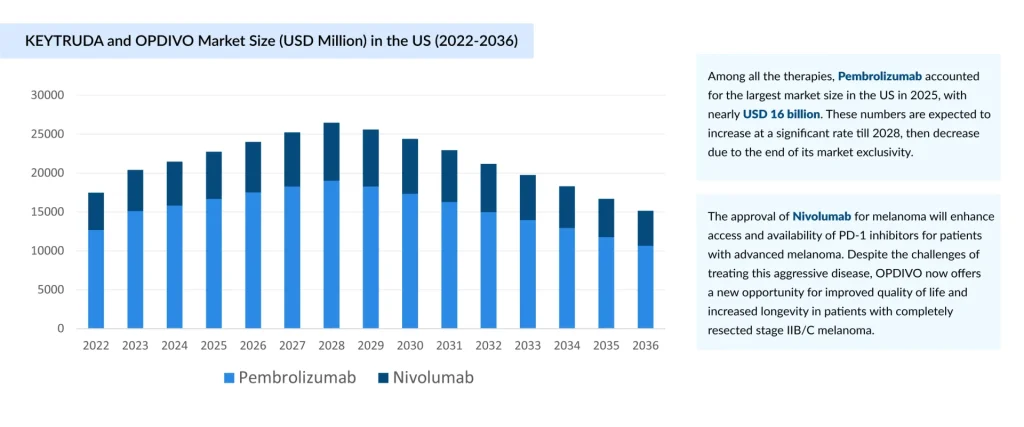
KEYTRUDA and KEYTRUDA QLEX combined generated $31.6 billion in full-year 2025 sales, up 7% year-over-year both nominally and on a currency-adjusted basis. That figure represented roughly 49% of Merck’s total 2025 revenue, an extraordinary level of concentration for a single molecule, and a number every competitor in the space is measured against.
Bristol Myers Squibb’s OPDIVO
OPDIVO (nivolumab) is BMS’s answer to KEYTRUDA and the second pillar of the modern PD-1 inhibitor category. Like its rival, it’s a monoclonal antibody that blocks PD-1 signaling, but its clinical development took a different path, carving out particular strength in melanoma, lung cancer, and, notably, the Japanese market, where it was approved first. OPDIVO was first approved by the FDA on December 22, 2014, a few months after KEYTRUDA in the US, but it had actually already received approval in Japan in July 2014, which shaped its later launch strategy. This makes OPDIVO the second PD-1 inhibitor FDA approved, and its Japan-first launch remains a defining feature of its commercial story.
Japan represents OPDIVO’s strongest regional market in the ongoing KEYTRUDA vs OPDIVO rivalry. Its early Japanese approval gave it a head start, and a decade later, the brand had entered 53 countries and was reimbursed in roughly 68% of them. Japan remains the one major market where OPDIVO outperforms KEYTRUDA in share. OPDIVO is approved for melanoma, non-small cell lung cancer, renal cell carcinoma, classical Hodgkin lymphoma, head and neck squamous cell carcinoma, urothelial carcinoma, MSI-H/dMMR colorectal cancer, hepatocellular carcinoma, esophageal cancer, gastric cancer, and malignant pleural mesothelioma. A subcutaneous formulation, OPDIVO Qvantig, also received US approval in late 2024, adding a faster in-clinic administration option.
OPDIVO revenue grew 7% to $2.5 billion in the third quarter of 2025 on continued demand, with BMS management guiding to high single-digit to low double-digit full-year growth for global OPDIVO sales together with Qvantig. Q1 2025 alone brought in $2.265 billion in OPDIVO revenue, up 9% year-over-year. Building on 2023 global sales that reached roughly $10 billion once Ono Pharmaceutical’s Japan revenue was included, full-year 2025 global OPDIVO sales are estimated at approximately $10 billion, a fraction of KEYTRUDA’s total, but still comfortably one of the best-selling drugs in oncology.
The Challengers: Regeneron, GSK, and Beyond
Original innovators Merck and BMS established billion-dollar PD-1 inhibitor franchises, while subsequent entrants have secured sustainable positions by focusing on differentiated opportunities. Rather than competing head-to-head with KEYTRUDA and OPDIVO across every cancer indication, this next tier of PD-1 inhibitors has concentrated on selected tumor types, often rare or underserved cancers, where strong clinical differentiation, rather than extensive commercial reach, provides a competitive advantage.
Sanofi/Regeneron Pharmaceuticals’ LIBTAYO
LIBTAYO (cemiplimab) was Regeneron and Sanofi’s entry into the PD-1 inhibitor pharmaceutical brand landscape, and it made its name in a cancer type the two leaders had largely left uncontested: advanced cutaneous squamous cell carcinoma (CSCC). The FDA approved LIBTAYO on September 28, 2018, for patients with metastatic or locally advanced CSCC who are not candidates for curative surgery or radiation, making it the first and, at the time, only treatment specifically approved for advanced CSCC in the United States.
The European Commission has approved LIBTAYO as an adjuvant treatment for CSCC patients at high risk of recurrence after surgery and radiation, in addition to its advanced-disease indication. It also holds EU approval in combination with chemotherapy for first-line advanced PD-L1-positive NSCLC. LIBTAYO was granted marketing and manufacturing authorization in Japan for advanced or recurrent cervical cancer in December 2022, becoming the first single-agent immunotherapy approved in Japan for advanced cervical cancer.
As per Javed, LIBTAYO is the leading PD-1 inhibitor for non-melanoma skin cancers, including cutaneous squamous cell carcinoma and basal cell carcinoma, and is expected to maintain its dominant position over the coming years.
GlaxoSmithKline’s JEMPERLI
JEMPERLI (dostarlimab) represents GSK’s push into the PD-1 inhibitor market, and it has become one of the more compelling clinical stories in the space thanks to strong overall survival data in endometrial cancer. Any discussion of the GSK PD-1 inhibitor strategy starts here. JEMPERLI was first approved by the FDA on April 22, 2021. That initial approval covered adult patients with mismatch repair-deficient (dMMR) recurrent or advanced endometrial cancer who had progressed on a platinum-containing regimen.
JEMPERLI, in combination with carboplatin and paclitaxel, followed by single-agent JEMPERLI, is approved for adult patients with primary advanced or recurrent endometrial cancer, an approval that was later broadened in August 2024 to include mismatch repair proficient (MMRp)/microsatellite stable (MSS) tumors, representing the majority of endometrial cancer cases. This made JEMPERLI plus chemotherapy the first and only immuno-oncology regimen to show a statistically significant overall survival benefit in this broader endometrial cancer population.
Approved by the EU for dMMR/MSI-H recurrent or advanced endometrial cancer in combination with chemotherapy, with GSK pursuing label expansion into the broader MMRp/MSS population to match its US approval. JEMPERLI has secured approval for dMMR solid tumors and endometrial cancer in Japan, extending GSK’s gynecologic oncology footprint into Asia’s second-largest pharmaceutical market.
Incyte’s ZYNYZ
Rounding out the challenger tier is ZYNYZ (retifanlimab), Incyte’s PD-1 inhibitor, licensed from MacroGenics and built around one of oncology’s rarest and most aggressive skin cancers: Merkel cell carcinoma (MCC). The FDA granted accelerated approval to ZYNYZ on March 22, 2023, for adult patients with metastatic or recurrent locally advanced Merkel cell carcinoma. This represented Incyte’s first regulatory approval for its PD-1 inhibitor franchise.
With a Merkel cell carcinoma patient population of approximately 4,500 cases in the US, retifanlimab is expected to encounter strong competition from these established drugs, and it is projected that retifanlimab could achieve nearly USD 50 million in sales by 2036, as per Javed.
Building on this momentum, May 15, 2025, marked another important milestone as ZYNYZ gained FDA approval for advanced anal cancer after overcoming an earlier regulatory setback. The approval expanded the drug’s clinical footprint, providing a new immunotherapy option for patients with this rare malignancy while reinforcing the increasing role of PD-1 inhibitors in anal cancer treatment.
|
List of Approved PD-1 Inhibitors |
|||||
|
Generic Name |
Brand Name |
Company |
First Approval (Year) |
Initial Indication |
Major Approved Regions |
|
Nivolumab |
OPDIVO |
Bristol Myers Squibb |
2014 |
Unresectable or metastatic melanoma |
US, EU, Japan, China, and many others |
|
Pembrolizumab |
KEYTRUDA |
Merck & Co. (MSD outside US/Canada) |
2014 |
Advanced melanoma |
Global (100+ countries) |
|
Cemiplimab |
LIBTAYO |
Regeneron/Sanofi |
2018 |
Metastatic or locally advanced cutaneous squamous cell carcinoma (CSCC) |
US, EU, Canada, Australia, others |
|
Dostarlimab |
JEMPERLI |
GSK |
2021 |
dMMR recurrent or advanced endometrial cancer |
US, EU, UK, Japan, others |
|
Toripalimab |
TUOYI (China), LOQTORZI (US) |
Junshi Biosciences/Coherus BioSciences (US) |
2018 (China); 2023 (US) |
Melanoma (China); Nasopharyngeal carcinoma (US) |
China, US, several other markets |
|
Sintilimab |
TYVYT |
Innovent Biologics/Eli Lilly (China collaboration) |
2018 |
Classical Hodgkin lymphoma |
China |
|
Camrelizumab |
AIRUIKA |
Jiangsu Hengrui Medicine |
2019 |
Relapsed/refractory classical Hodgkin lymphoma |
China |
|
Tislelizumab |
TEVIMBRA |
BeiGene |
2019 (China), 2024 (US) |
Classical Hodgkin lymphoma |
China, US, EU, UK, Australia, several countries |
|
Penpulimab |
AK105 |
Akeso |
2021 |
Relapsed/refractory classical Hodgkin lymphoma |
China |
|
Serplulimab |
HANSIZHUANG |
Henlius |
2022 |
MSI-H solid tumors |
China, Indonesia, several emerging markets |
|
Prolgolimab |
Forteca |
BIOCAD |
2020 |
Unresectable or metastatic melanoma |
Russia |
|
Zimberelimab |
YUANLI® (China) |
Gloria Biosciences |
2021 |
Relapsed/refractory classical Hodgkin lymphoma |
China |
The China Wave: Lower-Cost PD-1 Inhibitors Reshaping Access
The newest disruption in the PD-1 inhibitor market isn’t a better molecule; it’s a cheaper one. A cohort of China-originated PD-1 inhibitor drugs has begun reaching Western markets, and their entry strategy leans heavily on pricing pressure rather than novel mechanisms.
BeOne Medicines’ TEVIMBRA
TEVIMBRA (tislelizumab) is BeOne’s global PD-1 inhibitor and the company’s second approved medicine in the United States, engineered specifically to minimize Fc-gamma receptor binding, a design choice aimed at reducing a proposed mechanism of anti-PD-1 resistance. TEVIMBRA, first approved in China in December 2019 for classical Hodgkin lymphoma, now competes with Merck’s KEYTRUDA and Bristol Myers Squibb’s OPDIVO in the US. The FDA approved TEVIMBRA on March 14, 2024, as monotherapy for adult patients with unresectable or metastatic esophageal squamous cell carcinoma after prior chemotherapy, its first US indication. The European Commission followed in April 2024, approving tislelizumab across three NSCLC indications, including first- and second-line use.
On March 3, 2025, TEVIMBRA approval by the FDA marked another milestone for BeOne, authorizing the anti-PD-1 antibody in combination with platinum-based chemotherapy as a first-line treatment for adults with unresectable or metastatic PD-L1-positive esophageal squamous cell carcinoma. BeOne has now secured TEVIMBRA marketing approvals across the EU and 16 additional countries spanning North America, Europe, and Asia-Pacific, with additional indications in nasopharyngeal carcinoma and small cell lung cancer anticipated as the label continues to expand.
Innovent Biologics/Eli Lilly’s TYVYT
TYVYT (sintilimab) is the cautionary tale of the China wave. Developed by Innovent and licensed to Eli Lilly for Western commercialization, it aimed to enter the US market at a steep discount to KEYTRUDA. Lilly had planned to price TYVYT at a 40% discount to existing PD-1 inhibitors, but that strategy never materialized after the FDA rejected TYVYT’s approval as a treatment for non-small cell lung cancer, leading Lilly to return the drug’s rights to Innovent. The rejection centered on the FDA’s preference for trial data that better reflected the diversity and treatment patterns of the US patient population, rather than data generated primarily in China. TYVYT has remained approved and commercially available in China since 2018, but has not secured FDA approval, illustrating the regulatory hurdle facing single-country trial data.
Junshi Biosciences/Coherus BioSciences’ LOQTORZI
LOQTORZI (toripalimab) succeeded where TYVYT stumbled, becoming the first China-made PD-1 inhibitor to reach the US market. The FDA approved LOQTORZI on October 27, 2023, in combination with cisplatin and gemcitabine for first-line treatment of metastatic or recurrent locally advanced nasopharyngeal carcinoma, and as a single agent for recurrent, unresectable, or metastatic disease that progressed after platinum-based chemotherapy. This made LOQTORZI the first and only FDA-approved treatment for nasopharyngeal carcinoma.
Coherus launched LOQTORZI in the US at a list price roughly 20% below KEYTRUDA’s, directly targeting the affordability gap that has become the defining competitive lever for China-origin PD-1 inhibitors. Junshi has also pursued regulatory submissions in Europe for toripalimab in nasopharyngeal and esophageal squamous cell carcinoma, though these remain under review amid longer timelines than the US pathway.
Jiangsu Hengrui Medicine’s AIRUIKA
AIRUIKA (camrelizumab) illustrates a different kind of obstacle facing the China wave: manufacturing and inspection hurdles rather than efficacy questions. Approved in China since 2019, AIRUIKA now covers nine indications there, spanning monotherapy use in hepatocellular carcinoma, classical Hodgkin lymphoma, esophageal squamous cell carcinoma, and nasopharyngeal carcinoma, as well as combination regimens in non-small cell lung cancer and first-line unresectable hepatocellular carcinoma (uHCC) paired with the TKI rivoceranib.
For Western markets, Hengrui licensed camrelizumab to Elevar Therapeutics, which holds rights to commercialize the rivoceranib-camrelizumab combination globally outside Greater China and Korea. The FDA accepted the companion NDA/BLA submissions for first-line uHCC in 2023, but the pathway has proven rockier than for TEVIMBRA or LOQTORZI: the agency issued an initial complete response letter in May 2024, citing manufacturing deficiencies at the camrelizumab production facility and incomplete inspections tied to pandemic-era travel restrictions, followed by a second CRL in March 2025.
Notably, neither rejection flagged concerns with the clinical data itself; the combination’s phase 3 CARES-310 trial showed a median overall survival of 23.8 months versus 15.2 months for sorafenib. A third NDA resubmission was accepted in 2026, keeping camrelizumab’s US entry pending even as its China footprint continues to expand.
Henlius’ HANSIZHUANG
HANSIZHUANG (serplulimab) has taken the inverse route into the West compared with its China-origin peers, prioritizing Europe over the US to date. First approved by China’s NMPA in November 2022 for first-line squamous NSCLC, serplulimab has since added indications in extensive-stage small cell lung cancer (ES-SCLC), esophageal squamous cell carcinoma, non-squamous NSCLC, and, as of June 2026, perioperative gastric cancer, making it the first anti-PD-1 antibody approved anywhere for that setting.
In the EU, Henlius markets the drug as Hetronifly, and it holds the distinction of being the first anti-PD-1 monoclonal antibody approved in Europe for ES-SCLC, cleared by the European Commission in February 2025. Indication expansions followed quickly: the EC approved combination use in metastatic esophageal squamous cell carcinoma and non-squamous NSCLC in May 2026, and a positive CHMP opinion for squamous NSCLC followed in May 2026 as well. As of mid-2026, serplulimab has been approved in more than 40 countries and regions, has been launched in 16 EU countries, and is reimbursed in 10 European markets. Henlius has also struck commercialization partnerships, including with Eisai for the Japanese market and Intas Pharmaceuticals for Europe and India. Unlike TEVIMBRA and LOQTORZI, however, serplulimab has not yet secured FDA approval in the US; Henlius holds FDA clearances for other products in its portfolio, but serplulimab’s US regulatory pathway remains open.
Together, TEVIMBRA, LOQTORZI, AIRUIKA, HANSIZHUANG, and TYVYT illustrate China’s evolving role in the global PD-1 inhibitor landscape. While not every program has navigated Western regulatory scrutiny successfully, Chinese developers are increasingly pairing competitive pricing with multinational clinical development and strategic licensing partnerships, creating a new competitive dynamic that could reshape access to immunotherapy worldwide.
Market Dynamics to Watch
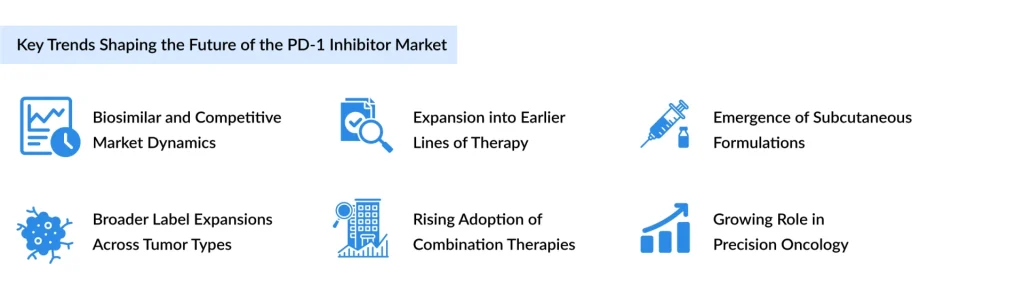
The competitive picture among PD-1 inhibitor drugs isn’t static. Four forces will shape who gains and who loses, shared over the next several years.
Patent cliffs are approaching
KEYTRUDA is set to face loss of exclusivity in 2028, and while Merck’s CEO has expressed growing confidence in defending the company’s full patent estate, given how case law has evolved, the company continues to plan around the 2028 date as a conservative assumption. OPDIVO faces a similar horizon on its core composition-of-matter patents. When exclusivity lapses on the two best-selling PD-1 inhibitor medications in history, it will open the door to biosimilar competition at a scale the oncology market has never seen, and every China-wave entrant currently undercutting on price will suddenly be competing against biosimilars of the original brands, not just each other.
Subcutaneous formulations are the new battleground
Both Merck and BMS have raced to bring subcutaneous versions of their flagship drugs to market, KEYTRUDA QLEX and OPDIVO Qvantig, respectively. The recent FDA approval of KEYTRUDA and KEYTRUDA QLEX for ovarian cancer, an indication the drug previously lacked, is expected to contribute meaningfully to 2026 sales growth. Subcutaneous administration cuts infusion time from roughly 30 minutes to just a few, easing the burden on infusion centers and patients alike, and, crucially, it offers a lifecycle-management tool that can help defend revenue even as intravenous formulations face biosimilar erosion after patent expiry.
Combination therapy is the growth engine
Almost none of the newer approvals across KEYTRUDA, OPDIVO, LIBTAYO, JEMPERLI, and TEVIMBRA are monotherapy wins anymore; they’re combination regimens paired with chemotherapy, targeted agents, or other checkpoint inhibitors like LAG-3-targeting relatlimab in OPDUALAG. This shift reflects a broader clinical reality: combination regimens routinely outperform monotherapy in overall survival, and regulatory bodies are increasingly rewarding combination data with faster and broader approvals, as seen with JEMPERLI’s landmark overall-survival win in the broader MMRp/MSS endometrial cancer population.
Bispecifics could be the next frontier
The next disruption may not be another PD-1 monoclonal antibody at all. Bispecific antibodies that pair PD-1 blockade with a second mechanism, VEGF inhibition, LAG-3 blockade, or novel T-cell engagement, are advancing through late-stage pipelines across nearly every major player in this space, including Merck, BMS, Regeneron, Summit Therapeutics, and several Chinese biotechs. Early data suggest some of these bispecifics may outperform PD-1 monotherapy and even some current combination regimens in specific tumor types, which could reshuffle the competitive hierarchy well before the 2028 patent cliff even arrives.
The Road Ahead
The PD-1 inhibitor market is no longer a two-horse race between Merck and BMS. It’s evolving into a multi-front competition shaped by lifecycle management, next-generation bispecifics, and a rising cohort of cost-competitive entrants from China. More than a decade after the first PD-1 inhibitor FDA approval date in September 2014, the immunotherapy race looks nothing like its early years.
According to Aparna Thakur, Project Manager of Forecasting at DelveInsight, in the increasingly crowded PD-1 market, KEYTRUDA maintains a dominant position, holding more than 50% market share in 2024. It is deeply entrenched with approval across 20 indications. Thakur further added that among the 10 approved drugs, early entrants OPDIVO and KEYTRUDA continue to command a major share of the market. However, after the end of market exclusivity of KEYTRUDA, the market size is expected to decline after 2028-2029.
The market beneath KEYTRUDA and OPDIVO has fragmented into distinct competitive lanes: rare-tumor specialists like LIBTAYO and ZYNYZ, survival-data differentiators like JEMPERLI, and a fast-growing cohort of value-priced Chinese PD-1 inhibitors led by TEVIMBRA and LOQTORZI that are rewriting the affordability conversation in Western markets.
The next five years will be defined less by new molecules and more by strategy: how gracefully Merck and BMS manage their 2028 patent cliffs, how aggressively subcutaneous formulations and combination regimens extend franchise life, and whether bispecific antibodies deliver a genuine step-change in efficacy that resets the competitive order entirely.
Watch for continued momentum from BeOne and Junshi/Coherus as they expand indications and geographies, keep an eye on GSK’s push to broaden JEMPERLI beyond gynecologic cancers, and don’t discount emerging entrants like Summit Therapeutics’ ivonescimab, a PD-1/VEGF bispecific that has already generated head-to-head data against KEYTRUDA in China and is now advancing through global trials. Pfizer’s Sasanlimab and Agenus’ Balstilimab are also progressing through clinical development and could further strengthen the competitive landscape following regulatory approval.
Sasanlimab is expected to be launched in 2026 and is anticipated to generate a revenue of more than USD 2 million in the launch year, as per Thakur.
The PD-1 inhibitor race isn’t slowing down; it’s just entering a more complicated, more crowded second act. As competition intensifies, companies are differentiating through combination regimens, novel indications, and improved dosing strategies rather than relying on monotherapy alone. The focus is shifting from simply gaining approval to demonstrating meaningful clinical and commercial advantages in an increasingly saturated market.

Downloads
Article in PDF
Recent Articles
- Incyte’s Zynyz Secures Approval for Anal Cancer—A Comeback After FDA Rejection
- Replimune Strengthens Oncology Portfolio With TUDRIQEV Approval
- ADCs in Lung Cancer Treatment: ENHERTU’s Rise, HER3 & TROP-2 Challenges, and What’s Next in ...
- Merck’s Keytruda Wins Another FDA Approval; Sanofi Pauses Trial of Myasthenia Gravis Drug, tolebr...
- Another Feather in the Cap for Xtandi and Keytruda — The Two Main Cancer Drugs