Nanobots in Medicine: Transforming Healthcare from the Inside Out
Jul 27, 2026
Table of Contents
For decades, the idea of microscopic robots travelling through the human bloodstream to hunt down disease sounded like pure science fiction. That idea is now a serious field of biomedical engineering. Medical nanorobotics sits at the intersection of nanotechnology, robotics, molecular biology, materials science, and artificial intelligence, and it is reshaping how researchers think about diagnosing and treating disease at the cellular and molecular level.
Nanobots, also called nanorobots or nanomachines, are engineered devices or particles built at the nanoscale, typically between 1 and 100 nanometers. However, many practical “nanobots” in biomedicine are hybrid micro/nano-scale constructs a few hundred nanometers to a few micrometers across. Unlike conventional pills, injections, or implants that act broadly throughout the body, nanobots are designed to travel to a precise location, sense their environment, and release a therapeutic payload or perform a mechanical task only when and where it is needed.
Downloads
Click Here To Get the Article in PDF

Recent Articles
- Top 5 Big Data Applications in Healthcare Revolutionizing Patient Care
- Seno Medical Secures EU MDR CE Mark for Next-Generation Imagio® Imaging System; Spine Innovation ...
- AstraZeneca’s Imfinzi Shows Positive Results; Novartis Announces Results of Tislelizumab; FDA Gra...
- Opioid Withdrawal Syndrome: What happens when a person withdraws from Opiates
- Nanomedicine’s Impact: Transforming the Future of Healthcare Industry Dynamics
This report provides a comprehensive overview of medical nanobots: how they are built, how they work, the technologies that make them possible, their expanding range of clinical applications, the market and regulatory landscape, and the challenges that must still be solved before nanorobotic medicine becomes a routine part of clinical care.
Understanding Medical Nanobots
What are Nanobots?
A medical nanobot is a microscopic device, particle, or molecular assembly engineered to perform a specific biomedical function, such as sensing, transporting a drug, cutting tissue, or reporting data, inside the human body. Some nanobots are fully synthetic (built from metals, polymers, or silicon), some are built from biological molecules such as DNA or proteins (DNA origami nanorobots), and others are “biohybrid,” combining a living cell or bacterium with a synthetic payload or sensor. What unifies them is scale and purpose: they operate at a size compatible with cells and biomolecules, and they are designed to act autonomously or semi-autonomously once inside the body.
Key Characteristics of Medical Nanobots
- Nanoscale dimensions that allow passage through capillaries and, in some designs, across biological barriers such as the blood-brain barrier.
- Targeting capability, using surface ligands, antibodies, or magnetic/chemical guidance to reach a specific cell type or tissue.
- Responsiveness to internal or external stimuli (pH, enzymes, magnetic fields, light, or ultrasound) that triggers a therapeutic action.
- Biocompatibility and, ideally, biodegradability so the device does not accumulate or trigger a harmful immune response.
- A payload or functional module: a drug reservoir, a sensor, or a mechanical actuator matched to the intended medical task.
|
Difference between Nanobots and Conventional Medical Devices |
||
|---|---|---|
|
Attribute |
Conventional Medical Devices |
Medical Nanobots |
|
Scale |
Millimeters to centimeters |
Nanometers to a few micrometers |
|
Delivery of therapy |
Systemic or localized by hand/instrument |
Autonomous, targeted at the cellular level |
|
Precision |
Organ or tissue-level precision |
Cell- or molecule-level precision |
|
Invasiveness |
Often requires incision or catheterization |
Can be delivered by injection or ingestion |
|
Control |
Operated directly by a clinician |
Guided remotely (magnetic, acoustic) or autonomous |
|
Feedback |
External imaging only |
Can carry onboard sensors for real-time data |
Evolution of Nanobots in Medicine
Historical Background
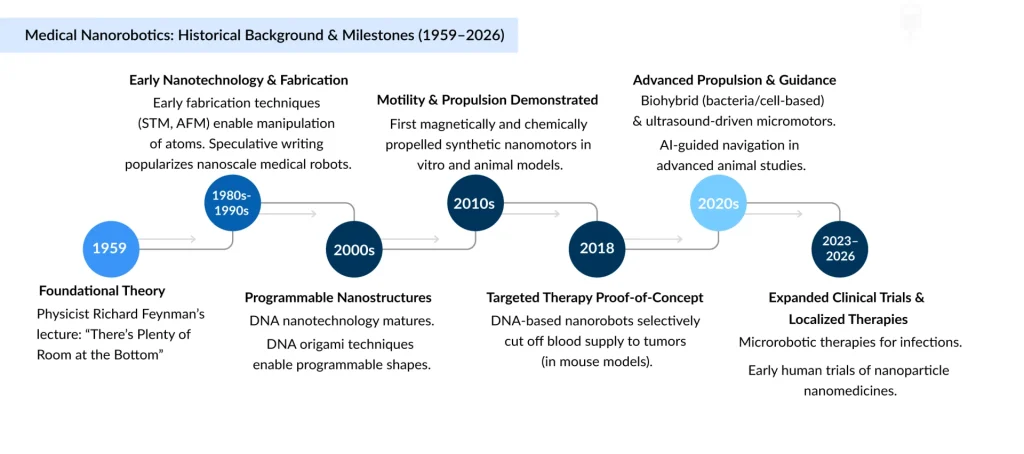
The development of medical nanorobotics has progressed from a theoretical concept to an active area of biomedical research over the past several decades. Key milestones, including the emergence of nanotechnology, DNA origami, magnetically guided nanomotors, and biohybrid microrobots, have significantly advanced the field. Although fully autonomous medical nanobots are not yet part of routine clinical practice, ongoing preclinical studies and early-stage clinical research continue to demonstrate their potential for targeted drug delivery, disease diagnosis, and precision therapy, bringing nanobots closer to future clinical application.
Components of Medical Nanobots
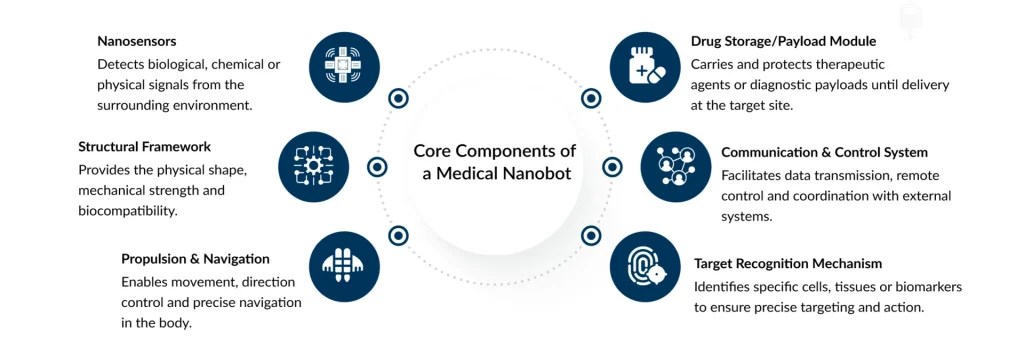
Although designs vary enormously depending on the intended application, most medical nanobots share a common set of functional building blocks, illustrated below.
Structural Framework: The chassis or scaffold that holds all other components together. This may be a synthetic polymer or metallic shell, a lipid vesicle, a silica or gold nanoparticle core, or a folded DNA origami lattice.
Propulsion and Navigation System: The mechanism that allows the nanobot to move, including flagella-inspired synthetic motors, magnetic nanoparticles steered by external magnetic fields, chemically powered catalytic motors, or biohybrid propulsion from an attached living cell.
Nanosensors: Molecular-scale sensors that detect biomarkers, pH changes, enzyme activity, temperature, or specific surface receptors that identify a diseased cell.
Drug Storage and Payload Module: A reservoir, cavity, or surface-conjugation site that carries the therapeutic cargo, a drug molecule, gene-editing complex, contrast agent, or radioactive isotope.
Target Recognition Mechanism: Surface ligands, antibodies, aptamers, or peptides that bind selectively to receptors on target cells, ensuring the payload is released only at the intended site.
Drug Release Mechanism: A trigger, such as a pH-sensitive coating, an enzyme-cleavable linker, a magnetically or thermally responsive material, or a light-activated switch, that releases the payload on demand.
Communication and Control System: For actuated nanorobots, a means of receiving external commands (e.g., via magnetic or acoustic fields) or transmitting status/sensor data outward, sometimes through nearby relay nanoparticles.
Power Source: The energy supply for movement and function: chemical fuel (e.g., catalytic decomposition of hydrogen peroxide or glucose), externally applied magnetic or acoustic energy, or, in experimental designs, light or biological ATP.
Types of Medical Nanobots
Medical nanobots are generally classified by their material composition and their propulsion mechanism. The table below summarizes the major categories in current research.
|
Type |
Description |
Typical Use Case |
|---|---|---|
|
DNA Nanobots |
Built from folded strands of DNA (DNA origami) programmed to open, close, or change shape in response to a molecular trigger. |
Targeted delivery to tumors; molecular logic-gated drug release |
|
Magnetic Nanobots |
Contain iron oxide or other magnetic nanoparticles; steered externally using magnetic field gradients or rotating fields. |
Navigation through blood vessels; MRI-guided targeting |
|
Biohybrid Nanobots |
Combine a living cell (bacterium, sperm cell, immune cell) with a synthetic payload or sensor. |
Crossing biological barriers; chemotaxis toward tumors/infections. |
|
Enzyme-Powered Nanobots |
Propelled by catalytic breakdown of biological substrates such as urea or glucose. |
Deep tissue penetration; self-powered movement in biofluids |
|
Light-Driven Nanobots |
Actuated by exposure to specific wavelengths of light (often near-infrared for tissue penetration). |
Photothermal/photodynamic therapy; superficial or endoscopically accessible targets |
|
Ultrasound-Driven Nanobots |
Propelled and controlled using externally applied acoustic (ultrasound) fields. |
Deep-tissue navigation without magnetic interference |
|
Chemically Powered Nanobots |
Use onboard catalytic reactions with body fluids to generate propulsion (bubble or self-electrophoretic thrust). |
Localized, fuel-driven mobility in fluid-rich environments |
|
Hybrid Nanorobotic Systems |
Combine two or more propulsion/targeting strategies (e.g., magnetic + enzymatic) for more robust control. |
Complex in vivo environments requiring redundancy and precision |
Working Mechanism of Medical Nanobots
Administration into the Human Body: Nanobots are most commonly introduced via intravenous injection, though oral, inhaled, and localized (e.g., intratumoral) administration routes are also being studied depending on the target site.
Navigation to the Target Site: Once inside the body, nanobots travel through the bloodstream or tissue using their propulsion system, guided passively by blood flow or actively by external magnetic, acoustic, or chemical gradients.
Disease Detection and Recognition: Onboard sensors and surface receptors detect biochemical markers, such as tumor-specific antigens, inflammatory cytokines, or abnormal pH, that identify the diseased tissue and trigger the next stage of action.
Therapeutic Action: Depending on the design, the nanobot may release a drug, deliver a gene-editing payload, generate localized heat to destroy abnormal cells, or perform a micro-mechanical action such as clearing a blockage.
Controlled Drug Release: Release is timed and localized using stimuli-responsive materials, ensuring the therapeutic payload acts only at the diseased site and minimizing exposure to healthy tissue.
Biodegradation and Clearance: After completing their task, biodegradable nanobots break down into non-toxic byproducts that are cleared through the kidneys, liver, or reticuloendothelial system; non-degradable designs are engineered for eventual excretion or magnetic retrieval.
Key Technologies Enabling Medical Nanobots
Nanotechnology: Nanotechnology is the fundamental technology behind medical nanobots. It involves designing and fabricating materials and devices at the nanoscale (1–100 nm), where materials exhibit unique physical, chemical, and biological properties. Techniques such as DNA origami, molecular self-assembly, nanolithography, and nanoparticle engineering allow researchers to construct nanobots with highly precise structures and functions.
Examples:
- DNA origami nanorobots developed by researchers at Harvard University can fold DNA into programmable structures that open only when they encounter specific cancer cell markers.
- Gold nanoparticles are incorporated into nanobots for photothermal therapy, where they generate heat upon near-infrared (NIR) laser irradiation to destroy tumor cells.
- Carbon nanotubes and graphene-based nanomaterials are investigated for constructing lightweight, mechanically robust nanodevices.
Application: Construction of nanobot chassis, drug carriers, nanoscale valves, and targeting structures.
Artificial Intelligence: Artificial Intelligence enables nanobots to make intelligent decisions by analyzing biological information in real time. AI algorithms process sensor inputs, predict disease locations, optimize navigation routes, and determine the appropriate timing for drug release.
Examples:
- AI algorithms analyze MRI or CT scans to determine the optimal route for magnetically guided nanobots to reach brain tumors.
- Machine learning models identify cancer-specific biomarkers from biosensor data and instruct nanobots to release drugs only near malignant cells.
- Reinforcement learning is being explored to improve autonomous navigation of microrobots through complex vascular networks.
Application: Autonomous navigation, target identification, adaptive drug delivery, and treatment optimization.
Microelectromechanical and Nanoelectromechanical Systems (MEMS/NEMS): MEMS and NEMS integrate miniature mechanical and electrical components that function as sensors, actuators, pumps, switches, and microvalves. As these technologies continue to shrink toward the nanoscale, they provide the mechanical functionality required for advanced nanobots.
Examples:
- MEMS-based pressure sensors monitor blood pressure or tissue pressure during minimally invasive procedures.
- Nanoactuators enable tiny robotic arms or valves to open drug reservoirs.
- NEMS cantilever sensors detect single biomolecules through extremely small changes in vibration frequency.
Application: Mechanical movement, sensing, controlled drug release, and environmental monitoring.
Biosensors: Biosensors allow nanobots to recognize specific biological molecules by combining a biological recognition element with a signal transducer. They enable nanobots to distinguish diseased cells from healthy tissue with exceptional sensitivity.
Examples:
- Antibody-based biosensors recognize HER2 receptors on breast cancer cells.
- Aptamer biosensors selectively bind prostate-specific membrane antigen (PSMA) in prostate cancer.
- Glucose enzyme sensors monitor glucose concentrations continuously for diabetes management.
- Biosensors detecting elevated inflammatory cytokines help identify infected tissues.
Application: Disease diagnosis, biomarker detection, targeted therapy, and real-time monitoring.
Smart Biomaterials: Smart biomaterials respond to physiological stimuli such as pH, temperature, enzymes, magnetic fields, or light. These materials enable nanobots to release therapeutic agents only under specific biological conditions.
Examples:
- pH-sensitive polymer nanoparticles release chemotherapy drugs only in the acidic microenvironment of tumors.
- Thermosensitive hydrogels release drugs when body temperature increases during inflammation.
- Enzyme-responsive polymers degrade in the presence of matrix metalloproteinases (MMPs), enzymes highly expressed in tumors.
- Light-responsive nanoparticles release drugs after exposure to near-infrared laser light.
Application: Controlled drug delivery, biodegradation, targeted release, and enhanced treatment safety.
Wireless Communication Technologies: Medical nanobots require external guidance and communication because onboard power and computing capabilities are extremely limited. Wireless technologies allow clinicians to control nanobots and monitor their activity remotely.
Examples:
- Magnetic field guidance steers iron oxide-based nanobots through blood vessels toward tumors.
- Ultrasound (acoustic) control propels micro/nanorobots in soft tissues without invasive procedures.
- Radiofrequency (RF) signals activate drug release from certain nanoparticle systems.
- Near-infrared (NIR) light remotely activates photothermal or photodynamic nanotherapeutic systems.
Application: Remote navigation, activation, monitoring, and synchronization of nanobot operations.
Molecular Engineering: Molecular engineering involves designing molecules with specific biological and chemical functions. By modifying DNA, proteins, peptides, antibodies, and synthetic polymers, researchers can program nanobots to recognize targets, carry therapeutic payloads, and perform complex biological tasks.
Examples:
- DNA nanorobots engineered to expose thrombin only after recognizing tumor-associated proteins, causing selective clotting within tumor blood vessels.
- PEGylated nanoparticles use polyethylene glycol (PEG) coatings to evade immune system recognition and remain in circulation longer.
- Peptide-functionalized nanoparticles specifically bind integrin receptors overexpressed on cancer cells.
- CRISPR-loaded nanoparticles deliver gene-editing components directly to diseased cells.
Application: Targeted drug delivery, gene therapy, molecular recognition, immune evasion, and programmable therapeutic functions.
Applications of Nanobots in Medicine
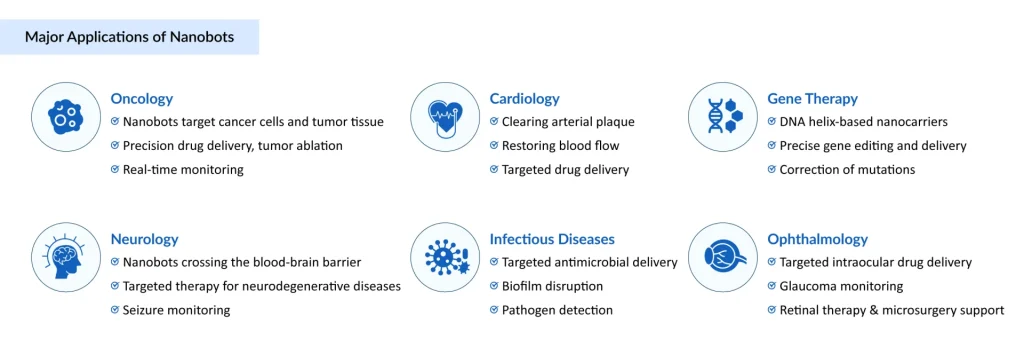
Medical nanobots are being investigated for applications across numerous clinical specialties, including oncology, cardiovascular medicine, neurology, infectious diseases, regenerative medicine, and precision therapeutics. While fully autonomous nanobots have not yet entered routine clinical practice, advances in nanotechnology, micro/nanorobotics, artificial intelligence, and biomaterials have accelerated preclinical research and early translational studies. Their potential lies in performing highly targeted diagnosis, drug delivery, minimally invasive interventions, and real-time physiological monitoring at the cellular and molecular levels.
Cancer Diagnosis and Treatment
Cancer remains the most extensively researched application of medical nanobots. Conventional chemotherapy distributes drugs throughout the body, often causing significant systemic toxicity and limiting therapeutic efficacy. Nanobots are being designed to selectively recognize tumor-associated biomarkers, navigate toward malignant tissues, and release therapeutic payloads only within the tumor microenvironment. Researchers are also developing DNA origami nanorobots, magnetic nanorobots, and biohybrid microrobots capable of transporting chemotherapeutic agents, immunotherapies, gene-editing systems, and RNA therapeutics directly to cancer cells. In addition, nanobots are being investigated for tumor imaging, photothermal therapy, photodynamic therapy, and anti-angiogenic approaches that restrict tumor blood supply. These strategies aim to improve treatment precision while minimizing damage to healthy tissues.
Cardiovascular Diseases
Cardiovascular disorders represent another promising area for nanobot-assisted therapy. Researchers are investigating magnetically guided nanobots capable of navigating through blood vessels to deliver thrombolytic drugs directly to blood clots, potentially reducing the dosage required for systemic thrombolysis. Nanobots are also being explored for targeted treatment of atherosclerotic plaques by delivering anti-inflammatory drugs or plaque-stabilizing agents directly to diseased arterial walls. Future concepts include nanoscale devices capable of continuously monitoring vascular biomarkers, blood flow characteristics, and endothelial health to facilitate early detection of cardiovascular disease.
Neurological Disorders
Treating neurological diseases is challenging because the blood-brain barrier (BBB) restricts the delivery of many therapeutic agents into the central nervous system. Nanobots equipped with magnetic guidance systems, surface-modified nanoparticles, or biohybrid propulsion mechanisms are being investigated to overcome this limitation. Current research focuses on targeted drug delivery for brain tumors, Alzheimer’s disease, Parkinson’s disease, epilepsy, glioblastoma, and neuroinflammatory disorders. Researchers are also exploring nanorobotic systems for localized gene therapy, neural imaging, and precision neurosurgical interventions with minimal damage to surrounding brain tissue.
Diabetes Management
Nanotechnology-based glucose monitoring systems are transforming diabetes management. Nanosensors integrated with wearable or implantable devices enable continuous glucose monitoring (CGM) with high sensitivity and reduced invasiveness. Researchers are developing smart nanocarriers capable of releasing insulin automatically in response to elevated blood glucose levels, creating the foundation for closed-loop artificial pancreas systems. Stimuli-responsive polymers, glucose-sensitive hydrogels, and enzyme-triggered nanoparticles are among the technologies being evaluated to improve glycemic control while reducing the risk of hypoglycemia.
Infectious Disease Management
Nanobots offer innovative strategies for combating bacterial, viral, and fungal infections, particularly those involving antibiotic-resistant pathogens and biofilms. Helical magnetic microrobots have demonstrated the ability to mechanically disrupt bacterial biofilms while simultaneously delivering antibiotics directly to infected tissues. Researchers are also investigating nanorobotic systems for localized antimicrobial therapy in chronic sinusitis, wound infections, urinary tract infections, implant-associated infections, and periodontal disease. Such targeted approaches may improve antimicrobial efficacy while limiting systemic antibiotic exposure.
Gene Therapy
Nanobots and nanoscale delivery platforms are emerging as promising alternatives to viral vectors for gene therapy. DNA nanostructures, lipid nanoparticles, polymeric nanocarriers, and biohybrid nanorobots are being engineered to transport CRISPR-Cas9 complexes, messenger RNA (mRNA), small interfering RNA (siRNA), and antisense oligonucleotides to specific cell populations. These delivery systems seek to improve editing precision, reduce off-target effects, and minimize immune responses. Gene-editing nanocarriers are currently being explored for inherited genetic disorders, cancer, and rare diseases.
Regenerative Medicine and Tissue Engineering
Nanobots are increasingly being investigated for regenerative medicine applications involving tissue repair and organ regeneration. Researchers are developing nanoscale scaffolds capable of directing stem cell differentiation, enhancing cell adhesion, and promoting extracellular matrix formation. Nanorobotic systems may also deliver growth factors, cytokines, or regenerative biomolecules directly to injured tissues. Applications under investigation include bone regeneration, cartilage repair, nerve regeneration, cardiac tissue repair following myocardial infarction, and integration with 3D-bioprinted tissues and bioengineered organs.
Ophthalmology
The eye presents unique challenges for conventional drug delivery because of anatomical barriers that limit drug penetration. Nanobots and micro/nanorobotic systems are being explored for targeted intraocular drug delivery to treat retinal diseases, glaucoma, diabetic retinopathy, age-related macular degeneration, and ocular tumors. Magnetically guided microrobots may eventually enable minimally invasive retinal surgery and localized therapeutic delivery with improved precision compared to conventional intravitreal injections.
Dentistry
Nanotechnology is increasingly being incorporated into modern dentistry through antimicrobial nanoparticles, nano-composite restorative materials, and experimental dental nanobots. Proposed applications include targeted elimination of oral pathogens, localized treatment of dental caries, root canal disinfection, enamel remineralization, periodontal therapy, and precision anesthesia delivery. Although fully autonomous dental nanobots remain theoretical, nanoparticle-based dental therapeutics are already being incorporated into commercial dental materials.
Gastrointestinal Disorders
The gastrointestinal tract is well suited for ingestible robotic systems capable of localized diagnosis and therapy. Researchers are developing swallowable micro/nanorobotic capsules equipped with imaging systems, biosensors, biopsy tools, and targeted drug delivery mechanisms. These devices may improve the diagnosis and treatment of inflammatory bowel disease, gastrointestinal bleeding, colorectal cancer, Crohn’s disease, ulcerative colitis, and gastric ulcers while reducing the need for invasive endoscopic procedures.
Orthopedics
Nanobots are being investigated for enhancing bone regeneration and musculoskeletal repair. Experimental systems are capable of delivering osteogenic growth factors, antibiotics, anti-inflammatory drugs, and stem cell stimulators directly to fracture sites or damaged joints. Nanotechnology-based approaches are also being studied for improving implant integration, accelerating bone healing, preventing implant-associated infections, and treating osteoarthritis and osteoporosis through localized therapeutic delivery.
Pulmonary Diseases
The lungs provide an accessible route for targeted nanomedicine delivery through inhalation. Nanobots and nanoparticle-based systems are under investigation for delivering anti-inflammatory agents, antibiotics, gene therapies, and anticancer drugs directly to lung tissue. Potential applications include cystic fibrosis, chronic obstructive pulmonary disease (COPD), asthma, pulmonary fibrosis, tuberculosis, respiratory infections, and lung cancer. Localized pulmonary delivery may increase therapeutic concentrations while minimizing systemic adverse effects.
Urology
Researchers are exploring nanobot-assisted therapies for diseases affecting the urinary tract and male reproductive system. Magnetically guided nanocarriers may enable localized treatment of bladder cancer, prostate cancer, kidney infections, urinary tract infections, and inflammatory disorders. Targeted delivery systems seek to improve drug concentration within diseased tissues while reducing systemic toxicity associated with conventional chemotherapy or antibiotic therapy.
Reproductive Medicine
Nanotechnology is opening new opportunities in reproductive medicine through targeted drug delivery and assisted reproductive technologies. Sperm-hybrid microrobots have demonstrated the ability to transport therapeutic agents toward cervical or uterine tumors while utilizing the natural motility of sperm cells. Researchers are also evaluating nanotechnology for improving fertility treatments, embryo implantation, localized hormone delivery, contraceptive technologies, and treatment of reproductive tract diseases.
Organ Transplantation
Nanobots and nanosensors are being investigated to improve transplant monitoring and post-transplant care. Implantable nanosensors may continuously detect biomarkers associated with inflammation, ischemia, immune activation, and early graft rejection before clinical symptoms become apparent. Researchers are also studying targeted nanocarriers capable of delivering immunosuppressive drugs directly to transplanted organs, which could reduce systemic immunosuppression, minimize adverse effects, and improve long-term graft survival.
Nanobots in Drug Delivery
Nanobots in Drug Delivery represent an advanced approach to precision medicine by enabling targeted, controlled, and personalized delivery of therapeutic agents directly to diseased tissues. Through surface-functionalized targeting molecules, stimuli-responsive drug release systems, and engineered designs capable of crossing biological barriers such as the blood-brain barrier, nanobots have the potential to improve treatment efficacy while minimizing systemic side effects. Although most medical nanobots remain in the research and preclinical stages, they are expected to play a significant role in the future of cancer therapy, neurological disorders, gene therapy, and other targeted treatments by enhancing the safety, accuracy, and effectiveness of drug delivery.
Nanobots in Disease Diagnosis
Nanobots have the potential to transform disease diagnosis by enabling the early, accurate, and minimally invasive detection of diseases at the molecular and cellular levels. Equipped with nanosensors and biomarker recognition systems, they can identify subtle biological changes, such as abnormal proteins, DNA mutations, or metabolic alterations, long before clinical symptoms appear. Nanobots can also enhance molecular imaging by delivering contrast agents directly to diseased tissues, improving the precision of MRI, CT, and optical imaging. Additionally, implantable or circulating nanosensor-based nanobots are being investigated for continuous real-time monitoring of physiological parameters, allowing clinicians to detect disease progression, monitor treatment response, and provide timely medical intervention. Although most diagnostic nanobot technologies are still in the research and preclinical stages, they hold significant promise for advancing precision diagnostics and personalized healthcare.
Nanobots in Minimally Invasive Surgery
Nanobots are emerging as a promising technology for minimally invasive surgery by enabling highly precise interventions at the cellular and molecular levels. Their microscopic size allows them to navigate through blood vessels and tissues to perform tasks such as targeted tumor removal, blood clot dissolution, microsurgery, and localized tissue repair with minimal damage to surrounding healthy structures. Guided by magnetic fields, ultrasound, or other external control systems, nanobots have the potential to reduce surgical trauma, blood loss, recovery time, and the risk of complications compared with conventional surgical procedures. Although most nanorobotic surgical systems are still in the experimental and preclinical stages, they hold significant promise for improving the precision, safety, and effectiveness of future minimally invasive treatments.
Integration of Artificial Intelligence with Nanobots
The integration of Artificial Intelligence (AI) with nanobots is transforming the future of precision medicine by enabling intelligent navigation, real-time decision-making, and personalized treatment. AI algorithms can analyze data collected by nanosensors, accurately distinguish healthy from diseased tissues, and optimize the movement of nanobots through complex biological environments such as blood vessels. By combining patient-specific genetic, imaging, and biomarker information, AI can also help determine the most effective targeting strategy, drug dosage, and treatment plan for each individual. Although AI-powered nanobots are still largely in the research and development stage, they hold significant potential to improve the accuracy, efficiency, and safety of disease diagnosis and targeted therapies.
Advantages of Nanobots in Medicine
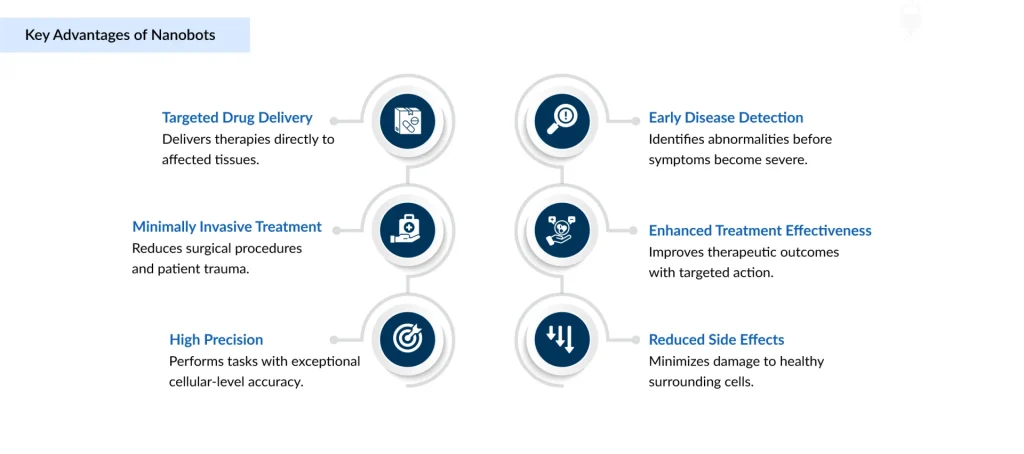
Medical nanobots offer numerous advantages over conventional diagnostic and therapeutic approaches by enabling highly precise, minimally invasive, and personalized medical interventions. Their ability to operate at the cellular and molecular levels has the potential to improve treatment outcomes while reducing complications, healthcare costs, and patient recovery times.
Clinical Advantages
- Highly Targeted Therapy: Nanobots can selectively recognize and bind to diseased cells using surface ligands, antibodies, or aptamers, delivering therapeutic agents directly to the affected site while minimizing damage to healthy tissues.
- Improved Drug Delivery Efficiency: By releasing drugs precisely where they are needed, nanobots can achieve therapeutic effects with lower drug doses, reducing systemic toxicity and adverse side effects associated with conventional treatments.
- Early Disease Detection: Integrated nanosensors enable nanobots to detect molecular biomarkers and subtle physiological changes before clinical symptoms become apparent, facilitating earlier diagnosis and timely intervention.
- Minimally Invasive Procedures: Nanobots can navigate through blood vessels and body cavities to reach difficult-to-access tissues, potentially reducing the need for open surgery, minimizing tissue trauma, and shortening recovery times.
- Enhanced Treatment Precision: Real-time sensing and targeted action improve the accuracy of therapies such as tumor ablation, clot removal, and localized drug delivery, resulting in better clinical outcomes.
Technological Advantages
- Programmable and Multifunctional Platforms: Nanobots can be engineered to perform multiple tasks simultaneously, including sensing, navigation, targeted drug delivery, molecular imaging, and therapeutic intervention within a single platform.
- Integration with Artificial Intelligence: AI and machine learning algorithms enhance nanobot performance by optimizing navigation, analyzing sensor data, enabling autonomous decision-making, and supporting personalized treatment strategies.
- Theranostic Capability: Nanobots can combine diagnostic imaging and therapeutic functions into a single “theranostic” system, allowing clinicians to detect disease, monitor treatment progress, and deliver therapy simultaneously.
- Stimuli-Responsive Drug Release: Smart nanobots can release therapeutic payloads only under specific conditions, such as changes in pH, temperature, enzyme activity, magnetic fields, or light, improving treatment precision and safety.
- Real-Time Monitoring: Advanced nanosensors allow continuous monitoring of physiological parameters and treatment response, enabling dynamic adjustments to therapy when necessary.
Economic and Healthcare Benefits
- Reduced Hospitalization: Less invasive procedures and faster recovery may decrease hospital stays, lowering healthcare resource utilization and improving patient comfort.
- Lower Long-Term Treatment Costs: Early diagnosis, targeted therapy, and improved treatment effectiveness can reduce disease progression, repeat procedures, and long-term healthcare expenditures.
- Reduced Side-Effect Management Costs: Precise drug delivery minimizes off-target toxicity, decreasing the need for supportive medications and management of treatment-related complications.
- Improved Healthcare Efficiency: Automated monitoring and precision treatment may reduce the workload on healthcare professionals while improving clinical decision-making and patient management.
- Enhanced Patient Quality of Life: Faster recovery, fewer complications, reduced pain, and personalized treatment approaches can improve patient satisfaction, treatment adherence, and overall quality of life.
Challenges and Limitations
Technical Challenges: Precisely controlling nanobot navigation inside a dynamic, fluid-filled, obstacle-rich human body remains difficult. Power supply at nanoscale, real-time tracking within tissue, and reliable, repeatable manufacturing at scale are all unresolved engineering problems.
Biological Challenges: The immune system may recognize and clear nanobots before they reach their target. Biological barriers (blood-brain barrier, mucus layers, cell membranes) can block access to certain tissues, and the complex, variable biology of individual patients makes consistent performance difficult to guarantee.
Manufacturing Challenges: Producing nanobots with consistent size, shape, and function at a cost and scale suitable for clinical use is a significant hurdle; many current designs are made in small batches under highly controlled lab conditions.
Regulatory Challenges: Existing regulatory frameworks for drugs and devices were not designed with autonomous, multi-functional nanoscale systems in mind, creating uncertainty about classification, approval pathways, and long-term surveillance requirements.
Ethical and Social Concerns: Questions around patient consent, data privacy (for nanosensors that transmit health data), equitable access to expensive new technology, and long-term unknown effects all require careful societal and bioethical consideration.
Cost and Commercialization Challenges: High research, development, and manufacturing costs, combined with long and uncertain regulatory pathways, make commercialization slow and capital-intensive, favoring well-funded companies and institutions.
Safety and Regulatory Considerations
Biocompatibility: Materials used in nanobots must not provoke harmful immune, inflammatory, or toxic reactions, and must be compatible with the tissues and fluids they contact.
Toxicity Assessment: Comprehensive preclinical toxicology, covering acute, chronic, and degradation-product toxicity, is required before any nanobot platform can advance to human trials.
Clinical Validation: Rigorous, phased human clinical trials are needed to confirm safety and efficacy, following pathways broadly similar to those used for novel drugs and combination products.
Regulatory Frameworks: Agencies such as the U.S. FDA and the European Medicines Agency are still developing clear, specific guidance for nanorobotic and nanomedicine products, often evaluating them as combination products spanning drug, device, and biologic categories.
Long-Term Safety Monitoring: Because nanobots are a genuinely new class of therapeutic, post-market surveillance and long-term follow-up will be essential to detect any delayed or cumulative effects not visible in short-term trials.
Future Trends in Medical Nanobotics
Swarm Nanorobotics: Coordinated groups (“swarms”) of nanobots working together could accomplish tasks, like collectively clearing a large clot or mapping a tumor’s full extent, beyond the capability of a single unit.
Self-Powered Nanobots: Ongoing research into enzyme-powered and biologically fueled propulsion aims to remove the need for continuous external energy fields, enabling deeper and more autonomous operation.
Multifunctional Nanobots: Future designs aim to combine sensing, diagnosis, and therapy (“theranostics”) into a single platform capable of adapting its action based on what it detects.
Smart Responsive Nanobots: Next-generation materials will allow nanobots to respond dynamically to multiple simultaneous biological cues rather than a single fixed trigger, improving precision in complex disease environments.
AI-Integrated Autonomous Nanobots: Greater onboard or networked AI processing is expected to allow nanobots to make increasingly sophisticated real-time decisions with less reliance on external control.
Nanobots Connected with Digital Health and IoT: Future systems may integrate with wearable devices and digital health platforms, streaming nanosensor data to clinicians for continuous, connected patient monitoring.Market Outlook
Current Market Scenario
The Nanorobots in Healthcare market size is estimated at USD 7.85 billion in 2025 and is projected to reach USD 15.95 billion by 2034. The market is projected to expand at a CAGR of 8.2% during the forecast period from 2026-2034.
Market Growth Drivers
- Rising global burden of cancer and chronic disease driving demand for more precise therapies.
- Continued advances in nanofabrication, DNA nanotechnology, and biomaterials.
- Growing integration of AI with medical imaging and nanorobot navigation.
- Increased public and private R&D investment in precision and personalized medicine.
Emerging Opportunities
- Theranostic platforms combining diagnosis and treatment in one device.
- Nanorobotic solutions for antibiotic-resistant infections.
- Digital-health-connected nanosensors for continuous, remote monitoring.
Challenges Affecting Market Growth
- High development and manufacturing costs.
- Slow, evolving regulatory pathways for novel nanorobotic products.
- Limited clinical-stage evidence compared with conventional therapeutics.
Key Companies and Research Institutions
The development of medical nanobots is supported by a collaborative ecosystem of medical device manufacturers, biotechnology and pharmaceutical companies, academic institutions, and emerging startups. Companies such as Thermo Fisher Scientific and Bruker Corporation provide advanced imaging, characterization, and nanofabrication technologies essential for nanorobotics research, while specialized firms including Nanobots Therapeutics and Theranautilus are developing targeted nanorobotic platforms for precision medicine. At the same time, leading research institutions such as the Institute for Bioengineering of Catalonia (IBEC), ICREA, ITMO University, and the University of Saskatchewan, along with numerous universities across the United States, China, and Hong Kong, continue to drive innovation through preclinical research. Complementing these efforts, a growing number of startups are focusing on DNA-based nanorobots, magnetically guided microrobots, biohybrid systems, and ingestible diagnostic robots, collectively accelerating the advancement of nanobot technologies toward future clinical applications.
|
Company |
Product/Technology |
Core Technology |
By Product |
By Application |
|
Bionaut Labs Inc. |
Bionaut™ Microrobotic Platform |
Magnetically guided microrobots |
Therapeutic Nanobots |
Neurological Disorders, Targeted Drug Delivery |
|
DNA Script |
DNA Synthesis Platform |
DNA engineering for programmable nanostructures |
DNA Nanorobotic Components |
Gene Therapy, Precision Medicine |
|
Cytiva |
NanoAssemblr™ Platform |
Lipid Nanoparticle Manufacturing |
Drug Delivery Nanoplatform |
Gene Therapy, RNA Therapeutics |
|
Thermo Fisher Scientific |
Lipid Nanoparticles & Nanoparticle Reagents |
Nanomedicine Platform |
Nanocarriers |
Drug Delivery, Diagnostics |
|
Bruker Corporation |
NanoWizard® BioAFM |
Nanomanipulation & Nanocharacterization |
Nanorobotic Research Instruments |
Nanobot Development Research |
|
Nanovery Ltd. |
VersICA® Platform |
Nanobiosensor Technology |
Diagnostic Nanobots/Nanosensors |
Disease Diagnosis, Biomarker Detection |
|
Ginkgo Bioworks |
Cell Programming Platform |
Synthetic Biology |
Biohybrid Nanobot Components |
Drug Delivery, Regenerative Medicine |
|
Oxford Nanopore Technologies |
Nanopore Sequencing Platform |
Nanopore Biosensing |
Molecular Diagnostic Nanotechnology |
Disease Diagnosis, Biomarker Detection |
|
Nanospectra Biosciences |
AuroLase® Therapy |
Gold Nanoshell Technology |
Therapeutic Nanoplatform |
Cancer Therapy |
|
Carthera |
SonoCloud® |
Ultrasound-mediated Drug Delivery |
Nanobot-Assisted Drug Delivery Platform |
Brain Disorders, Oncology |
|
MagForce AG |
NanoTherm® Therapy |
Magnetic Nanoparticles |
Therapeutic Nanoplatform |
Brain Tumors, Prostate Cancer |
|
Ocumension Therapeutics |
OcuNano™ Drug Delivery Research |
Ocular Nanomedicine |
Ophthalmic Nanoplatform |
Ophthalmology |
|
BlueWillow Biologics |
NanoBioProtect® Platform |
Nanoemulsion Technology |
Nanomedicine Platform |
Infectious Diseases |
|
Nanobiotix S.A. |
NBTXR3 (Hensify®) |
Hafnium Oxide Nanoparticles |
Radioenhancer Nanoplatform |
Oncology |
|
Cour Pharmaceuticals |
Immune-Modifying Nanoparticles (CNPs) |
Biodegradable Nanoparticles |
Immunotherapy Nanoplatform |
Autoimmune Diseases |
Conclusion
Medical nanobots represent one of the most ambitious frontiers in modern healthcare — a genuine convergence of nanotechnology, robotics, molecular biology, and artificial intelligence aimed at treating disease with a level of precision that was unimaginable a generation ago. Substantial technical, biological, manufacturing, and regulatory hurdles remain before nanorobots become a routine part of clinical practice, and most current progress is still concentrated in laboratory and animal research rather than widespread human treatment.
Even so, the trajectory is unmistakable. Steady breakthroughs in propulsion, targeting, biocompatible materials, and AI-guided control are moving the field from theoretical promise toward early clinical reality, and market forecasts consistently point to strong, sustained growth over the coming decade. As research matures, medical nanobots have the potential to fundamentally reshape how disease is detected, monitored, and treated, transforming healthcare, quite literally, from the inside out.

FAQs
Nanobots are microscopic devices engineered to perform precise medical tasks inside the human body, such as targeted drug delivery, diagnostics, and tissue repair. They are transforming healthcare by enabling more accurate, minimally invasive, and personalized treatment approaches.
In 2026, the most promising applications of nanorobotics include targeted cancer therapy, precision drug delivery, early disease detection, cardiovascular interventions, regenerative medicine, and infection management. Ongoing research is also exploring their role in neurological disorders and gene therapy.
Most nanobot technologies remain in the research, preclinical, or early clinical development stages, with only a limited number of nanotechnology-based systems reaching clinical use. Broader adoption is expected over the next decade as advances in safety, manufacturing, and regulatory approvals accelerate commercialization.
Nanobots are designed to navigate the body and deliver therapeutic agents directly to diseased tissues while minimizing exposure to healthy cells. This targeted approach has the potential to improve treatment efficacy, reduce side effects, and enhance outcomes in cancer therapy.
DelveInsight’s Nanobots in the Healthcare Sector report provides a comprehensive analysis of the market, including technology trends, key applications, competitive landscape, emerging innovations, regulatory developments, and growth opportunities. It also offers market forecasts, company profiles, and strategic insights to support informed business decisions.
Downloads
Article in PDF
Recent Articles
- Turning your own skin cells into cancer-killing machines
- Johnson & Johnson Secures FDA Approval for TRUFILL® n-BCA in Chronic Subdural Hematoma Treatm...
- Everything You Need to Know About Acute Kidney Injury
- Olympus Launches New Gynecologic Power Morcellator; Journey Biosciences Launched NaviDKD; GE Boar...
- STARMED Secures FDA 510(k) Clearance for Benign Thyroid Nodule Ablation; SciBase Advances U.S. Ex...