Osteosarcoma Treatment Landscape: Can New Therapies Break a 40-Year Stalemate in Bone Cancer Care?
Oct 19, 2026
Table of Contents
Summary
- Osteosarcoma is a rare, aggressive primary bone cancer that primarily affects adolescents and young adults. The total incident population across the seven major markets reached approximately 2,200 cases in 2025.
- In the United States, Acrotech Biopharma’s Levoleucovorin (KHAPZORY) has received FDA approval, while in Europe, Esteve Pharmaceuticals’ Mifamurtide (MEPACT) is approved by the European Commission and authorized across the EU.
- The development landscape is becoming increasingly diverse, with ADCs, immunotherapies, cancer vaccines, targeted inhibitors, radioligands, and cell-based therapies advancing through clinical development. Notable candidates include OST-HER2 (OS Therapies), DANYELZA (naxitamab-gqgk; SERB Pharmaceutical), vactosertib (TEW-7197; MedPacto), risvutatug rezetecan (Ris-Rez; GSK), Olaparib with Ceralaserti (AstraZeneca), OMO-103 (Peptomyc), Eflornithine (DFMO) and AMXT 1501 (Aminex Therapeutics), PEEL-224 (Peel Therapeutics), and others.
- The osteosarcoma market across the 7MM is projected to expand during the forecast period from USD 55 million in 2025 to USD 151 million by 2036 at a CAGR of 9%, driven by increasing disease recognition, improved diagnostic practices, and growing research activity supporting the development of novel therapeutic approaches.
Few diagnoses are as disruptive as osteosarcoma bone cancer. It strikes teenagers in the middle of growth spurts, school exams and sports seasons, and it demands months of intensive chemotherapy, major limb surgery and years of surveillance. Yet despite decades of research, the backbone of care has barely changed since the 1980s. One clinician quoted in DelveInsight’s 2026 market assessment put it bluntly: no new treatments have been developed for the disease in nearly 40 years. That long drought is finally showing signs of breaking. Antibody-drug conjugates, Listeria-based vaccines, MYC inhibitors, radioligands, and cell therapies are all moving through the clinic, and the osteosarcoma treatment market is entering its most dynamic phase in a generation.
Downloads
Click Here To Get the Article in PDF

Recent Articles
- Rare but Real: Unraveling the Different Types of Bone Sarcoma
- Key Companies To Keep an Eye on for Pipeline Therapies in Osteosarcoma Market in the Next Decade
- Osteosarcoma vs Ewing sarcoma
- Diagnosis Delays, Ineffective Treatment Options Plaque the Bone Cancer Market Growth
- Pitfalls of Current Osteosarcoma Treatment Approaches
The Patient Burden: A Rare Cancer With an Outsized Impact
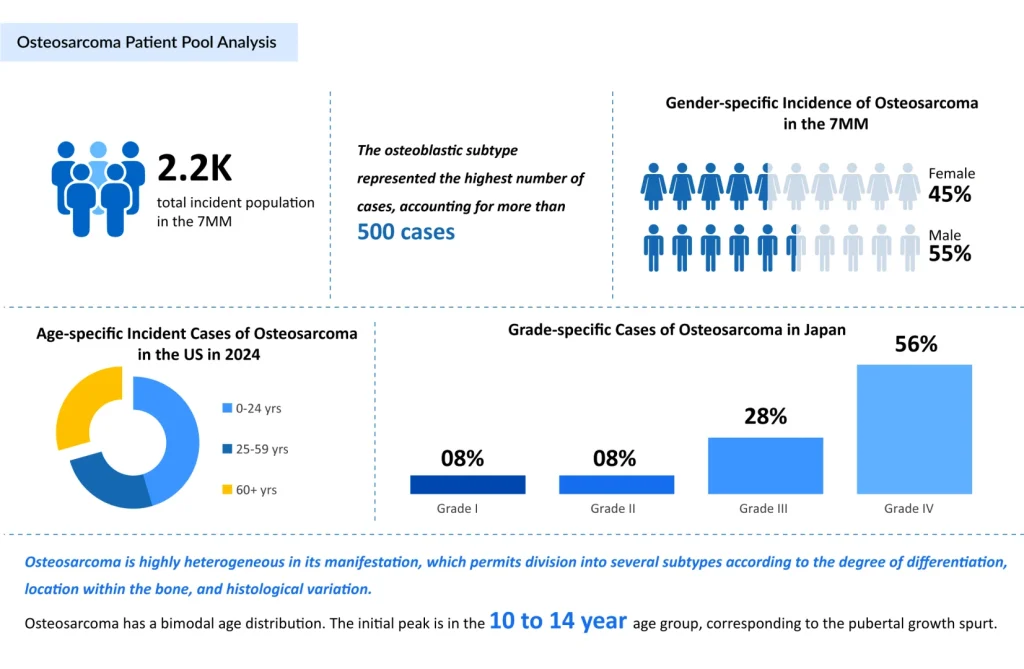
Osteosarcoma is rare, but its human cost is heavy. It accounts for less than 1% of all cancers diagnosed annually in the United States. Yet, it represents roughly 3% of childhood cancers and about 2.4% of pediatric cancers by some analyses, making it the eighth most common childhood malignancy. It is also the most common primary high-grade bone sarcoma. The American Cancer Society (2025) estimates about 1,000 new cases of osteosarcoma are diagnosed in the United States each year.
According to DelveInsight analysis, the total osteosarcoma incident population in the 7MM was 2.2K in 2025, out of which the United States accounted for approximately 60% of osteosarcoma incident cases. The disease follows a bimodal pattern. The first, largest peak occurs in adolescence (10 to 14 years in some analyses, 14 to 18 in others), aligned with the pubertal growth spurt, and a smaller peak occurs in older adults. Roughly 1 in 5 cases occurs in people older than 60.
Patients with localized disease and no evidence of metastasis have an overall survival of roughly 70 to 75%. For patients who present with metastatic disease, long-term survival falls to around 20 to 30%, and outcomes are worse again after relapse. About 10 to 15% of patients present with a pathological fracture, and the figure rises to about 30% in telangiectatic osteosarcoma.
Symptoms are easy to dismiss: progressive pain, a growing mass, and restricted joint movement over weeks to months. Delays in diagnosis, the absence of validated biomarkers, and a high relapse rate keep the unmet need very high. For families, osteosarcoma treatments also carry long-term costs, from limb reconstruction to hearing loss and cardiac toxicity from chemotherapy. Survivorship care is increasingly recognized as a priority in its own right.
The Current Standard: Surgery Plus MAP Chemotherapy
Before chemotherapy, patients with high-grade osteosarcoma typically died from lung micrometastases even after amputation. Today, treatment options for osteosarcoma combine surgical resection with multi-agent chemotherapy, most commonly the MAP regimen of methotrexate, doxorubicin, and cisplatin. Most patients with high-grade tumors receive about three months of neoadjuvant chemotherapy before surgery, followed by adjuvant therapy afterward.
For relapsed or refractory disease, NCCN guidelines list high-dose ifosfamide, etoposide, regorafenib, sorafenib, radium-223, and everolimus, while tyrosine kinase inhibitors such as cabozantinib are also used off-label. These second-line treatments for osteosarcoma deliver limited and short-lived benefit because of tumor heterogeneity, drug resistance, and the lack of predictive biomarkers. This is precisely the gap the osteosarcoma treatment market is trying to close.
Marketed Drugs: A Thin Shelf of Approved Osteosarcoma Medications
Beyond the standard chemotherapy backbone, very few products carry a regulatory label for osteosarcoma. Two names dominate the conversation on approved osteosarcoma medications.
Esteve Pharmaceuticals’ MEPACT
MEPACT (mifamurtide) is an immunomodulator that activates macrophages and monocytes, boosting the body’s own tumor-killing response. It is indicated for high-grade, non-metastatic, resectable osteosarcoma in children, adolescents and young adults aged 2 to 30 years, given after complete surgical removal of the tumor, alongside post-operative chemotherapy.
The European Commission granted MEPACT a marketing authorization valid across the European Union in March 2009, awarding it to IDM Pharma. Takeda acquired IDM Pharma later that year, adding what was then the first treatment approved for osteosarcoma in Europe. In February 2025, Takeda announced it would divest the product to Esteve Pharmaceuticals, a transaction expected to close in 2025. Importantly, MEPACT is not approved in the United States, which leaves the US osteosarcoma market without an immunomodulator option and is a significant reason why American clinicians continue to rely on chemotherapy alone.
Acrotech Biopharma’s KHAPZORY
KHAPZORY (levoleucovorin) is a folate analog used as rescue therapy after high-dose methotrexate in adult and pediatric patients with osteosarcoma. It is the pharmacologically active isomer of leucovorin. Methotrexate blocks dihydrofolate reductase, and KHAPZORY counteracts both the toxic and therapeutic effects of that blockade by restoring the folate-dependent reactions needed for DNA synthesis in healthy cells. The US FDA approved KHAPZORY in October 2018.
Both drugs matter, but neither attacks the cancer directly in the way a targeted therapy would. KHAPZORY is a supportive product that makes the MAP regimen safer, and MEPACT is an add-on whose use is geographically restricted. In other words, the osteosarcoma market still has no approved targeted therapy, no approved immunotherapy in the US, and no approved option for chemo-resistant or recurrent disease. That vacuum is the commercial opportunity that the pipeline is racing to fill.
Emerging Pipeline Therapies: The Most Exciting Phase in Osteosarcoma Drug Development
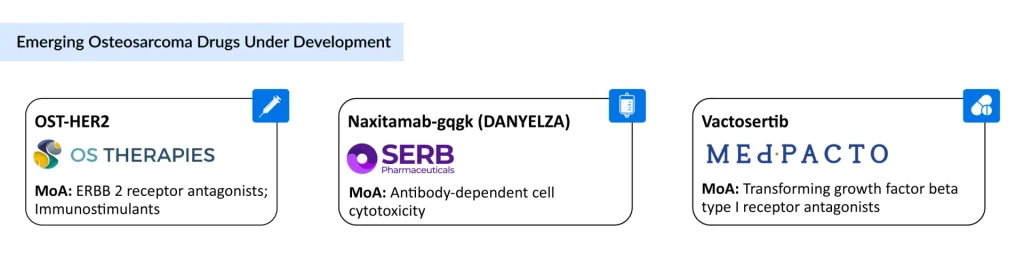
The osteosarcoma drug development pipeline has become broader and more mechanistically diverse than at any time in the past two decades. Regulatory incentives, including Orphan Drug Designation, Rare Pediatric Disease Designation, and Fast Track status, are encouraging investment from both biotechnology companies and large pharmaceutical firms. The emerging pipeline increasingly emphasizes targeted therapies and immunotherapy-based approaches, including OST-HER2 (OS Therapies), which employs HER2-directed cellular immunotherapy to stimulate antitumor immune responses; DANYELZA (naxitamab-gqgk; SERB Pharmaceutical), which targets GD2-expressing tumor cells through antibody-mediated cytotoxicity; Vactosertib (TEW-7197; MedPacto), which inhibits TGF-β signaling associated with tumor progression and metastasis; and Risvutatug Rezetecan (Ris-Rez; GSK), an antibody-drug conjugate (ADC) designed to deliver cytotoxic agents selectively to tumor cells.
The other osteosarcoma drugs under development include Olaparib with Ceralaserti (AstraZeneca), OMO-103 (Peptomyc), Eflornithine (DFMO) and AMXT 1501 (Aminex Therapeutics), PEEL-224 (Peel Therapeutics), ADCE-D01 (ADCendo), Dendritic cell-based vaccine (CellxLife), LNTH-2403 (Lantheus), and others. Collectively, these candidates highlight the growing emphasis on precision medicine, biomarker-guided patient selection, and innovative combination regimens aimed at improving clinical outcomes beyond conventional chemotherapy-based treatment approaches.
Despite these advances, osteosarcoma drug development remains largely concentrated in early-phase clinical trials, particularly Phase II studies. The limited number of late-stage trials and large, randomized clinical studies restricts the availability of robust evidence demonstrating meaningful improvements in key endpoints, including overall survival, event-free survival, and durable response rates. The lack of sufficiently powered confirmatory data presents a significant challenge to regulatory approval, contributing to variability in approval outcomes and timelines across major markets.
What Comes Next in the Osteosarcoma Treatment Space?
The osteosarcoma treatment market remains relatively small in absolute terms because of the rarity of the disease and the widespread use of predominantly off-patent chemotherapies as standard treatment. DelveInsight’s 2026 osteosarcoma market report, which evaluates the osteosarcoma market across the seven major markets from 2022 to 2036, indicates significant growth at a 9% CAGR, followed by a more pronounced increase as newly launched therapies begin to capture market share from conventional chemotherapy. The United States is expected to remain the largest contributor to the 7MM osteosarcoma market, supported by its approximately 60% share of incident cases across these markets and relatively faster access to novel treatments.
As per Sadaf Javed, Functional Head of Forecasting & Analytics at DelveInsight, pipeline launches are expected to be a key growth driver, with DelveInsight’s forecast anticipating the introduction of the first novel therapies around 2027. OST-HER2 and tegavivint are among the early entrants expected to contribute to market expansion, followed by additional uptake from emerging therapies such as vactosertib and ALMB-0168.
The strategic opportunity lies in developing a structured, curative treatment pathway for relapsed osteosarcoma, as disease management remains fragmented and opportunities for curative surgery are sometimes missed. Maintenance therapy following initial treatment, targeted approaches for chemotherapy-resistant tumors, and less toxic frontline options represent significant unmet needs. Companies that successfully combine clinically meaningful osteosarcoma therapies with validated biomarkers are likely to be best positioned to capitalize on these opportunities. For decades, osteosarcoma treatment has largely relied on surgery and MAP chemotherapy, with limited alternatives available for patients whose disease progresses or relapses.
However, the therapeutic landscape is beginning to evolve, with a Listeria-based vaccine already under regulatory review, a Breakthrough Therapy-designated antibody-drug conjugate (ADC) supported by positive Phase III data from China, and emerging MYC-targeted and PARP/ATR strategies, radioligands, and personalized cell therapies advancing in parallel. If even a few of these approaches achieve clinical and commercial success, the osteosarcoma market could look substantially different by 2036, with greater market value, a more diverse range of therapeutic modalities, and, most importantly, a broader choice of treatment options for patients with osteosarcoma.

Downloads
Article in PDF
Recent Articles
- Osteosarcoma vs Ewing sarcoma
- Diagnosis Delays, Ineffective Treatment Options Plaque the Bone Cancer Market Growth
- Key Companies To Keep an Eye on for Pipeline Therapies in Osteosarcoma Market in the Next Decade
- Rare but Real: Unraveling the Different Types of Bone Sarcoma
- Pitfalls of Current Osteosarcoma Treatment Approaches