5 Promising Exosome-based Therapies Paving the Way for Personalized Medicine
Mar 17, 2026
The field of exosome therapeutics is rapidly evolving, with growing interest across oncology, regenerative medicine, and rare diseases. Recent exosome therapy news and exosome clinical trial news highlight how these nano-sized extracellular vesicles are unlocking new possibilities in targeted drug delivery and precision medicine. While questions like “Is exosome therapy FDA approved?” remain common, the reality is that exosome-based therapeutic development is still largely in the clinical stage. However, the expanding exosomes pipeline and increasing number of exosome therapy clinical trials suggest that regulatory milestones may not be far away.
In recent years, engineered exosomes have emerged as a noteworthy class of biogenic nanoparticles, as per Sadaf Javed, Manager of Forecasting at DelveInsight. By precisely manipulating the cargo and surface markers of exosomes, engineered exosomes have gained enhanced anti-inflammatory, immunomodulatory, and tissue-reparative abilities, providing new prospects for the treatment of autoimmune diseases, according to Javed. Javed also stated that exosomes can be exploited for diverse therapeutic applications, including chemotherapy, gene therapy, and photothermal therapy. Moreover, Javed said, their capacity for homotypic targeting and self-recognition provides opportunities for personalized medicine.
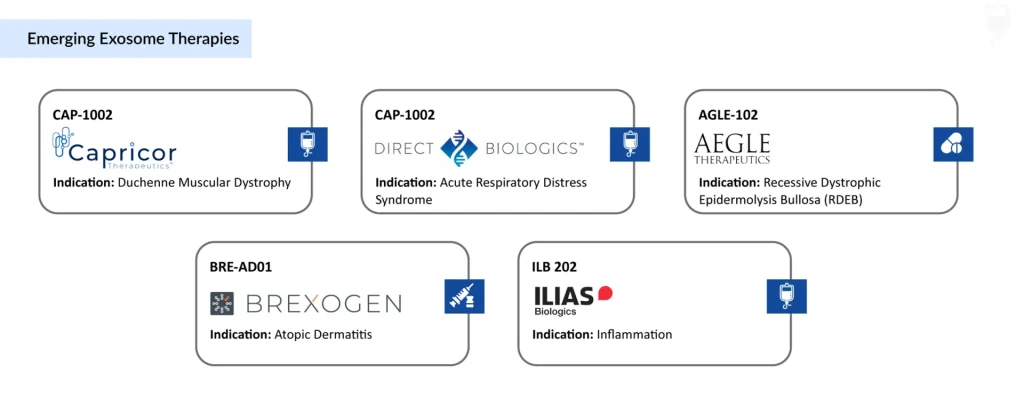
Several emerging companies are driving innovation in exosome-based therapies across a range of indications. Notable examples include Capricor Therapeutics and Nippon Shinyaku with Deramiocel (CAP-1002), Direct Biologics with ExoFlo, Aegle Therapeutics with AGLE-102, Brexogen with BRE-AD01, ILIAS Biologics with ILB-202, and others are highlighting the expanding therapeutic potential of exosomes.
Downloads
Click Here To Get the Article in PDF

Recent Articles
- Pfizer tightens DMD trial criteria over safety concerns; Kytopen raises $30M; Eli Lilly taps Reif...
- Definium Reports Positive Phase 3 EMERGE Results for DT120 ODT in MDD; AbbVie to Buy Apogee Thera...
- Johnson & Johnson’s TREMFYA Approved for Ulcerative Colitis; Roche’s Tecentriq Hybreza Approv...
- Bristol-Myers Squibb’s Opdivo & Yervoy Combo Trial; Sarepta’s Gene Therapy SRP-9001 for DMD;...
- 6 Emerging Treg Cell-based Therapies Shaping the Future of Immunotherapy
Here, DelveInsight spotlights some of the most promising emerging therapies, innovative contenders that could disrupt the exosome therapy market if approved.
Capricor Therapeutics’ CAP-1002
Deramiocel (CAP-1002) is emerging as a standout innovation in the rapidly evolving exosome-based therapy products landscape, bringing new hope to patients with Duchenne muscular dystrophy (DMD). Built on allogeneic cardiosphere-derived cells (CDCs), a rare and powerful population of cardiac cells, this therapy has demonstrated strong immunomodulatory and anti-fibrotic potential across both preclinical and clinical settings, helping preserve cardiac and skeletal muscle function.
What truly sets Deramiocel apart in the exosomes pipeline is its mechanism of action. CDCs release potent extracellular vesicles, central to exosome-based therapeutics, that reprogram macrophages, shifting them from a pro-inflammatory state to a healing phenotype. This positions Deramiocel at the forefront of exosome-based therapeutic development, aligning with the broader momentum seen across exosome therapeutics and exosome-based therapies.
Backed by over 250 peer-reviewed publications and clinical administration in more than 250 patients, Deramiocel reflects the growing maturity of exosome therapy clinical trials and the expanding role of exosomes-based therapeutics manufacturers in advancing next-generation biologics.
Regulatory momentum further strengthens its outlook. The therapy has secured Orphan Drug Designation in both the U.S. and Europe, along with RMAT and Rare Pediatric Disease Designations, highlighting its potential within the exosome-based therapy space. Notably, in March 2026, the FDA resumed review of Capricor’s Biologics License Application after lifting a prior Complete Response Letter. The resubmission, classified as Class 2, comes with a PDUFA target date of August 22, 2026, marking a critical milestone not just for Deramiocel but for the broader exosome therapy clinical trial ecosystem in the United States.
As interest surges in cutting-edge modalities like exosome mRNA therapy clinical trials and the pursuit of exosome mRNA therapy FDA approval, Deramiocel stands as a compelling example of how exosome-based therapeutics are transitioning from experimental science to clinical reality.
Direct Biologics’ ExoFlo
ExoFlo (DB-2Q) stands out among next-generation exosome-based therapy products, redefining the potential of exosome therapeutics in critical care. Derived from human bone marrow mesenchymal stem cells (MSCs), this advanced exosome-based therapy is rich in growth factors and extracellular vesicles, including potent exosomes that are driving innovation across the exosomes pipeline and accelerating exosome-based therapeutic development.
Developed by Direct Biologics, ExoFlo is currently being evaluated in the global Phase III EXTINGUISH ARDS study, one of the most closely watched exosome therapy clinical trials targeting hospitalized adults with moderate-to-severe ARDS. This pivotal exosome therapy clinical trial underscores the growing momentum of exosomes-based therapies and highlights the role of leading exosomes based therapeutics manufacturers in shaping the future of regenerative medicine.
As the industry rapidly evolves, with increasing interest in exosome mRNA therapy clinical trials, particularly in the United States, and ongoing progress toward exosome mRNA therapy FDA approval, ExoFlo exemplifies how exosome-based therapeutics are transitioning from experimental science to real-world clinical impact.
Aegle Therapeutics’ AGLE-102
AGLE-102 is emerging as a next-generation exosome-based therapy product redefining the landscape of regenerative medicine. Derived from allogeneic mesenchymal stem cells, this innovative candidate is a native composite of extracellular vesicles, power-packed carriers of bioactive molecules capable of reprogramming cellular responses and driving tissue repair. Positioned at the forefront of exosome therapeutics and exosome-based therapeutic development, AGLE-102 exemplifies the growing momentum within the exosomes pipeline.
Currently advancing through multiple exosome therapy clinical trials, AGLE-102 is being evaluated in Phase I/IIa studies targeting Dystrophic Epidermolysis Bullosa and severe burns, two areas with significant unmet need. In August 2024, Aegle Therapeutics marked a key milestone by dosing the first patient in its exosome therapy clinical trial for DEB, a rare and debilitating pediatric skin disorder. This development underscores the rapid progress of exosome-based therapies in clinical settings.
Earlier, in March 2024, the company opened enrollment for its Phase I/IIa study in Recessive Dystrophic Epidermolysis Bullosa, further strengthening its position among leading exosomes-based therapeutics manufacturers. Additionally, a completed pilot study in severe burns (NCT05078385) highlights the broader therapeutic potential of this exosome-based therapy.
While the field is still evolving, AGLE-102 reflects the expanding interest in advanced modalities such as exosome mRNA therapy clinical trials and the long-term pursuit of exosome mRNA therapy FDA approval. With ongoing innovation in the exosome mRNA therapy clinical trial United States landscape, therapies like AGLE-102 are paving the way for a new class of precision-driven, cell-free regenerative treatments.
Brexogen’s BRE-AD01
BRE-AD01 is redefining the future of exosome-based therapy products and next-generation exosome therapeutics. Built on Brexogen’s proprietary ‘BxC’ stem cell platform, activated using a clinically validated compound, this advanced exosome-based therapy is emerging as a powerful contender in the rapidly evolving exosomes pipeline and exosome-based therapeutic development landscape.
In preclinical studies, BRE-AD01 has demonstrated superior efficacy compared to leading treatments such as Dupixent, JAK inhibitors, and steroids, setting a new benchmark for exosome-based therapies. While JAK inhibitors, despite being innovative, have been associated with serious side effects in patients, BRE-AD01 showed no adverse effects in atopic dermatitis models, highlighting its strong safety profile and positioning it as a promising exosomes based therapeutics solution.
What truly differentiates BRE-AD01 is its multi-modal mechanism of action. It not only suppresses type 2 immune responses but also modulates IL-31R signaling and enhances skin barrier repair, delivering comprehensive symptom relief. This multi-targeted approach strengthens its potential within the growing category of exosome-based therapeutics manufacturer-driven innovations.
A major milestone came on October 27, 2022, when the US FDA’s Center for Biologics Evaluation and Research (CBER) cleared the Phase I trial, marking a breakthrough in exosome therapy clinical trials. This represents the first-ever Phase I clinical trial of therapeutic exosomes for atopic dermatitis in major markets, reinforcing momentum in exosome therapy clinical trial advancements.
As interest grows globally in exosome mRNA therapy clinical trials and the pathway toward exosome mRNA therapy FDA approval, BRE-AD01 stands at the forefront of innovation. Its clinical progress in the United States underscores the expanding potential of exosome mRNA therapy clinical trial United States initiatives and signals a transformative shift in how inflammatory skin diseases may be treated.
With strong efficacy, a compelling safety profile, and regulatory momentum, BRE-AD01 is not just another candidate; it is a next-generation leader in exosome-based therapeutic development, shaping the future of precision dermatology.
ILIAS Biologics’ ILB-202
ILIAS is pushing the boundaries of exosome-based therapy products with its lead candidate, ILB-202, a next-generation innovation in the rapidly evolving exosomes pipeline. Designed as a powerful exosome-based therapeutic, ILB-202 delivers the anti-inflammatory super-repressor protein IκB (srIκB) directly into cells, offering a precise and targeted approach to treating both acute and chronic inflammatory diseases.
What sets ILB-202 apart in the world of exosome therapeutics and exosomes-based therapies is its unique mechanism. By introducing srIκB, the dominant active form of IκBα, it effectively blocks the nuclear translocation of NF-κB, a central driver of inflammation. Unlike conventional approaches that target upstream signaling, this exosome-based therapy acts directly within the cytosol, significantly reducing off-target effects and enhancing therapeutic precision, marking a major step forward in exosome-based therapeutic development.
As part of ongoing exosome therapy clinical trials, ILB-202 has already been evaluated in a Phase I First-in-Human study. This randomized, double-blind, placebo-controlled exosome therapy clinical trial assessed safety, tolerability, immunogenicity, and pharmacodynamics in healthy volunteers. The study included 18 participants across three cohorts, with 12 receiving ILB-202 and 6 on placebo, demonstrating early clinical momentum for this promising candidate.
With growing interest in advanced modalities like exosome mRNA therapy clinical trial United States and the race toward exosome mRNA therapy FDA approval, ILB-202 represents a compelling addition to the broader landscape of exosomes based therapeutics. As innovation accelerates, companies like ILIAS, emerging as a key exosomes-based therapeutics manufacturer, are redefining the future of precision medicine through cutting-edge exosome-based therapy platforms.
Beyond the current wave of exosome-based therapies, a new cohort of innovators is stepping up to redefine the space. Companies like Aruna Bio (AB126) and NurExone Biologic (ExoPTEN) are advancing promising lead assets that could reshape neurological treatment paradigms.
Among them, ExoPTEN stands out as a potential first-in-class exosome therapy, currently in preclinical development, targeting high-burden neurological conditions such as acute spinal cord injury, optic nerve damage, and facial nerve injury in-human trials by 2026. NurExone is not only accelerating clinical progress but also scaling its manufacturing capabilities to fast-track the next generation of regenerative, exosome-driven therapeutics.
Meanwhile, the global race in exosome innovation is intensifying. Players like VivaZome Therapeutics are pushing boundaries in central nervous system repair, focusing on conditions such as traumatic brain injury, stroke, and neurodegenerative diseases. Headquartered at the Bio Innovation Hub at La Trobe University in Melbourne, VivaZome is pioneering Targeted Extracellular Vesicles (TEVs), a cutting-edge fusion of biology and engineering designed for precision, scalability, and enhanced therapeutic impact.
By leveraging advanced cell engineering, proprietary loading and targeting technologies, and a robust, scalable manufacturing platform, VivaZome is building a new class of EV-based therapies aimed at tackling some of the most debilitating neurological disorders, including post-traumatic epilepsy, stroke, and dementia. Their collaborative efforts with institutions like the Australian National University, University of Queensland, and La Trobe University, along with industry partners such as Cytiva and SeerPharma under the CRC-P program, further highlight the momentum and collaborative innovation driving this space forward.
In summary, the momentum in exosome therapeutics is undeniable. With a robust exosomes pipeline, increasing exosome therapy clinical trials, and innovation in exosome mRNA therapy, the field is poised for transformative breakthroughs. Although fda approved exosome therapy mRNA products are not yet a reality, ongoing advancements suggest that the first exosome-based therapeutic approved could emerge in the coming years.
As exosome therapy news and exosome clinical trial news continue to evolve, stakeholders across biotech, pharma, and healthcare should closely monitor this space because exosome-based therapeutic development may redefine the future of targeted medicine.

FAQs
Exosome therapies such as Deramiocel (CAP-1002) (Capricor Therapeutics and Nippon Shinyaku), ExoFlo (Direct Biologics), AGLE-102 (Aegle Therapeutics), BRE-AD01 (Brexogen), ILB-202 (ILIAS Biologics), AB126 (Aruna Bio), ExoPTEN (NurExone Biologic), and others are currently under development.
Exosome therapies are being investigated across multiple therapeutic areas such as oncology, neurological disorders, regenerative medicine, infectious & inflammatory diseases, and others.
No, there are currently zero FDA-approved exosome therapies.
Exosomes act as natural delivery vehicles, carrying proteins, RNA, or drugs into target cells to modulate disease pathways at a cellular level. They offer advantages over traditional therapies by enabling targeted delivery, reducing immune reactions, and improving stability and bioavailability of therapeutic payloads.
Key challenges include standardizing exosome isolation, characterization, and large-scale manufacturing to ensure consistent quality. Regulatory pathways are still evolving, and there are concerns around safety, targeting specificity, and understanding long-term biological effects.
Downloads
Article in PDF
Recent Articles
- Bristol-Myers Squibb’s Opdivo Approval; Mirati’s KRAS-inhibitor Adagrasib; J&J and Legend Bi...
- JAK Inhibitors Market
- FDA Expands SOLIRIS for Pediatric Myasthenia Gravis; vTv’s Cadisegliatin Program Resumes as FDA L...
- InnoCare’s Trial In China; Sanofi/GSK COVID-19 Vaccine; Apellis’s Empaveli for PNH; LianBio...
- FDA Grants Orphan Status to MDL-101 for LAMA2-CMD; Pfizer’s ABRYSVO Approved for High-Risk Adults...