
Biologics Market Summary
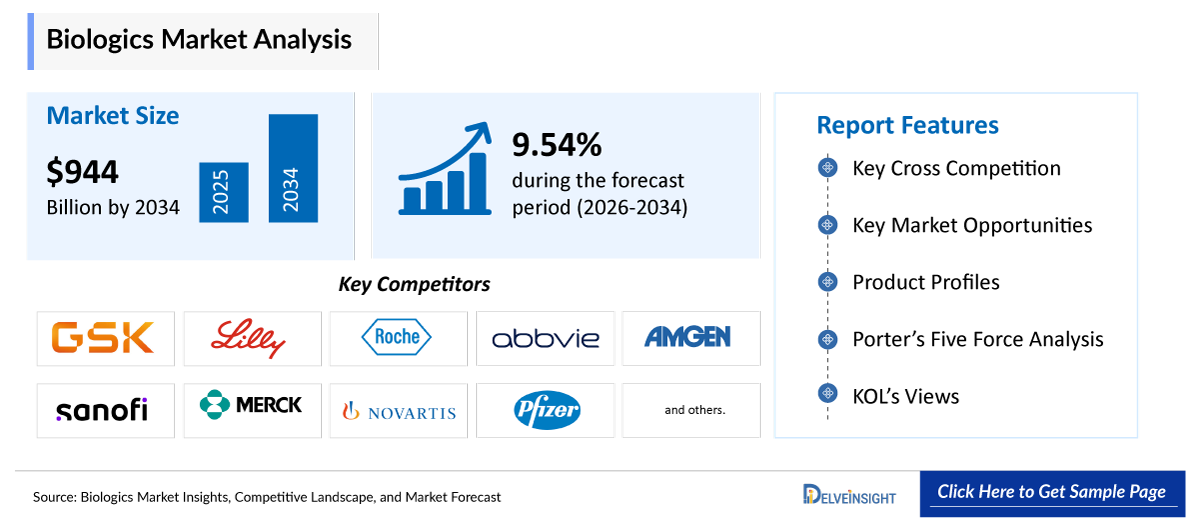
- The Global Biologics Market is expected to increase from USD 418.02 billion in 2025 to USD 944.13 billion by 2034, reflecting strong and sustained growth.
- The Global Biologics Market is growing at a CAGR of 9.54% during the forecast period from 2026 to 2034.
Biologics Market Insights & Forecast
- The rising prevalence of chronic and complex diseases, rapid growth in monoclonal antibodies along with cell and gene therapies, and increasing investments in biopharmaceutical R&D are collectively accelerating the Biologics drug Market. The growing burden of conditions such as cancer, autoimmune disorders, and rare genetic diseases is creating sustained demand for highly targeted and effective biologic treatments.
- At the same time, the expansion of monoclonal antibody pipelines and advanced therapies like CAR-T and gene editing is broadening the treatment landscape and improving clinical outcomes, especially in areas with limited conventional treatment options. This is further reinforced by strong R&D investments from pharmaceutical companies and biotech firms, which are driving innovation, clinical trials, and faster commercialization of next-generation Biologics, ultimately boosting Market growth and adoption worldwide.
- The leading Biologics Companies such as GlaxoSmithKline, Eli Lilly & Company, F. Hoffmann-La Roche Ltd, AbbVie Inc., Amgen Inc, Sanofi, Merck & Co., Inc, Novo Nordisk, Novartis AG, Pfizer Inc, AstraZeneca, Bristol Myers Squibb., Regeneron Pharmaceuticals Inc., Gilead Sciences, Inc., Boehringer Ingelheim International GmbH., Genentech, Inc, Biogen., bluebird bio, Inc, Janssen Global Services, LLC,., Cellitron Group, and others.
- North America is expected to dominate the Biologics Market due to its strong biopharmaceutical R&D infrastructure, presence of leading Global players, and high adoption of advanced biologic therapies. The region benefits from well-established healthcare systems, significant investments in drug development, and a high prevalence of chronic diseases such as cancer and autoimmune disorders that drive demand for Biologics. Additionally, supportive regulatory frameworks from agencies like the FDA, along with rapid approvals for innovative Biologics and strong clinical trial activity, further strengthen North America’s leadership position in the Global Biologics Market.
- In the product type segment of the Biologics Market, the monoclonal antibodies category is estimated to account for the largest Market share in 2025.
Request for Unlocking the Sample Page of the "Biologics Market"
Biologics Market Size and Forecasts
|
Report Metrics |
Details |
|
2025 Market Size | |
|
2034 Projected Market Size | |
|
Growth Rate (2026-2034) | |
|
Largest Market |
North America |
|
Fastest Growing Market |
Asia-Pacific |
|
Market Structure |
Moderately Concentrated |
Factors Contributing to the Growth of the Biologics Market
-
Rising prevalence of chronic and complex diseases
The increasing Global burden of cancer, autoimmune disorders, Diabetes, and neurological diseases is a major driver for Biologics. These conditions often cannot be effectively treated with conventional small molecules, creating a strong demand for targeted biologic therapies such as monoclonal antibodies and recombinant proteins.
-
Rapid growth in monoclonal antibodies and cell & gene therapies
The expansion of monoclonal antibody pipelines, CAR-T therapies, and gene therapies is significantly accelerating Market growth. These advanced Biologics are transforming treatment paradigms, especially in oncology and rare genetic disorders.
-
Increasing investments in R&D and biopharmaceutical pipelines
Pharmaceutical and biotech companies are heavily investing in biologic drug discovery and clinical development, especially in immunotherapy and oncology pipelines. This is supported by strong venture capital funding and government research grants.
Biologics Market Report Segmentation
This Biologics Market report offers a comprehensive overview of the Global Biologics Market, highlighting key trends, growth drivers, challenges, and opportunities. It covers detailed Market segmentation by Product Type (Cell-Based Biologics, Gene-Based Biologics, Monoclonal Antibodies, Vaccines, Recombinant Proteins, and Others), Source (Mammalian, Microbial, and Viral Vector), Application (Oncology, Immunology, Infectious Diseases, Neurological Diseases, and Others), Manufacturing Type (In-House and Outsourced), End-Users (Biopharmaceutical Companies, Contract Research Organizations (CROs), and Contract Development & Manufacturing Organizations (CDMOs)), and geography.
The Biologics Market Report provides valuable insights into the competitive landscape, regulatory environment, and Market dynamics across major Markets, including North America, Europe, and Asia-Pacific. Featuring in-depth profiles of leading industry players and recent product innovations, this report equips businesses with essential data to identify Market potential, develop strategic plans, and capitalize on emerging opportunities in the rapidly growing Biologics Market.
Biologics are a class of medicines derived from living organisms (such as cells, tissues, or microorganisms) that are used to prevent, treat, or cure diseases. Unlike traditional small-molecule drugs, Biologics are large, complex molecules such as proteins, antibodies, or nucleic acids, and are commonly used in treating conditions like cancer, autoimmune disorders, and infectious diseases.
The rising prevalence of chronic and complex diseases, rapid expansion of monoclonal antibodies along with cell and gene therapies, and increasing investments in biopharmaceutical R&D are collectively accelerating the Biologics Drug Market in a significant way. The growing Global burden of diseases such as cancer, autoimmune disorders, metabolic conditions, and rare genetic diseases is continuously increasing the demand for highly targeted, effective, and personalized treatment options that Biologics are well-suited to provide. Unlike conventional small-molecule drugs, Biologics offer greater specificity and improved therapeutic outcomes, particularly in difficult-to-treat and advanced disease conditions.
At the same time, the strong pipeline expansion in monoclonal antibodies, CAR-T therapies, and gene-editing technologies is reshaping the treatment landscape by enabling more precise intervention at the molecular and cellular level. These advanced therapies are not only improving patient survival rates but are also addressing previously unmet medical needs, especially in oncology and rare diseases, where traditional therapies often show limited effectiveness. This ongoing innovation is also supported by increasing R&D investments from leading pharmaceutical and biotechnology companies, which are funding extensive clinical trials, novel drug discovery platforms, and next-generation biologic development.
Furthermore, advancements in biomanufacturing technologies and faster regulatory approvals are helping speed up the development and commercialization process, reducing time-to-Market for innovative Biologics. As a result, the combination of rising disease burden, technological advancements, and strong investment momentum is collectively driving robust and sustained growth in the Global Biologics drug Market.
Get More Insights into the Report @ Biologics Market
What are the latest Biologics Market Dynamics and Trends?
The rising prevalence of chronic and complex diseases, rapid expansion of monoclonal antibodies along with cell and gene therapies, and increasing investments in biopharmaceutical R&D are collectively accelerating the Biologics drug Market.
According to the data provided by the International Agency for Research on Cancer (2026), the estimated new cases of cancer Globally would rise to 32.6 million by 2045. Additionally, according to the World Health Organization (2023), approximately 18 million people were living with Rheumatoid Arthritis worldwide.
Furthermore, as per the same source (2025), there were around a billion cases of seasonal influenza annually across the globe. Thus, the increasing prevalence of diseases such as cancer, rheumatoid arthritis, Influenza, and other chronic and infectious conditions is significantly driving the growth of the Biologics Market. Cancer is a major contributor due to the rising Global incidence and strong demand for targeted therapies like monoclonal antibodies and immunotherapies, which improve survival outcomes.
Similarly, Rheumatoid Arthritis and other autoimmune disorders require long-term treatment with Biologics that can effectively control immune system overactivity with fewer side effects compared to conventional drugs. Infectious diseases such as influenza, along with post-pandemic vaccine demand, are also boosting the adoption of Biologics through advanced vaccine platforms and antibody-based therapies. Collectively, these disease areas are increasing the need for innovative, highly specific, and effective treatments, thereby accelerating overall Biologics Market growth.
Furthermore, the rapid growth in monoclonal antibodies (mAbs) and cell & gene therapies (CGTs) is significantly boosting the Biologics Market by expanding highly targeted and transformative treatment options for complex and previously difficult-to-treat diseases. Monoclonal antibodies continue to dominate due to their strong clinical efficacy in oncology and autoimmune diseases, with continuous innovation in immune checkpoint inhibitors and next-generation antibody formats.
For instance, in March 2024, BeiGene received FDA approval for Tevimbra (tislelizumab), an anti-PD-1 monoclonal antibody for esophageal cancer, further strengthening the oncology Biologics segment. Similarly, biologic innovation in immunology was reinforced with ongoing approvals of antibody-based therapies such as Omeros’ narsoplimab (Yartemlea) in December 2025 for transplant-associated thrombotic microangiopathy, expanding Biologics into rare and high-unmet-need conditions.
Moreover, increasing investments in R&D and expanding biopharmaceutical pipelines are significantly boosting the overall Biologics Market by accelerating the discovery, development, and commercialization of advanced biologic therapies. Pharmaceutical and biotechnology companies are heavily investing in monoclonal antibodies, cell and gene therapies, recombinant proteins, and next-generation vaccine platforms to address rising demand for targeted treatments in oncology, autoimmune diseases, and rare disorders. These investments are strengthening manufacturing infrastructure, enhancing clinical trial activity, and improving large-scale Biologics production capabilities worldwide.
For instance, in April 2025, Regeneron announced a major manufacturing expansion agreement with FUJIFILM Diosynth Biotechnologies, with the company’s planned investments in Biologics manufacturing infrastructure expected to exceed $7 billion to expand production capacity for its biologic medicines. Similarly, Aurobindo Pharma’s subsidiary TheraNym Biologics announced in May 2024 an investment of around ₹1,000 crore ($150–175 million) to establish a new biologic drug substance manufacturing facility for MSD, aimed at expanding mammalian cell culture manufacturing capacity. Additionally, Novartis announced a $23 billion investment plan in 2025 to expand its R&D and manufacturing footprint in the United States, focusing on advanced Biologics and innovative therapies across oncology, immunology, and cardiovascular diseases. Thus, the factors mentioned above are expected to boost the overall Market of Biologics during the forecast period.
However, the complex manufacturing process and stringent regulatory requirements are collectively acting as major limiting factors for the Biologics Market by increasing production costs, development timelines, and commercialization challenges. Since Biologics are derived from living cells, even minor changes in raw materials, cell culture conditions, or purification processes can affect product quality, safety, and efficacy, making manufacturing highly sophisticated and expensive.
In addition, regulatory agencies such as the FDA and EMA require extensive clinical studies, comparability testing, and strict quality validation to ensure product consistency and patient safety. These rigorous regulatory standards prolong approval timelines and create significant financial and operational burdens for manufacturers, particularly smaller biotech companies, thereby limiting faster Market expansion and widespread Biologics accessibility.
Biologics Market Segment Analysis
Biologics Market by Product Type (Cell-Based Biologics, Gene-Based Biologics, Monoclonal Antibodies, Vaccines, Recombinant Proteins, and Others), Source (Mammalian, Microbial, and Viral Vector), Application (Oncology, Immunology, Infectious Diseases, Neurological Diseases, and Others), Manufacturing Type (In-House and Outsourced), End-Users (Biopharmaceutical Companies, Contract Research Organizations (CROs), and Contract Development & Manufacturing Organizations (CDMOs)), and Geography (North America, Europe, Asia-Pacific, and Rest of the World)
By Product Type: The Monoclonal antibodies category is expected to dominate the Market with the largest revenue share.
In the product type segment of the Biologics Market, the monoclonal antibodies category is contributing to 46% of total Market revenue in 2025, due to its high therapeutic specificity, strong clinical efficacy, and expanding applications across oncology, autoimmune diseases, infectious diseases, and neurological disorders. Monoclonal antibodies have become a cornerstone of modern biologic therapy because they can precisely target disease-causing cells or proteins while minimizing damage to healthy tissues, resulting in improved treatment outcomes and reduced side effects compared to conventional therapies.
The increasing Global burden of cancer and chronic inflammatory disorders has further accelerated demand for immune checkpoint inhibitors, anti-inflammatory antibodies, and antibody-drug conjugates (ADCs). In addition, continuous advancements in antibody engineering, bispecific antibodies, and next-generation immunotherapies are expanding the commercial and clinical potential of mAbs.
Recent regulatory approvals and product launches are strongly supporting this growth trajectory. For example, in December 2024, the U.S. FDA approved Biocon Biologics YESINTEK™ (ustekinumab-kfce), a biosimilar monoclonal antibody to Stelara®, for Crohn’s Disease, Ulcerative Colitis, Plaque Psoriasis, and Psoriatic Arthritis, further expanding access to biologic immunotherapies in autoimmune diseases. Additionally, in June 2025, the FDA approved Merck & Co.’s monoclonal antibody Enflonsia (clesrovimab) for the prevention of Respiratory Syncytial Virus in infants, highlighting the growing role of antibody-based Biologics in infectious disease prevention.
In oncology, AstraZeneca strengthened its Biologics portfolio when Imfinzi (durvalumab) received FDA priority review in August 2024 for limited-stage Small Cell Lung Cancer, reflecting increasing adoption of immune-oncology monoclonal antibodies. Furthermore, the pace of innovation remains exceptionally strong, with recent studies published under the National Library of Medicine (2025) showing that 13 monoclonal antibodies were approved by the FDA in 2024 alone, representing the highest number of mAb approvals since 2015.
The growing pipeline of biosimilars, bispecific antibodies, and precision immunotherapies, combined with increasing R&D investments and favorable regulatory support, continues to position monoclonal antibodies as the dominant driver of growth within the Global Biologics Market.
By Source: The mammalian category dominates the Market
Within the source segment of the Biologics Market, the mammalian category is anticipated to dominate, accounting for around 63% of the Market share in 2025, due to its superior ability to produce highly complex biologic molecules with proper protein folding, post-translational modifications, and human-like glycosylation patterns that are essential for therapeutic efficacy and safety. Mammalian cell systems, particularly Chinese Hamster Ovary (CHO) cells, are widely preferred for manufacturing monoclonal antibodies, recombinant proteins, vaccines, and advanced cell and gene therapies because they closely mimic human cellular processes, making them the industry standard for commercial Biologics production.
The increasing demand for monoclonal antibodies and precision Biologics in oncology, autoimmune diseases, and rare disorders is further accelerating the adoption of mammalian systems Globally. According to industry analyses, mammalian platforms account for the largest share of Biologics manufacturing because most FDA-approved Biologics are produced using mammalian cell culture technologies.
Recent industry developments are further strengthening the dominance of this segment.
For instance, in June 2024, WuXi Biologics significantly expanded its mammalian cell culture manufacturing capacity by installing multiple new 5,000-liter bioreactor units across Asia-Pacific facilities to support rising Global demand for Biologics and CDMO services.
Similarly, in October 2025, Sartorius AG launched its Flexsafe Pro bioprocessing bag platform designed specifically for advanced mammalian cell fermentation processes, helping manufacturers improve Biologics safety and scalability in large-scale production environments.
In addition, growing investments in Biologics CDMO infrastructure by companies such as Samsung Biologics, Lonza, and FUJIFILM Diosynth Biotechnologies are further expanding Global mammalian manufacturing capacity to meet rising demand for therapeutic antibodies and advanced Biologics. The ability of mammalian systems to support large-scale, high-quality Biologics production, combined with continuous technological advancements and strong regulatory acceptance, continues to position this category as the dominant source segment within the Global Biologics Market.
By Application: The Oncology category dominates the Market
Within the application segment of the Biologics Market, the oncology category is anticipated to dominate, accounting for around 34% of the Market share in 2025, due to the rapidly increasing Global cancer burden and the growing adoption of highly targeted biologic therapies such as monoclonal antibodies, immune checkpoint inhibitors, antibody-drug conjugates (ADCs), Bispecific Antibodies, and CAR-T cell therapies. Unlike conventional chemotherapy, oncology Biologics offer improved precision by specifically targeting cancer cells or immune pathways, leading to better treatment outcomes, reduced systemic toxicity, and higher survival rates. The strong clinical success of immunotherapies in cancers such as lung cancer, Breast Cancer, Multiple Myeloma, and leukemia has substantially increased investment and pipeline expansion in oncology Biologics.
In addition, pharmaceutical companies are increasingly focusing on personalized cancer medicine and biomarker-driven therapies, further accelerating demand for biologic products in oncology.
Recent approvals and launches continue to strengthen this segment.
For example, in July 2025, the U.S. FDA granted accelerated approval to Regeneron Pharmaceuticals bispecific antibody Lynozyfic (linvoseltamab-gcpt) for relapsed or refractory multiple myeloma, expanding advanced biologic treatment options in hematologic cancers. In another major development, in December 2024, the FDA approved Bizengri (zenocutuzumab-zbco), a bispecific HER2-targeted monoclonal antibody for advanced pancreatic and non-small cell lung cancers with NRG1 gene fusion, highlighting the growing role of precision Biologics in rare oncology indications.
Additionally, in April 2025, Biocon Biologics received FDA approval for JOBEVNE™ (bevacizumab-nwgd), a biosimilar to Avastin®, for multiple cancer indications, further expanding access to oncology Biologics Globally. Furthermore, regulatory agencies are increasingly prioritizing oncology Biologics, as seen in August 2024 when AstraZeneca’s Imfinzi (durvalumab) received FDA priority review for limited-stage small cell lung cancer, reinforcing the growing importance of immune-oncology Biologics.
Collectively, rising cancer incidence, continuous Biologics innovation, expanding immunotherapy pipelines, and strong regulatory support are making oncology the dominant application area driving growth in the Global Biologics Market.
By Manufacturing Type: The in-house category dominates the Market.
Within the mode segment of the Biologics Market, the in-house category is anticipated to dominate, accounting for around 55% of the Market share in 2025, by enabling pharmaceutical and biotechnology companies to maintain greater control over product quality, manufacturing consistency, regulatory compliance, and intellectual property protection throughout the Biologics development process. Since Biologics are highly complex products derived from living cells, maintaining strict control over cell culture conditions, purification processes, and formulation is critical to ensuring product safety and efficacy.
Large biopharmaceutical companies are increasingly investing in their own manufacturing facilities and advanced bioprocessing technologies to improve production efficiency, accelerate commercialization timelines, and reduce dependency on external suppliers. In-house manufacturing also supports faster scale-up of monoclonal antibodies, vaccines, recombinant proteins, and cell and gene therapies, particularly in high-demand therapeutic areas such as oncology and autoimmune diseases.
Furthermore, the expansion of internal manufacturing capabilities allows companies to integrate advanced technologies such as single-use bioreactors, continuous bioprocessing, and AI-driven process optimization, which enhance productivity and lower operational risks. As Biologics pipelines continue to expand globally, strong investments in internal manufacturing infrastructure are playing a crucial role in supporting large-scale Biologics production, strengthening supply chain reliability, and driving sustained growth of the Biologics Market.
By End-Users: The Biopharmaceutical Companies category dominates the Market.
Within the end-user segment of the Biologics Market, biopharmaceutical companies dominate due to their strong involvement in Biologics drug discovery, clinical development, large-scale manufacturing, and commercialization of advanced therapies such as monoclonal antibodies, vaccines, recombinant proteins, and cell and gene therapies. These companies invest heavily in R&D, bioprocessing infrastructure, and advanced manufacturing technologies to support expanding Biologics pipelines across oncology, immunology, and rare diseases.
In addition, the growing demand for targeted therapies and increasing regulatory approvals for Biologics are encouraging biopharmaceutical companies to expand production capacity and accelerate innovation, thereby strengthening their leading position in the Global Biologics Market.
Biologics Market Regional Analysis
North America Biologics Market Trends
North America is expected to account for the highest proportion of 41% of the Biologics Market in 2025, out of all regions. North America is expected to significantly boost the overall Biologics Market due to its highly advanced biopharmaceutical ecosystem, strong presence of leading biotechnology and pharmaceutical companies, extensive R&D investments, and rapid adoption of innovative biologic therapies across oncology, immunology, rare diseases, and infectious diseases. The region, particularly the United States, benefits from well-established healthcare infrastructure, favorable reimbursement systems, advanced Biologics manufacturing capabilities, and strong regulatory support from the U.S. FDA, which continues to accelerate approvals for monoclonal antibodies, cell and gene therapies, biosimilars, and recombinant Biologics.
In addition, the rising prevalence of chronic diseases such as cancer, autoimmune disorders, and neurological diseases is driving sustained demand for targeted biologic therapies throughout North America. According to the data provided by the American Cancer Society (2026), in 2026, approximately 2,114,850 new cancer cases are projected to occur in the United States.
Furthermore, the region is also witnessing continuous expansion in Biologics manufacturing infrastructure and CDMO capabilities, strengthening supply chain resilience and large-scale production capacity. Major investment activity across North America is also accelerating Market growth. In October 2024, Johnson & Johnson announced a $2 billion investment in a new advanced Biologics manufacturing facility in North Carolina to expand production capacity for its Biologics portfolio and pipeline.
Similarly, AstraZeneca announced plans to invest $3.5 billion in the United States by the end of 2026, including Biologics manufacturing and cell therapy expansion facilities across multiple states. In another major development, Eli Lilly and Company announced in February 2025 that it would invest approximately $50 billion to expand U.S.-based pharmaceutical and Biologics manufacturing infrastructure through new production facilities.
Additionally, Merck & Co. began construction of a $3 billion manufacturing facility in Virginia in 2025, alongside additional Biologics manufacturing investments in Delaware and North Carolina to support production of biologic medicines, including oncology therapies. These large-scale investments, combined with continuous Biologics approvals, expanding biosimilar adoption, and strong innovation in cell and gene therapies, are collectively strengthening North America’s position as the leading and fastest-advancing region in the Global Biologics Market.
Europe Biologics Market Trend
The Biologics Market in Europe is witnessing strong and sustained growth due to the region’s advanced healthcare infrastructure, rising prevalence of chronic and autoimmune diseases, increasing adoption of targeted biologic therapies, and strong regulatory support from the European Medicines Agency (EMA). Europe has become a major hub for Biologics innovation and manufacturing, supported by extensive investments in monoclonal antibodies, biosimilars, cell and gene therapies, and recombinant Biologics. Countries such as Germany, France, and the United Kingdom are leading Biologics development through strong clinical research ecosystems, favorable reimbursement frameworks, and expanding biopharmaceutical manufacturing capabilities.
In addition, the growing aging population and increasing burden of diseases such as cancer, Rheumatoid Arthritis, Crohn’s Disease, and Psoriasis are significantly driving demand for advanced biologic therapies across the region. Europe is also benefiting from rapid biosimilar adoption, which is improving patient access to biologic medicines while supporting healthcare sustainability. Recent developments further highlight the region’s accelerating Biologics expansion. For instance, in February 2025, Celltrion received European Commission approval for multiple biosimilars, including Eydenzelt® (aflibercept) and denosumab biosimilars Stoboclo® and Osenvelt®, significantly expanding biologic treatment availability across Europe.
Europe is also experiencing rapid growth in oncology Biologics, RNA-based therapies, and precision medicine, supported by increasing clinical trials and regulatory approvals for advanced therapies. Collectively, strong government support, expanding Biologics manufacturing infrastructure, rising biosimilar penetration, and continuous innovation in advanced biologic therapies are positioning Europe as one of the fastest-growing and most strategically important regions in the Global Biologics Market.
Asia-Pacific Biologics Market Trends
The Asia Pacific (APAC) region is emerging as a major growth driver for the Biologics Market due to rapidly expanding biopharmaceutical manufacturing capabilities, increasing healthcare investments, rising prevalence of chronic diseases, and growing demand for advanced biologic therapies across countries such as China, India, Japan, and South Korea. The region is witnessing strong growth in monoclonal antibodies, biosimilars, vaccines, and cell and gene therapies, supported by improving healthcare infrastructure and favorable government initiatives promoting domestic Biologics production.
In addition, the presence of cost-effective manufacturing environments and expanding Contract Development and Manufacturing Organization (CDMO) services is attracting significant investments from Global pharmaceutical companies into APAC. Countries like China and South Korea are heavily investing in large-scale Biologics manufacturing facilities and advanced bioprocessing technologies to strengthen Global supply chain capabilities. Furthermore, increasing clinical trial activities, rising adoption of biosimilars, and growing awareness regarding targeted therapies are accelerating Biologics commercialization throughout the region. As a result, APAC is becoming one of the fastest-growing and strategically important regions in the Global Biologics Market.
Who are the major players in the Biologics Market?
The following are the leading companies in the Biologics Market. These companies collectively hold the largest Market share and dictate industry trends.
- GlaxoSmithKline
- Eli Lilly & Company
- F. Hoffmann-La Roche Ltd.
- AbbVie Inc.
- Amgen Inc.
- Sanofi
- Merck & Co., Inc.
- Novo Nordisk
- Novartis AG
- Pfizer Inc.
- AstraZeneca
- Bristol Myers Squibb.
- Regeneron Pharmaceuticals Inc.
- Gilead Sciences, Inc.
- Boehringer Ingelheim International GmbH.
- Genentech, Inc.
- Biogen, bluebird bio, Inc.
- Janssen Global Services, LLC.
- Cellitron Group
- Others
How is the competitive landscape shaping the Biologics Market?
The competitive landscape of the Biologics Market is highly dynamic and innovation-driven, characterized by intense competition among Global biopharmaceutical companies, biotechnology firms, and Contract Manufacturing Organizations (CDMOs) focused on expanding Biologics pipelines, strengthening manufacturing capabilities, and accelerating regulatory approvals. Major Biologics Companies such as Roche, Amgen, AbbVie, Johnson & Johnson, Merck & Co., Novartis, and Pfizer are heavily investing in monoclonal antibodies, biosimilars, cell and gene therapies, and next-generation Biologics to strengthen their Market positions. At the same time, CDMOs such as Samsung Biologics, Lonza, and WuXi Biologics are expanding large-scale manufacturing infrastructure to meet rising outsourcing demand from pharmaceutical companies.
The Biologics Market is also witnessing increasing strategic collaborations, mergers, acquisitions, and licensing agreements aimed at accelerating Biologics innovation and commercialization. In addition, growing competition in biosimilars is intensifying pricing pressure while improving patient access to biologic therapies globally. Continuous advancements in antibody engineering, AI-driven drug discovery, single-use bioprocessing, and precision medicine are further reshaping the competitive environment, encouraging companies to focus on pipeline diversification, faster product approvals, and manufacturing efficiency to maintain long-term Market leadership in the rapidly evolving Biologics industry.
Biologics Market Recent Breakthroughs and Developments
- In October 2025, Sartorius AG launched its Flexsafe Pro bioprocessing bag platform designed specifically for advanced mammalian cell fermentation processes, helping manufacturers improve Biologics safety and scalability in large-scale production environments.
- In July 2025, the U.S. FDA granted accelerated approval to Regeneron Pharmaceuticals bispecific antibody Lynozyfic (linvoseltamab-gcpt) for relapsed or refractory multiple myeloma, expanding advanced biologic treatment options in hematologic cancers.
- In June 2025, the FDA approved Merck & Co.’s monoclonal antibody Enflonsia (clesrovimab) for the prevention of respiratory syncytial virus (RSV) in infants, highlighting the growing role of antibody-based Biologics in infectious disease prevention.
- In April 2025, Regeneron announced a major manufacturing expansion agreement with FUJIFILM Diosynth Biotechnologies, with the company’s planned investments in Biologics manufacturing infrastructure expected to exceed $7 billion to expand production capacity for its biologic medicines.
- In April 2025, Biocon Biologics received FDA approval for JOBEVNE™ (bevacizumab-nwgd), a biosimilar to Avastin®, for multiple cancer indications, further expanding access to oncology Biologics Globally.
- In April 2025, FUJIFILM Biotechnologies invested approximately $3.2 billion in a large-scale Biologics manufacturing campus in the U.S., reflecting growing industry confidence in outsourced Biologics manufacturing and advanced therapy production.
- In December 2024, the U.S. FDA approved Biocon Biologics YESINTEK™ (ustekinumab-kfce), a biosimilar monoclonal antibody to Stelara®, for Crohn’s disease, ulcerative colitis, plaque psoriasis, and psoriatic arthritis, further expanding access to biologic immunotherapies in autoimmune diseases.
- In December 2024, the FDA approved Bizengri (zenocutuzumab-zbco), a bispecific HER2-targeted monoclonal antibody for advanced pancreatic and non-small cell lung cancers with NRG1 gene fusion, highlighting the growing role of precision Biologics in rare oncology indications.
|
Report Metrics |
Details |
|
Study Period |
2023 to 2034 |
|
Base Year |
2025 |
|
Forecast Period |
2026 to 2034 |
|
Biologics Market CAGR | |
|
Biologics Companies |
GlaxoSmithKline, Eli Lilly & Company, F. Hoffmann-La Roche Ltd, AbbVie Inc., Amgen Inc, Sanofi, Merck & Co., Inc, Novo Nordisk, Novartis AG, Pfizer Inc, AstraZeneca, Bristol Myers Squibb., Regeneron Pharmaceuticals Inc., Gilead Sciences, Inc., Boehringer Ingelheim International GmbH., Genentech, Inc, Biogen., bluebird bio, Inc, Janssen Global Services, LLC,., Cellitron Group, and others. |
|
Biologics Market Segments |
By Product Type, by Source, by Application, by Manufacturing Type, by End-Users, and by Geography |
|
Biologics Regional Scope |
North America, Europe, Asia Pacific, the Middle East, Africa, and South America |
|
Biologics Country Scope |
U.S., Canada, Mexico, Germany, United Kingdom, France, Italy, Spain, China, Japan, India, Australia, South Korea, and key Countries |
Biologics Market Segmentation
- Biologics by Product Type Exposure
- Cell-Based Biologics
- Gene-Based Biologics
- Monoclonal Antibodies
- Vaccines
- Recombinant Proteins
- Others
- Biologics by Source Exposure
- Mammalian
- Microbial
- Viral Vector
- Biologics Application Exposure
- Oncology
- Immunology
- Infectious Diseases
- Neurological Diseases
- Others
- Biologics Manufacturing Type Exposure
- In-house
- Outsourced
- Biologics End-Users Exposure
- Biopharmaceutical Companies
- Contract Research Organizations (CROs)
- Contract Development & Manufacturing Organizations (CDMOs)
- Biologics Geography Exposure
- North America Biologics Market
- United States Biologics Market
- Canada Biologics Market
- Mexico Biologics Market
- Europe Biologics Market
- United Kingdom Biologics Market
- Germany Biologics Market
- France Biologics Market
- Italy Biologics Market
- Spain Biologics Market
- Rest of Europe Biologics Market
- Asia-Pacific Biologics Market
- China Biologics Market
- Japan Biologics Market
- India Biologics Market
- Australia Biologics Market
- South Korea Biologics Market
- Rest of Asia-Pacific Biologics Market
- Rest of the World Biologics Market
- South America Biologics Market
- Middle East Biologics Market
- Africa Biologics Market
Biologics Market Recent Industry Trends and Milestones (2023-2026)
|
Category |
Key Developments |
|
Biologics Product Approval |
FDA granted accelerated approval to Regeneron Pharmaceuticals bispecific antibody Lynozyfic, FDA approved Merck & Co.’s monoclonal antibody Enflonsia (clesrovimab) |
|
Biologics Product Expansion |
Regeneron announced a major manufacturing expansion agreement with FUJIFILM Diosynth Biotechnologies, with the company’s planned investments in Biologics manufacturing infrastructure expected to exceed $7 billion to expand production capacity for its biologic medicines. |
|
Biologics Product Investment |
Johnson & Johnson announced a $2 billion investment in a new advanced Biologics manufacturing facility in North Carolina to expand production capacity for its Biologics portfolio and pipeline. |
|
Company Strategy |
Regeneron Pharmaceuticals
Lonza
|
|
Emerging Technology |
Cell and Gene Therapy Technologies, Monoclonal Antibody Engineering, mRNA and RNA-Based Therapeutics, Advanced Bioprocessing Technologies, AI and Digital Biologics Development, Next-Generation Expression Systems, Precision and Personalized Biologics, Novel Vaccine Technologies, and others |
Key Takeaways from the Biologics Market Report Study
- Market size analysis for the current Biologics Market size (2025), and Market forecast for 8 years (2026 to 2034)
- Top key product/technology developments, mergers, acquisitions, partnerships, and joint ventures happened over the last 3 years.
- Key companies dominating the Biologics Market.
- Various opportunities available for the other competitors in the Biologics Market space.
- What are the top-performing segments in 2025? How these segments will perform in 2034?
- Which are the top-performing regions and countries in the current Biologics Market scenario?
- Which are the regions and countries where companies should have concentrated on opportunities for the Biologics Market growth in the future.
Startup Funding & Investment Trends
|
Company Name |
Total Funding |
Stage of Development |
Main Product |
Core Technology |
|
ArsenalBio |
$325 Million |
Series C |
Solid tumor cell therapies |
Programmable T-cell therapy platform / engineered cell therapy |
Stay updated with us for Recent Articles @ New DelveInsight Blogs