After KEYTRUDA: How PD-1 and PD-L1 Inhibitors Are Being Redesigned for a Post-Patent Era
Nov 05, 2026
Table of Contents
Summary
- The PD-1 and PD-L1 inhibitors list now spans a dozen or more approved drugs. Clinical efficacy is broadly similar across them, so winners are decided by trial breadth, indication coverage, and convenience.
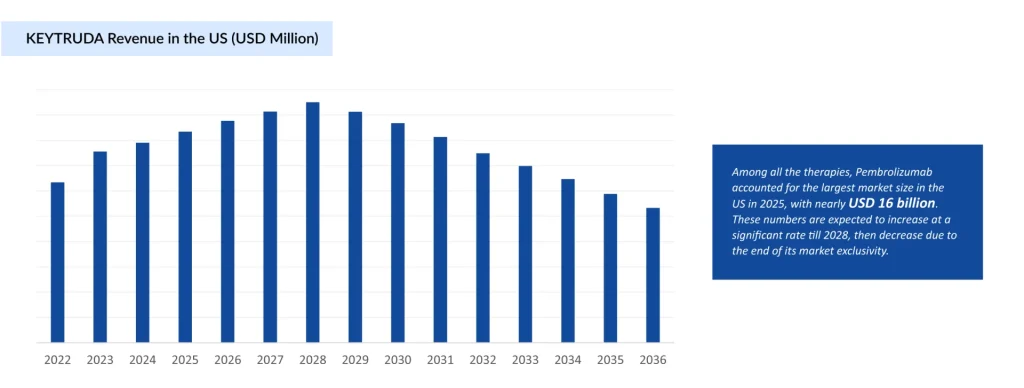
- Subcutaneous atezolizumab (2024), nivolumab (2024), and pembrolizumab (Keytruda Qlex, September 2025) cut administration to a few minutes. For Merck, the new formulation also carries fresh patent protection ahead of the expected 2028 loss of exclusivity.
- BioNTech/BMS, Pfizer, and Merck have all taken positions in PD-(L)1 x VEGF molecules. Dual-checkpoint bispecifics from AstraZeneca and Roche are also advancing.
- Merck is defending KEYTRUDA, BMS is building around dual checkpoints, AstraZeneca is betting on bispecifics and curative-intent use, Roche is leading on formulation, Regeneron owns skin cancers, and BeOne is the Chinese challenger that reached Western markets.
A little over a decade ago, a single antibody that took the brakes off exhausted T cells rewrote the rules of oncology. Today, PD-1 and PD-L1 inhibitors anchor treatment in more than a dozen tumor types, generate tens of billions of dollars a year, and sit inside almost every major combination trial in solid-tumor oncology. Merck’s KEYTRUDA alone posted roughly $16.4 billion in sales in the first half of 2026.
Downloads
Click Here To Get the Article in PDF

Recent Articles
- Johnson & Johnson’s TREMFYA Approved for Ulcerative Colitis; Roche’s Tecentriq Hybreza Approv...
- TRODELVY’s First-Line TNBC Approval: Gilead’s Big Bet Reshapes the TROP2 ADC Battlefield
- TEVIMBRA’s Winning Streak — BeiGene Secures New Indication for PD-1 Drug
- OPDIVO vs. KEYTRUDA: The Battle for Japan’s PD-1 Inhibitor Market Dominance
- Rapid Global Expansion of Chinese PD-1/PD-L1 Key Players
But the story is changing fast. The first wave of PD-1/PD-L1 inhibitors proved that immunotherapy could produce durable remissions. The second wave is asking harder questions. Why do most patients still fail to respond? Can one molecule be engineered to do two jobs at once? Can a 30-minute infusion become a two-minute injection? And what happens to the commercial landscape when the leading franchise loses patent protection around 2028?
The PD-1 and PD-L1 Inhibitors List: From Pioneers to a Crowded Class
The approvals of pembrolizumab and nivolumab in 2014 opened the era. Since then, the PD-1 and PD-L1 inhibitors list has grown into a diverse family with distinct regional and tumor-specific strengths.
|
Approved PD-1 and PD-L1 Inhibitors |
|||
|
Target |
Drug (brand) |
Developer |
Positioning |
|
PD-1 |
Pembrolizumab (KEYTRUDA) |
Merck |
Broadest label: NSCLC, melanoma, head and neck, urothelial and many more |
|
PD-1 |
Nivolumab (OPDIVO) |
Bristol Myers Squibb |
Melanoma, RCC, lung; CTLA-4 and LAG-3 combinations |
|
PD-1 |
Cemiplimab (LIBTAYO) |
Regeneron |
Cutaneous squamous cell carcinoma leader |
|
PD-1 |
Dostarlimab (JEMPERLI) |
GSK |
dMMR/MSI-H endometrial and rectal cancer |
|
PD-1 |
Tislelizumab (TEVIMBRA) |
BeiGene |
Engineered Fc to limit macrophage engagement; esophageal, gastric |
|
PD-1 |
Toripalimab, retifanlimab, penpulimab |
Junshi, Incyte, Akeso |
Nasopharyngeal carcinoma, Merkel cell carcinoma |
|
PD-L1 |
Atezolizumab (TECENTRIQ) |
Roche |
Lung, liver (with bevacizumab), early subcutaneous format |
|
PD-L1 |
Durvalumab (IMFINZI) |
AstraZeneca |
Stage III lung (PACIFIC), biliary, bladder, limited-stage SCLC |
|
PD-L1 |
Avelumab, cosibelimab |
Merck KGaA/Pfizer, Checkpoint Therapeutics |
Niche indications |
A few patterns stand out. First, PD-1 inhibitors and PD-L1 inhibitor drugs are clinically similar enough that differentiation rarely comes from the target alone. PD-1 blockade also prevents PD-L2 engagement, whereas PD-L1 antibodies leave that axis intact, but head-to-head evidence of a meaningful efficacy gap is thin. Second, trial breadth has decided the winners. KEYTRUDA’s dominance reflects an extraordinary number of registrational studies, not a molecular edge. Third, China-originated PD-1 inhibitor drugs are no longer regional curiosities. Several now hold US approvals, and Chinese developers are driving some of the most disruptive innovation in the class.
Convenience as a Competitive Weapon: The Subcutaneous Shift
One of the quietest but most commercially important evolutions is the move from intravenous infusion to subcutaneous injection. Roche’s subcutaneous atezolizumab arrived in September 2024, followed by Bristol Myers Squibb’s subcutaneous nivolumab with hyaluronidase in December 2024. Merck followed on September 19, 2025, when the FDA approved KEYTRUDA QLEX (pembrolizumab with berahyaluronidase alfa) across solid tumor indications approved for the IV product.
The pivotal pembrolizumab study showed a confirmed objective response rate of about 45% with the subcutaneous format versus about 42% with IV, with pharmacokinetic non-inferiority and a median injection time of roughly two minutes. For patients, that means less chair time. For infusion centers, it means capacity. For Merck, it means something more strategic: a new formulation with its own patent estate, designed to move a meaningful share of patients before IV biosimilars arrive.
The lesson for developers is that PD-1/PD-L1 inhibitors now compete on treatment experience as well as data. Fixed dosing, longer intervals (every six weeks for pembrolizumab), and short administration times are becoming table stakes. Operational friction remains, particularly for combinations where one partner is still intravenous, but the direction is clear.
Two Targets, One Molecule: The Rise of PD-1 and PD-L1 Bispecifics
If subcutaneous delivery is evolution, bispecific antibodies are mutation. The idea is simple: use a single molecule to block PD-1 or PD-L1 while hitting a second pathway that cooperates with it, delivering both signals to the same tumor microenvironment at the same time.
PD-1 x VEGF: The Breakout Class
No asset has captured more attention than ivonescimab, the PD-1 x VEGF tetravalent bispecific from Akeso, licensed to Summit Therapeutics for Western markets. The rationale is that VEGF blockade normalizes tumor vasculature and reduces immunosuppression, while PD-1 blockade reactivates T cells. Its design promotes cooperative binding, with the aim of concentrating activity in tumor tissue where both targets are abundant.
The clinical record for ivonescimab has been impressive, although not without limitations. In HARMONi-6, which evaluated ivonescimab plus chemotherapy against tislelizumab plus chemotherapy in squamous non-small cell lung cancer (NSCLC), overall survival data presented during the ASCO 2026 plenary session were characterized as the first statistically significant survival advantage over a PD-(L)1 antibody plus chemotherapy in a head-to-head Phase 3 trial. However, this benefit came with a higher incidence of high-grade toxicity, with Grade 3 or higher treatment-related adverse events reported in approximately 69% of patients receiving ivonescimab versus 59% in the tislelizumab arm. HARMONi-2, a monotherapy comparison against pembrolizumab in PD-L1-positive NSCLC, has reportedly demonstrated an overall survival benefit as well, according to a September 2026 report following Summit’s announcement.
Meanwhile, HARMONi, the global study evaluating ivonescimab in EGFR-mutated NSCLC following TKI therapy, met its primary progression-free survival endpoint but failed to achieve statistical significance for overall survival in the primary analysis, although subsequent follow-up indicated a consistent trend toward improved survival among Western patients. The U.S. FDA has accepted the biologics license application (BLA) for ivonescimab in this indication, assigning a PDUFA target date of November 14, 2026, potentially paving the way for the first U.S. approval of a PD-1/VEGF bispecific antibody.
The confirmatory tests that will define the class are HARMONi-3 (first-line NSCLC versus pembrolizumab plus chemotherapy) and HARMONi-7 (monotherapy versus pembrolizumab in high PD-L1 tumors). The open questions are whether results generated largely in Chinese populations translate globally, and whether the added VEGF-related toxicity is acceptable outside tightly selected patients.
The industry has voted with its checkbooks. BioNTech and Bristol Myers Squibb partnered around the PD-L1 x VEGF bispecific BNT327, Pfizer licensed a PD-1 x VEGF candidate from China’s 3SBio, and Merck secured a rival from LaNova. Few drug classes have attracted this much deal-making this quickly.
PD-1 x CTLA-4, PD-1 x LAG-3, and PD-1 x TIGIT
Dual-checkpoint bispecifics aim to capture the benefit of combination therapy with a better tolerability profile and simpler logistics. Akeso’s cadonilimab (PD-1 x CTLA-4) is already marketed in China. AstraZeneca is advancing volrustomig (PD-1 x CTLA-4) and rilvegostomig (PD-1 x TIGIT) in large Phase 3 programs, while Roche is evaluating tobemstomig (PD-1 x LAG-3), including combinations with anti-TIGIT therapy. The central scientific bet is that co-engagement on the same exhausted T cell produces effects two separate antibodies cannot match. The central risk is that fixed-ratio molecules cannot be dose-adjusted when toxicity appears.
Engineered Formats and Fusion Proteins
Beyond bispecifics, developers are experimenting with Fc-engineered antibodies that reduce unwanted macrophage-mediated T-cell depletion (a design principle behind tislelizumab), masked or conditionally activated antibodies intended to spare healthy tissue, and cytokine-armed checkpoint fusions. Not every experiment has worked. Earlier bifunctional PD-L1/TGF-beta traps, most notably bintrafusp alfa, failed to deliver and were discontinued, a reminder that elegant biology does not guarantee clinical benefit.
Who Is Winning? Company Positioning in the PD-1/PD-L1 Arena
The leading developers in the PD-1/PD-L1 inhibitor market are pursuing distinctly different strategies to sustain growth and strengthen their competitive positions. Merck maintains a commanding position with KEYTRUDA, whose core U.S. patent protection is expected to expire around 2028. To defend its franchise, the company is pursuing a three-pronged strategy encompassing subcutaneous KEYTRUDA QLEX, continued indication expansion and movement into earlier-stage disease, and combination assets spanning LAG-3, CTLA-4, antibody-drug conjugates (ADCs), and a PD-1 × VEGF bispecific. Analysts widely regard dual PD-1/VEGF agents as the most credible long-term competitive threat to KEYTRUDA. Bristol Myers Squibb maintains the broadest dual-checkpoint portfolio through OPDIVO, YERVOY, AND OPDUALAG, complemented by subcutaneous nivolumab and its partnership with BioNTech to develop a PD-L1 × VEGF bispecific.
However, OPDIVO’s growth has lagged KEYTRUDA, making pipeline innovation and next-generation assets critical to sustaining its future competitiveness. AstraZeneca has built its immuno-oncology franchise primarily around durvalumab in curative-intent settings and is among the most aggressive bispecific developers, with volrustomig and rilvegostomig positioned as potential next-generation treatment backbones alongside its leading ADC portfolio. Roche, which pioneered the PD-L1 inhibitor class with TECENTRIQ and has led efforts toward subcutaneous immunotherapy, continues to advance TIGIT- and LAG-3-directed bispecific candidates. However, setbacks in the SKYSCRAPER program have weakened its ambitions in lung cancer. Regeneron has leveraged cemiplimab to establish a strong position in skin cancers and is expanding into adjuvant and neoadjuvant settings while advancing LAG-3 combinations and a broader bispecific pipeline. BeOne Medicines represents a notable Chinese-origin challenger that has successfully expanded into Western markets, with tislelizumab’s engineered Fc design, broad esophageal and gastric cancer indications, and ability to conduct global clinical trials supporting its potential to capture additional share across Asia and selected Western indications.
Meanwhile, emerging developers, including Akeso and Summit, BioNTech, Pfizer, GSK, Junshi, Innovent, and Hengrui, are advancing differentiated immuno-oncology assets, with some of the most consequential innovations, particularly PD-1 × VEGF bispecifics, originating from Chinese biotechnology companies and reshaping licensing economics and global competitive dynamics. Ultimately, differentiation in the PD-1/PD-L1 market increasingly depends on four critical factors: efficacy, particularly demonstrated survival benefits against active PD-1 comparators rather than placebo; safety, especially for dual-target molecules; indication breadth encompassing early-stage and curative-intent settings; and treatment convenience through subcutaneous administration, extended dosing intervals, and fixed-dose combinations. Companies capable of demonstrating credible advantages across two or three of these dimensions are likely to outperform competitors that continue to rely primarily on established brands and first-mover advantages.
Why Patients Still Fall Through the Cracks: Resistance and Biomarker Limits
Despite a decade of progress in immunotherapy, most patients treated with PD-1 inhibitors fail to achieve durable clinical benefit, with the mechanisms underlying treatment resistance becoming increasingly well characterized. Primary resistance occurs when tumors fail to mount an effective immune response from the outset, driven by factors such as low tumor mutational burden, an immune-excluded microenvironment, loss of antigen presentation machinery, including B2M alterations, defects in interferon signaling associated with JAK1/2 mutations, and co-mutations such as STK11 and KEAP1 in lung cancer, which are associated with poor immunotherapy outcomes. In contrast, acquired resistance develops following an initial response and is frequently mediated by antigen loss, upregulation of alternative immune checkpoints such as TIM-3 and LAG-3, and expansion of immunosuppressive myeloid and regulatory T-cell populations. These resistance mechanisms provide a strong biological rationale for sequential or simultaneous multi-target therapeutic strategies designed to overcome immune escape and sustain antitumor activity.

Biomarker development remains a major limitation in optimizing immunotherapy selection and treatment outcomes. PD-L1 expression assessed through immunohistochemistry remains an imperfect predictive tool, as assays vary across drugs, indication-specific thresholds differ, intratumoral heterogeneity introduces sampling bias, and clinically meaningful responses can occur in PD-L1-negative patients. Tumor mutational burden and microsatellite instability or mismatch repair deficiency (MSI/dMMR) provide additional predictive value in selected settings but are applicable to relatively narrow patient populations. Emerging approaches, including gene expression signatures, circulating tumor DNA dynamics, spatial immune profiling, and target-specific patient selection strategies for agents such as TIGIT inhibitors, offer potential opportunities to improve treatment stratification, although none has yet achieved widespread standardization.
Consequently, until validated composite biomarkers become available, treatment decisions will continue to rely largely on tumor type, clinical context, and imperfect predictive indicators. Treatment sequencing represents another unresolved challenge, particularly following progression on PD-1/PD-L1 inhibitors, where evidence supporting rechallenge with the same therapeutic class remains limited. This uncertainty has increased interest in trials evaluating PD-1/VEGF combinations following prior immunotherapy exposure, while the optimal positioning of antibody-drug conjugates (ADCs), targeted therapies, and next-generation checkpoint combinations after first-line immunotherapy remains under investigation. Ultimately, sequencing strategies are likely to evolve toward tumor-specific approaches informed by resistance mechanisms, biomarker profiles, and prior treatment exposure.
The Road Ahead: Precision Immunotherapy and the Post-KEYTRUDA Era
Several forces are expected to shape the future of PD-1 and PD-L1 inhibitors. Bispecific antibodies are likely to transition from niche alternatives to mainstream treatment options, particularly if ivonescimab’s Phase 3 programs confirm survival superiority over pembrolizumab in Western populations. Such results could reshape first-line lung cancer treatment and eventually other tumor types, shifting therapeutic strategies from PD-1 inhibitors combined with chemotherapy toward PD-1/VEGF-based regimens. A positive FDA decision on November 14 would provide an early indication of this transition, although the initial approved indication is expected to remain narrow. Meanwhile, novel checkpoint targets are receiving renewed attention, supported by improved patient selection and biomarker-driven development.
LAG-3 has already demonstrated clinical value in melanoma, while TIGIT development is being reassessed through biomarker strategies and improved antibody design, with TIM-3 and myeloid-targeting approaches remaining at earlier stages of development. Future success will depend less on simply adding another checkpoint target to a PD-1 backbone and more on identifying tumor-specific biological mechanisms that can be effectively targeted. Next-generation biologics are also expected to expand the therapeutic landscape, with masked antibodies, cytokine-armed checkpoint fusion proteins, trispecific antibodies, and mRNA-encoded antibodies offering opportunities to improve tumor selectivity and minimize systemic toxicity. Intratumoral administration and neoadjuvant treatment strategies could further enhance localized immune activation while limiting systemic exposure.
At the same time, immunotherapy is moving toward increasingly individualized treatment approaches, with neoadjuvant regimens incorporating pathological response assessments to determine the need for adjuvant therapy, ctDNA-guided treatment escalation or de-escalation, and personalized cancer vaccines supporting a model in which treatment duration and intensity are tailored to individual patients rather than determined by fixed protocols. While these approaches could improve patient outcomes, they may also disrupt volume-driven revenue models by reducing treatment duration and drug utilization.
Consequently, commercial strategies are likely to evolve from molecule-centric positioning toward integrated platform-based approaches, with the most sustainable franchises combining established checkpoint backbones with proprietary antibody-drug conjugates (ADCs), vaccines, and delivery technologies rather than relying on a single antibody’s expanding indications. Developers will also face increasing pressure from payers to demonstrate comparative advantages over an increasingly affordable PD-1 standard, with reimbursement increasingly dependent on delivering meaningful improvements in survival, safety, or treatment convenience.

Downloads
Article in PDF
Recent Articles
- Coherus and Junshi’s Loqtorzi: First-ever Chinese PD-1 Inhibitor and Nasopharyngeal Carcinoma Tre...
- The Journey of PD-(L)1 Inhibitors: Milestones and Breakthroughs
- TRODELVY’s First-Line TNBC Approval: Gilead’s Big Bet Reshapes the TROP2 ADC Battlefield
- Rapid Global Expansion of Chinese PD-1/PD-L1 Key Players
- Top 10 Expected Oncology Drug Launches in 2023