6 HER2 NSCLC Pipeline Therapies Poised to Unlock New Market Opportunities
Nov 13, 2026
Summary
- HER2 mutations are detected in approximately 1–5% of NSCLC patients, although the actual prevalence may be underestimated due to limited next-generation sequencing (NGS) adoption, particularly in community settings, where testing rates remain below 50%.
- The approval of AstraZeneca and Daiichi Sankyo’s ENHERTU in August 2022 marked a major milestone, establishing HER2 mutations as an actionable therapeutic target.
- The treatment landscape is transitioning toward oral HER2-targeted therapies, following the U.S. first-line approvals of Boehringer Ingelheim’s HERNEXEOS and Bayer’s HYRNUO in 2026 for HER2 tyrosine kinase domain (TKD) activating mutation-positive NSCLC.
- The emerging pipeline is expanding therapeutic opportunities through next-generation TKIs, bispecific antibodies, and combination approaches.
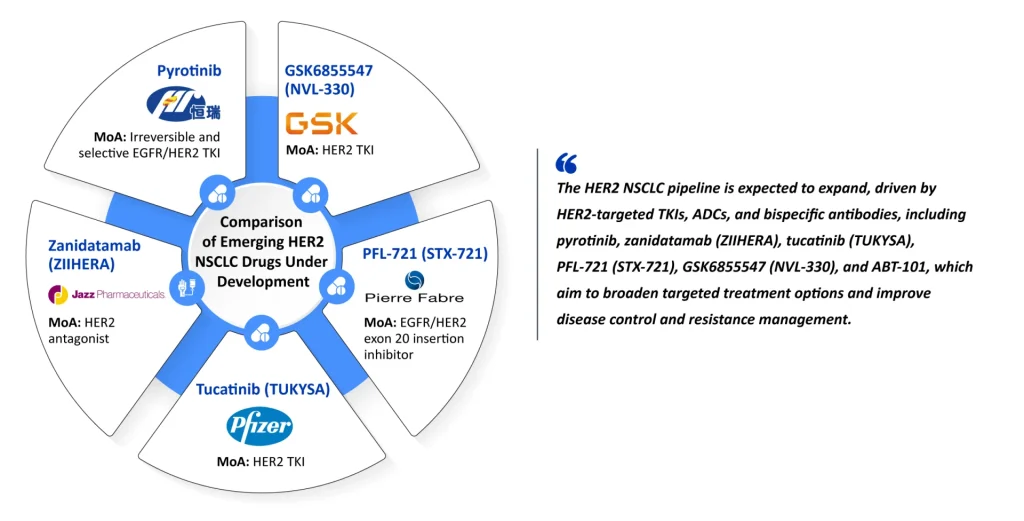
- Promising candidates include Pyrotinib (Jiangsu HengRui Medicine), Zanidatamab (ZIIHERA; Jazz Pharmaceuticals), Tucatinib (TUKYSA; Pfizer), PFL-721 (STX-721; Pierre Fabre Medicament), GSK6855547 [(NVL-330; GSK (Nuvalent)], ABT-101 (Anbogen Therapeutics), ELVN-002 (Enliven Therapeutics), IAM1363 (Iambic Therapeutics), and others, which may improve treatment coverage across HER2 alterations, resistance mechanisms, and CNS disease.
HER2 mutations are identified in approximately 1–5% of NSCLC patients at diagnosis; however, this prevalence likely understates the true disease burden rather than reflecting a definitive epidemiological estimate. Persistently low NGS adoption in real-world community settings, with testing rates below 50%, coupled with operational challenges such as prolonged turnaround times and inadequate tissue availability, continues to limit comprehensive molecular profiling.
HER2-mutant NSCLC has consequently emerged as a distinct molecularly defined therapeutic segment, historically managed under the broader nonsquamous NSCLC treatment paradigm with platinum-based chemotherapy, with or without PD-1/PD-L1 inhibitors. A major turning point occurred in August 2022, when trastuzumab deruxtecan (T-DXd) received approval, establishing HER2 mutations as a clinically actionable target. Nevertheless, intravenous administration, interstitial lung disease (ILD)/pneumonitis risk, and other treatment-related toxicities remain important clinical limitations.
Downloads
Click Here To Get the Article in PDF

Recent Articles
- Immuno-Oncology (I-O) Therapeutics: The Key to Future Cancer Treatment
- OPDIVO Approved for Resectable NSCLC; Palvella Gets $2.6M FDA Grant; First Patient Dosed in UGN-1...
- Copiktra receives approval; Lilly wins approval; Eisai’s Fycompa; Astellas’ Roxadustat; Janssen’s...
- Nkarta’s Anti-CD19 Allogeneic CAR-NK Cell Therapy, NKX019; Eisai Presents Results of lecanemab fo...
- GSK’s RSV Vaccine Clears Phase III Test in Adults; Roche’s Tecentriq for Adjuvant NSCLC; Owkin Ba...
The therapeutic landscape has undergone further transformation with the emergence of oral HER2-targeted tyrosine kinase inhibitors (TKIs), particularly zongertinib and sevabertinib, which secured U.S. first-line approvals in 2026 for HER2 tyrosine kinase domain (TKD) activating mutation-positive NSCLC. Their oral administration and demonstrated CNS activity offer meaningful differentiation, although variations in safety profiles and HER2-targeting breadth continue to shape their respective therapeutic positioning.
Meanwhile, the HER2 NSCLC drug pipeline is gaining momentum, with next-generation TKIs, bispecific antibodies, and combination regimens expanding the scope of HER2-directed treatment. Emerging approaches, including Pyrotinib, zanidatamab, tucatinib plus trastuzumab, NVL330, and PFL-721, could potentially extend therapeutic coverage across a wider spectrum of HER2 alterations and resistance settings.
As per Aparna Thakur, Project Manager of Forecasting at DelveInsight, the uptake of therapies in HER2-mutant NSCLC is expected to increase with the growing adoption of oral HER2-targeted TKIs such as zongertinib and sevabertinib, driven by their targeted activity, oral dosing, and CNS penetration. Zongertinib may see broader uptake due to its selectivity and first-line positioning, while sevabertinib may be used selectively based on its CNS activity and broader HER2/EGFR inhibition. Trastuzumab deruxtecan is expected to retain a role in later-line treatment, with emerging therapies potentially expanding treatment options further.
Collectively, the HER2-mutant NSCLC market is transitioning from a predominantly chemotherapy-driven landscape toward a targeted therapy-centric paradigm. Future market expansion is expected to be shaped by first-line penetration, enhanced CNS efficacy, broader HER2 alteration coverage, improved tolerability, and increasingly differentiated treatment sequencing strategies.
Let’s dive into the detailed assessment of the promising HER2 NSCLC drugs under development.
Jiangsu HengRui Medicine’s Pyrotinib: Pan-HER TKI
Pyrotinib is a next-generation, irreversible pan-ErbB tyrosine kinase inhibitor (TKI) designed to disrupt HER-driven oncogenic signaling. By forming a covalent bond with the ATP-binding pocket of the intracellular HER kinase domain, pyrotinib effectively suppresses receptor autophosphorylation across HER homodimers and heterodimers. This blockade disrupts key downstream oncogenic cascades, including the Ras/Raf/MEK/MAPK and PI3K/Akt pathways, thereby inhibiting tumor-promoting signaling.
The company has completed a global Phase III clinical trial (NCT04447118) evaluating pyrotinib in patients with advanced non-squamous non-small cell lung cancer (NSCLC) harboring HER2 exon 20 mutations who experienced disease progression following platinum-based chemotherapy, underscoring its therapeutic potential in a molecularly defined, treatment-refractory patient population.
Jazz Pharmaceuticals’ Zanidatamab (ZIIHERA): HER2 Bispecific Antibody
Zanidatamab is a next-generation bispecific HER2-targeted monoclonal antibody engineered to engage two distinct extracellular epitopes of HER2, driving receptor internalization, downregulating HER2 expression, and activating multiple immune-mediated mechanisms, including complement-dependent cytotoxicity (CDC), antibody-dependent cellular cytotoxicity (ADCC), and antibody-dependent cellular phagocytosis (ADCP). In NSCLC, zanidatamab is under investigation in the Phase II DiscovHER PAN-206 study as monotherapy for previously treated, locally advanced or metastatic HER2-positive (IHC 3+) solid tumors, including NSCLC. The trial aims to establish its antitumor potential in patients whose disease has progressed following prior systemic therapy.
Pfizer’s Tucatinib (TUKYSA): HER2-Selective TKI with CNS Activity
Pfizer’s tucatinib (TUKYSA) is an orally administered, highly selective, reversible tyrosine kinase inhibitor (TKI) targeting human epidermal growth factor receptor 2 (HER2). The drug selectively inhibits HER2-mediated signaling while demonstrating substantially greater selectivity for HER2 over epidermal growth factor receptor (EGFR), potentially reducing EGFR-associated toxicities. Although TUKYSA is commercially approved for specific HER2-positive breast cancer and colorectal cancer indications, Pfizer is also investigating its therapeutic potential across HER2-driven solid tumors, including non-small cell lung cancer (NSCLC).
In HER2-positive NSCLC, tucatinib is being evaluated in clinical development as a targeted therapeutic approach for patients harboring HER2 alterations, particularly those with advanced disease and limited treatment options. Pfizer’s Phase II basket study (NCT04579380) includes patients with HER2-mutated NSCLC, alongside other HER2-altered solid tumors, assessing tucatinib-based treatment strategies in this molecularly defined population. This investigation highlights the potential of selective HER2 inhibition to expand precision oncology treatment options for HER2-altered lung cancer; however, tucatinib remains investigational in NSCLC, with its efficacy and safety in this indication yet to be established.
Pierre Fabre Medicament’s PFL-721 (STX-721): Mutant-Selective Exon 20 Inhibitor
Pierre Fabre Medicament’s PFL-721 (STX-721) is an investigational, orally administered, mutant-selective tyrosine kinase inhibitor (TKI) being developed for patients with locally advanced or metastatic non-small cell lung cancer (NSCLC) harboring HER2 (ERBB2) exon 20 insertion mutations. The molecule is designed to selectively inhibit oncogenic EGFR and HER2 exon 20 alterations while sparing wild-type EGFR, potentially reducing the systemic toxicities associated with conventional EGFR/HER2-targeted therapies. Preclinical studies have demonstrated potent activity against diverse exon 20 insertion variants, more than 20-fold selectivity over wild-type EGFR, and robust antitumor effects in xenograft models.
PFL-721 is being investigated in the Phase I/II STX-721-101/PFL-721CI101 study (NCT06043817), an open-label, first-in-human trial evaluating its safety, tolerability, pharmacokinetics, and preliminary antitumor efficacy in patients with advanced NSCLC carrying EGFR or HER2 exon 20 insertion mutations. The study includes dose-escalation and dose-optimization components, with evaluation of different once-daily and twice-daily regimens. The trial also explores PFL-721 in combination with platinum-based chemotherapy, broadening its potential therapeutic application in exon 20-mutated NSCLC.
The program has demonstrated encouraging early clinical activity. At the 2026 ASCO Annual Meeting, dose-escalation results showed an overall response rate of 54% and disease control rate of 79% among patients receiving doses of at least 360 mg once daily, across the EGFR/HER2 exon 20-mutated NSCLC population. Partial responses were observed in 15 of 28 patients in this dose range, while circulating tumor DNA reductions supported the observed antitumor activity. Gastrointestinal adverse events, particularly diarrhea, represented the predominant toxicity, whereas systemic skin toxicities were relatively limited, consistent with the compound’s mutant-selective profile. These findings support continued clinical evaluation of PFL-721 as a potential targeted treatment for patients with HER2 exon 20-mutated NSCLC, including those previously treated with exon 20-directed TKIs.
GSK’s GSK6855547 (NVL-330): Brain-Penetrant HER2 Exon 20 Inhibitor
GSK6855547 (NVL-330) is an investigational, next-generation, brain-penetrant, HER2-selective tyrosine kinase inhibitor (TKI) being developed by GSK for patients with advanced or metastatic HER2-altered non-small cell lung cancer (NSCLC). Originally developed by Nuvalent, NVL-330 is designed to selectively inhibit oncogenic HER2 alterations, including HER2 exon 20 insertion mutations (HER2ex20), while sparing wild-type epidermal growth factor receptor (EGFR). Its differentiated profile aims to address key limitations of existing HER2-targeted therapies, particularly treatment-associated EGFR-related toxicities such as rash and gastrointestinal adverse events, while potentially improving therapeutic activity against intracranial disease. Preclinical studies demonstrated broad activity against oncogenic HER2 variants, favorable brain penetration, and substantial intracranial tumor regression, including in models previously resistant to zongertinib.
NVL-330 is being evaluated in the ongoing global Phase I/II HEROEX-1 (NCT06521554) study, a first-in-human, multicenter, open-label trial investigating oral NVL-330 monotherapy in previously treated patients with advanced or metastatic HER2-altered NSCLC. The study comprises dose-escalation (Phase Ia) and dose-expansion (Phase Ib) components to assess safety and tolerability, establish the recommended Phase II dose, characterize pharmacokinetics, and evaluate preliminary antitumor activity. The trial initially permits patients with HER2 mutations or amplification during dose escalation, while the expansion phase focuses on HER2-mutant NSCLC. With its combination of HER2 selectivity and CNS penetration, NVL-330 represents a promising investigational approach for patients with HER2-driven NSCLC, particularly those with brain metastases or limited treatment options following prior systemic therapy.
Iambic Therapeutics’ IAM1363: Next-Generation HER2-Selective Tyrosine Kinase Inhibitor
IAM1363 is an oral, highly selective, pan-mutant HER2 inhibitor with brain-penetrant properties, designed to target HER2 and its mutant variants while sparing wild-type EGFR. HER2 amplification and mutations are key oncogenic drivers across multiple human cancers. However, the therapeutic potential of HER2-targeted tyrosine kinase inhibitors (TKIs) has historically been constrained by compensatory resistance mechanisms and EGFR-related toxicities, necessitating a therapeutic window that existing pan-ERBB and HER2 inhibitors have struggled to achieve.
IAM1363 represents a differentiated therapeutic approach, demonstrating over 1,000-fold in vivo selectivity against wild-type EGFR, favorable pharmacokinetic (PK) and safety profiles, preferential tumor accumulation, and effective penetration into the central nervous system (CNS). These attributes position IAM1363 as a potentially transformative molecule capable of maximizing HER2 pathway inhibition while minimizing EGFR-mediated adverse effects. Preclinical studies have demonstrated robust antitumor activity and favorable tolerability across diverse HER2-driven tumor models, including intracranial models, with IAM1363 outperforming benchmark TKIs and antibody-drug conjugates (ADCs).
IAM1363 is currently being evaluated in a multicenter Phase 1/1b clinical trial, marking an important step toward translating its differentiated preclinical profile into clinical benefit for patients with HER2-driven malignancies.
Looking ahead, the approval of these emerging HER2-targeted therapies could significantly reshape the HER2-mutant NSCLC market, accelerating its evolution toward a more diversified and precision-driven treatment landscape. The question of which emerging HER2 therapies could change the standard of care will largely depend on their ability to address existing treatment limitations and deliver meaningful clinical benefits across patient populations. The introduction of next-generation TKIs, bispecific antibodies, and combination regimens may expand treatment eligibility beyond currently addressable HER2 mutations, improve outcomes in patients with brain metastases, and provide additional options for those developing resistance to established therapies.
Agents such as NVL-330 and PFL-721 could potentially address critical limitations associated with existing HER2-directed treatments through enhanced CNS penetration, mutant selectivity, and improved tolerability, while zanidatamab and tucatinib-based combinations may further broaden therapeutic approaches. Successful clinical development and regulatory approvals could intensify competition among HER2-targeted agents, influence treatment sequencing and market share distribution, and potentially establish new standards of care across earlier treatment lines.
Ultimately, the commercial trajectory of the HER2-mutant NSCLC market will depend on the ability of these investigational therapies to demonstrate meaningful clinical differentiation, durable efficacy, and favorable safety profiles, alongside improvements in molecular testing adoption that enable more patients to benefit from targeted treatment. Among these emerging HER2 therapies, those demonstrating substantial improvements in efficacy, CNS activity, and tolerability are most likely to influence future treatment guidelines and potentially redefine the standard of care in HER2-mutant NSCLC.

FAQs
Yes, HER2-positive lung cancer, particularly HER2-mutant non-small cell lung cancer (NSCLC), is treatable with targeted therapies, chemotherapy, and antibody-drug conjugates (ADCs). Although advanced disease remains challenging to cure, newer HER2-directed treatments have improved disease control and expanded therapeutic options.
Treatment selection depends on disease stage, prior therapies, HER2 mutation status, and patient characteristics. HER2-directed ADCs such as ENHERTU (trastuzumab deruxtecan) and emerging targeted therapies are increasingly important options, particularly for advanced disease.
HER2-directed therapies with potential intracranial activity include trastuzumab deruxtecan and investigational HER2 tyrosine kinase inhibitors (TKIs), such as zongertinib and sevabertinib. Their effectiveness in brain metastases varies, and clinical evidence continues to evolve.
HER2 TKIs, such as zongertinib and sevabertinib, are oral small-molecule drugs that directly inhibit HER2 signaling pathways involved in tumor growth. HER2 ADCs, such as trastuzumab deruxtecan, combine HER2-targeting antibodies with cytotoxic payloads to selectively deliver chemotherapy to cancer cells.
Several emerging therapies are being evaluated for HER2-mutant NSCLC, including Pyrotinib (Jiangsu HengRui Medicine), Zanidatamab (ZIIHERA; Jazz Pharmaceuticals), Tucatinib (TUKYSA; Pfizer), PFL-721 (STX-721; Pierre Fabre Medicament), GSK6855547 [(NVL-330; GSK (Nuvalent)], ABT-101 (Anbogen Therapeutics), ELVN-002 (Enliven Therapeutics), IAM1363 (Iambic Therapeutics), and others.
Downloads
Article in PDF
Recent Articles
- ADCs in Lung Cancer Treatment: ENHERTU’s Rise, HER3 & TROP-2 Challenges, and What’s Next in ...
- Novartis Secures FDA Approval for ITVISMA; Kelun-Biotech’s Phase III Study Shows Sac-TMT + Keytru...
- Notizia
- Noxxon’s NOX-A12 clinical trial; Exact Sciences buys PreventionGenetics; Nuvalent’s clinical trai...
- ESMO Asia 2022: Role of EGFR and ALK mutations in the East Asian Lung Cancer Market