Medical Robots: Transforming Healthcare in the 21st Century
Jun 18, 2026
Table of Contents
Medical robotics stands at the vanguard of one of the most transformative periods in the history of healthcare. From autonomous surgical systems performing minimally invasive procedures with sub-millimeter precision, to wearable exoskeletons restoring mobility to paralyzed patients, and AI-driven logistics robots streamlining hospital supply chains, the integration of robotics into medicine is rapidly reshaping every dimension of patient care.
The global medical robotics system market, valued at approximately USD 26.3 billion in 2025, is projected to surge to over USD 97.8 billion by 2034, growing at a CAGR of 15.23%. This explosive growth is underpinned by converging forces:
Downloads
Click Here To Get the Article in PDF

Recent Articles
- Össur Launches POWER KNEE; DePuy Synthes Acquires CrossRoads Extremity Systems; Myomo’s MyoPro; A...
- Medtronic Receives FDA Approval for OmniaSecure™ Lumenless Defibrillation Lead and Presents Posit...
- Boston Scientific INGEVITY™ gets Expanded Indication and acquires Silk Road Medical; FDA Approves...
- Most Promising Artificial Intelligence Applications in the Healthcare Segment
- Minimally Invasive Surgical Devices: Transforming Modern Surgery
- An aging global population
- The rising burden of chronic and degenerative diseases
- Escalating demand for precision surgery
- Critical shortages of skilled healthcare professionals
- Accelerating the maturation of enabling technologies such as artificial intelligence (AI), machine learning, computer vision, and advanced materials science.
Introduction: The Dawn of Robotic Medicine
The story of medical robotics begins in the late 1980s, when the ROBODOC system developed by Integrated Surgical Systems became one of the first robotic platforms used to assist in orthopedic surgeries, specifically for hip replacement procedures. This pioneering effort demonstrated that machines could execute pre-programmed surgical movements with a level of consistency that surpassed human capability in certain controlled tasks.
The 1990s saw the emergence of the da Vinci Surgical System by Intuitive Surgical, which would go on to redefine minimally invasive surgery and establish the commercial template for robotic surgical systems worldwide. Since then, the field has expanded at an astonishing pace, branching into rehabilitation robotics, companion and assistive robots for elderly and disabled populations, AI-driven diagnostic platforms, and autonomous mobile robots navigating hospital corridors.
Why Medical Robotics Now?
Several macro-level forces are converging to make this the most consequential decade yet for medical robotics:
- Demographic Aging: By 2050, the global population aged 60 and over will reach 2.1 billion (WHO), dramatically increasing demand for orthopedic, neurological, and geriatric care, where robotics can make an outsized impact.
- Chronic Disease Burden: Cardiovascular disease, cancer, diabetes, and musculoskeletal conditions collectively represent the leading causes of death and disability worldwide. Many of these conditions benefit from robotic-assisted surgical interventions.
- Healthcare Workforce Shortages: The WHO projects a global shortfall of 10 million health workers by 2030. Robotic systems can augment clinical capacity, automate repetitive tasks, and extend the reach of skilled surgeons.
- Technological Maturation: AI, 5G connectivity, miniaturization of sensors, and advances in soft robotics are enabling a new generation of medical robots that are more capable, safer, and more affordable than their predecessors.
- Post-Pandemic Healthcare Transformation: COVID-19 dramatically accelerated the adoption of contactless and autonomous technologies in hospitals, giving robotics deployments a powerful institutional tailwind.
Types of Medical Robots: A Comprehensive Classification
Surgical Robots
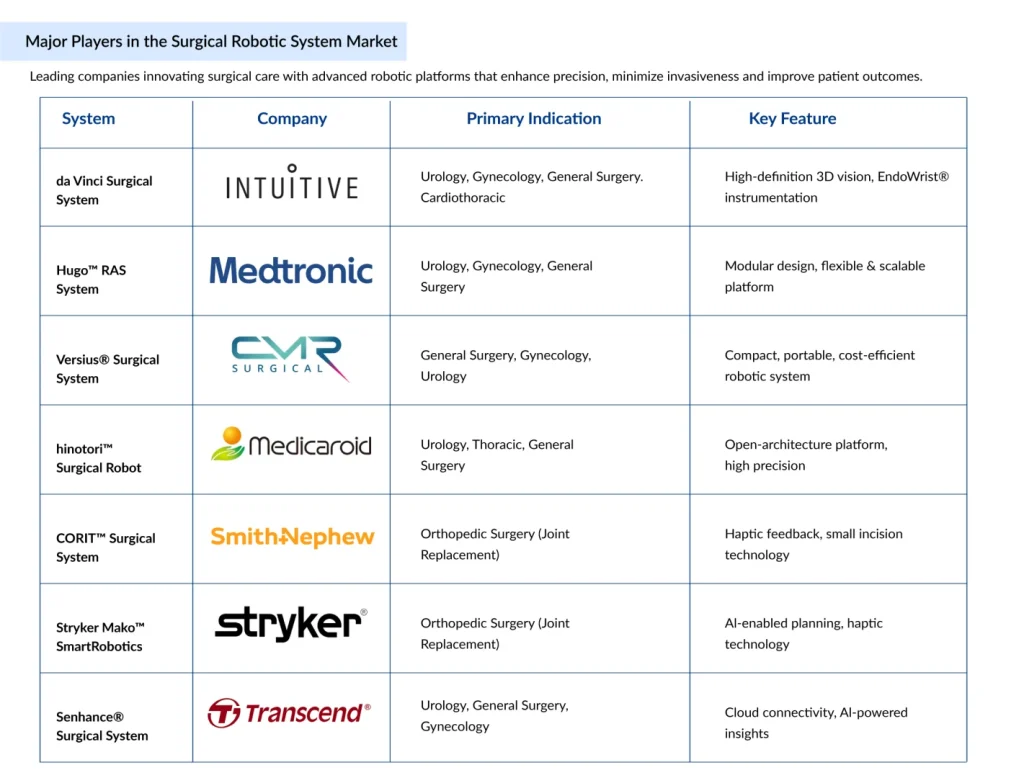
Surgical robots represent the largest and most commercially mature segment of the medical robotics industry. These systems augment the capabilities of surgeons, enabling greater precision, reduced invasiveness, and faster patient recovery. The segment encompasses several sub-categories:
Minimally Invasive Surgical (MIS) Robots: MIS robots, exemplified by the iconic da Vinci Surgical System (Intuitive Surgical), allow surgeons to perform complex procedures through tiny incisions using articulated robotic arms controlled from a console. The benefits include reduced blood loss, lower infection rates, shorter hospital stays, and faster return to normal activity compared to open surgery. The US surgical robots market by application type shows that urological procedures (including prostatectomies) account for the largest procedural volume (~31%), followed by gynecological surgery (~24%), general surgery (~19%), colorectal surgery (~12%), and thoracic/cardiac procedures (~9%).
Endoscopic and Micro-Surgical Robots: A rapidly evolving category involves robotic systems designed for endoscopic navigation and microsurgery. Companies such as Medtronic (Hugo RAS), CMR Surgical (Versius), and Asensus Surgical (Intelligent Surgical Unit) are introducing new paradigms where AI-driven image analysis guides robotic instruments through anatomically complex regions, including the colon, esophagus, and biliary system.
Neurosurgical Robots: Neurosurgical robots such as the Mazor X (Medtronic), ROSA Brain (Zimmer Biomet), and Neuromate (Renishaw) enable highly precise targeting within the brain and spine. These systems integrate pre-operative imaging data to plan trajectories for electrode placement, biopsy needle guidance, and stereotactic radiosurgery with sub-millimeter accuracy.
Rehabilitation and Wearable Robots
The wearable robots market and the broader healthcare wearable robot market represent the fastest-growing segment in medical robotics. These systems are designed to assist, augment, or restore physical function in patients with neurological conditions, musculoskeletal injuries, or congenital disabilities.
Exoskeletons for Rehabilitation: Powered exoskeletons such as Ekso Bionics’ EksoGT and ReWalk Robotics’ ReWalk Personal are FDA-cleared devices that enable individuals with spinal cord injuries (SCI) to stand and walk with assistance. Clinical studies consistently demonstrate that neuroplasticity benefits from repetitive, task-specific movements facilitated by exoskeletons promote neural pathway reorganization that can lead to lasting functional improvements.
Upper Limb Rehabilitation Robots: Systems such as the Armeo series (Hocoma/DIH Medical) and InMotion ARM (Bionik Laboratories) target stroke survivors and individuals with upper extremity impairments. These devices use sensor feedback and adaptive algorithms to tailor resistance and assistance levels to each patient’s real-time performance, enabling intensive, repetitive practice that would be impossible with human therapists alone.
Soft Wearable Robots: An emerging frontier involves soft robotic suits, flexible, textile-based devices that provide gentle actuation support rather than rigid exoskeletal structures. The Harvard Biodesign Lab’s Soft Exosuit and similar platforms aim to provide walking assistance for elderly individuals at risk of falls, or for patients with mild to moderate gait impairments. These systems are lighter, less conspicuous, and more comfortable than traditional exoskeletons.
Orthopedic Medical Robots
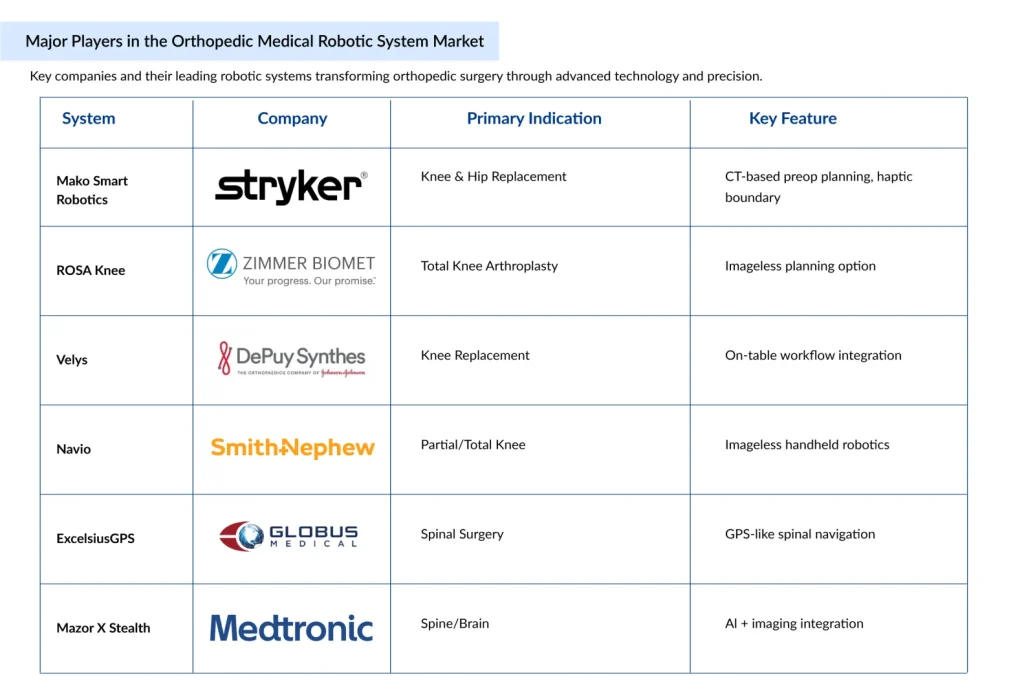
The orthopedic medical robots market addresses one of the highest-volume procedural areas in all of surgery. Total knee arthroplasty (TKA), total hip arthroplasty (THA), and spinal fusion surgeries collectively number in the millions annually worldwide. Robotic systems designed for these procedures offer surgeons real-time feedback, preoperative planning tools, and intraoperative guidance that improve implant positioning and long-term outcomes.
Stryker’s Mako system alone has been used in over 750,000 procedures globally as of 2024, with the company reporting consistently higher procedure volumes each year.
Hospital Logistics Robots
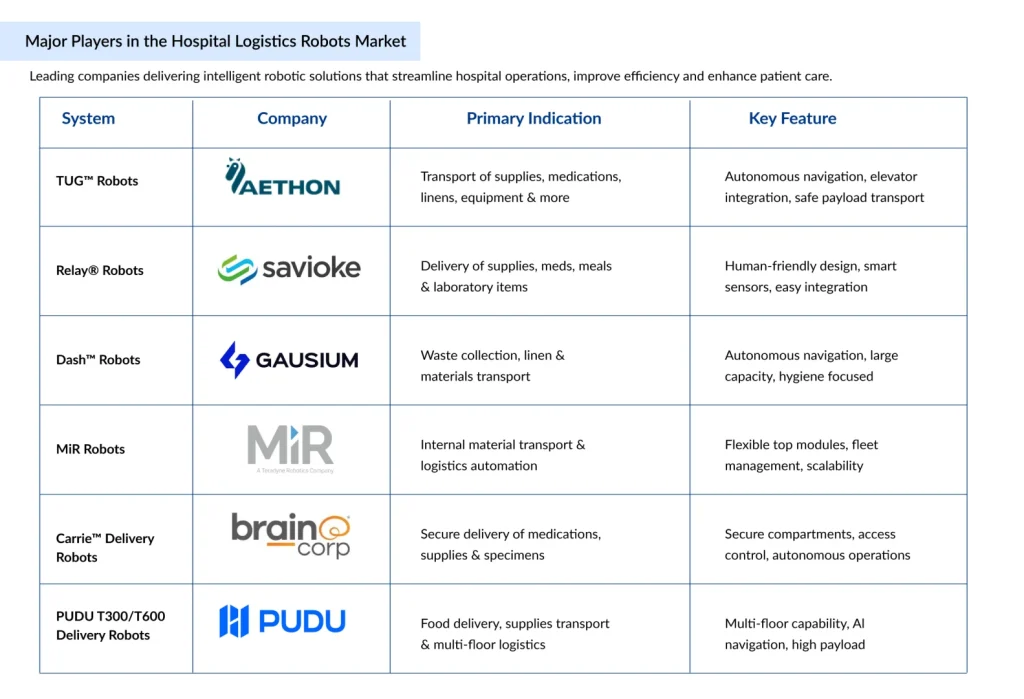
The hospital logistics robots market and broader hospital robot market represent one of the most rapidly expanding and perhaps underappreciated segments of healthcare robotics. Within the complex ecosystem of a modern hospital where thousands of items must move from pharmacies, laboratories, and supply rooms to patient bedsides daily, autonomous mobile robots (AMRs) are proving transformative.
Autonomous Mobile Robots (AMRs) for Hospitals: AMRs such as Aethon’s TUG robot, Swisslog’s TransCar, and Savioke’s Relay navigate hospital corridors autonomously, delivering medications, lab specimens, meals, linens, and medical supplies. By eliminating transport tasks from nursing and support staff, these systems free clinical personnel to focus on direct patient care, a critical benefit given acute nursing shortages worldwide.
Disinfection and Sterilization Robots: UV-C disinfection robots, including Xenex’s LightStrike, UVD Robots’ autonomous UVD platform (Blue Ocean Robotics), and Violet by Altapure, have seen explosive adoption since the COVID-19 pandemic. These systems autonomously navigate patient rooms, surgical suites, and ICUs, delivering high-intensity ultraviolet light to eradicate pathogens including SARS-CoV-2, C. difficile, and MRSA with greater consistency than manual cleaning alone.
Pharmacy Automation Robots: Pharmacy robots from companies such as Omnicell, BD (Carefusion), and Swisslog Pharmacy are integrated into hospital pharmacies worldwide, automating medication dispensing, vial filling, blister pack assembly, and IV compounding. These systems dramatically reduce dispensing errors (which contribute to thousands of preventable deaths annually), improve inventory management, and enable 24/7 pharmacy operations with minimal staffing.
Healthcare Assistive Robots
The healthcare assistive robot market and handicap assistance robots market cater to a broad and growing population of individuals who require assistance with activities of daily living (ADLs) due to physical disability, cognitive impairment, or the effects of aging. These robots are deployed in homes, long-term care facilities, and rehabilitation centers.
- JACO Robotic Arm (Kinova Robotics): Mounts to wheelchairs, allowing users with limited hand function to manipulate objects, drink independently, and interact with their environment.
- PARO Therapeutic Robot (AIST Japan): A seal-like companion robot used in dementia care, shown in clinical studies to reduce agitation, depression, and anxiety in elderly patients.
- Pepper & NAO (SoftBank Robotics): Social robots deployed in hospitals and care homes for patient engagement, cognitive stimulation, and wayfinding assistance.
- Care-O-bot (Fraunhofer IPA): A mobile platform designed to fetch objects, remind patients to take medications, and contact caregivers in emergencies.
Demand is particularly acute in Japan, Germany, South Korea, and the United States countries simultaneously facing aging populations and caregiver shortages.
Healthcare Mobile Robots
The healthcare mobile robot market and healthcare service robots market encompass a wide range of autonomous platforms that move throughout clinical environments to perform varied functions. Distinct from fixed surgical systems, mobile medical robots are defined by their ability to navigate dynamically through real-world hospital environments.
Key platforms in this space include the TUG (Aethon/Agilox), Hstar’s HOSPI, and Diligent Robotics’ Moxi, the latter of which has become a widely cited example of a hospital service robot that assists nurses with non-clinical tasks such as gathering supplies from the central supply room and delivering them to patient rooms. Moxi has been piloted in major U.S. health systems, including Texas Health Resources and Houston Methodist.
Medical Robots Market Dynamics
Key Market Drivers, Challenges & Opportunities
Market Drivers
Aging Global Population: The demographic transformation of the world’s population is the single most powerful structural driver of the medical robotics market. The United Nations estimates that by 2050, one in six people globally will be over 65, up from one in eleven in 2019. This aging cohort drives dramatically higher rates of orthopedic procedures, neurological conditions requiring surgical intervention, rehabilitation needs, and demand for assistive technologies. Robotic systems uniquely address the full continuum of care that elderly patients require.
Precision Medicine and Personalized Care: The broader trend toward precision medicine, tailoring treatment to individual patient characteristics, aligns powerfully with robotic capabilities. Robotic surgical systems equipped with AI can integrate patient-specific anatomical data, genetic information, and real-time intraoperative feedback to optimize procedure execution. Orthopedic robots, for example, use CT-derived 3D models of each patient’s anatomy to plan implant positioning with exactitude impossible with manual techniques.
Favorable Regulatory Environment: Regulatory agencies worldwide, particularly the FDA in the United States, have progressively streamlined pathways for medical robot approvals. The FDA’s De Novo and 510(k) clearance pathways have enabled numerous robotic medical devices to reach the market faster than traditional PMA routes. Additionally, the European Medical Device Regulation (MDR 2017/745) has created clearer, if more demanding, frameworks for robotic device certification in the EU market.
Technological Convergence: The convergence of AI, 5G, cloud computing, advanced imaging, and materials science is enabling a new generation of medical robots that transcend the capabilities of earlier systems. Real-time AI analytics can now interpret surgical video feeds, alert surgeons to anatomical structures at risk of injury, predict complications, and even suggest optimal instrument trajectories, all during live procedures.
Market Challenges
High Capital Cost: Robotic surgical systems such as the da Vinci Xi carry price tags of USD 1.5-2.5 million per unit, with annual service contracts adding USD 100,000-200,000. This remains a prohibitive barrier for community hospitals, rural facilities, and healthcare systems in low- and middle-income countries.
Training & Learning Curve: Effective utilization of medical robots requires substantial surgeon and clinical staff training. The learning curve for robotic surgery is well-documented and can initially lead to longer procedure times.
Regulatory Complexity: While frameworks are improving, obtaining clearance for novel robotic medical devices, particularly those incorporating AI decision-making, remains complex, time-consuming, and costly.
Cybersecurity Risks: As medical robots become increasingly networked and AI-integrated, cybersecurity vulnerabilities represent a critical concern. A cyberattack on a robotic surgical system could have life-threatening consequences.
Reimbursement Gaps: In many markets, reimbursement for robotic-assisted procedures is not meaningfully higher than for conventional approaches, making it difficult for hospitals to justify the investment based purely on financial returns.
Emerging Opportunities
Autonomous Surgical Robots: Fully autonomous robotic surgery remains the ‘holy grail’ of the field. Research platforms such as the Smart Tissue Autonomous Robot (STAR, Johns Hopkins University) have demonstrated the ability to perform supervised autonomous soft tissue surgery. Commercialization of semi-autonomous systems could democratize surgical expertise.
Nano-Robotics: Microscale and nanoscale robotic systems capable of navigating the bloodstream to deliver drugs, perform biopsies, clear arterial blockages, or destroy tumor cells represent a transformative frontier. Research programs at ETH Zurich, MIT, and Harvard are making rapid progress.
Telepresence & Remote Surgery: 5G-enabled robotic systems capable of transmitting haptic feedback and real-time imaging can facilitate true telesurgery, connecting expert surgeons in major centers with patients in remote or underserved locations. Proof-of-concept demonstrations have been conducted across multiple continents.
Mental Health Robots: An underexplored but rapidly growing area involves robots designed to support mental health care, providing CBT-based interventions, social connection for isolated individuals, and monitoring for psychiatric symptoms. This segment is expected to see significant investment through 2030.
Leading Medical Robot Companies & Competitive Landscape
Global Leaders in Robotic Surgery
The robotic surgery companies segment is dominated by a small number of established incumbents, but the competitive landscape is rapidly evolving as new entrants from traditional medical device companies, startups, and even technology giants (Google/Verily, Samsung, Amazon) seek to capture share.
|
Company |
Key Products |
Market Position |
|---|---|---|
|
Intuitive Surgical |
da Vinci Xi, da Vinci SP, Ion |
Global leader in soft tissue surgery |
|
Stryker |
Mako SmartRobotics |
Dominant in orthopedic robotics |
|
Medtronic |
Hugo RAS, Mazor X Stealth, ROSA Brain |
Broad-spectrum robotic portfolio |
|
Smith & Nephew |
Navio, Cori |
Strong in knee robotics |
|
Zimmer Biomet |
ROSA Bone, ROSA Brain |
Ortho & neuro focus |
|
Globus Medical |
ExcelsiusGPS, ExcelsiusGPSi |
Spine surgery robotics leader |
|
CMR Surgical |
Versius |
Modular surgical robot challenger |
|
Asensus Medical |
Intelligent Surgical Unit |
AI-native surgical platform |
|
Ekso Bionics |
EksoGT, EksoNR |
Neuro rehab exoskeletons |
|
ReWalk |
ReWalk Personal 6.0 |
SCI exoskeleton pioneer |
New Entrants & Disruptors
Beyond established players, a dynamic cohort of new medical robot companies and startups is challenging incumbent positions with novel approaches to robotic medical technology:
Moon Surgical (France): Developer of the Maestro system, a collaborative robot designed to hold and maneuver laparoscopic instruments, effectively giving surgeons a third hand during procedures without a dedicated robotic surgeon’s console.
Vicarious Surgical (US): Building a microrobot platform that uses a pair of tiny surgical robots and a 3D camera, inserted through a single tiny incision, to operate inside the body with unprecedented maneuverability.
Noah Medical (US): Developing the Galaxy System for lung cancer biopsy, using robotic bronchoscopy with real-time 3D fluoroscopic imaging to reach peripheral lung nodules that traditional bronchoscopes cannot access.
Levita Magnetics (US): Using externally applied magnets to control a miniaturized camera inside the abdominal cavity, enabling ‘scarless’ surgery through a single umbilical incision.
Caresyntax (US/Germany): Building an operating room intelligence platform that integrates AI and surgical data analytics to complement robotic and conventional surgical systems.
Regional Deep Dive
North America: The Market Leader
North America, led by the United States, commands the largest share of the global healthcare robotics market. Several structural factors underpin this dominance: the world’s highest per-capita healthcare expenditure, a well-developed reimbursement infrastructure, a large base of technologically sophisticated hospitals, and proximity to the headquarters and R&D operations of most leading robotic medical companies.
The US surgical robots market by application type is particularly instructive. Urological surgery remains the dominant application for robotic assistance in the US. This reflects the now near-universal adoption of robotic prostatectomy, which has replaced open and laparoscopic approaches in most major US cancer centers. Gynecological surgery (24%), general surgery (19%), colorectal (12%), and cardiothoracic applications (9%) round out the major procedure categories.
Europe: Sophisticated but Price-Sensitive
The region benefits from world-class healthcare systems, strong academic medical centers with active robotic surgery programs, and growing patient demand for minimally invasive procedures. However, cost pressures within national health systems, particularly in the UK’s NHS, Germany’s GKV, and France’s Assurance Maladie, create friction around capital expenditure approvals for robotic systems.
The EU’s MDR (Medical Device Regulation 2017/745), which came into full effect in 2021, has introduced more rigorous clinical evidence requirements for novel robotic devices. While this has temporarily slowed some new product launches, it is ultimately expected to strengthen patient safety and market confidence in European-cleared robotic technologies.
GCC Medical Robotics Market: A High-Growth Frontier
The GCC medical robotics market, encompassing Saudi Arabia, UAE, Qatar, Kuwait, Bahrain, and Oman, deserves special attention as one of the fastest-growing regional markets globally. Several powerful forces are driving this trajectory:
Vision 2030 (Saudi Arabia): Saudi Arabia’s Vision 2030 plan explicitly targets the transformation of the Kingdom’s healthcare sector, with robotics and digital health among the priority investment areas. The Ministry of Health has announced programs to equip major hospitals with robotic surgical capabilities.
UAE Healthcare Strategy 2023-2031: The UAE has set ambitious targets for healthcare innovation, including the deployment of AI and robotics across Emirati hospitals. Dubai Health Authority and Abu Dhabi Health Services (SEHA) have both piloted robotic surgery programs.
Medical Tourism: The GCC region is increasingly positioning itself as a medical tourism destination. Robotic surgical capabilities are a key credential that attracts international patients and supports premium pricing.
Wealth & Investment Capacity: GCC states’ sovereign wealth funds (including Saudi Arabia’s PIF and Abu Dhabi’s Mubadala) have made significant investments in global healthcare technology companies, reflecting strategic interest in deploying these technologies domestically.
Asia-Pacific: The Next Frontier
The Asia-Pacific region represents the most dynamic long-term growth opportunity in the global healthcare robotics market, driven by the combination of massive and aging populations (particularly in China, Japan, South Korea, and India), rapidly expanding healthcare infrastructure, and strong domestic R&D capabilities in key markets.
Japan, where over 28% of the population is aged 65+, has been an early and enthusiastic adopter of healthcare robotics across all categories, from surgical systems to care robots for the elderly. The Japanese government’s ‘Robot Strategy’ explicitly targets the care industry as a priority deployment area. China’s ‘Healthy China 2030’ initiative includes significant support for domestic medical robot development, and Chinese companies, including Tinavi Medical Technologies, Rokae, and Baidu Health, are rapidly closing the technology gap with Western incumbents.
Medical Robotics Technology: Key Innovations Driving the Industry
Artificial Intelligence and Machine Learning
AI is arguably the most transformative technology reshaping medical robotics today. Machine learning algorithms trained on vast datasets of surgical videos, imaging studies, and patient outcomes are enabling robotic systems to move beyond passive tool execution to active cognitive assistance.
Computer Vision: AI-powered computer vision can analyze intraoperative video in real time to identify anatomical structures, flag proximity to critical structures (nerve bundles, blood vessels), and detect complications in their earliest stages.
Predictive Analytics: AI can integrate preoperative patient data to predict the risk of specific intraoperative complications, allowing surgical teams to take proactive precautions.
Autonomous Execution: Research systems such as STAR (Smart Tissue Autonomous Robot) at Johns Hopkins have performed supervised anastomosis of intestinal tissue with outcomes superior to human surgeons in preclinical models, a harbinger of future semi-autonomous capabilities.
Natural Language Processing: AI assistants integrated into the OR can respond to voice commands from surgeons, retrieve imaging, adjust lighting and equipment settings, and document the procedure in real time.
Haptic Feedback and Force Sensing
One of the long-standing limitations of robotic surgery has been the absence of tactile feedback; surgeons working at a console cannot feel the tissues they are manipulating. Advances in haptic actuators, force sensors, and signal processing are beginning to address this gap. Companies including Johnson & Johnson MedTech (Ottava platform), Avatera Medical, and research teams at Imperial College London are integrating force feedback capabilities into next-generation surgical robots, with the aim of providing surgeons with a more naturalistic operative experience.
Miniaturization and Micro-Robotics
Robotic systems are becoming progressively smaller. Micro-surgical robots capable of operating on structures measured in millimeters, such as individual nerve fascicles, cochlear structures in the inner ear, or vessels in the eye, are transitioning from research prototypes to clinical investigation. The Preceyes Surgical System (Preceyes BV, Netherlands) has been used in clinical trials for retinal surgery, performing sub-retinal injections with precision impossible for even the most skilled ophthalmic surgeons.
Soft Robotics
Traditional rigid robotic systems are ill-suited to many biological environments. Soft robotics using flexible, compliant materials inspired by biological organisms enables robots to safely interact with delicate tissues, conform to complex anatomical geometries, and operate in confined spaces. Soft robotic actuators based on pneumatic, hydraulic, tendon-driven, or shape memory alloy mechanisms are finding applications in endoscopy, cardiac surgery, and wearable rehabilitation devices.
Digital Twins and Simulation
Digital twin technology creates virtual replicas of patients’ anatomies derived from imaging data that can be used to plan and rehearse surgical procedures before the patient enters the OR. Surgeons can practice on the digital twin, the robotic system can pre-plan trajectories, and AI can simulate hundreds of procedural variations to identify optimal approaches. Companies including Medivis, Proprio Vision, and 3D Systems’ healthcare division are commercializing digital twin and AR-based surgical planning tools that integrate with robotic platforms.
Surgical Robotics Outcomes
The evidence base for robotic surgery has grown substantially over the past decade, though it continues to evolve, and debate remains in some areas:
Prostatectomy: Robotic-assisted radical prostatectomy (RARP) is now performed in over 85% of prostatectomies in the United States. Published evidence consistently shows lower rates of urinary incontinence and erectile dysfunction recovery compared to open surgery. (Source: European Urology, 2022 Meta-Analysis)
Colectomy: A 2023 multicenter study published in JAMA Surgery found that robotic-assisted colectomy was associated with lower conversion rates to open surgery and shorter hospital stays compared to laparoscopic colectomy.
Cardiac Surgery: Robotic mitral valve repair using the da Vinci system has shown comparable or superior outcomes to open repair in experienced centers, with the advantage of significantly smaller incisions and faster recovery.
Knee Replacement: A 2022 RCT (RACER-Knee trial) published in The Lancet found that Mako robotic-assisted TKA resulted in improved patient-reported outcomes at 2 years compared to conventional manual TKA.
Rehabilitation Robotics Outcomes
The evidence base for rehabilitation robotics, while growing, is more heterogeneous than for surgical robotics:
Stroke Rehabilitation: A Cochrane Review found that robotic-assisted arm therapy after stroke was significantly more effective than conventional therapy alone in improving arm motor function, with the greatest benefits in patients who received combined robotic and conventional therapy.
Spinal Cord Injury: Studies of exoskeleton-assisted walking in incomplete SCI have demonstrated improvements in walking speed, endurance, and balance, as well as secondary health benefits including improved cardiovascular fitness and reduced spasticity.
Pediatric Rehabilitation: Robotic systems specifically designed for children, such as the Lokomat Junior, have shown efficacy in improving gait parameters in children with cerebral palsy, though evidence quality remains limited by small sample sizes.
The regulatory environment for robotic medical devices is complex and continues to evolve rapidly, shaped by both the capabilities of new technologies and high-profile safety concerns.
United States (FDA)
The FDA regulates robotic medical devices primarily as Class II (moderate risk) or Class III (high risk) devices. Surgical robots typically require 510(k) clearance (demonstrating substantial equivalence to a predicate device) or, for novel systems without a predicate, Pre-Market Approval (PMA). The FDA’s Digital Health Center of Excellence (DHCoE) is developing specific frameworks for AI/ML-based Software as a Medical Device (SaMD), which will increasingly intersect with robotic medical technology.
European Union (MDR)
The EU’s MDR 2017/745, fully applicable since May 2021, imposes significantly more rigorous clinical evidence requirements than its predecessor (MDD). Robotic systems seeking CE marking must demonstrate clinical benefit through adequate clinical evidence, not merely technical performance data. This has created both compliance challenges and market entry barriers for some robotic medical devices.
Emerging Regulatory Frameworks
In GCC countries, regulatory frameworks are maturing rapidly. Saudi Arabia’s SFDA and the UAE’s DOH/HAAD are increasingly aligning with FDA and EU standards, though with GCC-specific nuances. For advanced systems incorporating autonomous AI decision-making, global regulatory bodies are actively developing new frameworks that define the permissible scope of autonomous action, required human oversight mechanisms, and post-market surveillance requirements.
The Autonomous Surgical Suite
The trajectory of surgical robotics points toward progressively greater autonomy. By the mid-2030s, it is plausible that robotic systems guided by AI trained on millions of procedures and monitored by human surgeons will be capable of autonomously performing well-defined, structured elements of standardized surgical procedures. This does not imply replacement of surgeons, but rather a fundamental transformation of the surgeon’s role toward supervision, decision-making, and management of exceptions.
Robot-as-a-Service (RaaS) in Healthcare
The high upfront cost of robotic medical systems is a significant barrier to widespread adoption, particularly for community hospitals, clinics in low-income regions, and developing markets. The emerging Robot-as-a-Service model, where hospitals pay per procedure or per use rather than for the capital equipment, has the potential to dramatically democratize access to robotic capabilities. Intuitive Surgical has already piloted per-procedure pricing models in select markets.
Digital Integration and the ‘Smart OR’
The operating room of the future will be a fully integrated digital environment where the robotic surgical system is one node in a connected ecosystem that includes: AI-powered pre-operative planning tools, intraoperative augmented reality displays, real-time remote telementoring from expert surgeons, automated documentation and billing, post-operative AI monitoring, and continuous learning loops that improve the system’s performance with every procedure.
Global Health Equity through Robotics
Perhaps the most profound long-term promise of medical robotics is the potential to address global health equity. Telesurgical systems could extend the reach of specialist surgical expertise to populations currently underserved due to geographic isolation or healthcare system capacity limitations. Simplified robotic platforms designed for resource-constrained environments, lighter, more durable, lower-cost, and requiring less specialized support infrastructure, represent a significant design frontier for the industry and for global health organizations.
Conclusion
Medical robotics is no longer a futuristic vision; it is the rapidly expanding present of healthcare delivery. From the precise robotic hands performing complex surgeries to the tireless mobile robots navigating hospital halls, from the exoskeletons restoring movement to paralyzed patients to the AI-powered companions supporting the elderly and vulnerable, the scope of robotic innovation in medicine is breathtaking in its breadth and consequence. This growth is not speculative: it is grounded in the demographic reality of global aging, the clinical evidence for robotic-assisted care, the technological maturation of AI and robotics, and the institutional and financial commitments of governments, health systems, and the private sector worldwide.
For healthcare providers, investors, policymakers, and technology developers alike, the message is clear: medical robotics is not a niche market for a handful of elite institutions. It is the foundational infrastructure of the healthcare system of the coming decades. Those who engage seriously with this transformation, who invest in the technology, build the evidence base, develop the regulatory frameworks, and train the clinical workforce will be the architects of a healthier world.

FAQs
Medical Robots allow surgeons to skillfully use surgical instruments inside the patient’s body during minimally invasive surgeries. Doctors can undergo complex surgeries with more precision and flexibility.
Robots aid in surgery, for precision and minimally invasive procedures. Apart from that, they are used for diagnosis, drug delivery, wearable and rehabilitation devices, and also as newly developed prostheses.
Intuitive Surgical is currently the global pioneer in Medical Robots, but with the continuously evolving Medical Robots market landscape, any company can lead in the coming years which includes names such as Johnson & Johnson Medtronic, Zimmer Biomet, Accuray, Stereotaxis, Smith & Nephew, Globus Medical, Stryker, Auris Health, and many more.
Downloads
Article in PDF
Recent Articles
- Robotic Surgery: Navigating the Growing Demand, Ongoing Trends & Developments in the Global ...
- Insulet’s Omnipod 5 Automated Insulin Delivery System; Alivecor’s KardiaMobile Card; BD Boa...
- LivaNova Launched SenTiva DUO; Candela Launched Matrix System; 3M Launched Medical Adhesive; MONA...
- Medtronic Receives FDA Approval for OmniaSecure™ Lumenless Defibrillation Lead and Presents Posit...
- Zimmer Biomet Secures FDA Clearance for Upgraded ROSA® Knee Robotic System; IceCure’s ProSense® C...